















Europe Smart Shoes Market Outlook to 2030
Region:Europe
Author(s):Paribhasha Tiwari
Product Code:KROD8527
November 2024
81
About the Report
Europe Smart Shoes Market Overview
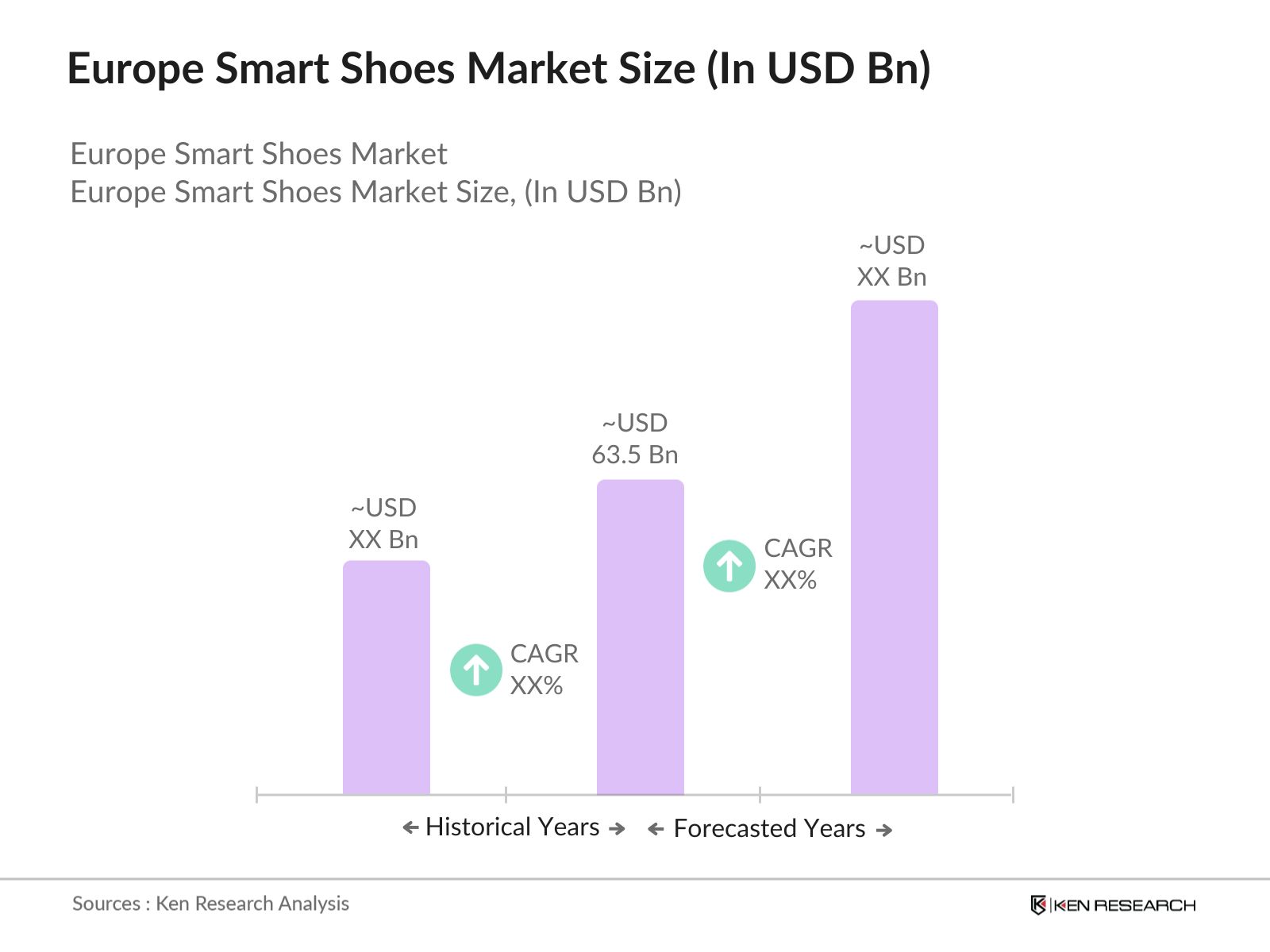
- The Europe Smart Shoes market is valued at USD 63.5 Billion, based on a five-year historical analysis. This market is primarily driven by increasing consumer adoption of wearable technology, particularly in the areas of health, fitness, and sports. Smart shoes provide users with features like activity tracking, health monitoring, and enhanced comfort, which have fueled demand across various demographics. Growing integration of IoT in everyday wearables, coupled with advancements in artificial intelligence (AI) and machine learning (ML), is playing a key role in driving market growth.
- Major cities and countries dominating the Europe Smart Shoes market include Germany, the UK, and France. These countries lead due to their advanced technological infrastructure, strong consumer base, and the presence of significant R&D facilities from top manufacturers. Additionally, high awareness and preference for tech-enabled fitness solutions among consumers contribute to their dominance in the market.
- The European Unions Horizon 2024 program includes funding for smart wearables, focusing on research and development of new materials and sensors used in smart shoes. The EU has allocated 13.5 billionoverall for various sectors, including digital and emerging technologies.
Europe Smart Shoes Market Segmentation
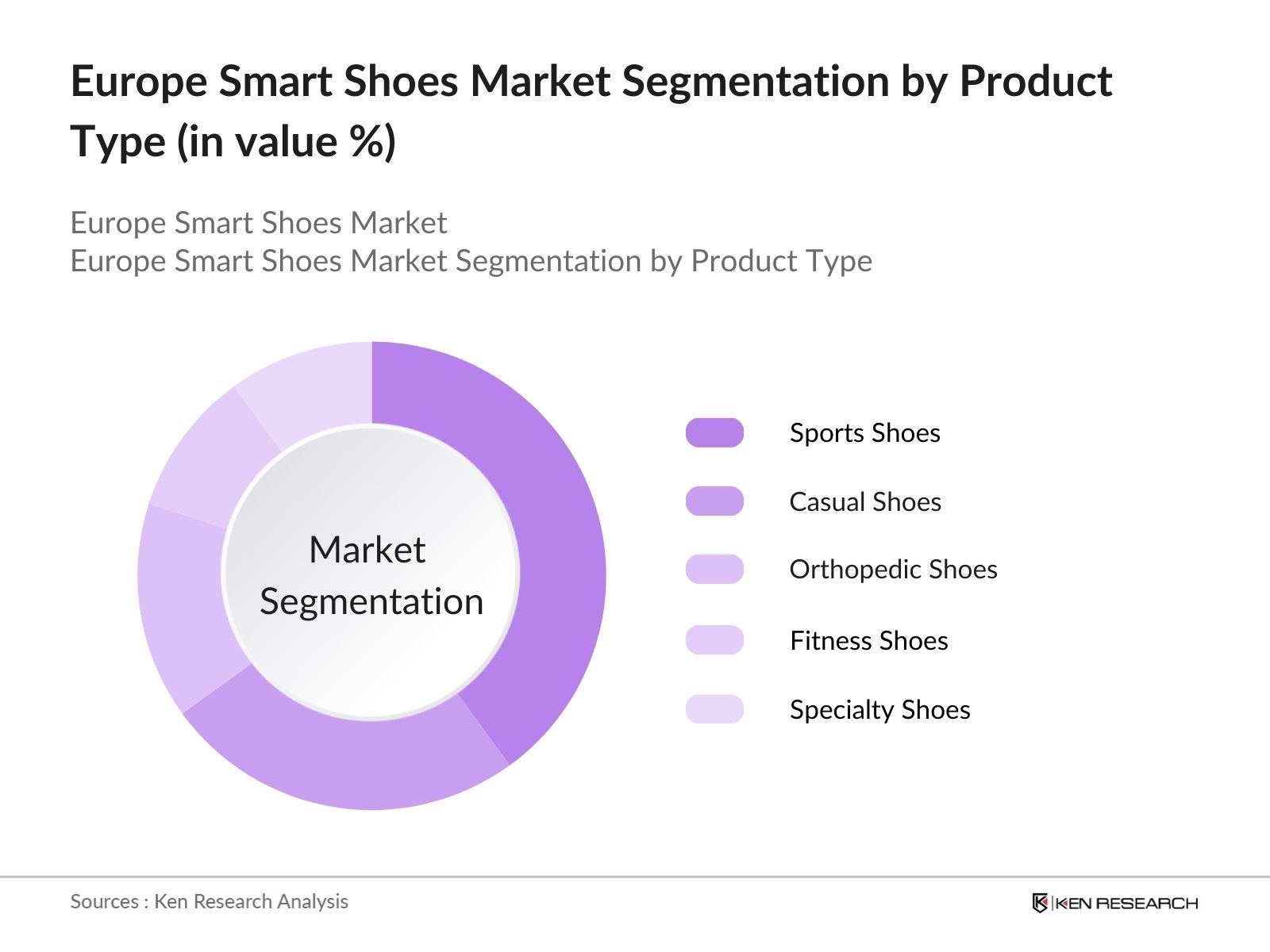
By Product Type: The Europe Smart Shoes market is segmented by product type into Sports Shoes, Casual Shoes, Orthopedic Shoes, Fitness Shoes, and Specialty Shoes. Among these, Sports Shoes hold a dominant market share due to their widespread adoption among athletes and fitness enthusiasts. Companies like Nike and Adidas have successfully integrated sensors and fitness-tracking features into sports footwear, enabling users to track distance, speed, and calories burned. This integration of technology has significantly contributed to the growth of this segment, especially among younger consumers who value performance enhancement and health data.
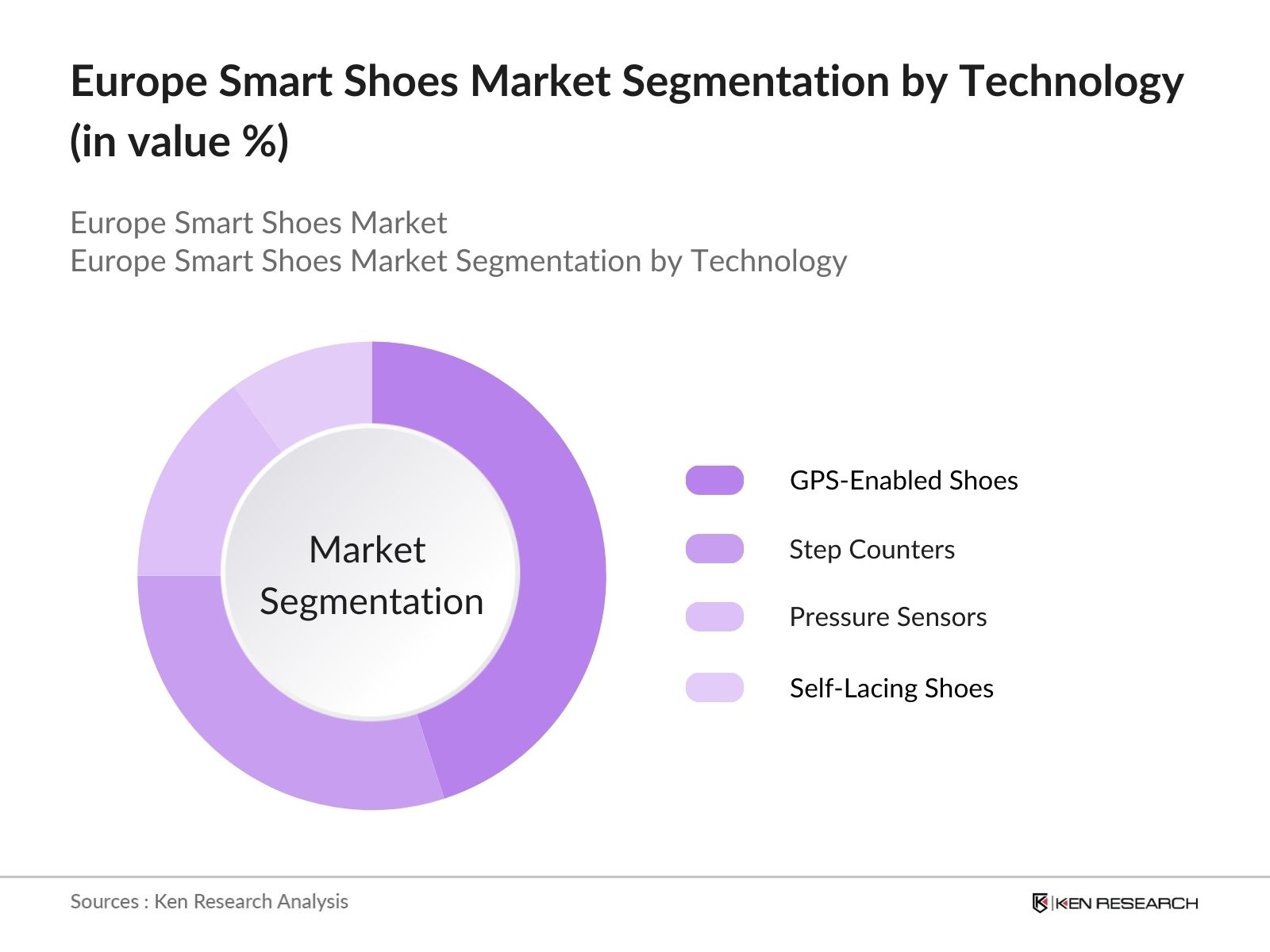
By Technology: The Europe Smart Shoes market is also segmented by technology into GPS-Enabled Shoes, Step Counters, Pressure Sensors, and Self-Lacing Shoes. GPS-Enabled Shoes lead the market in this segment, largely due to their use in sports training and health monitoring. These shoes are especially popular among runners and outdoor sports enthusiasts as they allow real-time location tracking and route monitoring. The increasing demand for personal safety and health tracking devices has further contributed to the dominance of this technology segment.
Europe Smart Shoes Matket Competitive Landscape
The Europe Smart Shoes market is characterized by the presence of both global and regional players. Companies are investing in R&D and collaborating with technology firms to develop innovative products. The consolidation of key market players underlines the competitive intensity within the market. The market is dominated by well-established brands such as Nike, Adidas, and Under Armour, which have strong brand recognition and distribution networks. These brands are continuously innovating to meet the demand for smart wearables with advanced functionalities. New entrants are also introducing niche products targeting specific consumer groups like the elderly and those requiring orthopedic support.
|
Company Name |
Establishment Year |
Headquarters |
Market Focus |
R&D Investment |
Product Range |
Global Presence |
Technology Integration |
Sustainability Efforts |
Strategic Partnerships |
|
Nike, Inc. |
1964 |
Beaverton, USA |
- | - | - | - | - | - | - |
|
Adidas AG |
1949 |
Herzogenaurach, DE |
- | - | - | - | - | - | - |
|
Under Armour, Inc. |
1996 |
Baltimore, USA |
- | - | - | - | - | - | - |
|
Puma SE |
1948 |
Herzogenaurach, DE |
- | - | - | - | - | - | - |
|
Xiaomi Corporation |
2010 |
Beijing, China |
- | - | - | - | - | - | - |
Europe Smart Shoes Market Analysis
Growth Drivers
-
Increasing Demand for Wearable Technology: The demand for wearable technology has expanded significantly in Europe due to the growing adoption of smart devices. In 2024, Europe saw approximately 190 million active wearable technology users, many of whom are looking for products that integrate fitness tracking and health monitoring, such as smart shoes. This trend is further fueled by the demand for more sophisticated and multifunctional wearables like smart shoes, capable of tracking a range of physical activities, such as walking distance, posture correction, and calorie monitoring.
-
Health & Fitness Consciousness: A rise in health consciousness across European countries, particularly after the COVID-19 pandemic, has driven the market for smart shoes. As of 2024, over 55 million Europeans were actively engaged in fitness programs that integrate technology like smart wearables. Smart shoes, which offer real-time health monitoring, are particularly appealing to fitness enthusiasts. Health-related apps and services supporting smart shoes have gained around 27 million new subscribers across Europe this year.
- Rising Penetration of IoT (Internet of Things): IoT-enabled smart shoes are gaining traction due to their ability to connect with other smart devices, creating a more integrated user experience. In 2024, Europe saw approximately 80 million IoT-enabled wearables, with smart shoes contributing a significant portion. This integration with smartphones, health applications, and even home automation systems is increasing the appeal of smart shoes, especially among tech-savvy consumers. Governments are also supporting IoT innovations, further propelling market growth.
Market Challenges
-
High Product Costs The high cost of smart shoes is a significant barrier to their widespread adoption in Europe. In 2024, the average retail price for a pair of smart shoes is around 250, which remains inaccessible for many consumers. The complexity of the technology, combined with expensive materials and sensors, contributes to the elevated costs, limiting the consumer base to mainly higher-income individuals.
- Limited Battery Life One of the major technical challenges in the smart shoes market is the limited battery life of the products. On average, smart shoes in Europe need to be recharged every 48 hours, which can be inconvenient for users who expect longer-lasting wearables. In 2024, R&D investments have focused on improving battery efficiency, but current models have yet to overcome the issue of short battery life, which hinders broader market penetration.
Europe Smart Shoes Market Future Outlook
Over the next five years, the Europe Smart Shoes market is expected to show significant growth driven by the continued integration of IoT and AI in wearables, increased consumer demand for health and fitness tracking, and advancements in battery life and sensor technology. The growing awareness of fitness and well-being, coupled with government support for tech innovation in smart wearables, is likely to contribute to the positive trajectory of this market. Expansion of e-commerce channels and the introduction of eco-friendly smart shoes are expected to offer new growth opportunities for market players.
Market Opportunities
- Integration with Smart Home and Healthcare Systems There is a growing opportunity for smart shoes to be integrated with broader smart home and healthcare systems. In 2024, approximately 65 million European households were equipped with smart home technologies, providing a potential market for smart shoes that can interact with these systems for enhanced health monitoring and home automation. Integration with telemedicine platforms can offer a new dimension to elderly care, allowing health professionals to monitor patients mobility remotely.
- Customization of Products for Niche Markets In 2024, the demand for niche-market products, such as orthopedics or sports-specialized smart shoes, is growing. Around 20 million people across Europe suffer from foot-related health issues, providing an opportunity for companies to develop specialized smart shoes that cater to these needs. Companies can leverage advanced analytics and AI to offer personalized health tracking solutions, which is expected to drive future growth.
Scope of the Report
|
By Product Type |
Sports Shoes Fitness Shoes Casual Shoes Orthopedic Shoes Specialty Shoes |
|
By End-User |
Adults Elderly Children |
|
By Technology |
GPS-Enabled Step Counters Self-Lacing Pressure Sensors |
|
By Distribution |
E-Commerce Specialty Stores Hypermarkets/Supermarkets Direct Sales |
|
By Region |
West East South North |
Products
Key Target Audience
Footwear Manufacturers
Technology Integrators (IoT, Sensors)
Sports Retailers
Fitness Trainers & Gyms
Healthcare Providers (Orthopedic Specialties)
Investors and Venture Capitalist Firms
Government and Regulatory Bodies (European Data Protection Board)
E-Commerce Platforms
Companies
Players Mentioned in the Report:
Nike, Inc.
Adidas AG
Under Armour, Inc.
Puma SE
Xiaomi Corporation
Digitsole
Salted Venture
Sensoria Inc.
Zhor-Tech
Footfalls & Heartbeats
Table of Contents
1. Europe Smart Shoes Market Overview
1.1. Definition and Scope
1.2. Market Taxonomy
1.3. Market Growth Rate
1.4. Market Segmentation Overview
2. Europe Smart Shoes Market Size (In EUR Mn)
2.1. Historical Market Size
2.2. Year-On-Year Growth Analysis
2.3. Key Market Developments and Milestones
3. Europe Smart Shoes Market Analysis
3.1. Growth Drivers
3.1.1. Increasing Demand for Wearable Technology
3.1.2. Health & Fitness Consciousness
3.1.3. Rising Penetration of IoT (Internet of Things)
3.1.4. Government Support for Smart Innovation
3.2. Market Challenges
3.2.1. High Product Costs
3.2.2. Limited Battery Life
3.2.3. Data Privacy and Cybersecurity Concerns
3.3. Opportunities
3.3.1. Integration with Smart Home and Healthcare Systems
3.3.2. Customization of Products for Niche Markets
3.3.3. Expansion of E-Commerce Platforms
3.4. Trends
3.4.1. Adoption of AI and Machine Learning in Footwear
3.4.2. Use of Eco-friendly Materials in Smart Shoes
3.4.3. Growing Popularity of Smart Running Shoes
3.5. Government Regulation
3.5.1. Data Protection Regulations (GDPR Compliance)
3.5.2. Health and Safety Standards
3.5.3. Technology Innovation Grants
3.6. SWOT Analysis
3.7. Stakeholder Ecosystem
3.8. Porters Five Forces
3.9. Competitive Ecosystem
4. Europe Smart Shoes Market Segmentation
4.1. By Product Type (In Value %)
4.1.1. Sports Shoes
4.1.2. Fitness Shoes
4.1.3. Casual Shoes
4.1.4. Orthopedic Shoes
4.1.5. Specialty Shoes
4.2. By End-User (In Value %)
4.2.1. Adults
4.2.2. Elderly
4.2.3. Children
4.3. By Distribution Channel (In Value %)
4.3.1. E-Commerce
4.3.2. Specialty Stores
4.3.3. Hypermarkets/Supermarkets
4.3.4. Direct Sales
4.4. By Technology (In Value %)
4.4.1. GPS-Enabled
4.4.2. Step Counters
4.4.3. Self-Lacing
4.4.4. Pressure Sensors
4.5. By Region (In Value %)
4.5.1. West
4.5.2. East
4.5.3. South
4.5.4. North
5. Europe Smart Shoes Market Competitive Analysis
5.1. Detailed Profiles of Major Companies
5.1.1. Nike, Inc.
5.1.2. Adidas AG
5.1.3. Under Armour, Inc.
5.1.4. Puma SE
5.1.5. New Balance Athletics, Inc.
5.1.6. Xiaomi Corporation
5.1.7. Digitsole
5.1.8. Salted Venture
5.1.9. Vivobarefoot Ltd.
5.1.10. Zhor-Tech
5.1.11. E-vone
5.1.12. Sensoria Inc.
5.1.13. Footfalls & Heartbeats
5.1.14. Ducere Technologies
5.1.15. ReTiSense
5.2. Cross Comparison Parameters (Technology Integration, Product Range, Target Consumer Base, R&D Investments, Headquarters, Global Market Presence, Sustainability Practices, Smart Shoe Features)
5.3. Market Share Analysis
5.4. Strategic Initiatives
5.5. Mergers and Acquisitions
5.6. Investment Analysis
5.7. Venture Capital Funding
5.8. Government Grants
5.9. Private Equity Investments
6. Europe Smart Shoes Market Regulatory Framework
6.1. Data Privacy & Cybersecurity Compliance
6.2. Product Certification Requirements
6.3. Standards for Wearable Health Devices
6.4. Government Funding for Innovation
7. Europe Smart Shoes Future Market Size (In EUR Mn)
7.1. Future Market Size Projections
7.2. Key Factors Driving Future Market Growth
8. Europe Smart Shoes Future Market Segmentation
8.1. By Product Type (In Value %)
8.2. By End-User (In Value %)
8.3. By Technology (In Value %)
8.4. By Distribution Channel (In Value %)
8.5. By Region (In Value %)
9. Europe Smart Shoes Market Analysts Recommendations
9.1. TAM/SAM/SOM Analysis
9.2. Consumer Cohort Analysis
9.3. Marketing Initiatives
9.4. White Space Opportunity Analysis
Research Methodology
Step 1: Identification of Key Variables
The initial phase involves constructing an ecosystem map encompassing all major stakeholders within the Europe Smart Shoes Market. This step is underpinned by extensive desk research, utilizing a combination of secondary and proprietary databases to gather comprehensive industry-level information. The primary objective is to identify and define the critical variables that influence market dynamics.
Step 2: Market Analysis and Construction
In this phase, we will compile and analyze historical data pertaining to the Europe Smart Shoes Market. This includes assessing market penetration, the ratio of marketplace-to-service providers, and the resultant revenue generation. Furthermore, an evaluation of service quality statistics will be conducted to ensure the reliability and accuracy of the revenue estimates.
Step 3: Hypothesis Validation and Expert Consultation
Market hypotheses will be developed and subsequently validated through computer-assisted telephone interviews (CATIs) with industry experts representing a diverse array of companies. These consultations will provide valuable operational and financial insights directly from industry practitioners, which will be instrumental in refining and corroborating the market data.
Step 4: Research Synthesis and Final Output
The final phase involves direct engagement with multiple smart shoe manufacturers to acquire detailed insights into product segments, sales performance, consumer preferences, and other pertinent factors. This interaction will serve to verify and complement the statistics derived from the bottom-up approach, ensuring a comprehensive, accurate, and validated analysis of the Europe Smart Shoes Market.
Frequently Asked Questions
01. How big is the Europe Smart Shoes Market?
The Europe Smart Shoes market was valued at USD 63.5 Billion, driven by increasing consumer demand for wearable technology, particularly in the health and fitness sectors.
02. What are the challenges in the Europe Smart Shoes Market?
Challenges in the Europe Smart Shoes Market include high production costs, limited battery life, and concerns about data privacy and security.
03. Who are the major players in the Europe Smart Shoes Market?
Key players in the Europe Smart Shoes Market include Nike, Adidas, Under Armour, Puma, and Xiaomi, who dominate due to their innovation in technology and extensive distribution networks.
04. What are the growth drivers of the Europe Smart Shoes Market?
The Europe Smart Shoes Market is driven by advancements in IoT and AI, increasing health consciousness, and consumer preference for tech-enabled fitness solutions.
Why Buy From Us?

What makes us stand out is that our consultants follows Robust, Refine and Result (RRR) methodology. i.e. Robust for clear definitions, approaches and sanity checking, Refine for differentiating respondents facts and opinions and Result for presenting data with story

We have set a benchmark in the industry by offering our clients with syndicated and customized market research reports featuring coverage of entire market as well as meticulous research and analyst insights.

While we don't replace traditional research, we flip the method upside down. Our dual approach of Top Bottom & Bottom Top ensures quality deliverable by not just verifying company fundamentals but also looking at the sector and macroeconomic factors.

With one step in the future, our research team constantly tries to show you the bigger picture. We help with some of the tough questions you may encounter along the way: How is the industry positioned? Best marketing channel? KPI's of competitors? By aligning every element, we help maximize success.

Our report gives you instant access to the answers and sources that other companies might choose to hide. We elaborate each steps of research methodology we have used and showcase you the sample size to earn your trust.

If you need any support, we are here! We pride ourselves on universe strength, data quality, and quick, friendly, and professional service.