















Europe Solar Tracker Market Outlook to 2030
Region:Europe
Author(s):Paribhasha Tiwari
Product Code:KROD8541
November 2024
99
About the Report
Europe Solar Tracker Market Overview
- The Europe Solar Tracker Market is valued at USD 2.21 billion, based on a five-year historical analysis. The demand for solar energy solutions has significantly increased due to heightened emphasis on sustainability and the expansion of renewable energy portfolios. European Union directives, such as the REPowerEU plan, have been instrumental in driving solar installations, resulting in an accelerated adoption of solar trackers. These systems, which enhance the efficiency of solar panels by tracking the sun's movement, have seen widespread adoption in large-scale solar farms and utility projects across Europe.
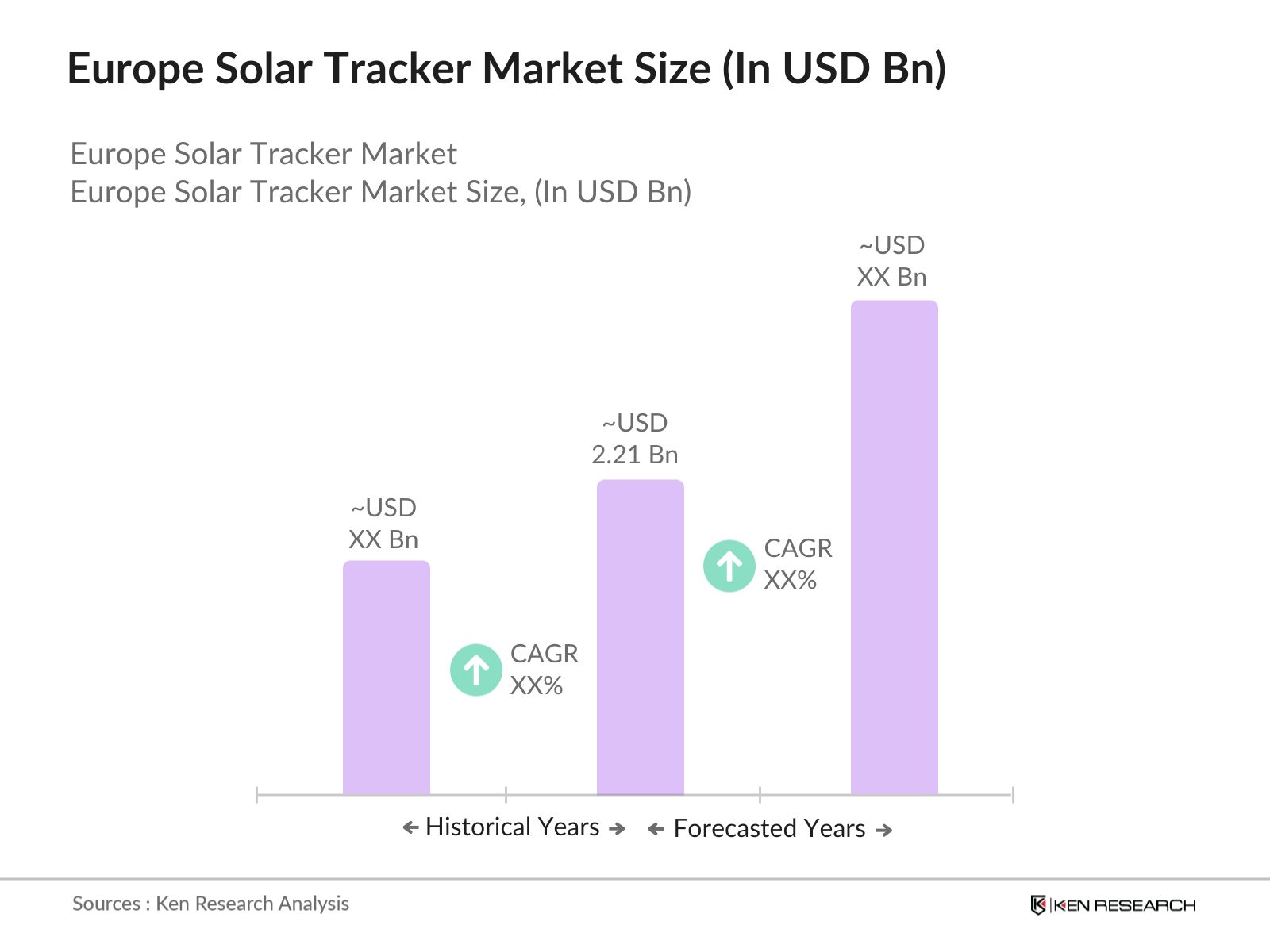
- Germany, Spain, and Italy dominate the European solar tracker market due to their favorable government policies, extensive solar resources, and early adoption of solar technologies. Germanys Energiewende policy, which emphasizes renewable energy transitions, has made it a leader in solar installations. Spain and Italy benefit from high solar irradiance levels, making solar power projects highly efficient and viable, further boosting the deployment of solar trackers in these regions.
- France has committed to installing an additional 20 GW of solar energy by 2026 under its multi-year energy plan. In 2024, the government is offering significant financial incentives for both commercial and residential solar tracker systems to meet these targets.
Europe Solar Tracker Market Segmentation
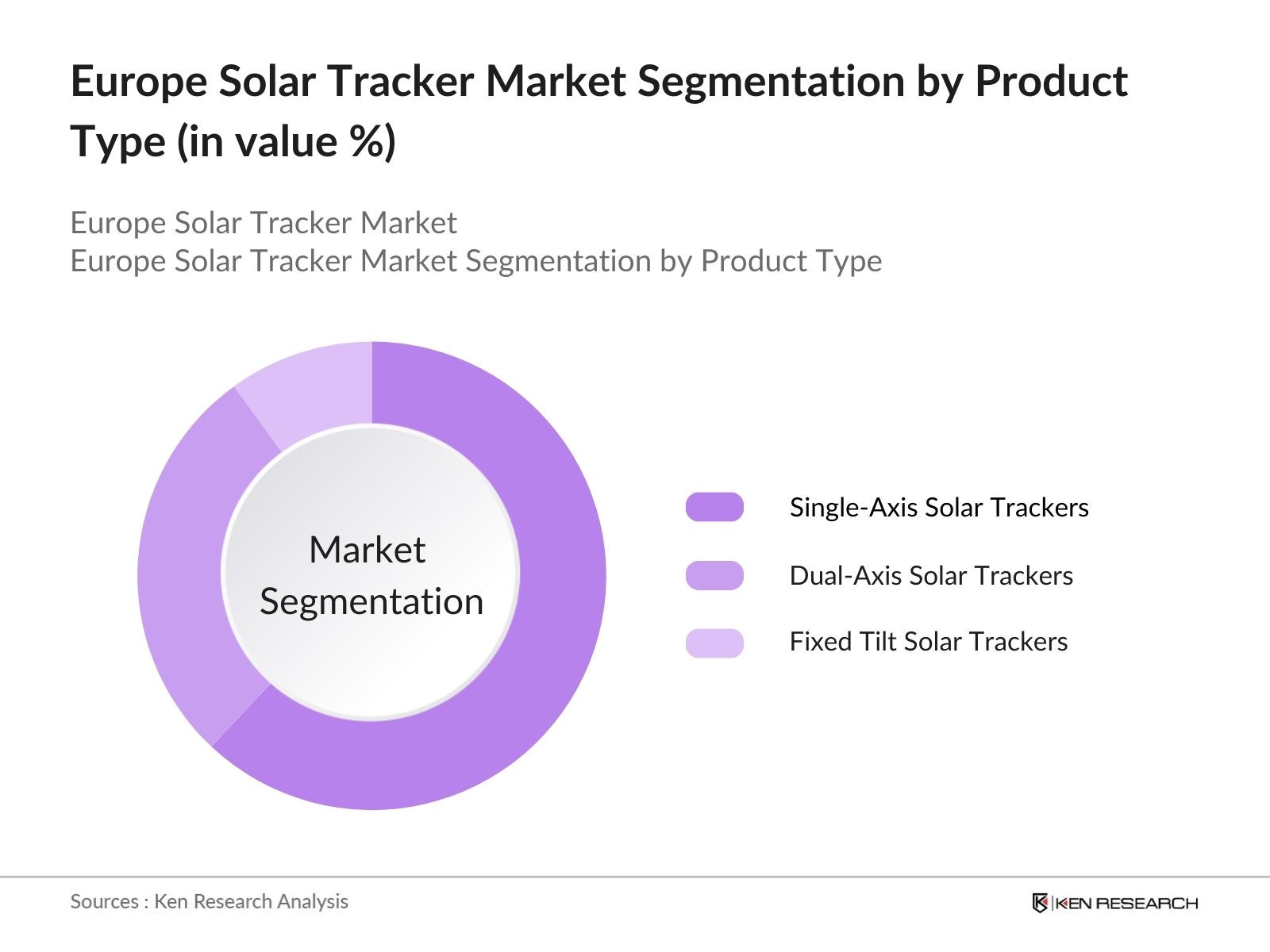
- By Product Type: Europe Solar Tracker Market is segmented by product type into single-axis solar trackers, dual-axis solar trackers, and fixed tilt solar trackers. Single-axis solar trackers have a dominant market share in the Europe Solar Tracker Market due to their cost-effectiveness and their ability to increase solar energy output by approximately 20-30% over fixed tilt systems. Single-axis trackers are predominantly used in utility-scale solar farms, particularly in regions with flat terrain, such as Spain and Portugal, which maximizes their efficiency.
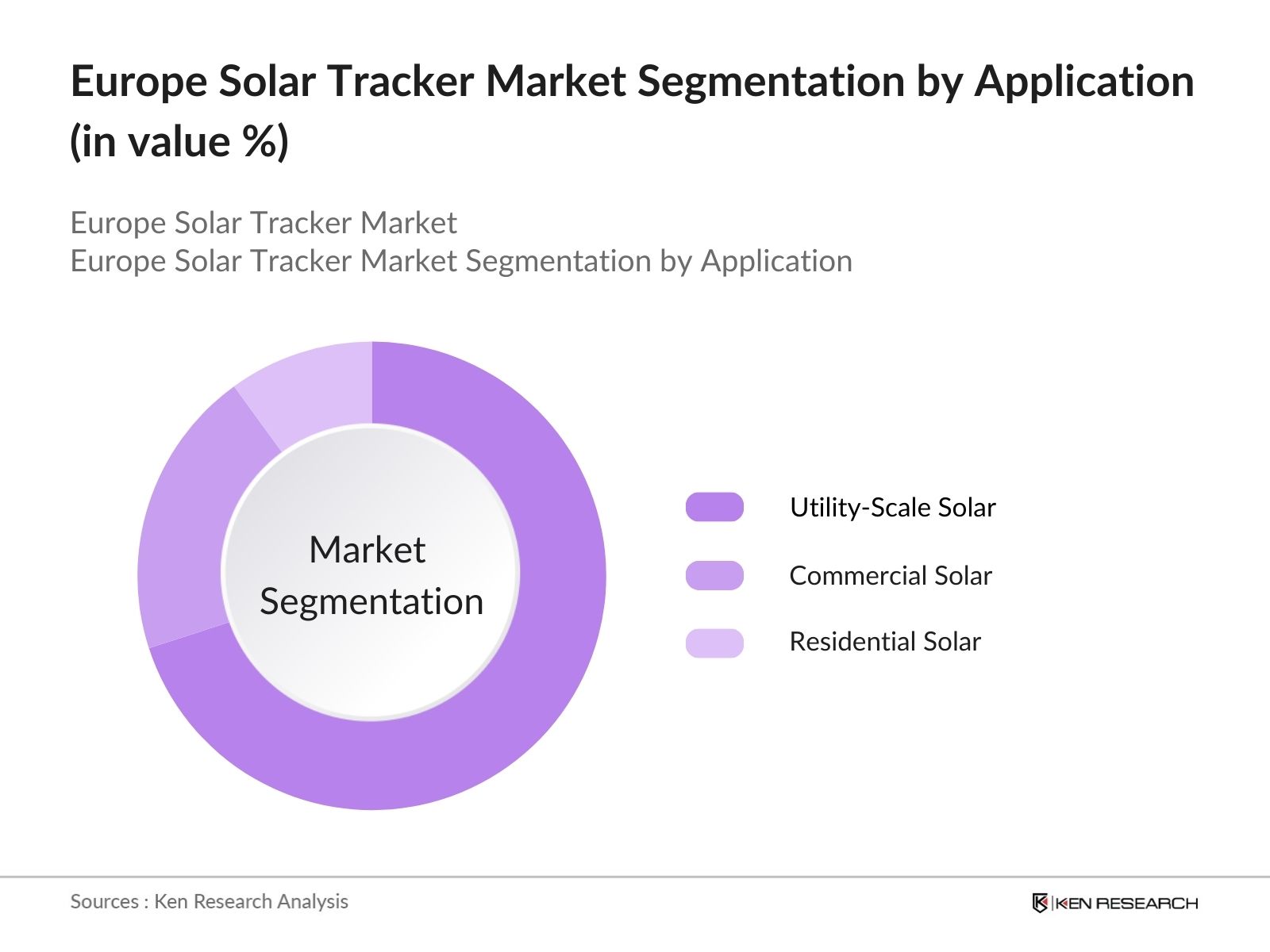
- By Application: Europe Solar Tracker Market is segmented by application into utility-scale solar, commercial solar, and residential solar. Utility-scale solar holds the largest share within this segmentation, as solar trackers are primarily installed in large-scale solar farms where space and infrastructure allow for their full efficiency. The rising trend of solar farm installations, particularly in Spain and Italy, further contributes to the dominance of this sub-segment, as these countries experience high levels of solar irradiance that make tracker usage ideal for maximizing energy production.
Europe Solar Tracker Market Competitive Landscape
The Europe Solar Tracker Market is dominated by a few major players, including global industry leaders such as NEXTracker, Array Technologies, and Soltec, as well as regional players like IDEEMATEC and Arctech Solar. This consolidation highlights the significant influence of these key companies, which maintain competitive advantages through technological innovations, strong supply chain networks, and strategic partnerships with large-scale solar developers across Europe. These companies are investing heavily in R&D to improve solar tracker technology, aiming to further enhance energy efficiency and reliability.
|
Company |
Establishment Year |
Headquarters |
Product Portfolio |
R&D Investment |
Production Capacity |
Key Markets |
Strategic Initiatives |
Technological Innovations |
|
NEXTracker |
2013 |
USA |
- | - | - | - | - | - |
|
Array Technologies |
1989 |
USA |
- | - | - | - | - | - |
|
Soltec Trackers |
2004 |
Spain |
- | - | - | - | - | - |
|
IDEEMATEC |
2003 |
Germany |
- | - | - | - | - | - |
|
Arctech Solar |
2009 |
China |
- | - | - | - | - | - |
Europe Solar Tracker Market Analysis
Market Growth Drivers
- Increasing Solar Energy Installations: Europe saw over 40 GW of new solar energy capacity installed in 2023, driven largely by the regions commitment to reducing carbon emissions. Solar farm deployments are expanding rapidly, with countries like Spain and Germany leading the charge in utility-scale solar farms. In residential and commercial sectors, rooftop solar tracker installations are increasing as a result of national energy independence goals.
- Favorable Government Policies: European governments have continued to bolster solar energy investments through subsidies and feed-in tariffs. In 2024, Germany's Renewable Energy Act provides up to 90 per MWh for solar-generated electricity, with similar incentives seen across Spain and Italy. These policies reduce financial risk and encourage further solar tracker adoption across sectors.
- Advancements in Solar Tracker Technology: Innovations in dual-axis and single-axis solar trackers are improving efficiency in capturing solar energy. In 2024, dual-axis trackers, which maximize energy yield by 25%-30% compared to fixed systems, are becoming standard in large-scale solar farms across Southern Europe, where high irradiance levels benefit from enhanced tracking technologies.
Market Challenges
- High Installation and Maintenance Costs: The installation of solar trackers, especially dual-axis systems, involves higher capital investment compared to fixed-tilt systems. In 2024, the average installation cost for a solar tracker in Europe is over 120,000 per MW, with ongoing operations and maintenance (O&M) further adding to long-term expenses.
- Limited Infrastructure in Emerging Regions: In Eastern Europe, especially countries like Bulgaria and Romania, limited grid infrastructure presents a significant barrier to large-scale solar deployments. In 2024, these nations are grappling with outdated grid systems that are not yet ready to integrate the increasing volume of solar energy, reducing the potential for solar tracker adoption in these regions.
Europe Solar Tracker Market Future Outlook
Over the next five years, the Europe Solar Tracker Market is expected to show substantial growth driven by continuous support from the European Union, advancements in tracker technology, and increasing investments in renewable energy projects. Key drivers include the EUs ambitious climate goals and renewable energy targets, which aim to reduce carbon emissions by expanding solar energy capacity across member states. Additionally, innovations in AI-driven solar trackers and the integration of smart grids are expected to further enhance the efficiency and appeal of solar energy projects, particularly in regions with high solar potential.
Market Opportunities
- Integration of Solar Trackers with Energy Storage Systems: In 2024, hybrid solar systems combining trackers with battery storage are being developed across Europe, particularly in Spain and Portugal. These systems provide energy independence and grid stability, allowing solar energy producers to store excess power during peak generation times and supply it when solar output is low.
- Expansion of Solar Projects in Eastern Europe: With the EU Green Deal incentivizing clean energy investments, Eastern European countries like Hungary and the Czech Republic are beginning to see increased solar farm installations. In 2024, the EU has allocated 50 billion towards renewable energy projects in the region, unlocking significant opportunities for solar tracker manufacturers to enter these untapped markets.
Scope of the Report
|
By Product Type |
Single-Axis Solar Trackers Dual-Axis Solar Trackers Fixed Tilt Solar Trackers |
|
By Application |
Utility-Scale Solar Commercial Solar Residential Solar |
|
By Technology |
Photovoltaic (PV) Concentrated Solar Power (CSP) Concentrator Photovoltaics (CPV) |
|
By Drive Type |
Electric Drive Hydraulic Drive Passive Solar Trackers |
|
By Region |
West Central East South |
Products
Key Target Audience
Solar Energy Investors and Venture Capitalist Firms
Government and Regulatory Bodies (European Commission, National Renewable Energy Agencies)
Solar Project Developers and EPC Contractors
Energy Utility Companies
Solar Panel Manufacturers
Solar Technology Providers
Smart Grid Infrastructure Companies
Solar Industry Associations and Trade Organizations
Companies
Players Mentioned in the Report:
NEXTracker
Array Technologies
Soltec Trackers
IDEEMATEC
Arctech Solar
First Solar
STI Norland
GameChange Solar
Convert Italia
PVHardware
Table of Contents
1. Europe Solar Tracker Market Overview
1.1. Definition and Scope
1.2. Market Taxonomy
1.3. Market Growth Rate (Renewable Energy Adoption, Solar Capacity Expansion)
1.4. Market Segmentation Overview
2. Europe Solar Tracker Market Size (In USD Mn)
2.1. Historical Market Size
2.2. Year-On-Year Growth Analysis
2.3. Key Market Developments and Milestones
3. Europe Solar Tracker Market Analysis
3.1. Growth Drivers
3.1.1. Increasing Solar Energy Installations (Solar Farm Deployments, Commercial and Residential Uptake)
3.1.2. Favorable Government Policies (Subsidies, Feed-In Tariffs)
3.1.3. Advancements in Solar Tracker Technology (Dual-Axis, Single-Axis Innovations)
3.1.4. Rising Awareness on Climate Change Mitigation (Sustainability Goals, Carbon Neutrality)
3.2. Market Challenges
3.2.1. High Installation and Maintenance Costs (Capital Investment, O&M)
3.2.2. Limited Infrastructure in Emerging Regions (Access to Grid, Lack of Expertise)
3.2.3. Regulatory Hurdles (Permits, Environmental Impact Assessments)
3.3. Opportunities
3.3.1. Integration of Solar Trackers with Energy Storage Systems (Hybrid Projects, Energy Independence)
3.3.2. Expansion of Solar Projects in Eastern Europe (Untapped Potential, EU Green Deal)
3.3.3. Collaboration with Grid Operators (Smart Grids, Renewable Integration)
3.4. Trends
3.4.1. Adoption of AI and IoT in Solar Trackers (Real-Time Monitoring, Efficiency Optimization)
3.4.2. Growth of Floating Solar Trackers (Water-Based Solar Farms, Land Utilization)
3.4.3. Expansion of Distributed Solar Systems (Rooftop Solar, Off-Grid Solutions)
3.5. Government Regulation
3.5.1. EU Renewable Energy Directive (REPowerEU, National Energy Action Plans)
3.5.2. National Solar Energy Targets (Germanys Energiewende, France's Multi-Year Energy Plan)
3.5.3. Tax Incentives and Subsidies (Solar Tax Credits, Reduced VAT)
3.5.4. Environmental Compliance (Biodiversity Protection, Environmental Permits)
3.6. SWOT Analysis
3.7. Stakeholder Ecosystem (Manufacturers, EPC Contractors, Energy Utilities)
3.8. Porters Five Forces (Supply Chain Dynamics, Bargaining Power of Buyers and Suppliers)
3.9. Competitive Ecosystem
4. Europe Solar Tracker Market Segmentation
4.1. By Product Type (In Value %)
4.1.1. Single-Axis Solar Trackers
4.1.2. Dual-Axis Solar Trackers
4.1.3. Fixed Tilt Solar Trackers
4.2. By Application (In Value %)
4.2.1. Utility-Scale Solar
4.2.2. Commercial Solar
4.2.3. Residential Solar
4.3. By Technology (In Value %)
4.3.1. Photovoltaic (PV)
4.3.2. Concentrated Solar Power (CSP)
4.3.3. Concentrator Photovoltaics (CPV)
4.4. By Drive Type (In Value %)
4.4.1. Electric Drive
4.4.2. Hydraulic Drive
4.4.3. Passive Solar Trackers
4.5. By Region (In Value %)
4.5.1. Western Europe (Germany, France, UK)
4.5.2. Central Europe (Poland, Austria, Czech Republic)
4.5.3. Eastern Europe (Hungary, Romania, Bulgaria)
4.5.4. Southern Europe (Italy, Spain, Greece)
4.5.5. Northern Europe (Denmark, Sweden, Finland)
5. Europe Solar Tracker Market Competitive Analysis
5.1. Detailed Profiles of Major Companies
5.1.1. Array Technologies
5.1.2. Soltec Trackers
5.1.3. NEXTracker
5.1.4. First Solar
5.1.5. Arctech Solar
5.1.6. SunPower Corporation
5.1.7. Convert Italia
5.1.8. PVHardware
5.1.9. IDEEMATEC
5.1.10. STI Norland
5.1.11. GameChange Solar
5.1.12. Valmont Industries
5.1.13. Solar Steel
5.1.14. DEGER Energie
5.1.15. Mahindra Susten
5.2. Cross Comparison Parameters (Production Capacity, R&D Spend, Market Presence, Patents Held, Manufacturing Locations, Revenue Breakdown by Region, Solar Tracker Type Expertise, Strategic Partnerships)
5.3. Market Share Analysis
5.4. Strategic Initiatives
5.5. Mergers and Acquisitions
5.6. Investment Analysis
5.7. Venture Capital Funding
5.8. Government Grants
5.9. Private Equity Investments
6. Europe Solar Tracker Market Regulatory Framework
6.1. Renewable Energy Standards (EU Renewable Energy Targets, National Energy Frameworks)
6.2. Compliance Requirements (Grid Integration, Land Usage)
6.3. Certification Processes (CE Marking, ISO Certifications)
7. Europe Solar Tracker Future Market Size (In USD Mn)
7.1. Future Market Size Projections
7.2. Key Factors Driving Future Market Growth
8. Europe Solar Tracker Future Market Segmentation
8.1. By Product Type (In Value %)
8.2. By Application (In Value %)
8.3. By Technology (In Value %)
8.4. By Drive Type (In Value %)
8.5. By Region (In Value %)
9. Europe Solar Tracker Market Analysts Recommendations
9.1. TAM/SAM/SOM Analysis
9.2. Customer Cohort Analysis
9.3. Marketing Initiatives
9.4. White Space Opportunity Analysis
Research Methodology
Step 1: Identification of Key Variables
The initial phase involves mapping the entire ecosystem of the Europe Solar Tracker Market, identifying all relevant stakeholders such as manufacturers, suppliers, and government bodies. Extensive desk research is conducted using secondary sources such as government reports, industry databases, and financial disclosures to identify critical market variables that influence growth.
Step 2: Market Analysis and Construction
In this phase, historical data pertaining to the Europe Solar Tracker Market is gathered and analyzed. This includes tracking solar installation rates, solar capacity, and adoption rates of tracking technology. Market penetration statistics are also compiled, alongside an analysis of key operational dynamics to ensure the accuracy of revenue projections.
Step 3: Hypothesis Validation and Expert Consultation
Market hypotheses are formulated based on the analysis of collected data. These hypotheses are then validated through in-depth interviews and consultations with industry experts, including manufacturers and EPC contractors, using CATI methodologies. This process ensures that the market assumptions are rooted in practical, operational knowledge.
Step 4: Research Synthesis and Final Output
In the final stage, data synthesis is performed by integrating expert consultations with desk research. This step includes verifying market data through interactions with solar tracker manufacturers and project developers, ensuring a comprehensive and validated final market analysis that reflects real-world industry conditions.
Frequently Asked Questions
01. How big is the Europe Solar Tracker Market?
The Europe Solar Tracker Market is valued at USD 2.21 billion, with its growth driven by the increasing deployment of utility-scale solar farms and technological advancements in solar tracking systems.
02. What are the challenges in the Europe Solar Tracker Market?
Challenges in the Europe Solar Tracker Market include high installation and maintenance costs, limited infrastructure in certain regions, and regulatory barriers that can slow project approvals.
03. Who are the major players in the Europe Solar Tracker Market?
Key players in the Europe Solar Tracker Market include NEXTracker, Array Technologies, Soltec Trackers, IDEEMATEC, and Arctech Solar. These companies dominate due to their technological innovations, strong supply chains, and partnerships with major solar developers.
04. What are the growth drivers of the Europe Solar Tracker Market?
The Europe Solar Tracker Market is driven by the European Union's renewable energy targets, advancements in solar tracker technology, and growing investments in large-scale solar projects, particularly in Germany, Spain, and Italy.
Why Buy From Us?

What makes us stand out is that our consultants follows Robust, Refine and Result (RRR) methodology. i.e. Robust for clear definitions, approaches and sanity checking, Refine for differentiating respondents facts and opinions and Result for presenting data with story

We have set a benchmark in the industry by offering our clients with syndicated and customized market research reports featuring coverage of entire market as well as meticulous research and analyst insights.

While we don't replace traditional research, we flip the method upside down. Our dual approach of Top Bottom & Bottom Top ensures quality deliverable by not just verifying company fundamentals but also looking at the sector and macroeconomic factors.

With one step in the future, our research team constantly tries to show you the bigger picture. We help with some of the tough questions you may encounter along the way: How is the industry positioned? Best marketing channel? KPI's of competitors? By aligning every element, we help maximize success.

Our report gives you instant access to the answers and sources that other companies might choose to hide. We elaborate each steps of research methodology we have used and showcase you the sample size to earn your trust.

If you need any support, we are here! We pride ourselves on universe strength, data quality, and quick, friendly, and professional service.