
Europe Steel Rebar Market Outlook to 2030
Region:Europe
Author(s):Paribhasha Tiwari
Product Code:KROD3154
December 2024
94
About the Report
Europe Steel Rebar Market Overview
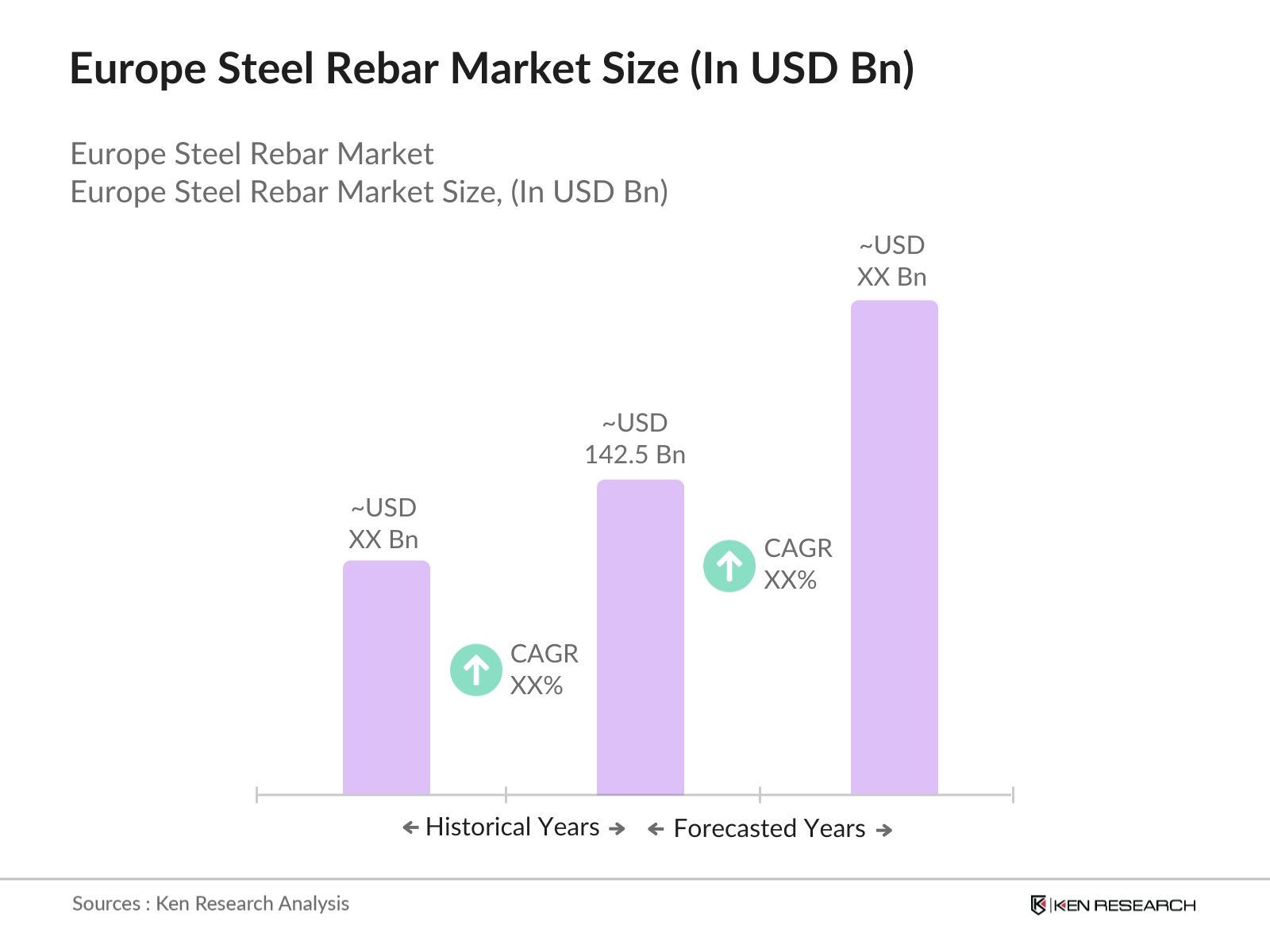
- The Europe steel rebar market, valued at USD 142.5 billion, is primarily driven by substantial investments in infrastructure development and urbanization. The construction of residential and commercial buildings, along with the expansion of transportation networks, has significantly increased the demand for steel rebar across the continent.
- Germany, the United Kingdom, and France are the leading countries in the European steel rebar market. Germany's dominance is attributed to its robust construction sector and extensive infrastructure projects. The United Kingdom's market strength stems from ongoing urban development and housing initiatives. France's position is bolstered by government investments in public infrastructure and modernization efforts.
- In 2023, several European countries have intensified efforts to incorporate eco-friendly materials and practices in construction, significantly impacting the demand for steel rebar. For instance, Germany is leading this initiative by promoting the use of high strength rebars and advanced materials that not only improve durability but also reduce carbon footprints.
Europe Steel Rebar Market Segmentation
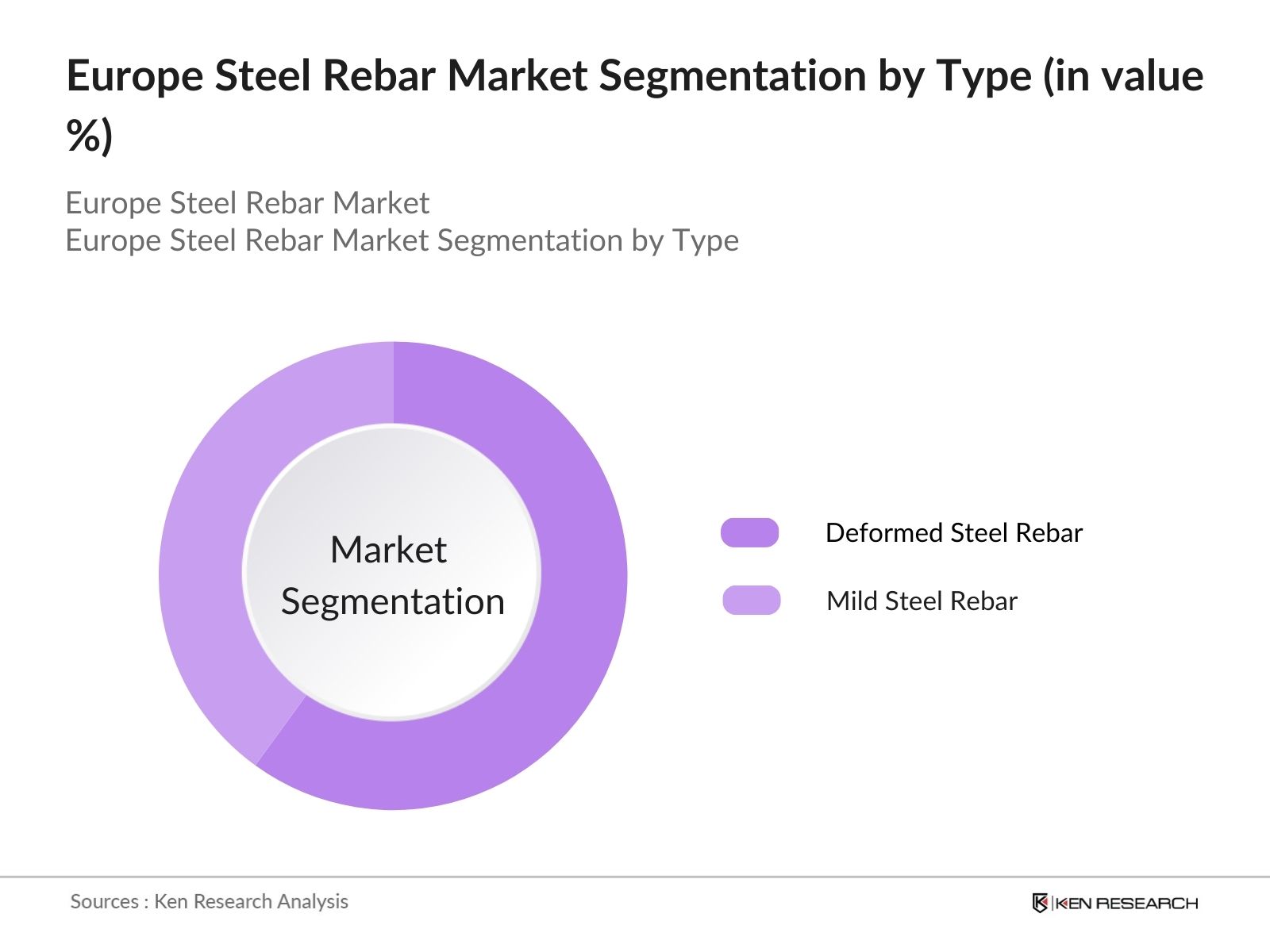
By Type: The Europe steel rebar market is segmented by type into deformed steel rebar and mild steel rebar. Deformed steel rebar holds a dominant market share due to its superior tensile strength and better bonding with concrete, making it ideal for high-stress applications in modern construction projects. Its ribbed surface enhances adherence to concrete, reducing slippage and improving structural integrity.
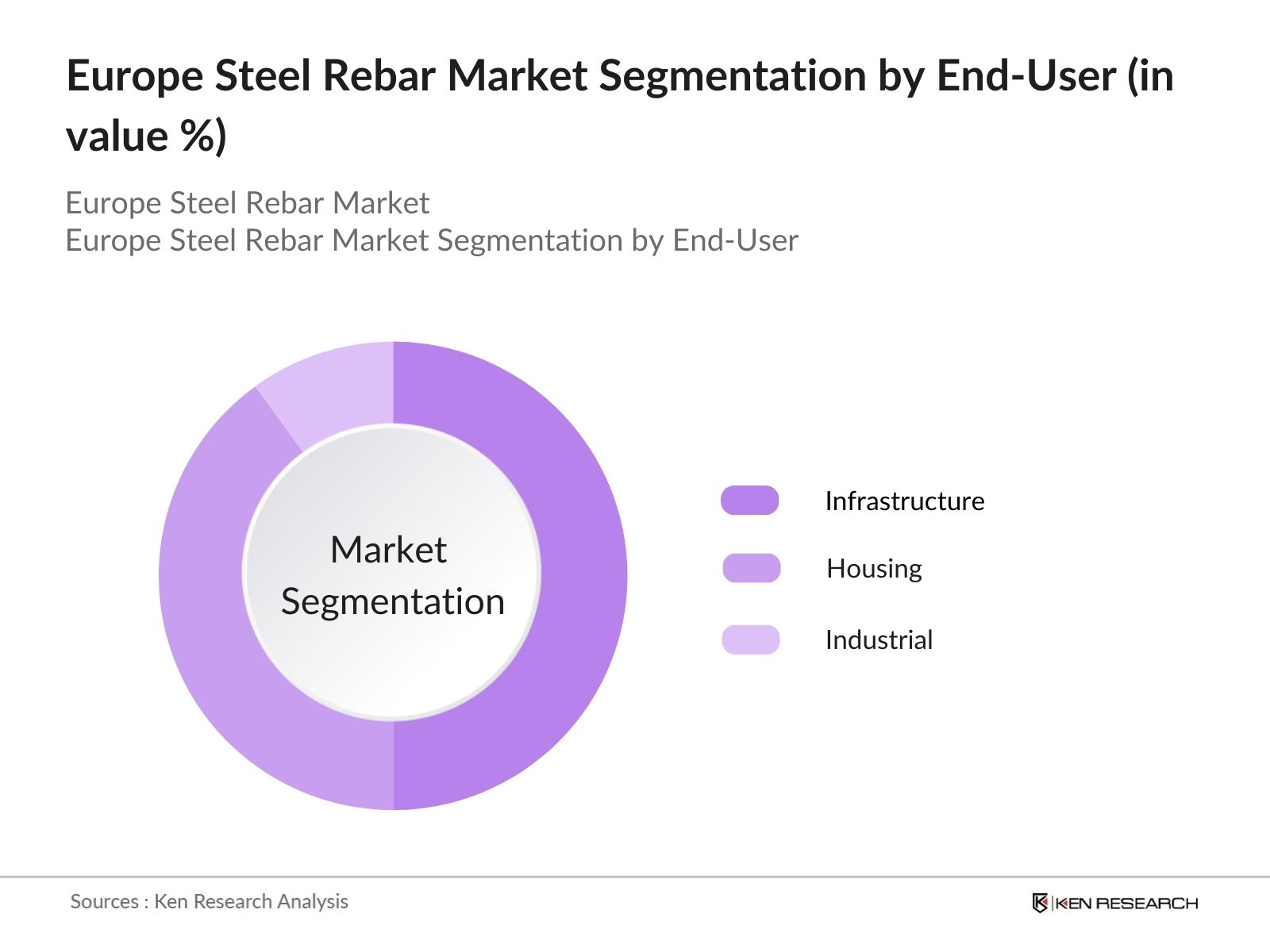
By End-Use Industry: The market is also segmented by end-use industry into infrastructure, housing, and industrial sectors. The infrastructure segment leads the market, driven by extensive investments in transportation networks, bridges, and public facilities. The demand for durable and high-strength materials in these projects propels the use of steel rebar, ensuring longevity and safety.
Europe Steel Rebar Market Competitive Landscape
The Europe steel rebar market is characterized by the presence of several key players who contribute to its competitive dynamics.
|
Company |
Establishment Year |
Headquarters |
Market Presence |
Technology Integration |
Regional Focus |
Revenue (USD) |
Sustainability Initiatives |
|---|---|---|---|---|---|---|---|
|
ArcelorMittal |
2006 |
Luxembourg City |
- |
- |
- |
- |
- |
|
CELSA Group |
1967 |
Barcelona, Spain |
- |
- |
- |
- |
- |
|
Nucor Corporation |
1940 |
Charlotte, USA |
- |
- |
- |
- |
- |
|
Gerdau S.A. |
1901 |
So Paulo, Brazil |
- |
- |
- |
- |
- |
|
Tata Steel |
1907 |
Mumbai, India |
- |
- |
- |
- |
- |
Europe Steel Rebar Market Analysis
Growth Drivers
- Infrastructure Development: The European Union has allocated over 120 billion in its 2024 budget for infrastructure development, with a major focus on enhancing transportation networks, including road, rail, and port projects. Major countries such as Germany, France, and the United Kingdom are undergoing substantial investments in transportation infrastructure, which are anticipated to demand over 35 million tons of steel rebar annually for the next five years. This surge in infrastructure activity directly boosts the requirement for steel rebar, given its structural integrity and tensile strength.
- Industrial Expansion: By 2024, Europes industrial production index has shown a significant rise, with manufacturing activities in heavy industries, including automotive and machinery sectors, driving steel demand. Its estimated that the industrial sector across major European economies requires approximately 20 million tons of steel rebar annually, as rebar is essential in construction and machinery frameworks. This demand is further accelerated by investments in high-tech industrial zones across Germany and France, increasing steel rebar utilization rates in these facilities.
- Government Initiatives and Investments: The European Green Deal, which involves an approximate 1 trillion investment over the next decade, is pushing forward green construction projects and retrofitting of older buildings to meet energy-efficient standards. This initiative is set to create a substantial market demand for steel rebar, especially in green-certified buildings requiring reinforced frameworks. Governments across Europe are also supporting residential and commercial renovations, further driving rebar demand in retrofitting projects.
Market Challenges
- Fluctuating Raw Material Prices: The cost of iron ore and other essential raw materials has shown a volatile trend, with recent data indicating fluctuations of up to 15% due to global supply chain disruptions. This price instability directly impacts steel rebar production costs, with producers often facing profit margin pressures. Europes dependency on raw material imports, particularly from countries like Australia and Brazil, has resulted in significant price risks that could hinder market growth in a cost-sensitive sector.
- Environmental Regulations: Europes stringent environmental standards, including the EU Emissions Trading System, are imposing increased costs on steel producers, especially those involved in energy-intensive processes like steel rebar manufacturing. Compliance costs related to carbon emissions and waste management have risen, amounting to nearly 20 billion across the industry by 2024. These regulations create operational challenges for manufacturers, who must invest in eco-friendly production technologies to avoid regulatory fines and penalties.
Europe Steel Rebar Market Future Outlook
Over the next five years, the Europe steel rebar market is expected to experience significant growth, driven by continuous government support, advancements in rebar manufacturing technologies, and increasing demand for sustainable construction materials. The emphasis on green building practices and the renovation of aging infrastructure will further augment market expansion.
Market Opportunities
- Technological Advancements in Production: Innovations in electric arc furnace technology are expected to reduce energy consumption in steel rebar production, with an estimated 25% reduction in energy costs. Major European producers are investing in advanced production technologies that enhance efficiency and lower emissions. This shift not only supports compliance with environmental regulations but also positions Europe as a leader in eco-friendly steel production.
- Expansion into Emerging Markets: With increased construction activities in regions such as Eastern Europe and the Balkans, European rebar producers have the opportunity to expand their market footprint. Trade data shows that exports of rebar from Western Europe to emerging markets reached 8 million tons in 2023. These markets are undergoing significant infrastructure and housing development, which creates a new avenue for European manufacturers to supply high-quality steel rebar products.
Scope of the Report
|
By Type |
Deformed Steel Rebar |
|
By Process |
Basic Oxygen Steelmaking |
|
By Coating Type |
Plain Carbon Steel Rebar |
|
By End-Use Industry |
Infrastructure |
|
By Country |
Germany |
Products
Key Target Audience
Construction Companies
Infrastructure Developers
Industrial Manufacturers
Government and Regulatory Bodies (e.g., European Commission)
Investors and Venture Capitalist Firms
Raw Material Suppliers
Engineering and Design Firms
Environmental Agencies
Companies
Players Mentioned in the Report:
ArcelorMittal
CELSA Group
Nucor Corporation
Gerdau S.A.
Tata Steel
NIPPON STEEL CORPORATION
EVRAZ plc
Mechel PAO
Steel Authority of India Limited (SAIL)
Hyundai Steel
Table of Contents
1. Europe Steel Rebar Market Overview
1.1 Definition and Scope
1.2 Market Taxonomy
1.3 Market Growth Rate
1.4 Market Segmentation Overview
2. Europe Steel Rebar Market Size (In USD Billion)
2.1 Historical Market Size
2.2 Year-On-Year Growth Analysis
2.3 Key Market Developments and Milestones
3. Europe Steel Rebar Market Analysis
3.1 Growth Drivers
3.1.1 Infrastructure Development
3.1.2 Urbanization and Housing Demand
3.1.3 Industrial Expansion
3.1.4 Government Initiatives and Investments
3.2 Market Challenges
3.2.1 Fluctuating Raw Material Prices
3.2.2 Environmental Regulations
3.2.3 Competition from Alternative Materials
3.3 Opportunities
3.3.1 Technological Advancements in Production
3.3.2 Expansion into Emerging Markets
3.3.3 Adoption of Sustainable Practices
3.4 Trends
3.4.1 Use of High-Strength Rebars
3.4.2 Integration of Smart Technologies
3.4.3 Increasing Demand for Epoxy-Coated Rebars
3.5 Government Regulations
3.5.1 EU Construction Product Regulations
3.5.2 Environmental Compliance Standards
3.5.3 Trade Policies and Tariffs
3.6 SWOT Analysis
3.7 Stakeholder Ecosystem
3.8 Porters Five Forces Analysis
3.9 Competitive Landscape
4. Europe Steel Rebar Market Segmentation
4.1 By Type (In Value %)
4.1.1 Deformed Steel Rebar
4.1.2 Mild Steel Rebar
4.2 By Process (In Value %)
4.2.1 Basic Oxygen Steelmaking
4.2.2 Electric Arc Furnace
4.3 By Coating Type (In Value %)
4.3.1 Plain Carbon Steel Rebar
4.3.2 Galvanized Steel Rebar
4.3.3 Epoxy-Coated Steel Rebar
4.4 By End-Use Industry (In Value %)
4.4.1 Infrastructure
4.4.2 Housing
4.4.3 Industrial
4.5 By Country (In Value %)
4.5.1 Germany
4.5.2 United Kingdom
4.5.3 France
4.5.4 Italy
4.5.5 Spain
4.5.6 Rest of Europe
5. Europe Steel Rebar Market Competitive Analysis
5.1 Detailed Profiles of Major Companies
5.1.1 ArcelorMittal
5.1.2 CELSA Group
5.1.3 Nucor Corporation
5.1.4 Gerdau S.A.
5.1.5 Tata Steel
5.1.6 NIPPON STEEL CORPORATION
5.1.7 EVRAZ plc
5.1.8 Mechel PAO
5.1.9 Steel Authority of India Limited (SAIL)
5.1.10 Hyundai Steel
5.1.11 POSCO
5.1.12 JSW Steel
5.1.13 NLMK Group
5.1.14 Sohar Steel Group
5.1.15 Qatar Steel Company
5.2 Cross Comparison Parameters (Revenue, Production Capacity, Geographic Presence, Product Portfolio, R&D Investment, Market Share, Strategic Initiatives, Sustainability Practices)
5.3 Market Share Analysis
5.4 Strategic Initiatives
5.5 Mergers and Acquisitions
5.6 Investment Analysis
5.7 Venture Capital Funding
5.8 Government Grants
5.9 Private Equity Investments
6. Europe Steel Rebar Market Regulatory Framework
6.1 Environmental Standards
6.2 Compliance Requirements
6.3 Certification Processes
7. Europe Steel Rebar Future Market Size (In USD Billion)
7.1 Future Market Size Projections
7.2 Key Factors Driving Future Market Growth
8. Europe Steel Rebar Future Market Segmentation
8.1 By Type (In Value %)
8.2 By Process (In Value %)
8.3 By Coating Type (In Value %)
8.4 By End-Use Industry (In Value %)
8.5 By Country (In Value %)
9. Europe Steel Rebar Market Analysts Recommendations
9.1 Total Addressable Market (TAM), Serviceable Available Market (SAM), and Serviceable Obtainable Market (SOM) Analysis
9.2 Customer Cohort Analysis
9.3 Marketing Initiatives
9.4 White Space Opportunity Analysis
Disclaimer Contact UsResearch Methodology
Step 1: Identification of Key Variables
The initial phase involves constructing an ecosystem map encompassing all major stakeholders within the Europe Steel Rebar Market. This step is underpinned by extensive desk research, utilizing a combination of secondary and proprietary databases to gather comprehensive industry-level information. The primary objective is to identify and define the critical variables that influence market dynamics.
Step 2: Market Analysis and Construction
In this phase, we compile and analyze historical data pertaining to the Europe Steel Rebar Market. This includes assessing market penetration, the ratio of marketplaces to service providers, and the resultant revenue generation. Furthermore, an evaluation of service quality statistics is conducted to ensure the reliability and accuracy of the revenue estimates.
Step 3: Hypothesis Validation and Expert Consultation
Market hypotheses are developed and subsequently validated through computer-assisted telephone interviews (CATIs) with industry experts representing a diverse array of companies. These consultations provide valuable operational and financial insights directly from industry practitioners, which are instrumental in refining and corroborating the market data.
Step 4: Research Synthesis and Final Output
The final phase involves direct engagement with multiple steel rebar manufacturers to acquire detailed insights into product segments, sales performance, consumer preferences, and other pertinent factors. This interaction serves to verify and complement the statistics derived from the bottom-up approach, thereby ensuring a comprehensive, accurate, and validated analysis of the Europe Steel Rebar market.
Frequently Asked Questions
1. How big is the Europe Steel Rebar Market?
The Europe Steel Rebar Market is valued at USD 142.5 billion, driven by substantial investments in infrastructure development and urbanization.
2. What are the challenges in the Europe Steel Rebar Market?
Challenges in the Europe Steel Rebar Market include fluctuating raw material prices, stringent environmental regulations, and competition from alternative materials such as composites and advanced polymers.
3. Who are the major players in the Europe Steel Rebar Market?
Key players in the Europe Steel Rebar Market include ArcelorMittal, CELSA Group, Nucor Corporation, Gerdau S.A., and Tata Steel.
4. What are the growth drivers of the Europe Steel Rebar Market?
The Europe Steel Rebar Market is propelled by factors such as infrastructure development, urbanization and housing demand, industrial expansion, and government initiatives and investments.
Why Buy From Us?

What makes us stand out is that our consultants follows Robust, Refine and Result (RRR) methodology. i.e. Robust for clear definitions, approaches and sanity checking, Refine for differentiating respondents facts and opinions and Result for presenting data with story

We have set a benchmark in the industry by offering our clients with syndicated and customized market research reports featuring coverage of entire market as well as meticulous research and analyst insights.

While we don't replace traditional research, we flip the method upside down. Our dual approach of Top Bottom & Bottom Top ensures quality deliverable by not just verifying company fundamentals but also looking at the sector and macroeconomic factors.

With one step in the future, our research team constantly tries to show you the bigger picture. We help with some of the tough questions you may encounter along the way: How is the industry positioned? Best marketing channel? KPI's of competitors? By aligning every element, we help maximize success.

Our report gives you instant access to the answers and sources that other companies might choose to hide. We elaborate each steps of research methodology we have used and showcase you the sample size to earn your trust.

If you need any support, we are here! We pride ourselves on universe strength, data quality, and quick, friendly, and professional service.