















Global AC Market Outlook to 2030
Region:Global
Author(s):Geetanshi
Product Code:KROD-006
June 2025
82
About the Report
Global AC Market Overview
- The Global AC Market was valued at USD 200 billion, based on a five-year historical analysis. This growth is primarily driven by rising temperatures due to climate change, increasing urbanization, and the growing demand for energy-efficient cooling solutions. The market has seen a surge in consumer preference for smart and eco-friendly air conditioning systems, which has further propelled its expansion.
- Key players in this market include the United States, China, and India. The dominance of these countries can be attributed to their large populations, rapid industrialization, and significant investments in infrastructure development. Additionally, the increasing disposable income of consumers in these regions has led to a higher demand for advanced air conditioning systems.
- In 2023, the European Union implemented updated regulations aimed at reducing greenhouse gas emissions from air conditioning systems. This regulation mandates that all new AC units must meet specific energy efficiency standards, promoting the adoption of environmentally friendly technologies and encouraging manufacturers to innovate in energy-saving solutions.

Global AC Market Segmentation
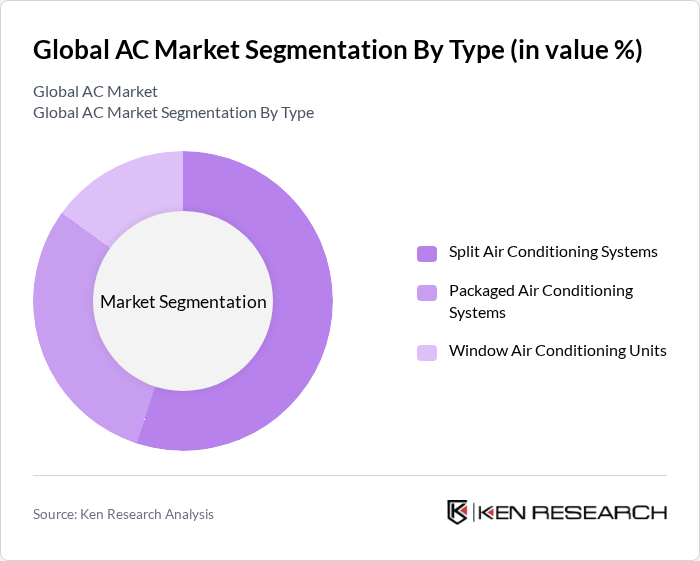
By Type: The air conditioning market is segmented into split air conditioning systems, packaged air conditioning systems, and window air conditioning units. Among these, split air conditioning systems including both ducted and ductless mini-split types dominate the market due to their versatility, energy efficiency, and suitability for both residential and commercial settings. The increasing adoption of smart home technology has also led to greater demand for split systems that can be integrated with automation platforms, appealing to consumers seeking convenience and energy savings.
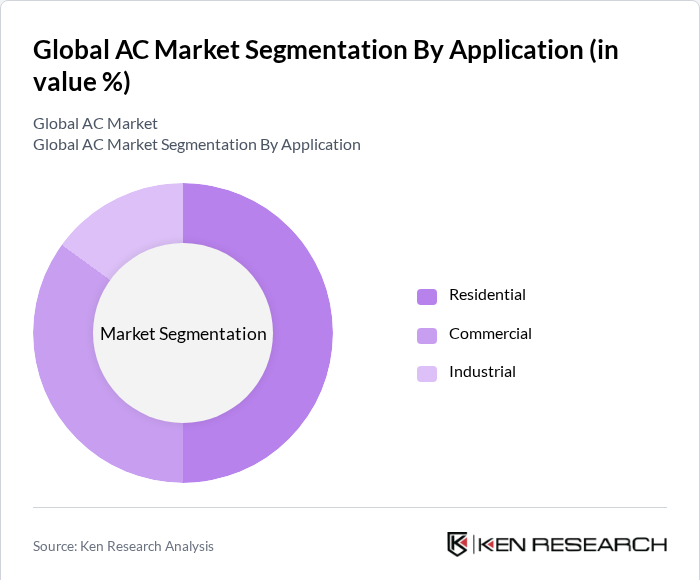
By Application: The market is segmented into residential, commercial, and industrial applications. The residential segment holds the largest share, driven by the increasing number of households and the rising demand for comfort cooling solutions. Consumers are increasingly investing in energy-efficient air conditioning systems to reduce energy costs and enhance indoor air quality. The trend towards smart homes has also contributed to the growth of this segment, as homeowners seek integrated solutions that offer convenience and efficiency.
Global AC Market Competitive Landscape
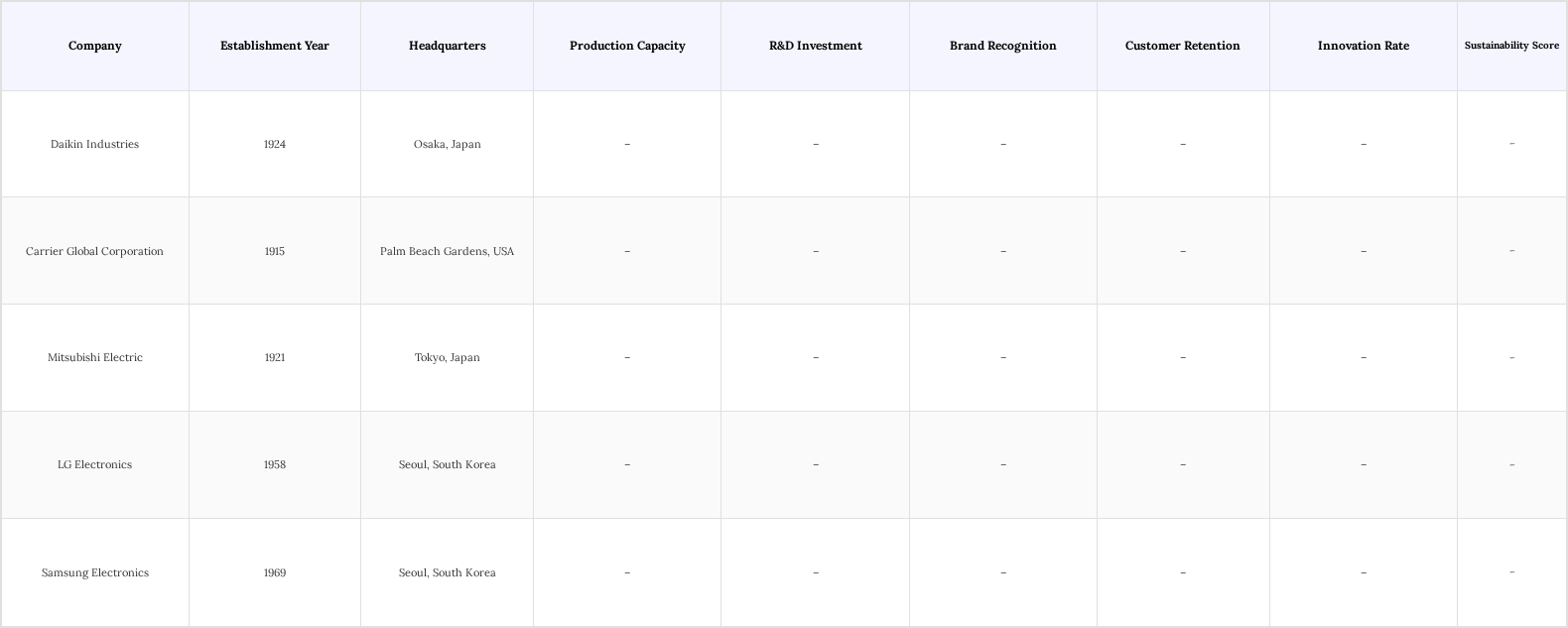
The Global AC Market is characterized by intense competition among key players such as Daikin Industries, Carrier Global Corporation, and Mitsubishi Electric. These companies are focusing on innovation, product differentiation, and sustainability to maintain their market positions. The competitive dynamics are further influenced by the increasing demand for energy-efficient and smart air conditioning solutions, prompting companies to invest in research and development[1][5].
Global AC Market Industry Analysis
Growth Drivers
- Increasing Urbanization: The global urban population is projected to reach about 5 billion by 2030, marking a significant rise from 3.3 billion in 2023. This growth is driven by an average annual urbanization rate of approximately 1.8%, nearly double the rate of overall population growth. Urban expansion is especially rapid in regions like Africa and Asia, where urban populations are expected to double between 2000 and 2030. This surge in urban residents intensifies the heat island effect in cities, leading to higher temperatures and a growing need for effective cooling solutions such as air conditioning systems.
- Rising Temperatures: Average global temperatures have increased by approximately 1.2°C since the late 19th century, with projections indicating a further rise of 1.5°C by 2050. This warming trend, especially in regions where summer temperatures regularly exceed 35°C, is driving consumers and businesses to invest more in air conditioning systems. As a result, demand for cooling solutions is expected to grow significantly, with unit sales projected to increase by 15% over the next five years, supporting sustained market expansion.
- Technological Advancements: Innovations in energy-efficient air conditioning technologies, particularly inverter technology, are transforming the market. Inverter ACs adjust compressor speed to maintain consistent temperatures, resulting in energy savings of up to 30–50% compared to traditional units. This technology also offers quieter operation and improved comfort by avoiding frequent on/off cycling. Governments in various regions have set ambitious energy efficiency targets—such as aiming for a 20% reduction in energy consumption by 2025—which are encouraging manufacturers to develop advanced, eco-friendly air conditioners.
Market Challenges
- High Initial Installation Costs: The upfront costs associated with purchasing and installing air conditioning systems can be a significant barrier for consumers and businesses. These initial expenses can deter potential buyers, especially in price-sensitive markets. Additionally, the ongoing financial burden of maintenance and energy consumption further complicates purchasing decisions, contributing to a slower adoption rate in certain market segments.
- Environmental Concerns: Growing awareness of climate change and environmental degradation is leading to stricter regulations on refrigerants and energy consumption. In None, new legislation mandates the phase-out of high-GWP refrigerants by 2025, which poses challenges for manufacturers. Compliance with these regulations requires significant investment in research and development, potentially increasing costs and limiting product availability. This regulatory landscape can hinder market growth as companies adapt to new standards.
Global AC Market Future Outlook
The air conditioning market is poised for significant transformation as technological advancements and environmental regulations shape its future. With a growing emphasis on energy efficiency and sustainability, manufacturers are likely to innovate further, integrating smart technologies and eco-friendly refrigerants into their products. Additionally, as urbanization continues to rise, the demand for air conditioning systems will remain robust. Companies that adapt to these trends and invest in sustainable practices will likely gain a competitive edge in the evolving market landscape.
Market Opportunities
- Expansion in Emerging Markets: Emerging markets in None present a significant opportunity for growth, with an expected increase in disposable income leading to higher demand for air conditioning systems. As urban populations expand, the need for effective cooling solutions will rise, creating a lucrative market for manufacturers. Companies that strategically enter these markets can capitalize on this growing demand and establish a strong foothold.
- Growth in Smart Home Technologies: The integration of smart technologies in air conditioning systems is becoming increasingly popular. In None, the smart home market is projected to grow by 20% annually, with consumers seeking energy-efficient and automated solutions. This trend presents an opportunity for manufacturers to develop smart air conditioning units that offer enhanced control and energy savings, appealing to tech-savvy consumers and environmentally conscious buyers alike.
Scope of the Report
| By Product Type |
Split Air Conditioning Systems Packaged Air Conditioning Systems Window Air Conditioning Units |
| By Application |
Residential Commercial Industrial |
| By Region |
North America Europe Asia-Pacific Latin America Middle East & Africa |
| By Technology |
Inverter Technology Non-Inverter Technology |
| By End-User |
Residential Users Commercial Users Government Institutions |
Products
Key Target Audience
Investors and Venture Capitalist Firms
Government and Regulatory Bodies (e.g., Environmental Protection Agency, Department of Energy)
Manufacturers and Producers
Distributors and Retailers
HVAC Contractors and Service Providers
Energy Efficiency Organizations
Building and Construction Companies
Utility Companies and Energy Providers
Companies
Players Mentioned in the Report:
Daikin Industries
Carrier Global Corporation
Mitsubishi Electric
LG Electronics
Samsung Electronics
Trane Technologies
Johnson Controls
Fujitsu General
Gree Electric Appliances
Haier Group
Table of Contents
1. Global AC Market Overview
1.1. Definition and Scope
1.2. Market Taxonomy
1.3. Market Growth Rate
1.4. Market Segmentation Overview
2. Global AC Market Size (In USD Bn)
2.1. Historical Market Size
2.2. Year-On-Year Growth Analysis
2.3. Key Market Developments and Milestones
3. Global AC Market Analysis
3.1. Growth Drivers
3.1.1. Increasing Urbanization and Population Growth
3.1.2. Rising Temperatures and Climate Change Impact
3.1.3. Technological Advancements in Energy Efficiency
3.2. Market Challenges
3.2.1. High Initial Installation Costs
3.2.2. Environmental Concerns and Regulations
3.2.3. Competition from Alternative Cooling Solutions
3.3. Opportunities
3.3.1. Expansion in Emerging Markets
3.3.2. Growth in Smart Home Technologies
3.3.3. Increasing Demand for Energy-Efficient Products
3.4. Trends
3.4.1. Shift Towards Eco-Friendly Refrigerants
3.4.2. Integration of IoT in Air Conditioning Systems
3.4.3. Customization and Personalization of AC Solutions
3.5. Government Regulation
3.5.1. Energy Efficiency Standards and Labels
3.5.2. Emission Reduction Targets
3.5.3. Incentives for Renewable Energy Use
3.5.4. Safety Standards for Installation and Operation
3.6. SWOT Analysis
3.7. Stake Ecosystem
3.8. Porter’s Five Forces
3.9. Competition Ecosystem
4. Global AC Market Segmentation
4.1. By Product Type
4.1.1. Split Air Conditioning Systems
4.1.2. Packaged Air Conditioning Systems
4.1.3. Window Air Conditioning Units
4.2. By Application
4.2.1. Residential
4.2.2. Commercial
4.2.3. Industrial
4.3. By Region
4.3.1. North America
4.3.2. Europe
4.3.3. Asia-Pacific
4.3.4. Latin America
4.3.5. Middle East & Africa
4.4. By Technology
4.4.1. Inverter Technology
4.4.2. Non-Inverter Technology
4.5. By End-User
4.5.1. Residential Users
4.5.2. Commercial Users
4.5.3. Government Institutions
5. Global AC Market Competitive Analysis
5.1. Detailed Profiles of Major Companies
5.1.1. Daikin Industries
5.1.2. Carrier Global Corporation
5.1.3. Mitsubishi Electric
5.1.4. LG Electronics
5.1.5. Samsung Electronics
5.1.6. Trane Technologies
5.1.7. Johnson Controls
5.1.8. Fujitsu General
5.1.9. Gree Electric Appliances
5.1.10. Haier Group
5.2. Cross Comparison Parameters
5.2.1. Market Share
5.2.2. Product Portfolio Diversity
5.2.3. Geographic Presence
5.2.4. R&D Investment
5.2.5. Customer Satisfaction Ratings
5.2.6. Pricing Strategies
5.2.7. Distribution Channels
5.2.8. Sustainability Initiatives
6. Global AC Market Regulatory Framework
6.1. Environmental Standards
6.2. Compliance Requirements
6.3. Certification Processes
7. Global AC Market Future Market Size (In USD Bn)
7.1. Future Market Size Projections
7.2. Key Factors Driving Future Market Growth
8. Global AC Market Future Market Segmentation
8.1. By Product Type
8.1.1. Split Air Conditioning Systems
8.1.2. Packaged Air Conditioning Systems
8.1.3. Window Air Conditioning Units
8.2. By Application
8.2.1. Residential
8.2.2. Commercial
8.2.3. Industrial
8.3. By Region
8.3.1. North America
8.3.2. Europe
8.3.3. Asia-Pacific
8.3.4. Latin America
8.3.5. Middle East & Africa
8.4. By Technology
8.4.1. Inverter Technology
8.4.2. Non-Inverter Technology
8.5. By End-User
8.5.1. Residential Users
8.5.2. Commercial Users
8.5.3. Government Institutions
9. Global AC Market Analysts’ Recommendations
9.1. TAM/SAM/SOM Analysis
9.2. Customer Cohort Analysis
9.3. Marketing Initiatives
9.4. White Space Opportunity Analysis
Research Methodology
Step 1: Identification of Key Variables
The initial phase involves mapping out the key stakeholders and variables that impact the Global AC Market. This is achieved through extensive desk research, leveraging secondary data sources and proprietary databases to gather relevant industry insights. The goal is to pinpoint and define the essential factors that drive market trends and dynamics.
Step 2: Market Analysis and Construction
In this phase, we will gather and analyze historical data related to the Global AC Market. This includes evaluating market penetration rates, the balance between manufacturers and service providers, and the resulting revenue streams. Additionally, we will assess service quality metrics to ensure the accuracy and reliability of our revenue projections.
Step 3: Hypothesis Validation and Expert Consultation
We will formulate market hypotheses and validate them through structured interviews with industry experts from various sectors. These consultations will provide critical operational and financial insights, helping to refine our understanding of the market and corroborate the data collected during the analysis phase.
Step 4: Research Synthesis and Final Output
The final step involves engaging with multiple manufacturers to gather in-depth insights into product categories, sales trends, and consumer preferences. This direct interaction will help verify and enhance the data obtained from previous research stages, ensuring a thorough and validated analysis of the Global AC Market.
Frequently Asked Questions
01. How big is the Global AC Market?
The Global AC Market is valued at USD 200 billion, driven by factors such as increasing demand, technological advancements, and supportive government initiatives.
02. What are the key challenges in the Global AC Market?
Key challenges in the Global AC Market include intense competition, regulatory complexities, and infrastructure limitations affecting market dynamics.
03. Who are the major players in the Global AC Market?
Major players in the Global AC Market include Daikin Industries, Carrier Global Corporation, Mitsubishi Electric, LG Electronics, Samsung Electronics, among others.
04. What are the growth drivers for the Global AC Market?
The primary growth drivers for the Global AC Market are increasing consumer demand, favorable policies, innovation, and substantial investment inflows.
Why Buy From Us?

What makes us stand out is that our consultants follows Robust, Refine and Result (RRR) methodology. i.e. Robust for clear definitions, approaches and sanity checking, Refine for differentiating respondents facts and opinions and Result for presenting data with story

We have set a benchmark in the industry by offering our clients with syndicated and customized market research reports featuring coverage of entire market as well as meticulous research and analyst insights.

While we don't replace traditional research, we flip the method upside down. Our dual approach of Top Bottom & Bottom Top ensures quality deliverable by not just verifying company fundamentals but also looking at the sector and macroeconomic factors.

With one step in the future, our research team constantly tries to show you the bigger picture. We help with some of the tough questions you may encounter along the way: How is the industry positioned? Best marketing channel? KPI's of competitors? By aligning every element, we help maximize success.

Our report gives you instant access to the answers and sources that other companies might choose to hide. We elaborate each steps of research methodology we have used and showcase you the sample size to earn your trust.

If you need any support, we are here! We pride ourselves on universe strength, data quality, and quick, friendly, and professional service.