
Global Accelerated Processing Unit Market Outlook to 2030
Region:Global
Author(s):Mukul Soni
Product Code:KROD10635
Region:Global
Author(s):Mukul Soni
Product Code:KROD10635
December 2024
85
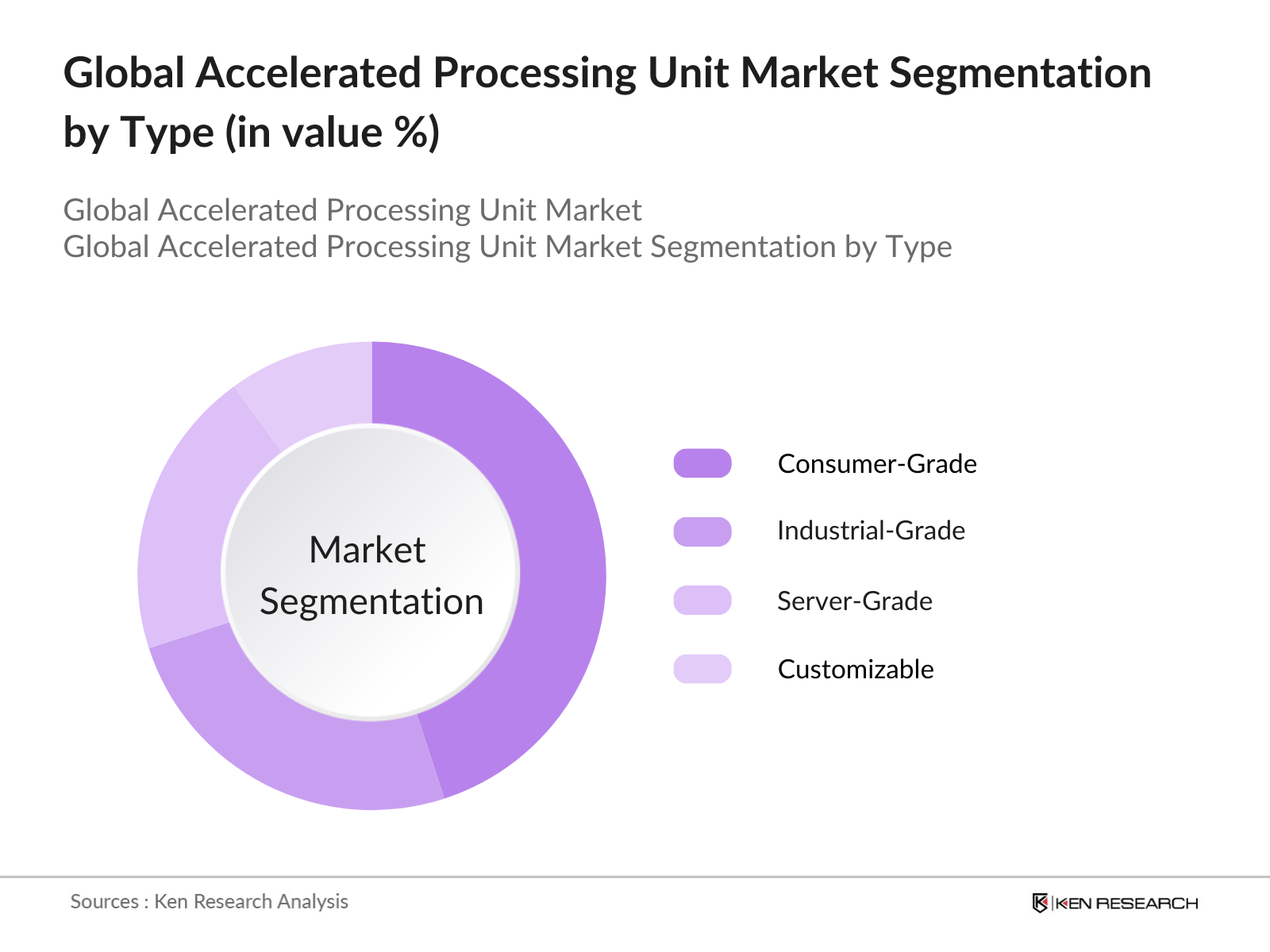
By Type: The APU market is segmented by type into Consumer-Grade, Industrial-Grade, Server-Grade, and Customizable APUs. Consumer-Grade APUs have the highest market share, primarily due to the demand from gaming enthusiasts and personal computer users who value performance and energy efficiency. Brands like AMD and Intel cater to this segment with products that support HD graphics and fast processing speeds.
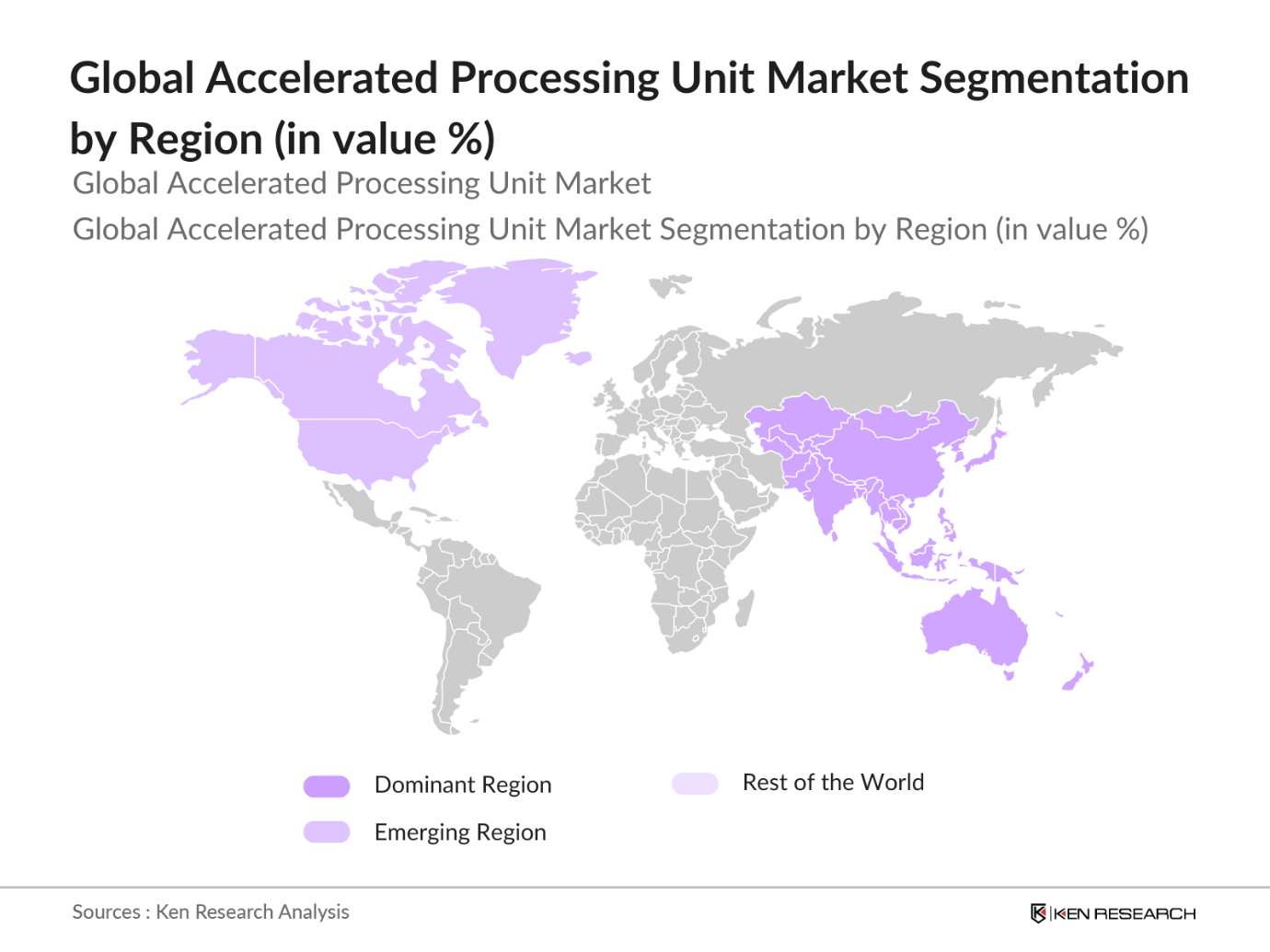
By Region: The regional segmentation includes North America, Europe, Asia Pacific, Latin America, and the Middle East & Africa. Asia Pacific has a dominant share, driven by the tech manufacturing hubs in China and Taiwan, along with the high demand for gaming and consumer electronics in Japan and South Korea. The region’s advantage lies in cost-effective production, advanced R&D facilities, and a strong supply chain network.
By Application: The market is also segmented by application, including Personal Computing, Gaming Consoles, Automotive, Data Centers, and AI & Machine Learning Processing. Gaming Consoles lead the market as they integrate APUs to enhance graphics and computing power for seamless gaming experiences. Major console manufacturers leverage APUs to meet the demand for high-performance gaming systems.
The Global Accelerated Processing Unit (APU) Market is characterized by competition among a few major players who leverage technological innovation, strategic partnerships, and customer-focused offerings.
The Accelerated Processing Unit (APU) Market is projected to grow further as demand for integrated processing units rises across industries. With technology continuously evolving, APUs will find increased adoption in next-gen applications, such as autonomous driving and advanced AI computations. Major investments in semiconductor manufacturing and infrastructure, coupled with the shift towards greener technologies, will foster market expansion, especially in the Asia Pacific and North American regions.
|
By Type |
Consumer-Grade Industrial-Grade Server-Grade Customizable |
|
By Application |
Personal Computing Gaming Consoles Automotive Data Centers AI & ML Processing |
|
By Technology |
GPU Integration CPU Integration FPGA-Enhanced Hybrid Integration |
|
By Core Count |
Dual-Core Quad-Core Octa-Core Multi-Core |
|
By End-User |
Consumer Electronics IT & Telecom Automotive Defense & Aerospace Healthcare |
Definition and Scope
Market Taxonomy
Market Dynamics Overview
Market Segmentation Summary
Historical Market Size
Year-On-Year Growth Analysis
Key Market Developments and Milestones
Growth Drivers
Rising Demand for High-Performance Computing
Expanding Applications in AI and Machine Learning (Market Adoption Rate)
Shift to Energy-Efficient Processing Units (Power Consumption Efficiency)
Influence of 5G and IoT Integration
Market Challenges
High R&D Costs
Limited Market Awareness (Awareness and Education)
Technical Limitations in Complex Processing (Processing Constraints)
Opportunities
Advancements in Integrated Graphics Processing (Performance-to-Cost Ratio)
Market Expansion in Emerging Economies (APU Adoption in Asia and Latin America)
Increasing Demand for Customizable APU Solutions
Trends
Rising Hybrid Cloud Deployments
Growing Integration with Quantum Computing
Innovations in Multi-Functional APU Architectures
Government Regulations
Emission Standards for Processing Units
Energy-Efficiency Certifications
Subsidies and Incentives for Semiconductor Advancements
By Type (in Value %)
Consumer-Grade APUs
Industrial-Grade APUs
Server-Grade APUs
Customizable APUs
By Application (in Value %)
Personal Computing
Gaming Consoles
Automotive (ADAS, Infotainment Systems)
Data Centers and Cloud Servers
AI and Machine Learning Processing
By Technology (in Value %)
GPU Integration
CPU Integration
FPGA-Enhanced APUs
Hybrid Integration (APU + ASIC)
By Core Count (in Value %)
Dual-Core APUs
Quad-Core APUs
Octa-Core APUs
Multi-Core (Beyond Octa)
By End-User Industry (in Value %)
Consumer Electronics
IT & Telecommunication
Automotive
Defense & Aerospace
Healthcare
Detailed Profiles of Major Companies
AMD (Advanced Micro Devices)
Intel Corporation
Nvidia Corporation
Qualcomm Technologies, Inc.
Arm Holdings
Apple Inc.
Samsung Electronics
Broadcom Inc.
MediaTek Inc.
Texas Instruments Incorporated
Marvell Technology Group Ltd.
Fujitsu Limited
Toshiba Corporation
VIA Technologies, Inc.
Huawei Technologies Co., Ltd.
Cross Comparison Parameters
Innovation Index (Patent Count)
Revenue and Market Share
Global Reach and Regional Presence
Employee Strength
Research and Development Spending
Partnership Ecosystem
Production Capacity (APU Units)
Customization Capability (Industry-Specific APUs)
Market Share Analysis
Strategic Initiatives
Mergers and Acquisitions
Investment Analysis
Government Grants and Incentives
Standards for APU Integration and Interoperability
Safety and Quality Certifications
Environmental Regulations for Semiconductor Manufacturing
Compliance and Certification Processes
Export and Trade Regulations for APUs
Projected Market Growth
Key Drivers Influencing Future Market Demand
By Type (in Value %)
By Application (in Value %)
By Technology (in Value %)
By Core Count (in Value %)
By Region (in Value %)
Total Addressable Market (TAM), Serviceable Available Market (SAM), and Serviceable Obtainable Market (SOM) Analysis
Customer Cohort Analysis (Tech-Oriented vs. Consumer-Centric)
Market Entry Strategies
White Space Opportunity Analysis
Disclaimer Contact UsThe research begins with mapping the APU market's ecosystem, identifying key stakeholders, and gathering foundational industry data. This step includes data from secondary sources such as reputable industry reports, financial databases, and technology publications to outline market variables.
Historical data and trends in the APU market are analyzed, including market penetration rates, average consumer spending, and growth rates across different regions. Market dynamics are examined to determine segment performance and demand patterns.
Hypotheses on market trends and drivers are developed and validated through expert interviews and consultations with industry stakeholders. Insights from these interviews are crucial to refining our market forecasts and verifying the data accuracy.
In this stage, the data is cross-referenced with direct feedback from key players in the APU industry to ensure accuracy and reliability. This process also involves checking data consistency and completing a validated and comprehensive report output.
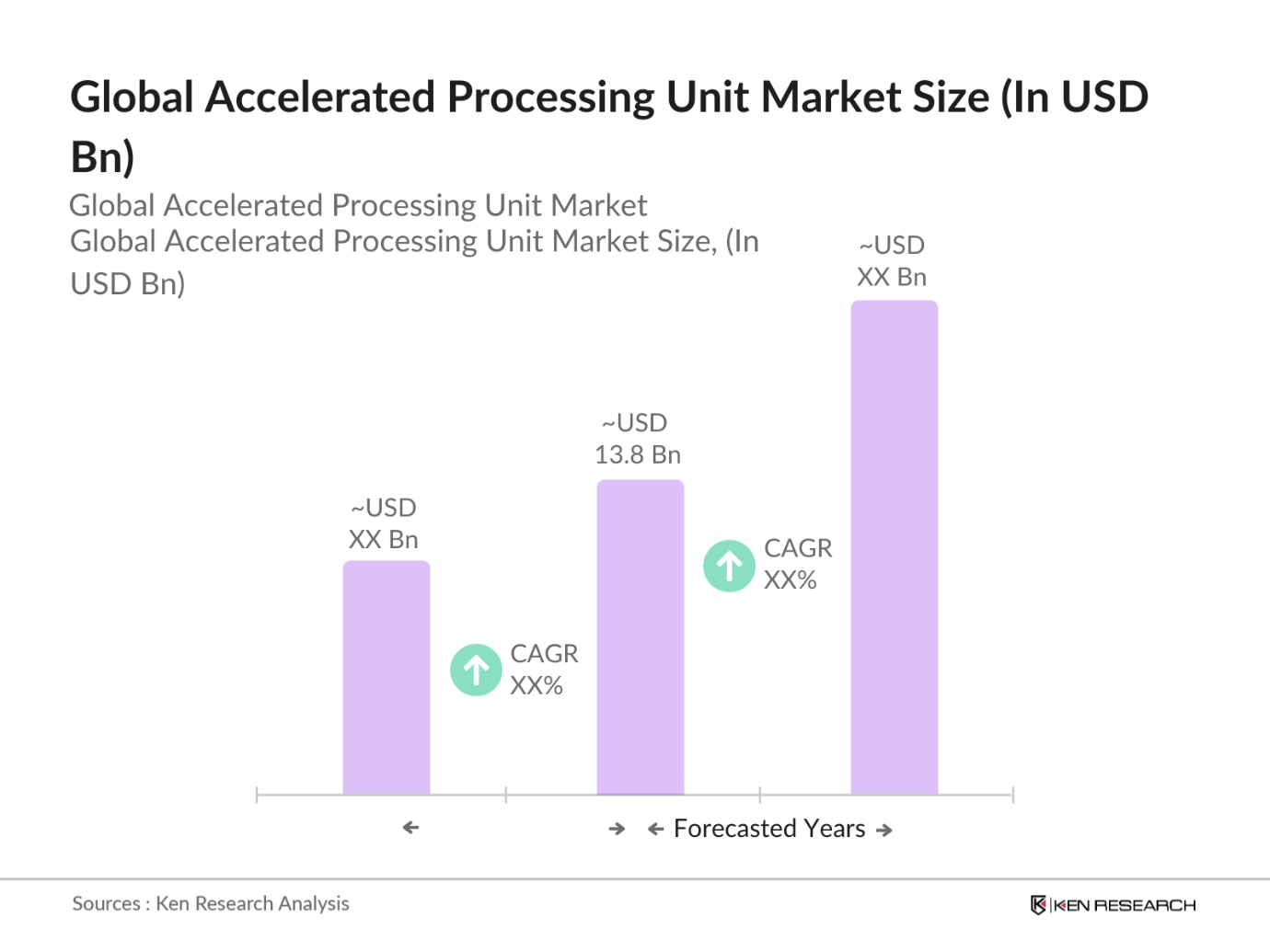
The APU market is valued at USD 13.8 billion, driven by its use in personal computing and gaming applications, alongside growing integration in AI.
Challenges include high R&D expenses, increasing competition from traditional processors, and limitations in handling complex computing tasks that require specialized processing capabilities.
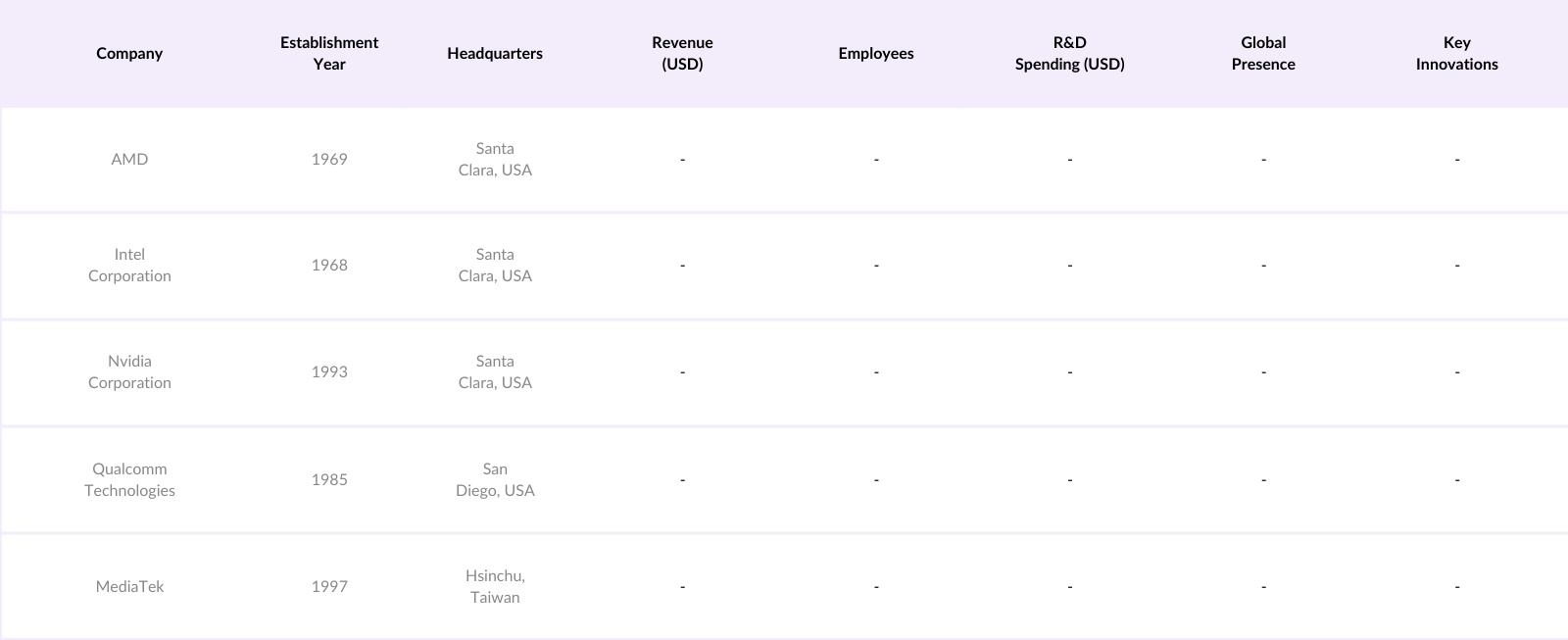
The major players include AMD, Intel, Nvidia, Qualcomm, and MediaTek, recognized for their innovation and strategic partnerships in the semiconductor industry.
Key drivers include the demand for energy-efficient processing, increased applications in AI and machine learning, and rising adoption of high-performance gaming consoles and personal computers.

What makes us stand out is that our consultants follows Robust, Refine and Result (RRR) methodology. i.e. Robust for clear definitions, approaches and sanity checking, Refine for differentiating respondents facts and opinions and Result for presenting data with story

We have set a benchmark in the industry by offering our clients with syndicated and customized market research reports featuring coverage of entire market as well as meticulous research and analyst insights.

While we don't replace traditional research, we flip the method upside down. Our dual approach of Top Bottom & Bottom Top ensures quality deliverable by not just verifying company fundamentals but also looking at the sector and macroeconomic factors.

With one step in the future, our research team constantly tries to show you the bigger picture. We help with some of the tough questions you may encounter along the way: How is the industry positioned? Best marketing channel? KPI's of competitors? By aligning every element, we help maximize success.

Our report gives you instant access to the answers and sources that other companies might choose to hide. We elaborate each steps of research methodology we have used and showcase you the sample size to earn your trust.

If you need any support, we are here! We pride ourselves on universe strength, data quality, and quick, friendly, and professional service.