Ken Research Logo

Global AdTech Market Outlook to 2030

Region:Global

Author(s):Mukul

Product Code:KROD11022

Published On

November 2024

Total pages

87

About the Report

Global AdTech Market Overview

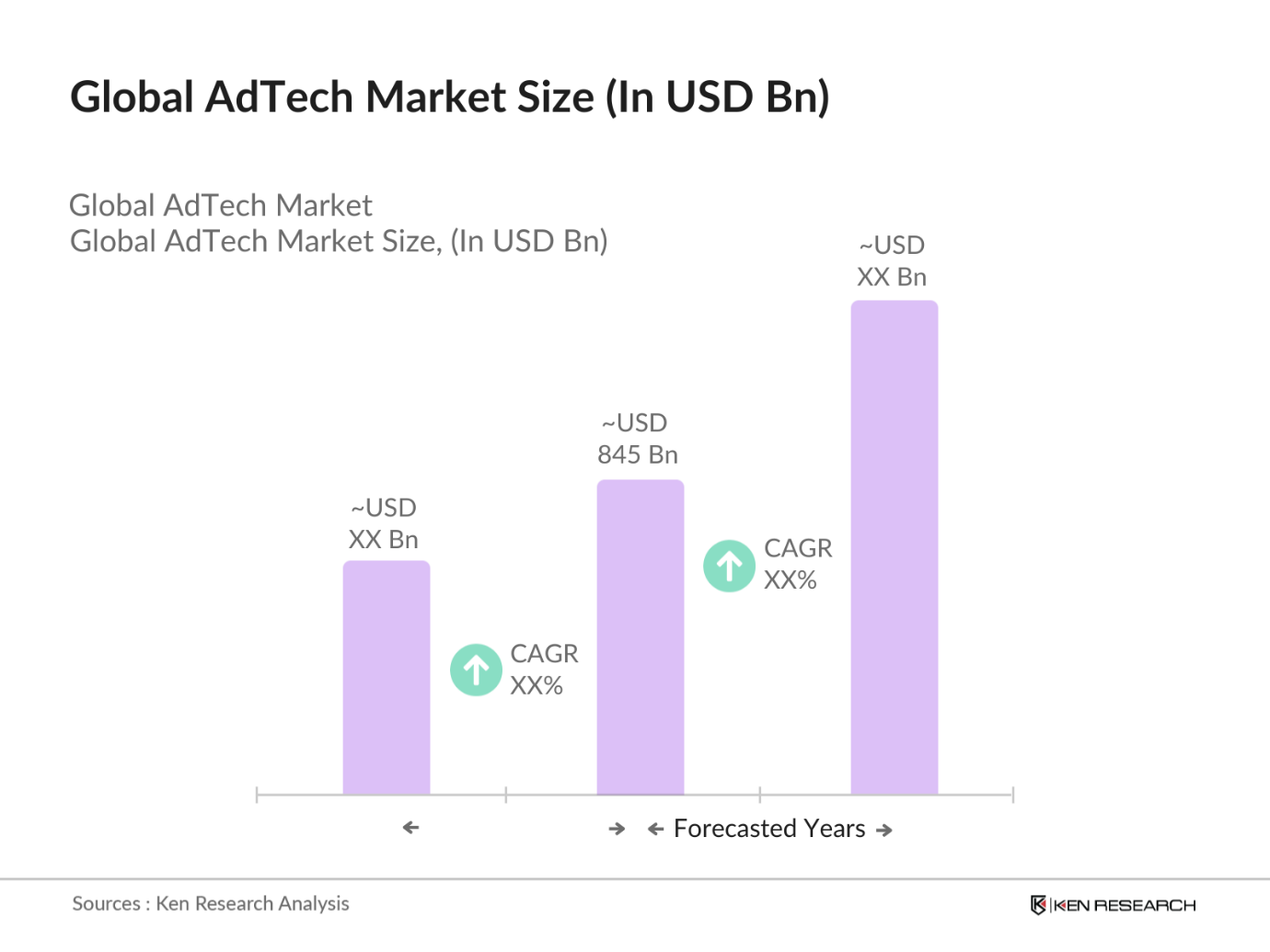
  • The global AdTech market, valued at USD 845 billion, has been primarily driven by the rise in digital advertising spend. This surge is fueled by technological advancements such as programmatic advertising, real-time bidding, and AI-driven ad personalization. Additionally, businesses are allocating higher budgets toward digital platforms due to the growing online consumer base. Mobile advertising, in particular, plays a significant role, contributing over 60% to the market revenue. Factors like the proliferation of connected devices and increased mobile internet usage also drive the market's expansion.

market overviews

  • Countries like the United States, China, and the United Kingdom dominate the AdTech market. The United States leads due to its robust digital infrastructure, advanced tech ecosystem, and high concentration of advertisers utilizing AI, machine learning, and big data for targeted campaigns. China follows closely, primarily driven by its mobile-first consumer behavior and the dominance of tech giants like Alibaba and Tencent, while the UK stands out due to its strong e-commerce sector and the growth of digital media consumption.
  • Influencer marketing continues to grow, with brands spending over $22 billion on influencer-led campaigns in 2024. Social media platforms like Instagram and TikTok have seen an explosion in influencer partnerships, with engagement rates from these campaigns surpassing 10%, far higher than traditional ad formats. The ability to connect directly with niche audiences has made influencer marketing an attractive option for brands across various industries

Global AdTech Market Segmentation

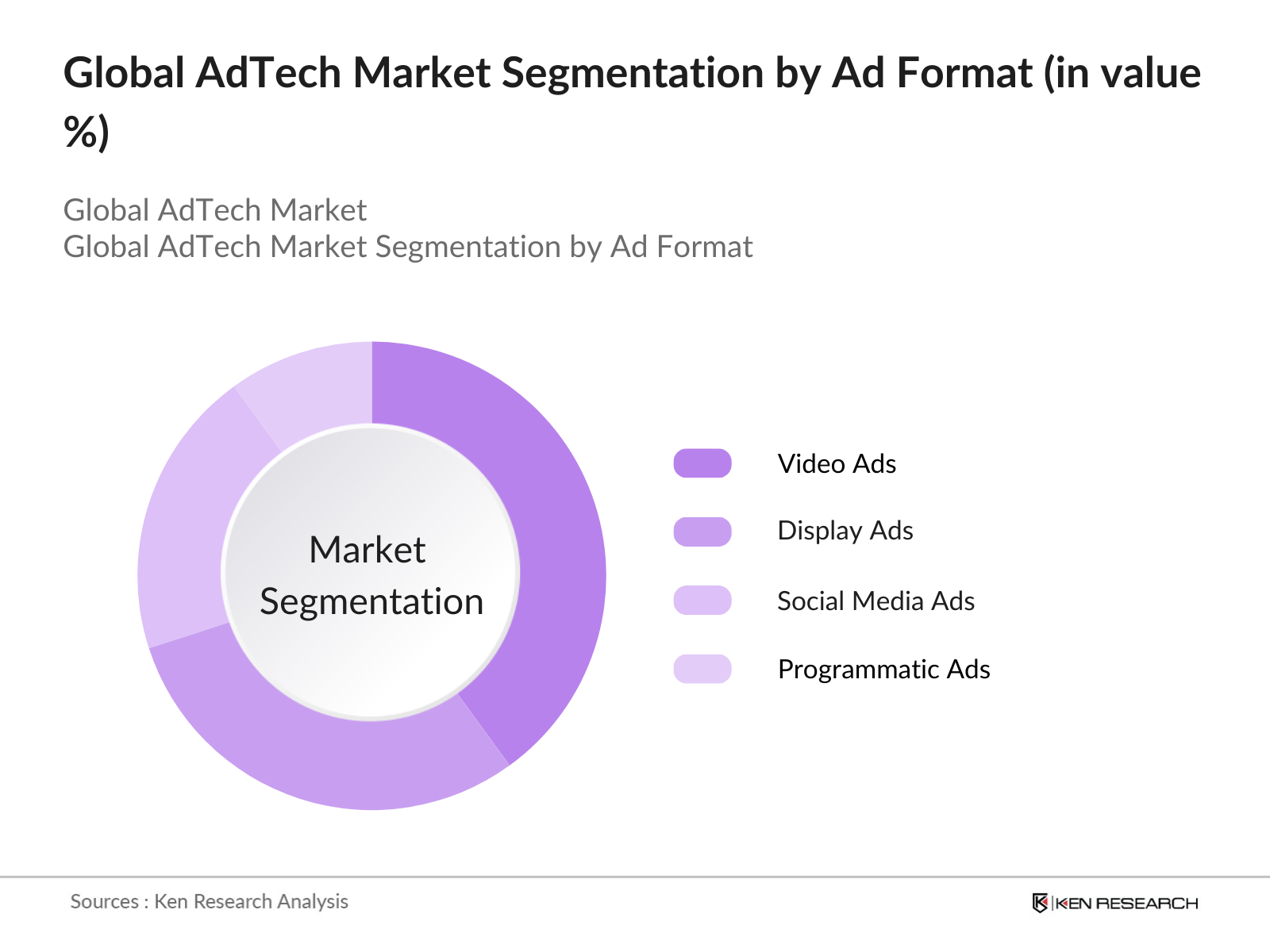
  • By Ad Format: The AdTech market is segmented by ad format into display ads, video ads, social media ads, and programmatic ads. Among these, video ads hold the dominant market share due to their higher engagement rates, as consumers increasingly prefer video content over other formats. The rise of platforms like YouTube, TikTok, and Instagram Reels has further fueled this dominance, as advertisers leverage video to deliver personalized and immersive ad experiences.

market overviews

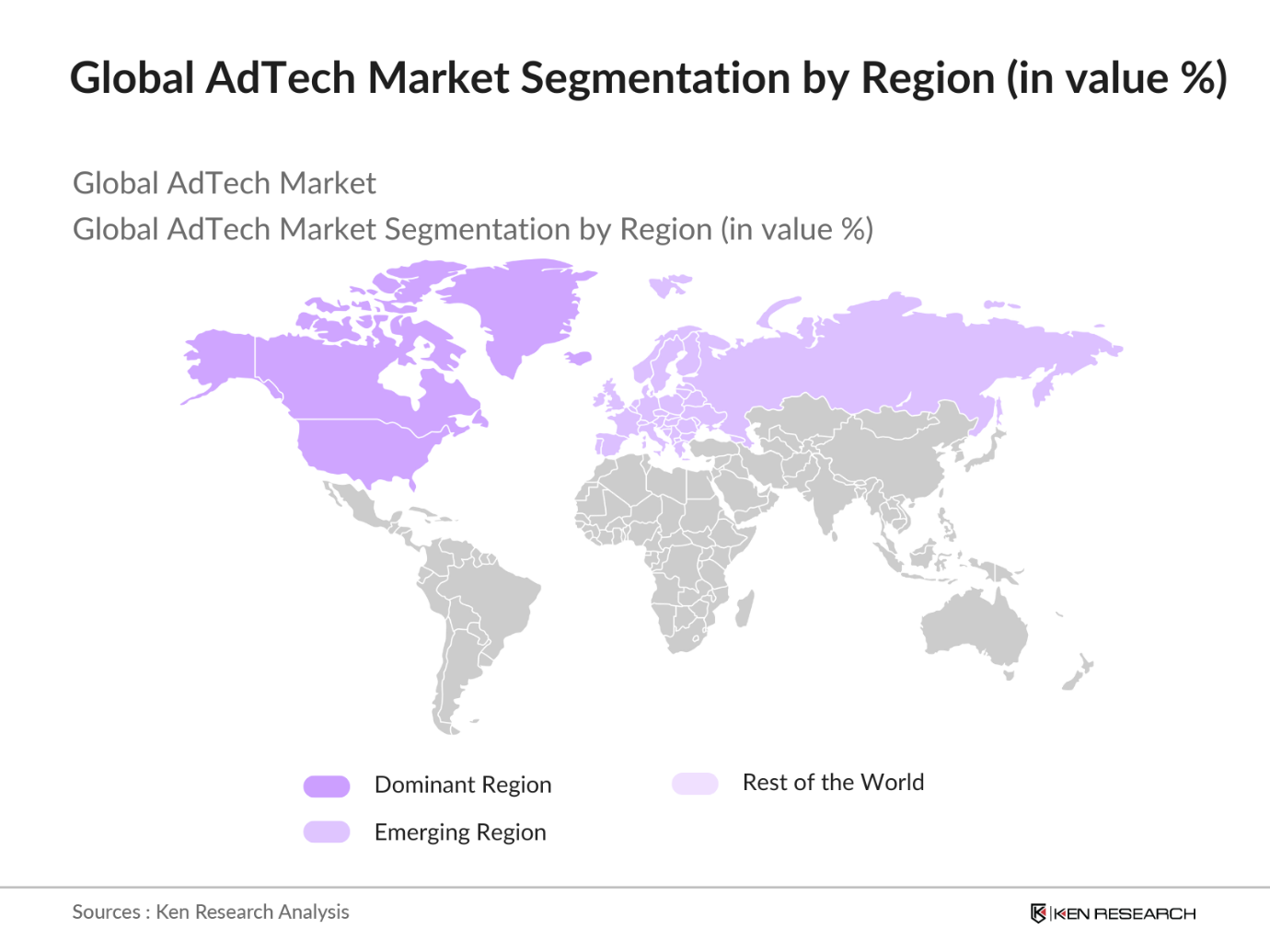
  • By Region: The AdTech market is also segmented by region into North America, Europe, Asia-Pacific, Latin America, and the Middle East & Africa. North America dominates the regional segmentation, particularly due to the concentration of leading tech companies, advertising platforms, and a high internet penetration rate. The region's established regulatory frameworks and advanced data privacy policies also play a crucial role in sustaining the growth of the AdTech market.

market overviews

  • By Platform: The global AdTech market is segmented by platform into mobile, desktop, connected TV, and OTT platforms. Mobile dominates this segment due to the increased use of smartphones and mobile applications. Brands have capitalized on in-app advertising and mobile-optimized video content, given that users spend a considerable amount of time on mobile devices, especially in emerging markets. The accessibility and convenience of mobile advertising are key factors driving this sub-segments dominance.

Global AdTech Market Competitive Landscape

The AdTech market is dominated by key players like Google LLC, Meta Platforms, Inc., and Amazon Advertising. These companies hold a significant share of the global market due to their vast user bases, comprehensive advertising solutions, and advanced technological integrations. Furthermore, the consolidation of smaller players through mergers and acquisitions highlights the influence of these industry giants in shaping the future of AdTech.

Global AdTech Industry Analysis

Growth Drivers

  • Increase in Digital Ad Spend (Revenue by Platform): Digital ad spending across various platforms continues to surge, driven by a massive shift toward online media consumption in 2024. As of 2024, total digital ad spend reached $485 billion globally, with significant contributions from social media platforms such as Facebook and Instagram, which alone accounted for $150 billion in advertising revenue. Search engines like Google generated nearly $220 billion from search ads, while video platforms like YouTube raked in $50 billion in ad revenues. These figures reflect a growing emphasis on digital advertising as businesses pivot from traditional media.
  • Programmatic Advertising Growth (Automation, Targeting, Ad Exchanges): In 2024, programmatic advertising has automated 80% of global digital ad buys, with over $340 billion of total digital ad spend executed via programmatic platforms. The introduction of real-time bidding (RTB) has further optimized ad targeting, improving campaign efficiency across sectors such as retail and entertainment. Large-scale advertising exchanges like Google Ad Manager have facilitated the purchase and sale of ad space, significantly reducing costs and increasing the precision of audience targeting, creating value for both advertisers and publishers.
  • Mobile Ad Ecosystem Expansion (Mobile Ad Revenue, App Ads): Mobile advertising has seen unprecedented growth due to the proliferation of smartphones, with global mobile ad revenue exceeding $275 billion in 2024, making up nearly 60% of all digital ad spend. App-based advertising, including in-app banners and video ads, has driven this trend, particularly in regions with high mobile penetration, such as India and China. Revenue from mobile app ads alone contributed $150 billion, thanks to high engagement in social media and gaming apps.

Market Restraints

  • Ad Fraud and Bot Traffic (Fraudulent Ad Revenue Losses): Ad fraud remains a critical challenge, costing the digital advertising industry over $100 billion in revenue losses in 2024 due to fraudulent impressions, bot traffic, and click fraud. These activities undermine advertisers' efforts by diluting genuine engagement, with approximately 21% of global ad traffic flagged as suspicious or non-human in origin. Ad exchanges have introduced advanced fraud detection tools, but they have not fully eradicated the problem, leading to a need for stricter measures.
  • Ad Blocker Proliferation (Ad Blocker Adoption Rates): Ad blockers are a growing issue, with an estimated 980 million internet users employing ad-blocking tools in 2024, representing a significant portion of potential ad viewers. This adoption rate results in billions of dollars in lost ad revenues annually. Platforms like YouTube and Facebook have introduced paid ad-free experiences to counter the rise of ad blockers, while advertisers are increasingly shifting to less intrusive ad formats to mitigate user resistance.

Global AdTech Market Future Outlook

Over the next five years, the AdTech market is expected to experience significant growth, driven by technological innovations in programmatic advertising, AI-powered targeting, and the rise of immersive technologies such as AR and VR. Additionally, the proliferation of connected TV and OTT platforms is expected to further drive revenue, as advertisers seek to capitalize on evolving consumer media consumption patterns. The introduction of stricter privacy regulations will also lead to a shift towards first-party data solutions and contextual advertising.

Market Opportunities

  • Expansion of Connected TV (CTV Ad Spend, Viewer Engagement Metrics): Connected TV (CTV) is a growing opportunity within the AdTech landscape, with global CTV ad spend surpassing $25 billion in 2024. Increased viewer engagement on platforms like Roku and Amazon Fire TV has pushed advertisers to invest more in CTV ad formats. In the U.S. alone, over 125 million households use CTVs, with over 70 million engaged with ad-supported streaming content. This rise in user engagement creates a lucrative space for brands seeking to capitalize on long-form video ads.
  • of First-Party Data Solutions (Data Ownership, Privacy Enhancements): With the tightening of privacy laws globally, businesses are increasingly relying on first-party data strategies. In 2024, 55% of digital advertisers have shifted their focus to first-party data to mitigate the impact of third-party cookie deprecation. Companies that own and leverage their customer data are not only improving ad personalization but are also ensuring compliance with regulations like GDPR and CCPA, avoiding potential fines and reputational damage.

Scope of the Report

Ad Format

Display Ads, Video Ads, Native Ads, Social Ads, Programmatic Ads

Platform

Mobile, Desktop, Connected TV, OTT Platforms

Target Audience

B2C, B2B

Technology

Programmatic Ad Buying, AI-Driven Targeting, Machine Learning Algorithms

Region

North America, Europe, Asia Pacific, Latin America, Middle East & Africa

Products

Key Target Audience

  • Digital Advertising Agencies

  • E-commerce Companies

  • Tech Companies Developing AdTech Solutions

  • Mobile Application Developers

  • OTT and Streaming Service Providers

  • Investors and Venture Capitalist Firms

  • Government and Regulatory Bodies (Federal Trade Commission, European Data Protection Board)

  • Publishers and Media Companies

Companies

Players Mentioned in the Report:

  • Google LLC

  • Meta Platforms, Inc.

  • Amazon Advertising

  • The Trade Desk, Inc.

  • Criteo S.A.

  • MediaMath

  • Xandr (AT&T)

  • Verizon Media

  • PubMatic

  • Roku Advertising

  • InMobi

  • Taboola

  • AppLovin

  • Adobe Advertising Cloud

  • Magnite

Table of Contents

1. Global AdTech Market Overview

1.1 Definition and Scope
1.2 Market Taxonomy (By Ad Formats, Platforms, Geographies, Target Audiences)
1.3 Market Growth Rate (Revenue Growth, Adoption Rate, Tech Penetration)
1.4 Market Segmentation Overview

2. Global AdTech Market Size (In USD Mn)

2.1 Historical Market Size
2.2 Year-on-Year Growth Analysis
2.3 Key Market Developments and Milestones

3. Global AdTech Market Analysis

3.1 Growth Drivers
3.1.1 Increase in Digital Ad Spend (Revenue by Platform)
3.1.2 Programmatic Advertising Growth (Automation, Targeting, Ad Exchanges)
3.1.3 Mobile Ad Ecosystem Expansion (Mobile Ad Revenue, App Ads)
3.1.4 Data Privacy Regulations Impact (GDPR, CCPA Compliance)
3.2 Market Challenges
3.2.1 Ad Fraud and Bot Traffic (Fraudulent Ad Revenue Losses)
3.2.2 Ad Blocker Proliferation (Ad Blocker Adoption Rates)
3.2.3 Attribution and ROI Measurement Challenges (Cross-Platform Attribution)
3.3 Opportunities
3.3.1 Expansion of Connected TV (CTV Ad Spend, Viewer Engagement Metrics)
3.3.2 Rise of First-Party Data Solutions (Data Ownership, Privacy Enhancements)
3.3.3 Emergence of AI-Driven Campaign Optimization (AI in Ad Targeting, Personalization)
3.4 Trends
3.4.1 Hyper-Personalization of Ads (Ad Customization Metrics, Real-Time Bidding)
3.4.2 Voice Search Optimization (Voice Ad Engagement, Search Ad Revenue Shift)
3.4.3 Growth in Influencer Marketing Platforms (Influencer Ad Spend, Engagement Metrics)
3.4.4 Expansion into AR/VR Advertising (Immersive Ad Experiences, Adoption Rates)
3.5 Regulatory Environment
3.5.1 Data Privacy Laws (Compliance Costs, Regional Variations)
3.5.2 Content Moderation Policies (Impact on Ad Revenue, Compliance Frameworks)
3.5.3 Consumer Protection Regulations (Transparency Metrics, Advertiser Accountability)
3.6 SWOT Analysis
3.7 Stakeholder Ecosystem (Ad Networks, DSPs, SSPs, Advertisers, Publishers)
3.8 Porters Five Forces
3.9 Competitive Ecosystem

4. Global AdTech Market Segmentation

4.1 By Ad Format (In Value %)
4.1.1 Display Ads
4.1.2 Video Ads
4.1.3 Native Ads
4.1.4 Social Media Ads
4.1.5 Programmatic Ads
4.2 By Platform (In Value %)
4.2.1 Mobile
4.2.2 Desktop
4.2.3 Connected TV
4.2.4 OTT Platforms
4.3 By Target Audience (In Value %)
4.3.1 B2C
4.3.2 B2B
4.4 By Technology (In Value %)
4.4.1 Programmatic Ad Buying
4.4.2 AI-Driven Ad Targeting
4.4.3 Machine Learning Algorithms
4.5 By Region (In Value %)
4.5.1 North America
4.5.2 Europe
4.5.3 Asia Pacific
4.5.4 Latin America
4.5.5 Middle East & Africa

5. Global AdTech Market Competitive Analysis

5.1 Detailed Profiles of Major Companies
5.1.1 Google LLC
5.1.2 Meta Platforms, Inc.
5.1.3 Amazon Advertising
5.1.4 Adobe Advertising Cloud
5.1.5 The Trade Desk, Inc.
5.1.6 MediaMath
5.1.7 Criteo S.A.
5.1.8 Xandr (AT&T)
5.1.9 Verizon Media
5.1.10 Roku Advertising
5.1.11 PubMatic
5.1.12 Magnite
5.1.13 InMobi
5.1.14 AppLovin
5.1.15 Taboola
5.2 Cross Comparison Parameters (Headquarters, No. of Employees, Revenue, Market Position, Inception Year, Global Reach, Ad Format Focus, Market Share)
5.3 Market Share Analysis
5.4 Strategic Initiatives
5.5 Mergers and Acquisitions
5.6 Investment Analysis
5.7 Venture Capital Funding
5.8 Government Grants
5.9 Private Equity Investments

6. Global AdTech Market Regulatory Framework

6.1 Data Privacy Compliance (GDPR, CCPA)
6.2 Consumer Protection Guidelines
6.3 Industry Standards and Certifications

7. Global AdTech Future Market Size (In USD Mn)

7.1 Future Market Size Projections
7.2 Key Factors Driving Future Market Growth

8. Global AdTech Future Market Segmentation

8.1 By Ad Format (In Value %)
8.2 By Platform (In Value %)
8.3 By Target Audience (In Value %)
8.4 By Technology (In Value %)
8.5 By Region (In Value %)

9. Global AdTech Market Analysts Recommendations

9.1 TAM/SAM/SOM Analysis
9.2 Customer Cohort Analysis
9.3 Marketing Initiatives
9.4 White Space Opportunity Analysis

Disclaimer Contact Us

Research Methodology

Step 1: Identification of Key Variables

This step involves identifying all key variables impacting the AdTech market, including platform dynamics, technological adoption, and regulatory frameworks. Extensive desk research was conducted utilizing proprietary databases and secondary research tools to gather comprehensive market data.

Step 2: Market Analysis and Construction

The second phase involves analyzing historical data of the AdTech market. Key metrics such as ad spend, platform performance, and revenue generation by ad format are considered to construct an accurate picture of market dynamics.

Step 3: Hypothesis Validation and Expert Consultation

Market hypotheses were developed based on collected data and validated through interviews with key AdTech industry experts. This method ensured the reliability of market estimates, including engagement with top industry leaders.

Step 4: Research Synthesis and Final Output

In this final phase, data from both primary and secondary research sources were synthesized to create a comprehensive, actionable report. Cross-validation with digital advertising companies and platforms further solidified the accuracy of the analysis.


Frequently Asked Questions

01. How big is the Global AdTech Market?

The global AdTech market, valued at USD 845 billion, is driven by increased digital ad spending and technological advancements like AI, programmatic buying, and mobile advertising growth.

02. What are the challenges in the Global AdTech Market?

Key challenges include ad fraud, bot traffic, data privacy concerns, and measurement issues in cross-platform attribution. Stricter regulations and a higher reliance on third-party cookies also create challenges.

03. Who are the major players in the Global AdTech Market?

The market is dominated by industry giants like Google LLC, Meta Platforms, Inc., Amazon Advertising, The Trade Desk, and Criteo S.A., thanks to their vast global reach and advanced tech-driven solutions.

04. What are the growth drivers in the Global AdTech Market?

Key growth drivers include the rise in digital ad spending, the proliferation of mobile devices, the adoption of programmatic advertising, and advancements in AI for personalized ad targeting.


Why Buy From Us?

RRR
Refine Robust Result (RRR) Framework

What makes us stand out is that our consultants follows Robust, Refine and Result (RRR) methodology. i.e. Robust for clear definitions, approaches and sanity checking, Refine for differentiating respondents facts and opinions and Result for presenting data with story

Our Reach Is Unmatched

We have set a benchmark in the industry by offering our clients with syndicated and customized market research reports featuring coverage of entire market as well as meticulous research and analyst insights.

Research
Shifting the Research Paradigm

While we don't replace traditional research, we flip the method upside down. Our dual approach of Top Bottom & Bottom Top ensures quality deliverable by not just verifying company fundamentals but also looking at the sector and macroeconomic factors.

Insite
More Insights-Better Decisions

With one step in the future, our research team constantly tries to show you the bigger picture. We help with some of the tough questions you may encounter along the way: How is the industry positioned? Best marketing channel? KPI's of competitors? By aligning every element, we help maximize success.

Trust
Transparency and Trust

Our report gives you instant access to the answers and sources that other companies might choose to hide. We elaborate each steps of research methodology we have used and showcase you the sample size to earn your trust.

support
Round the Clock Support

If you need any support, we are here! We pride ourselves on universe strength, data quality, and quick, friendly, and professional service.

Why Client Choose Us?

400000+ Reports in repository
150+ Consulting project a year
100+ Analysts
8000+ Client Queries in 2022