
Global Agricultural Films Market Outlook to 2030
Region:Global
Author(s):Vijay Kumar
Product Code:KROD3503
Region:Global
Author(s):Vijay Kumar
Product Code:KROD3503
October 2024
85
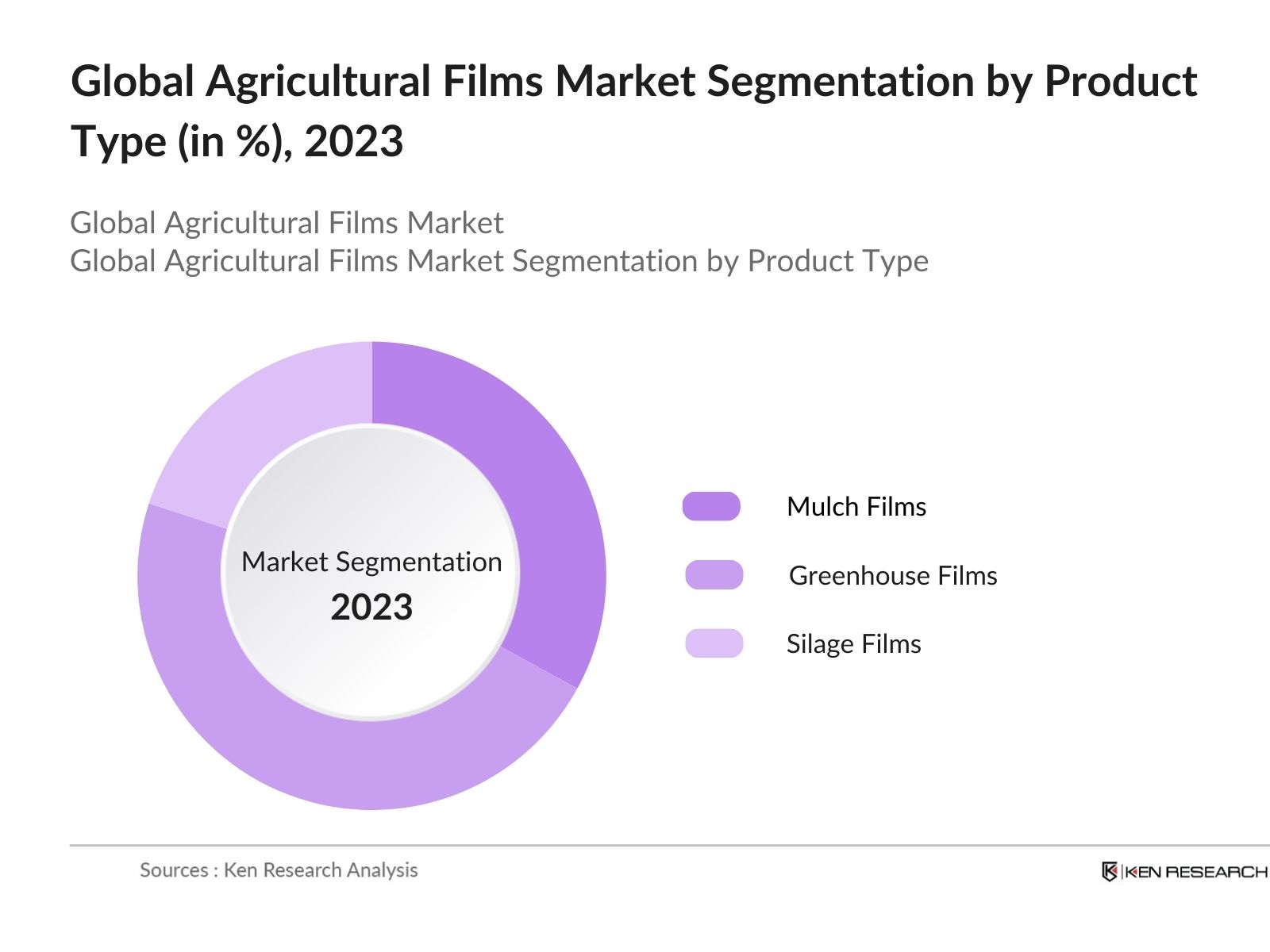
By Product Type: The market is segmented by product type into mulch films, greenhouse films, and silage films. Greenhouse films hold a dominant market share within the product type category due to their widespread adoption in controlled environment agriculture. These films are essential for enhancing crop growth by providing an optimal growing environment. As urbanization increases and arable land becomes scarce, the demand for greenhouse films has surged, especially in regions where weather conditions can be extreme, such as in the Asia-Pacific and Latin American regions.
By Material Type: The market is further segmented by material type into linear low-density polyethylene (LLDPE), low-density polyethylene (LDPE), ethylene-vinyl acetate (EVA), and others. Among these, LLDPE dominates due to its flexibility, cost-effectiveness, and durability. The material's superior resistance to environmental factors such as UV rays and heat makes it ideal for agricultural applications. LLDPE is extensively used in mulch and silage films, contributing significantly to the market's growth in regions like North America and Europe.
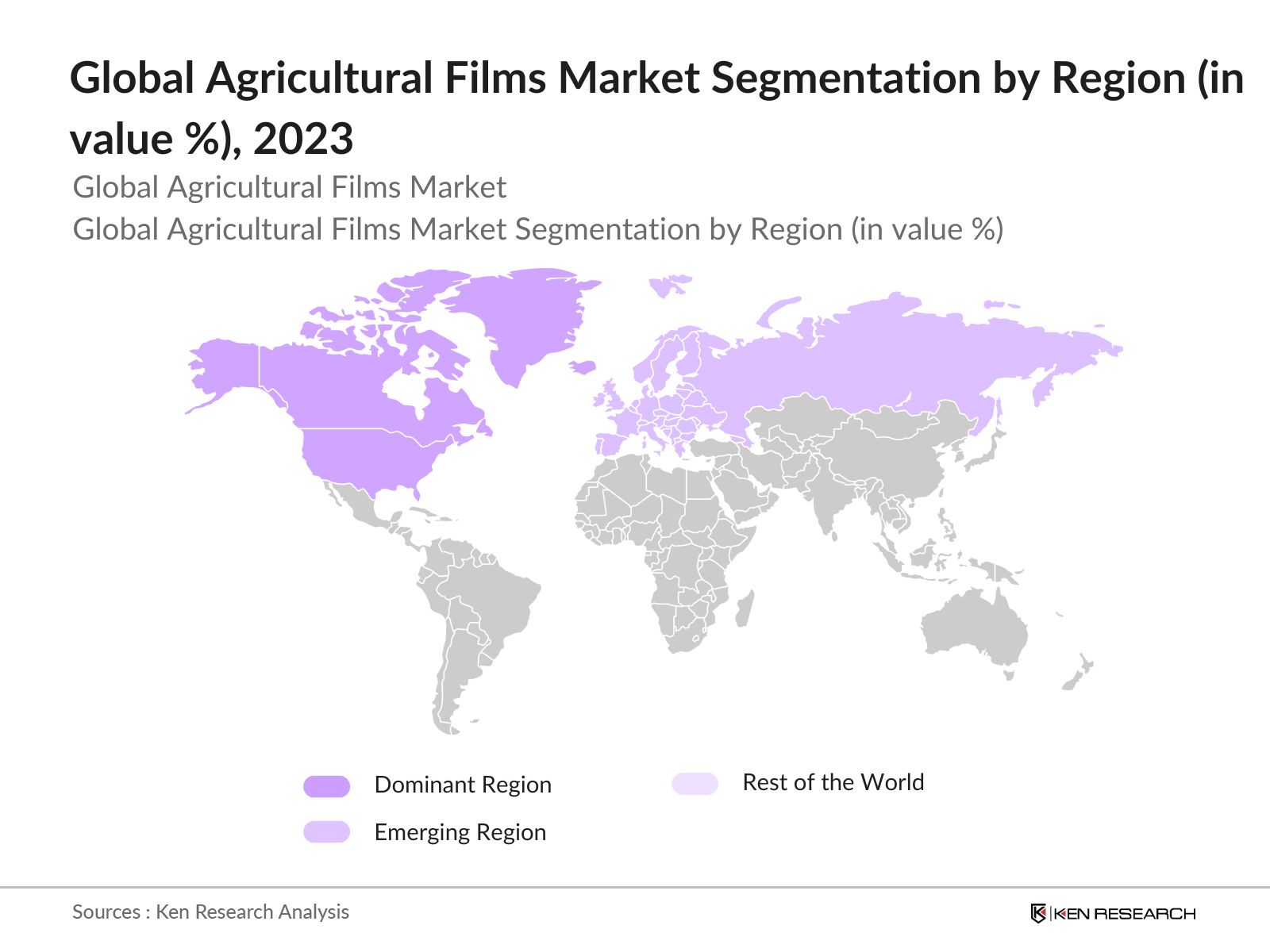
By Region: Regionally, the agricultural films market is segmented into North America, Europe, Asia-Pacific, Latin America, and the Middle East & Africa. The Asia-Pacific region dominates the market, led by China and India, where agricultural practices rely heavily on plasticulture to boost crop yields. China, with its large-scale farming operations, and India's increasing focus on modernizing its agriculture, drive the demand for agricultural films in this region.
The global agricultural films market is dominated by key players who have extensive production capacities, diverse product portfolios, and a focus on innovation and sustainability. These players are engaged in strategic partnerships, research and development for biodegradable products, and expanding their geographic reach to maintain a competitive edge. The competitive landscape is highly consolidated, with major players such as BASF SE, Berry Global, and Armando Alvarez Group dominating the market.
|
Company |
Establishment Year |
Headquarters |
Production Capacity |
Revenue |
Sustainability Initiatives |
Product Portfolio |
R&D Investments |
|
BASF SE |
1865 |
Ludwigshafen, Germany |
|||||
|
Berry Global, Inc. |
1967 |
Evansville, USA |
|||||
|
The RKW Group |
1957 |
Frankenthal, Germany |
|||||
|
Armando Alvarez Group |
1964 |
Cantabria, Spain |
|||||
|
Ab Rani Plast Oy |
1955 |
Teerijrvi, Finland |
The global agricultural films market is poised for significant growth in the coming years, driven by advancements in polymer technologies, increasing global food demand, and a growing focus on sustainable farming practices. The adoption of biodegradable films is expected to be a key trend as environmental concerns surrounding plastic waste escalate.
|
By Product Type |
Mulch Films Greenhouse Films Silage Films Others |
|
By Material Type |
LLDPE LDPE EVA Others (Polypropylene, PVC) |
|
By Application |
Agriculture Horticulture Livestock Farming |
|
By Technology |
Co-extruded Films Blown Films Cast Films Nanocomposite Films |
|
By Region |
North America Europe Asia-Pacific Latin America Middle East & Africa |
1.1. Definition and Scope
1.2. Market Taxonomy
1.3. Market Growth Rate
1.4. Market Segmentation Overview
2.1. Historical Market Size
2.2. Year-On-Year Growth Analysis
2.3. Key Market Developments and Milestones
3.1. Growth Drivers
3.1.1. Increasing Global Demand for High-Yield Crops
3.1.2. Advances in Polymer Technology (Material innovations)
3.1.3. Rising Awareness of Sustainable Agricultural Practices
3.1.4. Government Support and Subsidies for Modern Farming Techniques
3.2. Market Challenges
3.2.1. Environmental Concerns about Plastic Waste (Biodegradability, Recycling)
3.2.2. Fluctuating Raw Material Costs (Polyethylene, EVA)
3.2.3. Dependence on Weather Conditions and Seasonality
3.3. Opportunities
3.3.1. Growing Adoption of Mulching and Greenhouse Farming (Application Growth)
3.3.2. Rising Demand in Emerging Markets (Asia-Pacific and Latin America)
3.3.3. Technological Advancements in Film Coating and UV Stabilizers
3.4. Trends
3.4.1. Shift Toward Biodegradable Films (Sustainability)
3.4.2. Use of Multi-Layer Films for Enhanced Durability and Efficiency
3.4.3. Integration of Smart Films with Sensors for Precision Farming
3.5. Government Regulations
3.5.1. Regulations Promoting Sustainable Agriculture
3.5.2. Global Initiatives to Curb Plastic Pollution
3.5.3. Tariffs and Trade Agreements Affecting Raw Materials
3.6. SWOT Analysis
3.7. Stakeholder Ecosystem
3.8. Porters Five Forces
3.9. Competition Ecosystem
4.1. By Product Type (In Value %)
4.1.1. Mulch Films
4.1.2. Greenhouse Films
4.1.3. Silage Films
4.1.4. Others (Protective Films)
4.2. By Material Type (In Value %)
4.2.1. Linear Low-Density Polyethylene (LLDPE)
4.2.2. Low-Density Polyethylene (LDPE)
4.2.3. Ethylene Vinyl Acetate (EVA)
4.2.4. Others (Polypropylene, Polyvinyl Chloride)
4.3. By Application (In Value %)
4.3.1. Agriculture (Crop Protection, Soil Protection)
4.3.2. Horticulture (Greenhouse, Floriculture)
4.3.3. Livestock Farming (Silage, Fodder Protection)
4.4. By Technology (In Value %)
4.4.1. Co-extruded Films
4.4.2. Blown Films
4.4.3. Cast Films
4.4.4. Nanocomposite Films
4.5. By Region (In Value %)
4.5.1. North America
4.5.2. Europe
4.5.3. Asia-Pacific
4.5.4. Latin America
4.5.5. Middle East & Africa
5.1. Detailed Profiles of Major Companies
5.1.1. BASF SE
5.1.2. Berry Global, Inc.
5.1.3. The RKW Group
5.1.4. Trioplast Industrier AB
5.1.5. Armando Alvarez Group
5.1.6. Ab Rani Plast Oy
5.1.7. Kuraray Co. Ltd.
5.1.8. Dow Chemical Company
5.1.9. Coveris
5.1.10. Novamont S.p.A.
5.1.11. British Polythene Industries PLC (BPI)
5.1.12. Groupe Barbier
5.1.13. POLIFILM GmbH
5.1.14. Plastika Kritis S.A.
5.1.15. AEP Industries Inc.
5.2. Cross Comparison Parameters (Number of Employees, Headquarters, Revenue, Production Capacity, Market Presence, Environmental Sustainability Programs, Product Portfolio, Innovation Index)
5.3. Market Share Analysis
5.4. Strategic Initiatives
5.5. Mergers And Acquisitions
5.6. Investment Analysis
5.7. Government Grants and Subsidies
5.8. Venture Capital Funding
5.9. Private Equity Investments
6.1. Environmental Standards and Certifications
6.2. Government Incentives for Sustainable Films
6.3. Compliance and Certification Processes
7.1. Future Market Size Projections
7.2. Key Factors Driving Future Market Growth
8.1. By Product Type (In Value %)
8.2. By Material Type (In Value %)
8.3. By Application (In Value %)
8.4. By Technology (In Value %)
8.5. By Region (In Value %)
9.1. TAM/SAM/SOM Analysis
9.2. Customer Cohort Analysis
9.3. Marketing Initiatives
9.4. White Space Opportunity Analysis
The first step involves mapping out the key stakeholders and trends in the global agricultural films market. This includes extensive desk research to understand the influence of factors like raw material availability, technology trends, and government policies.
This phase focuses on gathering and analyzing historical data on agricultural film production and usage. It assesses market penetration, production capacity, and key growth drivers to ensure accurate revenue projections.
Hypotheses about market growth are tested through interviews with industry experts, including manufacturers, suppliers, and policymakers. These consultations offer valuable insights into market dynamics and potential future developments.
In the final stage, data from the bottom-up approach is validated through direct engagement with industry players. This ensures that the report is comprehensive and presents a holistic view of the market, taking into account all critical variables.
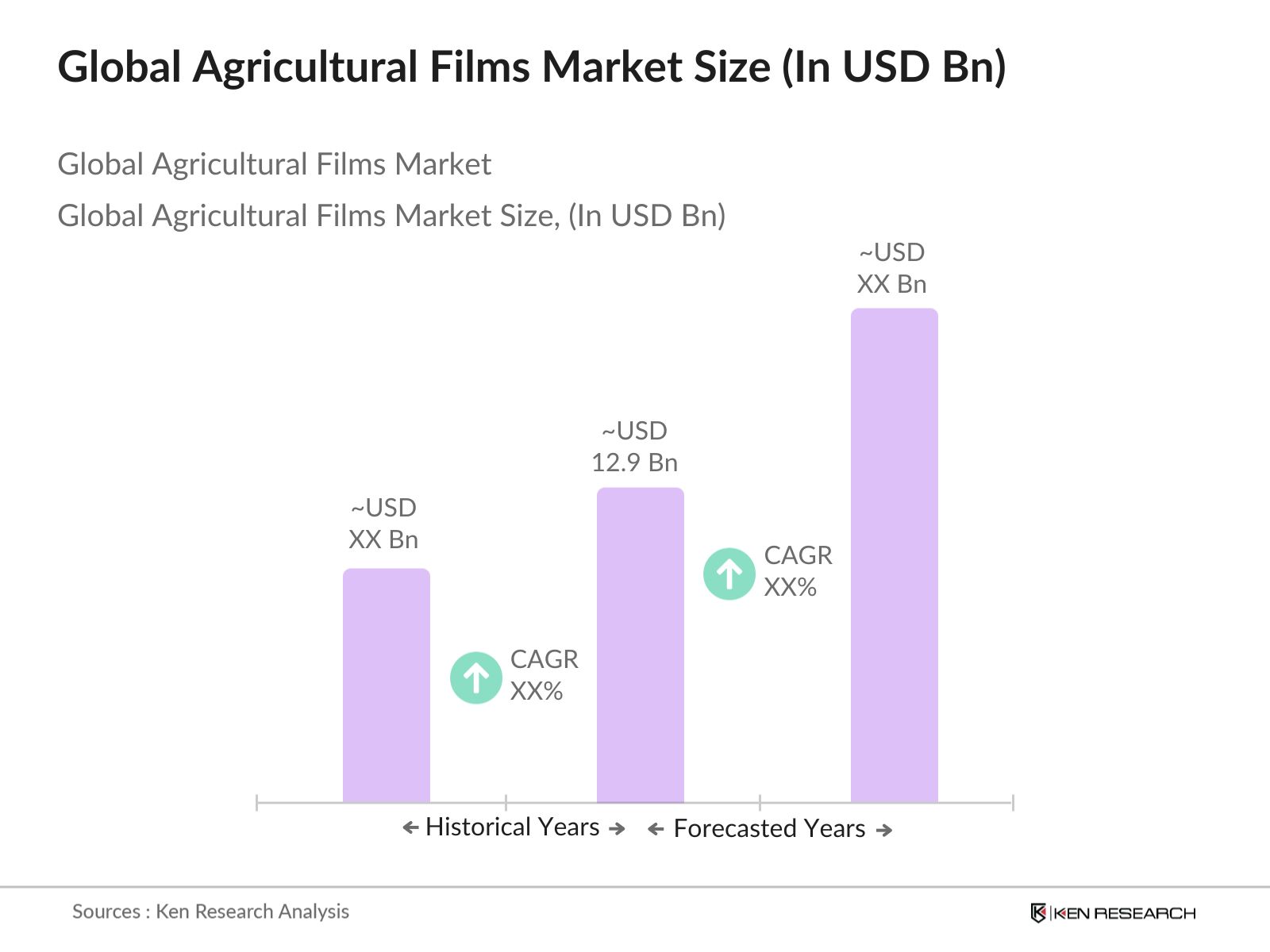
The global agricultural films market is valued at USD 12.9 billion, driven by the increasing use of plasticulture to boost crop yields and improve farming efficiency.
The global agricultural films market key challenges include environmental concerns about plastic waste, fluctuating raw material prices, and the need for innovations in biodegradable films to align with global sustainability goals.
Major players in the global agricultural films market include BASF SE, Berry Global, The RKW Group, Armando Alvarez Group, and Ab Rani Plast Oy, each with strong production capacities and a focus on sustainability.
Growth in the agricultural films market is driven by advancements in polymer technology, increasing food demand, and the growing adoption of greenhouse farming and sustainable agriculture practices.

What makes us stand out is that our consultants follows Robust, Refine and Result (RRR) methodology. i.e. Robust for clear definitions, approaches and sanity checking, Refine for differentiating respondents facts and opinions and Result for presenting data with story

We have set a benchmark in the industry by offering our clients with syndicated and customized market research reports featuring coverage of entire market as well as meticulous research and analyst insights.

While we don't replace traditional research, we flip the method upside down. Our dual approach of Top Bottom & Bottom Top ensures quality deliverable by not just verifying company fundamentals but also looking at the sector and macroeconomic factors.

With one step in the future, our research team constantly tries to show you the bigger picture. We help with some of the tough questions you may encounter along the way: How is the industry positioned? Best marketing channel? KPI's of competitors? By aligning every element, we help maximize success.

Our report gives you instant access to the answers and sources that other companies might choose to hide. We elaborate each steps of research methodology we have used and showcase you the sample size to earn your trust.

If you need any support, we are here! We pride ourselves on universe strength, data quality, and quick, friendly, and professional service.