















Global Agriculture Adjuvant Market Outlook 2030
Region:Global
Author(s):Shivani Mehra
Product Code:KROD2110
November 2024
82
About the Report
Global Agriculture Adjuvant Market Overview
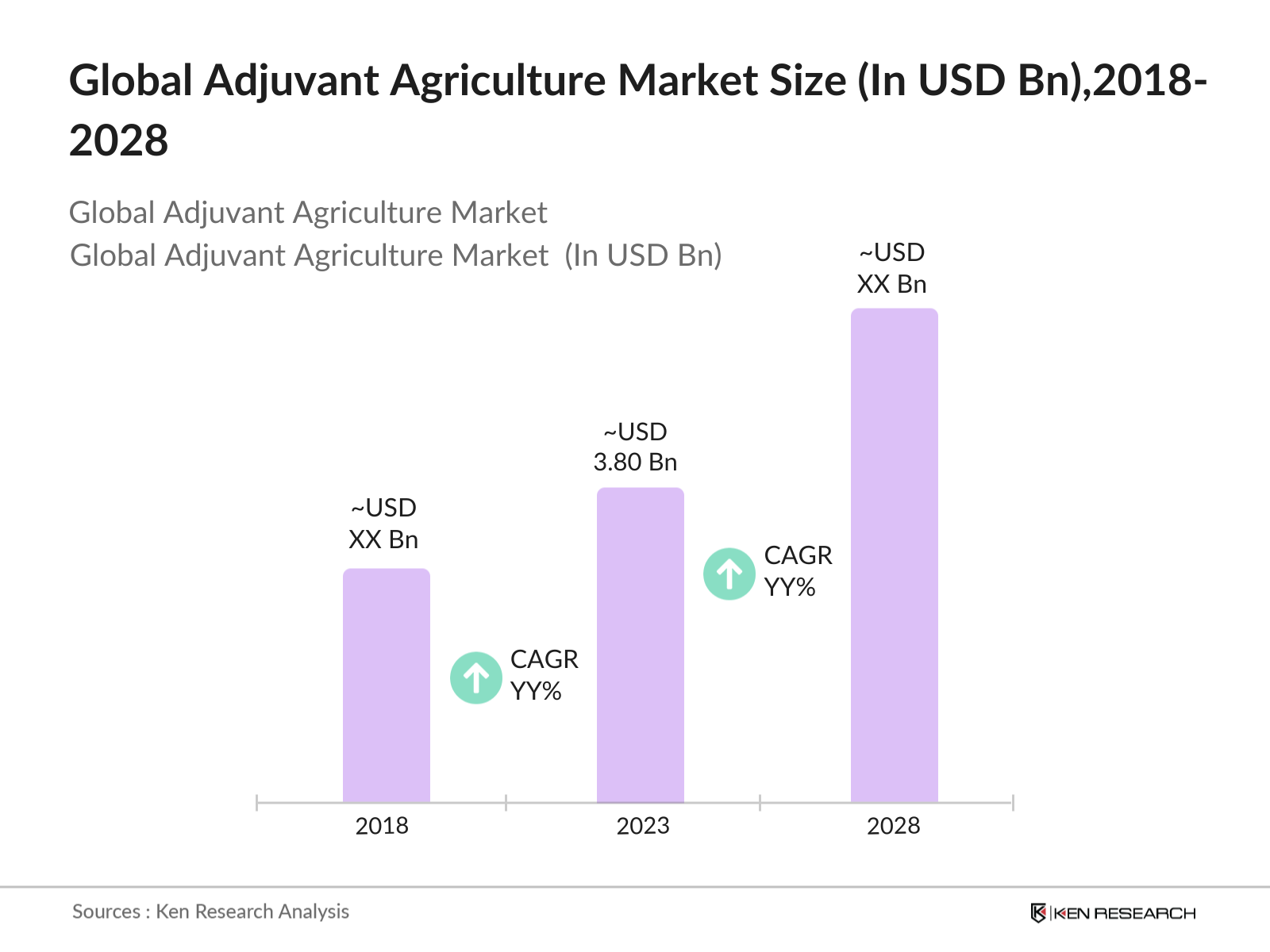
- The Global Agriculture Adjuvant Market reached a market size of USD 3.80 billion in 2023, driven by the increasing demand for crop protection chemicals and fertilizers to enhance agricultural productivity. This growth is attributed to the rising global population, which demands higher crop yields, particularly in regions like Asia-Pacific and North America. Government support for sustainable agriculture and innovations in crop management are further fueling the expansion of the adjuvant sector.
- Leading companies in the Global Agriculture Adjuvant Market include BASF SE, Corteva Agriscience, Evonik Industries AG, Bayer AG, and Syngenta AG. The key players mentionedBASF SE, Corteva Agriscience, Evonik Industries AG, Bayer AG, and Syngenta AGare indeed significant contributors to the market. These companies dominate through strong portfolios that focus on agricultural adjuvants for herbicides, insecticides, and fungicides.
- In January 2023, BASF introduced theAgnique BioHanceline, specifically designed to enhance the efficacy of herbicides used in corn and wheat farming, particularly targeting the North American market. This initiative aligns with the growing emphasis on sustainable agriculture and aims to reduce the chemical footprint associated with farming practices. Additionally, BASF projected that this product line would contribute to a3% increase in sales by the end of 2024.
- Cities like Des Moines (USA) and So Paulo (Brazil) are prominent in the Global Agriculture Adjuvant Market due to their proximity to large-scale agricultural activities. Des Moines is central to the Midwest agricultural belt, where the application of herbicides and pesticides is substantial. So Paulo, on the other hand, is a hub for agricultural exports and research, leading Brazil's use of crop protection chemicals, including adjuvants, which enhances its dominant market position in Latin America.
Global Agriculture Adjuvant Market Segmentation
The Global Agriculture Adjuvant Market is divided into the following segments:
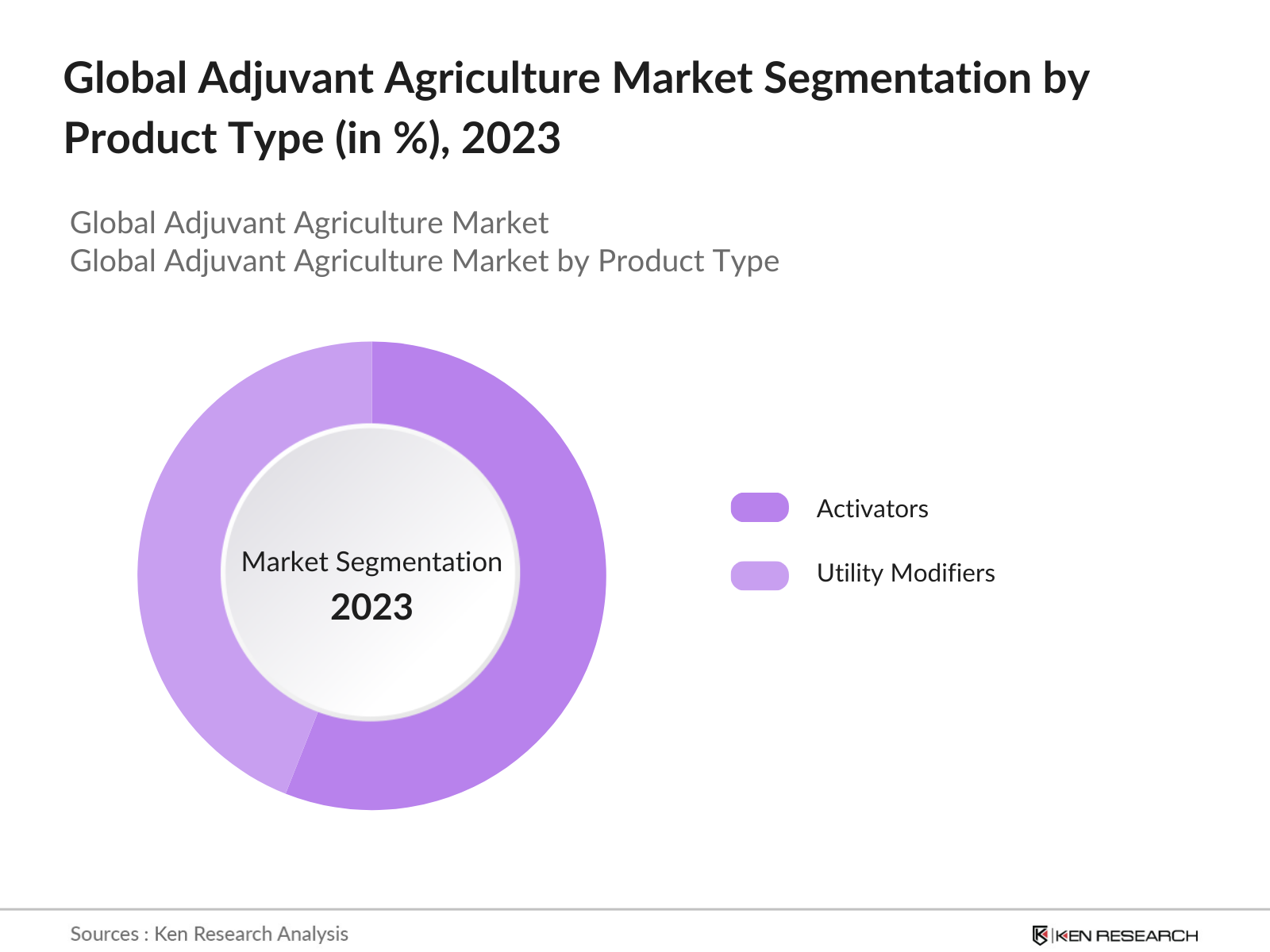
By Product Type: The Global Agriculture Adjuvant Market is segmented by product type into Activators and Utility Modifiers. In 2023, activators held a dominant market share due to their critical role in enhancing the effectiveness of herbicides and insecticides. This segment's dominance is driven by the need for more efficient pest control methods in large-scale commercial farming, particularly in North America and Europe, where farmers seek to optimize crop yields through the efficient use of agrochemicals.
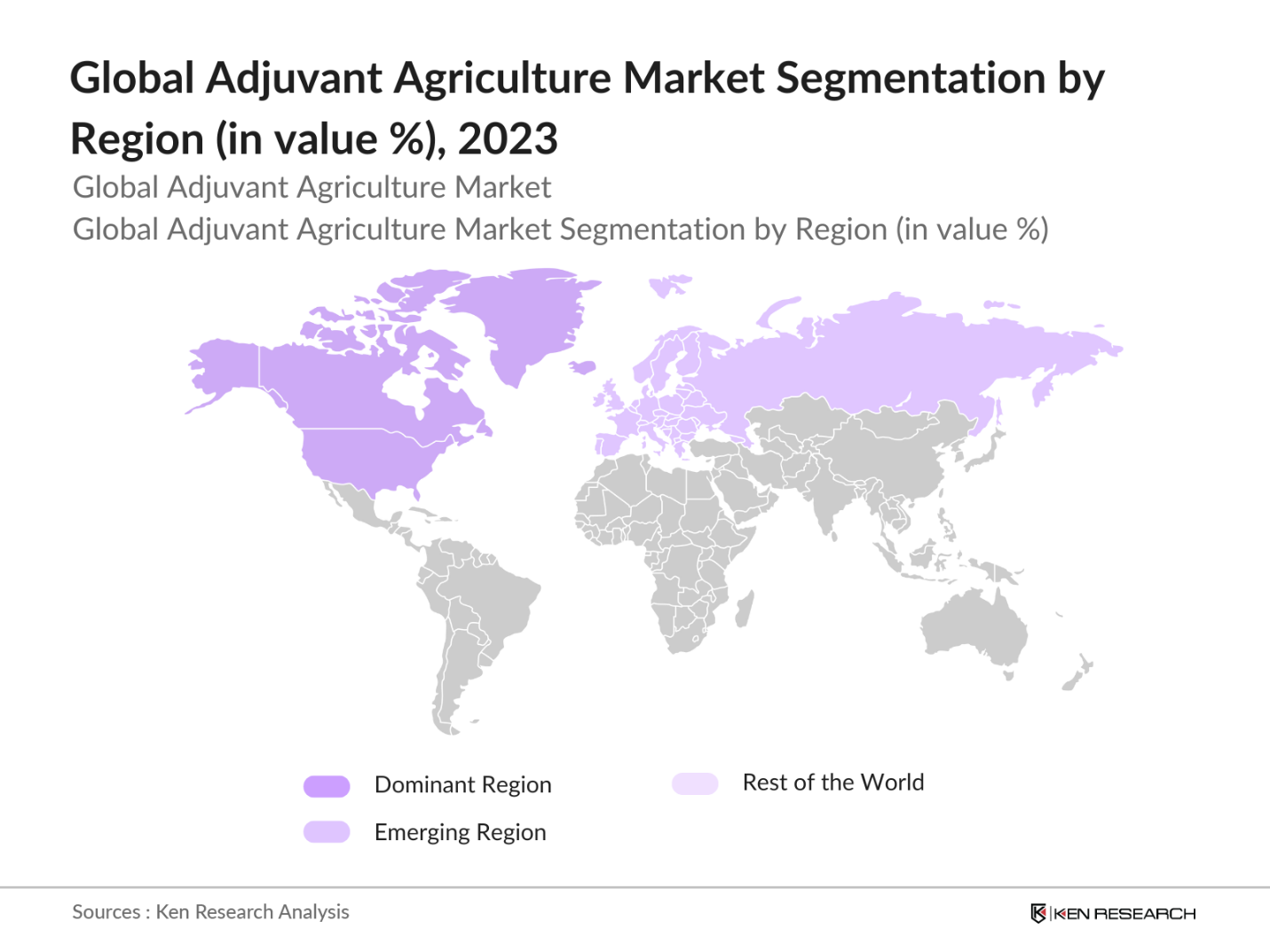
By Region: The Global Agriculture Adjuvant Market is regionally segmented into North America, Europe, Asia-Pacific (APAC), Latin America, and the Middle East & Africa (MEA). In 2023, North America dominated the market due to its large-scale commercial farming practices and the widespread use of precision agriculture technologies. The U.S., in particular, has seen increasing use of adjuvants to optimize pesticide applications, driven by stringent regulations and the need for higher crop yields.
By Crop Type: The Global Agriculture Adjuvant Market is segmented by crop type into Cereals & Grains, Fruits & Vegetables, and Oilseeds & Pulses. In 2023, Cereals & Grains held the largest market share due to the extensive cultivation of crops like corn, wheat, and rice, especially in regions like Asia-Pacific and North America. These crops require substantial use of herbicides and insecticides, driving higher consumption of adjuvants to improve agrochemical efficiency.
Global Agriculture Adjuvant Market Competitive Landscape
|
Company |
Establishment Year |
Headquarters |
|
BASF SE |
1865 |
Ludwigshafen, Germany |
|
Corteva Agriscience |
2019 |
Wilmington, Delaware, USA |
|
Evonik Industries AG |
2007 |
Essen, Germany |
|
Bayer AG |
1863 |
Leverkusen, Germany |
|
Syngenta AG |
2000 |
Basel, Switzerland |
- BASF SE: In March 2023, BASF announced plans to expand its polymer dispersions production capacity by adding a second production line at its site in Daya Bay, China, which is scheduled to start operations in early 2024. This expansion aims to serve fast-growing industries such as architectural coatings and construction, indicating a strategic move to enhance its presence in the region.
- Corteva Agriscience: Corteva does indeed offer various adjuvants, including Gateway, which is designed to enhance the performance of agricultural products. Gateway is a non-ionic paraffinic oil blend surfactant used primarily with herbicides and other crop protection products, particularly in industrial vegetation management and range and pasture applications.
Global Agriculture Adjuvant Market Analysis
Global Agriculture Adjuvant Market Growth Drivers
- Increased Adoption of Precision Farming: Precision farming technologies are gaining traction globally, driving the demand for agricultural adjuvants that optimize the application of agrochemicals. According to data from the United States Department of Agriculture (USDA), precision farming tools like variable rate technology (VRT) and GPS-guided spraying are projected to reduce input costs for farmers by $12 billion annually by 2025. As more countries adopt these technologies to meet growing food demand, the role of adjuvants in enhancing the efficacy of herbicides and pesticides becomes crucial, particularly in regions like North America and Europe.
- Rising Demand for Food Security Amid Population Growth: Global population growth is exerting pressure on agricultural systems to increase productivity. Adjuvants, which improve the efficiency of crop protection chemicals, are becoming increasingly important in achieving higher yields. The FAO (Food and Agriculture Organization) reported that adjuvant use has contributed to a 15% increase in yield efficiency in regions such as Asia-Pacific and Latin America, where large-scale farming is prevalent.
- Government Push for Sustainable Agriculture: Governments worldwide are prioritizing sustainable agriculture to combat climate change and ensure long-term food security. In 2023, the European Union allocated 10 billion to support research and development in eco-friendly farming practices, including the use of bio-based adjuvants to reduce environmental impact. This policy is expected to increase the use of adjuvants by 20% in European countries by 2025, as they enhance the effectiveness of environmentally sustainable pesticides.
Global Agriculture Adjuvant Market Challenges
- Volatile Raw Material Prices: The industry heavily relies on petrochemical-derived raw materials, and fluctuations in crude oil prices significantly impact production costs. In 2023, crude oil prices rose to approximately $90 per barrel due to geopolitical tensions, which indeed increases operational expenses for manufacturers of adjuvants that utilize oil derivatives such as surfactants. This rise in costs could lead to reduced profitability unless manufacturers switch to more stable or bio-based materials.
- Limited Awareness Among Small-Scale Farmers: While large-scale commercial farms are rapidly adopting adjuvants, small-scale farmers, especially in regions like Africa and Southeast Asia, have limited knowledge of these products and their benefits. A 2023 survey by the African Development Bank revealed that many smallholder farmers in sub-Saharan Africa are unaware of adjuvants, despite the potential for significant yield improvements. This lack of awareness presents a challenge for market penetration, particularly in emerging markets.
Global Agriculture Adjuvant Market Government Initiatives
- U.S. Department of Agriculture (USDA) Funding for Sustainable Agriculture: In 2023, theUSDA announcedan investmentexceeding$46 millionspecificallyfor the SustainableAgriculture Researchand Education(SARE) program, which supportsfarmer-driven innovationand educationprograms aimedat promotingclimate-smart practices. This investment aims to reduce chemical usage by enhancing the performance of pesticides and herbicides. The funding is expected to drive the development of new adjuvants in the U.S. market, improving crop yields and reducing environmental impact.
- Indias National Mission for Sustainable Agriculture (NMSA): In 2023, the Indian government expanded its NMSA program with a 15,000 crore budget, promoting the use of precision farming tools and crop protection solutions, including adjuvants. The initiative is targeted at increasing agricultural productivity in key farming states such as Punjab and Haryana, where the use of pesticides has historically been high. The program also focuses on training farmers to use adjuvants to minimize chemical inputs while improving crop yields.
Global Agriculture Adjuvant Market Outlook
The Global Agriculture Adjuvant Market is poised for significant transformation by 2028, driven by a combination of stringent environmental regulations, technological advancements, and growing consumer demand for sustainable farming practices.
Future Trends (Market Outlook 2028)
- Increased Adoption of Bio-based Adjuvants: By 2028, the adjuvant market will be increasingly driven by the shift toward bio-based products, as governments worldwide implement stricter regulations on chemical usage. According to projections, bio-based adjuvants are expected to account for over 40% of total adjuvant consumption, particularly in Europe and North America. This shift will be supported by new regulations and consumer demand for environmentally friendly agricultural products, making bio-based adjuvants essential for sustainable farming practices.
- Expansion of Precision Agriculture: The growing integration of digital farming technologies is expected to fuel the demand for precision adjuvants by 2028. These adjuvants, tailored for use with drones and IoT devices, will see a surge in adoption, particularly in North America and Asia-Pacific. Countries like China and the United States are investing heavily in precision farming infrastructure, boosting the demand for adjuvants that improve the efficiency of agrochemical applications.
Scope of the Report
|
By Product Type |
Activators Utility Modifiers |
|
By Crop Type |
Cereals & Grains Fruits & Vegetables Oilseeds & Pulses |
|
By Region |
North America Europe Asia-Pacific (APAC) Latin America Middle East & Africa |
|
By Formulation |
Liquid Powder |
Products
Key Target Audience Organizations and Entities Who Can Benefit by Subscribing This Report:
Agrochemical Manufacturers
Adjuvant Suppliers
Agricultural Equipment Manufacturers
Precision Farming Solution Providers
Government and Regulatory Bodies (USDA)
Large-Scale Commercial Farms
Investments and Venture Capitalist Firms
Companies
Players Mentioned in the Report:
BASF SE
Corteva Agriscience
Evonik Industries AG
Bayer AG
Syngenta AG
Clariant International Ltd.
Solvay S.A.
Croda International Plc
Huntsman Corporation
Wilbur-Ellis Company
Dow AgroSciences LLC
Helena Agri-Enterprises, LLC
Nufarm Limited
Akzo Nobel N.V.
Stepan Company
Table of Contents
01. Global Agriculture Adjuvant Market Overview
1.1. Definition and Scope
1.2. Market Taxonomy
1.3. Market Growth Rate
1.4. Market Segmentation Overview
02. Global Agriculture Adjuvant Market Size (in USD Bn), 2018-2023
2.1. Historical Market Size
2.2. Year-on-Year Growth Analysis
2.3. Key Market Developments and Milestones
03. Global Agriculture Adjuvant Market Analysis
3.1. Growth Drivers
3.1.1. Precision Farming Adoption
3.1.2. Rising Demand for Food Security
3.1.3. Government Support for Sustainable Agriculture
3.2. Restraints
3.2.1. Stringent Regulations on Chemical Use
3.2.2. High Costs of Raw Materials
3.3. Opportunities
3.3.1. Bio-based Adjuvant Development
3.3.2. Technological Integration in Application
3.4. Trends
3.4.1. Shift to Bio-based Adjuvants
3.4.2. Use of Adjuvants in Organic Farming
3.5. Government Initiatives
3.5.1. USDA Funding for Sustainable Agriculture
3.5.2. European Union Green Deal for Sustainable Farming
3.6. SWOT Analysis
3.7. Stake Ecosystem
3.8. Competition Ecosystem
04. Global Agriculture Adjuvant Market Segmentation, 2023
4.1. By Product Type (in Value %)
4.1.1. Activators
4.1.2. Utility Modifiers
4.2. By Crop Type (in Value %)
4.2.1. Cereals & Grains
4.2.2. Fruits & Vegetables
4.2.3. Oilseeds & Pulses
4.3. By Application (in Value %)
4.3.1. Herbicides
4.3.2. Insecticides
4.3.3. Fungicides
4.4. By Formulation (in Value %)
4.4.1. Liquid
4.4.2. Powder
4.5. By Region (in Value %)
4.5.1. North America
4.5.2. Europe
4.5.3. Asia-Pacific
4.5.4. Latin America
4.5.5. Middle East & Africa (MEA)
05. Global Agriculture Adjuvant Market Competitive Landscape
5.1. Detailed Profiles of Major Companies
5.1.1. BASF SE
5.1.2. Corteva Agriscience
5.1.3. Evonik Industries AG
5.1.4. Bayer AG
5.1.5. Syngenta AG
5.1.6. Clariant International
5.1.7. Dow AgroSciences
5.1.8. Huntsman Corporation
5.1.9. Solvay S.A.
5.1.10. Croda International Plc
5.1.11. Nufarm Limited
5.1.12. Wilbur-Ellis Company
5.1.13. Stepan Company
5.1.14. Akzo Nobel N.V.
5.1.15. Helena Agri-Enterprises, LLC
06. Global Agriculture Adjuvant Market Cross Comparison
6.1. Market Share Analysis
6.2. Strategic Initiatives
6.3. Mergers and Acquisitions
6.4. Investment Analysis
6.4.1. Venture Capital Funding
6.4.2. Government Grants
6.4.3. Private Equity Investments
07. Global Agriculture Adjuvant Market Regulatory Framework
7.1. Environmental Standards
7.2. Compliance Requirements
7.3. Certification Processes
08. Global Agriculture Adjuvant Market Future Market Size (in USD Bn), 2023-2028
8.1. Future Market Size Projections
8.2. Key Factors Driving Future Market Growth
09. Global Agriculture Adjuvant Market Future Market Segmentation, 2028
9.1. By Region (in Value %)
9.2. By Product Type (in Value %)
9.3. By Crop Type (in Value %)
9.4. By Application (in Value %)
9.5. By Formulation (in Value %)
10. Global Agriculture Adjuvant Market Analysts Recommendations
10.1. TAM/SAM/SOM Analysis
10.2. Customer Cohort Analysis
10.3. Marketing Initiatives
10.4. White Space Opportunity Analysis
Disclaimer
Contact Us
Research Methodology
Step: 1 Identifying Key Variables:
Ecosystem creation for all the major entities and referring to multiple secondary and proprietary databases to perform desk research around market to collate industry level information.
Step: 2 Market Building:
Collating statistics on the Global Agriculture Adjuvant Market over the years, penetration of marketplaces and service providers ratio to compute revenue generated for the Global Agriculture Adjuvant Market. We will also review service quality statistics to understand revenue generated which can ensure accuracy behind the data points shared.
Step: 3 Validating and Finalizing:
Building market hypothesis and conducting CATIs with industry experts belonging to different companies to validate statistics and seek operational and financial information from company representatives.
Step: 4 Research Output:
Our team will approach multiple Agriculture Adjuvant and understand nature of product segments and sales, consumer preference and other parameters, which will support us validate statistics derived through bottom to top approach from Agriculture Adjuvant.
Frequently Asked Questions
01. How big is the Global Agriculture Adjuvant Market?
The Global Agriculture Adjuvant Market was valued at USD 3.80 billion in 2023. The market is driven by the rising need for crop protection, increased demand for sustainable agriculture, and advancements in precision farming technologies.
02. What are the challenges in the Global Agriculture Adjuvant Market?
Challenges include stringent regulatory frameworks, fluctuating raw material prices, and limited awareness among small-scale farmers. Additionally, rising operational costs due to oil price volatility significantly impact the profitability of manufacturers.
03. Who are the major players in the Global Agriculture Adjuvant Market?
Key players in the market include BASF SE, Corteva Agriscience, Bayer AG, Syngenta AG, and Evonik Industries AG. These companies lead due to their innovation in product lines, strong global distribution, and focus on sustainable agricultural practices.
04. What are the growth drivers of the Global Agriculture Adjuvant Market?
The market is driven by the growing adoption of precision farming, increasing global demand for food security, and government initiatives supporting sustainable agriculture. Additionally, technological advancements in crop protection chemicals boost adjuvant usage.
Why Buy From Us?

What makes us stand out is that our consultants follows Robust, Refine and Result (RRR) methodology. i.e. Robust for clear definitions, approaches and sanity checking, Refine for differentiating respondents facts and opinions and Result for presenting data with story

We have set a benchmark in the industry by offering our clients with syndicated and customized market research reports featuring coverage of entire market as well as meticulous research and analyst insights.

While we don't replace traditional research, we flip the method upside down. Our dual approach of Top Bottom & Bottom Top ensures quality deliverable by not just verifying company fundamentals but also looking at the sector and macroeconomic factors.

With one step in the future, our research team constantly tries to show you the bigger picture. We help with some of the tough questions you may encounter along the way: How is the industry positioned? Best marketing channel? KPI's of competitors? By aligning every element, we help maximize success.

Our report gives you instant access to the answers and sources that other companies might choose to hide. We elaborate each steps of research methodology we have used and showcase you the sample size to earn your trust.

If you need any support, we are here! We pride ourselves on universe strength, data quality, and quick, friendly, and professional service.