
Global AI in Drug Discovery Market Outlook to 2030
Region:Global
Author(s):Paribhasha Tiwari
Product Code:KROD9525
Region:Global
Author(s):Paribhasha Tiwari
Product Code:KROD9525
November 2024
86
Listen to the audio summary
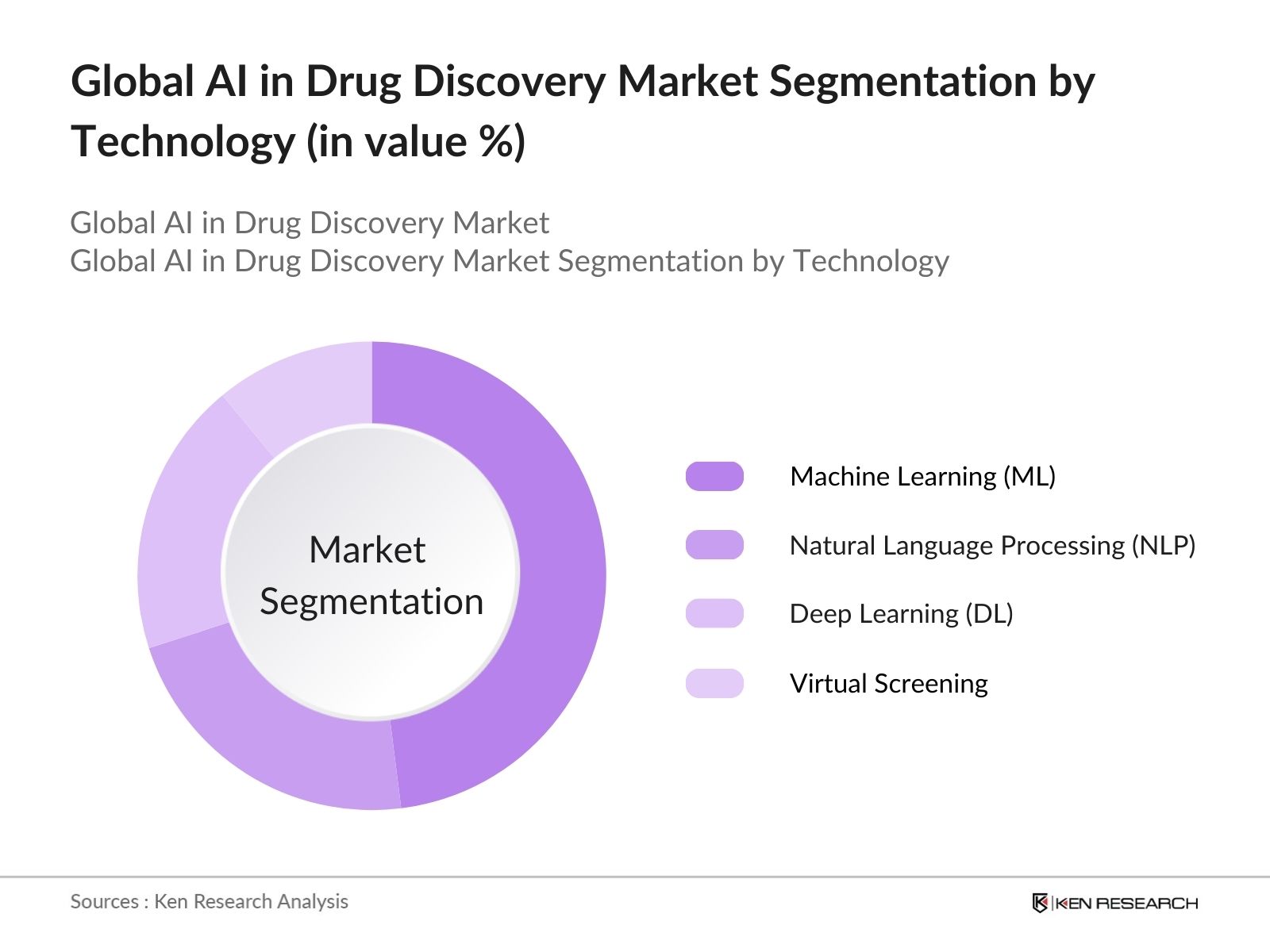
By Technology: The AI in drug discovery market is segmented by technology into Machine Learning (ML), Natural Language Processing (NLP), Deep Learning (DL), and Virtual Screening. Recently, machine learning has dominated the technology segment of the AI drug discovery market due to its ability to analyze large datasets quickly and generate models that can predict drug interactions, toxicity, and efficacy. The automation provided by ML in the drug discovery process significantly reduces both time and cost, making it highly attractive to pharmaceutical companies aiming to speed up their R&D processes.
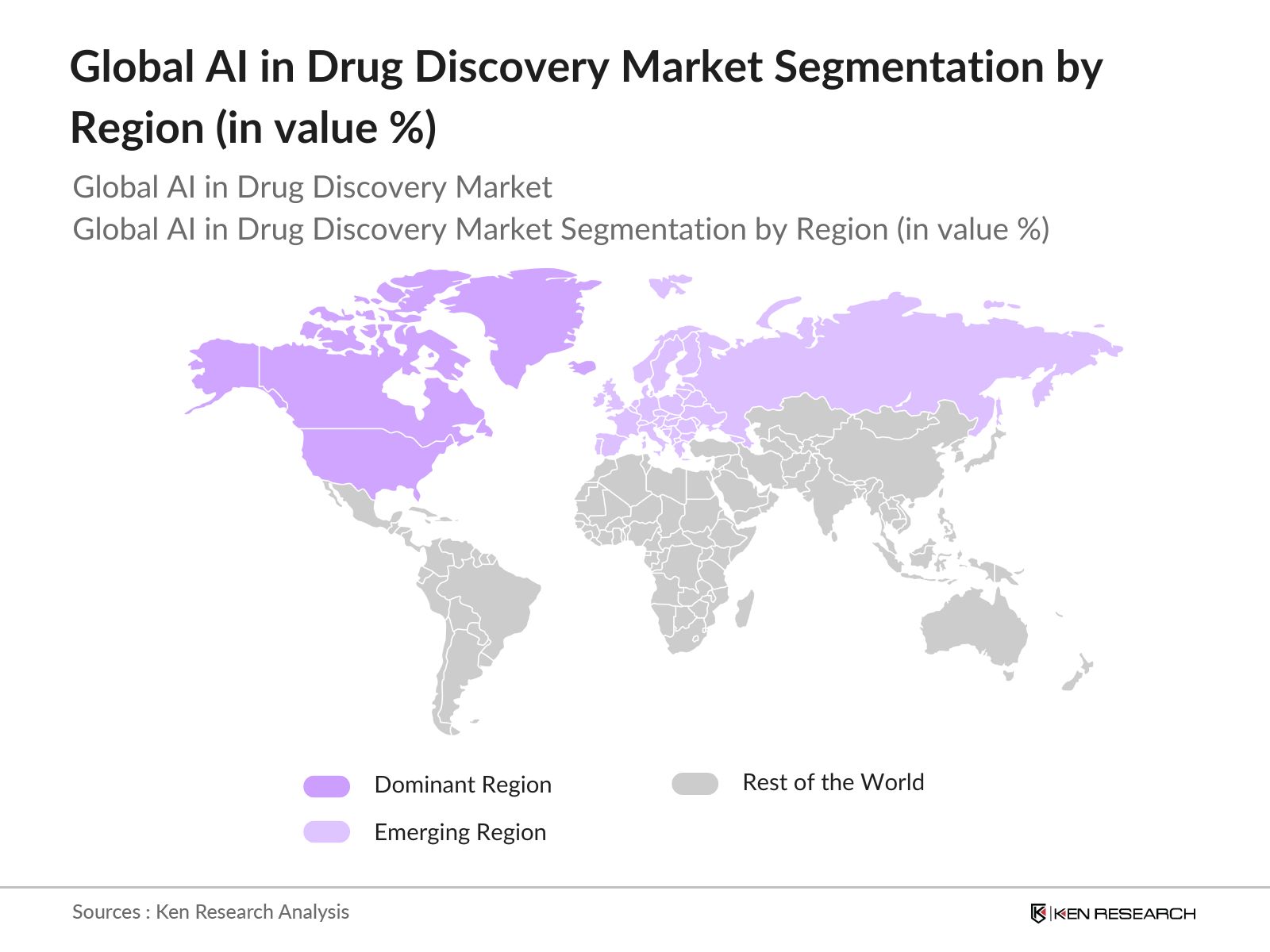
By Region: Regionally, the market is divided into North America, Europe, Asia-Pacific, Latin America, and the Middle East & Africa. North America leads the market, driven by its high concentration of AI technology companies and pharmaceutical giants actively integrating AI into drug discovery. The region's strong regulatory support and substantial investment in healthcare innovation also contribute to its dominance.
By Application: The market is also segmented by application into Target Identification, Drug Screening, De Novo Drug Design, and Preclinical and Clinical Testing. Target Identification holds the dominant share of the market, largely due to the critical role AI plays in identifying novel drug targets through genome analysis and molecular profiling. AI algorithms help streamline the identification process, leading to more accurate predictions of how drug molecules will interact with specific targets, thereby improving success rates in the early stages of drug development.
The global AI in drug discovery market is dominated by both established pharmaceutical companies and innovative AI startups. This consolidation highlights the significance of partnerships between AI specialists and drug manufacturers, with companies investing heavily in AI-driven R&D initiatives. The competitive landscape is characterized by collaborations, strategic alliances, and increasing acquisitions of AI companies by pharmaceutical firms to enhance their drug development pipelines.
|
Company |
Establishment Year |
Headquarters |
R&D Investment |
AI Patents |
Therapeutic Areas |
Partnerships |
Drug Candidates |
AI Platform |
|---|---|---|---|---|---|---|---|---|
|
Exscientia |
2012 |
Oxford, UK |
- |
- |
- |
- |
- |
- |
|
BenevolentAI |
2013 |
London, UK |
- |
- |
- |
- |
- |
- |
|
Insilico Medicine |
2014 |
Hong Kong, China |
- |
- |
- |
- |
- |
- |
|
Atomwise |
2012 |
San Francisco, USA |
- |
- |
- |
- |
- |
- |
|
Schrodinger |
1990 |
New York, USA |
- |
- |
- |
- |
- |
- |
Over the next five years, the global AI in drug discovery market is expected to witness significant growth driven by the increasing integration of AI technologies in pharmaceutical research, heightened investment in AI-driven drug pipelines, and the adoption of AI across both early-stage drug discovery and clinical trials. Additionally, advancements in AI algorithms, coupled with the expanding application of AI in predicting drug efficacy and toxicity, will likely lead to the development of more targeted therapies.
|
By Technology |
Machine Learning (ML) |
|
By Application |
Target Identification |
|
By Drug Type |
Small Molecule Drugs |
|
By End-User |
Pharmaceutical Companies |
|
By Region |
North America |
1.1. Definition and Scope
1.2. Market Taxonomy
1.3. Market Dynamics
1.4. Market Segmentation Overview
2.1. Historical Market Size
2.2. Year-On-Year Growth Analysis
2.3. Key Market Developments and Milestones
3.1. Growth Drivers
3.1.1. Increasing R&D Investments (AI Implementation in Drug Discovery)
3.1.2. Growing Number of AI Startups in Healthcare (Startups Contribution)
3.1.3. Shorter Drug Development Cycles (Efficiency in Clinical Trials)
3.1.4. Rising Demand for Precision Medicine (AI in Personalized Therapies)
3.2. Market Challenges
3.2.1. Data Privacy and Security (Handling Sensitive Health Data)
3.2.2. High Costs of AI Solutions (Implementation and Operational Costs)
3.2.3. Regulatory Compliance (FDA and EMA AI Drug Discovery Guidelines)
3.2.4. Lack of Skilled Workforce (Shortage of AI Specialists in Drug Development)
3.3. Opportunities
3.3.1. Collaboration Between Pharma and AI Companies (Partnerships and Joint Ventures)
3.3.2. Increasing Use of AI for Rare Diseases Drug Discovery (Filling Therapeutic Gaps)
3.3.3. Expansion into Emerging Markets (Untapped Potential in APAC and Africa)
3.3.4. AI-Driven Predictive Analytics (Use of AI in Predictive Clinical Outcomes)
3.4. Trends
3.4.1. Use of AI in Biomarker Discovery (Accelerating Disease Diagnosis)
3.4.2. Increased Application of NLP in Drug Discovery (Text Mining for Data Extraction)
3.4.3. Integration of AI with High-Throughput Screening (Automation in Drug Screening)
3.4.4. Rise in AI-Backed Drug Repurposing Initiatives (Rediscovering Drugs with AI)
3.5. Government Regulation
3.5.1. AI Regulatory Frameworks for Drug Development (FDA, EMA Standards)
3.5.2. Government AI Innovation Initiatives in Healthcare (Global AI Policies in Drug R&D)
3.5.3. Public-Private Partnerships in AI (AI in National Health Programs)
3.5.4. AI Ethics and Drug Discovery (Ethical Use of AI in Healthcare)
3.6. SWOT Analysis
3.7. Stakeholder Ecosystem (AI Software Providers, Pharma Companies, Research Institutions)
3.8. Porters Five Forces (Market Power Dynamics Between Pharma and AI Providers)
3.9. Competitive Ecosystem (AI-Driven Drug Discovery Landscape)
4.1. By Technology (In Value %)
4.1.1. Machine Learning (ML)
4.1.2. Natural Language Processing (NLP)
4.1.3. Deep Learning (DL)
4.1.4. Virtual Screening
4.2. By Application (In Value %)
4.2.1. Target Identification
4.2.2. Drug Screening
4.2.3. De Novo Drug Design
4.2.4. Preclinical and Clinical Testing
4.3. By Drug Type (In Value %)
4.3.1. Small Molecule Drugs
4.3.2. Biologics
4.3.3. Gene Therapies
4.3.4. RNA-based Drugs
4.4. By End-User (In Value %)
4.4.1. Pharmaceutical Companies
4.4.2. Biotechnology Companies
4.4.3. Contract Research Organizations (CROs)
4.4.4. Academic & Research Institutes
4.5. By Region (In Value %)
4.5.1. North America
4.5.2. Europe
4.5.3. Asia-Pacific
4.5.4. Latin America
4.5.5. Middle East & Africa
5.1 Detailed Profiles of Major Companies
5.1.1. Exscientia
5.1.2. BenevolentAI
5.1.3. Insilico Medicine
5.1.4. Atomwise
5.1.5. Schrodinger
5.1.6. Iktos
5.1.7. Deep Genomics
5.1.8. Recursion Pharmaceuticals
5.1.9. Valo Health
5.1.10. XtalPi
5.1.11. BioSymetrics
5.1.12. Healx
5.1.13. Cyclica
5.1.14. Owkin
5.1.15. Verge Genomics
5.2 Cross Comparison Parameters (Funding Received, AI Expertise, Drug Discovery Platforms, Therapeutic Focus, Patents Held, Key Partnerships, Clinical Trials Contribution, AI-Driven Drug Approvals)
5.3 Market Share Analysis (By Company, By Application, By Region)
5.4 Strategic Initiatives (R&D Investments, AI-Healthcare Collaborations)
5.5 Mergers and Acquisitions (AI-Focused Pharma M&A)
5.6 Investment Analysis (AI-Specific Drug Discovery Investments)
5.7 Venture Capital Funding (Top AI Healthcare Investors)
5.8 Government Grants (AI Research Funding in Drug Development)
5.9 Private Equity Investments (PE Investments in AI Drug Discovery Companies)
6.1. AI and Drug Discovery Regulatory Compliance (FDA, EMA, PMDA Standards)
6.2. Certification Processes for AI-Driven Solutions in Drug Development
7.1. Future Market Size Projections
7.2. Key Factors Driving Future Market Growth
8.1. By Technology (In Value %)
8.2. By Application (In Value %)
8.3. By Drug Type (In Value %)
8.4. By End-User (In Value %)
8.5. By Region (In Value %)
9.1. TAM/SAM/SOM Analysis
9.2. Strategic Product Positioning
9.3. White Space Opportunity Analysis
9.4. Growth Opportunity Mapping
The first step involved creating an in-depth ecosystem map of the global AI in drug discovery market. Through extensive desk research using proprietary databases and industry-level sources, key variables like R&D investment, AI application areas, and major collaborations between pharma and AI companies were identified.
This step entailed gathering historical data related to AI implementation in drug discovery and evaluating the growth trajectory across key segments, including technology and application types. The analysis also covered AIs role in drug pipeline acceleration and clinical trials optimization.
Our hypotheses were validated through consultations with AI and pharmaceutical industry experts. CATIs were conducted with key stakeholders to collect insights on AI integration in drug discovery, partnerships, and R&D trends.
We synthesized the findings from expert consultations and quantitative data collection to generate a comprehensive analysis of the market. The final report is a validated overview of the global AI in drug discovery market, including projections and future trends.
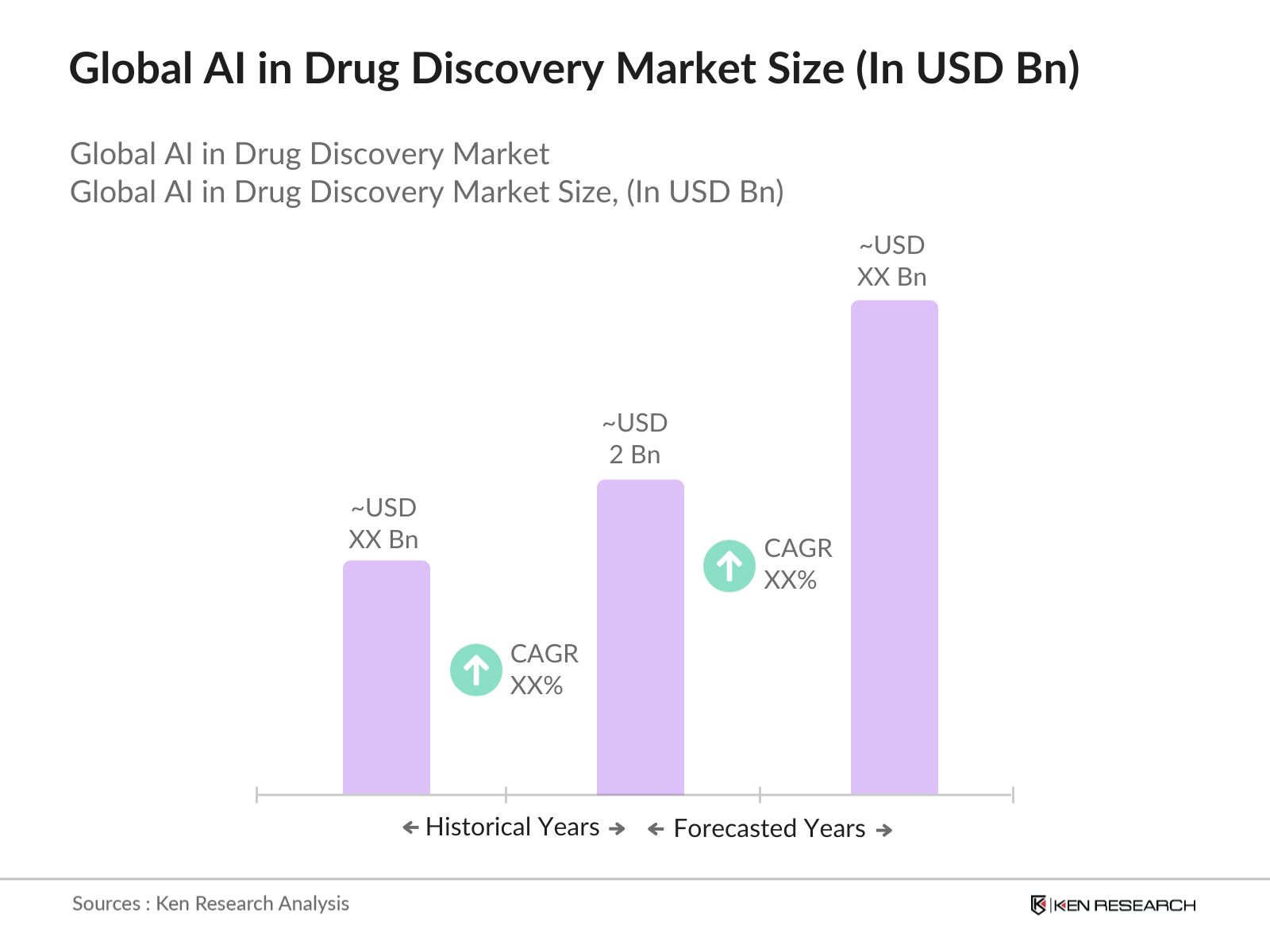
The global AI in drug discovery market is valued at USD 2 billion, driven by the rising adoption of AI technologies across the pharmaceutical industry to accelerate drug development and clinical trials.
Challenges include high implementation costs, regulatory hurdles, and the need for a skilled workforce proficient in both AI and drug discovery, limiting the full-scale adoption of AI across pharmaceutical R&D.
Key players include Exscientia, BenevolentAI, Insilico Medicine, Atomwise, and Schrodinger, all of which have established strong partnerships with pharmaceutical companies and made significant advancements in AI-driven drug discovery platforms.
Growth drivers include increasing R&D investments, the rising need for precision medicine, the application of AI in target identification and drug screening, and collaborations between AI companies and pharmaceutical firms.

What makes us stand out is that our consultants follows Robust, Refine and Result (RRR) methodology. i.e. Robust for clear definitions, approaches and sanity checking, Refine for differentiating respondents facts and opinions and Result for presenting data with story

We have set a benchmark in the industry by offering our clients with syndicated and customized market research reports featuring coverage of entire market as well as meticulous research and analyst insights.

While we don't replace traditional research, we flip the method upside down. Our dual approach of Top Bottom & Bottom Top ensures quality deliverable by not just verifying company fundamentals but also looking at the sector and macroeconomic factors.

With one step in the future, our research team constantly tries to show you the bigger picture. We help with some of the tough questions you may encounter along the way: How is the industry positioned? Best marketing channel? KPI's of competitors? By aligning every element, we help maximize success.

Our report gives you instant access to the answers and sources that other companies might choose to hide. We elaborate each steps of research methodology we have used and showcase you the sample size to earn your trust.

If you need any support, we are here! We pride ourselves on universe strength, data quality, and quick, friendly, and professional service.