
Global AI in Healthcare Market Outlook 2030
Region:Global
Author(s):Shivani Mehra
Product Code:KROD4951
Region:Global
Author(s):Shivani Mehra
Product Code:KROD4951
November 2024
88
Listen to the audio summary
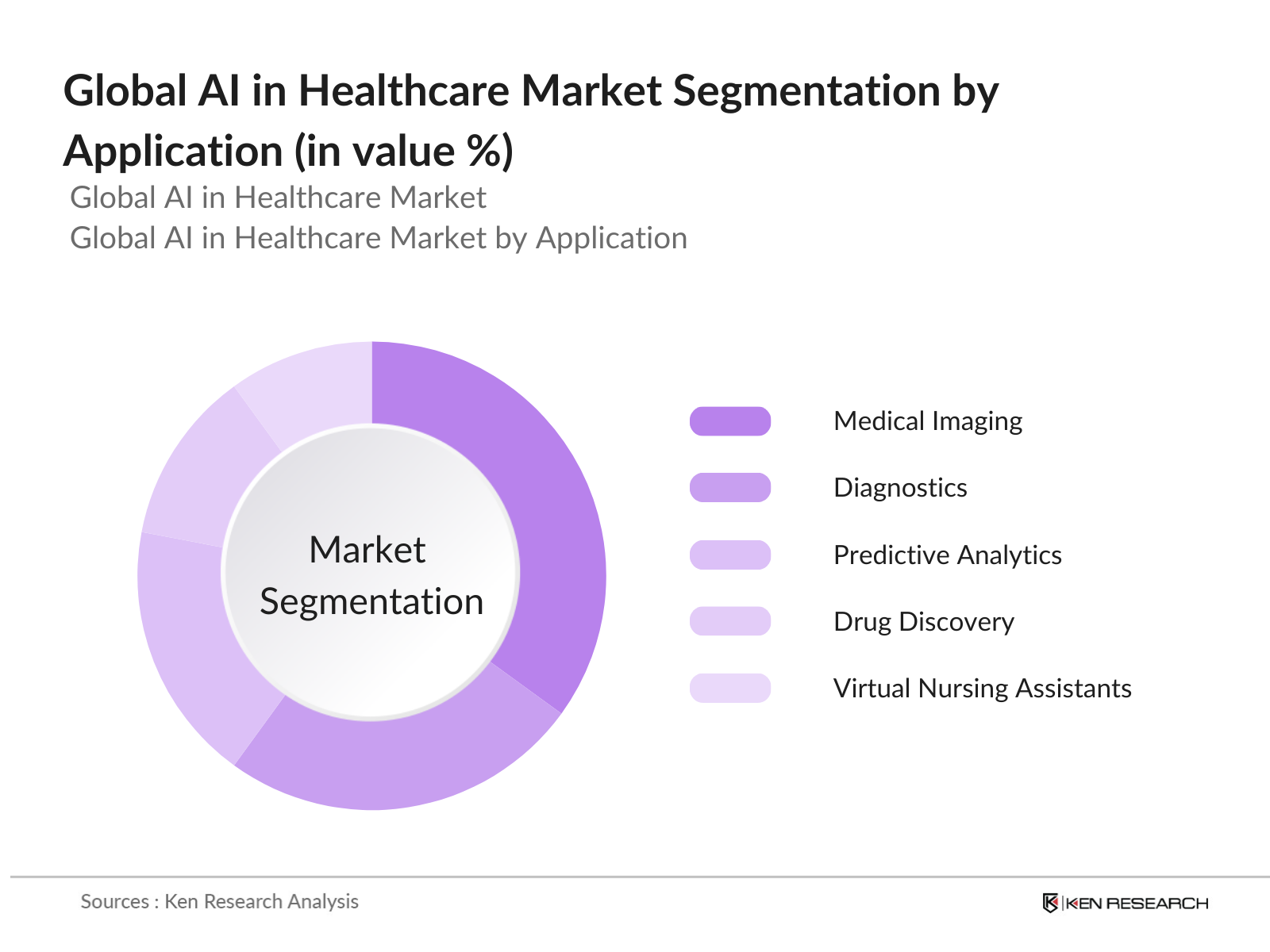
By Application: The Global AI in Healthcare market is segmented by application into medical imaging, diagnostics, predictive analytics, drug discovery, and virtual nursing assistants. Among these, medical imaging dominates the market share due to the increasing reliance on AI tools for detecting anomalies in imaging data. These AI solutions assist radiologists in improving diagnostic accuracy and reducing human error. Additionally, AI-driven tools are significantly enhancing early disease detection capabilities, making medical imaging a crucial segment in healthcare AI.
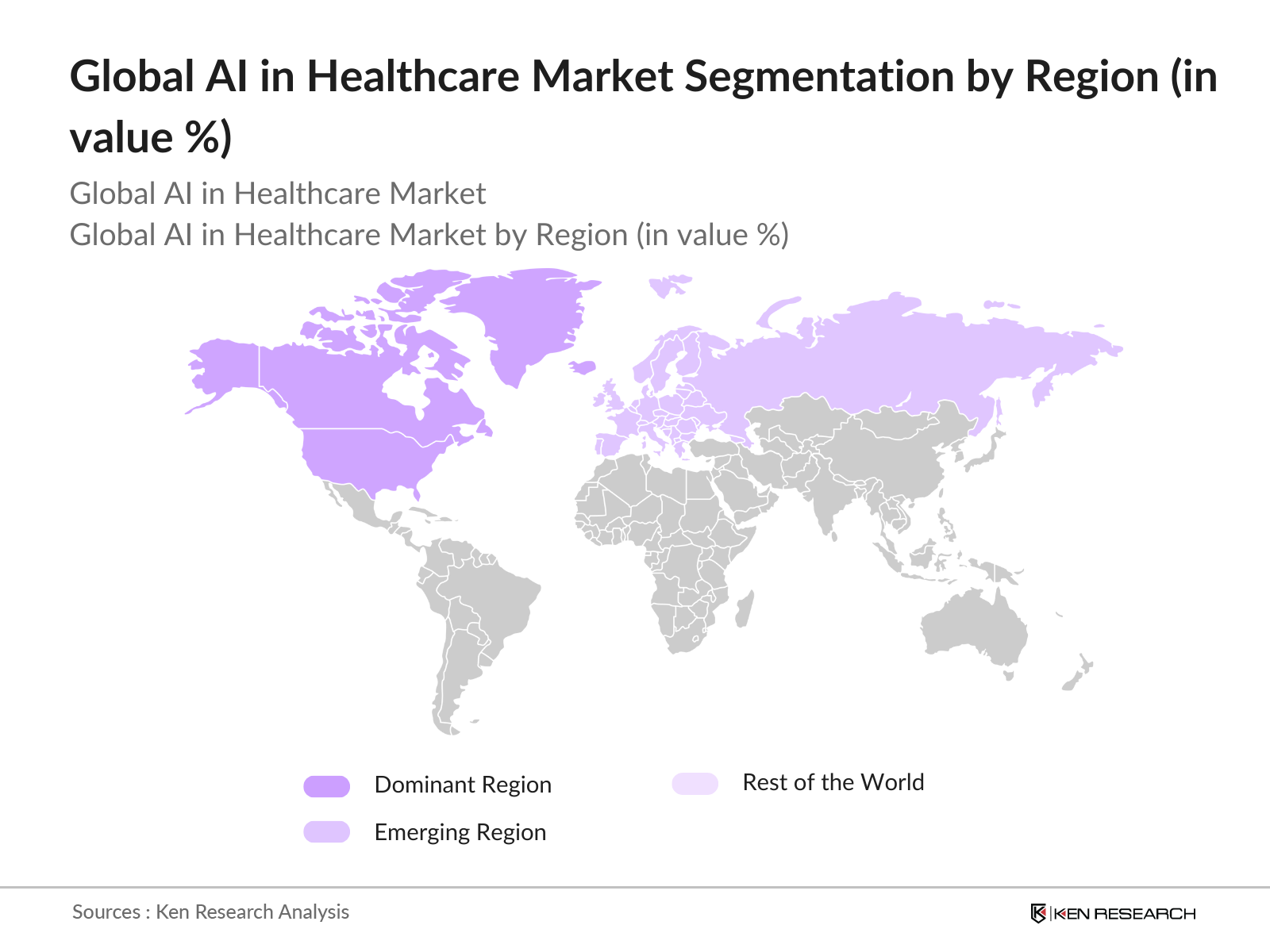
By Region: The Global AI in Healthcare market is segmented into North America, Europe, Asia-Pacific, Latin America, and the Middle East & Africa. North America leads the market, mainly due to the technological advancements and high healthcare expenditures in the United States. The presence of major AI developers and healthcare giants further boosts this region's leadership in the sector. The growing demand for AI-driven healthcare solutions and the presence of a well-established digital health infrastructure contribute significantly to North Americas market dominance.
The Global AI in Healthcare market is dominated by several key players, many of whom have established strong footholds through strategic partnerships and significant R&D investments. These companies focus on developing AI-driven tools and platforms that revolutionize healthcare delivery.
|
Company Name |
Establishment Year |
Headquarters |
AI Patents |
R&D Investment |
AI in Diagnostics Solutions |
AI Integration with EMR |
AI-Powered Predictive Tools |
Strategic Partnerships |
Global Presence |
|
IBM Watson Health |
2015 |
United States |
|||||||
|
NVIDIA Corporation |
1993 |
United States |
|||||||
|
Google Health |
2018 |
United States |
|||||||
|
Siemens Healthineers |
2017 |
Germany |
|||||||
|
GE Healthcare |
1994 |
United States |
Over the next five years, the AI in Healthcare market is expected to experience robust growth due to rapid advancements in AI technology, an increasing need for data-driven healthcare solutions, and the continued digitization of healthcare services. The integration of AI in early diagnosis, personalized treatment, and robotic surgeries will further propel the market forward. Companies that develop AI-powered tools for healthcare professionals are likely to see significant opportunities as healthcare providers look for solutions to reduce costs, improve patient outcomes, and manage the growing volume of patient data.
|
By Application |
Medical Imaging Diagnostic Predictive Analytics Drug Discovery Virtual Nursing Assistants |
|
By Component |
Hardware Software Services |
|
By Technology |
Machine Learning Natural Language Processing Computer Vision Context-Aware Processing |
|
By End-User |
Hospitals and Clinics Pharmaceutical and Biotechnology Companies Research Institutions Healthcare Payers |
|
By Region |
North America Europe Asia-Pacific Latin America Middle East & Africa |
1.1. Definition and Scope
1.2. Market Taxonomy (AI-driven diagnostics, clinical decision support systems, predictive analytics, medical imaging AI, robotic surgery)
1.3. Market Growth Rate (Compound Annual Growth Rate, AI adoption rates, digital health expenditure)
1.4. Market Segmentation Overview
2.1. Historical Market Size
2.2. Year-On-Year Growth Analysis
2.3. Key Market Developments and Milestones (AI-enabled healthcare regulations, key market launches, AI-driven initiatives)
3.1. Growth Drivers
3.1.1. Increased Adoption of AI in Diagnostics
3.1.2. Growing Demand for Personalized Medicine
3.1.3. AI Integration with Telehealth
3.1.4. Government and Regulatory Support for AI in Healthcare
3.2. Market Challenges
3.2.1. High Implementation Costs
3.2.2. Ethical and Regulatory Challenges
3.2.3. Data Privacy and Security Concerns
3.2.4. Lack of Skilled AI Workforce
3.3. Opportunities
3.3.1. AI-Powered Drug Discovery
3.3.2. Growth of AI in Mental Health Monitoring
3.3.3. Increased Funding and Venture Capital Investments
3.3.4. Expansion of AI in Developing Healthcare Markets
3.4. Trends
3.4.1. AI Integration with Wearable Devices
3.4.2. Rising Use of AI in Virtual Health Assistants
3.4.3. Use of Natural Language Processing (NLP) for Clinical Data
3.5. Government Regulations (FDA, EMA, AI-specific healthcare standards, data-sharing policies)
3.6. SWOT Analysis
3.7. Stakeholder Ecosystem
3.8. Porters Five Forces
3.9. Competition Ecosystem
4.1. By Application (In Value %)
4.1.1. Medical Imaging
4.1.2. Diagnostics
4.1.3. Predictive Analytics
4.1.4. Drug Discovery
4.1.5. Virtual Nursing Assistants
4.2. By Component (In Value %)
4.2.1. Hardware
4.2.2. Software
4.2.3. Services
4.3. By Technology (In Value %)
4.3.1. Machine Learning
4.3.2. Natural Language Processing
4.3.3. Computer Vision
4.3.4. Context-Aware Processing
4.4. By End-User (In Value %)
4.4.1. Hospitals and Clinics
4.4.2. Pharmaceutical and Biotechnology Companies
4.4.3. Research Institutions
4.4.4. Healthcare Payers
4.5. By Region (In Value %)
4.5.1. North America
4.5.2. Europe
4.5.3. Asia-Pacific
4.5.4. Latin America
4.5.5. Middle East & Africa
5.1. Detailed Profiles of Major Competitors
5.1.1. IBM Watson Health
5.1.2. NVIDIA Corporation
5.1.3. Google Health
5.1.4. Microsoft Azure AI
5.1.5. GE Healthcare
5.1.6. Siemens Healthineers
5.1.7. Medtronic
5.1.8. Philips Healthcare
5.1.9. Tempus Labs
5.1.10. Zebra Medical Vision
5.1.11. Butterfly Network
5.1.12. PathAI
5.1.13. Sensely
5.1.14. Atomwise
5.1.15. Viz.ai
5.2. Cross Comparison Parameters (Revenue, AI Solutions Portfolio, Market Presence, Partnerships, R&D Spend, AI Patents, AI Healthcare Adoption Rate, Employee Count)
5.3. Market Share Analysis
5.4. Strategic Initiatives
5.5. Mergers and Acquisitions
5.6. Investment Analysis
5.7. Venture Capital Funding
5.8. Government Grants
5.9. Private Equity Investments
6.1. Data Protection and Privacy Regulations (HIPAA, GDPR, CCPA)
6.2. AI Algorithm Approval Process (FDA, CE Marking)
6.3. Certification and Compliance (ISO, AI Safety Regulations)
6.4. Ethical Standards for AI in Healthcare
7.1. Future Market Size Projections
7.2. Key Factors Driving Future Market Growth
8.1. By Application (In Value %)
8.2. By Component (In Value %)
8.3. By Technology (In Value %)
8.4. By End-User (In Value %)
8.5. By Region (In Value %)
9.1. TAM/SAM/SOM Analysis
9.2. Customer Cohort Analysis
9.3. Marketing Initiatives
9.4. White Space Opportunity Analysis
Disclaimer Contact UsThis step involves mapping out the healthcare ecosystem and identifying all critical stakeholders, including AI developers, healthcare institutions, and regulatory bodies. Extensive desk research is carried out to gather industry-level information from secondary and proprietary sources.
Historical market data is analyzed to assess the adoption rate of AI technologies in healthcare. Key performance indicators, such as AI integration in diagnostic tools and patient management systems, are measured to estimate current market performance.
Market hypotheses are generated based on data analysis and are validated through interviews with industry experts, including AI software providers and healthcare professionals. These insights help ensure the accuracy of market estimates and projections.
The final step synthesizes all research findings into a comprehensive market report. This includes validation of data through direct engagement with healthcare providers using AI tools. The report is then refined to ensure it delivers actionable insights.
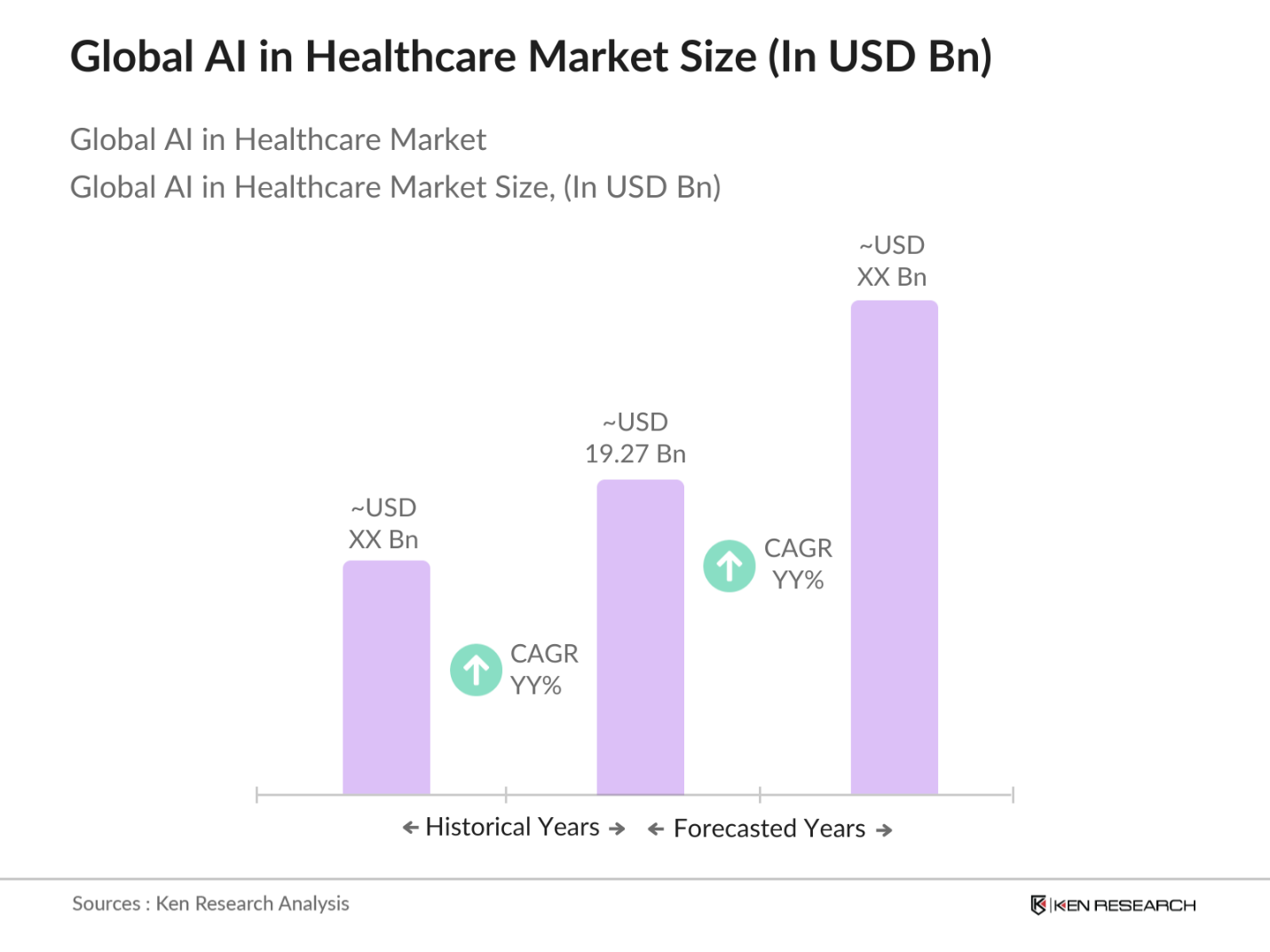
The Global AI in Healthcare market is valued at USD 19.27 billion, driven by increasing adoption of AI technologies in diagnostics, patient management, and personalized treatments.
Challenges include the high cost of AI implementation, ethical concerns regarding data privacy, and the shortage of skilled professionals to manage AI-driven systems in healthcare.
Key players include IBM Watson Health, NVIDIA Corporation, Google Health, Siemens Healthineers, and GE Healthcare, all of whom dominate due to their strong R&D investments and partnerships in AI technologies.
The market is driven by factors such as the need for cost-effective healthcare solutions, rising demand for AI-powered diagnostics, and growing volumes of patient data that require advanced analytics.

What makes us stand out is that our consultants follows Robust, Refine and Result (RRR) methodology. i.e. Robust for clear definitions, approaches and sanity checking, Refine for differentiating respondents facts and opinions and Result for presenting data with story

We have set a benchmark in the industry by offering our clients with syndicated and customized market research reports featuring coverage of entire market as well as meticulous research and analyst insights.

While we don't replace traditional research, we flip the method upside down. Our dual approach of Top Bottom & Bottom Top ensures quality deliverable by not just verifying company fundamentals but also looking at the sector and macroeconomic factors.

With one step in the future, our research team constantly tries to show you the bigger picture. We help with some of the tough questions you may encounter along the way: How is the industry positioned? Best marketing channel? KPI's of competitors? By aligning every element, we help maximize success.

Our report gives you instant access to the answers and sources that other companies might choose to hide. We elaborate each steps of research methodology we have used and showcase you the sample size to earn your trust.

If you need any support, we are here! We pride ourselves on universe strength, data quality, and quick, friendly, and professional service.