
Global AI in Sports Market Outlook 2030
Region:Global
Author(s):Shivani Mehra
Product Code:KROD6265
Region:Global
Author(s):Shivani Mehra
Product Code:KROD6265
November 2024
97
Listen to the audio summary
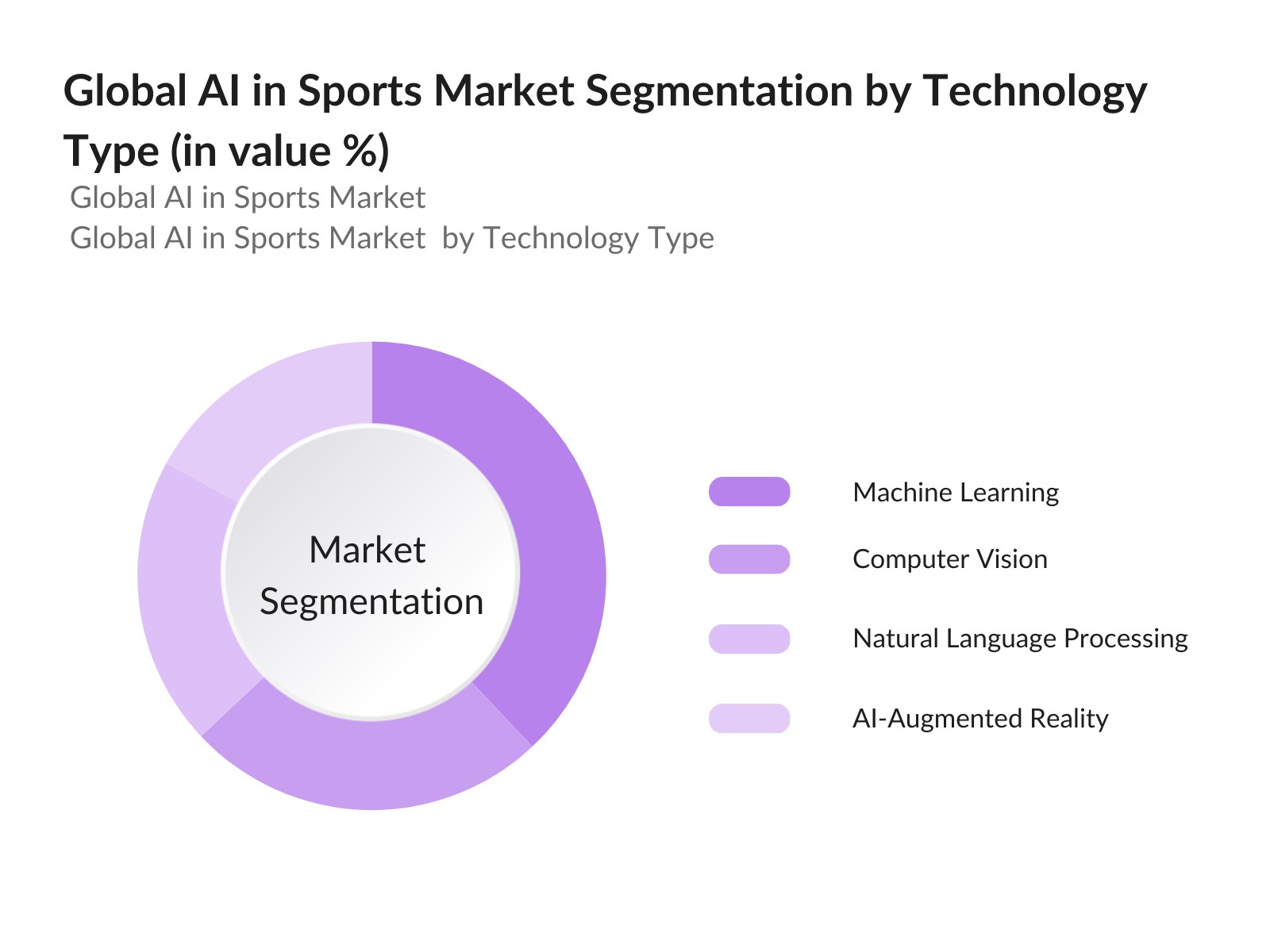
By Technology Type: The AI in Sports market is segmented by technology into machine learning, computer vision, natural language processing (NLP), and AI-augmented reality (AI-AR). Machine learning holds the dominant market share in 2023 due to its extensive use in predictive analysis for player performance and game strategies. The ability of machine learning models to process vast amounts of data in real time and offer actionable insights makes it the most prevalent AI technology used in sports. Additionally, sports organizations are using machine learning algorithms for health monitoring, which further boosts its adoption.
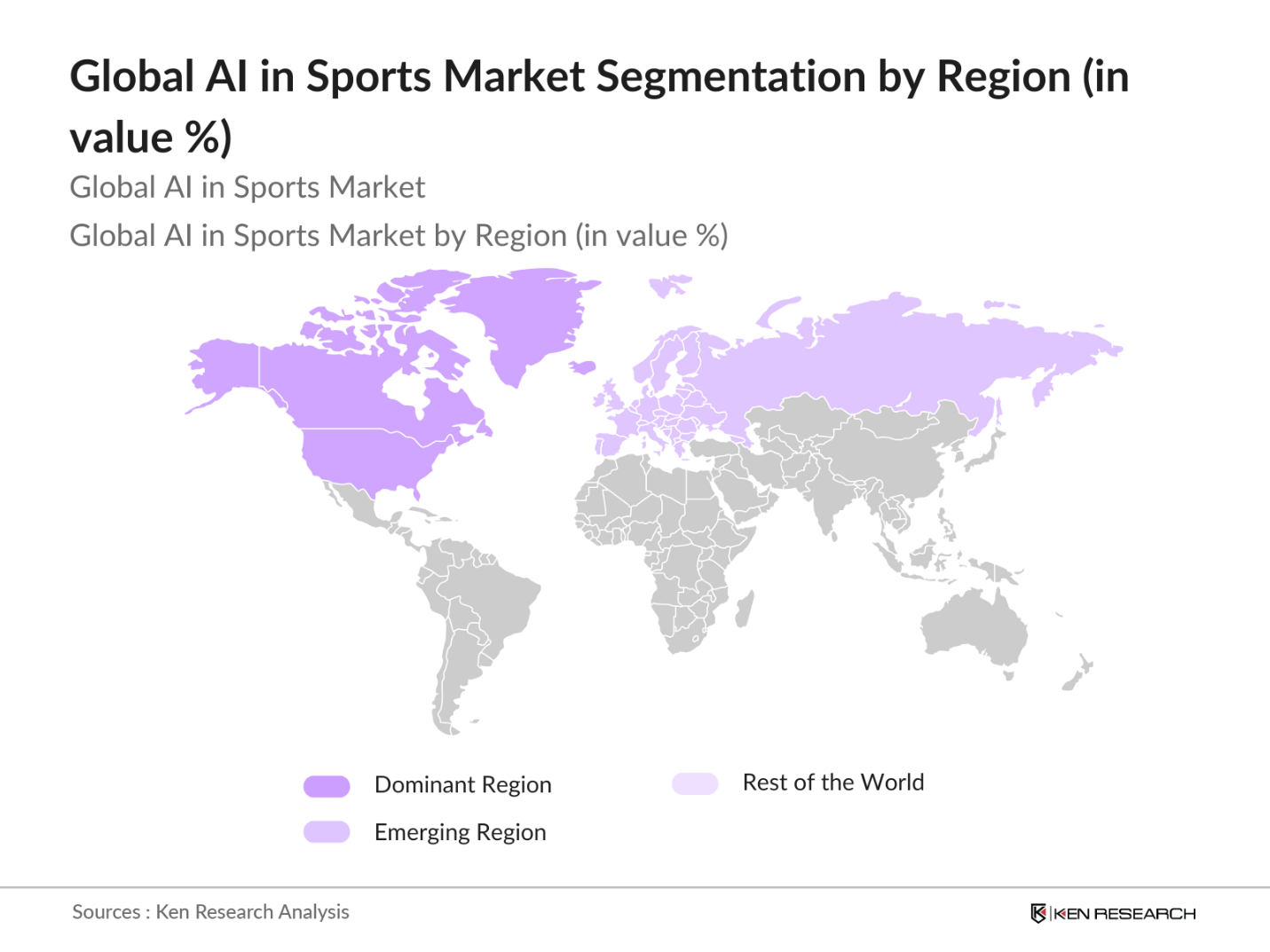
By Region: The AI in Sports market is segmented by region into North America, Europe, Asia-Pacific, Middle East & Africa, and Latin America. North America dominates the market due to its advanced technological infrastructure and strong presence of major sports leagues like the NFL, NBA, and NHL, which are early adopters of AI technologies. The region also benefits from a robust startup ecosystem and substantial investments in sports tech. Europe follows closely, driven by soccer clubs using AI tools for player scouting and fan engagement.
The Global AI in Sports market is dominated by a mix of established technology giants and specialized sports tech companies. These companies are playing pivotal roles in shaping the market through technological innovations, partnerships with sports organizations, and strategic investments.
|
Company Name |
Established Year |
Headquarters |
Key Parameters |
|
IBM Corporation |
1911 |
Armonk, USA |
- |
|
Microsoft Corporation |
1975 |
Redmond, USA |
- |
|
Stats Perform |
2018 |
Chicago, USA |
- |
|
Catapult Group International |
2006 |
Melbourne, Australia |
- |
|
SAP SE |
1972 |
Walldorf, Germany |
- |
Over the next five years, the Global AI in Sports market is expected to experience significant growth, driven by continuous advancements in AI technology, growing demand for personalized fan experiences, and the increasing use of AI in predictive analytics for team strategies. Furthermore, the expansion of esports and its reliance on AI for gameplay analysis will provide new growth opportunities for market players. The implementation of AI in injury prevention, training enhancement, and real-time game analytics is projected to further boost the market's expansion.
|
By Technology Type |
Machine Learning Computer Vision Natural Language Processing AI-Enhanced Augmented Reality |
|
By Application |
Player Performance Tracking Fan Engagement Team Strategy Optimization AI-Powered Sports Equipment |
|
By Sports Type |
Football Basketball Tennis Cricket Esports |
|
By Deployment Type |
Cloud-Based Solutions On-Premises Solutions |
|
By Region |
North America Europe Asia-Pacific Middle East & Africa Latin America |
1.1. Definition and Scope
1.2. Market Taxonomy
1.3. Market Dynamics
1.4. Market Segmentation Overview
2.1. Historical Market Size
2.2. Growth Rate Analysis
2.3. Key Developments and Milestones
3.1. Growth Drivers
3.1.1. Integration of AI with Athlete Performance Tracking
3.1.2. Expansion of AI-Enhanced Fan Engagement Solutions
3.1.3. Rising Investments in AI-Based Sports Analytics
3.1.4. Proliferation of AI-Enabled Wearables and Devices
3.2. Market Challenges
3.2.1. High Cost of AI Adoption in Sports (Cost Factor)
3.2.2. Data Privacy and Ethical Concerns (Regulatory Challenges)
3.2.3. Lack of Skilled Workforce for AI Integration (Talent Gap)
3.3. Opportunities
3.3.1. AI in Esports (Emerging Opportunities)
3.3.2. Collaboration with Technology Giants (Strategic Partnerships)
3.3.3. AI for Injury Prevention and Recovery (Healthcare Integration)
3.4. Market Trends
3.4.1. Increasing Use of AI in Predictive Analytics for Team Strategy
3.4.2. Adoption of AI-Based Video Referee Systems
3.4.3. Real-Time AI Analysis for Fan Experience (Fan Personalization)
3.5. Government Initiatives and Regulations
3.5.1. Sports Digital Transformation Initiatives
3.5.2. AI-Driven Sports Policies
3.5.3. Government Funding for AI in Sports Development
4.1. By Technology Type (In Value %)
4.1.1. Machine Learning
4.1.2. Computer Vision
4.1.3. Natural Language Processing
4.1.4. AI-Enhanced Augmented Reality
4.2. By Application (In Value %)
4.2.1. Player Performance Tracking
4.2.2. Fan Engagement
4.2.3. Team Strategy Optimization
4.2.4. AI-Powered Sports Equipment
4.3. By Sports Type (In Value %)
4.3.1. Football
4.3.2. Basketball
4.3.3. Tennis
4.3.4. Cricket
4.3.5. Esports
4.4. By Deployment Type (In Value %)
4.4.1. Cloud-Based Solutions
4.4.2. On-Premises Solutions
4.5. By Region (In Value %)
4.5.1. North America
4.5.2. Europe
4.5.3. Asia-Pacific
4.5.4. Middle East & Africa
4.5.5. Latin America
5.1. Detailed Profiles of Major Companies
5.1.1. IBM Corporation
5.1.2. Microsoft Corporation
5.1.3. SAS Institute Inc.
5.1.4. Stats Perform
5.1.5. Catapult Group International Ltd
5.1.6. Orreco
5.1.7. Zebra Technologies Corporation
5.1.8. Hudl
5.1.9. Second Spectrum
5.1.10. Beyond Sports
5.1.11. SAP SE
5.1.12. STATSports Group
5.1.13. Quant4Sport
5.1.14. Sportlogiq
5.1.15. Satsport Software Solutions
5.2. Cross Comparison Parameters (Revenue, Market Share, AI Solutions Offered, Sports Applications, Technological Partnerships, Global Presence, Strategic Initiatives, Innovation in AI Solutions)
5.3. Market Share Analysis
5.4. Strategic Initiatives
5.5. Mergers and Acquisitions
5.6. Investment Analysis
5.7. Private Equity and Venture Capital Funding
5.8. Government Grants for AI in Sports
6.1. AI Ethics and Regulations in Sports
6.2. Data Privacy Regulations
6.3. Certification Standards for AI in Sports Equipment
7.1. Future Market Size Projections
7.2. Key Factors Driving Future Market Growth
8.1. By Technology Type (In Value %)
8.2. By Application (In Value %)
8.3. By Sports Type (In Value %)
8.4. By Deployment Type (In Value %)
8.5. By Region (In Value %)
9.1. TAM/SAM/SOM Analysis
9.2. Market Penetration Strategies
9.3. Innovation and R&D Investments
9.4. AI Adoption Roadmap for Sports Organizations
In the first step, we map out the key variables that shape the dynamics of the AI in Sports market. This includes identifying the primary stakeholders such as technology providers, sports leagues, and analytics companies. Through detailed desk research, we gather insights into the major factors driving and hindering market growth.
This phase involves collecting historical data and analyzing key trends in AI adoption within the sports industry. We assess various metrics like AI penetration rates in professional sports leagues, the impact of AI on fan engagement, and market revenue generation.
Our research hypotheses are validated through discussions with industry experts and sports tech companies. This includes consultation with professionals working within the AI and sports ecosystem to verify the accuracy and relevance of market data.
The final step involves synthesizing all gathered information to deliver an accurate and comprehensive market analysis. This includes insights on technology trends, consumer preferences, and growth forecasts based on validated data.
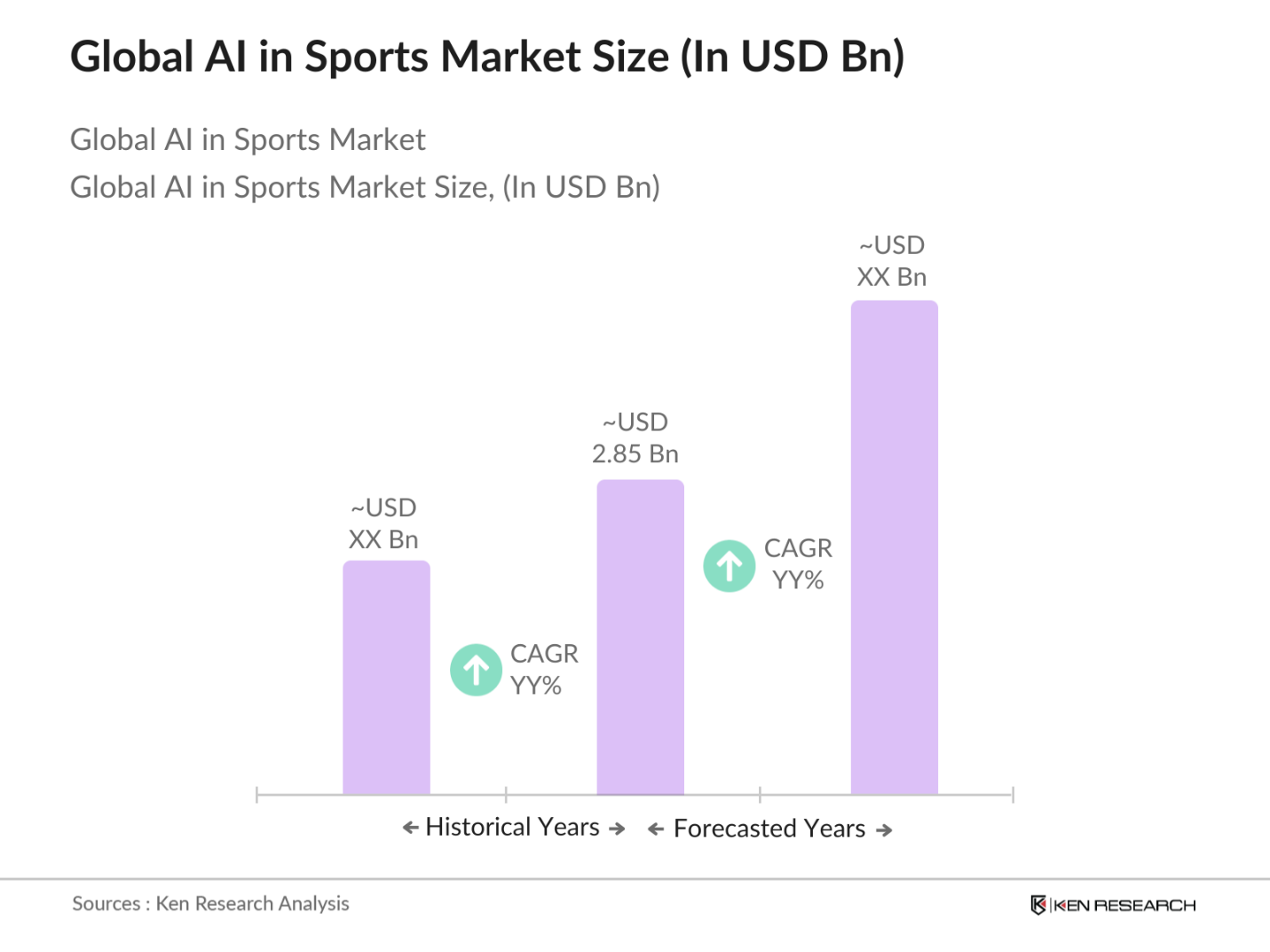
The Global AI in Sports market is valued at USD 2.85 billion, driven by advancements in AI technology, player performance analytics, and AI-enhanced fan engagement solutions.
Key challenges include the high cost of AI implementation, concerns over data privacy and security, and the lack of skilled professionals capable of integrating AI systems into sports environments.
Major players in the market include IBM Corporation, Microsoft Corporation, Stats Perform, Catapult Group International, and SAP SE, all of which dominate through their AI-driven sports solutions and global partnerships.
Growth drivers include the increasing demand for real-time data analysis, the adoption of AI-based wearables in sports, and the integration of AI technologies to enhance fan engagement and operational efficiency in sports leagues.

What makes us stand out is that our consultants follows Robust, Refine and Result (RRR) methodology. i.e. Robust for clear definitions, approaches and sanity checking, Refine for differentiating respondents facts and opinions and Result for presenting data with story

We have set a benchmark in the industry by offering our clients with syndicated and customized market research reports featuring coverage of entire market as well as meticulous research and analyst insights.

While we don't replace traditional research, we flip the method upside down. Our dual approach of Top Bottom & Bottom Top ensures quality deliverable by not just verifying company fundamentals but also looking at the sector and macroeconomic factors.

With one step in the future, our research team constantly tries to show you the bigger picture. We help with some of the tough questions you may encounter along the way: How is the industry positioned? Best marketing channel? KPI's of competitors? By aligning every element, we help maximize success.

Our report gives you instant access to the answers and sources that other companies might choose to hide. We elaborate each steps of research methodology we have used and showcase you the sample size to earn your trust.

If you need any support, we are here! We pride ourselves on universe strength, data quality, and quick, friendly, and professional service.