
Global AI Powered Stock Trading Platform Market Outlook to 2030
Region:Global
Author(s):Paribhasha Tiwari
Product Code:KROD4813
Region:Global
Author(s):Paribhasha Tiwari
Product Code:KROD4813
December 2024
90
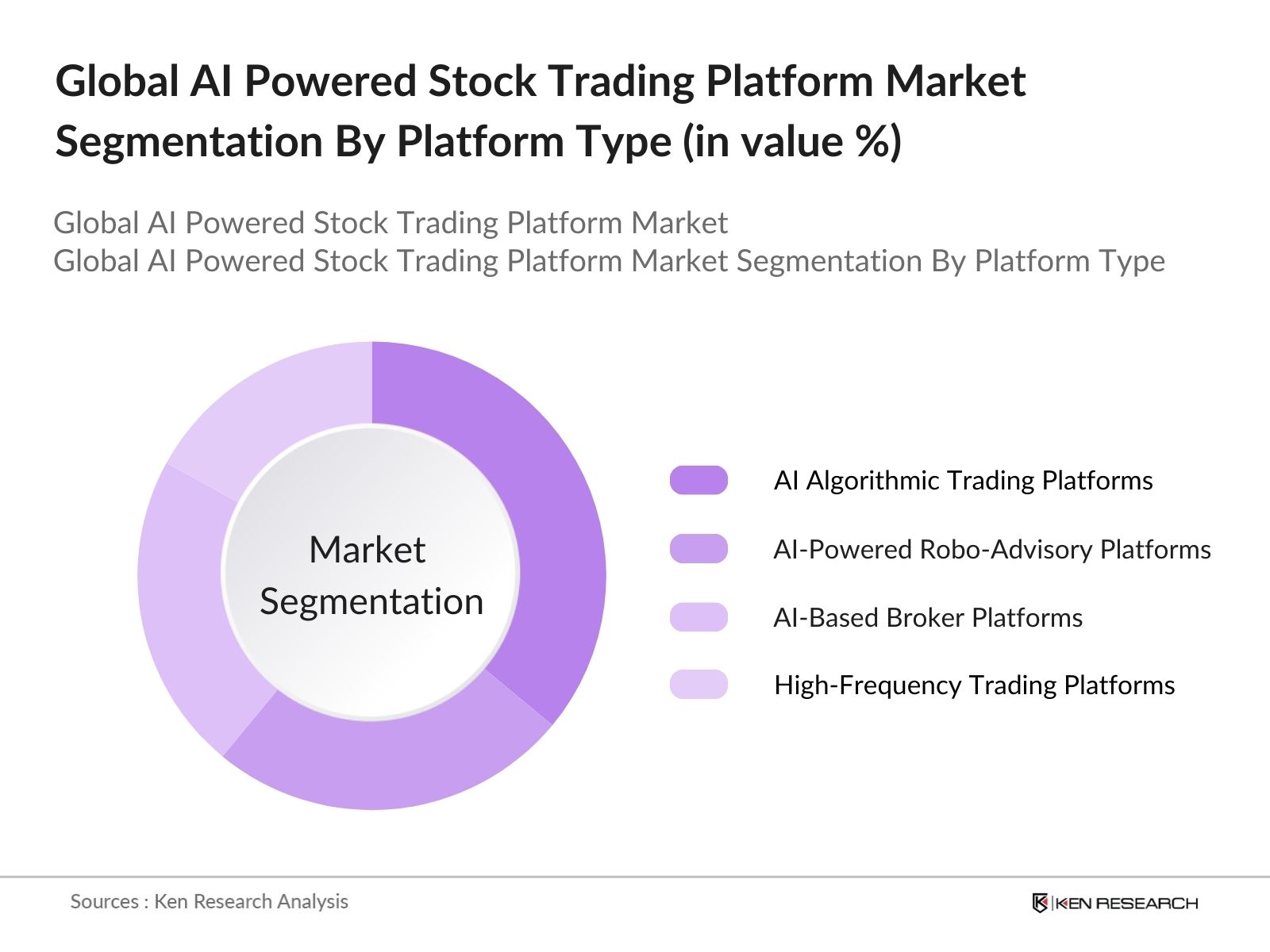
By Platform Type: The global AI-powered stock trading platform market is segmented by platform type into AI-based broker platforms, AI algorithmic trading platforms, AI-powered robo-advisory platforms, and high-frequency trading platforms. Recently, AI algorithmic trading platforms have dominated the market. The reason behind this is their ability to execute a large number of trades in a fraction of a second, using complex algorithms and real-time data. These platforms are widely adopted by hedge funds, institutional investors, and high-net-worth individuals, who rely on AI models to optimize trades and reduce latency.
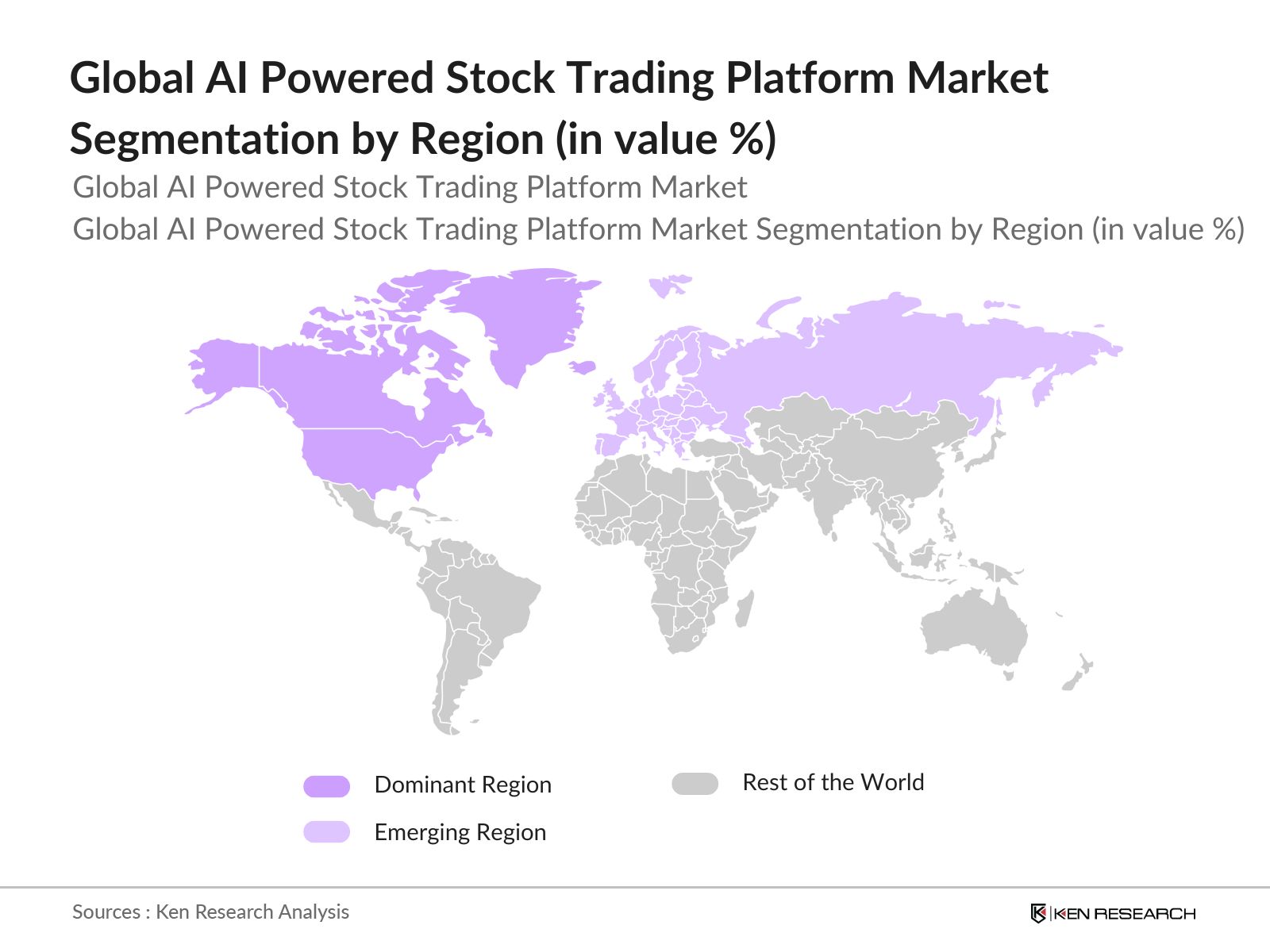
By Region: The market is segmented regionally into North America, Europe, Asia-Pacific, Latin America, and the Middle East & Africa. North America is the dominant region in the global AI-powered stock trading platform market, driven primarily by the United States. This dominance stems from the region's advanced technological infrastructure, a well-established financial ecosystem, and substantial investments in fintech innovation. The U.S. is home to leading AI trading platforms and boasts a large base of institutional and retail investors who leverage AI-driven tools for algorithmic and high-frequency trading.
The global AI-powered stock trading platform market is dominated by both established financial institutions and fintech startups. These companies are investing heavily in AI-driven solutions to stay ahead of competitors and meet the growing demand for automated trading. The market consolidation reflects the influence of a few key players with advanced AI capabilities.
|
Company |
Establishment Year |
Headquarters |
AI Trading Platform |
Revenue (USD Bn) |
AI Tools |
User Base |
Partnerships |
Global Presence |
|
Alpaca Markets |
2015 |
San Mateo, USA |
- | - | - | - | - | - |
|
QuantConnect |
2011 |
Seattle, USA |
- | - | - | - | - | - |
|
Trade Ideas LLC |
2003 |
Irvine, USA |
- | - | - | - | - | - |
|
Tickeron |
2017 |
Reno, USA |
- | - | - | - | - | - |
|
Wealthfront |
2008 |
Palo Alto, USA |
- | - | - | - | - | - |
Growth Drivers
Market Challenges
Over the next few years, the global AI-powered stock trading platform market is expected to grow significantly, driven by advancements in machine learning, deep learning technologies, and the increasing adoption of AI across financial institutions. The rise in algorithmic trading, along with developments in quantum computing, will create new opportunities for innovative trading platforms. Furthermore, as more retail investors turn to AI-powered robo-advisors for personalized investment strategies, the demand for AI-driven platforms is set to rise, leading to increased competition and technological innovation.
Market Opportunities
|
By Platform Type |
AI-Based Broker Platforms AI Algorithmic Trading Platforms AI-Powered Robo-Advisory Platforms High-Frequency Trading Platforms |
|
By Technology |
Machine Learning Algorithms Natural Language Processing Neural Networks Predictive Analytics Deep Learning Systems |
|
By Trading Type |
Day Trading Swing Trading Scalping Position Trading |
|
By End-User |
Institutional Investors Retail Investors Hedge Funds Asset Management Firms |
|
By Region |
North America Europe Asia Pacific Latin America Middle East & Africa |
1.1. Definition and Scope
1.2. Market Taxonomy
1.3. Market Growth Rate
1.4. Market Segmentation Overview
2.1. Historical Market Size
2.2. Year-On-Year Growth Analysis
2.3. Key Market Developments and Milestones
3.1. Growth Drivers
3.1.1. Increased Adoption of AI in Financial Markets (Algorithmic Trading, Deep Learning Integration)
3.1.2. Rising Popularity of Automated and Self-Learning Trading Systems
3.1.3. Data-Driven Decision-Making (Predictive Analytics, Big Data Utilization)
3.1.4. Demand for Faster Transaction Execution (Latency Reduction, Speed Optimization)
3.2. Market Challenges
3.2.1. Regulatory Concerns (Compliance with Global Financial Market Regulations)
3.2.2. Cybersecurity Threats (Data Breach Risks, Algorithm Vulnerabilities)
3.2.3. High Initial Setup and Operational Costs (AI Infrastructure, Advanced Software Development)
3.2.4. Limited Understanding of AI Tools in Emerging Markets
3.3. Opportunities
3.3.1. Expansion of AI Capabilities in Emerging Markets
3.3.2. Integration of AI with Blockchain for Enhanced Security
3.3.3. Increased Investment in AI-Driven Financial Innovation (Institutional Investments, Venture Capital)
3.3.4. Customization of Trading Algorithms for Retail and Institutional Clients
3.4. Trends
3.4.1. Growth of AI-Powered Robo-Advisors (Personalized Portfolio Management)
3.4.2. Use of Natural Language Processing in Sentiment Analysis (Market Prediction via News Sentiment)
3.4.3. Rise of Quantum Computing in Stock Market Predictions
3.4.4. AI Ethics and Responsible AI Development
3.5. Government Regulation
3.5.1. Securities and Exchange Commission (SEC) Guidelines
3.5.2. Anti-Money Laundering (AML) and Know Your Customer (KYC) Requirements
3.5.3. Market Surveillance Regulations for AI-Driven Trading
3.5.4. International Financial Regulation Frameworks
3.6. SWOT Analysis
3.7. Stakeholder Ecosystem (Retail Traders, Institutional Investors, Platform Providers)
3.8. Porters Five Forces Analysis
3.9. Competition Ecosystem (AI Innovators, Traditional Market Platforms, Fintech Disruptors)
4.1. By Platform Type (In Value %)
4.1.1. AI-Based Broker Platforms
4.1.2. AI Algorithmic Trading Platforms
4.1.3. AI-Powered Robo-Advisory Platforms
4.1.4. High-Frequency Trading Platforms
4.2. By Technology (In Value %)
4.2.1. Machine Learning Algorithms
4.2.2. Natural Language Processing
4.2.3. Neural Networks
4.2.4. Predictive Analytics
4.2.5. Deep Learning Systems
4.3. By Trading Type (In Value %)
4.3.1. Day Trading
4.3.2. Swing Trading
4.3.3. Scalping
4.3.4. Position Trading
4.4. By End-User (In Value %)
4.4.1. Institutional Investors
4.4.2. Retail Investors
4.4.3. Hedge Funds
4.4.4. Asset Management Firms
4.5. By Region (In Value %)
4.5.1. North America
4.5.2. Europe
4.5.3. Asia Pacific
4.5.4. Latin America
4.5.5. Middle East & Africa
5.1. Detailed Profiles of Major Companies
5.1.1. Alpaca Markets
5.1.2. QuantConnect
5.1.3. I Know First
5.1.4. SigFig Wealth Management
5.1.5. Trade Ideas LLC
5.1.6. Kavout
5.1.7. Tickeron
5.1.8. Numerai
5.1.9. Wealthfront
5.1.10. Capitalise.ai
5.1.11. Interactive Brokers
5.1.12. E*TRADE Financial Corporation
5.1.13. TD Ameritrade Holding Corporation
5.1.14. Fidelity Investments
5.1.15. Robinhood Markets Inc.
5.2. Cross Comparison Parameters (Revenue, Headquarters, Inception Year, AI Capability, Trading Volume, User Base, Algorithms Used, Regulatory Compliance)
5.3. Market Share Analysis
5.4. Strategic Initiatives (Partnerships, AI Development, Market Expansion)
5.5. Mergers And Acquisitions
5.6. Investment Analysis
5.7. Venture Capital Funding in AI Trading Platforms
5.8. Government Grants for AI Innovation
5.9. Private Equity Investments
6.1. AI Usage in Financial Market Regulations
6.2. Data Protection and Privacy Laws (GDPR, CCPA)
6.3. Compliance with Securities Trading Regulations
6.4. Global Financial Data Standards
7.1. Future Market Size Projections
7.2. Key Factors Driving Future Market Growth (AI Adoption, Technological Advancements, Retail Investor Growth)
8.1. By Platform Type (In Value %)
8.2. By Technology (In Value %)
8.3. By Trading Type (In Value %)
8.4. By End-User (In Value %)
8.5. By Region (In Value %)
9.1. TAM/SAM/SOM Analysis
9.2. Customer Cohort Analysis
9.3. Marketing Initiatives
9.4. White Space Opportunity Analysis
The initial phase focuses on constructing a detailed ecosystem map covering all major stakeholders in the global AI-powered stock trading platform market. Comprehensive desk research is conducted using secondary and proprietary databases to gather vital industry-level information. This helps in identifying critical variables influencing the market.
This phase involves compiling and analyzing historical data related to the market, including market penetration, stock trading volumes, and AI platform adoption rates. Furthermore, service quality and algorithm efficiency are analyzed to ensure reliable revenue estimates.
Industry experts are consulted through computer-assisted interviews (CATIS) to validate market assumptions and obtain financial insights from practitioners. These consultations help refine the market data, ensuring its accuracy.
In this step, direct engagement with AI platform providers is conducted to gather insights on product segments, user preferences, and emerging trends. This ensures the final report provides a comprehensive, accurate analysis of the market, supported by both primary and secondary data.
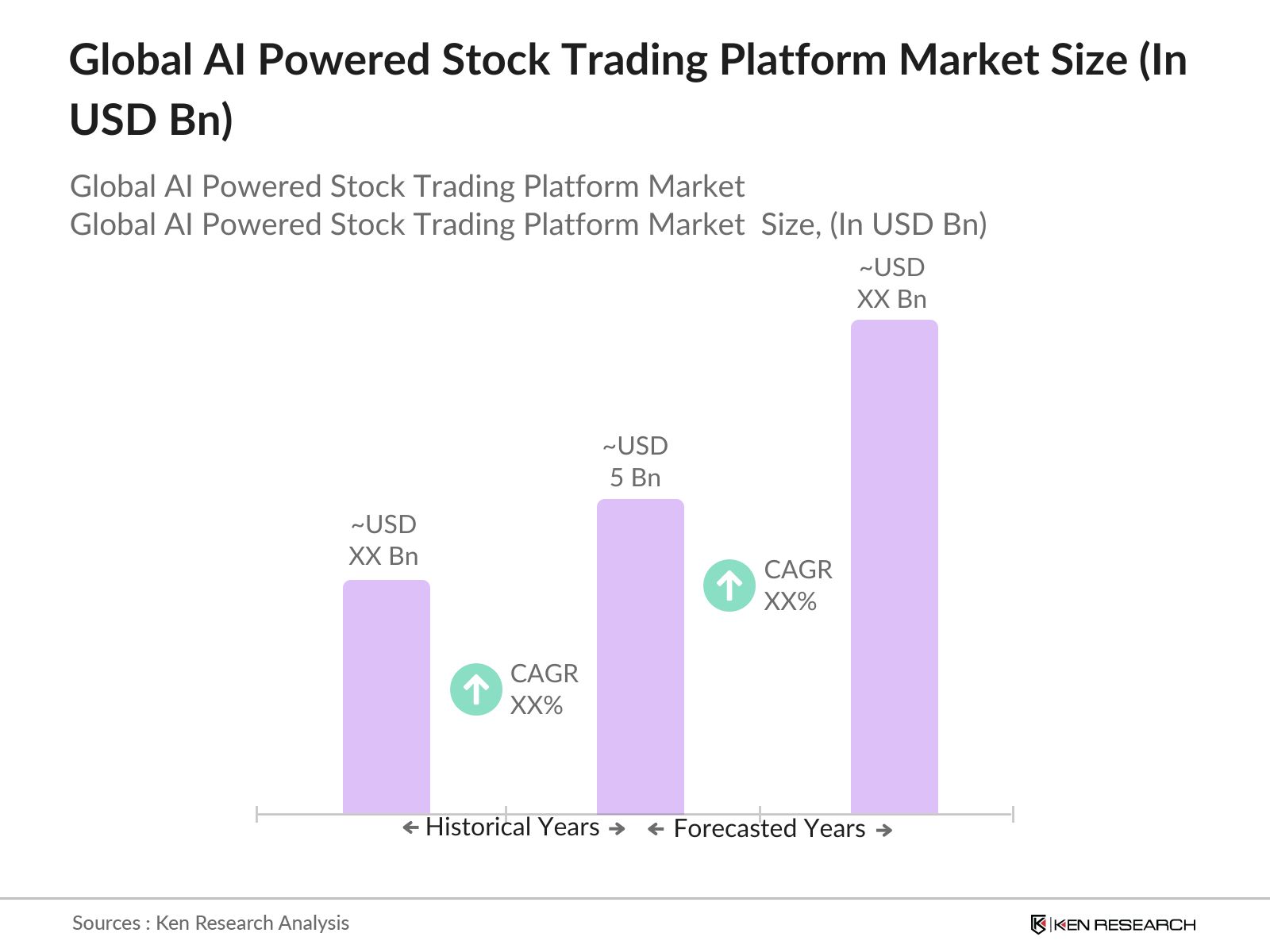
The global AI-powered stock trading platform market is valued at USD 5 billion, driven by rising demand for algorithmic trading, predictive analytics, and data-driven decision-making tools.
Challenges in the global AI-powered stock trading platform market include high initial setup costs, regulatory compliance, and cybersecurity concerns, as AI systems often require substantial investment in infrastructure and face potential risks from hacking.
Major players in the global AI-powered stock trading platform market include Alpaca Markets, QuantConnect, Trade Ideas LLC, Wealthfront, and Interactive Brokers, all of which have a strong presence in algorithmic and high-frequency trading.
Growth drivers in the global AI-powered stock trading platform market include advancements in machine learning, the increasing popularity of robo-advisors, and the need for faster and more efficient trading solutions in volatile markets.

What makes us stand out is that our consultants follows Robust, Refine and Result (RRR) methodology. i.e. Robust for clear definitions, approaches and sanity checking, Refine for differentiating respondents facts and opinions and Result for presenting data with story

We have set a benchmark in the industry by offering our clients with syndicated and customized market research reports featuring coverage of entire market as well as meticulous research and analyst insights.

While we don't replace traditional research, we flip the method upside down. Our dual approach of Top Bottom & Bottom Top ensures quality deliverable by not just verifying company fundamentals but also looking at the sector and macroeconomic factors.

With one step in the future, our research team constantly tries to show you the bigger picture. We help with some of the tough questions you may encounter along the way: How is the industry positioned? Best marketing channel? KPI's of competitors? By aligning every element, we help maximize success.

Our report gives you instant access to the answers and sources that other companies might choose to hide. We elaborate each steps of research methodology we have used and showcase you the sample size to earn your trust.

If you need any support, we are here! We pride ourselves on universe strength, data quality, and quick, friendly, and professional service.