
Global Air Filters Market Outlook to 2030
Region:Global
Author(s):Mukul Soni
Product Code:KROD10968
Region:Global
Author(s):Mukul Soni
Product Code:KROD10968
December 2024
95
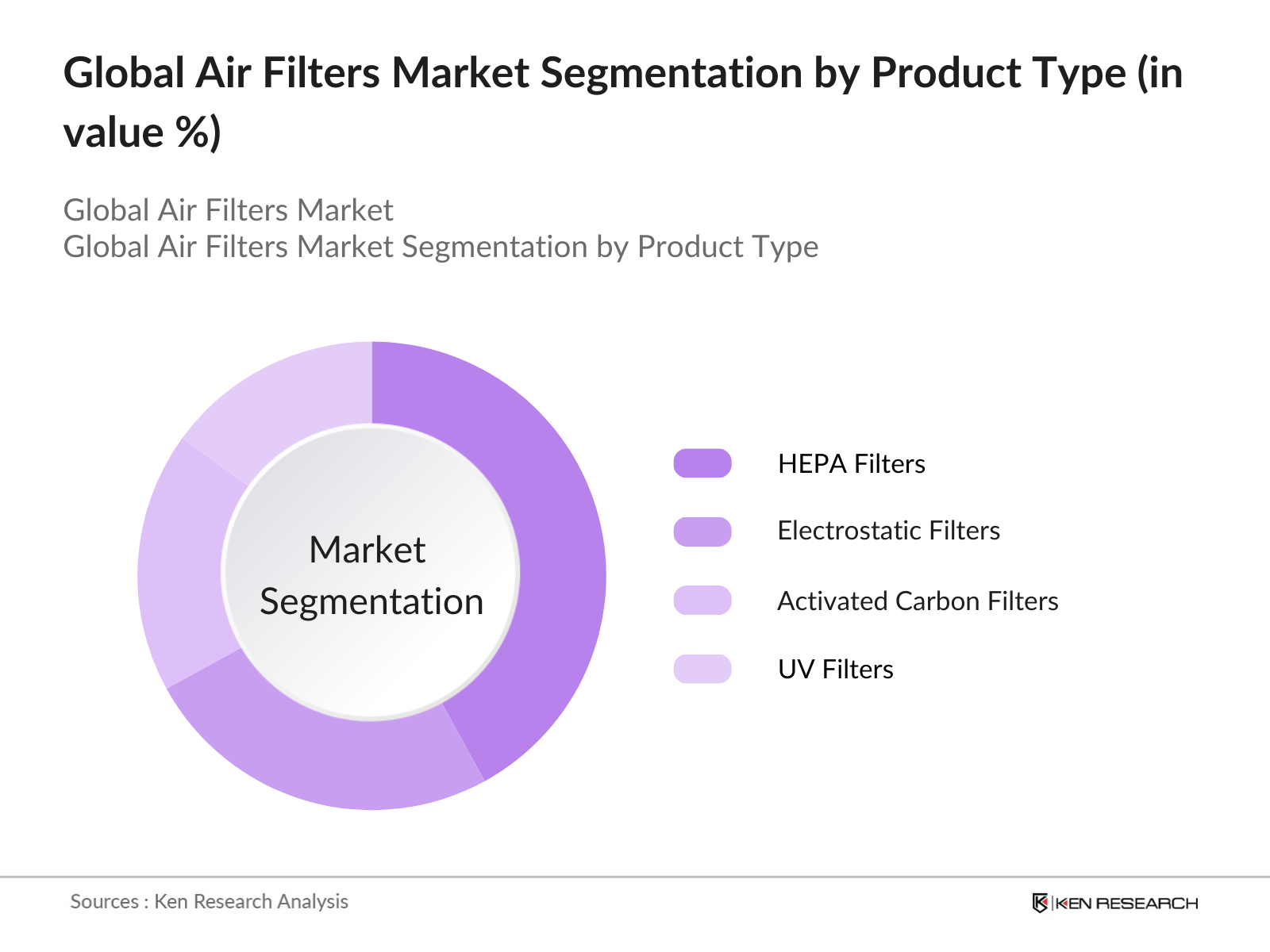
By Product Type: The Global Air Filters Market is segmented by product type into HEPA filters, electrostatic filters, activated carbon filters, UV filters, and others (including ionizers and antimicrobial filters). HEPA filters have a dominant market share due to their widespread application across healthcare, automotive, and residential sectors. HEPA filters are highly effective at trapping airborne particles, including bacteria and viruses, making them essential in healthcare settings. Additionally, their use in automotive cabin air filtration systems has significantly increased due to rising awareness about air quality in confined spaces.
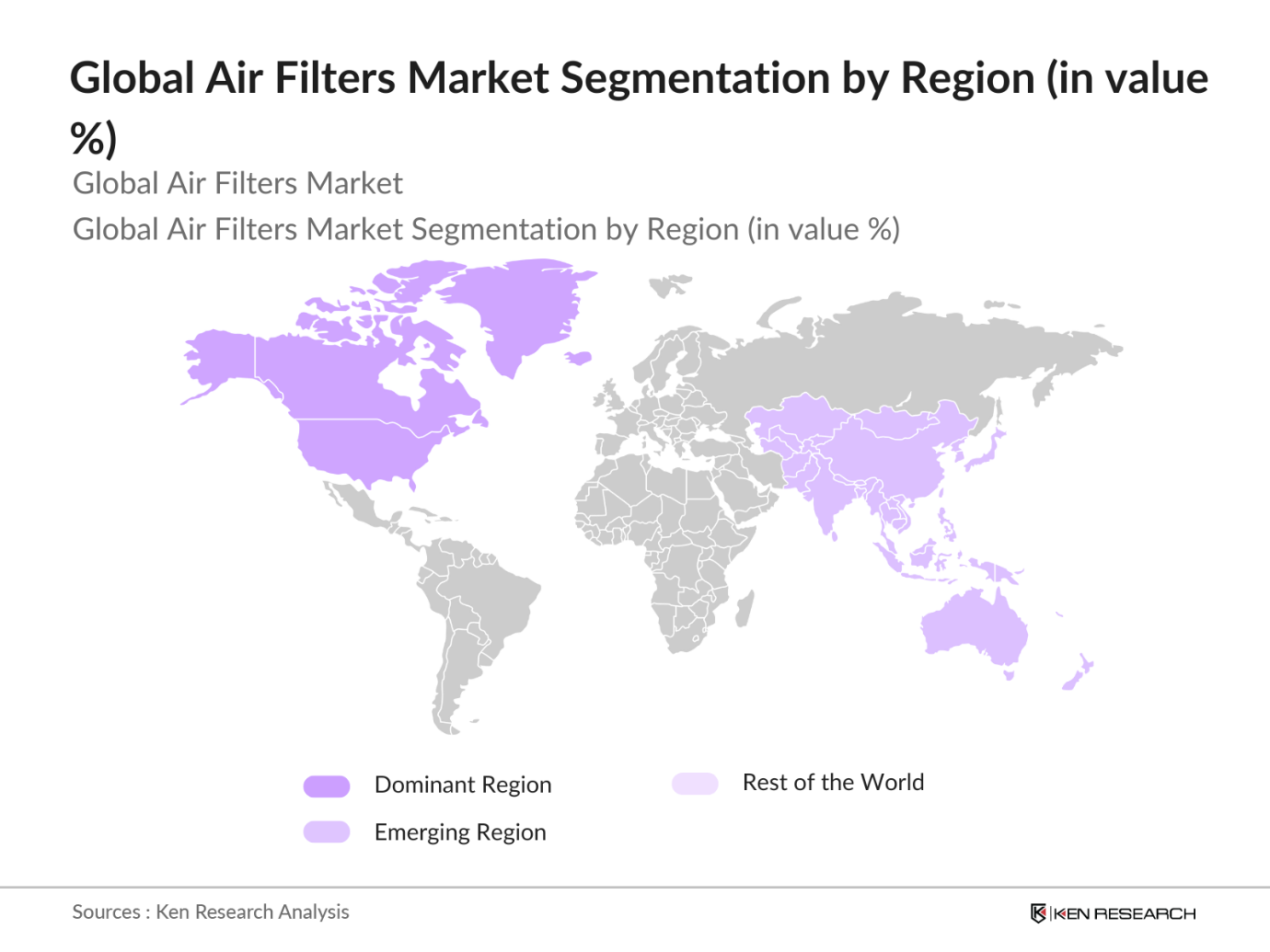
By Region: The market is segmented by region into North America, Europe, Asia-Pacific, the Middle East & Africa, and Latin America. North America has the largest market share, mainly due to strict air quality regulations and the high adoption rate of advanced air filtration systems in the United States. Asia-Pacific is the fastest-growing region, with China and India leading due to increasing industrialization, urbanization, and efforts to tackle air pollution. Europe also holds a significant share, driven by stringent environmental laws and high demand from the automotive and healthcare industries.
By Application: The market is further segmented by application into residential, commercial, industrial, healthcare, and automotive sectors. The industrial segment dominates the market, driven by the high demand for air filtration systems in manufacturing plants, oil & gas refineries, and power generation units. These sectors require continuous air filtration to maintain operational efficiency and comply with regulatory standards. Industrial filtration systems also aid in controlling hazardous emissions and airborne pollutants in facilities, which is critical for environmental compliance and worker safety.
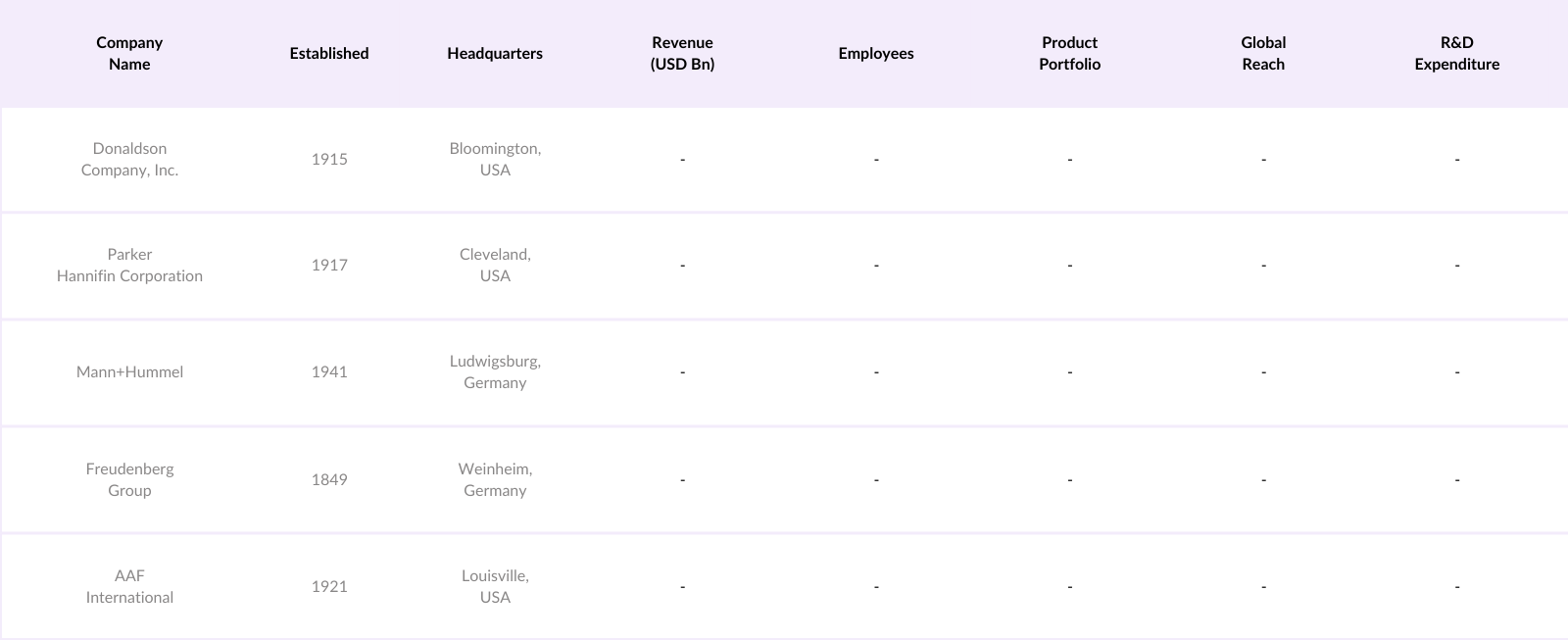
The Global Air Filters Market is dominated by a few major players, including Donaldson Company, Parker Hannifin, and Mann+Hummel. These companies have a strong presence across various sectors and regions, offering a wide range of air filtration products that meet diverse customer needs. Their dominance is also attributed to extensive R&D investments, product innovations, and strategic partnerships aimed at expanding their global reach.
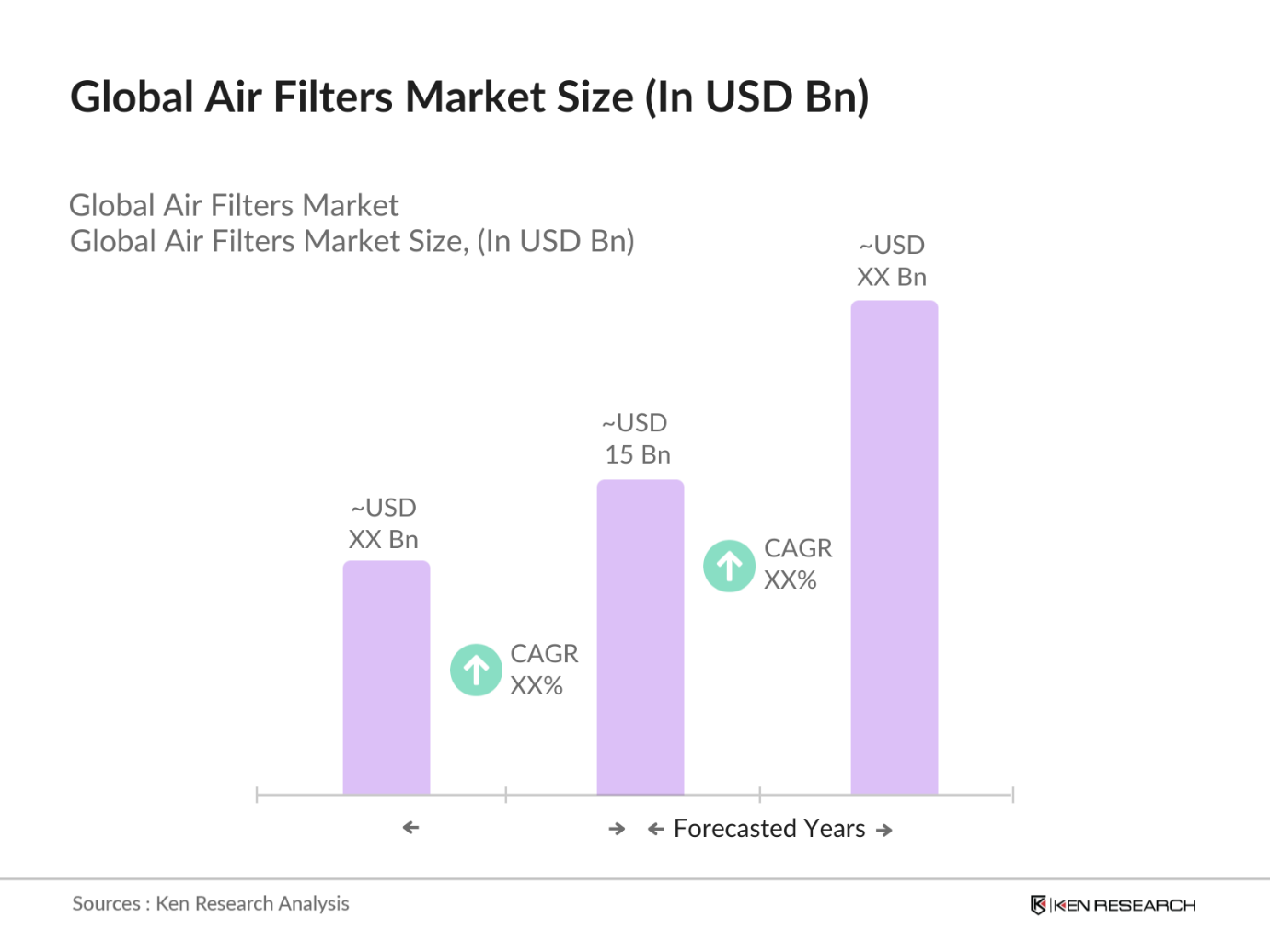
Over the next five years, the Global Air Filters Market is expected to experience steady growth, driven by continuous innovations in air filtration technology and growing awareness about indoor air quality. The increasing demand from industrial, healthcare, and residential sectors will continue to boost market revenues. Stricter government regulations on air pollution control and the growing emphasis on sustainability will further propel market expansion. The adoption of smart air filtration systems, enabled by IoT, will also open new avenues for growth in the market.
|
By Product Type |
HEPA Filters |
|
Electrostatic Filters |
|
|
Activated Carbon Filters |
|
|
UV Filters |
|
|
Others (Ionizers, Antimicrobial Filters) |
|
|
By Application |
Residential |
|
Commercial |
|
|
Industrial |
|
|
Healthcare |
|
|
Automotive |
|
|
By Filter Media |
Fiberglass |
|
Synthetic Polymer |
|
|
Activated Carbon |
|
|
Metal Mesh |
|
|
Others (Nanofiber, Ceramic) |
|
|
By End-Use Industry |
Manufacturing & Processing |
|
Automotive & Transportation |
|
|
Food & Beverage |
|
|
Pharmaceuticals |
|
|
Oil & Gas |
|
|
By Region |
North America |
|
Europe |
|
|
Asia-Pacific |
|
|
Middle East & Africa |
|
|
Latin America |
1.1. Definition and Scope
1.2. Market Taxonomy
1.3. Market Growth Rate
1.4. Market Segmentation Overview
2.1. Historical Market Size
2.2. Year-On-Year Growth Analysis
2.3. Key Market Developments and Milestones
3.1. Growth Drivers
3.1.1. Increasing Environmental Regulations
3.1.2. Rising Demand for Energy Efficiency (Energy Efficiency Standards, Environmental Sustainability)
3.1.3. Advancements in Filtration Technologies (Nanofiber, HEPA, Activated Carbon Filters)
3.1.4. Rapid Urbanization and Industrialization (Infrastructure Growth, Air Pollution Control Initiatives)
3.2. Market Challenges
3.2.1. High Initial Costs (Technological Investments, R&D Expenses)
3.2.2. Availability of Low-Cost Substitutes
3.2.3. Complex Regulatory Standards (Certification Requirements, Compliance Costs)
3.3. Opportunities
3.3.1. Expansion into Emerging Markets (Geographical Expansion)
3.3.2. Increasing Demand in Healthcare and Automotive Industries (Sector-Specific Opportunities)
3.3.3. Integration of Smart Filters with IoT Technology
3.4. Trends
3.4.1. Adoption of IoT-Enabled Air Filtration Systems (Smart HVAC, Real-Time Monitoring)
3.4.2. Use of Sustainable and Eco-Friendly Filters (Biodegradable, Recyclable Materials)
3.4.3. Growth of Portable and Compact Air Filters (Consumer Electronics, Portable Devices)
3.5. Government Regulations
3.5.1. Environmental Protection Agency (EPA) Regulations
3.5.2. European Union Air Quality Standards
3.5.3. National Clean Air Program (NCAP) Initiatives
3.5.4. International Green Building Standards (LEED, BREEAM Certifications)
3.6. SWOT Analysis
3.6.1. Strengths
3.6.2. Weaknesses
3.6.3. Opportunities
3.6.4. Threats
3.7. Stakeholder Ecosystem (Supply Chain Analysis, OEMs, Suppliers)
3.8. Porters Five Forces
3.9. Competition Ecosystem (Competitor Landscape, Key Players)
4. Global Air Filters Market Segmentation
4.1. By Product Type (In Value %)
4.1.1. HEPA Filters
4.1.2. Electrostatic Filters
4.1.3. Activated Carbon Filters
4.1.4. UV Filters
4.1.5. Others (Ionizers, Antimicrobial Filters)
4.2. By Application (In Value %)
4.2.1. Residential
4.2.2. Commercial
4.2.3. Industrial
4.2.4. Healthcare
4.2.5. Automotive
4.3. By Filter Media (In Value %)
4.3.1. Fiberglass
4.3.2. Synthetic Polymer
4.3.3. Activated Carbon
4.3.4. Metal Mesh
4.3.5. Others (Nanofiber, Ceramic)
4.4. By End-Use Industry (In Value %)
4.4.1. Manufacturing & Processing
4.4.2. Automotive & Transportation
4.4.3. Food & Beverage
4.4.4. Pharmaceuticals
4.4.5. Oil & Gas
4.5. By Region (In Value %)
4.5.1. North America
4.5.2. Europe
4.5.3. Asia-Pacific
4.5.4. Middle East & Africa
4.5.5. Latin America
5.1. Detailed Profiles of Major Companies
5.1.1. Donaldson Company, Inc.
5.1.2. Parker Hannifin Corporation
5.1.3. Camfil AB
5.1.4. Freudenberg Group
5.1.5. Mann+Hummel
5.1.6. 3M Company
5.1.7. AAF International
5.1.8. Daikin Industries, Ltd.
5.1.9. Cummins Filtration
5.1.10. Clarcor Inc.
5.1.11. Honeywell International Inc.
5.1.12. APC Filtration Inc.
5.1.13. Koch Filter Corporation
5.1.14. Nordic Air Filtration
5.1.15. Filtration Group Corporation
5.2. Cross Comparison Parameters
5.2.1. Revenue
5.2.2. Number of Employees
5.2.3. Headquarters Location
5.2.4. Inception Year
5.2.5. Product Portfolio Strength
5.2.6. Market Share
5.2.7. R&D Expenditure
5.2.8. Patents and Innovations
5.3. Market Share Analysis
5.4. Strategic Initiatives (M&A, Partnerships, Alliances)
5.5. Investment Analysis
5.6. Venture Capital Funding
5.7. Government Grants and Incentives
5.8. Private Equity Investments
6.1. Environmental Standards (Emission Control Regulations)
6.2. Compliance Requirements (ISO Certifications, ASHRAE Standards)
6.3. Certification Processes
7.1. Future Market Size Projections
7.2. Key Factors Driving Future Market Growth
8.1. By Product Type (In Value %)
8.2. By Application (In Value %)
8.3. By Filter Media (In Value %)
8.4. By End-Use Industry (In Value %)
8.5. By Region (In Value %)
9.1. TAM/SAM/SOM Analysis
9.2. Customer Cohort Analysis
9.3. Marketing Initiatives
9.4. White Space Opportunity Analysis
Disclaimer Contact UsThe initial phase of research involves mapping the Global Air Filters Market ecosystem, identifying key stakeholders such as manufacturers, suppliers, and end-users. This is achieved through extensive desk research, utilizing proprietary databases and publicly available data from reputable sources like industry reports and government publications.
In this step, historical data on market performance is compiled and analyzed to understand the trends and patterns shaping the market. This involves a deep dive into air filter applications across sectors such as healthcare, automotive, and industrial, as well as a study of market growth drivers and challenges.
Preliminary market insights are then validated through consultations with industry experts, including professionals from air filter manufacturing companies and regulatory bodies. This is done through phone interviews and surveys, providing a real-world perspective on the data and trends analyzed.
The final phase involves synthesizing all gathered information into a comprehensive report. This includes cross-referencing data from top-down and bottom-up approaches to ensure accuracy. The final report is then subjected to peer reviews by market experts before being published.
The global air filters market is valued at USD 15 billion, driven by strong demand in industrial, healthcare, and residential applications.
Key challenges include high initial costs of advanced air filtration systems and the presence of low-cost substitutes, which can reduce market penetration for premium solutions.
Major players include Donaldson Company, Parker Hannifin, Mann+Hummel, Freudenberg Group, and AAF International, known for their extensive product portfolios and global market reach.
Growth is driven by increasing government regulations on air quality control, technological advancements in filtration systems, and growing awareness of indoor air quality in industrial and residential settings.

What makes us stand out is that our consultants follows Robust, Refine and Result (RRR) methodology. i.e. Robust for clear definitions, approaches and sanity checking, Refine for differentiating respondents facts and opinions and Result for presenting data with story

We have set a benchmark in the industry by offering our clients with syndicated and customized market research reports featuring coverage of entire market as well as meticulous research and analyst insights.

While we don't replace traditional research, we flip the method upside down. Our dual approach of Top Bottom & Bottom Top ensures quality deliverable by not just verifying company fundamentals but also looking at the sector and macroeconomic factors.

With one step in the future, our research team constantly tries to show you the bigger picture. We help with some of the tough questions you may encounter along the way: How is the industry positioned? Best marketing channel? KPI's of competitors? By aligning every element, we help maximize success.

Our report gives you instant access to the answers and sources that other companies might choose to hide. We elaborate each steps of research methodology we have used and showcase you the sample size to earn your trust.

If you need any support, we are here! We pride ourselves on universe strength, data quality, and quick, friendly, and professional service.