Ken Research Logo

Global Air Purifier Market Outlook to 2030

Region:Global

Author(s):Shivani Mehra

Product Code:KROD2890

Published On

November 2024

Total pages

87

About the Report

Global Air Purifier Market Outlook to 2028

Global Air Purifier Market Overview

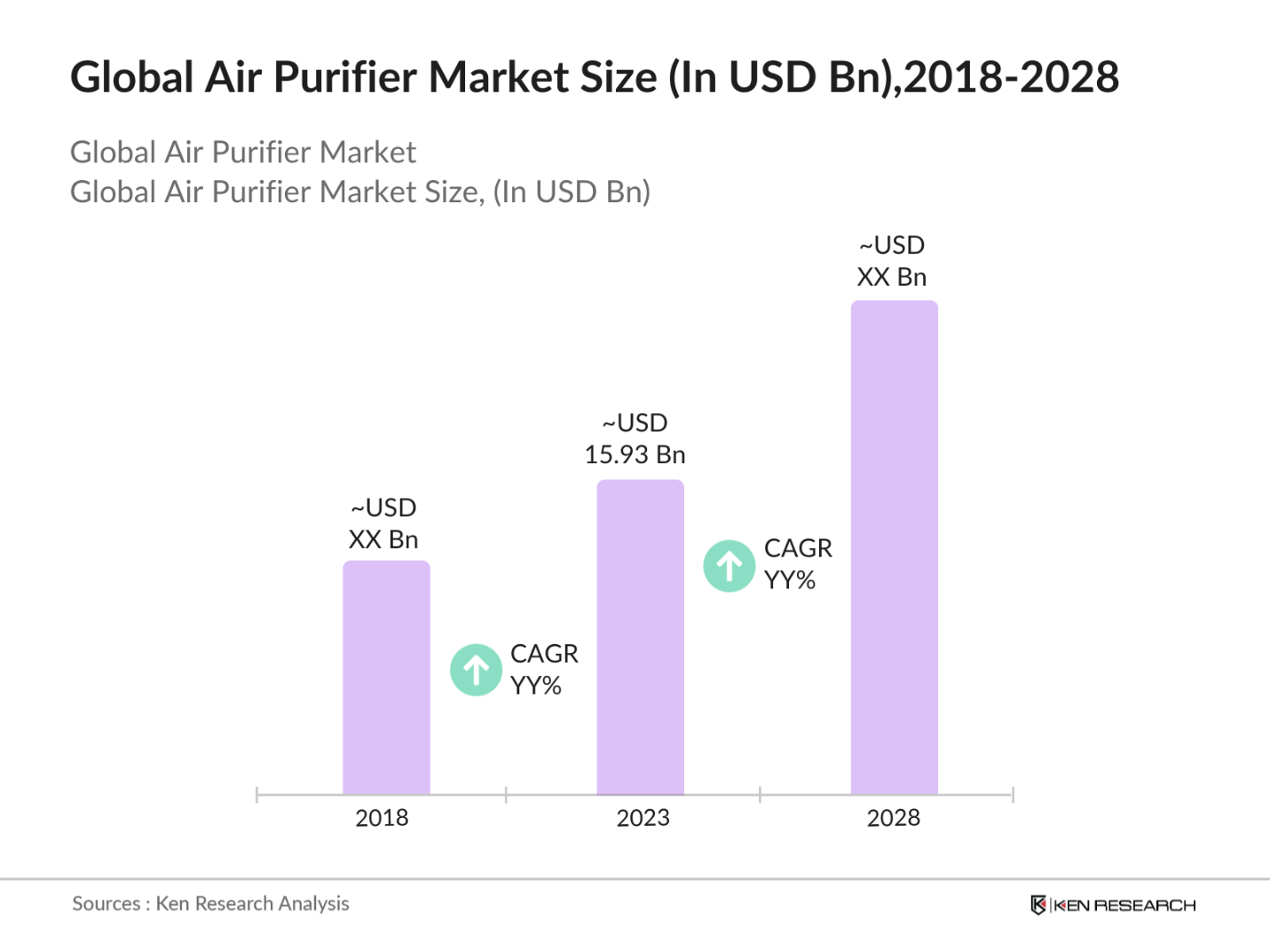
  • The global air purifier market was valued at USD 15.93 billion in 2023, driven by rising concerns about air quality and health risks associated with pollution. The demand for air purifiers is particularly high in urban areas where pollution levels are critical. Additionally, the surge in respiratory ailments and increased awareness of airborne diseases. The industry is also seeing growth due to advancements in filter technology, making purifiers more effective in removing pollutants from indoor spaces.

market overviews

  • Prominent players in the global air purifier market include Dyson, Honeywell, Philips, IQAir, and Panasonic. These companies are at the forefront of innovation in air purification technologies. Dyson, for example, excels in premium home air purifiers with advanced HEPA filter designs, while Honeywell leads in industrial air purifiers integrated with smart home systems. Philips focuses on energy-efficient models, IQAir is renowned for its medical-grade filtration systems, and Panasonic is advancing ion technology, particularly across Japan and Asia.
  • In 2023, Philips launched the latest in its "The Series 5000i incorporates advanced sensors that detect air quality and automatically adjust the purifier's settings based on real-time data. This feature is designed to enhance user experience by ensuring optimal air purification, including viruses, in spaces as large as 60 square meters. This development came in response to increased demand in Asia-Pacific and Europe, where air quality issues have worsened due to industrial emissions and vehicle exhaust.
  • Cities like Beijing, New Delhi, Los Angeles, and Tokyo dominate the air purifier market due to their unique air quality challenges. Beijing and New Delhi face severe pollution from industrial emissions and vehicle exhaust, making air purifiers essential for urban homes and businesses. Los Angeles and Tokyo, despite having comparatively better air quality, are seeing rising demand for advanced air filtration systems as concerns about indoor air quality continue to grow.

Global Air Purifier Market Segmentation

The Air Purifier Market is divided into the following segments:

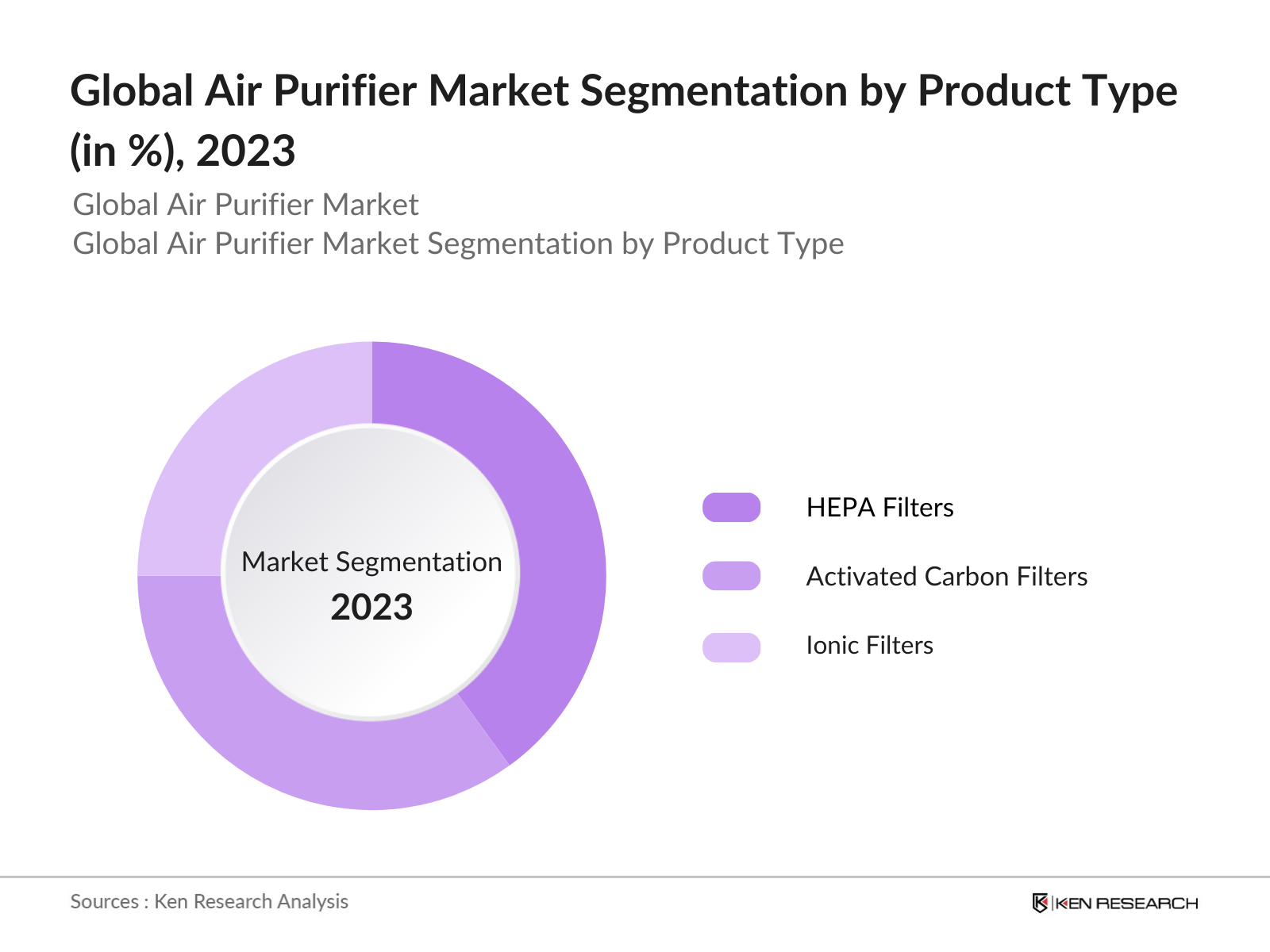
By Product Type: The global air purifier market is segmented by product type into HEPA filters, activated carbon filters, and ionic filters. In 2023, HEPA filters are indeed recognized for their effectiveness in capturing airborne particles as small as 0.3 microns, making them a standard choice in various environments such as hospitals, schools, and offices due to their efficiency in filtering pollutants and allergens.
market overviews

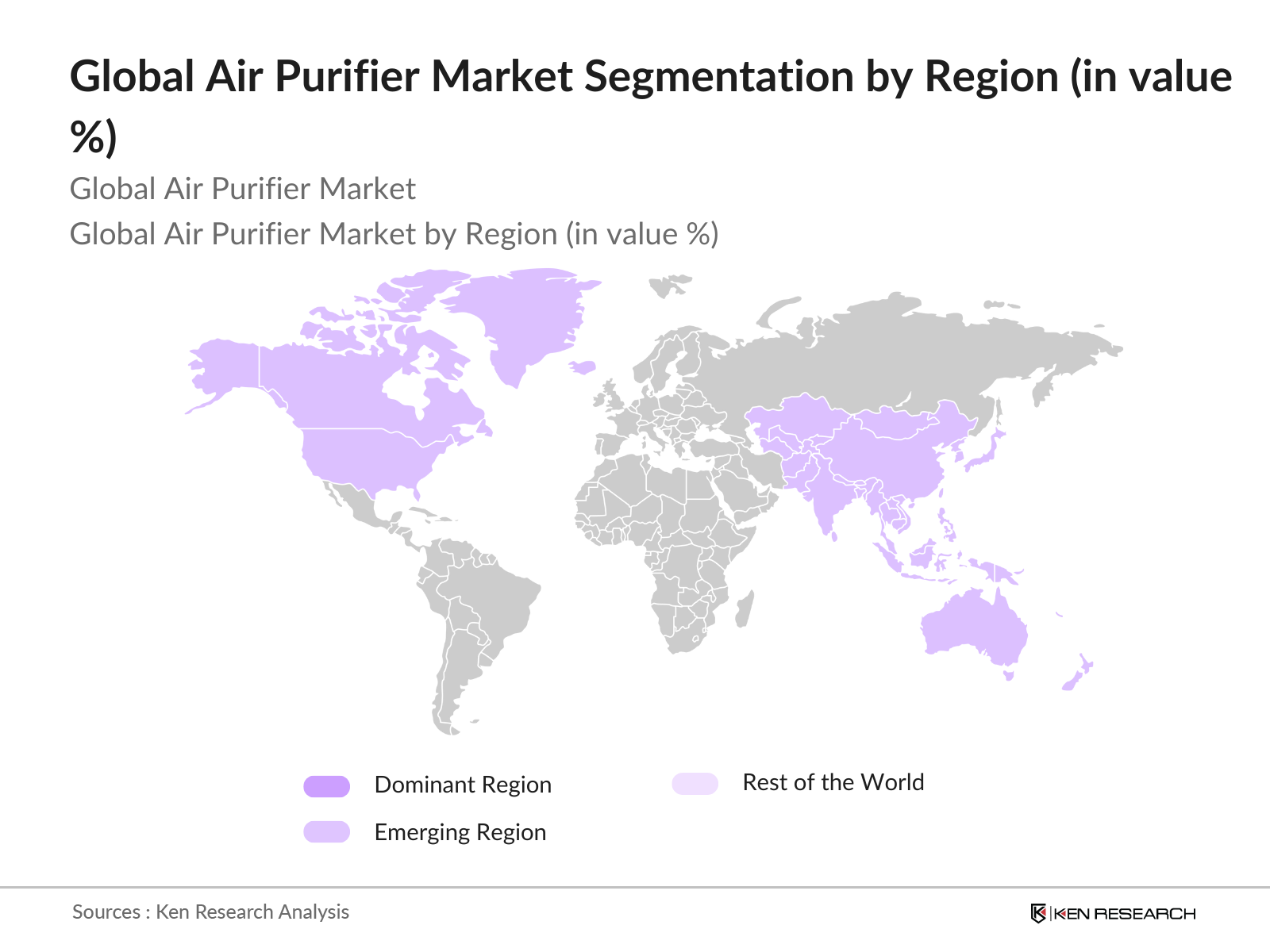
By Region: The global air purifier market is segmented regionally into North America, Europe, APAC, Latin America, and MEA. In 2023, APAC led the market, driven by high demand in countries like China and India. China's ongoing air pollution crisis and India's government-led initiatives, such as the "Clean Air for Cities" program, have significantly boosted the market in the region. North America followed closely, with a strong focus on integrating smart home technology and eco-friendly air purifiers, particularly in the U.S.
market overviews

By Application: The global air purifier market is segmented by application into residential, commercial, and industrial use. In 2023, the residential segment indeed held the largest share, primarily driven by increasing concerns about indoor air quality, particularly in urban areas that face pollution, allergens, and health crises. This trend has led to air purifiers becoming a common household item as consumers seek solutions to improve air quality in their homes.

Global Air Purifier Market Competitive Landscape

Company

Establishment Year

Headquarters

Dyson

1993

Malmesbury, UK

Honeywell

1906

Charlotte, USA

Philips

1891

Amsterdam, Netherlands

IQAir

1963

Goldach, Switzerland

Panasonic

1918

Osaka, Japan


  • Dyson: In 2023, Dyson launched the “Pure Cool” series, integrating real-time pollution detection and advanced HEPA filtration technology. The product is tailored for both residential and commercial markets, with demand soaring in Europe and North America, particularly in high-pollution areas such as urban centers. Dyson also announced its expansion into smart home air quality solutions, targeting users who seek integrated, tech-driven solutions.
  • Philips: Philips continues to innovate in the health-tech space with the introduction of its “Series 5000i” air purifier, focusing on large residential and small commercial spaces. The 2023 model features a smart control system that learns user preferences and adjusts settings to maximize energy efficiency while providing optimal air purification. This product launch was heavily marketed in Europe and APAC, where air quality concerns have led to a surge in consumer demand.

Global Air Purifier Market Analysis

Global Air Purifier Market Growth Drivers

  • Increasing Air Pollution in Urban Areas: Rising air pollution levels across major cities globally have significantly driven the demand for air purifiers. In 2023, cities like New Delhi and Beijing recorded hazardous air quality levels, with PM2.5 concentrations reaching critical levels on some days. According to the World Health Organization (WHO), a vast majority of the global population breathes air that exceeds WHO air quality guidelines. These alarming pollution levels, primarily due to vehicle emissions, industrial activities, and construction dust, have increased consumer demand for air purifiers in both residential and commercial spaces.
  • Health Awareness and Respiratory Issues: With the increasing prevalence of respiratory issues such as asthma and allergies, consumers are becoming more health-conscious and are investing in air purifiers to improve indoor air quality. The Global Asthma Report 2023 estimates that 339 million people globally suffer from asthma, with an increasing number of cases reported in heavily polluted regions. This rise in respiratory conditions has significantly driven demand for air purifiers, as people seek solutions to reduce airborne allergens, mold, and other pollutants inside homes and workplaces.
  • Government Regulations on Indoor Air Quality Stricter government regulations aimed at improving indoor air quality are spurring demand for air purification solutions. In January 2023, the EPA proposed revisions to the National Ambient Air Quality Standards (NAAQS) for particulate matter (PM), specifically targeting PM2.5, which are fine particles less than 2.5 micrometers in diameter. The proposal aimed to lower the primary annual PM2.5 standard from 12.0 micrograms per cubic meter to a range between 9.0 to 10.0 ?g/m³, with discussions on even lower levels down to 8.0 ?g/m³.

Global Air Purifier Market Challenges

  • High Installation and Maintenance Costs: The costs associated with purchasing, installing, and maintaining advanced air purifiers remain a significant challenge. Premium air purifiers, especially those with HEPA filters, tend to be expensive, and industrial models require substantial investment. Additionally, the need for replacement filters and regular maintenance adds to the ongoing expenses, making air purifiers less accessible to price-sensitive consumers.
  • Lack of Awareness in Emerging Markets: Despite rising pollution levels, there remains a significant lack of awareness about air purifiers in emerging markets such as Africa and parts of Southeast Asia. These regions remain under-penetrated due to limited consumer awareness and purchasing power, hindering market growth. The lack of widespread knowledge about the benefits and availability of air purification solutions continues to be a challenge in these areas.

Global Air Purifier Market Government Initiatives

  • India’s "Clean Air for Cities" Initiative: The Indian government launched the “Clean Air for Cities” initiative aimed at improving air quality in Tier-1 and Tier-2 cities. This initiative mandates the installation of air purification systems in public and private sector buildings, including hospitals, schools, and shopping malls. The program is expected to drive demand for air purifiers, particularly in high-pollution cities such as New Delhi and Mumbai.
  • China’s Indoor Air Quality Regulations: The Chinese government revised its indoor air quality standards, known as the "Standards for Indoor Air Quality" (GB/T 18883-2022), which officially replaced the previous standards from 2002. These new standards were implemented on February 1, 2023. This new policy mandates the installation of high-efficiency air filtration systems in factories and office buildings in urban areas. The regulations also require regular air quality monitoring and reporting, driving the adoption of air purifiers across various sectors.

Global Air Purifier Future Market Outlook

The future of the global air purifier market looks promising, with robust growth expected through 2028, driven by increasing awareness of health and wellness and the implementation of stricter government regulations on indoor air quality. As air pollution continues to rise, particularly in urban areas, consumers and businesses alike are expected to invest in advanced purification systems to ensure safer environments.

Future Trends:

  • Growth in Commercial and Industrial Segments: The adoption of air purifiers in commercial and industrial spaces is projected to rise through 2028, driven by stricter air quality regulations. Countries like the United States, China, and Germany are likely to experience increased demand as corporations invest in purifiers to meet government standards. Industrial air purifiers, capable of managing toxic emissions and pollutants, will become more common in manufacturing-intensive regions.
  • Increasing Focus on Energy-Efficient Air Purifiers As concerns about climate change and sustainability grow, manufacturers will shift their focus to producing energy-efficient air purifiers. By 2028, eco-friendly models using renewable energy sources, such as solar-powered purifiers, will be introduced to meet consumer demand for sustainable products. Governments may also incentivize the use of energy-efficient purifiers through subsidies and tax credits, further driving their adoption.

Scope of the Report

By Product Type

HEPA Filters

Activated Carbon Filters

Ionic Filters

By Application

Residential

Commercial

Industrial

By Region

Asia-Pacific

North America

Europe

Others (BTL and CTL)

Latin America

MEA

By Technology Type

Mechanical Filtration

UVGI

Photocatalytic Oxidation


Products

Key Target Audience Organizations and Entities Who Can Benefit by Subscribing This Report:

  • Residential building owners

  • Hospitals and healthcare facilities

  • Industrial manufacturing units

  • Government and regulatory bodies (EPA)

  • Investments and venture capitalist firms

  • Public transportation companies

Companies

Players Mentioned in the Report:

  • Dyson

  • Honeywell

  • Philips

  • IQAir

  • Panasonic

  • Sharp Corporation

  • Samsung Electronics

  • LG Electronics

  • Xiaomi Corporation

  • Blueair

  • Levoit

  • Coway

  • Daikin

  • Winix

  • Whirlpool Corporation

Table of Contents

01. Global Air Purifier Market Overview

1.1. Definition and Scope

1.2. Market Taxonomy

1.3. Market Growth Rate

1.4. Market Segmentation Overview

02. Global Air Purifier Market Size (in USD Bn), 2018-2023

2.1. Historical Market Size

2.2. Year-on-Year Growth Analysis

2.3. Key Market Developments and Milestones

03. Global Air Purifier Market Analysis

3.1. Growth Drivers

3.1.1. Rising Air Pollution

3.1.2. Increasing Health Awareness

3.1.3. Government Regulations

3.2. Challenges

3.2.1. High Installation Costs

3.2.2. Energy Consumption

3.2.3. Lack of Awareness in Emerging Markets

3.3. Opportunities

3.3.1. Rising Demand for Portable Purifiers

3.3.2. Expansion in Commercial Spaces

3.3.3. Growing Smart Home Integration

3.4. Trends

3.4.1. IoT-Enabled Air Purifiers

3.4.2. Increase in Public Space Installations

3.4.3. Portable Air Purifiers

3.5. Government Initiatives

3.5.1. Indias Clean Air for Cities Program

3.5.2. U.S. EPA Indoor Air Quality Standards

3.5.3. Chinas Indoor Air Regulations

3.6. SWOT Analysis

3.7. Stakeholder Ecosystem

3.8. Competition Ecosystem

04. Global Air Purifier Market Segmentation, 2023

4.1. By Product Type (in Value %)

4.1.1. HEPA Filters

4.1.2. Activated Carbon Filters

4.1.3. Ionic Filters

4.2. By Application (in Value %)

4.2.1. Residential

4.2.2. Commercial

4.2.3. Industrial

4.3. By Region (in Value %)

4.3.1. North America

4.3.2. Europe

4.3.3. APAC

4.3.4. Latin America

4.3.5. MEA

4.4. By Technology Type (in Value %)

4.4.1. Mechanical Filtration

4.4.2. UVGI

4.4.3. Photocatalytic Oxidation

4.5. By Distribution Channel (in Value %)

4.5.1. Offline Stores

4.5.2. Online Platforms

4.5.3. Specialty Stores

05. Global Air Purifier Market Cross Comparison

5.1. Detailed Profiles of Major Companies

5.1.1. Dyson

5.1.2. Honeywell

5.1.3. Philips

5.1.4. IQAir

5.1.5. Panasonic

5.1.6. Sharp Corporation

5.1.7. Samsung Electronics

5.1.8. LG Electronics

5.1.9. Xiaomi Corporation

5.1.10. Blueair

5.1.11. Levoit

5.1.12. Coway

5.1.13. Daikin

5.1.14. Winix

5.1.15. Whirlpool Corporation

5.2. Cross Comparison Parameters (No. of Employees, Headquarters, Inception Year, Revenue)

06. Global Air Purifier Market Competitive Landscape

6.1. Market Share Analysis

6.2. Strategic Initiatives

6.3. Mergers and Acquisitions

6.4. Investment Analysis

6.4.1. Venture Capital Funding

6.4.2. Government Grants

6.4.3. Private Equity Investments

07. Global Air Purifier Market Regulatory Framework

7.1. Air Quality Standards

7.2. Compliance Requirements

7.3. Certification Processes

08. Global Air Purifier Market Future Market Size (in USD Bn), 2023-2028

8.1. Future Market Size Projections

8.2. Key Factors Driving Future Market Growth

09. Global Air Purifier Market Future Market Segmentation, 2028

9.1. By Product Type (in Value %)

9.2. By Application (in Value %)

9.3. By Technology Type (in Value %)

9.4. By Distribution Channel (in Value %)

9.5. By Region (in Value %)

10. Global Air Purifier Market Analysts' Recommendations

10.1. TAM/SAM/SOM Analysis

10.2. Customer Cohort Analysis

10.3. Marketing Initiatives

10.4. White Space Opportunity Analysis

Disclaimer

Contact Us

Research Methodology

Step: 1 Identifying Key Variables:

Ecosystem creation for all the major entities and referring to multiple secondary and proprietary databases to perform desk research around market to collate industry level information.

Step: 2 Market Building:

Collating statistics on the Global Air Purifier Market over the years, penetration of marketplaces and service providers ratio to compute revenue generated for the Global Air Purifier Market. We will also review service quality statistics to understand revenue generated which can ensure accuracy behind the data points shared.

Step: 3 Validating and Finalizing:

Building market hypothesis and conducting CATIs with industry experts belonging to different companies to validate statistics and seek operational and financial information from company representatives.

Step: 4 Research Output:

Our team will approach multiple Air Purifier and understand nature of product segments and sales, consumer preference and other parameters, which will support us validate statistics derived through bottom to top approach from Air Purifier.

Frequently Asked Questions

01. How big is the global air purifier market?

The global air purifier market was valued at USD 15.93 billion in 2023, driven by increasing air pollution levels, rising health concerns, and government regulations on indoor air quality. The market is also benefiting from growing demand in both residential and commercial segments.

02. What are the challenges in the global air purifier market?

Challenges in the global air purifier market include high installation and maintenance costs, limited consumer awareness in emerging markets, and the energy consumption of purifiers. Additionally, sustainability concerns around the environmental impact of air purifiers pose a challenge to manufacturers.

03. Who are the major players in the global air purifier market?

Key players in the global air purifier market include Dyson, Honeywell, Philips, IQAir, and Panasonic. These companies lead the market through their innovative product offerings, global distribution networks, and strong focus on air quality solutions across various sectors.

04. What are the growth drivers of the global air purifier market?

Growth drivers for the global air purifier market include rising pollution levels in urban areas, increasing health awareness, particularly about respiratory issues, and government regulations that enforce indoor air quality standards. Demand for smart, energy-efficient air purifiers is also driving growth.


Why Buy From Us?

RRR
Refine Robust Result (RRR) Framework

What makes us stand out is that our consultants follows Robust, Refine and Result (RRR) methodology. i.e. Robust for clear definitions, approaches and sanity checking, Refine for differentiating respondents facts and opinions and Result for presenting data with story

Our Reach Is Unmatched

We have set a benchmark in the industry by offering our clients with syndicated and customized market research reports featuring coverage of entire market as well as meticulous research and analyst insights.

Research
Shifting the Research Paradigm

While we don't replace traditional research, we flip the method upside down. Our dual approach of Top Bottom & Bottom Top ensures quality deliverable by not just verifying company fundamentals but also looking at the sector and macroeconomic factors.

Insite
More Insights-Better Decisions

With one step in the future, our research team constantly tries to show you the bigger picture. We help with some of the tough questions you may encounter along the way: How is the industry positioned? Best marketing channel? KPI's of competitors? By aligning every element, we help maximize success.

Trust
Transparency and Trust

Our report gives you instant access to the answers and sources that other companies might choose to hide. We elaborate each steps of research methodology we have used and showcase you the sample size to earn your trust.

support
Round the Clock Support

If you need any support, we are here! We pride ourselves on universe strength, data quality, and quick, friendly, and professional service.

Why Client Choose Us?

400000+ Reports in repository
150+ Consulting project a year
100+ Analysts
8000+ Client Queries in 2022