
Global Alkalized Cocoa Powder Market Outlook to 2030
Region:Global
Author(s):Abhinav kumar
Product Code:KROD9544
November 2024
81
About the Report
Global Alkalized Cocoa Powder Market Overview
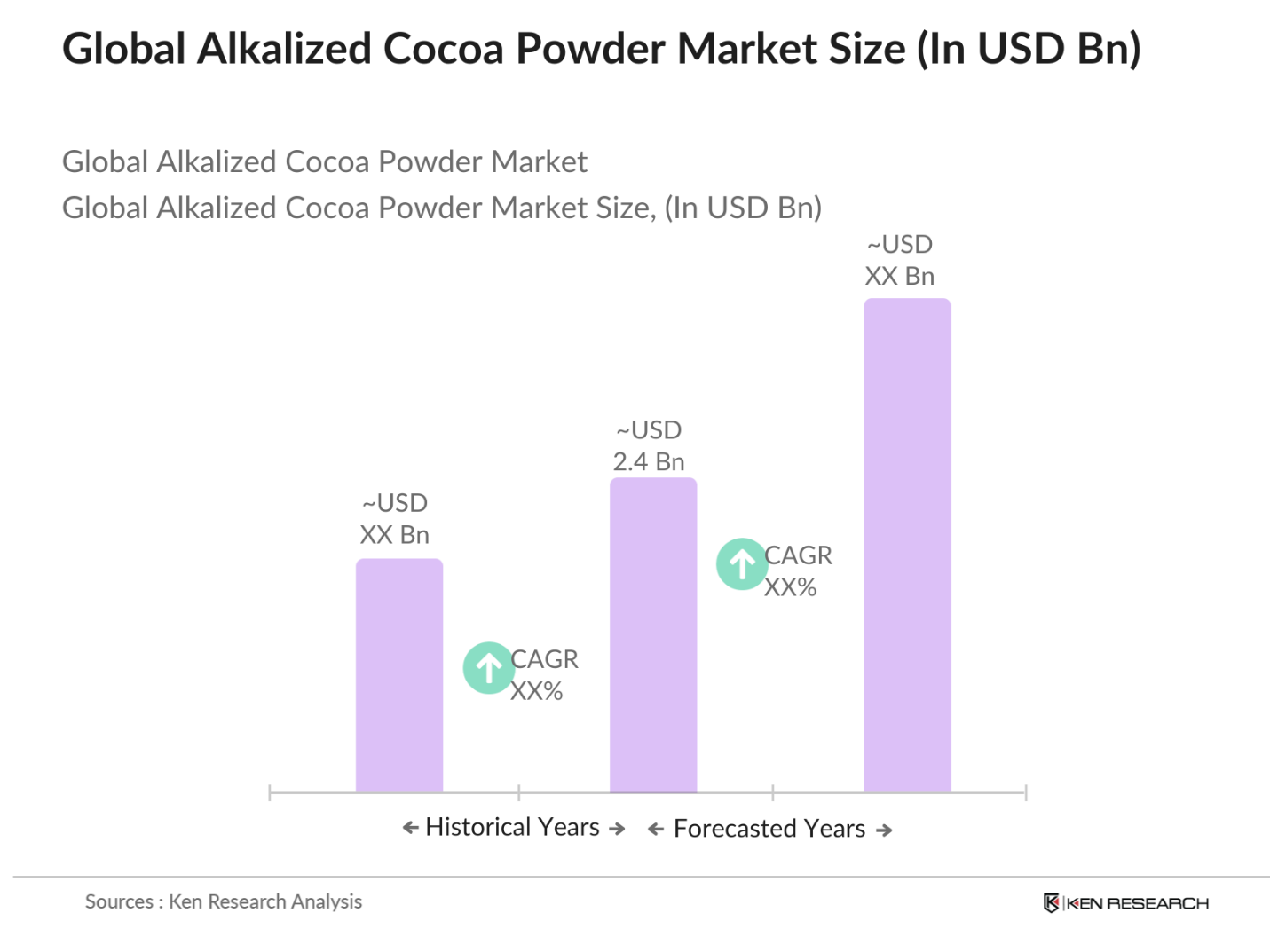
- The global alkalized cocoa powder market is valued at USD 2.4 billion, based on a five-year historical analysis. This valuation is driven by the increasing consumer demand for chocolate-based products, including confectioneries, baked goods, and beverages. Alkalized cocoa powder, known for its enhanced solubility and consistent flavor profile, is a preferred ingredient in these products. Its ability to dissolve easily in liquids makes it ideal for use in hot chocolate, chocolate milk, and other cocoa-based beverages, providing a smooth and enjoyable drinking experience.
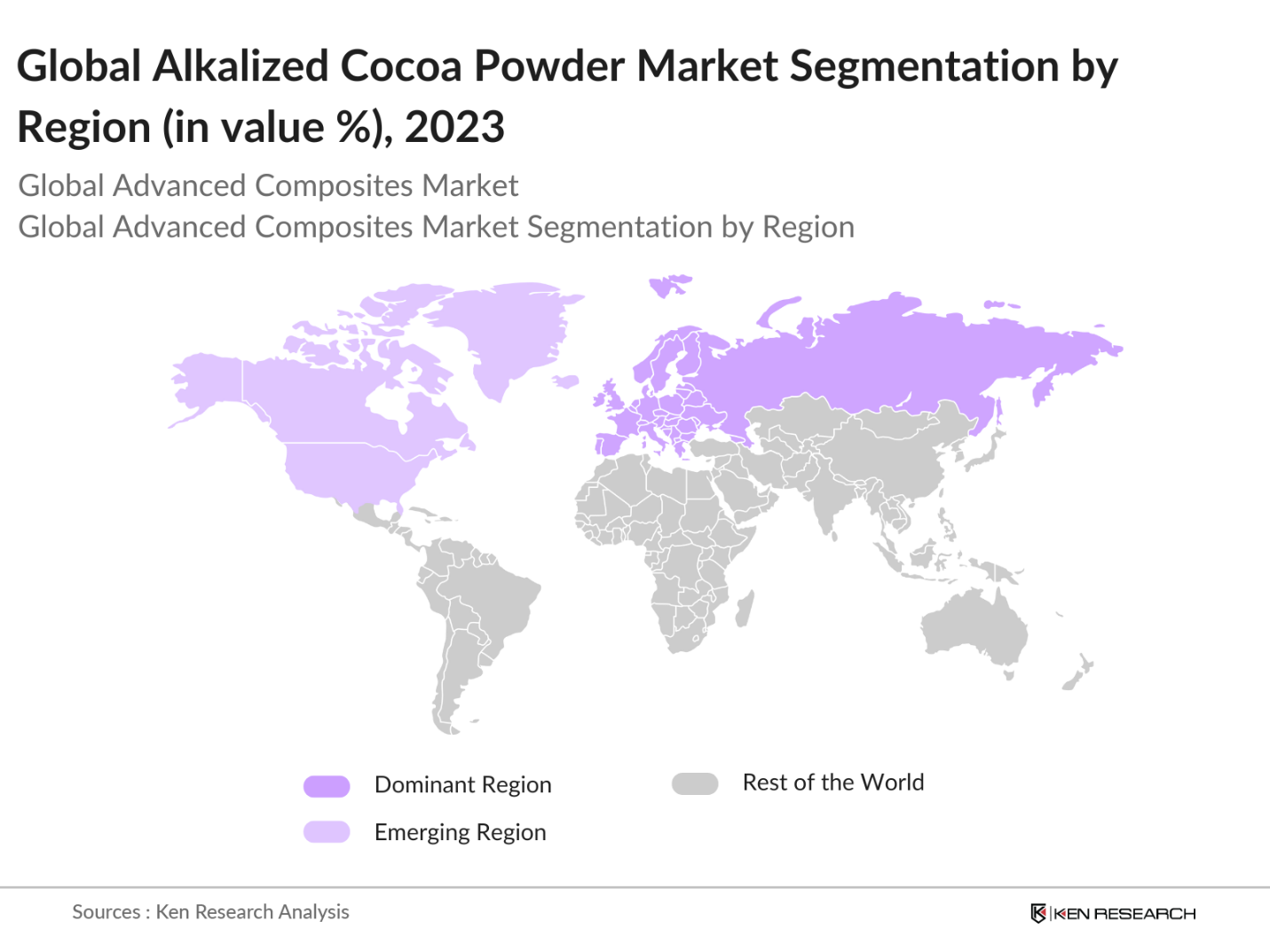
- Europe dominates the alkalized cocoa powder market due to its mature cocoa processing industry, strong demand for premium chocolates, rich culinary heritage, and growing awareness of cocoa's health benefits. The region's established infrastructure and consumer preferences have solidified its leading position in the market.
- Consumers are increasingly prioritizing sustainability and ethical sourcing in their purchasing decisions. In 2023, 60% of global consumers expressed willingness to pay more for sustainably sourced cocoa products. Certifications like Fair Trade and Rainforest Alliance have seen a 20% increase in cocoa product certifications, reflecting this trend.
Global Alkalized Cocoa Powder Market Segmentation
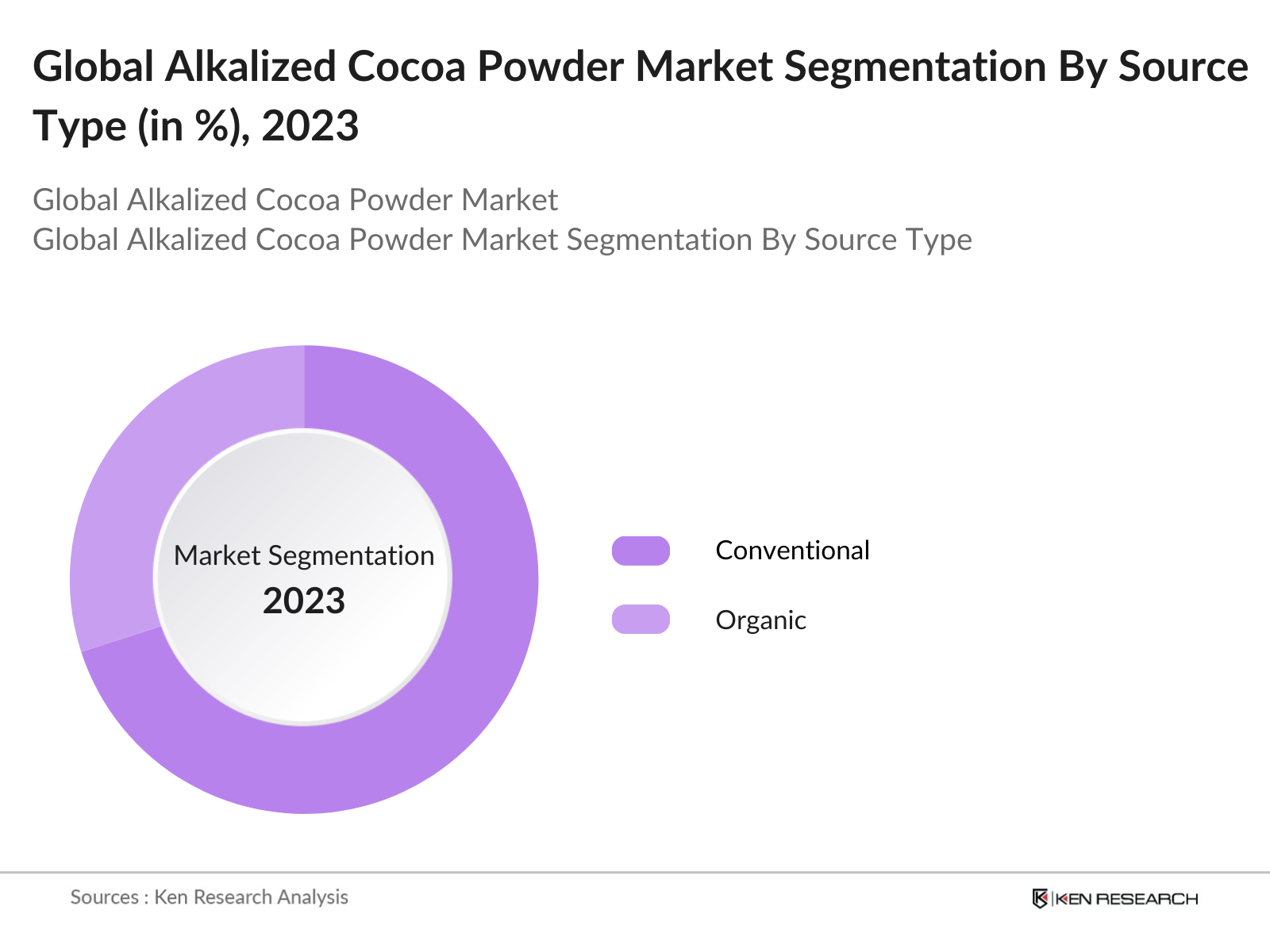
By Source: The alkalized cocoa powder market is segmented by source into organic and conventional. Conventional alkalized cocoa powder holds a dominant market share due to its widespread availability and cost-effectiveness. Manufacturers and consumers often prefer conventional sources for large-scale production and consumption, making it the prevalent choice in the market.
By Region: Regionally, the market is segmented into North America, Europe, Asia Pacific, Latin America, and Middle East & Africa. Europe holds the largest market share, attributed to its rich tradition of chocolate consumption and advanced cocoa processing facilities. The region's established consumer base and industry infrastructure support its leading position in the market.
By Application: The market is divided by application into food & beverages, cosmetics, and others. Within the food & beverages segment, bakery & confectionery products lead the market share. The versatility of alkalized cocoa powder in enhancing the flavor and appearance of baked goods and confections contributes to its dominance in this application.
Global Alkalized Cocoa Powder Market Competitive Landscape
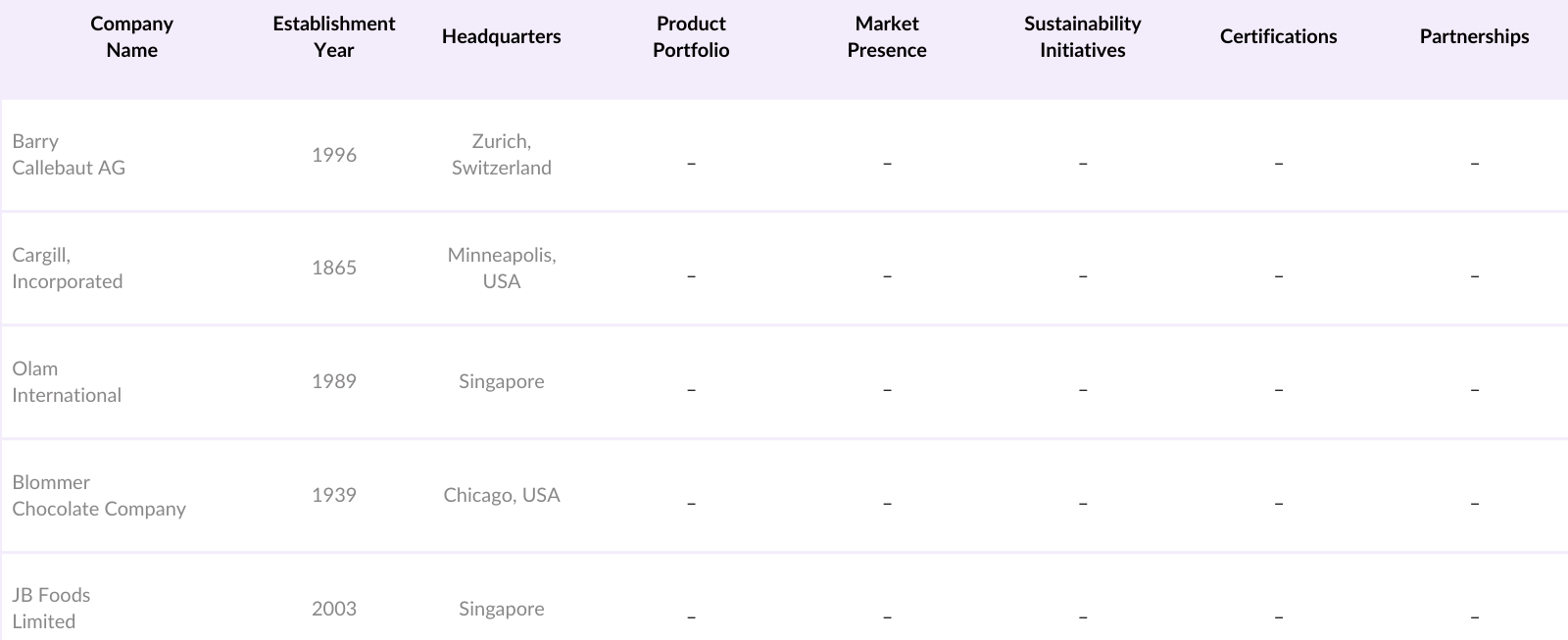
The global alkalized cocoa powder market features several key players contributing to its growth and development. These companies have established strong market positions through extensive product portfolios, global market presence, and commitment to sustainability and customer engagement. The competitive landscape includes:
Global Alkalized Cocoa Powder Industry Analysis
Growth Drivers
- Increasing Demand for Chocolate and Cocoa-Based Products: The global consumption of chocolate and cocoa-based products has been on the rise, with the International Cocoa Organization reporting a global grind of approximately 4.8 million metric tons of cocoa beans in the 2022/2023 season. This surge is driven by heightened consumer interest in confectioneries, beverages, and bakery items that incorporate cocoa. The United States, for instance, saw chocolate sales reaching $22 billion in 2022, reflecting a robust demand for cocoa products.
- Expansion of Applications in Beverages and Bakery Products: Alkalized cocoa powder's enhanced solubility and consistent flavor profile have led to its increased use in beverages and bakery products. In 2023, the global bakery products market was valued at $407 billion, with cocoa-based items constituting a significant portion. Additionally, the global hot chocolate market reached $3.2 billion in 2022, indicating a growing preference for cocoa-infused beverages.
- Growing Health Consciousness Driving Dark Cocoa Demand: Consumers are increasingly aware of the health benefits associated with dark cocoa, such as its antioxidant properties and potential cardiovascular advantages. A 2023 study by the National Institutes of Health highlighted that cocoa flavonoids could improve heart health. This awareness has led to a rise in demand for dark chocolate products, with the global dark chocolate market valued at $51 billion in 2022.
Market Challenges
- Fluctuating Cocoa Bean Prices: The volatility in cocoa bean prices poses a significant challenge for manufacturers. In 2022, cocoa prices ranged between $2,200 and $2,600 per metric ton, influenced by factors such as weather conditions and political instability in cocoa-producing regions. This unpredictability affects production costs and pricing strategies for alkalized cocoa powder.
- Stringent Food and Beverage Regulations: Compliance with varying international food safety standards and regulations can be complex. For instance, the European Union's regulation (EC) No 1881/2006 sets maximum levels for certain contaminants in foodstuffs, including cocoa products. Adhering to such stringent standards requires continuous monitoring and can increase operational costs for manufacturers.
Global Alkalized Cocoa Powder Market Future Outlook
Over the next five years, the global alkalized cocoa powder market is expected to show significant growth driven by continuous consumer demand for chocolate-based products, advancements in cocoa processing technologies, and increasing applications in various industries such as food & beverages and cosmetics. The market is projected to grow at a compound annual growth rate (CAGR) of 3.6% from 2024 to 2030.
Opportunities
- Increasing Usage in Vegan and Plant-Based Foods: The rise of veganism and plant-based diets has opened new avenues for alkalized cocoa powder. The global plant-based food market was valued at $44.2 billion in 2022, with cocoa-based products like dairy-free chocolates and desserts gaining popularity. Alkalized cocoa powder's versatility makes it a preferred ingredient in these vegan formulations.
- Innovations in Flavored and Blended Cocoa Powders: Manufacturers are exploring innovative flavored and blended cocoa powders to cater to diverse consumer tastes. In 2023, the flavored cocoa powder segment saw a 15% increase in product launches, including varieties like spiced and fruit-infused cocoa powders. These innovations aim to attract consumers seeking unique and gourmet cocoa experiences.
Scope of the Report
|
Source |
Organic Conventional |
|
Application |
Food & Beverages Bakery & Confectionery Beverages Dairy Products Spreads and Sauces Ready-to-Eat Products Cosmetics Nutraceuticals |
|
Type |
Light Alkalized Cocoa Powder Medium Alkalized Cocoa Powder Dark Alkalized Cocoa Powder |
|
Distribution Channel |
B2B, B2C Online Retail Supermarkets/Hypermarkets Specialty Stores |
|
Region |
North America Europe Asia Pacific Latin America Middle East & Africa |
Products
Key Target Audience Organizations and Entities Who Can Benefit by Subscribing This Report:
Food & Beverage Manufacturing Industries
Cosmetic Product Manufacturing Companies
Nutraceutical Companies
Importer and Exporter Companies
Government and Regulatory Bodies (e.g., Food and Drug Administration)
Investment and Venture Capitalist Firms
Companies
Players Mentioned in the Report
Barry Callebaut AG
Cargill, Incorporated
Olam International
Blommer Chocolate Company
JB Foods Limited
Nestle S.A.
Mondelez International
Ghirardelli Chocolate Company
Mars, Incorporated
Ferrero International S.A.
Table of Contents
1. Global Alkalized Cocoa Powder Market Overview
1.1. Definition and Scope
1.2. Market Taxonomy
1.3. Market Growth Rate
1.4. Market Segmentation Overview
2. Global Alkalized Cocoa Powder Market Size (In USD Mn)
2.1. Historical Market Size
2.2. Year-On-Year Growth Analysis
2.3. Key Market Developments and Milestones
3. Global Alkalized Cocoa Powder Market Analysis
3.1. Growth Drivers
3.1.1. Increasing Demand for Chocolate and Cocoa-Based Products
3.1.2. Expansion of Applications in Beverages and Bakery Products
3.1.3. Growing Health Consciousness Driving Dark Cocoa Demand
3.1.4. Rise in Consumer Preference for Premium and Organic Cocoa
3.2. Market Challenges
3.2.1. Fluctuating Cocoa Bean Prices
3.2.2. Stringent Food and Beverage Regulations
3.2.3. Environmental Concerns in Cocoa Production
3.3. Opportunities
3.3.1. Increasing Usage in Vegan and Plant-Based Foods
3.3.2. Innovations in Flavored and Blended Cocoa Powders
3.3.3. Expansion in Emerging Markets
3.4. Trends
3.4.1. Shift Toward Sustainable and Ethically Sourced Cocoa
3.4.2. Growing Use of Cocoa in Nutraceutical and Functional Foods
3.4.3. Demand for Clean Label and All-Natural Products
3.5. Government Regulations
3.5.1. Food Safety Standards for Cocoa Products
3.5.2. Import and Export Policies
3.5.3. Sustainable Sourcing Regulations
3.5.4. Certification Requirements
3.6. SWOT Analysis
3.7. Stake Ecosystem
3.8. Porters Five Forces Analysis
3.9. Competitive Ecosystem
4. Global Alkalized Cocoa Powder Market Segmentation
4.1. By Source (In Value %)
4.1.1. Organic
4.1.2. Conventional
4.2. By Application (In Value %)
4.2.1. Food & Beverages
4.2.1.1. Bakery & Confectionery
4.2.1.2. Beverages
4.2.1.3. Dairy Products
4.2.1.4. Spreads and Sauces
4.2.1.5. Ready-to-Eat Products
4.2.2. Cosmetics
4.2.3. Nutraceuticals
4.3. By Type (In Value %)
4.3.1. Light Alkalized Cocoa Powder
4.3.2. Medium Alkalized Cocoa Powder
4.3.3. Dark Alkalized Cocoa Powder
4.4. By Distribution Channel (In Value %)
4.4.1. B2B
4.4.2. B2C
4.4.2.1. Online Retail
4.4.2.2. Supermarkets/Hypermarkets
4.4.2.3. Specialty Stores
4.5. By Region (In Value %)
4.5.1. North America
4.5.2. Europe
4.5.3. Asia Pacific
4.5.4. Latin America
4.5.5. Middle East & Africa
5. Global Alkalized Cocoa Powder Market Competitive Analysis
5.1 Detailed Profiles of Major Companies
5.1.1. Cargill, Incorporated
5.1.2. Olam International
5.1.3. Barry Callebaut AG
5.1.4. Archer Daniels Midland Company
5.1.5. Blommer Chocolate Company
5.1.6. Nestle S.A.
5.1.7. Mondelez International
5.1.8. Ghirardelli Chocolate Company
5.1.9. Mars, Incorporated
5.1.10. Ferrero International S.A.
5.1.11. The Hershey Company
5.1.12. Puratos Group
5.1.13. Bloomer Chocolate Company
5.1.14. JB Foods Limited
5.1.15. Fuji Oil Holdings Inc.
5.2 Cross Comparison Parameters (Revenue, Product Portfolio, Sustainability Initiatives, Certifications, Market Presence, Partnerships, Manufacturing Capabilities, Customer Engagement)
5.3 Market Share Analysis
5.4 Strategic Initiatives
5.5 Mergers and Acquisitions
5.6 Investment Analysis
5.7 Private Equity and Venture Capital Investments
5.8 Government Grants
6. Global Alkalized Cocoa Powder Market Regulatory Framework
6.1 Environmental and Sustainability Standards
6.2 Food and Beverage Compliance Requirements
6.3 Certification and Licensing Requirements
6.4 Import Tariffs and Trade Regulations
7. Global Alkalized Cocoa Powder Future Market Size (In USD Mn)
7.1 Future Market Size Projections
7.2 Key Factors Driving Future Market Growth
8. Global Alkalized Cocoa Powder Future Market Segmentation
8.1 By Source (In Value %)
8.2 By Application (In Value %)
8.3 By Type (In Value %)
8.4 By Distribution Channel (In Value %)
8.5 By Region (In Value %)
9. Global Alkalized Cocoa Powder Market Analysts Recommendations
9.1 TAM/SAM/SOM Analysis
9.2 Customer Cohort Analysis
9.3 Market Penetration Strategies
9.4 White Space Opportunity Analysis
Disclaimer Contact UsResearch Methodology
Step 1: Identification of Key Variables
The initial phase involves constructing an ecosystem map encompassing all major stakeholders within the global alkalized cocoa powder market. This step is underpinned by extensive desk research, utilizing a combination of secondary and proprietary databases to gather comprehensive industry-level information. The primary objective is to identify and define the critical variables that influence market dynamics.
Step 2: Market Analysis and Construction
In this phase, we compile and analyze historical data pertaining to the global alkalized cocoa powder market. This includes assessing market penetration, the ratio of marketplaces to service providers, and the resultant revenue generation. Furthermore, an evaluation of service quality statistics is conducted to ensure the reliability and accuracy of the revenue estimates.
Step 3: Hypothesis Validation and Expert Consultation
Market hypotheses are developed and subsequently validated through computer-assisted telephone interviews (CATIs) with industry experts representing a diverse array of companies. These consultations provide valuable operational and financial insights directly from industry practitioners, which are instrumental in refining and corroborating the market data.
Step 4: Research Synthesis and Final Output
The final phase involves direct engagement with multiple cocoa product manufacturers to acquire detailed insights into product segments, sales performance, consumer preferences, and other pertinent factors. This interaction serves to verify and complement the statistics derived from the bottom-up approach, thereby ensuring a comprehensive, accurate, and validated analysis of the global alkalized cocoa powder market.
Frequently Asked Questions
1. How big is the global alkalized cocoa powder market?
The global alkalized cocoa powder market is valued at USD 2.4 billion, driven by increasing consumer demand for chocolate-based products and the versatility of alkalized cocoa powder in various applications.
2. What are the challenges in the global alkalized cocoa powder market?
Challenges include fluctuating cocoa bean prices, stringent food safety regulations, and environmental concerns related to cocoa production. These factors can impact production costs and market stability.
3. Who are the major players in the global alkalized cocoa powder market?
Key players in the market include Barry Callebaut AG, Cargill Incorporated, Olam International, Blommer Chocolate Company, and JB Foods Limited, all of whom have established strong global presence and product portfolios.
4. What are the growth drivers of the global alkalized cocoa powder market?
The market is driven by the rising demand for chocolate-based products, innovations in cocoa processing, and increasing application of alkalized cocoa powder in beverages, bakery items, and confectionery products.
Why Buy From Us?

What makes us stand out is that our consultants follows Robust, Refine and Result (RRR) methodology. i.e. Robust for clear definitions, approaches and sanity checking, Refine for differentiating respondents facts and opinions and Result for presenting data with story

We have set a benchmark in the industry by offering our clients with syndicated and customized market research reports featuring coverage of entire market as well as meticulous research and analyst insights.

While we don't replace traditional research, we flip the method upside down. Our dual approach of Top Bottom & Bottom Top ensures quality deliverable by not just verifying company fundamentals but also looking at the sector and macroeconomic factors.

With one step in the future, our research team constantly tries to show you the bigger picture. We help with some of the tough questions you may encounter along the way: How is the industry positioned? Best marketing channel? KPI's of competitors? By aligning every element, we help maximize success.

Our report gives you instant access to the answers and sources that other companies might choose to hide. We elaborate each steps of research methodology we have used and showcase you the sample size to earn your trust.

If you need any support, we are here! We pride ourselves on universe strength, data quality, and quick, friendly, and professional service.