
Global Aluminum Fishing Boats Market Outlook to 2030
Region:Global
Author(s):Abhinav kumar
Product Code:KROD5996
Region:Global
Author(s):Abhinav kumar
Product Code:KROD5996
November 2024
92
Listen to the audio summary
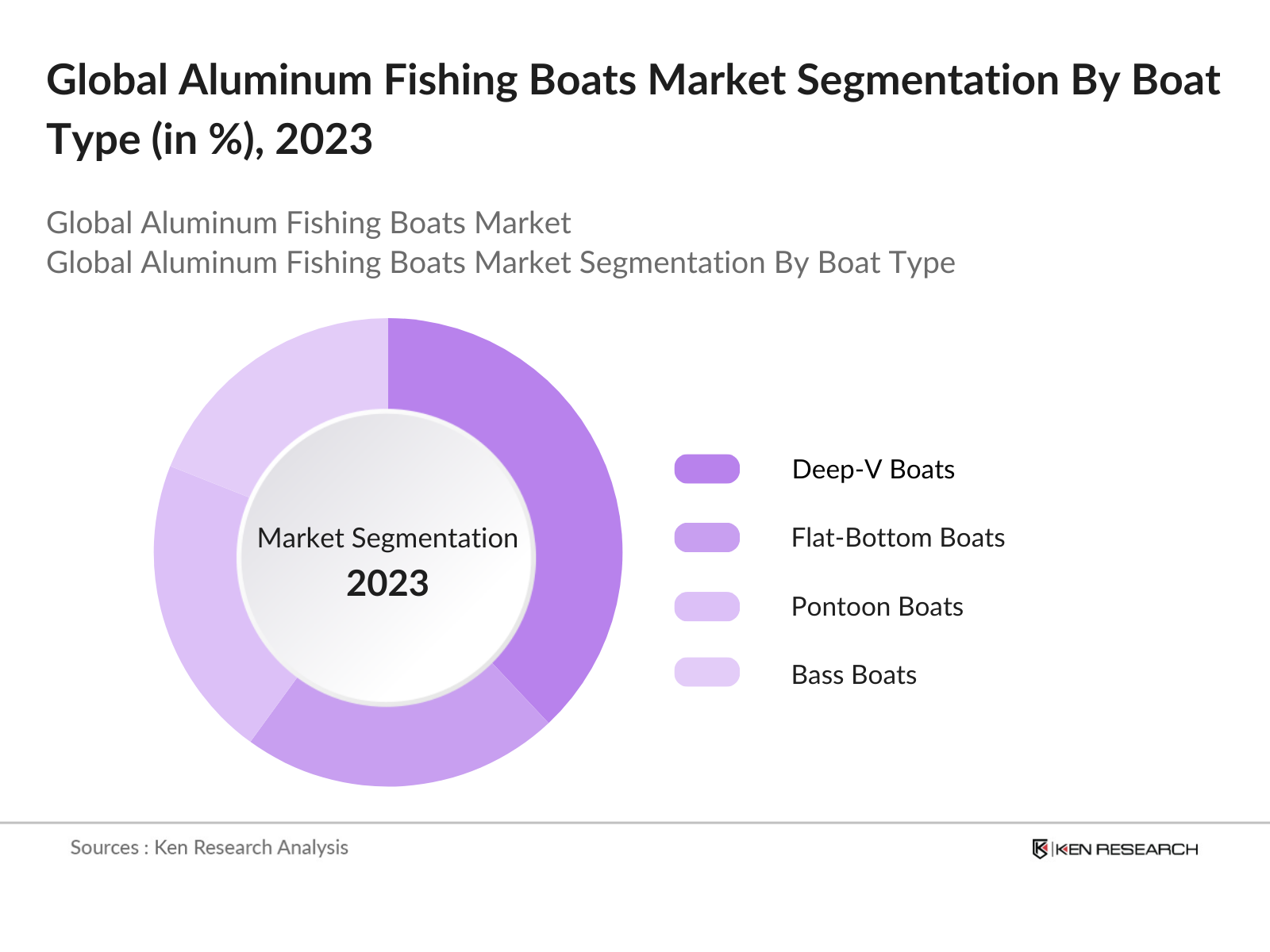
By Boat Type: The aluminum fishing boats market is segmented by boat type into Deep-V Boats, Flat-Bottom Boats, Pontoon Boats, Bass Boats, and Jon Boats. Recently, Deep-V Boats have held a dominant market share due to their superior stability and ability to handle choppy waters, which makes them popular for both deep-sea fishing and freshwater fishing in large lakes. These boats are preferred for their efficient hull design, which provides a smoother ride even in turbulent water conditions, making them versatile for a wide range of fishing activities.
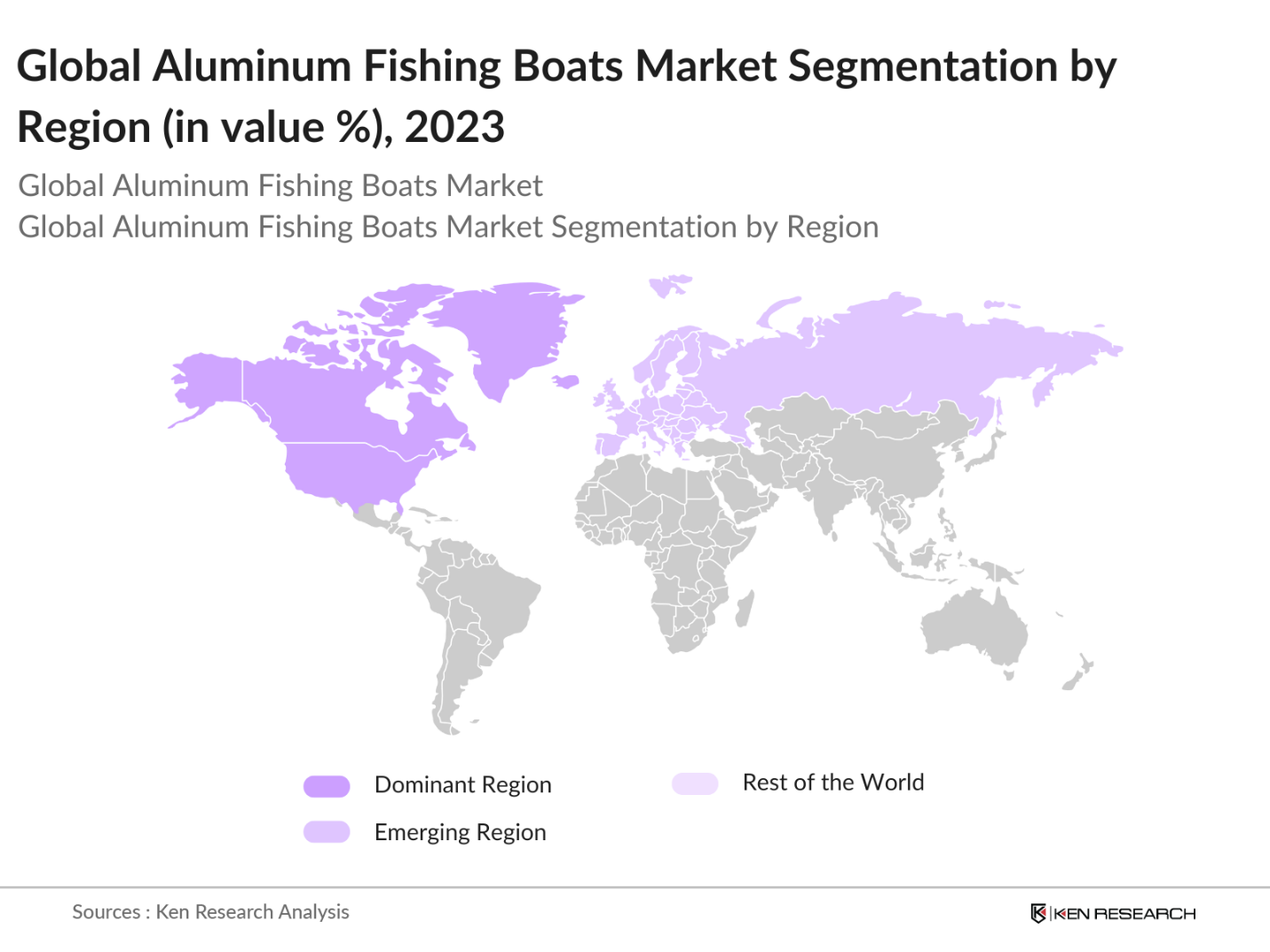
By Region: The aluminum fishing boats market is segmented by region into North America, Europe, Asia-Pacific, Latin America, and Middle East & Africa.
North America leads the global market due to the regions strong recreational fishing industry, expansive freshwater resources, and the presence of a large number of boat manufacturers. The U.S. is a particularly dominant market, with significant consumer demand driven by a well-established infrastructure for boating and fishing activities. Europe, particularly Scandinavia, is witnessing steady growth, fueled by its rich fishing heritage and marine resources.
By Engine Type: The market is further segmented by engine type into Inboard Engines, Outboard Engines, and Electric Engines.
Outboard Engines dominate the market, largely because of their ease of maintenance, versatility, and higher power-to-weight ratios. They allow for more interior space in boats, which is a significant advantage for fishing enthusiasts who need additional room for equipment. Outboard motors are also easily replaceable and ideal for shallow waters, which are prevalent in popular fishing regions.
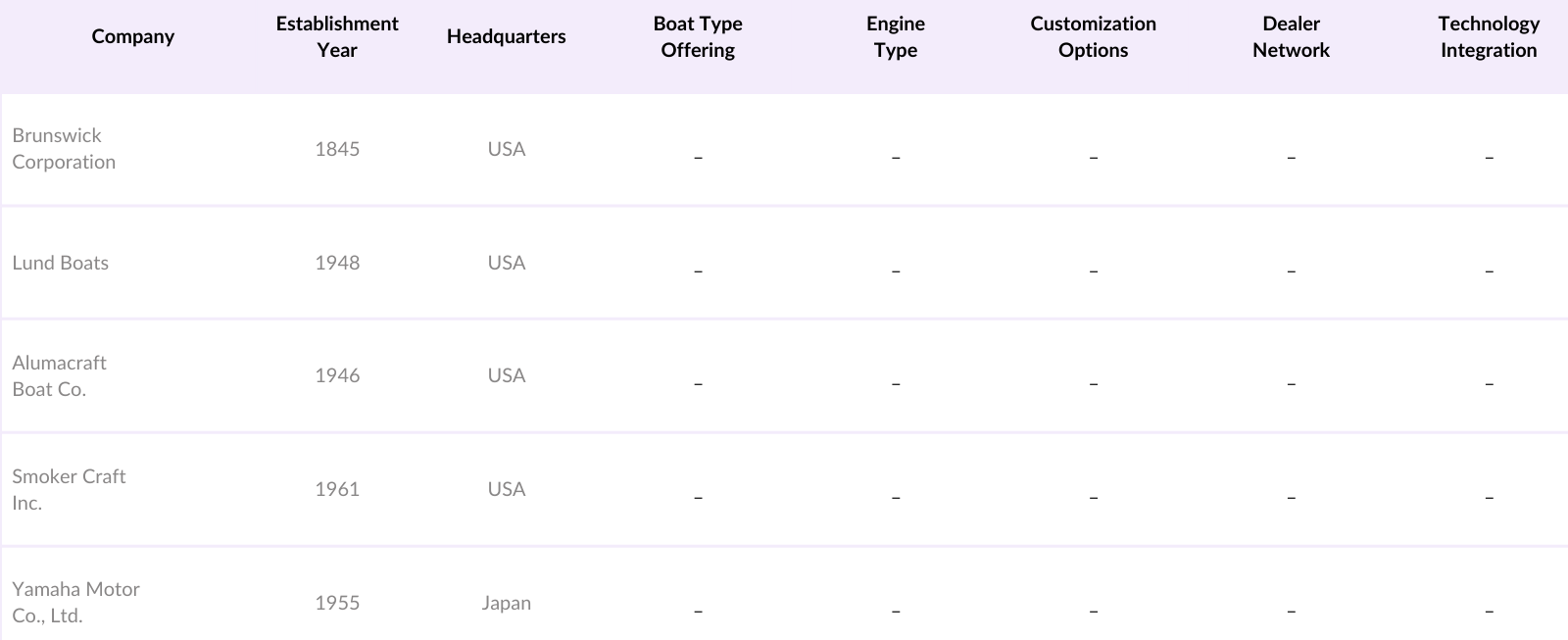
The global aluminum fishing boats market is relatively consolidated, with several key players dominating the landscape. This consolidation highlights the influence of established companies with extensive product portfolios and strong distribution networks. The market is dominated by players such as Brunswick Corporation, Lund Boats, and Alumacraft Boat Co., which benefit from strong brand recognition, extensive dealership networks, and a broad range of product offerings tailored to different consumer needs. Innovations in hull design, engine technology, and fishing equipment integration further bolster their competitive advantage.
Over the next five years, the global aluminum fishing boats market is expected to experience significant growth, driven by increased consumer interest in outdoor recreational activities, rising disposable incomes, and advancements in boat electrification technology. The transition toward eco-friendly, sustainable boating solutions is projected to accelerate, with electric engines and hybrid technologies becoming more prevalent. North America and Europe will continue to dominate, but emerging markets in Asia-Pacific are expected to show substantial growth, spurred by increasing consumer interest in recreational fishing.
|
By Boat Type |
Deep-V Boats Flat-Bottom Boats Pontoon Boats Bass Boats Jon Boats |
|
By Engine Type |
Inboard Engines Outboard Engines Electric Engines |
|
By Application |
Recreational Fishing Commercial Fishing Marine Patrolling Water Sports |
|
By Length |
<20 Feet 20–30 Feet >30 Feet |
|
By Region |
North America Europe Asia-Pacific Latin America Middle East & Africa |
1.1. Definition and Scope
1.2. Market Taxonomy
1.3. Market Growth Rate
1.4. Market Segmentation Overview
1.5. Industry Value Chain
2.1. Historical Market Size
2.2. Year-On-Year Growth Analysis
2.3. Key Market Developments and Milestones
3.1. Growth Drivers (Hull Material, Fuel Efficiency, Boat Design)
3.1.1. Increased Leisure Activities
3.1.2. Rising Popularity of Recreational Fishing
3.1.3. Growing Demand for Lightweight Boats
3.2. Market Challenges (Operational Costs, Competition from Fiberglass Boats)
3.2.1. High Maintenance Costs
3.2.2. Regulatory Restrictions
3.2.3. Limited Infrastructure in Emerging Markets
3.3. Opportunities (Boat Electrification, Customizable Features)
3.3.1. Expansion of Eco-friendly Boats
3.3.2. Technological Innovations in Navigation Systems
3.3.3. Emerging Markets for Sport Fishing
3.4. Market Trends (Fishing Equipment Integration, Sustainable Materials)
3.4.1. Adoption of Hybrid Engines
3.4.2. Rise in Use of Smart Technologies in Boats
3.4.3. Demand for Multi-functional Fishing Boats
3.5. Regulatory Impact (Emissions Standards, Safety Regulations)
3.5.1. Environmental Protection Standards
3.5.2. Marine Safety Regulations
3.5.3. Regional Emission Guidelines
4.1. By Boat Type (In Value %)
4.1.1. Deep-V Boats
4.1.2. Flat-Bottom Boats
4.1.3. Pontoon Boats
4.1.4. Bass Boats
4.1.5. Jon Boats
4.2. By Engine Type (In Value %)
4.2.1. Inboard Engines
4.2.2. Outboard Engines
4.2.3. Electric Engines
4.3. By Application (In Value %)
4.3.1. Recreational Fishing
4.3.2. Commercial Fishing
4.3.3. Marine Patrolling
4.3.4. Water Sports
4.4. By Length (In Value %)
4.4.1. <20 Feet
4.4.2. 2030 Feet
4.4.3. >30 Feet
4.5. By Region (In Value %)
4.5.1. North America
4.5.2. Europe
4.5.3. Asia-Pacific
4.5.4. Latin America
4.5.5. Middle East & Africa
5.1. Detailed Profiles of Major Companies (Inception Year, Headquarters, Revenue, Employee Size, Market Share)
5.1.1. Brunswick Corporation
5.1.2. Yamaha Motor Co., Ltd.
5.1.3. Lund Boats
5.1.4. Smoker Craft Inc.
5.1.5. Alumacraft Boat Co.
5.1.6. Tracker Marine Group
5.1.7. Legend Boats
5.1.8. Xpress Boats
5.1.9. G3 Boats
5.1.10. Crestliner Inc.
5.1.11. War Eagle Boats
5.1.12. Lowe Boats
5.1.13. Princecraft Boats
5.1.14. Polar Kraft Boats
5.1.15. Ranger Boats
5.2. Cross Comparison Parameters (Boat Type Offering, Engine Type, Customization Options, Dealer Network, Technology Integration, Sustainability Initiatives, Pricing, Customer Service Ratings)
5.3. Market Share Analysis
5.4. Strategic Initiatives
5.5. Mergers and Acquisitions
5.6. Investment Analysis
5.7. Private Equity Investments
5.8. Joint Ventures and Partnerships
6.1. Environmental Protection and Emission Regulations
6.2. Marine Safety Standards
6.3. Boat Licensing and Certification
6.4. Import/Export Restrictions and Tariffs
7.1. Future Market Size Projections
7.2. Key Factors Driving Future Market Growth
8.1. By Boat Type (In Value %)
8.2. By Engine Type (In Value %)
8.3. By Application (In Value %)
8.4. By Length (In Value %)
8.5. By Region (In Value %)
9.1. TAM/SAM/SOM Analysis
9.2. Customer Cohort Analysis
9.3. Marketing Initiatives
9.4. White Space Opportunity Analysis
Disclaimer Contact UsThe initial phase of this research involved identifying major stakeholders within the aluminum fishing boats market. Through desk research and secondary data collection, we mapped the industry's ecosystem to identify key variables, including consumer preferences, boat type demand, and technological advancements.
We analyzed historical data to understand market penetration, sales trends, and revenue streams. Market size was calculated through the collection of data from boat manufacturers, suppliers, and distributors, ensuring the inclusion of different market segments.
Our hypotheses regarding market growth, consumer behavior, and technology integration were validated through expert consultations and interviews with industry leaders from top aluminum boat manufacturing firms. Insights from these discussions informed our final market estimates.
The final step involved synthesizing data gathered from primary and secondary sources to produce an accurate, comprehensive analysis. The report incorporates feedback from boat manufacturers and market experts to ensure that findings reflect current market conditions.
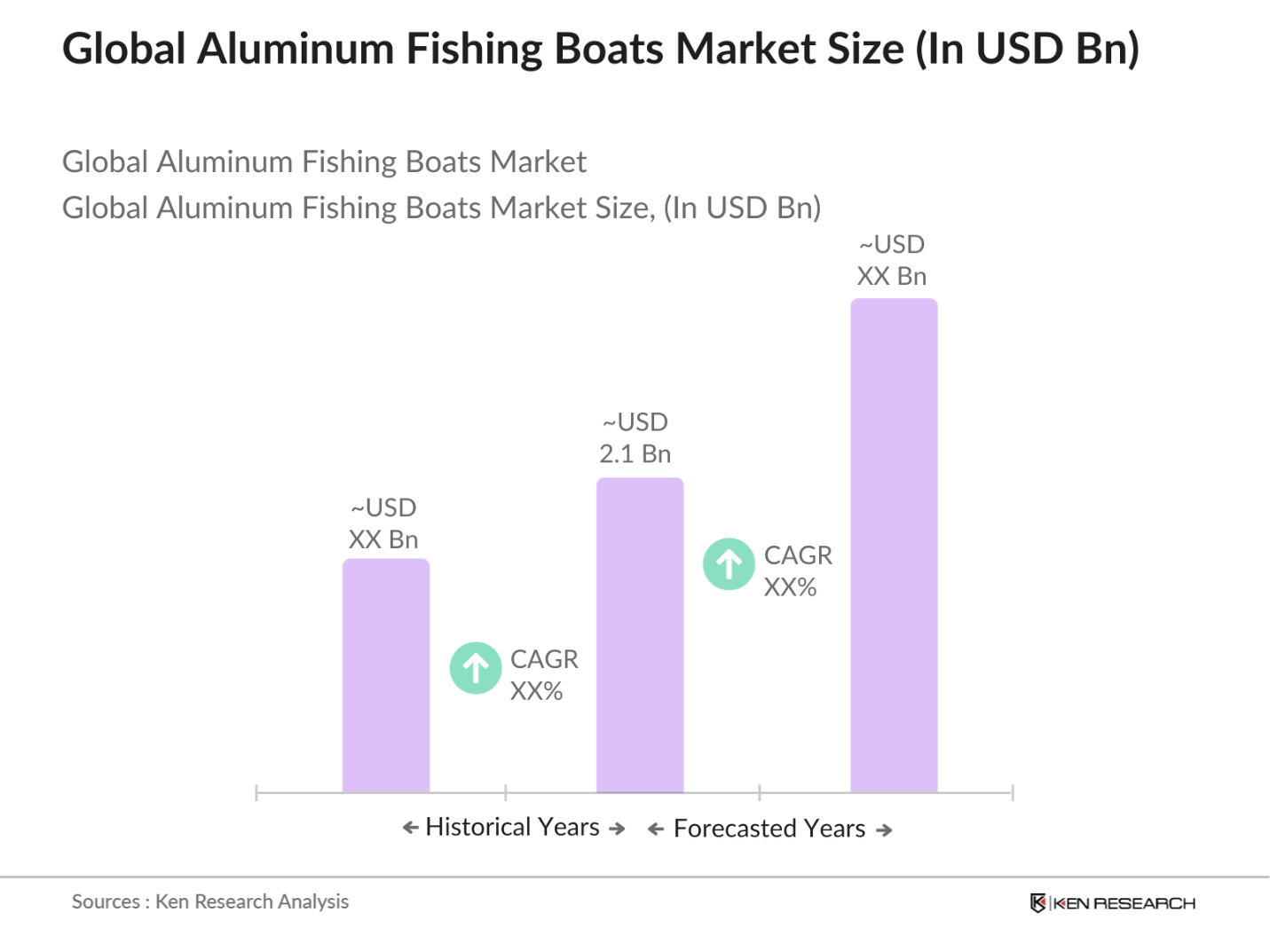
The global aluminum fishing boats market is valued at approximately USD 2.1 billion in 2023, driven by rising demand for recreational fishing and advancements in boat technology.
Challenges include high maintenance costs for aluminum boats, regulatory hurdles regarding emissions, and competition from fiberglass boats, which are often preferred for their design flexibility.
Major players in the market include Brunswick Corporation, Yamaha Motor Co., Ltd., Lund Boats, Alumacraft Boat Co., and Smoker Craft Inc. These companies dominate due to their extensive product portfolios, strong brand recognition, and innovation in boat design.
The market is driven by the increasing popularity of recreational fishing, rising disposable incomes, and a growing preference for lightweight, fuel-efficient aluminum boats, particularly in North America and Europe.

What makes us stand out is that our consultants follows Robust, Refine and Result (RRR) methodology. i.e. Robust for clear definitions, approaches and sanity checking, Refine for differentiating respondents facts and opinions and Result for presenting data with story

We have set a benchmark in the industry by offering our clients with syndicated and customized market research reports featuring coverage of entire market as well as meticulous research and analyst insights.

While we don't replace traditional research, we flip the method upside down. Our dual approach of Top Bottom & Bottom Top ensures quality deliverable by not just verifying company fundamentals but also looking at the sector and macroeconomic factors.

With one step in the future, our research team constantly tries to show you the bigger picture. We help with some of the tough questions you may encounter along the way: How is the industry positioned? Best marketing channel? KPI's of competitors? By aligning every element, we help maximize success.

Our report gives you instant access to the answers and sources that other companies might choose to hide. We elaborate each steps of research methodology we have used and showcase you the sample size to earn your trust.

If you need any support, we are here! We pride ourselves on universe strength, data quality, and quick, friendly, and professional service.