
Global Animal Health Market Outlook to 2030
Region:Global
Author(s):Mukul
Product Code:KROD9097
Region:Global
Author(s):Mukul
Product Code:KROD9097
October 2024
95
Listen to the audio summary
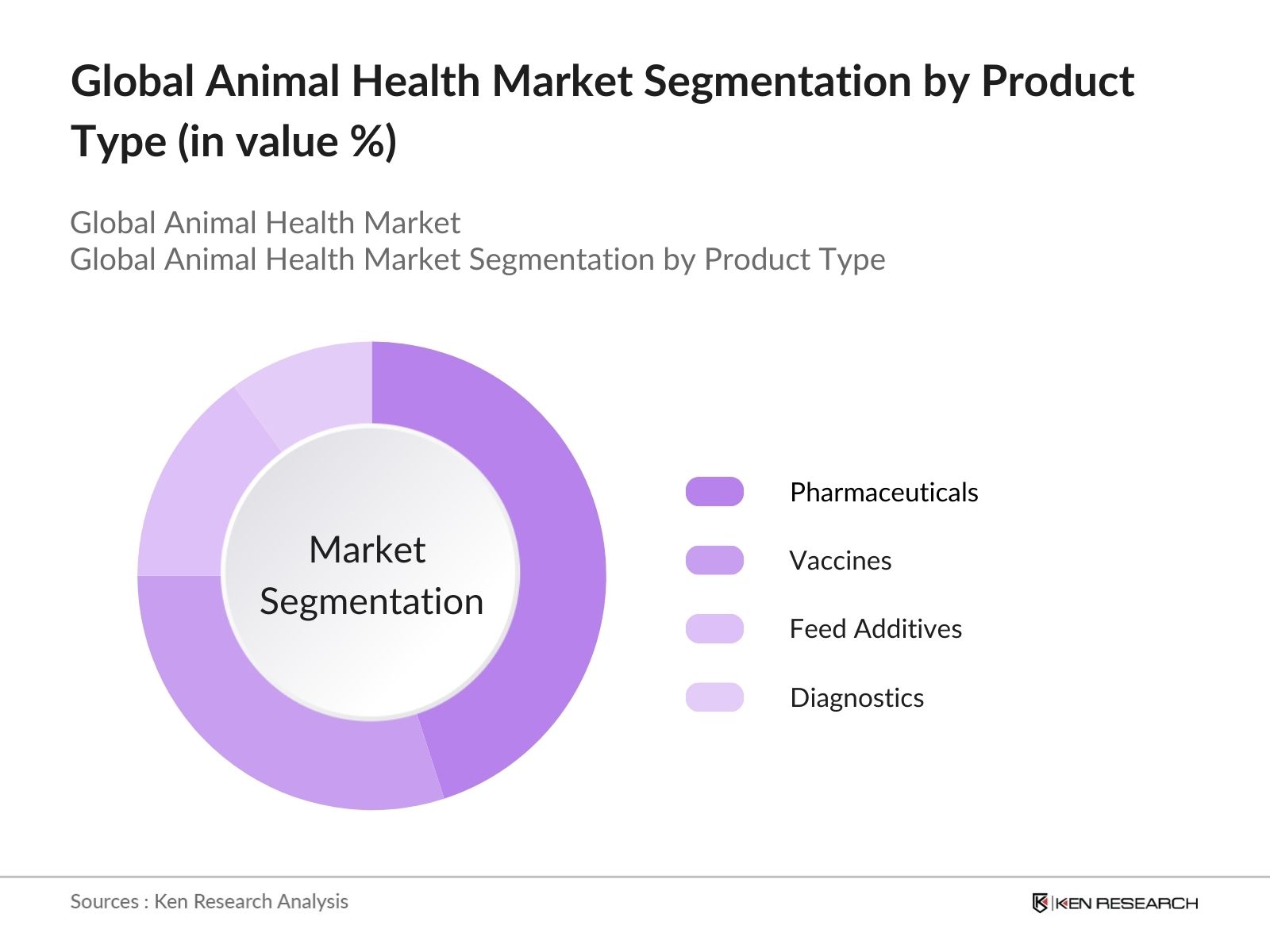
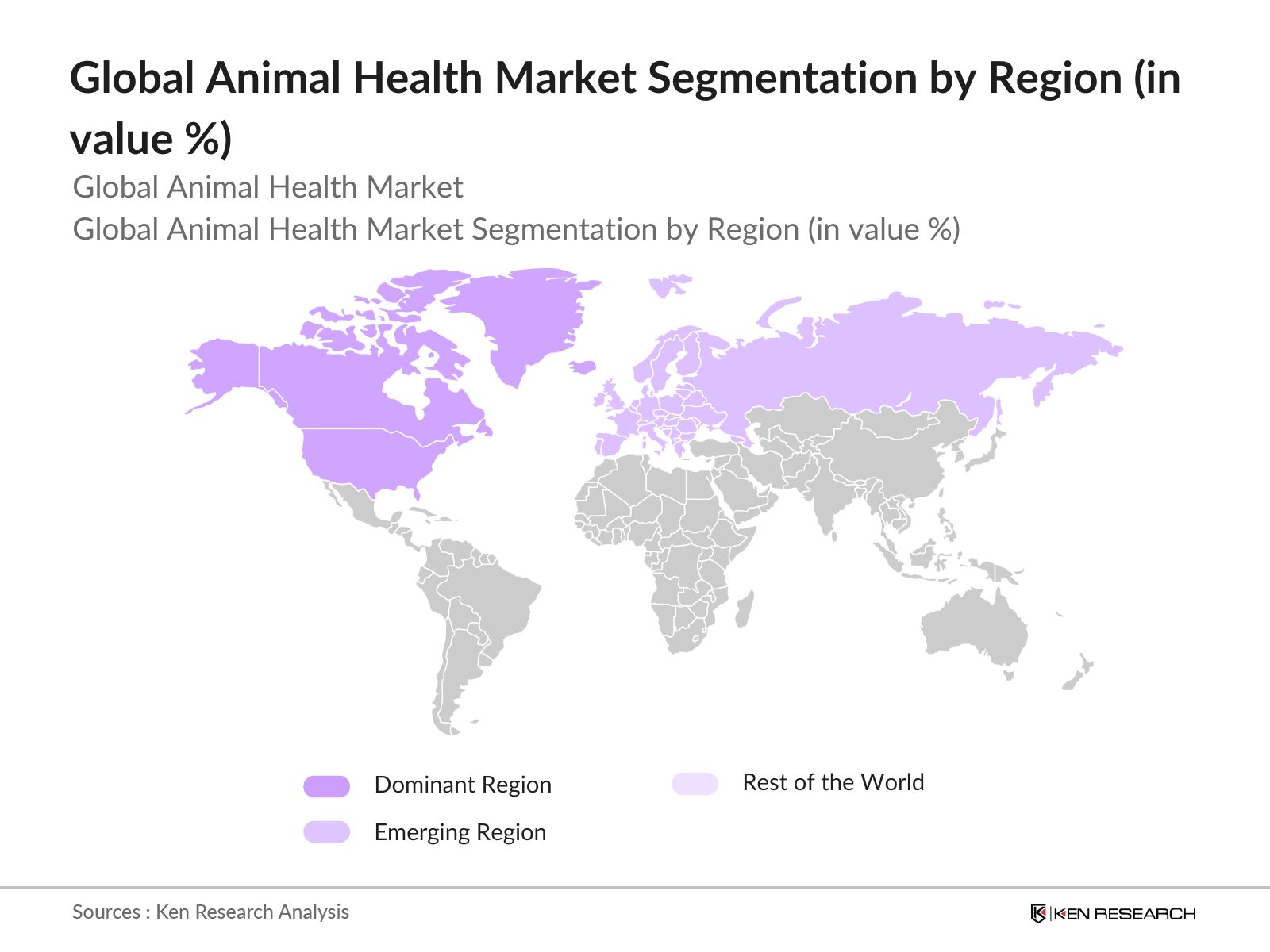
Global Animal Health Market Segmentation
The global animal health market is characterized by intense competition among several leading players, each contributing significantly to advancements in veterinary pharmaceuticals, diagnostics, and vaccines. Companies are focusing on expanding their product portfolios through mergers, acquisitions, and R&D investments to gain a competitive edge in this fast-growing industry. The top competitors are also forming strategic alliances with local players to enhance their global reach and penetrate emerging markets more effectively.
|
Company Name |
Year Established |
Headquarters |
Product Portfolio |
R&D Expenditure |
Global Market Presence |
Strategic Partnerships |
Sustainability Initiatives |
Recent Mergers & Acquisitions |
Innovation Index |
|
Zoetis Inc. |
1952 |
Parsippany, NJ, USA |
|||||||
|
Boehringer Ingelheim |
1885 |
Ingelheim, Germany |
|||||||
|
Merck Animal Health |
1891 |
Kenilworth, NJ, USA |
|||||||
|
Elanco Animal Health |
1954 |
Greenfield, IN, USA |
|||||||
|
Bayer Animal Health |
1863 |
Leverkusen, Germany |
Global Animal Health Industry Analysis
Over the next five years, the global animal health market is expected to witness significant growth, driven by increasing awareness of zoonotic diseases, rising pet ownership, and advancements in animal healthcare technologies. The demand for preventive veterinary care is projected to rise as pet owners prioritize the health of companion animals, while livestock farmers seek to ensure the well-being of their animals to meet growing demand for animal-based products. Additionally, technological innovations in diagnostics and telemedicine will play a pivotal role in reshaping the veterinary care landscape, further bolstering market growth.
|
Product Type |
Pharmaceuticals, Vaccines, Feed Additives, Diagnostics, Others |
|
Animal Type |
Companion Animals, Livestock Animals |
|
End User |
Veterinary Hospitals and Clinics, Retail Pharmacies, Online Pharmacies |
|
Distribution Channel |
Veterinary Pharmacies, Wholesalers and Distributors, E-Commerce |
|
Region |
North America, Europe, Asia-Pacific, Latin America, Middle East and Africa |
1.1. Definition and Scope
1.2. Market Taxonomy
1.3. Market Growth Rate
1.4. Market Segmentation Overview
2.1. Historical Market Size
2.2. Year-on-Year Growth Analysis
2.3. Key Market Developments and Milestones
3.1. Growth Drivers
3.1.1. Rising Pet Ownership and Expenditure
3.1.2. Increasing Incidence of Zoonotic Diseases
3.1.3. Advancements in Veterinary Healthcare Technologies
3.1.4. Growing Demand for Livestock Products
3.2. Market Challenges
3.2.1. High Costs of Animal Healthcare
3.2.2. Regulatory Hurdles (Regulatory Policies)
3.2.3. Limited Access to Veterinary Services in Rural Areas
3.3. Opportunities
3.3.1. Expansion of Animal Vaccination Programs
3.3.2. Increasing Demand for Companion Animal Healthcare (Pet Diagnostics, Pet Supplements)
3.3.3. Emerging Markets in Asia Pacific
3.4. Trends
3.4.1. Rising Adoption of Telemedicine in Veterinary Care
3.4.2. Growth of Preventive Healthcare Solutions (Preventive Veterinary Medicine)
3.4.3. Development of Advanced Animal Pharmaceuticals (Innovations in Animal Biologics)
3.5. Government Regulation
3.5.1. Veterinary Drug Approvals (Regulation of Animal Drugs)
3.5.2. Animal Health and Welfare Standards (Global Animal Health Standards)
3.5.3. Zoonotic Disease Prevention and Control Programs (Animal Disease Management)
3.6. SWOT Analysis
3.7. Stakeholder Ecosystem (Veterinary Practitioners, Pet Owners, Livestock Farmers, Regulators)
3.8. Porters Five Forces
3.9. Competition Ecosystem
4.1. By Product Type (In Value %)
4.1.1. Pharmaceuticals
4.1.2. Vaccines
4.1.3. Feed Additives
4.1.4. Diagnostics
4.1.5. Others (Medical Devices, Therapeutics)
4.2. By Animal Type (In Value %)
4.2.1. Companion Animals
4.2.2. Livestock Animals
4.3. By End User (In Value %)
4.3.1. Veterinary Hospitals and Clinics
4.3.2. Retail Pharmacies
4.3.3. Online Pharmacies
4.4. By Distribution Channel (In Value %)
4.4.1. Veterinary Pharmacies
4.4.2. Wholesalers and Distributors
4.4.3. E-Commerce
4.5. By Region (In Value %)
4.5.1. North America
4.5.2. Europe
4.5.3. Asia-Pacific
4.5.4. Latin America
4.5.5. Middle East and Africa
5.1. Detailed Profiles of Major Companies
5.1.1. Zoetis Inc.
5.1.2. Boehringer Ingelheim
5.1.3. Merck Animal Health
5.1.4. Elanco Animal Health
5.1.5. Bayer Animal Health
5.1.6. Ceva Sant Animale
5.1.7. Virbac
5.1.8. Vetoquinol
5.1.9. Dechra Pharmaceuticals
5.1.10. IDEXX Laboratories
5.1.11. Heska Corporation
5.1.12. Phibro Animal Health
5.1.13. Neogen Corporation
5.1.14. Covetrus
5.1.15. PetIQ, Inc.
5.2. Cross Comparison Parameters (Headquarters, Number of Employees, Market Presence, Product Portfolio, Innovation Index, R&D Investment, Strategic Partnerships, Sustainability Initiatives)
5.3. Market Share Analysis
5.4. Strategic Initiatives
5.5. Mergers and Acquisitions
5.6. Investment Analysis
5.7. Venture Capital Funding
5.8. Government Grants
5.9. Private Equity Investments
6.1. Animal Drug Regulatory Authorities
6.2. Compliance and Certification Requirements (GMP, ISO)
6.3. Animal Health Product Registration Processes
7.1. Future Market Size Projections
7.2. Key Factors Driving Future Market Growth
8.1. By Product Type (In Value %)
8.2. By Animal Type (In Value %)
8.3. By End User (In Value %)
8.4. By Distribution Channel (In Value %)
8.5. By Region (In Value %)
9.1. TAM/SAM/SOM Analysis
9.2. Customer Cohort Analysis
9.3. Marketing Initiatives
9.4. White Space Opportunity Analysis
Disclaimer Contact UsIn the initial phase, we mapped the ecosystem of the global animal health market by identifying major stakeholders, including veterinary pharmaceutical companies, pet care providers, and livestock farmers. This step involved extensive desk research using both secondary data and proprietary industry databases to gather crucial market information. The goal was to define the critical variables influencing the dynamics of the animal health market.
We compiled and analyzed historical data, including market penetration of veterinary pharmaceuticals, diagnostics, and vaccines. This phase also included an assessment of service availability across various geographies and sectors. Data was cross-verified to ensure accurate revenue estimates and service-level insights, particularly regarding preventive animal healthcare and livestock productivity.
We developed market hypotheses and validated them through consultations with industry experts via computer-assisted interviews (CATIs). Experts from key companies in the veterinary healthcare field provided valuable insights on market trends, operational challenges, and opportunities, which were critical to refining the market analysis.
In the final phase, we engaged with major players in the global animal health market, including veterinary pharmaceutical manufacturers and livestock farmers, to obtain granular insights on sales performance, product development, and regional demand patterns. This bottom-up approach helped to ensure the accuracy of our findings and provided a comprehensive view of the global animal health market.
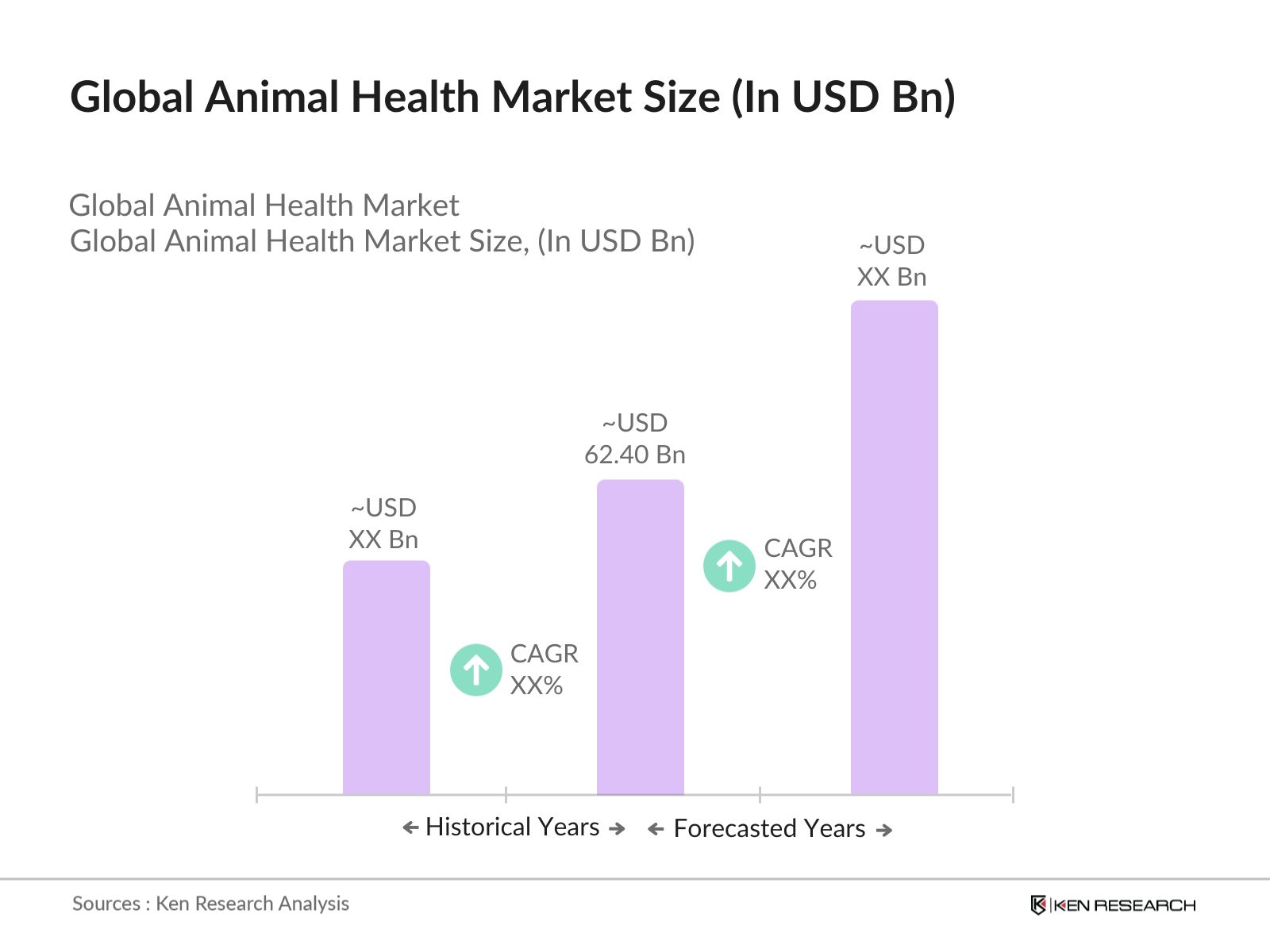
The global animal health market is valued at USD 62.40 billion, driven by increasing pet ownership, the rise in livestock farming, and growing demand for animal-based products. The market has experienced rapid growth due to advancements in veterinary diagnostics and pharmaceuticals.
The animal health market faces several challenges, including high costs associated with veterinary care, stringent regulatory policies, and limited access to healthcare services in rural areas. These factors hinder the growth potential, especially in emerging markets.
Key players in the global animal health market include Zoetis Inc., Boehringer Ingelheim, Merck Animal Health, Elanco Animal Health, and Bayer Animal Health. These companies dominate due to their extensive R&D investments, strong global presence, and diverse product portfolios.
The market is driven by rising pet ownership, increased demand for livestock products, and advancements in veterinary healthcare technologies. Additionally, government initiatives to control zoonotic diseases and improve animal health standards further propel market growth.

What makes us stand out is that our consultants follows Robust, Refine and Result (RRR) methodology. i.e. Robust for clear definitions, approaches and sanity checking, Refine for differentiating respondents facts and opinions and Result for presenting data with story

We have set a benchmark in the industry by offering our clients with syndicated and customized market research reports featuring coverage of entire market as well as meticulous research and analyst insights.

While we don't replace traditional research, we flip the method upside down. Our dual approach of Top Bottom & Bottom Top ensures quality deliverable by not just verifying company fundamentals but also looking at the sector and macroeconomic factors.

With one step in the future, our research team constantly tries to show you the bigger picture. We help with some of the tough questions you may encounter along the way: How is the industry positioned? Best marketing channel? KPI's of competitors? By aligning every element, we help maximize success.

Our report gives you instant access to the answers and sources that other companies might choose to hide. We elaborate each steps of research methodology we have used and showcase you the sample size to earn your trust.

If you need any support, we are here! We pride ourselves on universe strength, data quality, and quick, friendly, and professional service.