
Global Animal Husbandry Market Outlook to 2030
Region:Global
Author(s):Shivani Mehra
Product Code:KROD5244
November 2024
95
About the Report
Global Animal Husbandry Market Outlook to 2028
Global Animal Husbandry Market Overview
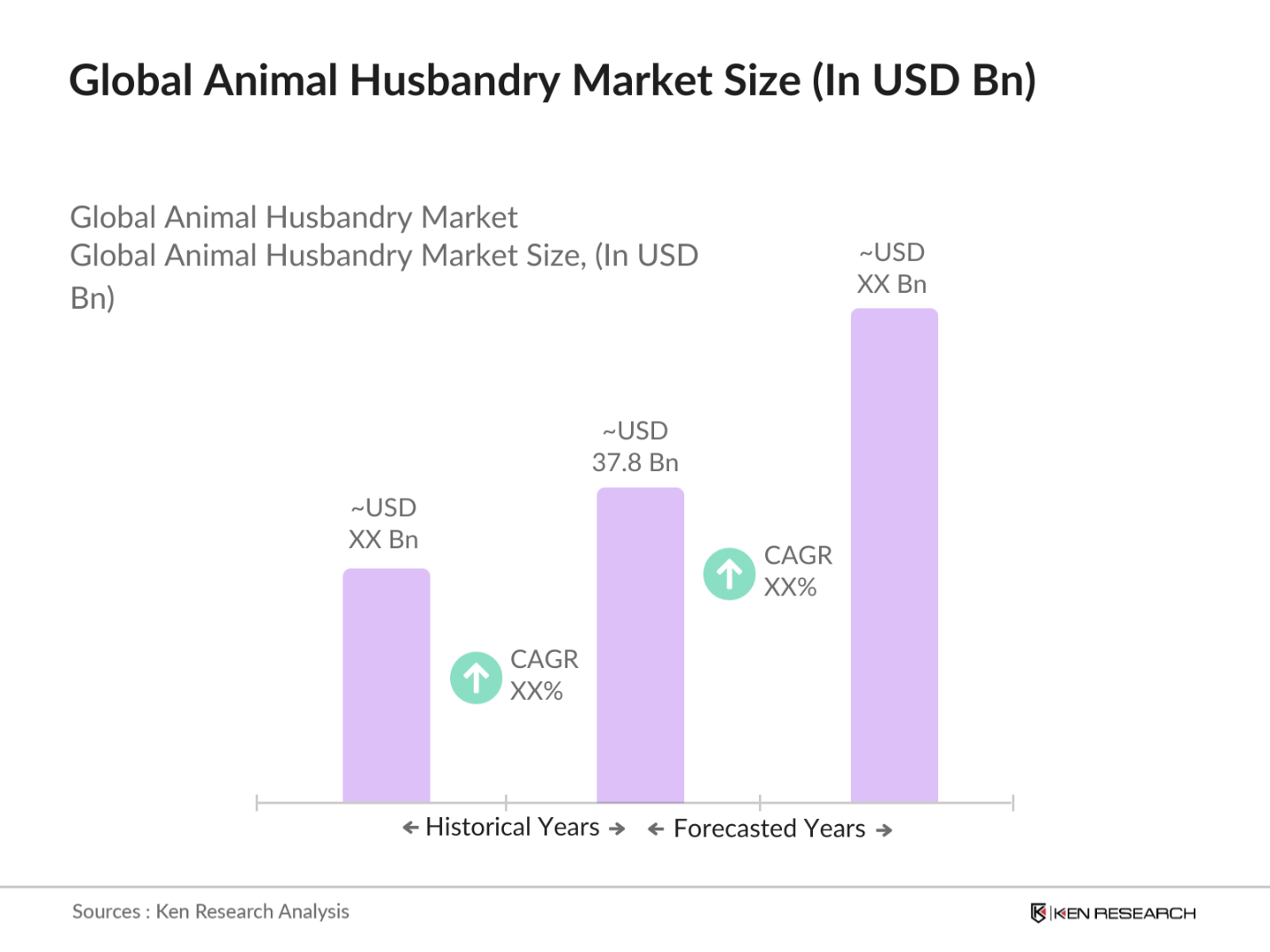
- The global animal husbandry market is valued at USD37.8 billion, driven by increasing demand for animal-based protein products such as meat, milk, and eggs. The growth is spurred by a combination of factors, including the rising global population, urbanization, and higher disposable income, particularly in emerging markets like India, China, and Brazil. Furthermore, advancements in animal breeding techniques, veterinary healthcare, and feed efficiency have helped optimize production rates and reduced mortality in livestock farming. The increasing preference for organic and sustainably produced livestock products is also pushing market expansion. Government support and subsidies in key regions like North America and Europe have encouraged the development of large-scale, technologically advanced animal husbandry operations.
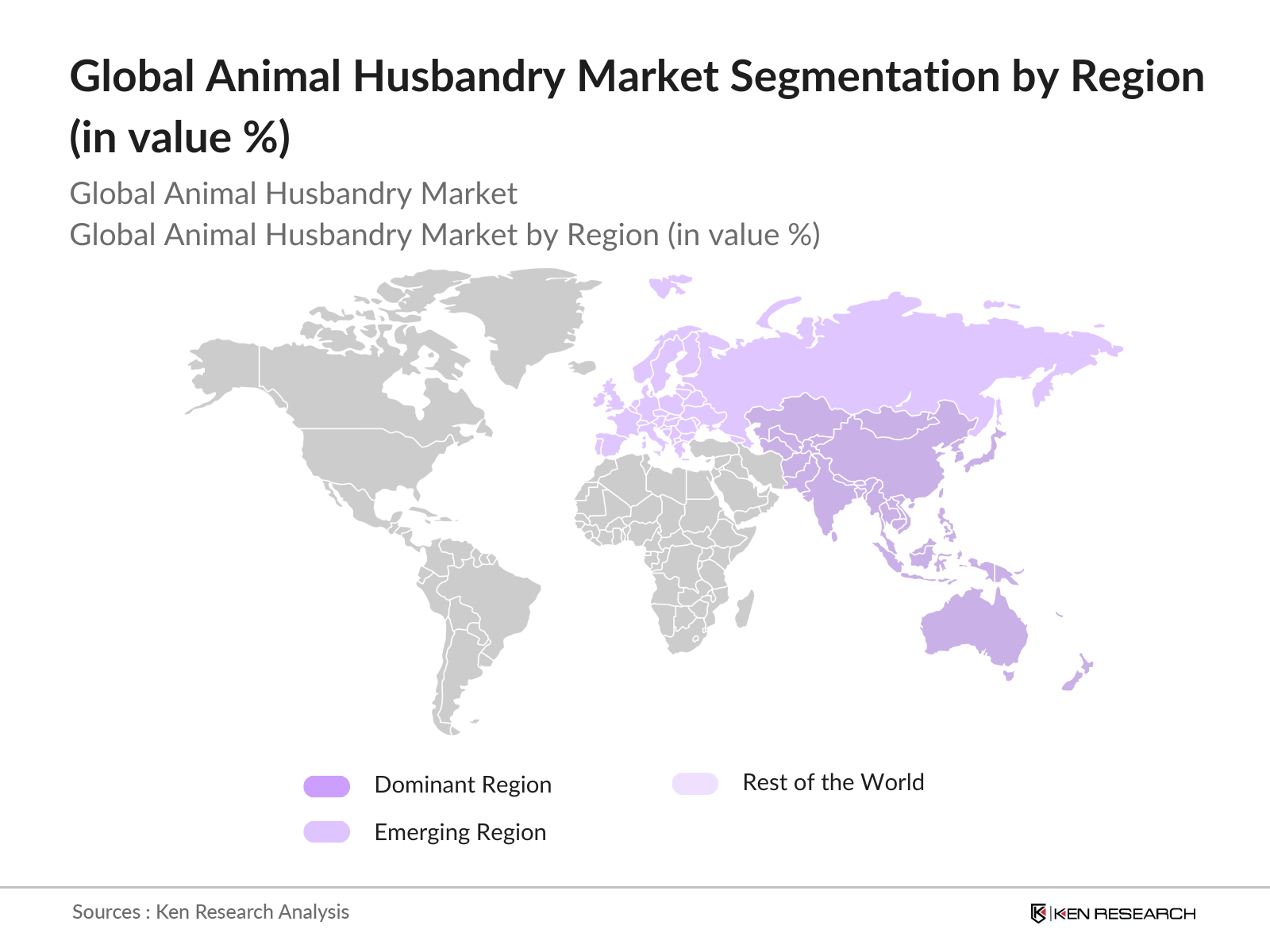
- The Asia-Pacific region dominates the global animal husbandry market. Countries like China and India lead the region due to their large populations and high demand for animal-based protein sources. Chinas growing middle class and urbanization have fueled an increase in meat consumption, while India remains the worlds largest milk producer. In contrast, North America and Europe are at the forefront of innovations in livestock management, driven by advances in precision farming, feed optimization technologies, and animal health solutions. Brazil is another major player in the market, primarily driven by its role as a leading exporter of beef and poultry products.
- Government support in various regions has played a pivotal role in advancing the animal husbandry industry. For instance, in the European Union, the Common Agricultural Policy (CAP) provides subsidies to livestock farmers who implement sustainable practices and reduce greenhouse gas emissions. In the United States, the USDA has implemented programs that offer financial assistance and technical support to farmers adopting advanced animal care and sustainable management techniques. Additionally, emerging economies like India have implemented national schemes such as the Rashtriya Gokul Mission, which aims to improve indigenous cattle breeds and promote dairy farming. These government initiatives help boost productivity, enhance animal health, and promote the sustainable development of the industry.
Global Animal Husbandry Market Segmentation
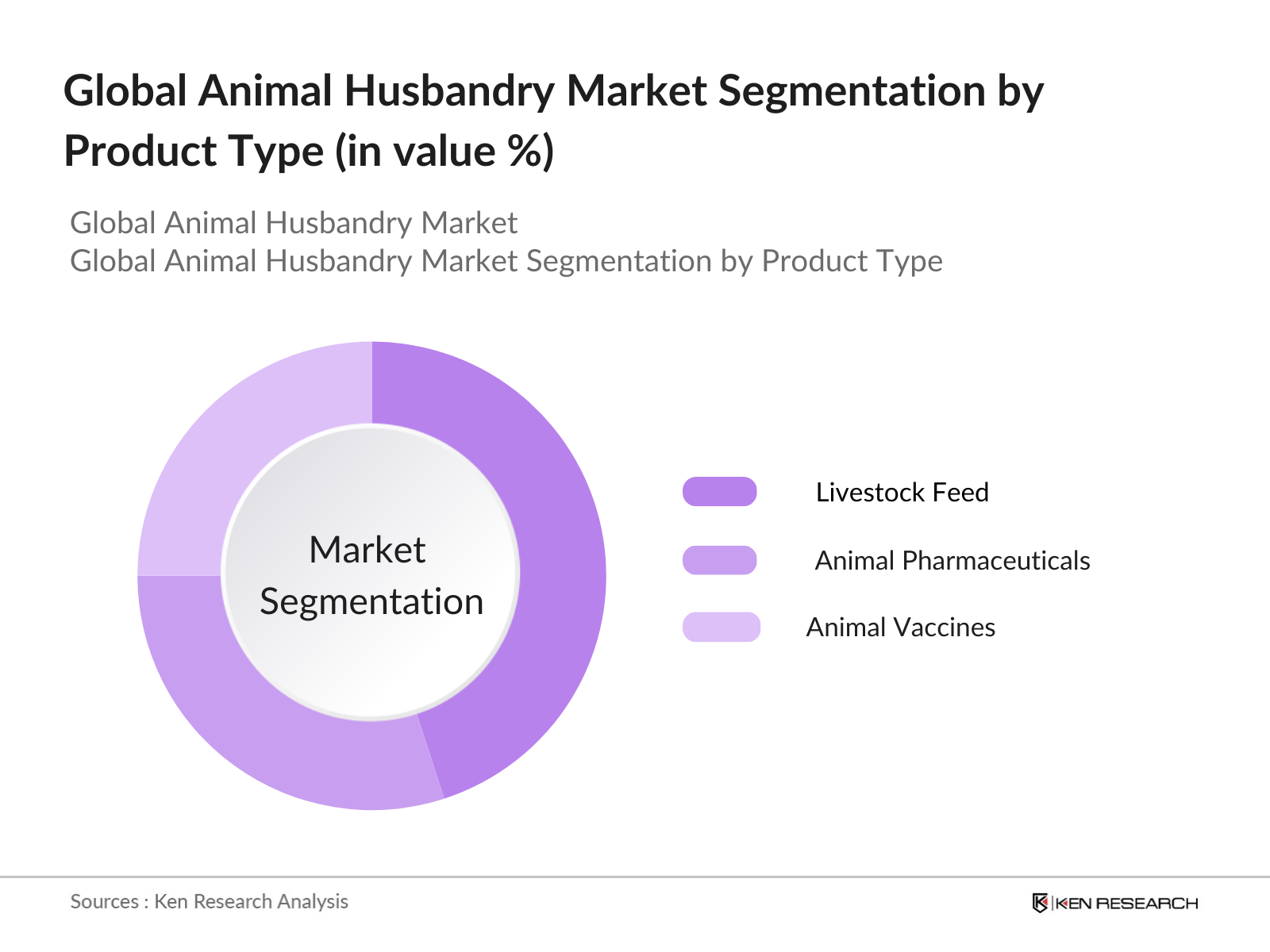
By Product Type: The global animal husbandry market is segmented by product type into livestock feed, animal vaccines, and animal pharmaceuticals. Livestock Feed dominates the market with around of the demand for high-quality, nutrient-rich feed is driven by the need to optimize growth rates, enhance immune system responses, and improve overall livestock productivity. Livestock feed includes concentrates, silage, roughages, and specialized feed for different animal types. Advances in feed formulation technology and the use of feed additives have further boosted demand in this segment.
By Region : The global animal husbandry market is also segmented by region into North America, Europe, Asia-Pacific, Latin America, and Middle East & Africa. Asia-Pacific, driven by the massive populations of China and India, which are experiencing rising demand for animal-based protein. Government support, investments in livestock productivity, and rising disposable incomes are key factors behind this growth.
Global Animal Husbandry Market Competitive Landscape
The global animal husbandry market is highly competitive, with several large companies and numerous small to medium-sized players. Key players are focusing on expanding their product portfolios and entering strategic partnerships to strengthen their position in the market. Companies are also focusing on adopting sustainable practices and advanced technologies to improve animal productivity and health.
|
Company |
Establishment Year |
Headquarters |
Revenue (USD bn) |
Key Products |
R&D Investments |
Partnerships |
|
Cargill Inc. |
1865 |
Minnesota, USA |
- |
- |
- |
- |
|
Archer Daniels Midland (ADM) |
1902 |
Illinois, USA |
- |
- |
- |
- |
|
Zoetis |
1952 |
New Jersey, USA |
- |
- |
- |
- |
|
Elanco Animal Health |
1954 |
Indiana, USA |
- |
- |
- |
- |
|
Alltech |
1980 |
Kentucky, USA |
- |
- |
- |
- |
Global Animal Husbandry Market Analysis
Global Animal Husbandry Market Growth Drivers:
- Rising Global Demand for Animal Protein: The growing population and increased income levels, especially in emerging markets such as China and India, are leading to a higher consumption of animal protein. With global meat consumption expected to grow by 15% over the next five years, animal husbandry is becoming a key industry to meet these nutritional demands. Livestock farming is expanding to fulfill the growing consumer demand for products like meat, eggs, and dairy, and this remains a fundamental growth driver for the sector.
- Technological Advancements in Animal Breeding and Healthcare: Innovations such as genetic selection, artificial insemination, and in-vitro fertilization are improving livestock productivity and growth rates. Additionally, veterinary healthcare products, including vaccines, antibiotics, and probiotics, are improving animal health, reducing mortality rates, and enhancing production quality. The growing adoption of precision livestock farming technologies, which include automated feeding systems and health monitoring tools, further contributes to increased productivity.
- Increasing Demand for Sustainable Farming Practices: Consumers are becoming more concerned about the environmental impact of animal farming, leading to a growing interest in sustainable practices. Governments in regions like Europe are pushing for more sustainable livestock farming through subsidies for eco-friendly farming practices, reducing greenhouse gas emissions from livestock, and improving waste management practices. Sustainable farming methods, such as reducing methane emissions and optimizing feed efficiency, are increasingly influencing market dynamics.
Global Animal Husbandry Market Challenges
- Rising Feed Prices: The cost of feed remains one of the largest challenges for livestock farmers, accounting for nearly of total production costs. The rising prices of feed ingredients, such as corn, soybean, and wheat, due to climate-related issues and geopolitical tensions, have put significant pressure on profitability. This price volatility poses challenges for small and medium-sized livestock farmers, particularly in developing regions.
- Stringent Environmental Regulations: Governments in regions such as Europe and North America are enforcing stringent regulations to reduce the environmental impact of livestock farming. These include measures to reduce greenhouse gas emissions, control water pollution from animal waste, and promote sustainable farming practices. Compliance with these regulations often requires costly investments in infrastructure and technology, which can be a barrier for smaller farms.
- Animal Health and Disease Outbreaks: Disease outbreaks, such as avian influenza and African swine fever, continue to pose a major threat to the animal husbandry market. These diseases can decimate entire livestock populations, leading to significant economic losses. Despite advancements in veterinary healthcare, managing disease outbreaks remains a key challenge for the industry, especially in regions where biosecurity measures are less developed.
Global Animal Husbandry Market Future Outlook
The global animal husbandry market is expected to continue its growth trajectory over the next five years, driven by increasing demand for animal-based products, technological advancements, and a growing focus on sustainable farming practices. The market is anticipated to expand further as precision livestock farming, biotechnology, and automation technologies gain widespread adoption. Asia-Pacific will continue to be a key growth region, with increased investments in livestock production and rising demand for protein.
Global Animal Husbandry Market Marketing Opportunities
- Emerging Markets: The growing middle-class populations in countries such as India, Brazil, and China present significant opportunities for livestock product manufacturers. The demand for animal-based protein in these regions is rising rapidly, driven by population growth and changing dietary habits. Companies that can expand their operations into these regions or form strategic partnerships with local players will benefit from these expanding markets.
- Technology Integration in Farming: The adoption of technologies like AI, big data analytics, and IoT is creating new marketing opportunities for companies that offer advanced livestock management solutions. The ability to provide real-time data on animal health, feed efficiency, and overall farm productivity is increasingly valuable for farmers looking to optimize operations.
Scope of the Report
|
By Product Type |
Livestock Feed Vaccines Pharmaceuticals |
|
By Display Technology |
Cattle Poultry Swine Sheep & Goats Aquaculture |
|
By Application |
Medical Imaging AR/VR Advertising and Marketing Engineering and Design |
|
By Farming System |
Intensive Extensive Mixed Farming |
|
By Region |
North America Europe Asia-Pacific Latin America Middle East & Africa |
Products
Key Target Audience
Livestock Farmers
Animal Feed Manufacturers
Veterinary Health Providers
Government and Regulatory Bodies
Pharmaceutical Companies
Agricultural Cooperatives
Investors and Venture Capitalists
Animal Healthcare and Biotechnology Firms
Companies
Players Mention in the Report
Cargill Inc.
Archer Daniels Midland (ADM)
Zoetis Inc.
Elanco Animal Health
Alltech
Nutreco N.V.
Tyson Foods
Bayer Animal Health
Merck Animal Health
BASF SE
Novozymes
DSM
De Heus Animal Nutrition
JBS S.A.
Boehringer Ingelheim
Table of Contents
01. Global Animal Husbandry Market Overview
1.1. Definition and Scope
1.2. Market Taxonomy
1.3. Market Growth Rate
1.4. Market Segmentation Overview
02. Global Animal Husbandry Market Size (USD)
2.1. Historical Market Size
2.2. Year-On-Year Growth Analysis
2.3. Key Market Developments and Milestones
03. Global Animal Husbandry Market Analysis
3.1. Growth Drivers
3.1.1. Rising Demand for Animal Protein
3.1.2. Technological Advancements in Breeding and Healthcare
3.1.3. Increasing Demand for Sustainable Farming Practices
3.1.4. Expansion in the Dairy Sector
3.2. Market Challenges
3.2.1. Rising Feed Prices
3.2.2. Regulatory Hurdles
3.2.3. Disease Outbreaks in Livestock
3.3. Opportunities
3.3.1. Growth in Emerging Markets
3.3.2. Integration of Technology in Farming
3.3.3. Demand for Sustainable Meat Production
3.4. Trends
3.4.1. Rising Popularity of Organic Meat
3.4.2. Automation in Livestock Farming
3.4.3. AI and IoT Applications in Animal Health
3.5. Regulatory Landscape
3.5.1. U.S. Animal Welfare Regulations
3.5.2. European Environmental Regulations
3.5.3. Global Compliance Standards
3.6. SWOT Analysis
3.7. Stakeholder Ecosystem
3.8. Porters Five Forces Analysis
04. Global Animal Husbandry Market Segmentation
4.1. By Product Type (in Value %) 4.1.1. Livestock Feed
4.1.2. Animal Vaccines
4.1.3. Animal Pharmaceuticals
4.2. By Animal Type (in Value %) 4.2.1. Poultry
4.2.2. Cattle
4.2.3. Swine
4.2.4. Sheep and Goats
4.2.5. Aquaculture
4.3. By Region (in Value %) 4.3.1. North America
4.3.2. Europe
4.3.3. Asia-Pacific
4.3.4. Latin America
4.3.5. Middle East & Africa
05. Global Animal Husbandry Competitive Analysis
5.1. Detailed Profiles of Major Companies
5.1.1. Cargill Inc.
5.1.2. Archer Daniels Midland (ADM)
5.1.3. Zoetis Inc.
5.1.4. Elanco Animal Health
5.1.5. Alltech
5.1.6. Nutreco N.V.
5.1.7. Tyson Foods
5.1.8. Bayer Animal Health
5.1.9. Merck Animal Health
5.1.10. BASF SE
5.1.11. Novozymes
5.1.12. DSM
5.1.13. De Heus Animal Nutrition
5.1.14. JBS S.A.
5.1.15. Boehringer Ingelheim
5.2. Cross Comparison Parameters (Revenue, No. of Employees, R&D Investments, Key Partnerships)
5.3. Market Share Analysis
5.4. Strategic Initiatives
5.5. Mergers & Acquisitions
5.6. Investment and Funding Analysis
06. Global Animal Husbandry Regulatory Framework
6.1. U.S. Animal Welfare Regulations
6.2. European Animal Welfare Standards
6.3. Compliance and Certification Processes
07. Global Animal Husbandry Future Market Size (USD)
7.1. Future Market Size Projections
7.2. Key Factors Driving Future Growth
7.3. Market Challenges to Future Growth
08. Global Animal Husbandry Future Market Segmentation
8.1. By Product Type
8.1.1. Livestock Feed
8.1.2. Animal Vaccines
8.1.3. Animal Pharmaceuticals
8.2. By Animal Type
8.2.1. Poultry
8.2.2. Cattle
8.2.3. Swine
8.2.4. Sheep and Goats
8.2.5. Aquaculture
8.3. By Region
8.3.1. North America
8.3.2. Europe
8.3.3. Asia-Pacific
8.3.4. Latin America
8.3.5. Middle East & Africa
09. Global Animal Husbandry Analyst Recommendations
9.1. TAM/SAM/SOM Analysis
9.2. Strategic Marketing Recommendations
9.3. Customer Cohort Analysis
9.4. White Space Opportunity Analysis
Disclaimer
Contact Us
Research Methodology
Step 1: Identification of Key Variables
The first step focuses on identifying the major stakeholders and key variables influencing the animal husbandry market. This includes livestock producers, feed manufacturers, veterinary health providers, and regulatory bodies. Extensive desk research was conducted using secondary data sources such as government publications, industry reports, and proprietary databases. These variables help in understanding the macroeconomic factors, market drivers, and challenges shaping the industry.
Step 2: Market Data Collection and Analysis
This phase involves collecting quantitative data from credible sources to estimate the historical and current market size and assess growth trends. Data sources include industry databases like FAO (Food and Agriculture Organization), USDA (United States Department of Agriculture), and other government reports. Metrics such as livestock production rates, feed consumption, and technological adoption rates were analyzed to project future market growth and opportunities.
Step 3: Validation Through Expert Consultation
In order to validate the gathered data and insights, consultations with industry experts, key opinion leaders, and livestock producers were conducted. These interviews provided deeper insights into the evolving market trends, challenges, and opportunities. Expert opinions also helped refine the market forecasts and verify the impact of factors such as emerging technology in farming, sustainable practices, and government regulations on the industry.
Step 4: Research Synthesis and Final Output
The final step involves synthesizing all databoth primary and secondaryinto a cohesive report. The analysis includes integrating quantitative data on market size, segment shares, and growth projections with qualitative insights from industry experts. The report is designed to provide a comprehensive overview of the market landscape, covering everything from competitive analysis to market challenges and future opportunities.
Frequently Asked Questions
01. How big is the global animal husbandry market?
The global animal husbandry market is valued at approximately USD 37.8 trillion in 2023. This growth is primarily driven by increasing demand for livestock products such as meat, dairy, and eggs, coupled with technological advancements in livestock farming, healthcare, and nutrition. Emerging markets, particularly in Asia-Pacific and Latin America, are contributing significantly to this expansion.
02. What are the key challenges in the global animal husbandry market?
The key challenges include rising feed costs, which account for nearly 60% of total livestock production expenses, and compliance with stringent environmental regulations. Moreover, managing disease outbreaks like avian influenza and African swine fever poses a constant risk to livestock populations, leading to economic losses for farmers. Sustainability and reducing environmental impact are also major challenges that the industry faces globally.
03. Who are the major players in the global animal husbandry market?
The major players in the animal husbandry market include global giants such as Cargill Inc., Archer Daniels Midland (ADM), Zoetis Inc., Elanco Animal Health, and Alltech. These companies are investing heavily in technological advancements, animal health solutions, and feed efficiency improvements to stay competitive in the market.
04. What is driving growth in the animal husbandry market?
The market is being driven by the increasing demand for animal-based protein products like meat, milk, and eggs, especially in emerging economies such as China, India, and Brazil. Advancements in animal breeding, precision livestock farming, and veterinary healthcare have also contributed significantly to productivity growth in the sector. Additionally, the growing adoption of sustainable practices and animal welfare standards.
Why Buy From Us?

What makes us stand out is that our consultants follows Robust, Refine and Result (RRR) methodology. i.e. Robust for clear definitions, approaches and sanity checking, Refine for differentiating respondents facts and opinions and Result for presenting data with story

We have set a benchmark in the industry by offering our clients with syndicated and customized market research reports featuring coverage of entire market as well as meticulous research and analyst insights.

While we don't replace traditional research, we flip the method upside down. Our dual approach of Top Bottom & Bottom Top ensures quality deliverable by not just verifying company fundamentals but also looking at the sector and macroeconomic factors.

With one step in the future, our research team constantly tries to show you the bigger picture. We help with some of the tough questions you may encounter along the way: How is the industry positioned? Best marketing channel? KPI's of competitors? By aligning every element, we help maximize success.

Our report gives you instant access to the answers and sources that other companies might choose to hide. We elaborate each steps of research methodology we have used and showcase you the sample size to earn your trust.

If you need any support, we are here! We pride ourselves on universe strength, data quality, and quick, friendly, and professional service.