
Global Anti-Drone Market Outlook to 2030
Region:Global
Author(s):Shambhavi
Product Code:KROD3364
Region:Global
Author(s):Shambhavi
Product Code:KROD3364
November 2024
92
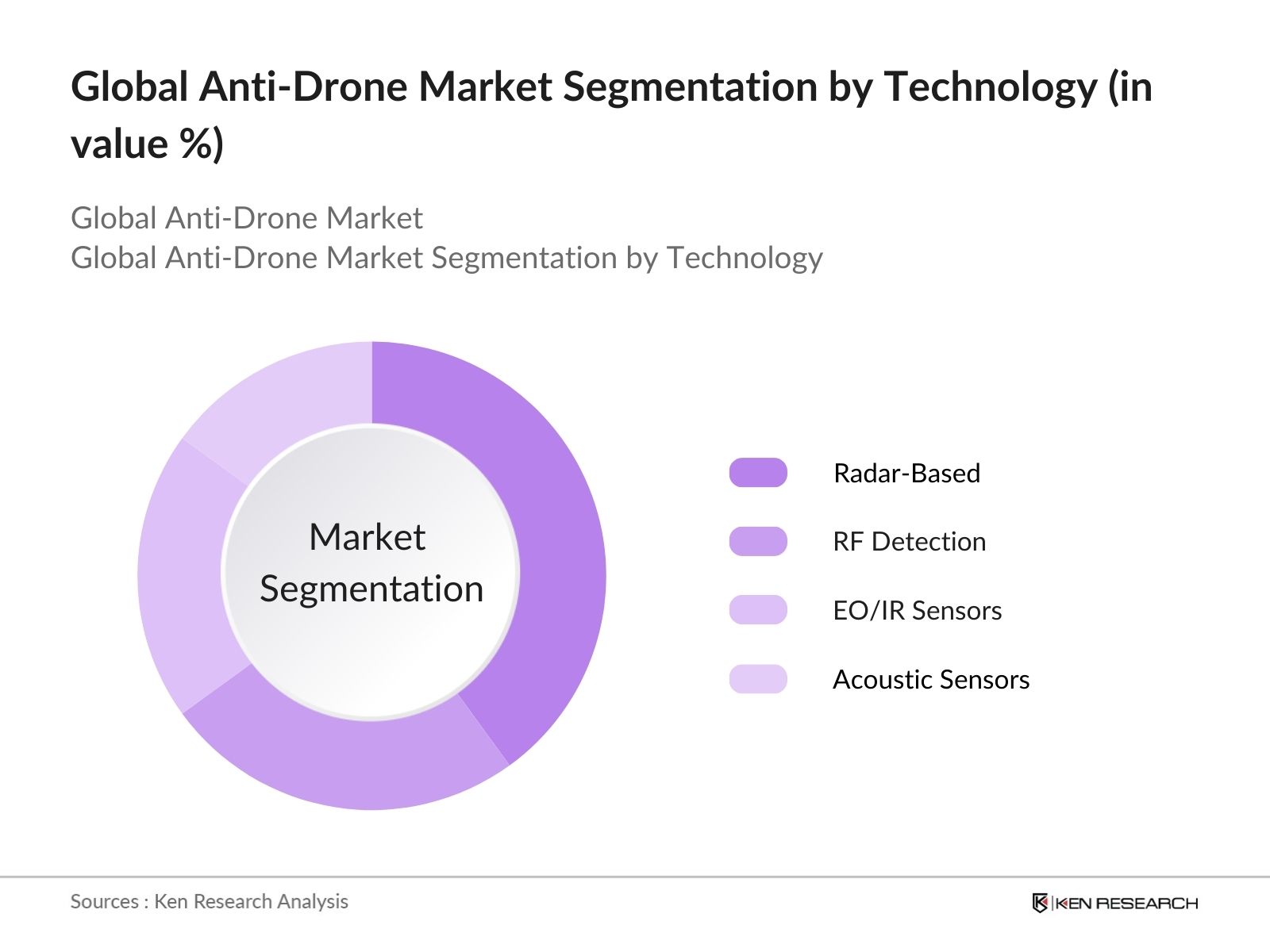
By Technology: The global anti-drone market is segmented by technology into radar-based systems, radiofrequency (RF) detection, electro-optical/infrared (EO/IR) sensors, and acoustic sensors. Radar-based systems currently dominate the market share due to their ability to detect and track drones over long distances, even in adverse weather conditions. These systems are favored by military and government agencies for border protection and securing critical infrastructure.
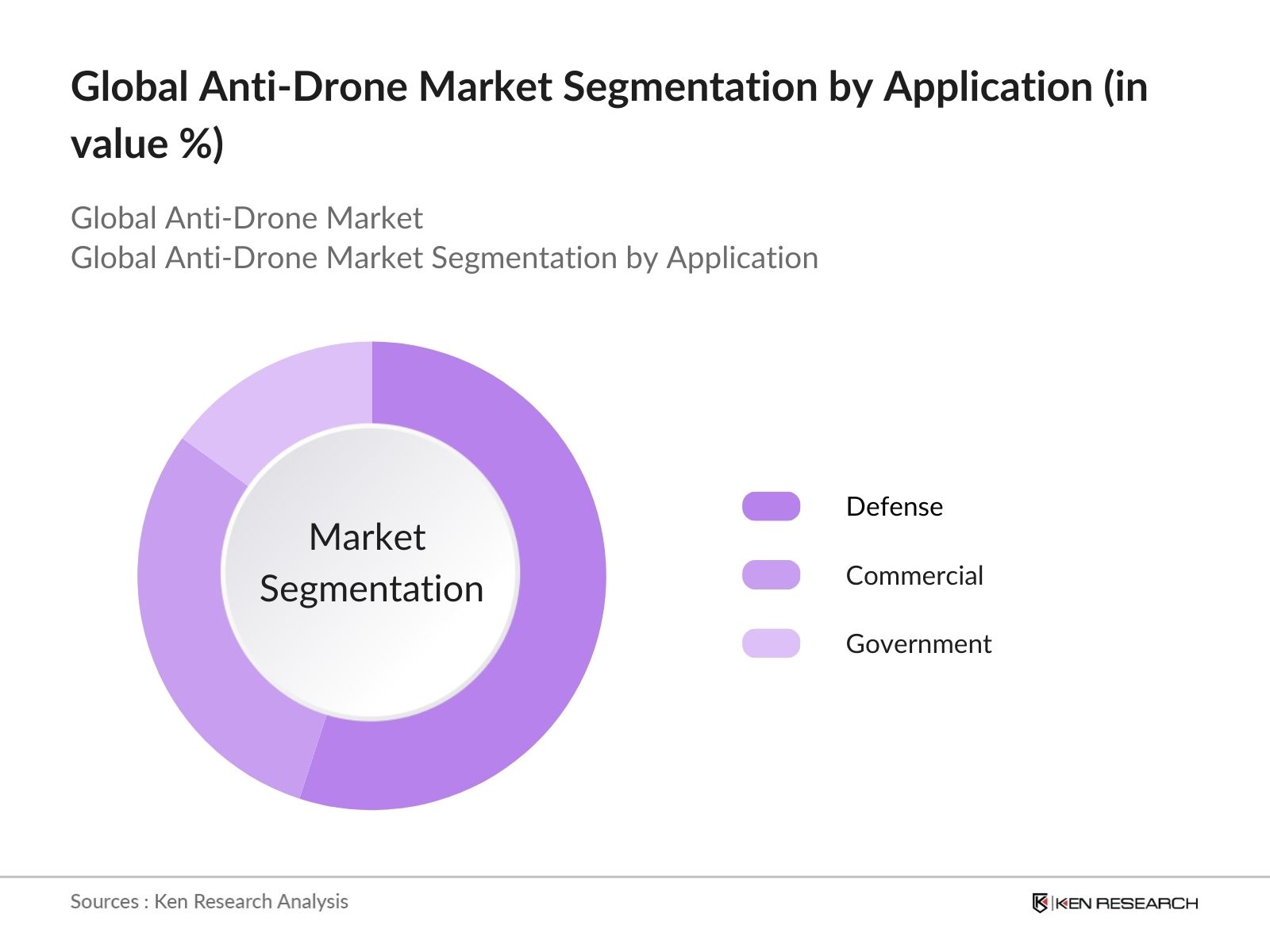
By Application: The market is also segmented by application into defense, commercial, and government sectors. The defense sector holds the largest share in the anti-drone market due to increasing security concerns and the need to protect military installations from espionage or attacks using UAVs. Defense agencies prioritize these systems as part of their national security strategies, driving the growth of the segment.
The global anti-drone market is characterized by the presence of several major players, including those specializing in defense and security systems. The market is consolidated, with leading companies holding significant influence over market trends and innovations.The global anti-drone market is dominated by key players such as Lockheed Martin, Raytheon Technologies, and DroneShield Ltd. These companies have a competitive advantage due to their strong R&D capabilities, strategic partnerships, and a deep understanding of defense requirements. The competition in this market is fierce, as companies continually innovate to address emerging threats posed by drones.
|
Company Name |
Established |
Headquarters |
R&D Expenditure |
Global Reach |
Product Range |
Key Customers |
Partnerships |
Recent Developments |
|
Lockheed Martin |
1995 |
Bethesda, USA |
||||||
|
Raytheon Technologies |
1922 |
Waltham, USA |
||||||
|
DroneShield Ltd |
2016 |
Sydney, Australia |
||||||
|
Rafael Advanced Defense |
1948 |
Haifa, Israel |
||||||
|
Boeing Defense, Space |
1939 |
Chicago, USA |
The global anti-drone market is projected to experience significant growth in the coming years, driven by heightened security concerns and the continuous advancement of UAV technologies. The increasing adoption of drones in both commercial and military applications will lead to a corresponding rise in demand for anti-drone solutions. As countries invest in national security, defense budgets are likely to allocate more resources toward the development and deployment of advanced anti-drone systems. Technological advancements, such as the integration of artificial intelligence and machine learning into detection systems, are expected to enhance the accuracy and efficiency of anti-drone solutions.
|
Segment |
Subsegments |
|
By Technology |
Radar-Based, RF Detection, EO/IR Sensors, Acoustic Sensors |
|
By Platform Type |
Ground-Based, Handheld, UAV-Based |
|
By Application |
Defense, Commercial, Government |
|
By End-User |
Airports, Critical Infrastructure, Public Events, Prisons |
|
By Region |
North America, Europe, Asia-Pacific, Middle East & Africa, Latin America |
1.1. Definition and Scope
1.2. Market Taxonomy
1.3. Market Growth Rate
1.4. Market Segmentation Overview
2.1. Historical Market Size
2.2. Year-On-Year Growth Analysis
2.3. Key Market Developments and Milestones
3.1. Growth Drivers
3.1.1. Rising Threat of Unauthorized Drone Usage
3.1.2. Advancements in Anti-Drone Technologies
3.1.3. Increasing Government and Defense Investments
3.1.4. Proliferation of Drones in Restricted Areas
3.2. Market Challenges
3.2.1. High Costs of Anti-Drone Systems
3.2.2. Legal and Regulatory Constraints
3.2.3. Complexity in Integration with Existing Infrastructure
3.3. Opportunities
3.3.1. Demand for Commercial Anti-Drone Solutions
3.3.2. Expansion into Emerging Markets
3.3.3. Collaboration between Private and Public Sectors
3.4. Trends
3.4.1. Use of AI in Detection and Neutralization
3.4.2. Mobile Anti-Drone Solutions
3.4.3. Integration of Anti-Drone Systems with Smart Security
3.5. Government Regulations
3.5.1. Drone Traffic Management Regulations
3.5.2. Restrictions on Civilian Drone Use
3.5.3. Standardization of Anti-Drone Technologies
3.5.4. Public Safety Regulations
3.6. SWOT Analysis
3.7. Stakeholder Ecosystem
3.8. Porters Five Forces Analysis
3.9. Competition Ecosystem
4.1. By Technology (In Value %)
4.1.1. Radar-Based
4.1.2. RF Detection
4.1.3. Electro-Optical/Infrared (EO/IR) Sensors
4.1.4. Acoustic Sensors
4.2. By Platform Type (In Value %)
4.2.1. Ground-Based
4.2.2. Handheld
4.2.3. UAV-Based
4.3. By Application (In Value %)
4.3.1. Defense
4.3.2. Commercial
4.3.3. Government
4.4. By End-User (In Value %)
4.4.1. Airports
4.4.2. Critical Infrastructure
4.4.3. Public Events
4.4.4. Prisons
4.5. By Region (In Value %)
4.5.1. North America
4.5.2. Europe
4.5.3. Asia-Pacific
4.5.4. Middle East & Africa
4.5.5. Latin America
5.1. Detailed Profiles of Major Companies
5.1.1. Lockheed Martin Corporation
5.1.2. Raytheon Technologies Corporation
5.1.3. Thales Group
5.1.4. Boeing Defense, Space & Security
5.1.5. DroneShield Ltd
5.1.6. Rafael Advanced Defense Systems
5.1.7. Dedrone Inc.
5.1.8. Northrop Grumman Corporation
5.1.9. Leonardo S.p.A
5.1.10. Blighter Surveillance Systems
5.1.11. Liteye Systems Inc.
5.1.12. Saab AB
5.1.13. Elbit Systems Ltd
5.1.14. Airbus S.A.S.
5.1.15. Israel Aerospace Industries
5.2. Cross Comparison Parameters (Number of Patents, Product Range, Global Footprint, R&D Investments, Strategic Partnerships, Revenue Growth, Market Penetration, Acquisition History)
5.3. Market Share Analysis
5.4. Strategic Initiatives
5.5. Mergers and Acquisitions
5.6. Investment Analysis
5.7. Venture Capital Funding
5.8. Government Grants and Subsidies
6.1. Drone Control Regulations
6.2. Compliance Requirements
6.3. Certification Processes for Anti-Drone Solutions
7.1. Future Market Size Projections
7.2. Key Factors Driving Future Market Growth
8.1. By Technology (In Value %)
8.2. By Platform Type (In Value %)
8.3. By Application (In Value %)
8.4. By End-User (In Value %)
8.5. By Region (In Value %)
9.1. TAM/SAM/SOM Analysis
9.2. Product Development Strategies
9.3. Marketing Initiatives
9.4. White Space Opportunity Analysis
In this phase, an ecosystem map of the global anti-drone market is constructed, outlining the key stakeholders, including manufacturers, service providers, and end-users. Extensive desk research from reliable secondary sources and proprietary databases is conducted to identify market drivers, trends, and key variables.
This phase involves gathering and analyzing historical data on market size, product penetration, and application-specific growth trends. The analysis covers key factors such as technological advancements, regulatory frameworks, and defense sector developments to estimate market revenue and segment performance.
To ensure the accuracy of market estimates, hypotheses developed during the research are validated through consultations with industry experts, including defense contractors, security system manufacturers, and government agencies. These insights refine the market analysis.
The final stage involves synthesizing the research findings into actionable insights, verified through additional consultations with stakeholders. This ensures that the report provides a holistic view of the global anti-drone market, supported by both primary and secondary data.
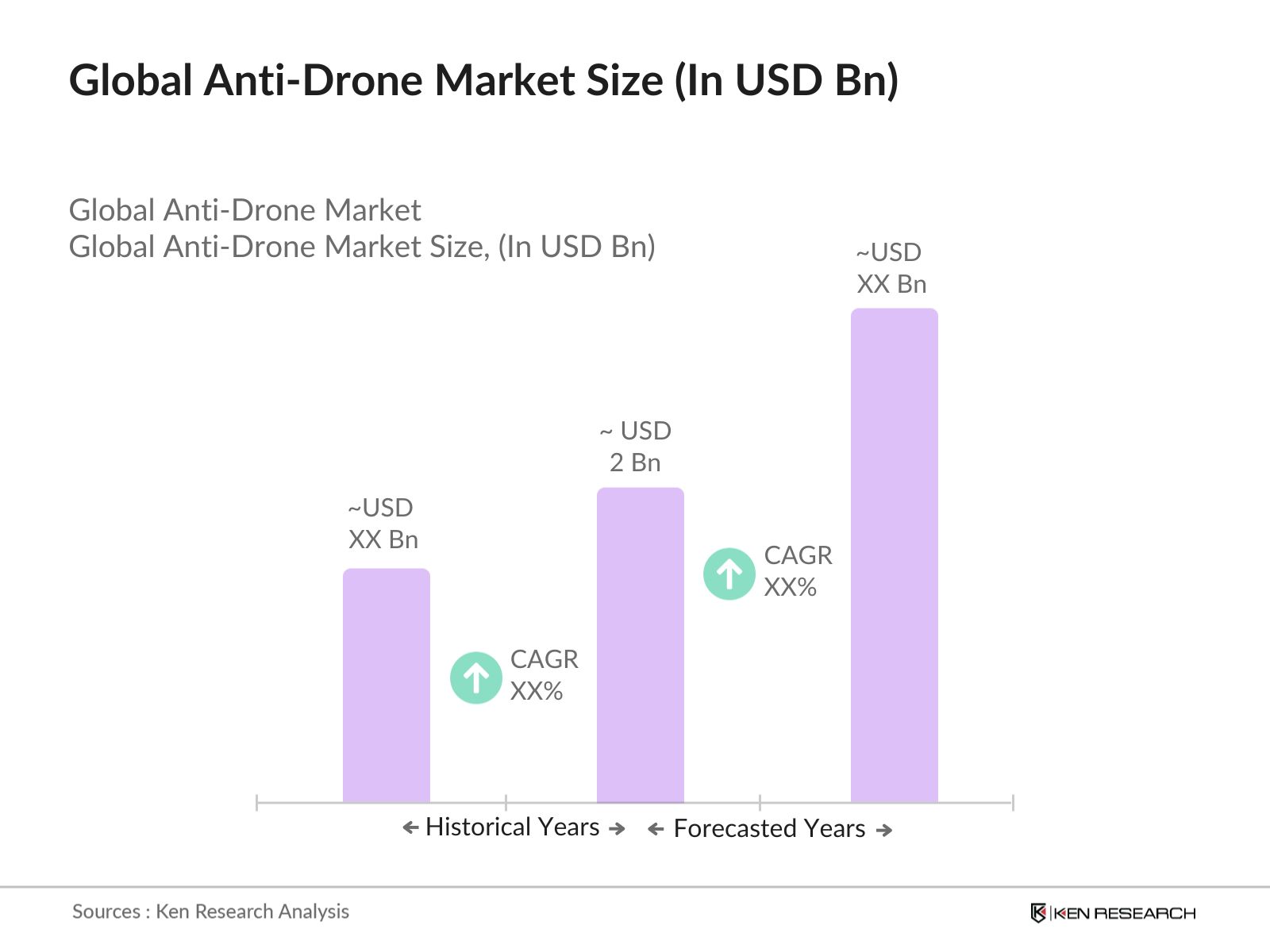
The global anti-drone market is valued at USD 2 billion in 2023, driven by the rising use of drones and increasing security concerns worldwide.
The major challenges in global anti-drone market include high costs associated with advanced detection systems, regulatory complexities, and difficulties in integrating anti-drone solutions with existing infrastructure.
Key players in global anti-drone market in include Lockheed Martin, Raytheon Technologies, DroneShield Ltd, Boeing Defense, and Rafael Advanced Defense Systems, which dominate the market due to their strong defense portfolios and global reach.
The global anti-drone market is propelled by rising concerns over UAV threats, government investments in national security, and technological advancements in drone detection and neutralization systems.
Future trends in global anti-drone market include the integration of AI and machine learning into anti-drone systems for enhanced detection accuracy, mobile anti-drone solutions, and expansion into commercial applications such as public events and airport security.

What makes us stand out is that our consultants follows Robust, Refine and Result (RRR) methodology. i.e. Robust for clear definitions, approaches and sanity checking, Refine for differentiating respondents facts and opinions and Result for presenting data with story

We have set a benchmark in the industry by offering our clients with syndicated and customized market research reports featuring coverage of entire market as well as meticulous research and analyst insights.

While we don't replace traditional research, we flip the method upside down. Our dual approach of Top Bottom & Bottom Top ensures quality deliverable by not just verifying company fundamentals but also looking at the sector and macroeconomic factors.

With one step in the future, our research team constantly tries to show you the bigger picture. We help with some of the tough questions you may encounter along the way: How is the industry positioned? Best marketing channel? KPI's of competitors? By aligning every element, we help maximize success.

Our report gives you instant access to the answers and sources that other companies might choose to hide. We elaborate each steps of research methodology we have used and showcase you the sample size to earn your trust.

If you need any support, we are here! We pride ourselves on universe strength, data quality, and quick, friendly, and professional service.