
Global Antidepressants Market Outlook 2030
Region:Global
Author(s):Shivani Mehra
Product Code:KROD5901
Region:Global
Author(s):Shivani Mehra
Product Code:KROD5901
November 2024
97
Listen to the audio summary
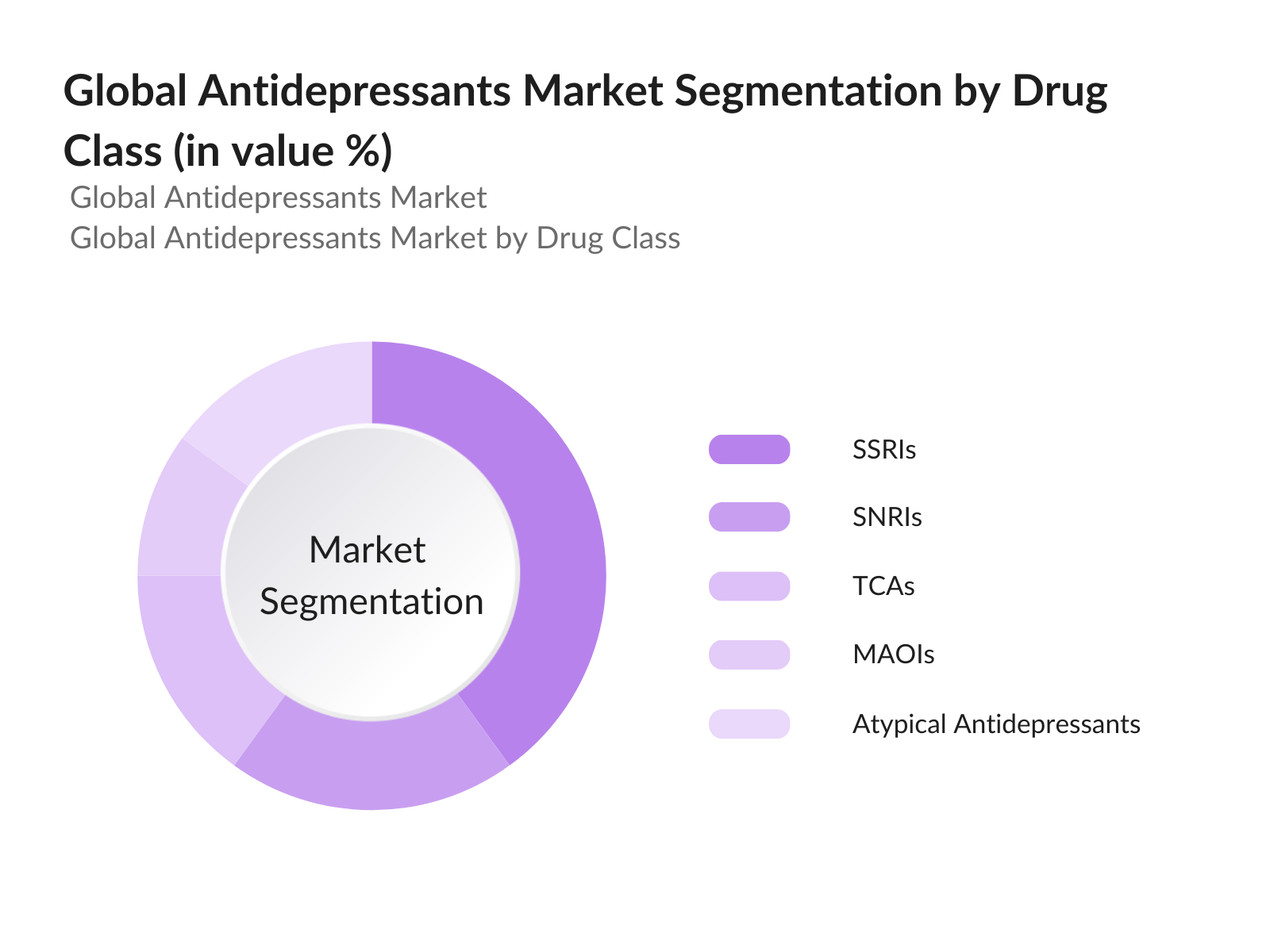
By Drug Class: The antidepressants market is segmented by drug class into Selective Serotonin Reuptake Inhibitors (SSRIs), Serotonin-Norepinephrine Reuptake Inhibitors (SNRIs), Tricyclic Antidepressants (TCAs), Monoamine Oxidase Inhibitors (MAOIs), and Atypical Antidepressants. SSRIs hold the dominant market share, primarily due to their efficacy and fewer side effects compared to other drug classes. SSRIs are often the first-line treatment for depression, anxiety, and other related disorders, making them widely prescribed. Brands like Prozac and Zoloft continue to perform strongly in the market.
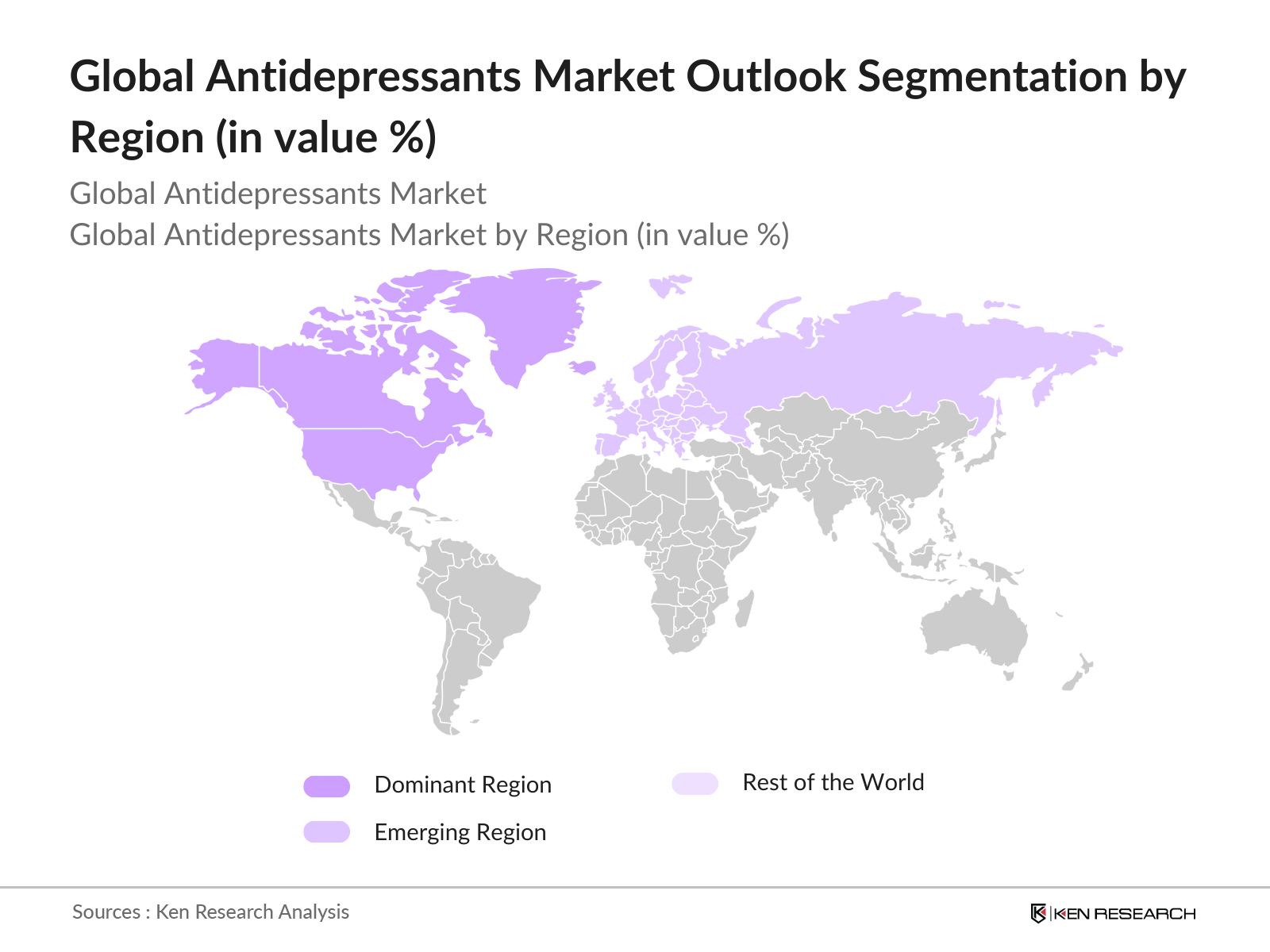
By Region: The antidepressants market is segmented by region into North America, Europe, Asia-Pacific, Latin America, and Middle East & Africa. North America remains the largest regional market, driven by advanced healthcare facilities, widespread awareness regarding mental health, and extensive R&D activities in pharmaceutical sectors. The U.S., being a key market, accounts for the bulk of antidepressant consumption globally.
The global antidepressants market is highly competitive, with a mixture of established pharmaceutical giants and emerging players. Major companies are engaged in extensive research and development to introduce novel therapies and sustain their market position.
|
Company |
Establishment Year |
Headquarters |
Market Presence |
R&D Expenditure |
Number of Employees |
Revenue |
Key Products |
|
Eli Lilly and Company |
1876 |
Indianapolis, USA |
- |
- |
- |
- |
- |
|
Pfizer Inc. |
1849 |
New York, USA |
- |
- |
- |
- |
- |
|
GlaxoSmithKline (GSK) Plc |
2000 |
London, UK |
- |
- |
- |
- |
- |
|
Johnson & Johnson |
1886 |
New Brunswick, USA |
- |
- |
- |
- |
- |
|
Lundbeck |
1915 |
Copenhagen, Denmark |
- |
- |
- |
- |
- |
Over the next five years, the global antidepressants market is expected to witness significant growth, propelled by increasing mental health awareness, the rise of digital health solutions, and the introduction of novel therapies. Government initiatives focused on mental health reform and financial support for R&D activities will further strengthen market expansion. With ongoing advancements in treatment options, including non-traditional antidepressants and neurostimulation techniques, the market is set to benefit from growing patient acceptance of emerging therapies.
|
By Drug Class |
SSRIs SNRIs TCAs MAOIs Atypical Antidepressants |
|
By Indication |
Major Depressive Disorder Bipolar Disorder Anxiety Disorders OCD, Others |
|
By Distribution Channel |
Hospital Pharmacies Retail Pharmacies Online Pharmacies |
|
By Age Group |
Pediatric Adults Geriatric |
|
By Region |
North America Europe Asia-Pacific Latin America Middle East & Africa |
1.1. Definition and Scope (Volumetric Imaging, 3D Displays, Real-Time Projections)
1.2. Market Taxonomy (Hardware, Software, Services)
1.3. Market Growth Rate (CAGR, Revenue Growth, Market Expansion)
1.4. Market Segmentation Overview (By Product Type, By Display Technology, By Application, By End-User, By Region)
2.1. Historical Market Size (Retrospective Growth, Technological Milestones)
2.2. Year-On-Year Growth Analysis (Market Performance, Economic Impact)
2.3. Key Market Developments and Milestones (Product Launches, Patent Approvals, M&A Activity)
3.1. Growth Drivers
3.1.1. Increasing Demand in Medical Imaging
3.1.2. Advancements in AR/VR Technologies
3.1.3. Defense and Security Applications
3.1.4. Growing Entertainment Sector (Movies, Gaming)
3.2. Restraints
3.2.1. High Initial Costs of Deployment
3.2.2. Limited Awareness Among End Users
3.2.3. Technical Challenges (Processing Power, Data Load)
3.3. Opportunities
3.3.1. Expansion in Healthcare Applications (Surgery Planning, Medical Visualization)
3.3.2. Partnerships with Content Creators (Gaming, Media)
3.3.3. Adoption in Automotive Design
3.4. Trends
3.4.1. Increasing Use of Holographic Technology
3.4.2. Integration with AI for Enhanced Display
3.4.3. Rising Demand for Personalization in Display Devices
3.5. Government Regulations and Standards
3.5.1. FCC Guidelines for Display Devices
3.5.2. Patent Laws and Intellectual Property
3.5.3. Regulations for Use in Medical and Defense Applications
3.6. SWOT Analysis
3.7. Stakeholder Ecosystem (Manufacturers, Software Providers, System Integrators)
3.8. Porters Five Forces Analysis
3.9. Competitive Ecosystem (Market Dynamics, Disruptors, New Entrants)
4.1. By Product Type (In Value %)
4.1.1. Static Volumetric Displays
4.1.2. Swept-Volume Displays
4.1.3. Multi-Planar Volumetric Displays
4.2. By Display Technology (In Value %)
4.2.1. Digital Light Processing (DLP)
4.2.2. Liquid Crystal Display (LCD)
4.2.3. Light Emitting Diode (LED)
4.3. By Application (In Value %)
4.3.1. Medical Imaging
4.3.2. AR/VR
4.3.3. Advertising and Marketing
4.3.4. Engineering and Design
4.4. By End-User (In Value %)
4.4.1. Healthcare
4.4.2. Automotive
4.4.3. Aerospace & Defense
4.4.4. Entertainment and Media
4.4.5. Education
4.5. By Region (In Value %)
4.5.1. North-East
4.5.2. Midwest
4.5.3. West Coast
4.5.4. Southern States
5.1. Detailed Profiles of Major Companies
5.1.1. LightSpace Technologies
5.1.2. HoloTech Switzerland
5.1.3. Voxon Photonics
5.1.4. RealView Imaging
5.1.5. Leia Inc.
5.1.6. 3DIcon Corporation
5.1.7. Holoxica Ltd
5.1.8. The Coretec Group Inc.
5.1.9. Alioscopy
5.1.10. Seekway Technology Ltd.
5.1.11. Zebra Imaging
5.1.12. Voxeon LLC
5.1.13. Unity Technologies
5.1.14. Fovi 3D
5.1.15. Light Field Lab, Inc.
5.2. Cross Comparison Parameters (Revenue, No. of Employees, Key Patents, Product Portfolio, R&D Investments)
5.3. Market Share Analysis
5.4. Strategic Initiatives
5.5. Mergers and Acquisitions
5.6. Investment and Funding Analysis
5.7. Venture Capital Funding
5.8. Government Funding and Grants
5.9. Private Equity Investments
6.1. Compliance with FCC and FDA Standards
6.2. Certification for Medical Applications
6.3. Guidelines for Defense and Security Applications
7.1. Future Market Size Projections (Technological Progress, Adoption Rates)
7.2. Key Factors Driving Future Market Growth (AI Integration, User Demand, Lower Costs)
8.1. By Product Type (In Value %)
8.2. By Display Technology (In Value %)
8.3. By Application (In Value %)
8.4. By End-User (In Value %)
8.5. By Region (In Value %)
9.1. Total Addressable Market (TAM), Serviceable Available Market (SAM), Serviceable Obtainable Market (SOM) Analysis
9.2. Customer Cohort Analysis
9.3. Marketing and Distribution Strategies
9.4. White Space Opportunity Analysis
The first stage involved a comprehensive mapping of the global antidepressants market, covering all major stakeholders, including pharmaceutical manufacturers, healthcare providers, and government bodies. Desk research was conducted to identify key market variables, including drug adoption rates, regulatory landscape, and R&D investment.
Historical data from proprietary databases and public sources was compiled and analyzed to determine key market trends and growth drivers. This stage also involved assessing market penetration and drug availability across various regions to evaluate revenue potential.
Industry hypotheses were validated through interviews with pharmaceutical professionals and mental health experts. These consultations provided real-time insights into current challenges and opportunities in the antidepressants market, offering a comprehensive view of market dynamics.
The final step integrated insights from stakeholders, pharmaceutical companies, and market data to produce a robust analysis of the global antidepressants market. This final output provided a validated and accurate depiction of market size, key trends, and future projections.
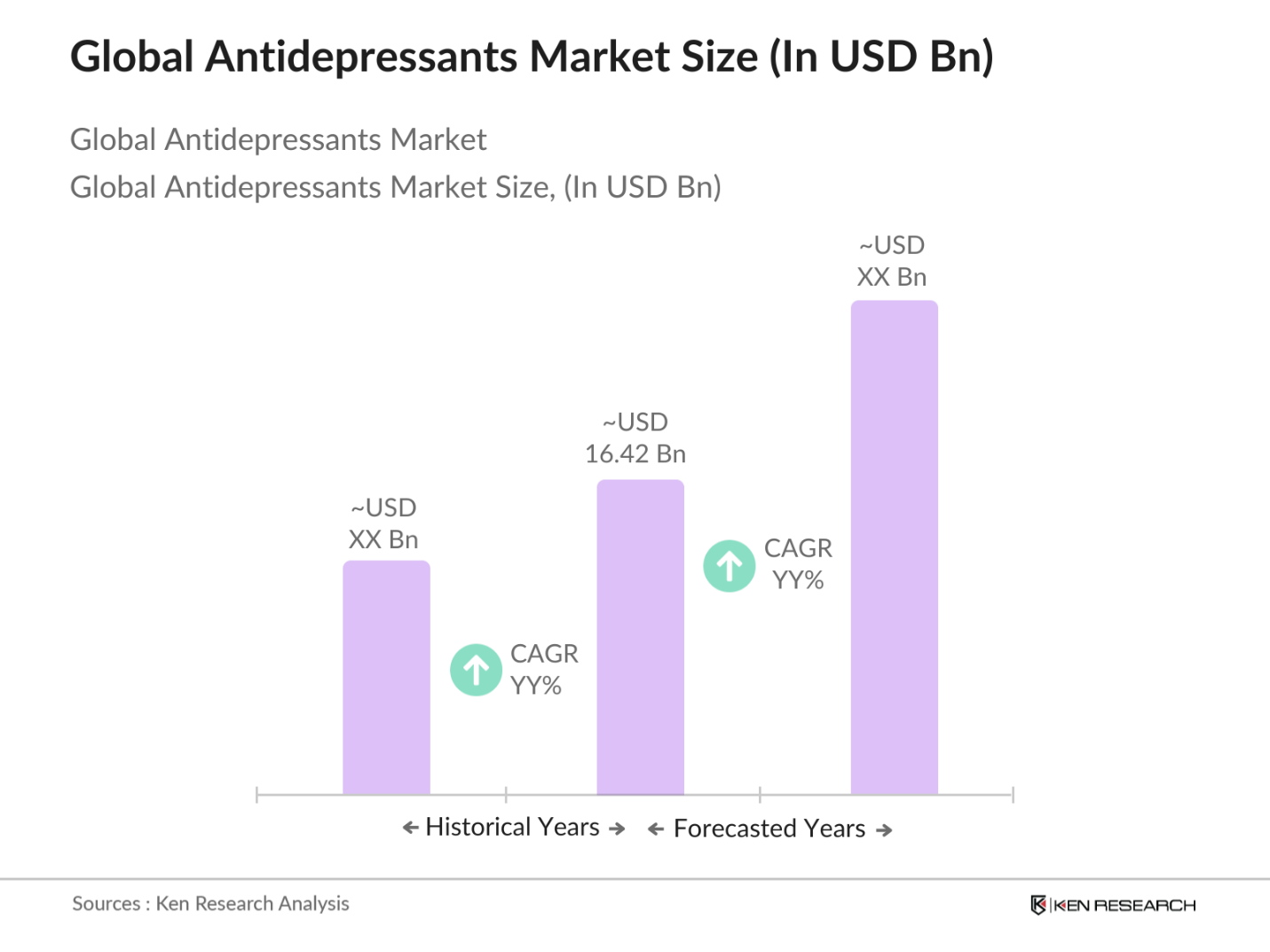
The global antidepressants market is valued at USD 16.42billion, driven by the rising prevalence of mental health disorders and increased awareness regarding depression treatments. The market is expected to see steady growth due to advancements in drug delivery and the availability of fast-acting antidepressants.
The key challenges include regulatory scrutiny, side effects associated with long-term antidepressant use, and the growing availability of cheaper generic drugs. Furthermore, there is concern regarding patient dependency on these medications, which limits long-term market expansion.
Key players include Eli Lilly and Company, Pfizer Inc., GlaxoSmithKline Plc, Johnson & Johnson, and Lundbeck. These companies dominate the market due to their extensive R&D efforts, strong global distribution networks, and comprehensive product portfolios.
The market is driven by increasing diagnosis rates of mental health disorders, advancements in pharmaceutical R&D, and the introduction of innovative therapies. Additionally, government initiatives aimed at promoting mental health awareness and reform have supported market growth.

What makes us stand out is that our consultants follows Robust, Refine and Result (RRR) methodology. i.e. Robust for clear definitions, approaches and sanity checking, Refine for differentiating respondents facts and opinions and Result for presenting data with story

We have set a benchmark in the industry by offering our clients with syndicated and customized market research reports featuring coverage of entire market as well as meticulous research and analyst insights.

While we don't replace traditional research, we flip the method upside down. Our dual approach of Top Bottom & Bottom Top ensures quality deliverable by not just verifying company fundamentals but also looking at the sector and macroeconomic factors.

With one step in the future, our research team constantly tries to show you the bigger picture. We help with some of the tough questions you may encounter along the way: How is the industry positioned? Best marketing channel? KPI's of competitors? By aligning every element, we help maximize success.

Our report gives you instant access to the answers and sources that other companies might choose to hide. We elaborate each steps of research methodology we have used and showcase you the sample size to earn your trust.

If you need any support, we are here! We pride ourselves on universe strength, data quality, and quick, friendly, and professional service.