
Global Antifibrinolytic Market Outlook to 2030
Region:Global
Author(s):Shambhavi
Product Code:KROD7891
December 2024
85
About the Report
Global Antifibrinolytic Market Overview
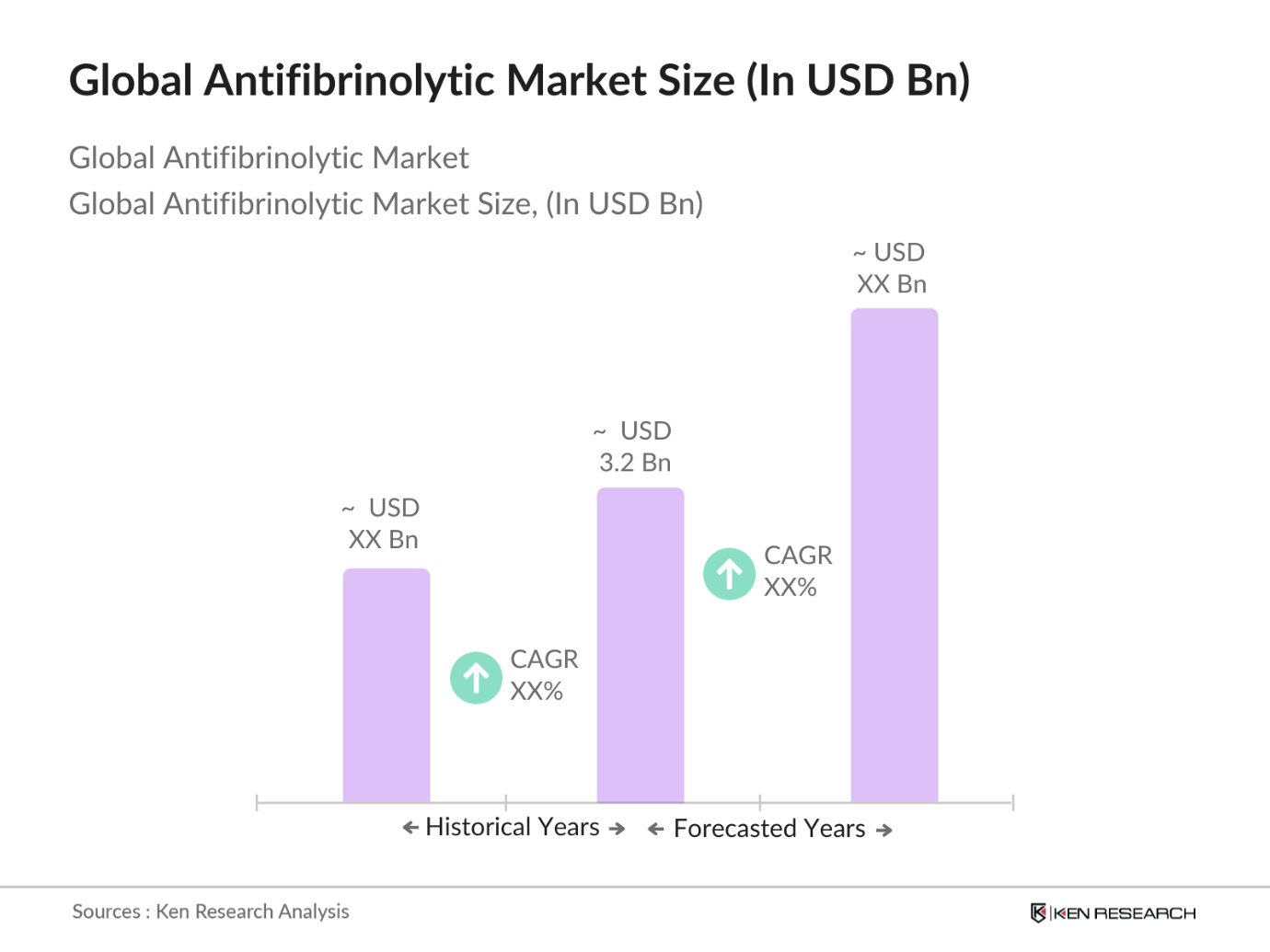
- The Global Antifibrinolytic Market is valued at USD 3.2 billion. This valuation is driven by increasing surgical procedures, advancements in trauma management, and rising awareness around hemorrhagic conditions. A primary catalyst is the significant use of antifibrinolytic drugs in controlling blood loss during surgeries and trauma events, particularly in countries with advanced healthcare systems.
- Key players in the Global Antifibrinolytic Market are concentrated in North America and Europe. These regions benefit from strong healthcare infrastructure, high adoption rates of antifibrinolytic agents in clinical practices, and robust R&D in the biopharmaceutical sector, positioning them as dominant players in the market.
- Regulatory agencies have established comprehensive frameworks for the evaluation and approval of antifibrinolytic agents. The FDA's Center for Drug Evaluation and Research (CDER) oversees the approval process in the United States, ensuring that new drugs meet stringent safety and efficacy standards. Similarly, the EMA's Committee for Medicinal Products for Human Use (CHMP) conducts scientific assessments for drug approvals in the European Union. These regulatory pathways are designed to protect public health while facilitating the availability of effective therapies.
Global Antifibrinolytic Market Segmentation
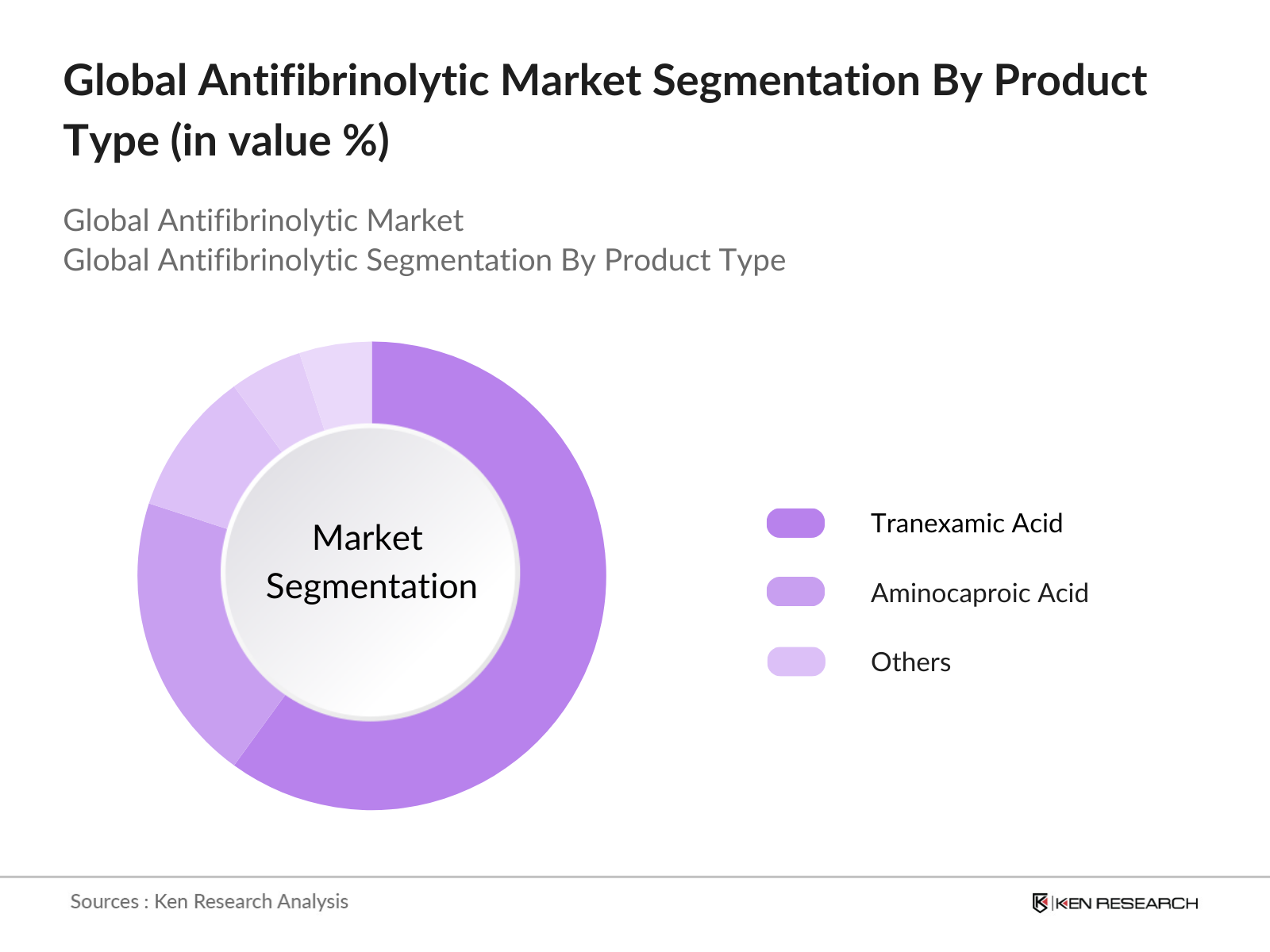
By Product Type: The Global Antifibrinolytic Market is segmented by product type into Tranexamic Acid, Aminocaproic Acid, and Others. Tranexamic Acid leads this segment due to its extensive use in surgeries for blood loss prevention and its efficacy in diverse medical conditions, including menorrhagia and trauma management.
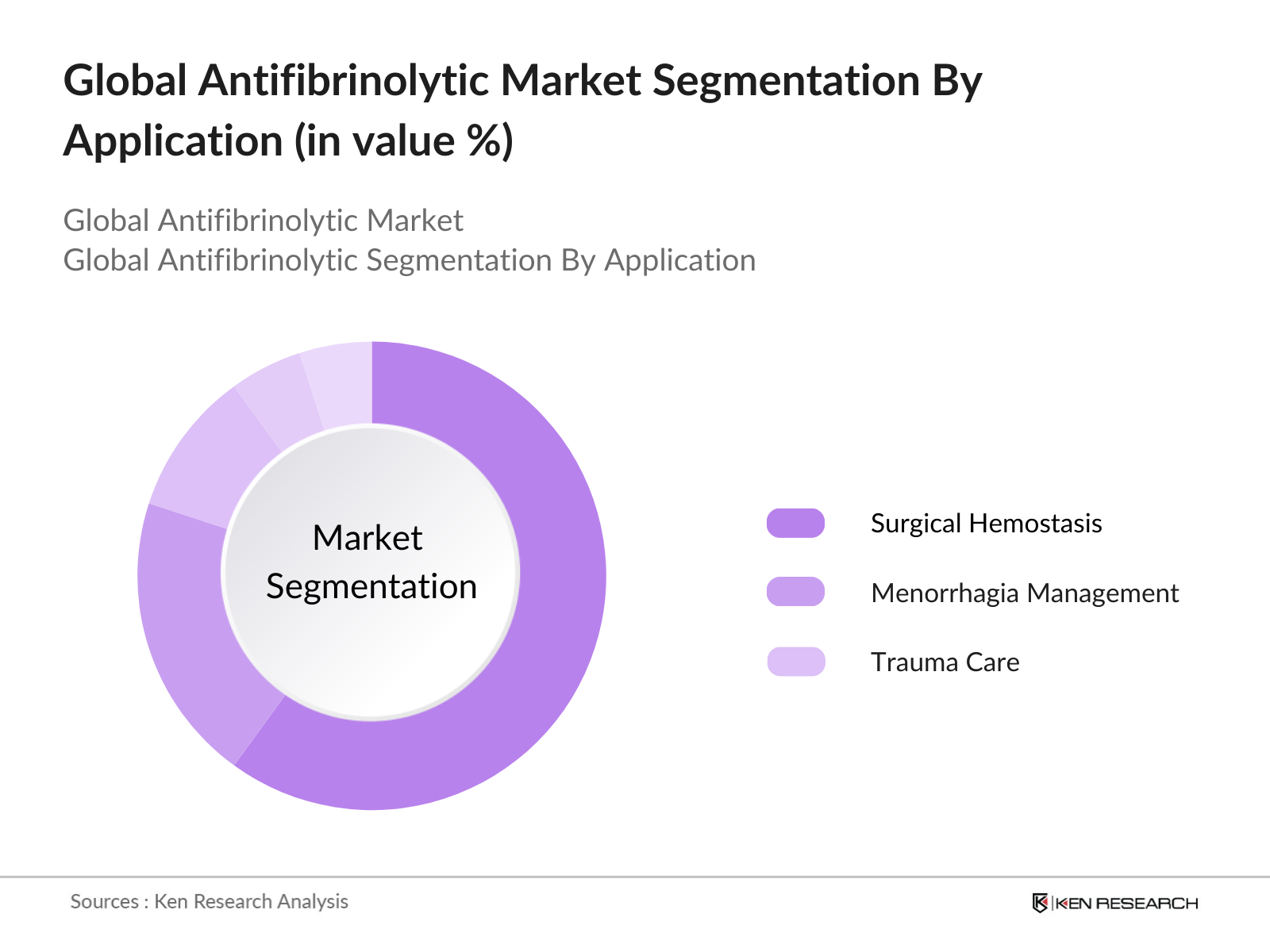
By Application: Segmented by application, the market includes Surgical Hemostasis, Menorrhagia Management, and Trauma Care. Surgical Hemostasis holds a dominant market share due to the prevalence of its application in hospitals and clinics, where controlling blood loss is critical during operations.
Global Antifibrinolytic Market Competitive Landscape
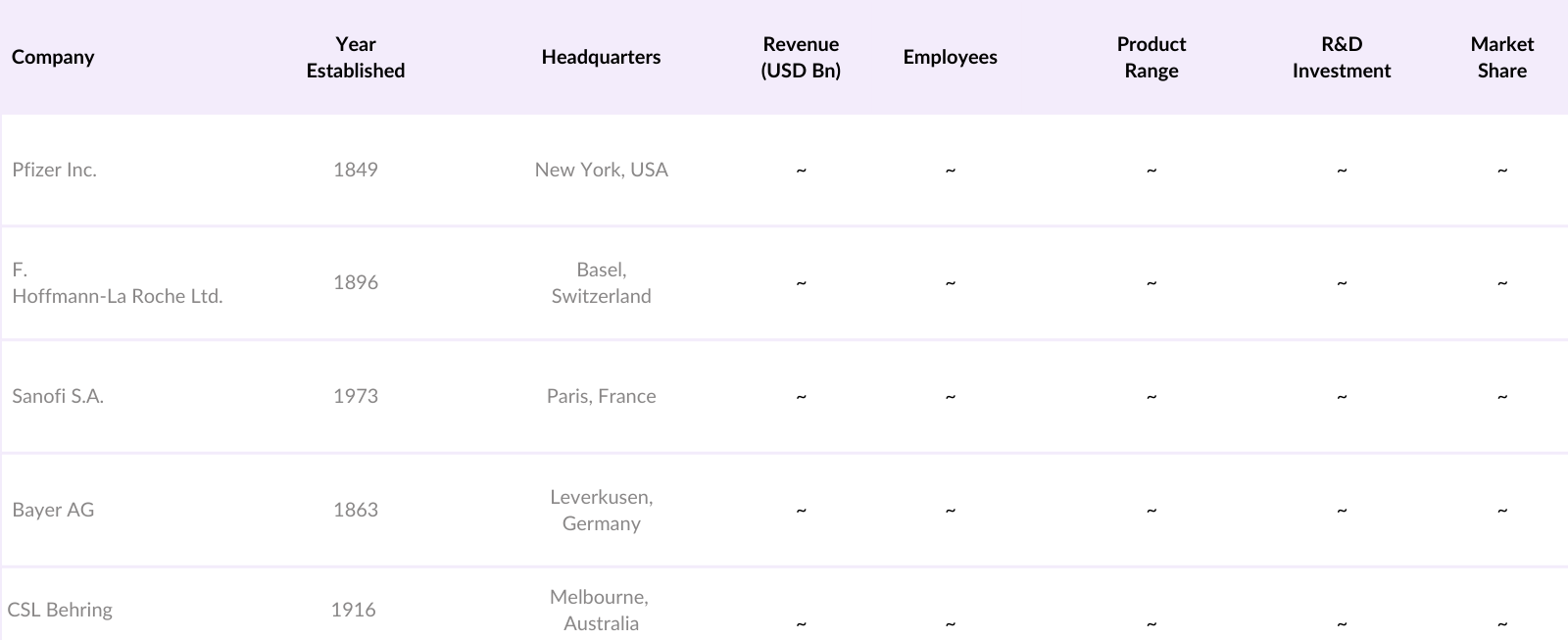
The Global Antifibrinolytic Market features key players, including major pharmaceutical giants that have consolidated market influence. The dominance of these players reflects their well-established distribution channels, extensive product portfolios, and ongoing investment in R&D.
Global Antifibrinolytic Market Analysis
Growth Drivers
- Increased Demand in Surgical Procedures: The global healthcare sector has witnessed a significant rise in surgical interventions, with an estimated 310 million major surgeries performed annually. This surge is attributed to an aging global population, which has grown by approximately 9 million individuals aged 65 and above each year, leading to a higher prevalence of chronic diseases necessitating surgical treatment. Consequently, the demand for antifibrinolytic agents, essential in reducing perioperative blood loss, has escalated to meet the needs of these procedures.
- Rising Awareness of Hemorrhage Management: Hemorrhage remains a leading cause of mortality, accounting for over 1.9 million deaths annually worldwide. In response, healthcare systems have intensified efforts to improve hemorrhage management protocols. The World Health Organization (WHO) has emphasized the importance of antifibrinolytic drugs like tranexamic acid in trauma care, highlighting their role in reducing mortality rates by up to 30% when administered promptly. This heightened awareness has propelled the adoption of antifibrinolytic agents in both surgical and emergency settings.
- Technological Innovations in Antifibrinolytic Agents: Advancements in pharmaceutical research have led to the development of next-generation antifibrinolytic agents with enhanced efficacy and safety profiles. For instance, novel formulations with improved bioavailability are undergoing clinical trials, aiming to provide faster onset of action and reduced side effects. These innovations are supported by substantial investments in R&D, with the global pharmaceutical industry allocating over $200 billion annually towards research, fostering the introduction of superior antifibrinolytic therapies.
Market Challenges
- Limited Accessibility in Emerging Economies: Despite the proven benefits of antifibrinolytic agents, their availability in low- and middle-income countries (LMICs) remains constrained. Approximately 5 billion people lack access to safe and affordable surgical care, limiting the use of essential medications like antifibrinolytics. Factors such as inadequate healthcare infrastructure, supply chain challenges, and economic constraints hinder the widespread adoption of these life-saving drugs in resource-limited settings.
- High Cost of Advanced Antifibrinolytic Drugs: The development and production of advanced antifibrinolytic agents involve significant financial investments, leading to elevated market prices. For instance, the average cost of a single dose of certain antifibrinolytic drugs can exceed $100, posing affordability challenges for both healthcare providers and patients, particularly in countries without comprehensive health insurance coverage. This financial barrier restricts the utilization of these agents, especially in regions with limited healthcare budgets.
Global Antifibrinolytic Market Future Outlook
Over the next several years, the Global Antifibrinolytic Market is expected to witness growth driven by heightened adoption in surgical settings and advancements in trauma care solutions. Continuous product innovations aimed at enhancing bioavailability and minimizing adverse effects will further boost market demand.
Market Opportunities
- Expanding Usage in Non-Surgical Hemorrhage: Beyond surgical applications, antifibrinolytic agents are increasingly utilized in managing non-surgical hemorrhagic conditions, such as postpartum hemorrhage (PPH). PPH is a leading cause of maternal mortality, responsible for approximately 70,000 deaths annually. Clinical studies have demonstrated that administering tranexamic acid within three hours of childbirth can reduce PPH-related mortality by 31%, presenting a significant opportunity to enhance maternal health outcomes globally.
- Strategic Collaborations in R&D: Pharmaceutical companies are forming strategic partnerships to accelerate the development of novel antifibrinolytic agents. Collaborative efforts between industry leaders and academic institutions have resulted in over 1,500 ongoing clinical trials focused on hemostatic agents, including antifibrinolytics. These alliances facilitate resource sharing, access to cutting-edge research, and expedited innovation, fostering the introduction of advanced therapies to the market.
Scope of the Report
|
Segment |
Sub-Segment |
|
Product Type |
Tranexamic Acid Aminocaproic Acid Others |
|
Application |
Surgical Hemostasis Menorrhagia Trauma Others |
|
Administration Route |
Oral Topical Parenteral |
|
End User |
Hospitals Ambulatory Surgical Centers Specialized Clinics, Pharmacies |
|
Region |
North America Europe Asia Pacific MEA Latin America |
Products
Key Target Audience
Investor and Venture Capitalist Firms
Government and Regulatory Bodies (e.g., FDA, EMA)
Pharmaceutical Manufacturers
Hospitals and Surgical Centers
Trauma and Emergency Care Centers
Research and Development Laboratories
Biopharmaceutical Companies
Public Health Organizations
Companies
Players mentioned in the report
Pfizer Inc.
F. Hoffmann-La Roche Ltd.
Sanofi S.A.
Bayer AG
CSL Behring
Novartis AG
Amgen Inc.
Johnson & Johnson Services, Inc.
Merck & Co., Inc.
Boehringer Ingelheim GmbH
AstraZeneca Plc
Teva Pharmaceuticals Industries Ltd.
GlaxoSmithKline Plc
Bristol-Myers Squibb Company
Eli Lilly and Company
Table of Contents
1. Global Antifibrinolytic Market Overview
1.1 Definition and Scope
1.2 Market Taxonomy
1.3 Market Dynamics Overview
1.4 Market Segmentation Overview
2. Global Antifibrinolytic Market Size (in USD)
2.1 Historical Market Size
2.2 Year-On-Year Growth Analysis
2.3 Key Market Developments and Innovations
3. Global Antifibrinolytic Market Analysis
3.1 Growth Drivers (Medical Advancements, Increasing Prevalence of Hemorrhagic Conditions)
3.1.1 Increased Demand in Surgical Procedures
3.1.2 Rising Awareness of Hemorrhage Management
3.1.3 Technological Innovations in Antifibrinolytic Agents
3.2 Market Challenges (Adverse Effects, Regulatory Compliance)
3.2.1 Limited Accessibility in Emerging Economies
3.2.2 High Cost of Advanced Antifibrinolytic Drugs
3.2.3 Stringent Approval Processes
3.3 Opportunities (Emerging Markets, Product Innovations)
3.3.1 Expanding Usage in Non-Surgical Hemorrhage
3.3.2 Strategic Collaborations in R&D
3.3.3 Enhanced Bioavailability of New Formulations
3.4 Trends (Personalized Medicine, Minimally Invasive Techniques)
3.4.1 Adoption of Precision Medicine
3.4.2 Transition Towards Biologically Engineered Antifibrinolytics
3.4.3 Integration with Automated Healthcare Systems
3.5 Government Regulation (Approval Standards, Subsidies for Lifesaving Medications)
3.5.1 Drug Approval Pathways
3.5.2 Compliance with Quality Standards
3.5.3 Access to Subsidized Treatments
3.6 SWOT Analysis
3.7 Value Chain Analysis
3.8 Porters Five Forces Analysis
3.9 Competitive Landscape and Market Structure
4. Global Antifibrinolytic Market Segmentation
4.1 By Product Type (in Value %) (Tranexamic Acid, Aminocaproic Acid, Others)
4.1.1 Tranexamic Acid
4.1.2 Aminocaproic Acid
4.1.3 Others
4.2 By Application (in Value %) (Surgical Hemostasis, Menorrhagia, Trauma, Others)
4.2.1 Surgical Hemostasis
4.2.2 Menorrhagia Management
4.2.3 Trauma Care
4.3 By Administration Route (in Value %) (Oral, Topical, Parenteral)
4.3.1 Oral
4.3.2 Topical
4.3.3 Parenteral
4.4 By End User (in Value %) (Hospitals, Ambulatory Surgical Centers, Specialized Clinics, Pharmacies)
4.4.1 Hospitals
4.4.2 Ambulatory Surgical Centers
4.4.3 Specialized Clinics
4.5 By Region (in Value %) (North America, Europe, Asia Pacific, MEA, Latin America)
4.5.1 North America
4.5.2 Europe
4.5.3 Asia Pacific
4.5.4 MEA
4.5.5 Latin America
5. Global Antifibrinolytic Market Competitive Analysis
5.1 Profiles of Key Competitors
5.1.1 Pfizer Inc.
5.1.2 F. Hoffmann-La Roche Ltd.
5.1.3 Sanofi S.A.
5.1.4 Bayer AG
5.1.5 Eli Lilly and Company
5.1.6 Amgen Inc.
5.1.7 Teva Pharmaceuticals Industries Ltd.
5.1.8 Novartis AG
5.1.9 GlaxoSmithKline Plc
5.1.10 Merck & Co., Inc.
5.1.11 AstraZeneca Plc
5.1.12 Johnson & Johnson Services, Inc.
5.1.13 Boehringer Ingelheim GmbH
5.1.14 Bristol-Myers Squibb Company
5.1.15 CSL Behring
5.2 Cross Comparison Parameters (Revenue, R&D Investment, Geographic Reach, Market Share, Product Portfolio, Innovation Capabilities, Sustainability Initiatives, Supply Chain)
5.3 Market Share Analysis
5.4 Strategic Initiatives and Expansion Plans
5.5 Mergers, Acquisitions, and Partnerships
5.6 Investment Patterns and Funding
5.7 Venture Capital and Private Equity Insights
5.8 Government Funding and Grants
6. Global Antifibrinolytic Market Regulatory Framework
6.1 International Compliance Standards
6.2 Certification and Quality Requirements
6.3 Subsidies and Government Programs for Critical Medications
7. Global Antifibrinolytic Future Market Size (in USD)
8. Global Antifibrinolytic Future Market Segmentation
8.1 By Product Type (in Value %)
8.2 By Application (in Value %)
8.3 By Administration Route (in Value %)
8.4 By End User (in Value %)
8.5 By Region (in Value %)
9. Global Antifibrinolytic Market Analysts Recommendations
9.1 Product Innovation and Development Strategies
9.2 Customer Behavior Analysis
9.3 Marketing Strategies and Campaigns
9.4 Identifying White Space and New Markets
Disclaimer Contact UsResearch Methodology
Step 1: Identification of Key Variables
The initial step involves mapping the Global Antifibrinolytic Market, incorporating data from key industry stakeholders. Extensive secondary research is performed using industry databases to identify critical variables affecting market dynamics.
Step 2: Market Analysis and Construction
This phase entails evaluating historical market data to assess market trends and key factors influencing growth. The analysis also considers the roles of service providers and product-specific data to estimate market revenue accurately.
Step 3: Hypothesis Validation and Expert Consultation
Hypotheses are validated through consultations with industry experts, which provide insights into operational and financial metrics crucial for refining data accuracy and market estimations.
Step 4: Research Synthesis and Final Output
In the final phase, data obtained is validated with multiple pharmaceutical manufacturers and healthcare providers to ensure comprehensive and accurate market insights for the Antifibrinolytic Market.
Frequently Asked Questions
01. How big is the Global Antifibrinolytic Market?
The Global Antifibrinolytic Market is valued at USD 3.2 billion, driven by the rising use of antifibrinolytics in surgical settings and trauma care.
02. What challenges exist in the Global Antifibrinolytic Market?
The market faces challenges including high development costs, regulatory compliance requirements, and competition from alternative therapies.
03. Who are the major players in the Global Antifibrinolytic Market?
Key players include Pfizer Inc., F. Hoffmann-La Roche Ltd., Sanofi S.A., and Bayer AG, known for their extensive R&D and global reach.
04. What are the growth drivers of the Global Antifibrinolytic Market?
Growth is propelled by increasing surgical procedures worldwide, heightened awareness in hemorrhage management, and advances in trauma care.
05. What is the impact of government regulation on the Global Antifibrinolytic Market?
Government regulations enforce strict compliance on drug development and quality standards, which affects the product approval processes and market dynamics.
Why Buy From Us?

What makes us stand out is that our consultants follows Robust, Refine and Result (RRR) methodology. i.e. Robust for clear definitions, approaches and sanity checking, Refine for differentiating respondents facts and opinions and Result for presenting data with story

We have set a benchmark in the industry by offering our clients with syndicated and customized market research reports featuring coverage of entire market as well as meticulous research and analyst insights.

While we don't replace traditional research, we flip the method upside down. Our dual approach of Top Bottom & Bottom Top ensures quality deliverable by not just verifying company fundamentals but also looking at the sector and macroeconomic factors.

With one step in the future, our research team constantly tries to show you the bigger picture. We help with some of the tough questions you may encounter along the way: How is the industry positioned? Best marketing channel? KPI's of competitors? By aligning every element, we help maximize success.

Our report gives you instant access to the answers and sources that other companies might choose to hide. We elaborate each steps of research methodology we have used and showcase you the sample size to earn your trust.

If you need any support, we are here! We pride ourselves on universe strength, data quality, and quick, friendly, and professional service.