
Global Antimicrobial Packaging Market Outlook to 2030
Region:Global
Author(s):Vijay Kumar
Product Code:KROD2729
Region:Global
Author(s):Vijay Kumar
Product Code:KROD2729
December 2024
100
Listen to the audio summary
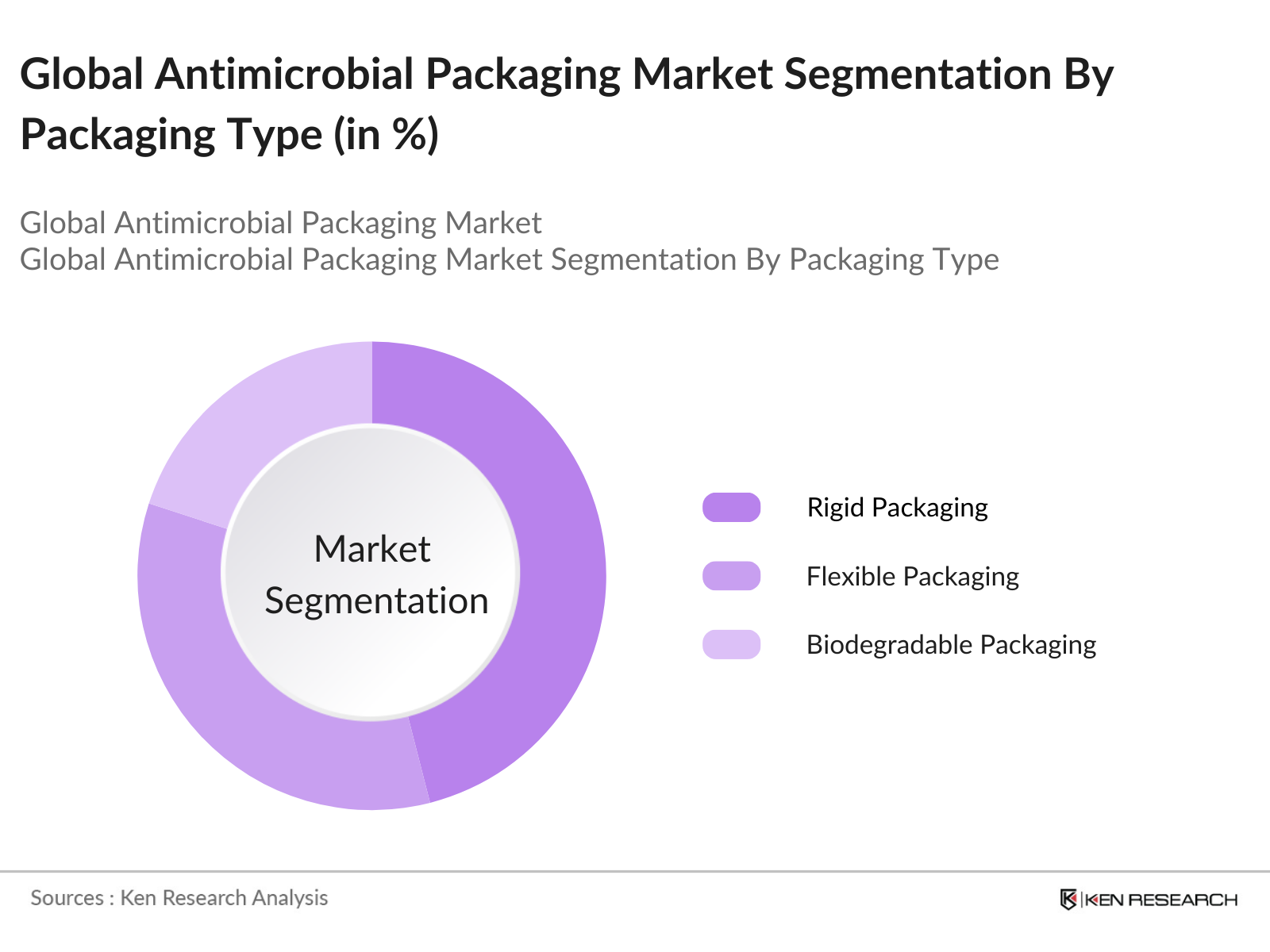
By Packaging Type: The global antimicrobial packaging market is segmented by packaging type into rigid packaging, flexible packaging, and biodegradable packaging. Rigid packaging has a dominant market share due to its widespread use in food and pharmaceutical applications. Rigid containers, bottles, and boxes are known for their ability to provide superior protection against physical and environmental damage, making them ideal for preserving product quality, particularly in the healthcare and food sectors.
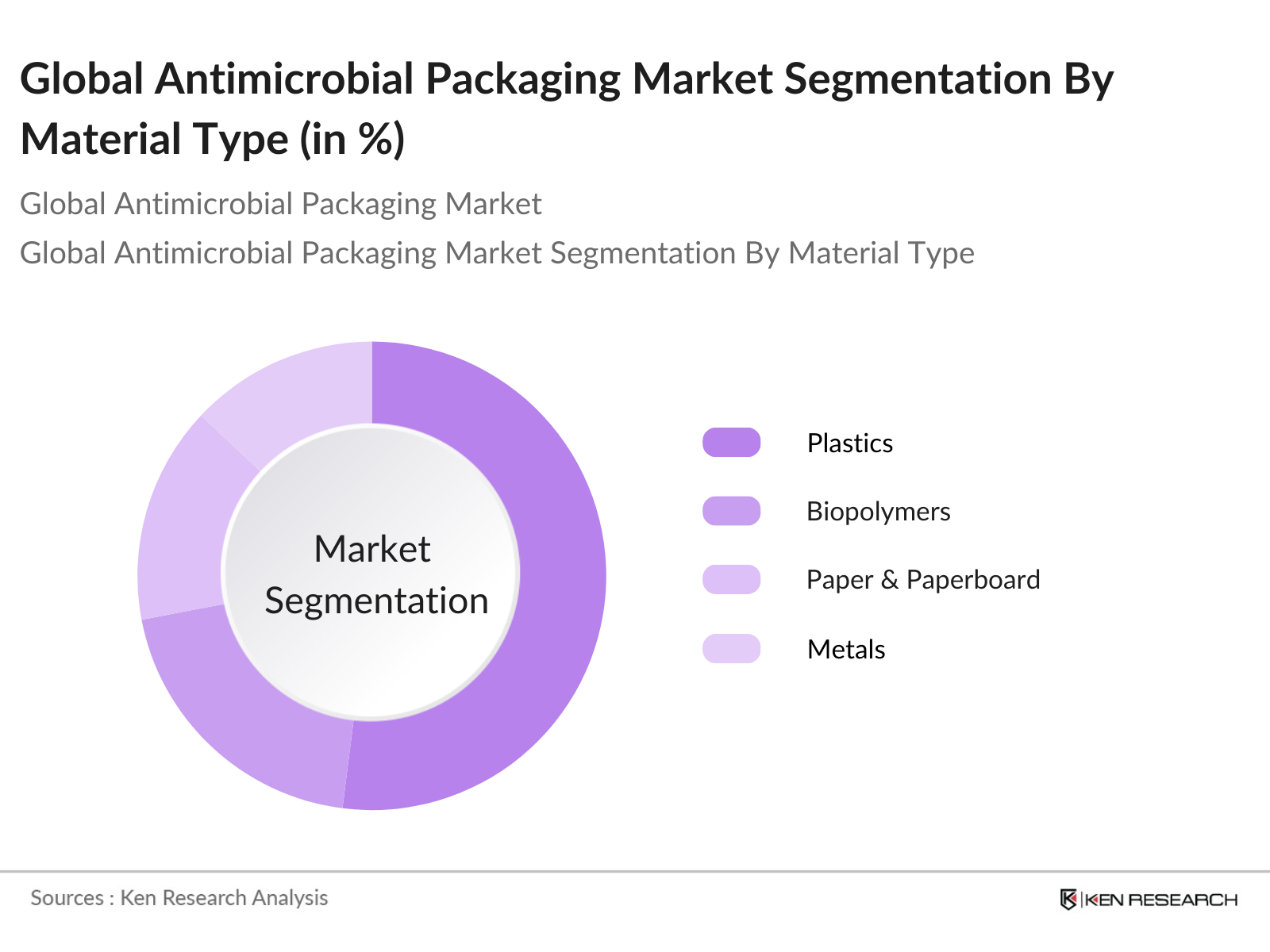
By Material Type: The antimicrobial packaging market is also segmented by material type into plastics, biopolymers, paper & paperboard, and metals. Plastics dominate the market due to their cost-effectiveness, versatility, and ability to integrate antimicrobial agents during the manufacturing process. Plastics offer high barrier protection, and flexibility in design, and are extensively used across industries such as food, healthcare, and personal care products.
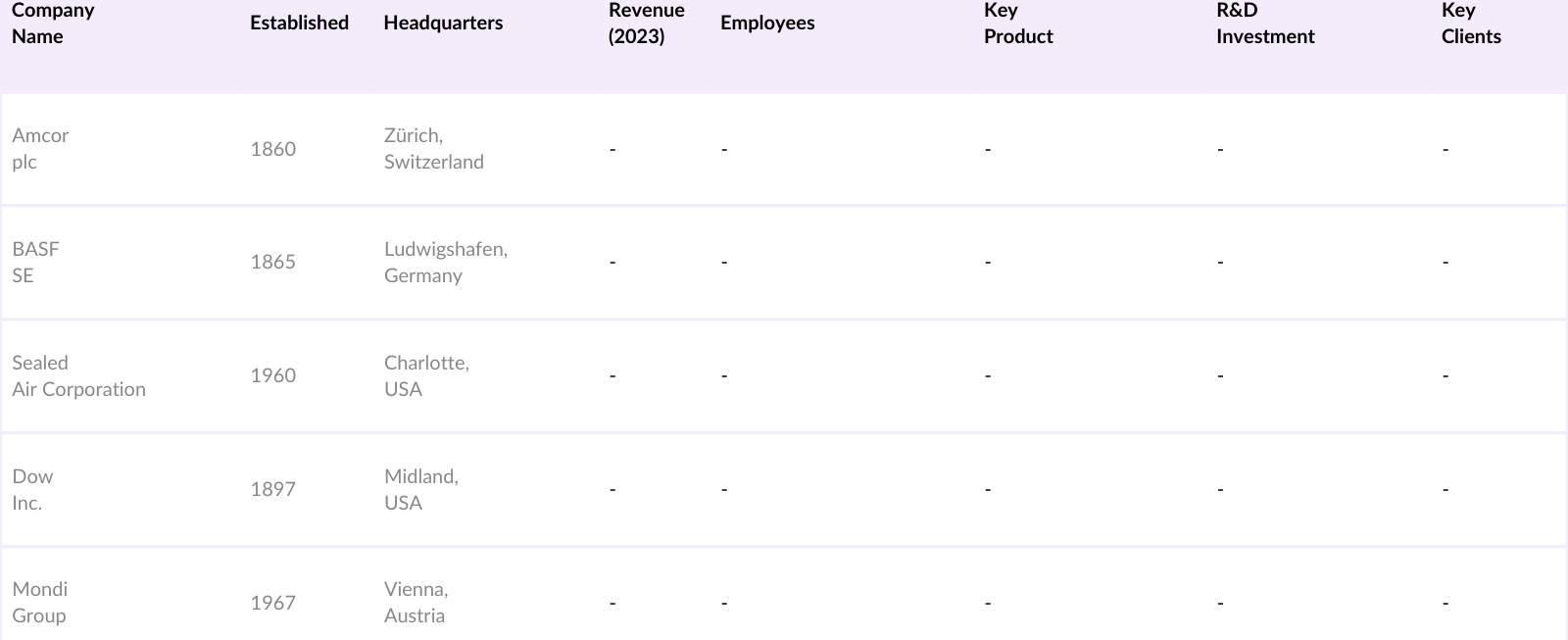
The global antimicrobial packaging market is characterized by intense competition among major players, who are continuously investing in research and development to innovate and improve their product offerings. These companies are focused on expanding their market presence through strategic partnerships, mergers, and acquisitions, with a strong emphasis on sustainability and meeting regulatory standards.
Over the next five years, the global antimicrobial packaging market is expected to show significant growth, driven by increasing demand for hygienic packaging solutions across industries such as food and beverage, healthcare, and personal care. The integration of new technologies, including nanotechnology and AI, in antimicrobial packaging is anticipated to enhance the effectiveness of these materials, making them more efficient in preventing microbial growth.
|
Packaging Type |
Rigid Packaging Flexible Packaging Biodegradable Packaging |
|
Material Type |
Plastics Biopolymers Paper & Paperboard Metal |
|
Active Agent |
Organic Acid-Based Enzyme-Based Antimicrobial Polymer-Based |
|
End-Use Industry |
Food & Beverage Pharmaceuticals Personal Care Products Healthcare |
|
Region |
North America Europe Asia-Pacific Middle East & Africa Latin America |
1.1. Definition and Scope
1.2. Market Taxonomy
1.3. Market Growth Rate
1.4. Market Segmentation Overview
2.1. Historical Market Size
2.2. Year-On-Year Growth Analysis
2.3. Key Market Developments and Milestones
3.1. Growth Drivers
3.1.1. Increasing demand for shelf-life extension in food products
3.1.2. Growth in pharmaceutical packaging demand
3.1.3. Rising consumer awareness about food safety
3.1.4. Innovations in biodegradable antimicrobial packaging
3.2. Market Challenges
3.2.1. High cost of antimicrobial materials
3.2.2. Regulatory barriers in different regions
3.2.3. Limited consumer adoption in developing markets
3.3. Opportunities
3.3.1. Increasing use of natural antimicrobial agents
3.3.2. Expansion of the pharmaceutical industry
3.3.3. Rising demand for eco-friendly packaging
3.4. Trends
3.4.1. Adoption of nanotechnology in antimicrobial packaging
3.4.2. Use of active and intelligent packaging systems
3.4.3. Focus on sustainability and recycling in antimicrobial packaging
3.5. Regulatory Landscape
3.5.1. U.S. Food and Drug Administration (FDA) standards
3.5.2. European Union regulations (EFSA)
3.5.3. Global Food Safety Initiative (GFSI) compliance
3.6. SWOT Analysis
3.7. Stakeholder Ecosystem (Raw Material Suppliers, Packaging Manufacturers, End-users)
3.8. Porters Five Forces (Suppliers, Buyers, Substitutes, New Entrants, Rivalry)
3.9. Competition Ecosystem
4.1. By Packaging Type (In Value %)
4.1.1. Rigid Packaging
4.1.2. Flexible Packaging
4.1.3. Biodegradable Packaging
4.2. By Material Type (In Value %)
4.2.1. Plastics
4.2.2. Biopolymers
4.2.3. Paper & Paperboard
4.2.4. Metal
4.3. By Active Agent (In Value %)
4.3.1. Organic Acid-Based
4.3.2. Enzyme-Based
4.3.3. Antimicrobial Polymer-Based
4.4. By End-Use Industry (In Value %)
4.4.1. Food & Beverage
4.4.2. Pharmaceuticals
4.4.3. Personal Care Products
4.4.4. Healthcare
4.5. By Region (In Value %)
4.5.1. North America
4.5.2. Europe
4.5.3. Asia-Pacific
4.5.4. Middle East & Africa
4.5.5. Latin America
5.1. Detailed Profiles of Major Companies
5.1.1. Amcor plc
5.1.2. Mondi Group
5.1.3. BASF SE
5.1.4. Sealed Air Corporation
5.1.5. Dow Inc.
5.1.6. Tetra Pak International S.A.
5.1.7. PolyOne Corporation
5.1.8. Sonoco Products Company
5.1.9. Bemis Company, Inc.
5.1.10. Dunmore Corporation
5.1.11. BioCote Ltd
5.1.12. Takex Labo Co., Ltd.
5.1.13. Microban International, Ltd.
5.1.14. Linpac Packaging Ltd.
5.1.15. Plasmatreat GmbH
5.2. Cross Comparison Parameters
5.2.1. Manufacturing Capacities
5.2.2. Global Presence
5.2.3. Revenue
5.2.4. Product Portfolio
5.2.5. Strategic Partnerships
5.2.6. R&D Investment
5.2.7. Innovation Capabilities
5.2.8. Sustainability Initiatives
5.3. Market Share Analysis
5.4. Strategic Initiatives
5.5. Mergers and Acquisitions
5.6. Investment Analysis
5.7. Venture Capital Funding
5.8. Government Grants
5.9. Private Equity Investments
6.1. Food Contact Materials Standards
6.2. Antimicrobial Additives Compliance
6.3. Packaging Waste and Recycling Legislation
6.4. Certification and Labeling Requirements
7.1. Future Market Size Projections
7.2. Key Factors Driving Future Market Growth
8.1. By Packaging Type (In Value %)
8.2. By Material Type (In Value %)
8.3. By Active Agent (In Value %)
8.4. By End-Use Industry (In Value %)
8.5. By Region (In Value %)
9.1. TAM/SAM/SOM Analysis
9.2. Consumer Cohort Analysis
9.3. Marketing Initiatives
9.4. White Space Opportunity Analysis
The first step involves mapping the global antimicrobial packaging market, focusing on key stakeholders across industries such as food, pharmaceuticals, and healthcare. This phase involves comprehensive desk research, analyzing secondary and proprietary databases to gather market data.
In this phase, we collect historical data to construct a detailed market analysis. This involves analyzing packaging material trends, antimicrobial agents, and the use of these materials across various end-use industries.
To validate the findings, we conduct interviews with industry experts from antimicrobial packaging manufacturers, healthcare providers, and regulatory bodies. These insights are used to refine the market data and ensure accuracy.
The final phase involves synthesizing the data into a comprehensive market report, providing detailed insights into market trends, competitive dynamics, and growth opportunities in the antimicrobial packaging market.
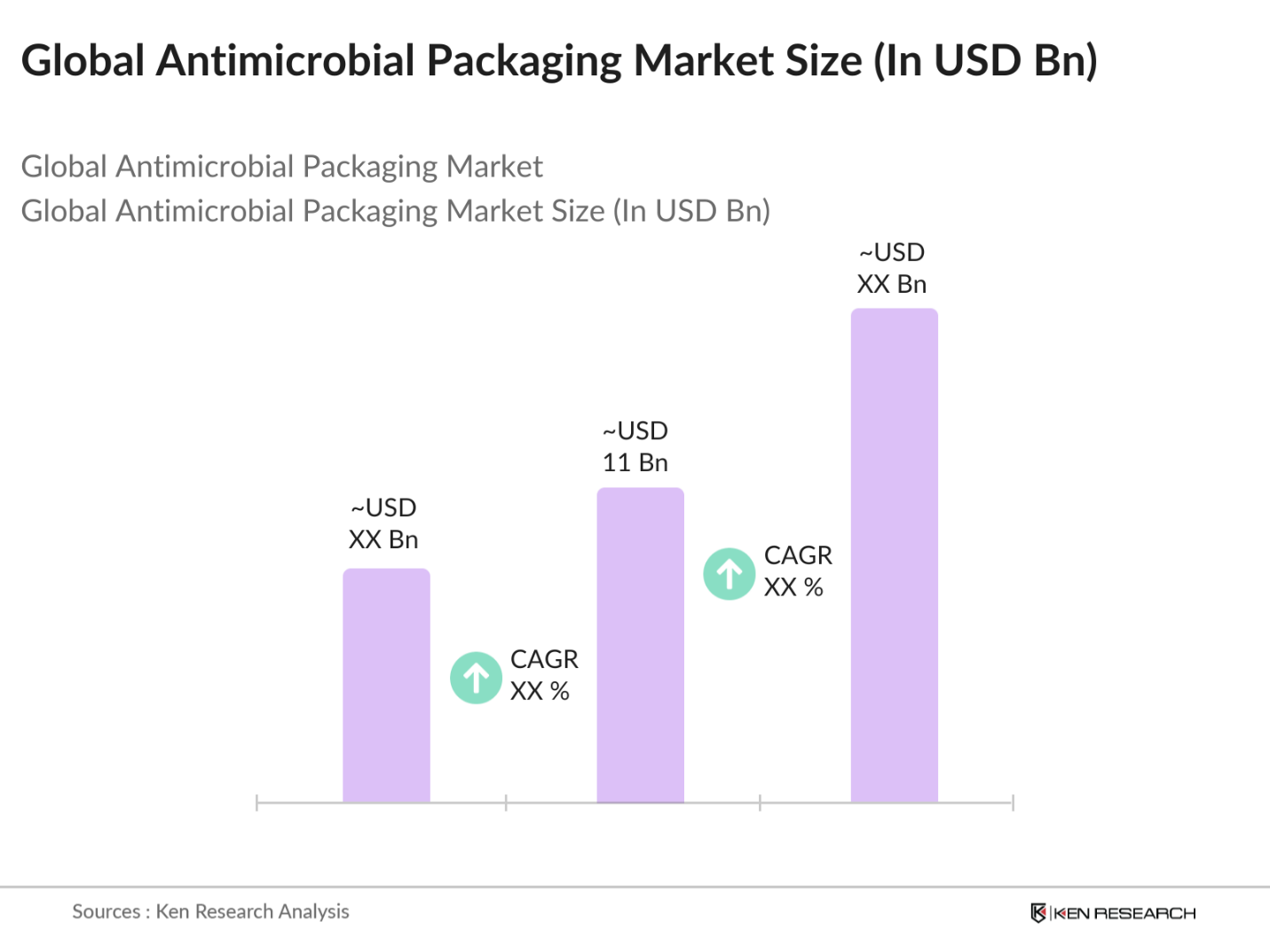
The global antimicrobial packaging market is valued at USD 11 billion, driven by increasing demand from the food, pharmaceutical, and healthcare sectors. The rising need for extended product shelf life and safety in packaging is contributing to its growth.
Challenges include the global antimicrobial packaging market high cost of antimicrobial materials, strict regulatory frameworks, and limited consumer awareness in developing regions. Additionally, some antimicrobial agents face issues with food safety compliance in certain countries.
Key players in the global antimicrobial packaging market include Amcor plc, BASF SE, Dow Inc., Sealed Air Corporation, and Mondi Group. These companies dominate the market through innovation, sustainability initiatives, and a strong global presence.
The global antimicrobial packaging market is propelled by rising consumer health concerns, demand for longer shelf life in packaged food, and the need for effective packaging solutions in the pharmaceutical sector. The adoption of nanotechnology in packaging also plays a significant role.

What makes us stand out is that our consultants follows Robust, Refine and Result (RRR) methodology. i.e. Robust for clear definitions, approaches and sanity checking, Refine for differentiating respondents facts and opinions and Result for presenting data with story

We have set a benchmark in the industry by offering our clients with syndicated and customized market research reports featuring coverage of entire market as well as meticulous research and analyst insights.

While we don't replace traditional research, we flip the method upside down. Our dual approach of Top Bottom & Bottom Top ensures quality deliverable by not just verifying company fundamentals but also looking at the sector and macroeconomic factors.

With one step in the future, our research team constantly tries to show you the bigger picture. We help with some of the tough questions you may encounter along the way: How is the industry positioned? Best marketing channel? KPI's of competitors? By aligning every element, we help maximize success.

Our report gives you instant access to the answers and sources that other companies might choose to hide. We elaborate each steps of research methodology we have used and showcase you the sample size to earn your trust.

If you need any support, we are here! We pride ourselves on universe strength, data quality, and quick, friendly, and professional service.