















Global App Development Market Outlook to 2030
Region:Global
Author(s):Paribhasha Tiwari
Product Code:KROD2185
December 2024
85
About the Report
Global App Development Market Overview
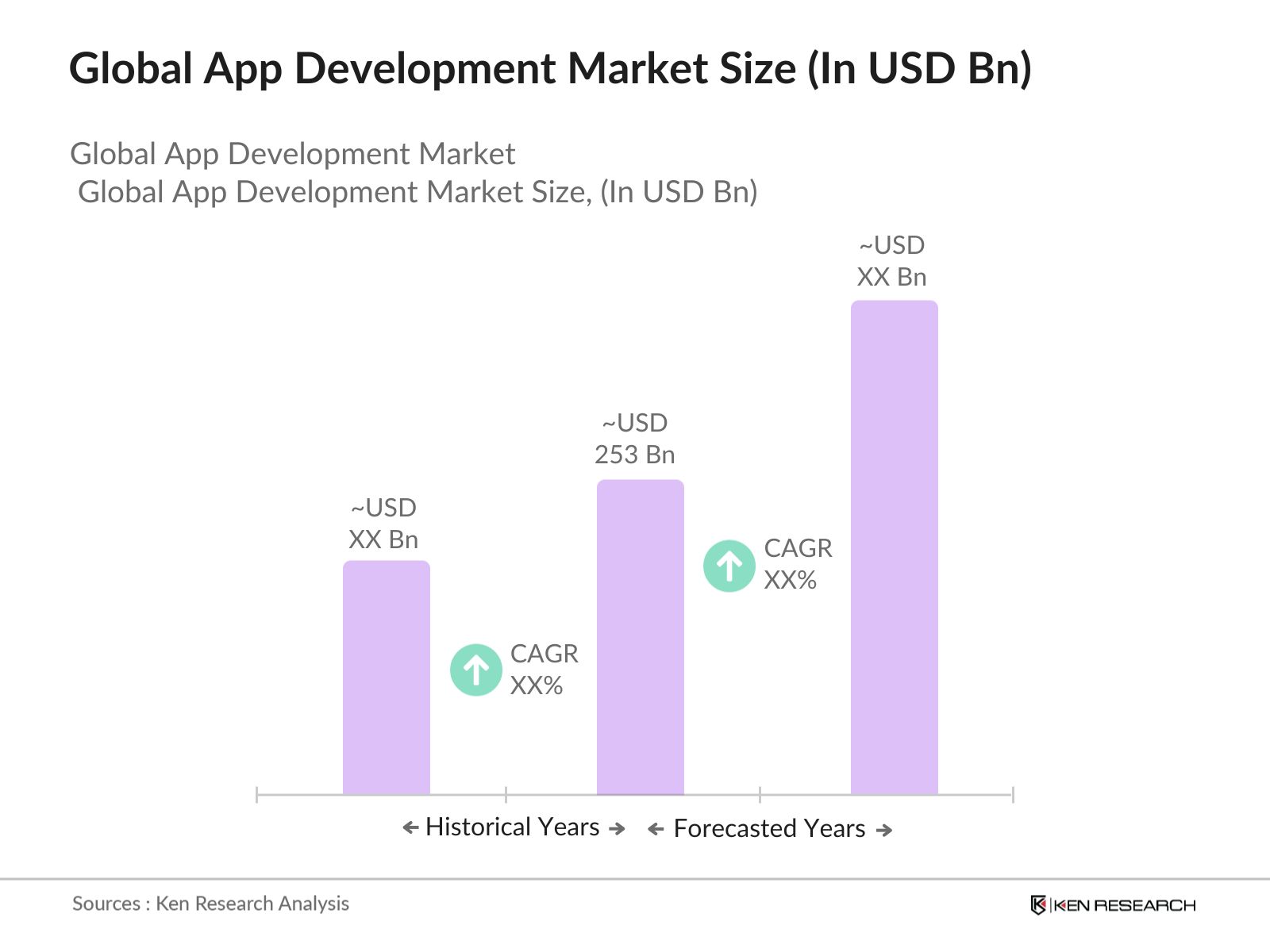
- The global app development market is valued at USD 253 billion based on a five-year historical analysis. This substantial valuation is driven primarily by the increasing adoption of smartphones and the rapid growth in mobile internet penetration. The rise in the number of app downloads, expanding digital infrastructure, and advancements in technologies like artificial intelligence (AI), blockchain, and cloud computing further drive the market. The demand for enterprise applications, especially for workflow automation and customer engagement, has also fueled the market.
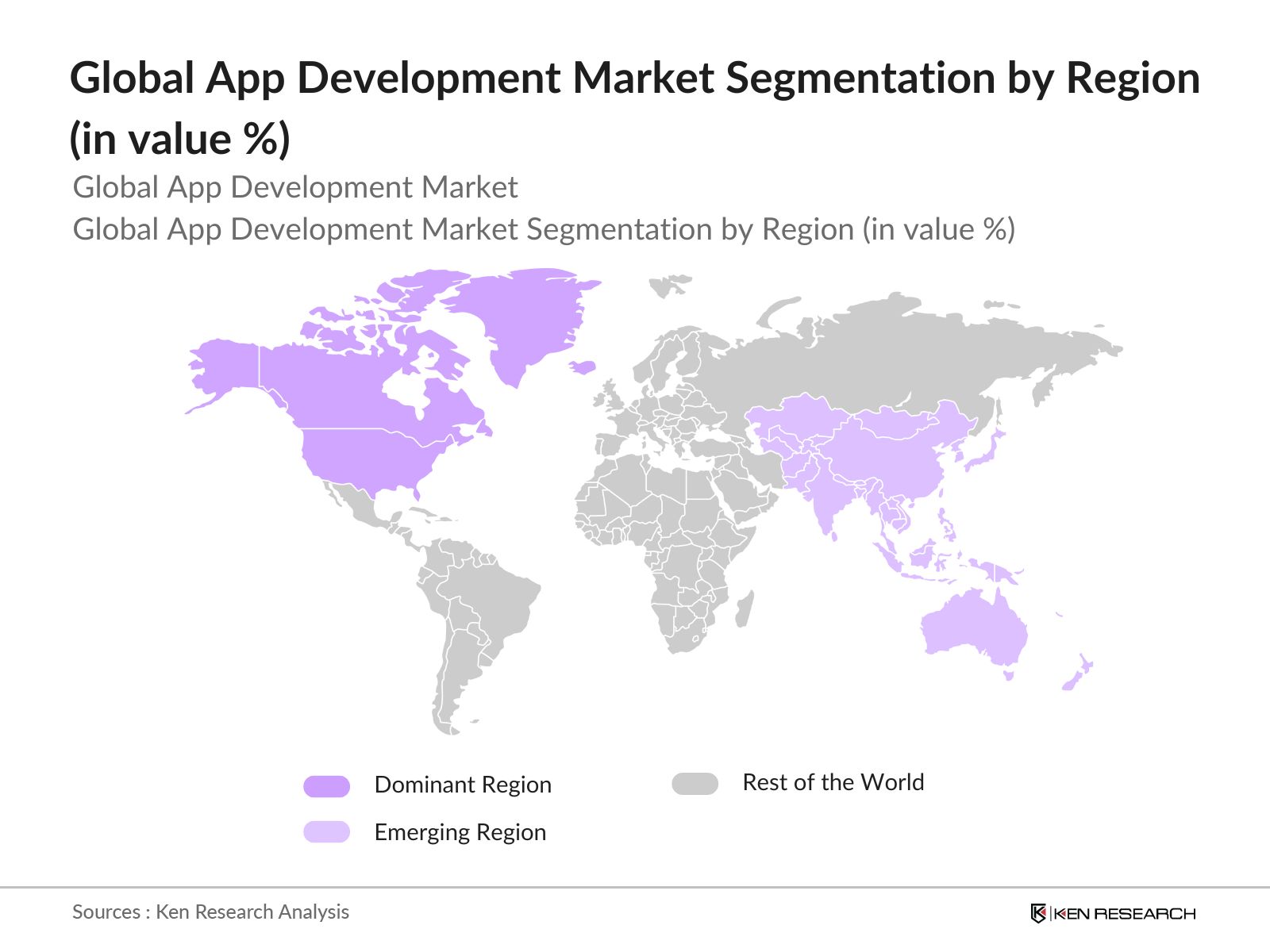
- The United States, China, and India are the leading countries in the global app development market. The United States dominates due to its strong technological infrastructure, significant investments in software development, and the presence of global tech giants like Google, Apple, and Microsoft. China holds a prominent position due to its massive user base and the growth of domestic platforms such as Tencent and Alibaba. India, on the other hand, is emerging as a powerhouse due to its growing developer base, lower development costs, and booming startup ecosystem.
- The U.S. government has been actively investing in digital infrastructure to support app development growth. In 2024, the Biden administration allocated over $ 2.75 billion as part of its Digital Equity Act, aimed at expanding broadband access and upgrading digital infrastructure across rural and underserved communities. This initiative increases internet accessibility, which boosts mobile app usage, especially for essential services such as healthcare, education, and finance. By enabling more people to access mobile services, the initiative indirectly supports app development by expanding the potential user base and improving access to development resources such as cloud-based services and frameworks.
Global App Development Market Segmentation
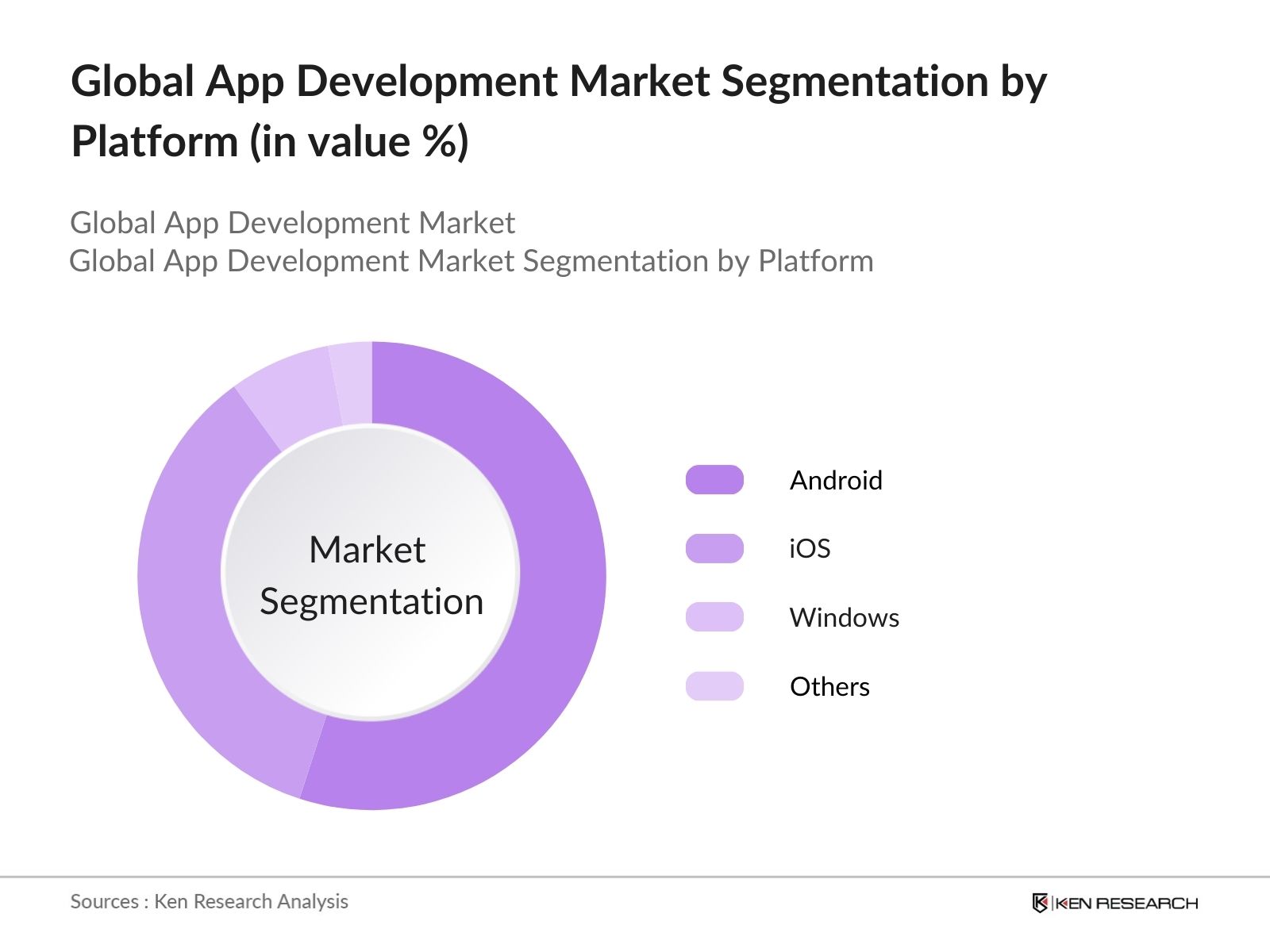
By Platform: The app development market is segmented by platform into iOS, Android, Windows, and others such as HarmonyOS. Android holds the dominant market share in this segment due to its widespread use in emerging markets like India, Brazil, and Indonesia. The open-source nature of the platform, combined with its lower entry barriers, allows developers to build and distribute apps at a lower cost, making Android apps more accessible to users.
By Region: Regionally, the market is segmented into North America, Europe, Asia-Pacific, Middle East & Africa, and Latin America. North America holds the largest share in the market, largely due to the regions technological advancements, significant investment in app development technologies, and the presence of major players in the app ecosystem. However, Asia-Pacific is witnessing rapid growth, particularly due to the increasing penetration of smartphones and rising digital transformation efforts across industries.
By Application: App development can also be segmented by application, including Gaming, Business, E-commerce, Healthcare, and others such as Lifestyle and Education. Gaming applications dominate this segment, driven by a growing global user base of mobile gamers, advancements in mobile graphics technology, and increasing revenue generated from in-app purchases and ad-based models.
Global App Development Market Competitive Landscape
The global app development market is dominated by a mix of tech giants and emerging startups, with a few major players exerting significant influence over the market dynamics. Companies such as Google, Apple, and Microsoft have a substantial footprint due to their control over major app distribution platforms, including the Google Play Store, Apple App Store, and Microsoft Store. Other key players include leading cloud service providers and mobile-first companies.
|
Company |
Establishment Year |
Headquarters |
Revenue (USD bn) |
No. of Employees |
Global Reach |
Platform Focus |
R&D Investments (USD bn) |
|
Google LLC |
1998 |
USA |
- | - | - | - | - |
|
Apple Inc. |
1976 |
USA |
- | - | - | - | - |
|
Microsoft Corporation |
1975 |
USA |
- | - | - | - | - |
|
Tencent Holdings Ltd |
1998 |
China |
- | - | - | - | - |
|
SAP SE |
1972 |
Germany |
- | - | - | - | - |
Global App Development Market Analysis
Growth Drivers
- Increased Mobile Device Adoption: The app development market has significantly benefited from the rising global smartphone adoption. According to the International Telecommunication Union (ITU), in 2024, there are approximately 6.8 billion smartphone subscriptions worldwide. This surge is driving the demand for mobile apps, as more consumers access various digital services via smartphones. The value generated by mobile devices in terms of app downloads and usage is substantial. For instance, data from the GSM Association (GSMA) shows that smartphone-based internet traffic constitutes 63% of the total mobile data traffic globally. As a result, app developers are targeting this expanding user base to cater to growing mobile-first needs, driving the demand for app development solutions.
- Expansion of E-commerce and Digital Payment Solutions: With the rise of e-commerce, app development has witnessed rapid growth as businesses move online. According to the World Bank, the value of global e-commerce transactions in 2024 surpassed $6 trillion, driven largely by the increasing use of mobile applications for online shopping and digital payments. Countries like China, the USA, and India have seen immense growth in mobile-based e-commerce applications, contributing significantly to the app development market. The expansion of digital payment solutions such as mobile wallets, which are increasingly integrated with e-commerce apps, also drives the demand for secure and scalable app development services.
- Advancements in Cross-Platform Development: Cross-platform frameworks like React Native and Flutter have grown in popularity due to their ability to reduce app development costs and increase efficiency. According to data from Statista, in 2024, React Native powers over 38,000 mobile apps globally, while Flutter has been utilized by over 30% of the app development community. This trend is fueled by the need for businesses to deploy apps across multiple platforms like iOS and Android without duplicating development efforts, creating cost-effective solutions and fostering faster time-to-market.
Market Challenges
- Fragmentation of Platforms: The growing complexity of the mobile OS ecosystem presents a challenge for app developers. With Android, iOS, and emerging operating systems, developers face increased costs and efforts to maintain compatibility across devices. In 2024, app developers report an average increase of 30% in development time when ensuring cross-platform compatibility, according to a study by the International App Developers Forum (IADF). The fragmented ecosystem of operating systems requires additional resources, testing, and updates, complicating the development process and inflating costs for businesses.
- Cybersecurity and Privacy Concerns: Cybersecurity remains a major concern for app development, as data breaches cost businesses significant sums. According to the International Association of Privacy Professionals (IAPP), app-related breaches cost companies over $5 billion globally in 2024 due to both compliance violations and loss of consumer trust. Developers now have to integrate more sophisticated security measures such as end-to-end encryption and multi-factor authentication, which increases both the time and cost of development. Additionally, meeting stringent regulations like the European Unions General Data Protection Regulation (GDPR) and the California Consumer Privacy Act (CCPA) adds to the compliance burden.
Global App Development Market Future Outlook
The global app development market is expected to experience continuous growth, driven by several key factors. The increasing integration of advanced technologies like 5G, AI, AR/VR, and cloud computing will enhance app functionalities and user experiences, contributing to market expansion. Additionally, the rising adoption of enterprise apps for workforce management and customer engagement, along with innovations in app monetization strategies, will further fuel the market. As more companies across various industries embrace digital transformation, the demand for customized app solutions will also grow, especially in sectors like healthcare, education, and fintech.
Market Opportunities
- Growth of 5G Networks: The expansion of 5G networks offers substantial opportunities for app developers to create high-bandwidth, low-latency applications. In 2024, the global 5G network generated over $450 billion in economic value, according to the ITU. The widespread rollout of 5G in developed and developing economies enables the creation of apps with augmented reality (AR), virtual reality (VR), and real-time communication functionalities that were previously unattainable with 4G networks. This opens new markets and drives innovation across various sectors including gaming, healthcare, and education.
- Integration with AI and Machine Learning: Artificial Intelligence (AI) and Machine Learning (ML) are increasingly integrated into mobile applications, creating a new wave of intelligent apps. In 2024, businesses invested over $80 billion in AI-driven app development, according to data from the International AI Alliance. The growing use of AI for personalized recommendations, predictive analytics, and natural language processing in apps provides developers with the opportunity to create highly intuitive and efficient solutions for sectors like e-commerce, healthcare, and finance.
Scope of the Report
|
By Platform |
iOS Android Windows Others |
|
By Application |
Gaming Business E-Commerce Healthcare Others |
|
By Deployment |
Native Apps Web Apps Hybrid Apps |
|
By End-User |
Individual Developer SMEs Large Enterprises Government & Non-Profits |
|
By Region |
North America Europe Asia-Pacific Middle East & Africa Latin America |
Products
Key Target Audience
App Developers and Development Agencies
Telecommunication Providers
Investors and Venture Capitalist Firms
Enterprise Software Providers
Government and Regulatory Bodies (Federal Trade Commission, European Data Protection Board)
Cloud Service Providers
E-commerce Platforms
Technology Startups
Companies
Players Mentioned in the Report:
Google LLC
Apple Inc.
Microsoft Corporation
Tencent Holdings Ltd.
SAP SE
Amazon Web Services (AWS)
Salesforce
Adobe Systems Incorporated
IBM Corporation
Oracle Corporation
Table of Contents
1. Global App Development Market Overview
1.1. Definition and Scope
1.2. Market Taxonomy
1.3. Market Growth Rate
1.4. Market Segmentation Overview
2. Global App Development Market Size (In USD Bn)
2.1. Historical Market Size
2.2. Year-On-Year Growth Analysis
2.3. Key Market Developments and Milestones
3. Global App Development Market Analysis
3.1. Growth Drivers
3.1.1. Increased Mobile Device Adoption (Smartphone penetration, in value)
3.1.2. Expansion of E-commerce and Digital Payment Solutions (Transaction value, e-commerce growth rate)
3.1.3. Advancements in Cross-Platform Development (Development frameworks usage metrics)
3.1.4. Rise of Enterprise Mobile Apps (B2B app development spend, industry vertical adoption rates)
3.2. Market Challenges
3.2.1. Fragmentation of Platforms (OS ecosystem complexity, development costs)
3.2.2. Cybersecurity and Privacy Concerns (Cost impact due to breaches, compliance costs)
3.2.3. Developer Skill Gaps (Hiring challenges, developer salary trends)
3.2.4. Monetization Complexity (App revenue distribution, ad revenue growth)
3.3. Opportunities
3.3.1. Growth of 5G Networks (Market value generated by 5G app developments)
3.3.2. Integration with AI and Machine Learning (AI-enabled apps growth rate, investments in AI-driven applications)
3.3.3. AR/VR App Innovations (AR/VR market adoption by sector, user engagement)
3.3.4. Blockchain for App Security (Blockchain usage in app security, blockchain-enabled app investments)
3.4. Trends
3.4.1. Low-Code/No-Code App Development (Adoption rate, developer cost savings)
3.4.2. Progressive Web Apps (PWA) (Growth in PWA usage, performance improvement)
3.4.3. IoT App Development (Connected devices growth, app usage across IoT devices)
3.4.4. Cloud-Native Apps (Cloud adoption rates, cost benefits for cloud-based apps)
3.5. Government Regulation
3.5.1. Data Privacy Laws (Compliance requirements for GDPR, CCPA)
3.5.2. App Store Regulations (App store guidelines by platform, fees charged)
3.5.3. Cybersecurity Standards (Government-led cybersecurity initiatives, app security compliance)
3.5.4. Developer Tax Regulations (Tax implications for app revenue, regional developer tax obligations)
3.6. SWOT Analysis
3.7. Stake Ecosystem
3.8. Porters Five Forces
3.9. Competition Ecosystem
4. Global App Development Market Segmentation
4.1. By Platform (In Value %) 4.1.1. iOS
4.1.2. Android
4.1.3. Windows
4.1.4. Others (Harmony OS, KaiOS)
4.2. By Application (In Value %) 4.2.1. Gaming
4.2.2. Business
4.2.3. E-Commerce
4.2.4. Healthcare
4.2.5. Others (Education, Lifestyle)
4.3. By Deployment Type (In Value %) 4.3.1. Native Apps
4.3.2. Web Apps
4.3.3. Hybrid Apps
4.4. By End-User (In Value %) 4.4.1. Individual Developers
4.4.2. SMEs
4.4.3. Large Enterprises
4.4.4. Government and Non-Profit Organizations
4.5. By Region (In Value %) 4.5.1. North America
4.5.2. Europe
4.5.3. Asia-Pacific
4.5.4. Middle East & Africa
4.5.5. Latin America
5. Global App Development Market Competitive Analysis
5.1. Detailed Profiles of Major Competitors
5.1.1. Apple Inc.
5.1.2. Google LLC
5.1.3. Microsoft Corporation
5.1.4. IBM Corporation
5.1.5. Oracle Corporation
5.1.6. Adobe Systems Incorporated
5.1.7. Amazon Web Services (AWS)
5.1.8. Salesforce
5.1.9. SAP SE
5.1.10. Tencent Holdings Ltd.
5.1.11. Huawei Technologies Co., Ltd.
5.1.12. Zoho Corporation
5.1.13. Xamarin (Microsoft)
5.1.14. OutSystems
5.1.15. Mendix
5.2. Cross Comparison Parameters (Platform Support, Revenue Generation, Market Penetration, Developer Tools Offered, App Store Policies, Licensing Models, Global Reach, Number of Employees)
5.3. Market Share Analysis
5.4. Strategic Initiatives
5.5. Mergers And Acquisitions
5.6. Investment Analysis
5.7. Venture Capital Funding
5.8. Government Grants
5.9. Private Equity Investments
6. Global App Development Market Regulatory Framework
6.1. Data Privacy and Security Compliance
6.2. App Store Guidelines and Restrictions
6.3. Intellectual Property and Copyright Laws
6.4. Financial and Tax Regulations
7. Global App Development Future Market Size (In USD Bn)
7.1. Future Market Size Projections
7.2. Key Factors Driving Future Market Growth
8. Global App Development Future Market Segmentation
8.1. By Platform
8.2. By Application
8.3. By Deployment Type
8.4. By End-User
8.5. By Region
9. Global App Development Market Analysts Recommendations
9.1. TAM/SAM/SOM Analysis
9.2. Customer Cohort Analysis
9.3. Marketing Initiatives
9.4. White Space Opportunity Analysis
Research Methodology
Step 1: Identification of Key Variables
The initial stage of the research involves creating an exhaustive ecosystem map that includes all relevant stakeholders in the global app development market. Extensive desk research is conducted using both proprietary and secondary data sources to define the critical variables influencing market trends and growth.
Step 2: Market Analysis and Construction
This step involves gathering and analyzing historical market data for app development, focusing on market penetration, platform usage rates, and application performance. The objective is to estimate revenue generation while evaluating service quality and app monetization statistics.
Step 3: Hypothesis Validation and Expert Consultation
To validate key market assumptions, expert consultations are carried out via in-depth interviews with industry specialists from top app development firms. These discussions provide insights into operational challenges, innovation trends, and financial performance, ensuring the accuracy of market data.
Step 4: Research Synthesis and Final Output
In the final phase, all primary and secondary data are synthesized to present a comprehensive analysis of the app development market. A bottom-up approach is used to estimate market size, while interviews with key players ensure data reliability.
Frequently Asked Questions
01. How big is the Global App Development Market?
The global app development market was valued at USD 253 billion, driven by the increasing adoption of mobile devices and the growing demand for enterprise applications.
02. What are the challenges in the Global App Development Market?
Challenges in the global app development market include platform fragmentation, cybersecurity concerns, and the complexity of app monetization strategies. Additionally, the high costs associated with developing and maintaining apps across multiple platforms pose a challenge.
03. Who are the major players in the Global App Development Market?
Key players in the global app development market include Google, Apple, Microsoft, Tencent, and SAP. These companies dominate the market due to their control over key platforms and investment in cloud and AI-based app development technologies.
04. What are the growth drivers of the Global App Development Market?
The primary growth drivers of global app development market include the increasing use of smartphones, advancements in cloud computing, the rise of enterprise apps, and innovations in mobile payments and e-commerce integration.
Why Buy From Us?

What makes us stand out is that our consultants follows Robust, Refine and Result (RRR) methodology. i.e. Robust for clear definitions, approaches and sanity checking, Refine for differentiating respondents facts and opinions and Result for presenting data with story

We have set a benchmark in the industry by offering our clients with syndicated and customized market research reports featuring coverage of entire market as well as meticulous research and analyst insights.

While we don't replace traditional research, we flip the method upside down. Our dual approach of Top Bottom & Bottom Top ensures quality deliverable by not just verifying company fundamentals but also looking at the sector and macroeconomic factors.

With one step in the future, our research team constantly tries to show you the bigger picture. We help with some of the tough questions you may encounter along the way: How is the industry positioned? Best marketing channel? KPI's of competitors? By aligning every element, we help maximize success.

Our report gives you instant access to the answers and sources that other companies might choose to hide. We elaborate each steps of research methodology we have used and showcase you the sample size to earn your trust.

If you need any support, we are here! We pride ourselves on universe strength, data quality, and quick, friendly, and professional service.