
Global Aramid Fiber Market
Region:Global
Author(s):Shivani Mehra
Product Code:KROD2344
Region:Global
Author(s):Shivani Mehra
Product Code:KROD2344
November 2024
94
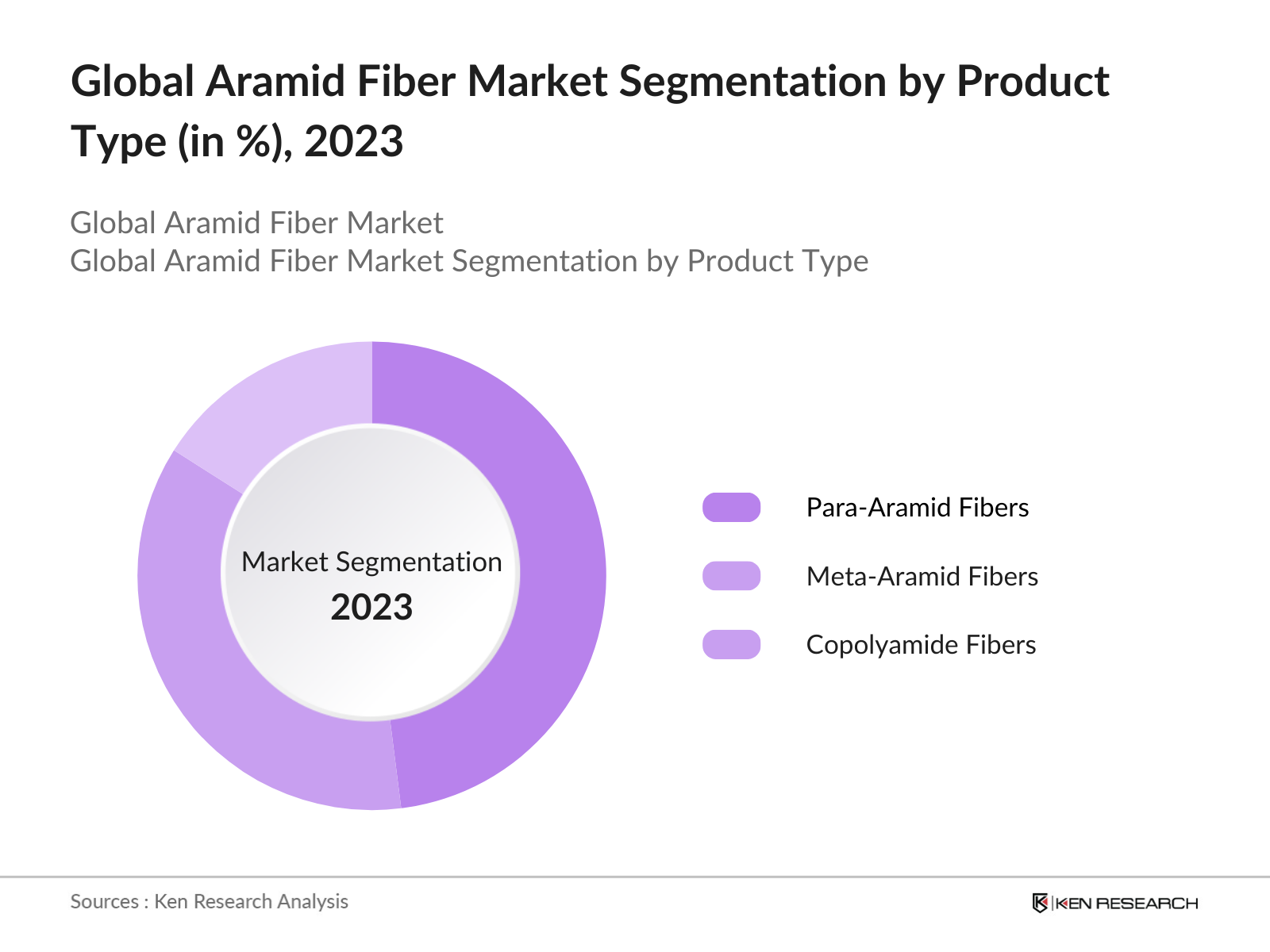
By Product Type: The global aramid fiber market is segmented into para-aramid fibers, meta-aramid fibers, and copolyamide fibers. In 2023, para-aramid fibers dominated the market due to their widespread use in high-strength applications such as bulletproof vests and protective clothing. Their exceptional strength and impact resistance make them crucial for the defense industry. Meta-aramid fibers, valued for their heat resistance, are commonly used in fire-resistant garments, while copolyamide fibers are utilized in lower-strength, specialized applications.
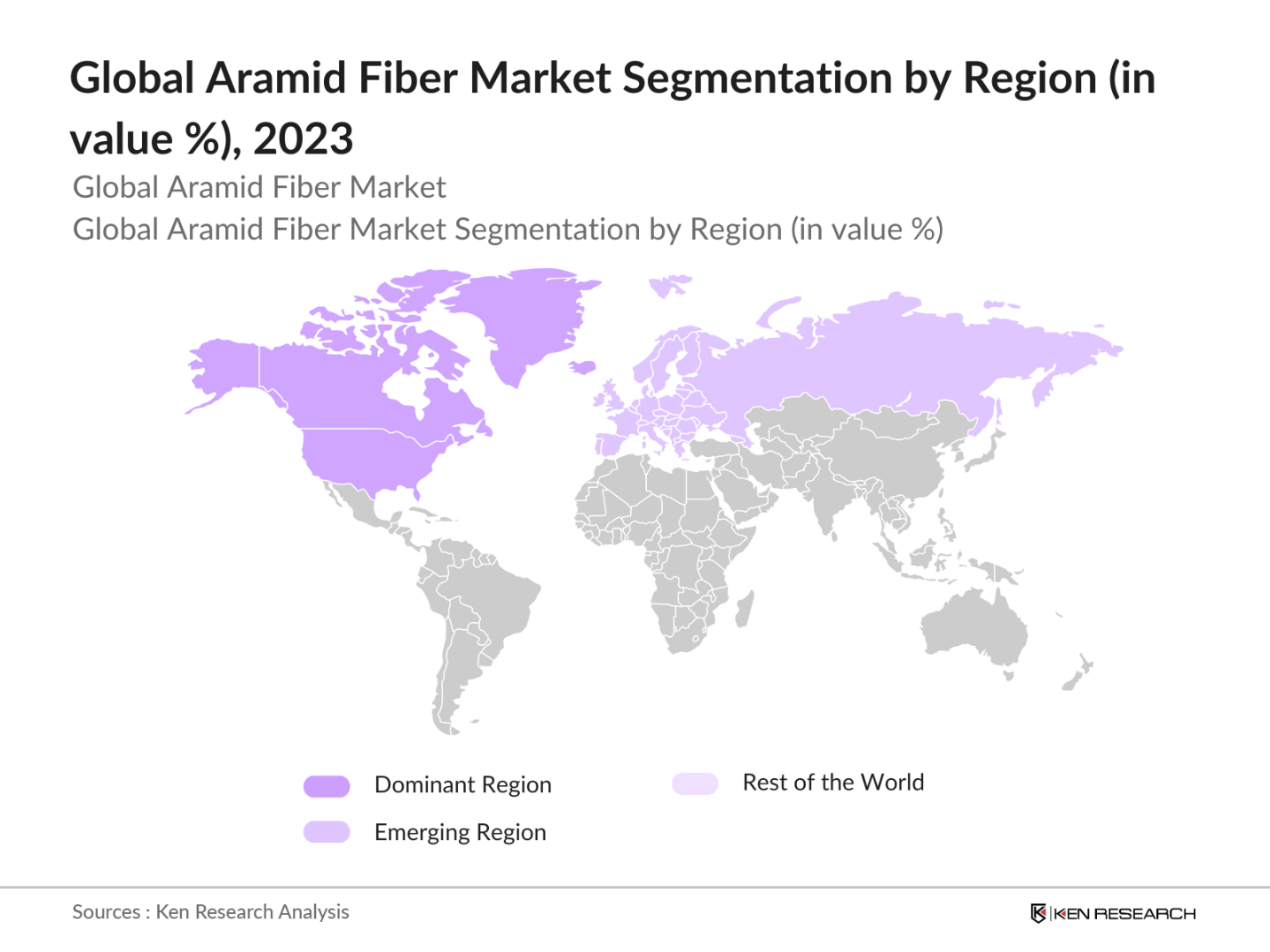
By Region: The global aramid fiber market is segmented by region into North America, Europe, Asia-Pacific (APAC), Latin America, and Middle East & Africa (MEA). In 2023, North America held the largest market share due to strong demand from the defense sector and significant investments in the automotive and aerospace industries. Europe saw growth driven by stringent emission regulations, prompting isncreased use of lightweight materials. APAC is also experiencing rapid expansion due to industrial growth and rising defense spending across countries like China and India.
By Application: The aramid fiber market is segmented by application into automotive, aerospace & defense, and electrical insulation. In 2023, the aerospace & defense segment held the largest market share due to increasing demand for lightweight materials in aircraft manufacturing. Aramid fibers are used to reduce weight while maintaining strength, which is crucial for fuel efficiency. Additionally, military applications, such as body armor, rely on aramid fibers for their protective qualities. The automotive sector is also growing, driven by demand for energy-efficient vehicles.
|
Company |
Established Year |
Headquarters |
|
Teijin Limited |
1918 |
Tokyo, Japan |
|
DuPont de Nemours, Inc. |
1802 |
Delaware, USA |
|
Kolon Industries, Inc. |
1954 |
Seoul, South Korea |
|
Hyosung Corporation |
1966 |
Seoul, South Korea |
|
Yantai Tayho Advanced Materials Co. |
1986 |
Yantai, China |
Global Aramid Fiber Market Government Initiatives
The global aramid fiber market is poised for significant growth by 2028, driven by the increasing demand for lightweight, durable materials across various industries. As regulations tighten and sustainability becomes a key focus, industries such as automotive, renewable energy, and telecommunications are shifting towards more advanced materials like aramid fibers to meet their evolving needs.
|
By Product Type |
Para-Aramid Fibers Meta-Aramid Fibers Copolyamide Fibers |
|
By Application |
Aerospace & Defense Automotive Electrical Insulation |
|
By Region |
North America Europe APAC Latin America MEA |
|
By End-Use Industry |
Aerospace & Defense Automotive Oil & Gas Electrical & Electronics |
1.1. Definition and Scope
1.2. Market Taxonomy
1.3. Market Growth Rate
1.4. Market Segmentation Overview
2.1. Historical Market Size
2.2. Year-on-Year Growth Analysis
2.3. Key Market Developments and Milestones
3.1. Growth Drivers
3.1.1. Increased Military and Defense Expenditure
3.1.2. Stringent Emission Regulations in the Automotive Industry
3.1.3. Rising Demand for Lightweight Aircraft Components
3.2. Challenges
3.2.1. High Production Costs
3.2.2. Environmental Concerns Related to Aramid Fiber Disposal
3.2.3. Dependence on Fluctuating Raw Material Supply
3.3. Opportunities
3.3.1. Expanding Use in Telecommunications and 5G Infrastructure
3.3.2. Increasing Use in Renewable Energy Projects
3.4. Trends
3.4.1. Growth in Fire-Resistant Clothing for Industrial Workers
3.4.2. Expansion in Electric Vehicle Applications
3.4.3. Sustainability Initiatives in Aramid Fiber Manufacturing
3.5. Government Initiatives
3.5.1. U.S. Defense Department Funding for Advanced Protective Gear
3.5.2. European Union Emission Regulation Enforcement
3.5.3. India's "Atmanirbhar Bharat" Initiative for Domestic Defense Production
3.6. SWOT Analysis
3.7. Stake Ecosystem
3.8. Competition Ecosystem
4.1. By Region (in Value %)
4.1.1. North America
4.1.2. Europe
4.1.3. Asia-Pacific (APAC)
4.1.4. Latin America
4.1.5. Middle East & Africa (MEA)
4.2. By Product Type (in Value %)
4.2.1. Para-Aramid Fibers
4.2.2. Meta-Aramid Fibers
4.2.3. Copolyamide Fibers
4.3. By Application (in Value %)
4.3.1. Aerospace & Defense
4.3.2. Automotive
4.3.3. Electrical Insulation
4.4. By End-Use Industry (in Value %)
4.4.1. Aerospace & Defense
4.4.2. Automotive
4.4.3. Oil & Gas
4.4.4. Electrical & Electronics
4.5. By Fiber Form (in Value %)
4.5.1. Continuous Fibers
4.5.2. Staple Fibers
4.5.3. Pulp
4.6. By Function (in Value %)
4.6.1. Protection
4.6.2. Reinforcement
4.6.3. Friction Management
5.1. Detailed Profiles of Major Companies
5.1.1. Teijin Limited
5.1.2. DuPont de Nemours, Inc.
5.1.3. Kolon Industries, Inc.
5.1.4. Hyosung Corporation
5.1.5. Yantai Tayho Advanced Materials Co., Ltd.
5.1.6. Kermel
5.1.7. China National Bluestar (Group) Co., Ltd.
5.1.8. Toray Chemical Korea Inc.
5.1.9. Owens Corning
5.1.10. Honeywell International Inc.
5.2. Cross Comparison Parameters (No. of Employees, Headquarters, Inception Year, Revenue)
6.1. Market Share Analysis
6.2. Strategic Initiatives
6.3. Mergers and Acquisitions
6.4. Investment Analysis
6.4.1. Venture Capital Funding
6.4.2. Government Grants
6.4.3. Private Equity Investments
7.1. Environmental Standards
7.2. Compliance Requirements
7.3. Certification Processes
8.1. Future Market Size Projections
8.2. Key Factors Driving Future Market Growth
9.1. By Region (in Value %)
9.2. By Product Type (in Value %)
9.3. By Application (in Value %)
9.4. By End-Use Industry (in Value %)
10.1. TAM/SAM/SOM Analysis
10.2. Customer Cohort Analysis
10.3. Marketing Initiatives
10.4. White Space Opportunity Analysis
Ecosystem creation for all the major entities and referring to multiple secondary and proprietary databases to perform desk research around market to collate industry level information.
Collating statistics on the Global Aramid Fiber Market over the years, penetration of marketplaces and service providers ratio to compute revenue generated for Global Aramid Fiber Market. We will also review service quality statistics to understand revenue generated which can ensure accuracy behind the data points shared.
Building market hypothesis and conducting CATIs with industry experts belonging to different companies to validate statistics and seek operational and financial information from company representatives.
Our team will approach multiple Aramid Fiber and understand nature of product segments and sales, consumer preference and other parameters, which will support us validate statistics derived through bottom to top approach from Aramid Fiber.
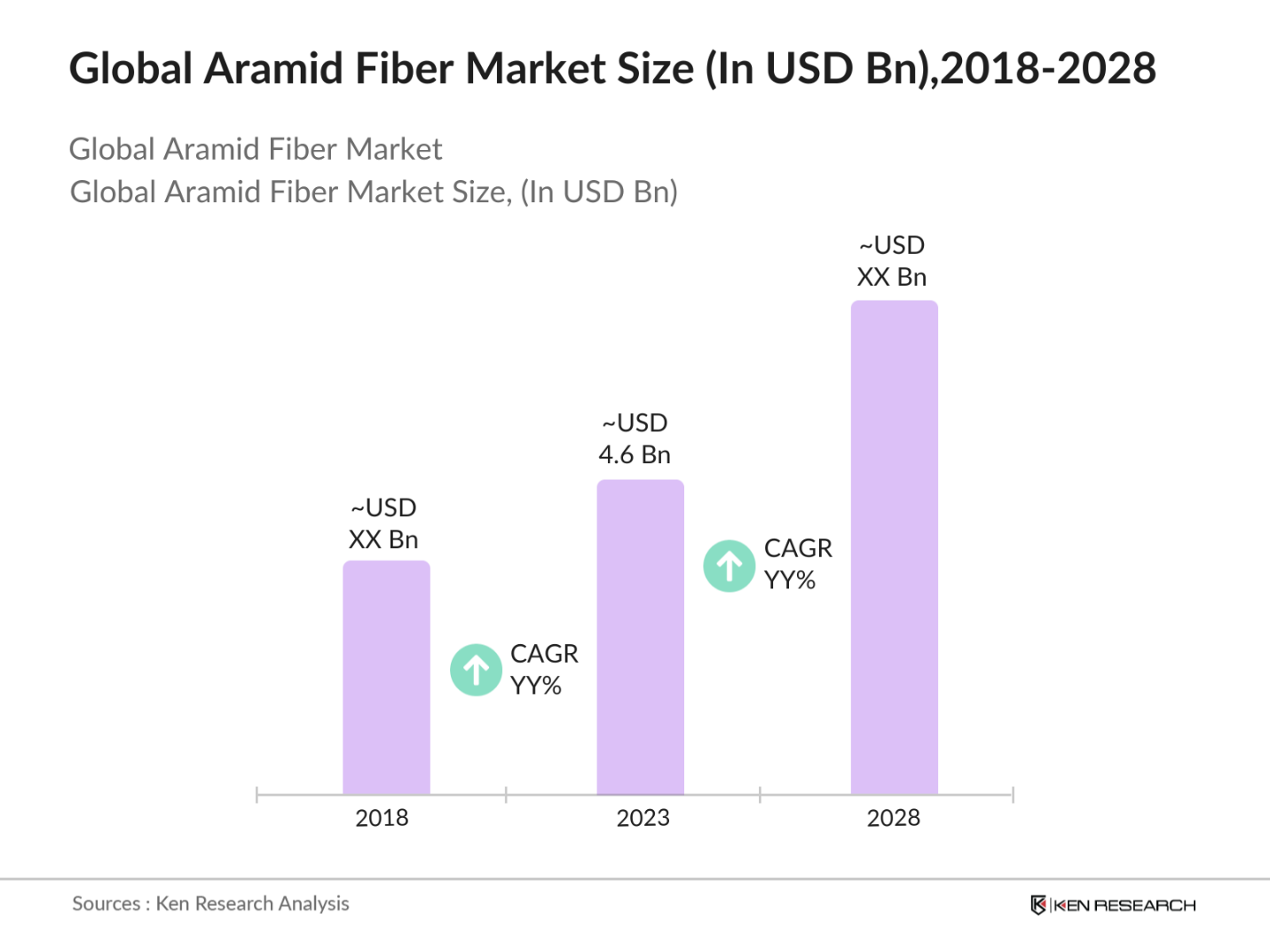
The global aramid fiber market was valued at USD 4.6 billion in 2023, driven by the demand for lightweight, high-strength materials in sectors like defense, automotive, and aerospace. Increased adoption in ballistic protection and fuel-efficient vehicles are key factors contributing to its growth.
Challenges in the global aramid fiber market include high production costs, limited raw material supply, and environmental concerns related to fiber disposal. The dependence on specific chemicals and price volatility in supply chains also pose threats to market stability.
Key players in the global aramid fiber market include Teijin Limited, DuPont de Nemours, Inc., Kolon Industries, Inc., Hyosung Corporation, and Yantai Tayho Advanced Materials Co., Ltd. These companies lead the market with their advanced product portfolios and strong partnerships across multiple industries.
The global aramid fiber market is driven by the rising demand for protective gear in the defense sector, stringent emissions regulations in the automotive industry, and the push for lightweight materials in aerospace to improve fuel efficiency. The material's high strength-to-weight ratio makes it critical across these sectors.

What makes us stand out is that our consultants follows Robust, Refine and Result (RRR) methodology. i.e. Robust for clear definitions, approaches and sanity checking, Refine for differentiating respondents facts and opinions and Result for presenting data with story

We have set a benchmark in the industry by offering our clients with syndicated and customized market research reports featuring coverage of entire market as well as meticulous research and analyst insights.

While we don't replace traditional research, we flip the method upside down. Our dual approach of Top Bottom & Bottom Top ensures quality deliverable by not just verifying company fundamentals but also looking at the sector and macroeconomic factors.

With one step in the future, our research team constantly tries to show you the bigger picture. We help with some of the tough questions you may encounter along the way: How is the industry positioned? Best marketing channel? KPI's of competitors? By aligning every element, we help maximize success.

Our report gives you instant access to the answers and sources that other companies might choose to hide. We elaborate each steps of research methodology we have used and showcase you the sample size to earn your trust.

If you need any support, we are here! We pride ourselves on universe strength, data quality, and quick, friendly, and professional service.