
Global Aspherical Lens Market Outlook to 2030
Region:Global
Author(s):Vijay Kumar
Product Code:KROD1786
December 2024
82
About the Report
Global Aspherical Lens Market Overview
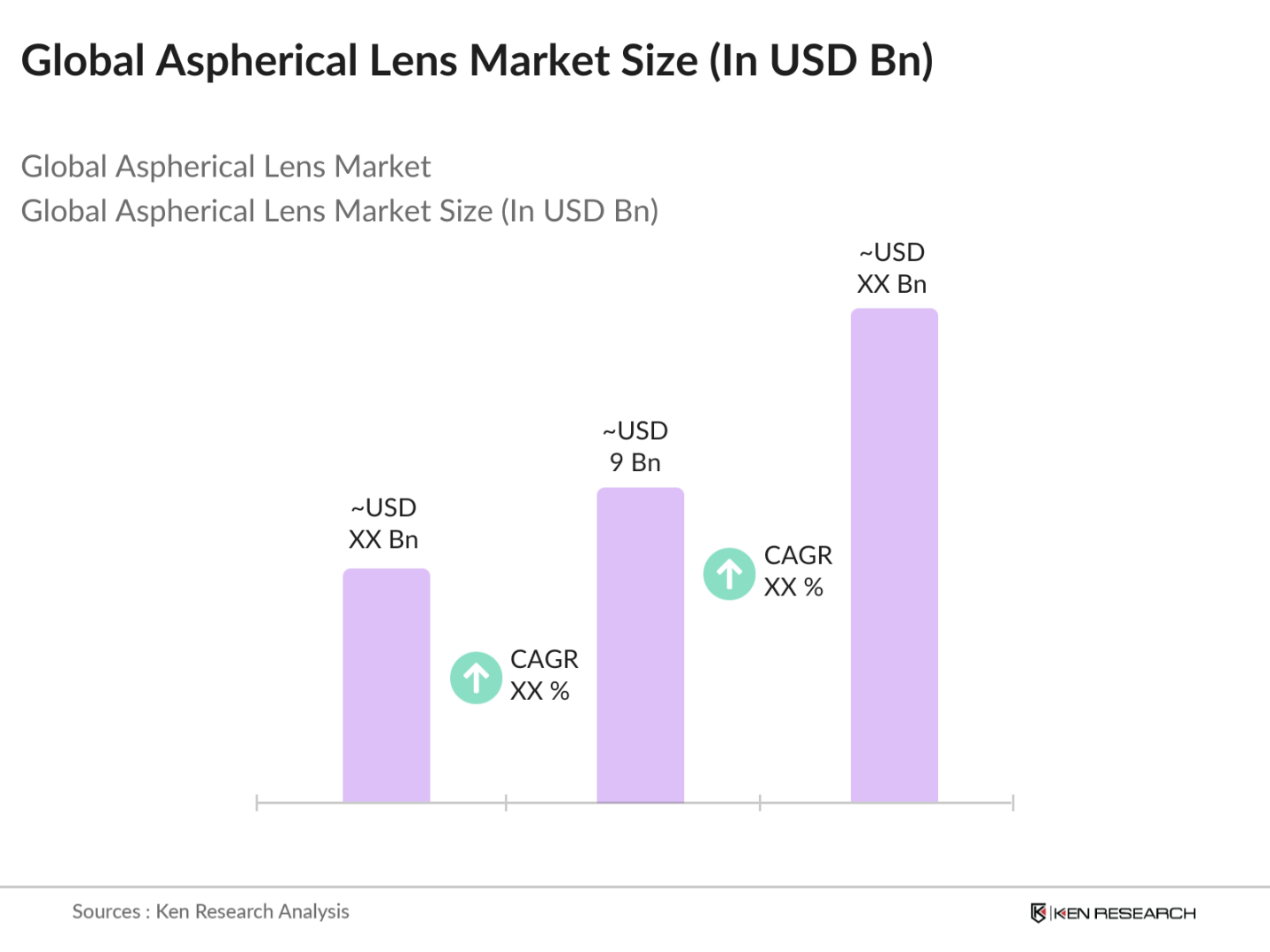
- The global aspherical lens market reached a valuation of USD 9 billion in 2023, driven by the growing demand for high-performance optical devices across various industries, including consumer electronics, automotive, and medical devices. The market's growth is propelled by advancements in optical technologies, increasing applications in imaging systems, and the rising adoption of aspherical lenses in cameras and smartphones for better image quality.
- Major players in the market include Canon Inc., Nikon Corporation, Sony Corporation, Carl Zeiss AG, and Panasonic Corporation. These companies have solidified their market positions through significant investments in research and development, strategic partnerships, and a focus on expanding their product offerings. Their ability to innovate and introduce high-precision lenses for a wide range of applications has enabled them to maintain a competitive edge in the market.
- In 2023, Canon Inc. expanded its product portfolio by launching a new range of aspherical lenses designed for advanced imaging systems, targeting the professional photography and videography markets. This new product, featuring superior aberration correction and enhanced image quality, has gained significant traction in North America and Europe. Additionally, Nikon Corporation introduced a new series of compact lenses for automotive cameras, highlighting the increasing demand for high-quality optical components in the automotive industry.
- Asia-Pacific dominates the global aspherical lens market, primarily due to the region's strong consumer electronics manufacturing base, rapid technological advancements, and the presence of key industry players. The region's focus on innovation, coupled with increasing investments in the automotive and healthcare sectors, contributes to its leadership position. Government initiatives to boost local manufacturing and technological advancements are also driving the adoption of aspherical lenses across various industries in the region.
Global Aspherical Lens Market Segmentation
The Global Aspherical Lens Market can be segmented based on Product Type, Application, and Region.
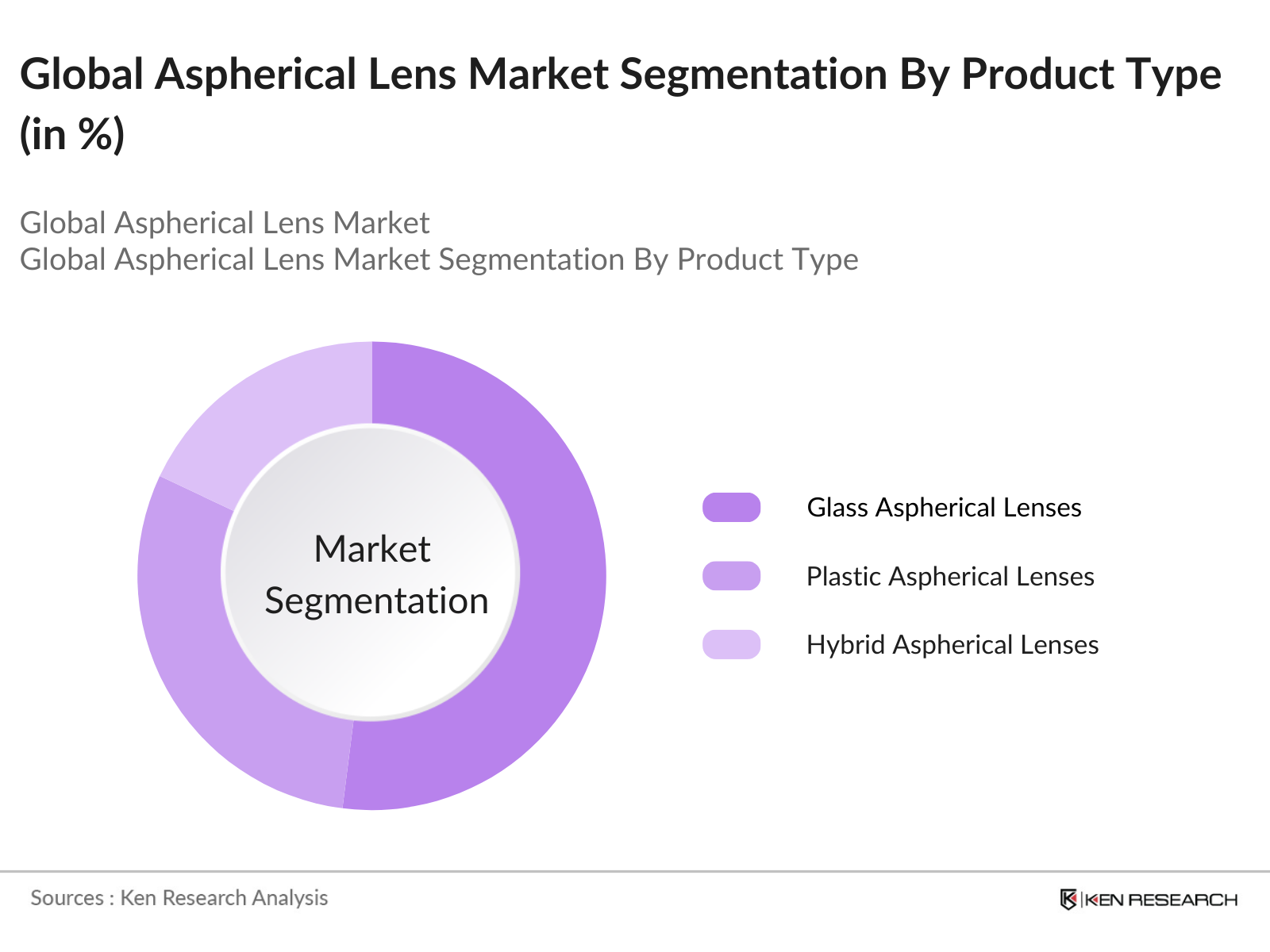
By Product Type: The market is segmented by product type into glass aspherical lenses, plastic aspherical lenses, and hybrid aspherical lenses. In 2023, glass aspherical lenses held the dominant market share due to their superior optical performance and widespread use in high-end imaging applications. The increasing demand for high-precision optical components in cameras and medical devices has reinforced the dominance of this segment.
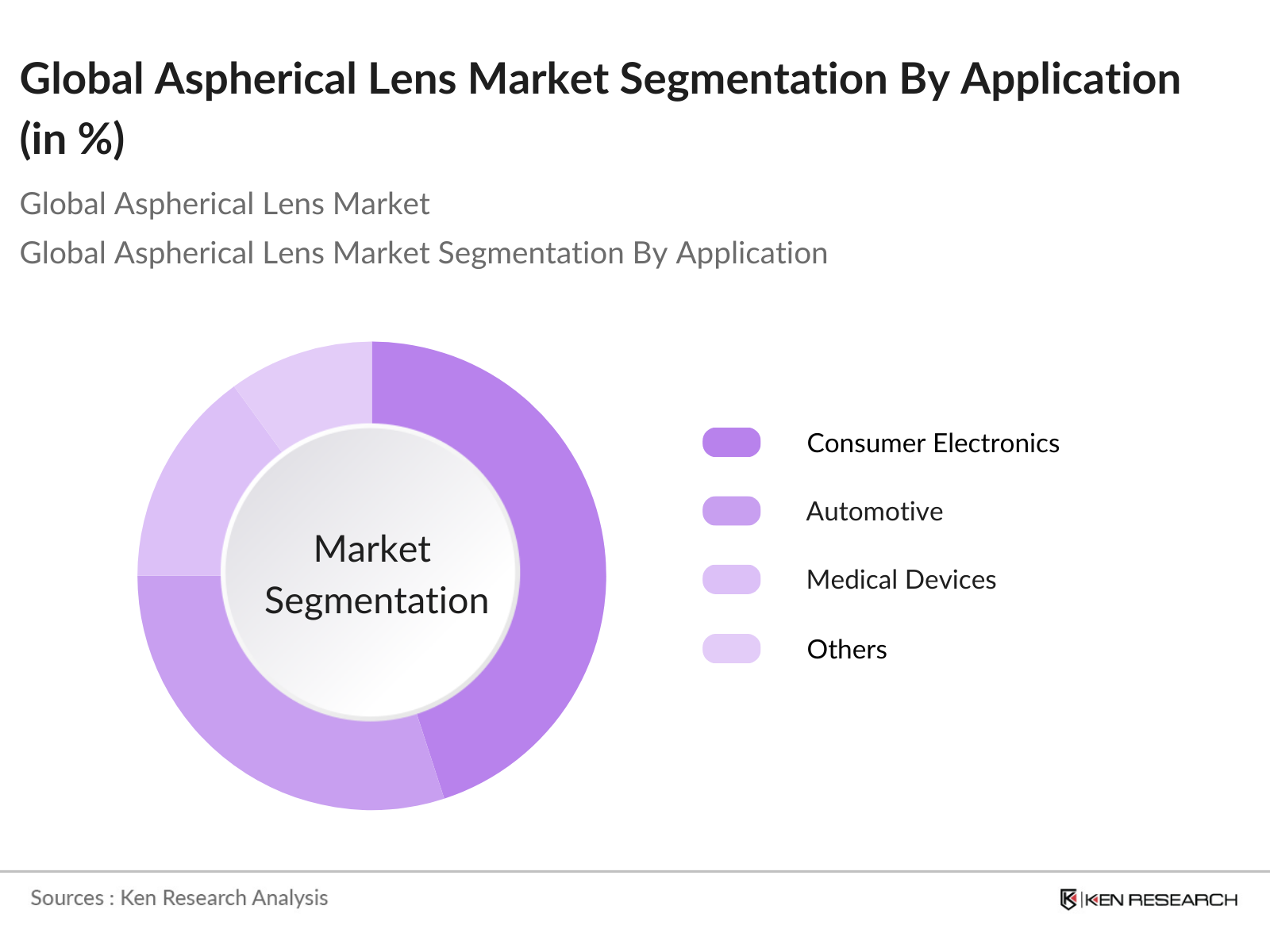
By Application: The market is further segmented by application into consumer electronics, automotive, medical devices, and others. The consumer electronics segment accounted for the largest market share in 2023, driven by the growing use of aspherical lenses in smartphones, cameras, and other imaging devices. The demand for high-quality lenses to improve image clarity and reduce optical aberrations continues to drive the growth of this segment.
By Region: Geographically, the aspherical lens market is segmented into North America, Europe, Asia-Pacific, Latin America, and MEA. Asia-Pacific dominated the market in 2023, driven by the region's large-scale production of consumer electronics, strong industrial base, and rapid adoption of advanced optical technologies. The demand for aspherical lenses in Asia-Pacific is particularly strong in the consumer electronics and automotive sectors, where precise optical components are essential for performance and quality.
Global Aspherical Lens Market Competitive Landscape
|
Company Name |
Headquarters |
Establishment Year |
|
Canon Inc. |
Japan |
1937 |
|
Nikon Corporation |
Japan |
1917 |
|
Sony Corporation |
Japan |
1946 |
|
Carl Zeiss AG |
Germany |
1846 |
|
Panasonic Corporation |
Japan |
1918 |
- Nikon Corporation: In August 2024, Nikon introduced the NIKKOR Z 28-400mm f/4-8 VR, a versatile high-magnification zoom lens designed for the Nikon Z mount system. This release is part of Nikon's strategy to expand its lens lineup, offering advanced optical solutions that cater to the needs of photographers and videographers, thereby supporting the aspherical lens market.
- Carl Zeiss AG: Carl Zeiss AG introduced a new line of aspherical lenses for medical imaging devices in 2023. These lenses are designed to provide high precision and clarity, essential for diagnostic and surgical applications, highlighting the company's focus on the growing medical devices market.
Global Aspherical Lens Market Analysis
Market Growth Drivers
- Expansion of Automotive Safety Systems: The demand for aspherical lenses in the automotive industry is being driven by the increasing adoption of advanced driver-assistance systems (ADAS) and autonomous driving technologies. In 2024, the global automotive industry is expected to invest over USD 120 billion in ADAS development, with aspherical lenses being a critical component in ensuring high-resolution image capture for cameras used in these systems. The precise optical performance of aspherical lenses enhances the functionality of ADAS, contributing to their widespread adoption.
- Increasing Adoption in the Automotive Industry: The rising demand for advanced driver assistance systems (ADAS) and autonomous vehicles is leading to increased use of aspherical lenses in automotive cameras and sensors. These lenses are critical for ensuring high-quality image capture and accurate object detection in automotive applications.
- Technological Advancements in Optical Components: Continuous advancements in optical technologies, such as the development of high-precision manufacturing techniques, are enhancing the performance and reducing the costs of aspherical lenses. These innovations are driving the adoption of aspherical lenses across various industries.
Global Aspherical Lens Market Challenges
- High Production Costs: The manufacturing of aspherical lenses, especially those made from glass, involves complex and costly processes that require advanced machinery and precision engineering. In 2024, the cost of setting up a production line for high-precision aspherical lenses is estimated to exceed USD 20 million, making it a significant barrier for new entrants. This high capital requirement limits the number of manufacturers capable of producing high-quality aspherical lenses, thereby restricting market growth.
- Limited Awareness in Emerging Markets: While the demand for aspherical lenses is strong in developed markets, awareness and adoption in emerging markets remain limited. In 2024, it is estimated that over 60% of businesses in regions such as Latin America and Africa are still using traditional spherical lenses due to cost concerns and a lack of knowledge about the benefits of aspherical lenses. This limited awareness hinders the market penetration of advanced optical technologies in these regions, slowing down global market growth.
Global Aspherical Lens Market Government Initiatives
- Japans Optical Industry Support Program (2024): This initiative aims to strengthen Japan's optical components industry by providing subsidies and support for research and development in advanced optical technologies. The program has significantly boosted the production of high-quality aspherical lenses in the country.
- Chinas Made in China 2025 Initiative: Under this initiative, the Chinese government is promoting the development and adoption of advanced manufacturing technologies, including high-precision optics. This program provides incentives for companies to invest in the production of aspherical lenses, contributing to market growth in China.
Global Aspherical Lens Market Future Market Outlook
The Global Aspherical Lens Market is poised for significant growth, driven by advancements in optical technologies, increasing demand in emerging markets, and a stronger focus on high-performance imaging and sensing solutions.
Future Market Trends
- Technological Advancements in Aspherical Lens Manufacturing: By 2028, the aspherical lens market will witness significant technological advancements, particularly in precision manufacturing and material innovations. Leading companies are expected to introduce next-generation lenses that offer superior optical performance and are more cost-effective to produce.
- Increased Demand in Emerging Markets: The market is set to expand significantly in emerging regions such as Asia-Pacific and Latin America. Industrial growth and urbanization in these regions will drive the demand for high-quality optical components, particularly in the consumer electronics and automotive sectors.
Scope of the Report
|
By Product |
Glass Aspherical Lenses Plastic Aspherical Lenses Hybrid Aspherical Lenses |
|
By Technology |
Fused Deposition Modeling (FDM) Selective Laser Sintering (SLS) Stereolithography (SLA) Digital Light Processing (DLP) |
|
By Region |
North America Europe APAC Latin America MEA |
|
By Application |
Consumer Electronics Automotive Medical Devices Others Residential |
Products
Key Target Audience Organizations and Entities Who Can Benefit by Subscribing to This Report:
Optical Component Manufacturers
Consumer Electronics Companies
Automotive Manufacturers
Medical Device Companies
Government and Regulatory Bodies
Investment and Venture Capitalist Firms
Time Period Captured in the Report
Historical Period: 2018-2023
Base Year: 2023
Forecast Period: 2023-2028
Companies
Players Mentioned in the Report
Canon Inc.
Nikon Corporation
Sony Corporation
Carl Zeiss AG
Panasonic Corporation
Hoya Corporation
Largan Precision Co., Ltd.
Sunny Optical Technology Group Co., Ltd.
Edmund Optics Inc.
Schott AG
Table of Contents
1. Global Aspherical Lens Market Overview
1.1. Definition and Scope
1.2. Market Taxonomy
1.3. Market Growth Rate
1.4. Market Segmentation Overview
2. Global Aspherical Lens Market Size (in USD Billion), 2018-2023
2.1. Historical Market Size
2.2. Year-on-Year Growth Analysis
2.3. Key Market Developments and Milestones
3. Global Aspherical Lens Market Analysis
3.1. Growth Drivers
3.1.1. Expansion of Automotive Safety Systems
3.1.2. Rising Demand in Medical Imaging
3.1.3. Growth in the Consumer Electronics Sector
3.2. Restraints
3.2.1. High Production Costs
3.2.2. Supply Chain Disruptions
3.2.3. Limited Awareness in Emerging Markets
3.3. Opportunities
3.3.1. Integration in Autonomous Vehicles
3.3.2. Expansion in AR/VR Applications
3.3.3. Increasing Use in High-End Photography
3.4. Trends
3.4.1. Use in Autonomous Vehicles
3.4.2. Adoption in AR/VR Devices
3.4.3. Expansion in High-End Photography
3.5. Government Regulations
3.5.1. Japans Optical Industry Innovation Program (2023)
3.5.2. Chinas 2024 Made in China 2025 Initiative
3.5.3. South Koreas National Smart Manufacturing Strategy (2024)
3.6. SWOT Analysis
3.7. Stakeholder Ecosystem
3.8. Competition Ecosystem
4. Global Aspherical Lens Market Segmentation, 2023
4.1. By Product Type (in Value %)
4.1.1. Glass Aspherical Lenses
4.1.2. Plastic Aspherical Lenses
4.1.3. Hybrid Aspherical Lenses
4.2. By Application (in Value %)
4.2.1. Consumer Electronics
4.2.2. Automotive
4.2.3. Medical Devices
4.2.4. Others
4.3. By Region (in Value %)
4.3.1. North America
4.3.2. Europe
4.3.3. Asia-Pacific
4.3.4. Latin America
4.3.5. MEA
4.4. By Technology (in Value %)
4.4.1. Fused Deposition Modeling (FDM)
4.4.2. Selective Laser Sintering (SLS)
4.4.3. Stereolithography (SLA)
4.4.4. Digital Light Processing (DLP)
5. Global Aspherical Lens Market Cross Comparison
5.1. Detailed Profiles of Major Companies
5.1.1. Canon Inc.
5.1.2. Nikon Corporation
5.1.3. Sony Corporation
5.1.4. Carl Zeiss AG
5.1.5. Panasonic Corporation
5.2. Cross Comparison Parameters (No. of Employees, Headquarters, Inception Year, Revenue)
6. Global Aspherical Lens Market Competitive Landscape
6.1. Market Share Analysis
6.2. Strategic Initiatives
6.3. Mergers and Acquisitions
6.4. Investment Analysis
6.4.1. Venture Capital Funding
6.4.2. Government Grants
6.4.3. Private Equity Investments
7. Global Aspherical Lens Market Regulatory Framework
7.1. Environmental and Quality Standards
7.2. Compliance Requirements
7.3. Certification Processes
8. Global Aspherical Lens Future Market Size (in USD Billion), 2023-2028
8.1. Future Market Size Projections
8.2. Key Factors Driving Future Market Growth
9. Global Aspherical Lens Market Future Segmentation, 2028
9.1. By Product Type (in Value %)
9.2. By Application (in Value %)
9.3. By Region (in Value %)
9.4. By Technology (in Value %)
10. Global Aspherical Lens Market Analysts Recommendations
10.1. TAM/SAM/SOM Analysis
10.2. Customer Cohort Analysis
10.3. Marketing Initiatives
10.4. White Space Opportunity Analysis
Disclaimer
Contact Us
Research Methodology
Step 1: Identifying Key Variables
Creating an ecosystem for all major entities within the Global Aspherical Lens Market and referencing a combination of secondary and proprietary databases to conduct desk research. This step involves gathering industry-level information, identifying market trends, and understanding the competitive landscape to ensure a comprehensive analysis.
Step 2: Market Building
Collating statistics on the Global Aspherical Lens Market over the years, analyzing market penetration across various segments, and evaluating the performance of key market players. This includes reviewing production capacities, market shares, and sales data to accurately compute the revenue generated within the global aspherical lens market. Quality checks are conducted to ensure the accuracy and reliability of the data points shared.
Step 3: Validating and Finalizing
Developing market hypotheses and conducting Computer Assisted Telephone Interviews (CATIs) with industry experts and stakeholders from leading companies in the aspherical lens market. These interviews are crucial for validating the collected data, refining market forecasts, and obtaining operational and financial insights directly from industry representatives.
Step 4: Research Output
Engaging with multiple key players in the aspherical lens industry to understand the dynamics of product segments, customer needs, sales patterns, and market challenges. This step involves using a bottom-up approach to validate the data, ensuring that the final statistics and insights accurately reflect market conditions and support strategic decision-making.
Frequently Asked Questions
1. How big is the Global Aspherical Lens Market?
The global aspherical lens market reached a valuation of USD 9 billion in 2023, driven by the growing demand for high-performance optical devices across various industries, including consumer electronics, automotive, and medical devices.
2. What are the challenges in the Global Aspherical Lens Market?
Challenges in the global aspherical lens market include high production costs, particularly for glass lenses, and limited awareness of their benefits in emerging markets. These factors can hinder widespread adoption, especially in cost-sensitive industries.
3. Who are the major players in the Global Aspherical Lens Market?
Key players in the global aspherical lens market include Canon Inc., Nikon Corporation, Sony Corporation, Carl Zeiss AG, and Panasonic Corporation. These companies lead the market with their extensive product offerings and strong presence in high-performance optical components.
4. What are the growth drivers of the Global Aspherical Lens Market?
The market is driven by the expansion of the consumer electronics industry, increasing adoption of aspherical lenses in automotive applications, and continuous technological advancements in optical components.
Why Buy From Us?

What makes us stand out is that our consultants follows Robust, Refine and Result (RRR) methodology. i.e. Robust for clear definitions, approaches and sanity checking, Refine for differentiating respondents facts and opinions and Result for presenting data with story

We have set a benchmark in the industry by offering our clients with syndicated and customized market research reports featuring coverage of entire market as well as meticulous research and analyst insights.

While we don't replace traditional research, we flip the method upside down. Our dual approach of Top Bottom & Bottom Top ensures quality deliverable by not just verifying company fundamentals but also looking at the sector and macroeconomic factors.

With one step in the future, our research team constantly tries to show you the bigger picture. We help with some of the tough questions you may encounter along the way: How is the industry positioned? Best marketing channel? KPI's of competitors? By aligning every element, we help maximize success.

Our report gives you instant access to the answers and sources that other companies might choose to hide. We elaborate each steps of research methodology we have used and showcase you the sample size to earn your trust.

If you need any support, we are here! We pride ourselves on universe strength, data quality, and quick, friendly, and professional service.