Ken Research Logo

Global Automotive Interior Design Market Outlook to 2030

Region:Global

Author(s):Naman Rohilla

Product Code:KROD1205

Published On

November 2024

Total pages

92

About the Report

Global Automotive Interior Design Market Overview

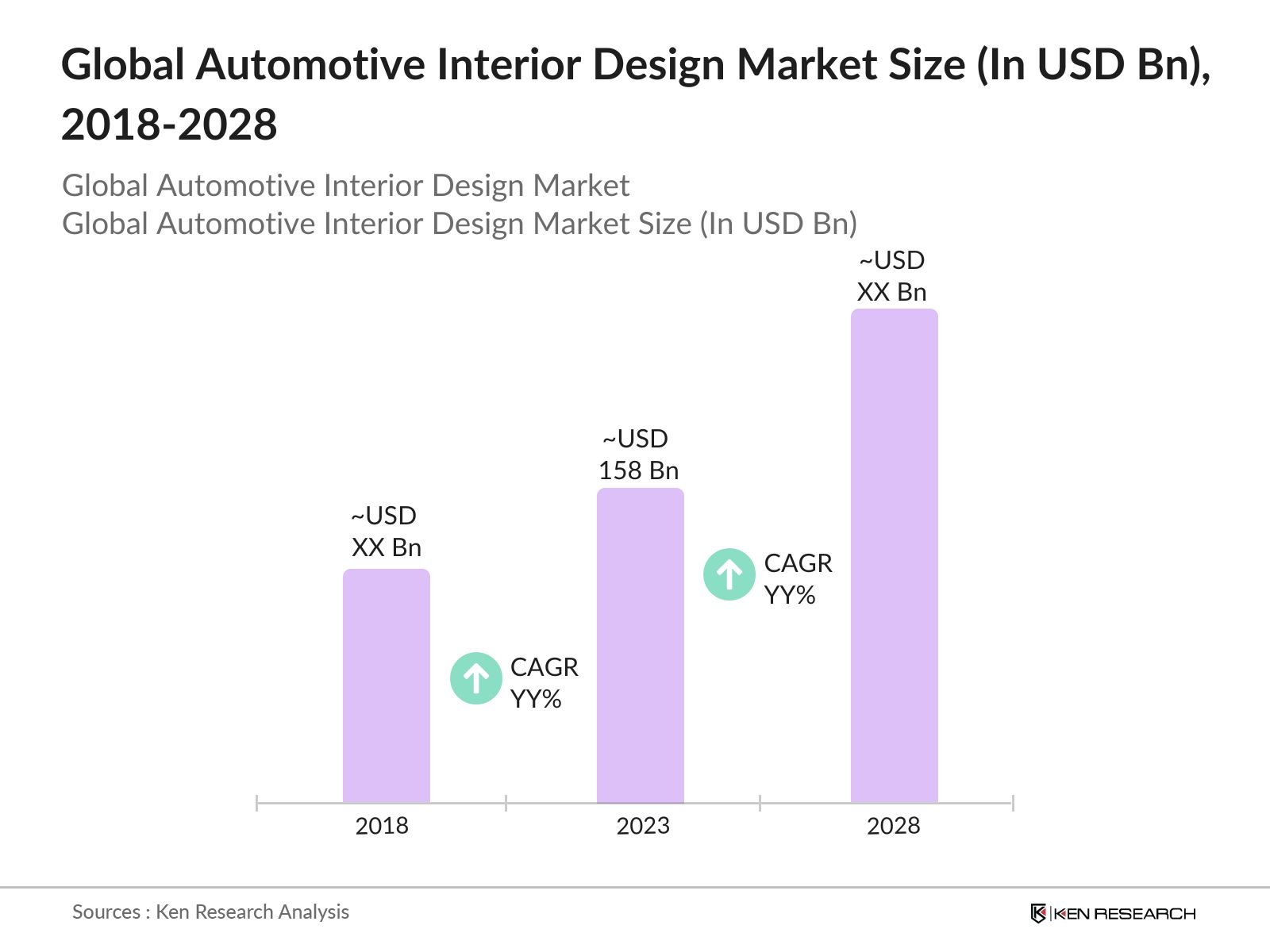
  • The Global Automotive Interior Design Market was valued at USD 158 billion in 2023. The market is driven by innovations in material science, increasing demand for luxury and comfort features, and the growing focus on vehicle aesthetics and user experience. The shift towards electric vehicles (EVs) and autonomous driving technologies is further transforming the landscape of automotive interiors, leading to the adoption of new designs and materials.
  • The major players in the global automotive interior design market include Faurecia, Lear Corporation, Adient, Continental AG, and Magna International. These companies are leading the development of advanced interior solutions, focusing on enhancing comfort, safety, and overall vehicle aesthetics.
  • In 2023, Faurecia launched its new "Cockpit of the Future" concept, which integrates smart surfaces, personalized ambient lighting, and advanced seating solutions to create a more immersive driving experience. The company has 5 R&D centers and 8 production sites dedicated to developing these advanced cockpit technologies. This innovation highlights the trend towards more connected, user-centric vehicle interiors that cater to the evolving needs of modern consumers.
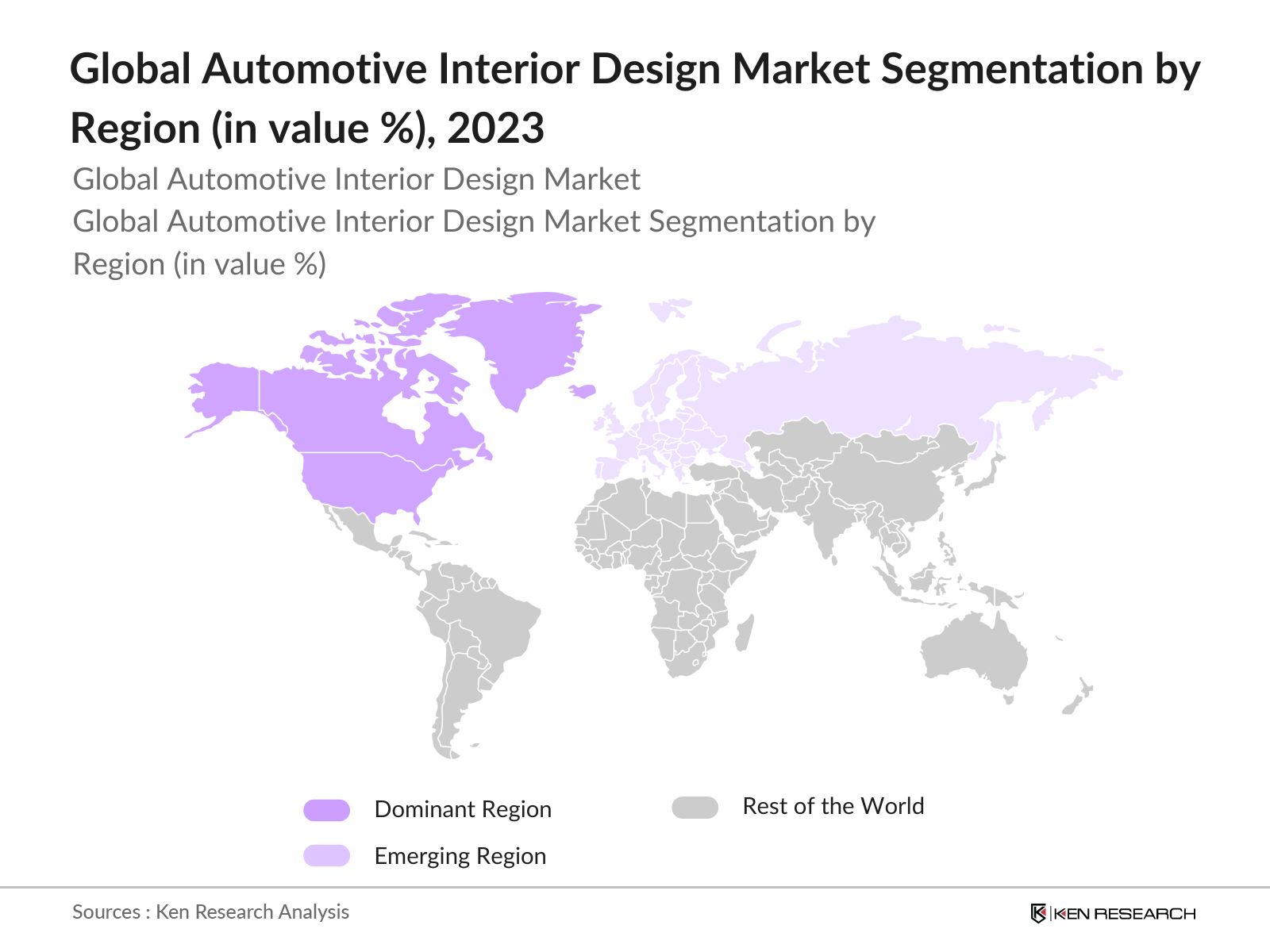
  • In 2023, North America dominates the global automotive interior design market due to the high demand for luxury vehicles, substantial investments in automotive R&D, and the presence of leading automakers. The increasing adoption of electric vehicles (EVs) and the focus on sustainable interior materials further solidify North America's leading position in this market.

Global Automotive Interior Design Market Size

Global Automotive Interior Design Market Segmentation

The global automotive interior design market is segmented by component type, vehicle type, and region.

  • By Component Type: The market is segmented into dashboards & instrument panels, seats, infotainment systems, door panels, and others. In 2023, the seats segment held the highest market share, driven by the increasing demand for comfort and ergonomic design in vehicle interiors.

Global Automotive Interior Design Market Share

  • By Vehicle Type: The market is segmented into passenger cars, light commercial vehicles (LCVs), and heavy commercial vehicles (HCVs). In 2023, the passenger cars segment held the largest market share, owing to the growing demand for luxury and premium vehicles.
  • By Region: The market is segmented into North America, Europe, Asia-Pacific (APAC), Middle East & Africa (MEA), and Latin America. In 2023, North America held the largest market share, supported by technological advancements and a strong automotive manufacturing base.

Global Automotive Interior Design Market

Global Automotive Interior Design Market Competitive Landscape

Company

Establishment Year

Headquarters

Faurecia

1997

Nanterre, France

Lear Corporation

1917

Southfield, Michigan, USA

Adient

2016

Plymouth, Michigan, USA

Continental AG

1871

Hanover, Germany

Magna International

1957

Aurora, Ontario, Canada

  • Faurecia: In 2023, Faurecia introduced a modular and sustainable approach to automotive seating design, emphasizing flexible assembly options and reduced development costs. The company aims to achieve 20 billion in sales by 2025 from sustainable mobility solutions and has set a goal to reduce CO2 emissions associated with materials by 87% by 2030.
  • Lear Corporation: Lear Corporation unveiled a new range of eco-friendly automotive fabrics in 2022, focusing on sustainable materials with up to 50% recycled content. This initiative aligns with the automotive industry's aim to reduce greenhouse gas emissions by 30% by 2030 and meet growing consumer demand for vehicles made with sustainable materials.

Global Automotive Interior Design Market Analysis

Global Automotive Interior Design Market Growth Drivers:

  • Innovations in Material Science: The development of new materials, such as lightweight composites, sustainable fabrics, and advanced polymers, is driving the evolution of automotive interiors. Lightweight materials like composites and advanced polymers can reduce vehicle weight by up to 10%, leading to a 5-7% improvement in fuel efficiency and lower emissions. These materials offer improved durability, aesthetics, and comfort while reducing vehicle weight, contributing to better fuel efficiency and lower emissions.
  • Increasing Demand for Luxury Features: Consumers are increasingly seeking high-end interior features, such as premium seating, advanced infotainment systems, and customizable ambient lighting. 70% of consumers are willing to pay more for vehicles equipped with premium interior features like advanced infotainment systems and customizable ambient lighting. This trend is particularly strong in the luxury vehicle segment, where interior design plays a crucial role in brand differentiation and customer satisfaction.
  • Rise of Electric and Autonomous Vehicles: The shift towards electric vehicles (EVs) and autonomous driving technologies is reshaping the design of automotive interiors. With the absence of a traditional powertrain, EVs offer more design flexibility, allowing for innovative layouts and enhanced passenger comfort. Electric vehicles can provide up to 30% more interior space compared to conventional vehicles due to the absence of a traditional powertrain. Autonomous vehicles, on the other hand, require interiors that facilitate relaxation and entertainment, further driving market growth.

Global Automotive Interior Design Market Challenges:

  • High Costs of Advanced Interior Components: The integration of advanced interior features, such as smart surfaces and high-tech infotainment systems, increases production costs. For instance, electronic components now account for 8-12% of a vehicle's total cost, up from just 1-2% previously. This rise in costs can hinder the adoption of these technologies in mid-range and budget vehicles, where affordability is critical.
  • Technical Complexity: Integrating new technologies, such as AI-driven infotainment systems and smart surfaces, requires technical expertise. Developing these systems can result in longer development cycles, with studies indicating that the complexity of modern vehicle interiors can lead to up to 30% of development costs being attributed to cockpit and interior systems. This complexity poses challenges for manufacturers aiming to innovate efficiently.

Global Automotive Interior Design Market Government Initiatives:

  • European Union's Green Deal: The European Union's Green Deal, introduced in 2019, aims for net-zero greenhouse gas emissions by 2050. As part of this initiative, the EU plans to cut CO emissions from cars and vans by 55% by 2030. This regulatory framework promotes the use of sustainable materials in vehicle manufacturing, driving the adoption of eco-friendly solutions in the automotive industry.
  • California's Clean Air Act: California's Clean Air Act mandates that automakers produce a certain percentage of zero-emission vehicles (ZEVs). As of 2023, California requires that 35% of new car sales be ZEVs by 2026, increasing to 100% by 2035. This initiative influences manufacturers to invest in electric vehicle technology and sustainable materials for vehicle interiors, thereby reducing emissions and promoting environmental sustainability.

Global Automotive Interior Design Market Future Market Outlook

The Global Automotive Interior Design Market is expected to grow over the coming years, driven by advancements in material technology, the increasing adoption of electric and autonomous vehicles, and the rising demand for luxury features in vehicles.

Global Automotive Interior Design Market Future Market Trends:

  • Integration with Autonomous Systems: By 2028, automotive interiors are expected to increasingly integrate with autonomous driving systems, allowing for innovative designs that cater to various modes of use, such as working or relaxing. As autonomous vehicles become more prevalent, the demand for versatile interior spaces is projected to rise, with estimates indicating that 15% of vehicles could be autonomous by 2030, reshaping interior design priorities.
  • Increased Focus on Sustainability: There is a growing demand for sustainable interior solutions, including recycled and eco-friendly materials. Manufacturers are prioritizing sustainability in their design processes, with studies showing that a 10% weight reduction in vehicles can save between 5% and 7% in fuel consumption. This shift aligns with global environmental goals, pushing automakers to adopt greener practices in vehicle interiors.

Scope of the Report

By Component Type

Self-Propelled Sprayer Markets

Tractor-Mounted Sprayer Markets

Handheld Sprayer Markets

Aerial Sprayer Markets (Drones)

By Vehicle Type

Field Crops

Horticulture

Orchard Spraying

Viticulture

By Region

North America

Europe

Asia-Pacific (APAC)

Middle East & Africa (MEA)

Latin America

Products

Key Target Audience Organizations and Entities Who Can Benefit by Subscribing This Report:

  • Government and Regulatory Bodies

  • Banks and Financial Institutes

  • Investors and Venture Capitalists

  • Automotive Manufacturers

  • Automotive OEMs (Original Equipment Manufacturers)

  • Interior Design Firms

Time Period Captured in the Report

  • Historical Period: 2018-2023

  • Base Year: 2023

  • Forecast Period: 2023-2028

Companies


  • Faurecia

  • Lear Corporation

  • Adient

  • Continental AG

  • Magna International

  • Toyota Boshoku Corporation

  • Johnson Controls International

  • Hyundai Mobis

  • Yanfeng Automotive Interiors

  • Visteon Corporation

  • Tachi-S Co., Ltd.

  • NHK Spring Co., Ltd.

  • DURA Automotive Systems

  • Grupo Antolin

  • TS Tech Co., Ltd.

Table of Contents

1. Global Automotive Interior Design Market Overview

1.1. Definition and Scope

1.2. Market Taxonomy

1.3. Market Growth Rate

1.4. Market Segmentation Overview

1.5. Key Market Trends and Developments

2. Global Automotive Interior Design Market Size (in USD Bn), 2018-2023

2.1. Historical Market Size

2.2. Year-on-Year Growth Analysis

2.3. Key Market Developments and Milestones

2.4. Market Impact of COVID-19 and Recovery Analysis

3. Global Automotive Interior Design Market Analysis

3.1. Growth Drivers

3.1.1. Innovations in Material Science

3.1.2. Increasing Demand for Luxury and Comfort Features

3.1.3. Rise of Electric and Autonomous Vehicles

3.2. Restraints

3.2.1. High Costs of Advanced Interior Components

3.2.2. Technical Complexity in Integration

3.3. Opportunities

3.3.1. Expansion in Emerging Markets

3.3.2. Development of Sustainable and Autonomous Interiors

3.4. Trends

3.4.1. Adoption of AI and IoT in Interior Design

3.4.2. Increased Focus on Sustainability

3.4.3. Versatile Interior Spaces for Autonomous Vehicles

3.5. Government Regulations

3.5.1. European Unions Green Deal

3.5.2. Californias Clean Air Act

3.6. SWOT Analysis

3.7. Stakeholder Ecosystem

3.8. Competitive Landscape Overview

4. Global Automotive Interior Design Market Segmentation, 2023

4.1. By Component Type (in Value %)

4.1.1. Seats

4.1.2. Dashboards & Instrument Panels

4.1.3. Infotainment Systems

4.1.4. Door Panels

4.1.5. Others

4.2. By Vehicle Type (in Value %)

4.2.1. Passenger Cars

4.2.2. Light Commercial Vehicles (LCVs)

4.2.3. Heavy Commercial Vehicles (HCVs)

4.3. By Region (in Value %)

4.3.1. North America

4.3.2. Europe

4.3.3. Asia-Pacific (APAC)

4.3.4. Middle East & Africa (MEA)

4.3.5. Latin America

5. Global Automotive Interior Design Market Cross Comparison

5.1. Detailed Profiles of Major Companies

5.1.1. Faurecia

5.1.2. Lear Corporation

5.1.3. Adient

5.1.4. Continental AG

5.1.5. Magna International

5.1.6. Toyota Boshoku Corporation

5.1.7. Johnson Controls International

5.1.8. Hyundai Mobis

5.1.9. Yanfeng Automotive Interiors

5.1.10. Visteon Corporation

5.1.11. Tachi-S Co., Ltd.

5.1.12. NHK Spring Co., Ltd.

5.1.13. DURA Automotive Systems

5.1.14. Grupo Antolin

5.1.15. TS Tech Co., Ltd.

5.2. Cross Comparison Parameters (No. of Employees, Headquarters, Inception Year, Revenue)

6. Global Automotive Interior Design Market Competitive Landscape

6.1. Market Share Analysis

6.2. Strategic Initiatives

6.2.1. Product Launches and Innovations

6.2.2. Strategic Partnerships and Collaborations

6.2.3. Expansion and Investment Strategies

6.3. Mergers and Acquisitions

6.4. Investment Analysis

6.4.1. Venture Capital Funding

6.4.2. Government Grants

6.4.3. Private Equity Investments

7. Global Automotive Interior Design Market Regulatory Framework

7.1. Environmental Standards and Impact Assessments

7.2. Compliance Requirements for Interior Components

7.3. Certification Processes for Interior Materials

7.4. International Standards and Agreements

8. Global Automotive Interior Design Market Future Market Size (in USD Bn), 2023-2028

8.1. Future Market Size Projections

8.2. Key Factors Driving Future Market Growth

8.3. Impact of Emerging Technologies on Market Growth

9. Global Automotive Interior Design Market Future Market Segmentation, 2028

9.1. By Component Type (in Value %)

9.2. By Vehicle Type (in Value %)

9.3. By Region (in Value %)

10. Global Automotive Interior Design Market Analysts Recommendations

10.1. TAM/SAM/SOM Analysis

10.2. Customer Cohort Analysis

10.3. Marketing Initiatives

10.4. White Space Opportunity Analysis

10.5. Strategic Recommendations for Key Players

Research Methodology

Step: 1 Identifying Key Variables

Ecosystem creation for all the major entities and referring to multiple secondary and proprietary databases to perform desk research around the Market to collate Market-level information.

Step: 2 Market Building

Collating statistics on the Global Automotive Interior Design Market over the years, and analyzing the penetration of Marketplaces as well as the ratio of service providers to compute the revenue generated for the market. We will also review service quality statistics to understand the revenue generated which can ensure accuracy behind the data points shared.

Step: 3 Validating and Finalizing

Building Market hypotheses and conducting CATIs with Market experts belonging to different companies to validate statistics and seek operational and financial information from company representatives.

Step: 4 Research Output

Our team will approach multiple automotive companies to understand the nature of product segments and sales, consumer preferences, and other parameters, supporting us in validating statistics derived through the bottom-to-top approach from these companies.

Frequently Asked Questions

01 How big is the Global Automotive Interior Design Market?

The Global Automotive Interior Design Market was valued at USD 158 billion in 2023, driven by innovations in material science and increasing demand for luxury vehicle features.

02 Who are the major players in the Global Automotive Interior Design Market?

The major players in the global automotive interior design market include Faurecia, Lear Corporation, Adient, Continental AG, and Magna International.

03 What are the growth drivers of the Global Automotive Interior Design Market?

The growth drivers in the global automotive interior design market include innovations in material science, the increasing demand for luxury features, and the rise of electric and autonomous vehicles.

04 What are the challenges in the Global Automotive Interior Design Market?

The global automotive interior design market faces challenges such as high costs of advanced interior components and the technical complexity of integrating new technologies.

Why Buy From Us?

RRR
Refine Robust Result (RRR) Framework

What makes us stand out is that our consultants follows Robust, Refine and Result (RRR) methodology. i.e. Robust for clear definitions, approaches and sanity checking, Refine for differentiating respondents facts and opinions and Result for presenting data with story

Our Reach Is Unmatched

We have set a benchmark in the industry by offering our clients with syndicated and customized market research reports featuring coverage of entire market as well as meticulous research and analyst insights.

Research
Shifting the Research Paradigm

While we don't replace traditional research, we flip the method upside down. Our dual approach of Top Bottom & Bottom Top ensures quality deliverable by not just verifying company fundamentals but also looking at the sector and macroeconomic factors.

Insite
More Insights-Better Decisions

With one step in the future, our research team constantly tries to show you the bigger picture. We help with some of the tough questions you may encounter along the way: How is the industry positioned? Best marketing channel? KPI's of competitors? By aligning every element, we help maximize success.

Trust
Transparency and Trust

Our report gives you instant access to the answers and sources that other companies might choose to hide. We elaborate each steps of research methodology we have used and showcase you the sample size to earn your trust.

support
Round the Clock Support

If you need any support, we are here! We pride ourselves on universe strength, data quality, and quick, friendly, and professional service.

Why Client Choose Us?

400000+ Reports in repository
150+ Consulting project a year
100+ Analysts
8000+ Client Queries in 2022