
Global Automotive Roof Racks Market Outlook to 2030
Region:Global
Author(s):Vijay Kumar
Product Code:KROD7922
November 2024
99
About the Report
Global Automotive Roof Racks Market Overview
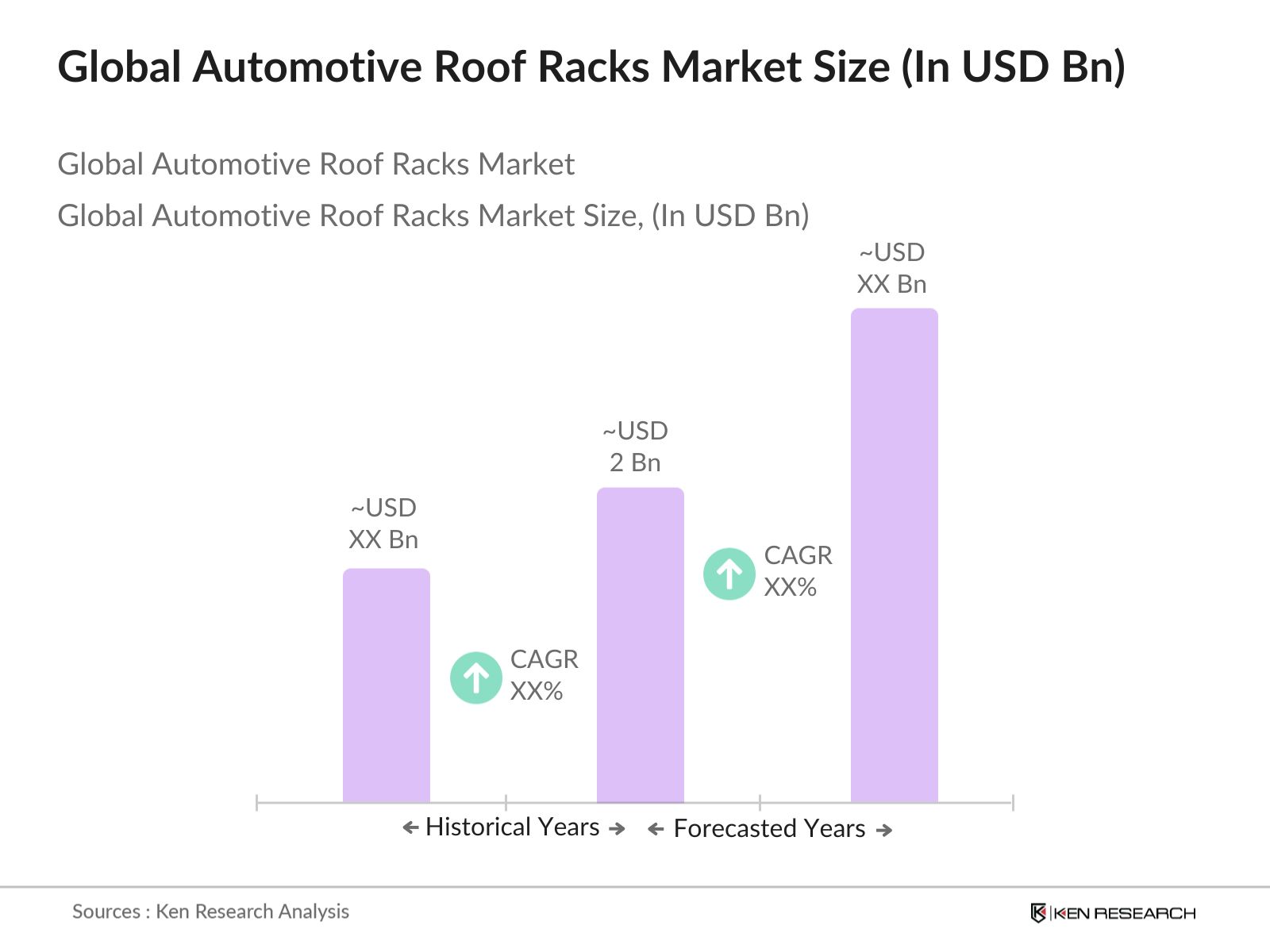
- The global automotive roof racks market is valued at USD 2 billion, based on a five-year historical analysis. The market is primarily driven by the increasing demand for SUVs and crossovers, alongside the rising popularity of outdoor activities such as camping, biking, and adventure sports. With the growing number of electric vehicles (EVs) that often require additional storage solutions, roof racks are becoming an essential accessory for enhancing vehicle utility, particularly in markets such as North America and Europe.
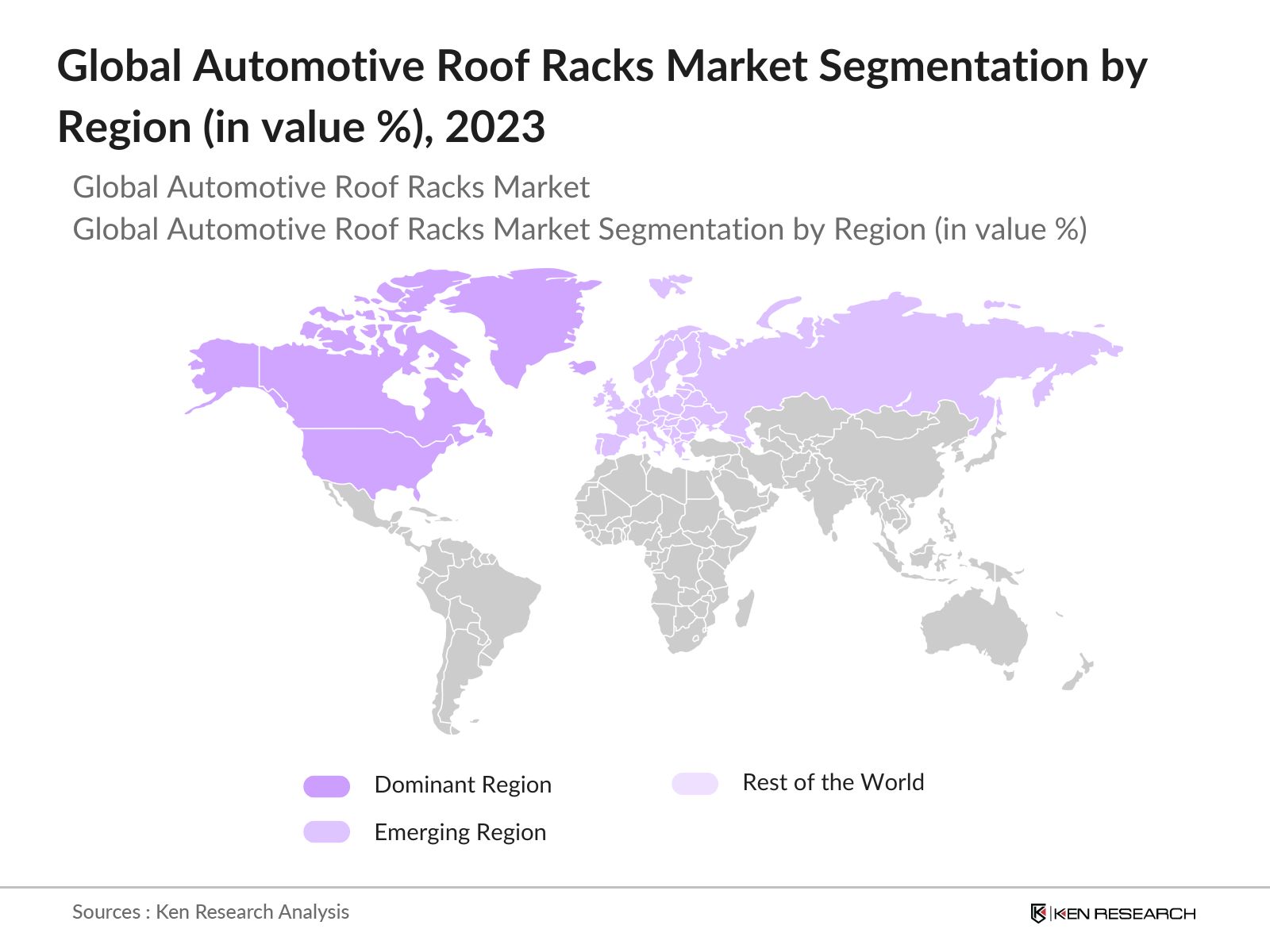
- Regions such as North America, Europe, and Asia-Pacific (APAC) dominate the global automotive roof racks market due to their respective strengths in vehicle ownership and production. North America leads the market, driven by the high demand for SUVs and crossovers, which are popular for outdoor activities, alongside the region's well-established automotive aftermarket. Europe follows closely, with a strong presence of premium vehicle manufacturers and a growing trend toward adventure tourism and electric vehicles.
- Load Carrying Limits In many regions, national guidelines specify limits on how much weight can be safely carried on vehicle roofs. For example, in 2023, the U.K. government updated its guidelines, stating that most vehicles should not exceed a roof load of 75 kg, including the weight of the roof rack itself. These restrictions are designed to prevent accidents caused by overloading, ensuring that vehicles remain stable even when carrying heavy or bulky items.
Global Automotive Roof Racks Market Segmentation
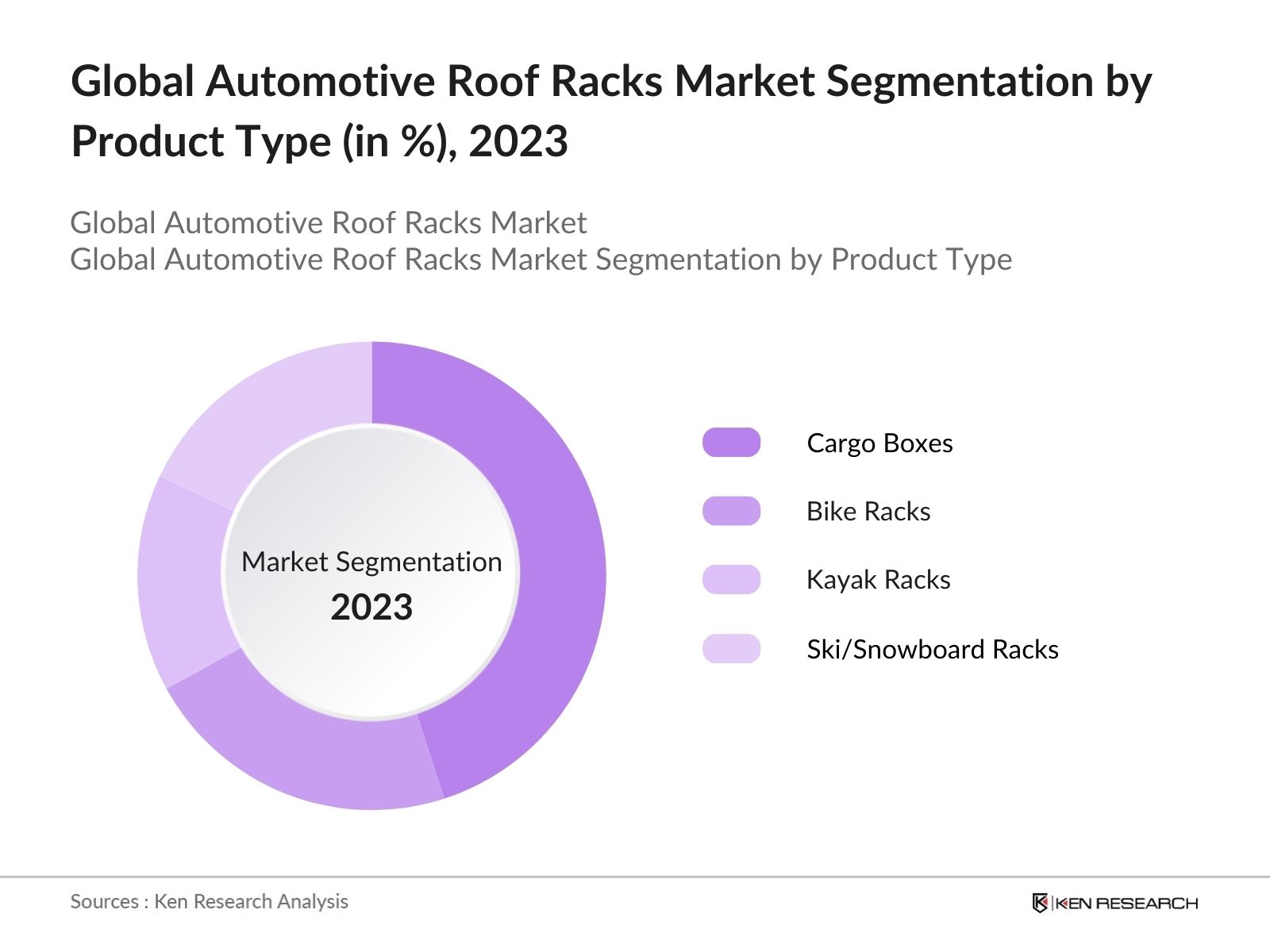
By Product Type: The global automotive roof racks market is segmented by product type into cargo boxes, bike racks, kayak racks, ski/snowboard racks, and luggage baskets. Cargo boxes held a dominant market share in 2023 due to their high utility and versatility. They provide a secure and weatherproof option for storing luggage and equipment, making them popular among adventurers and families who require extra storage space.
By Vehicle Type: In terms of vehicle types, the market is segmented into passenger cars, SUVs, commercial vehicles, and electric vehicles (EVs). SUVs account for the largest market share due to their robust sales globally and the tendency of owners to accessorize these vehicles with roof racks for recreational purposes. SUVs offer more storage and are preferred for outdoor activities, leading to higher adoption of roof racks for carrying sports equipment, luggage, and other cargo.
By Region: Regionally, the market is segmented into North America, Europe, Asia-Pacific, Latin America, and Middle East & Africa. North America leads the market due to high vehicle ownership rates, particularly SUVs and crossovers, and a well-established automotive aftermarket industry. Europe follows closely, driven by consumer preferences for outdoor activities and a growing EV market, which often requires additional storage solutions.
Global Automotive Roof Racks Market Competitive Landscape
The global automotive roof racks market is characterized by the presence of several major players who dominate through a combination of strong distribution networks, product innovation, and brand reputation. Companies like Thule Group and Yakima Products, Inc. lead due to their diverse product portfolios and extensive market presence. The market is consolidated, with major players like Thule Group and Yakima leveraging their strong brand presence and diverse product offerings to maintain their leadership.

Global Automotive Roof Racks Industry Analysis
Growth Drivers
- Increase in Adventure Tourism: The rise in outdoor recreation has significantly driven the demand for automotive roof racks. According to the U.S. Bureau of Economic Analysis, the outdoor recreation economy contributed USD 689 billion to the GDP in 2022, highlighting a growing interest in activities like camping, hiking, and kayaking. Roof racks are essential for transporting outdoor gear, and this trend has been observed in both developed and emerging markets.
- Rise in Vehicle Ownership: Global vehicle sales reached 82 million units in 2022, driven by economic growth and increasing urbanization. Passenger cars accounted for the majority of these sales, contributing significantly to the roof rack market. The International Organization of Motor Vehicle Manufacturers (OICA) recorded that in the U.S. alone, over 13 million light vehicles were sold in 2022. With growing disposable incomes, especially in developing regions, vehicle ownership is expected to further increase.
- Urbanization and Lifestyle Changes: As of 2023, over 4.4 billion people reside in urban areas globally, and urbanization rates are continuing to rise. In China, urbanization reached 65% in 2023, and India crossed 35%, reflecting a shift towards city living. This change in lifestyle, coupled with an increasing number of smaller, compact vehicles in urban areas, has heightened the need for roof racks to compensate for limited internal storage space.
Market Challenges
- High Cost of Advanced Roof Racks: While basic roof racks are relatively affordable, the shift towards advanced, aerodynamic, and lightweight models has increased the average price significantly. For instance, in 2023, the average cost of an aerodynamic roof rack ranged from USD 500 to USD 1,500, depending on features and materials. This poses a challenge, especially in price-sensitive markets such as India and Southeast Asia, where affordability remains a key factor.
- Compatibility Issues with Vehicle Models: Vehicle-specific roof racks are not universally compatible, creating challenges for consumers. For instance, vehicles with panoramic sunroofs or non-standard roof designs often require custom roof racks, adding complexity to both manufacturing and installation. In 2022, over 40% of new vehicle models introduced had unique roof designs, which posed a challenge for aftermarket roof rack manufacturers.
Global Automotive Roof Racks Market Future Outlook
Over the next five years, the global automotive roof racks market is expected to witness steady growth, driven by the increasing demand for SUVs and EVs, alongside the rising popularity of outdoor recreational activities. Technological advancements in lightweight materials and aerodynamic designs will also play a key role in driving the market's expansion. With more consumers leaning toward eco-friendly vehicles and adventure tourism, the demand for durable, multi-functional roof racks will increase.
Market Opportunities
- Innovation in Lightweight Materials: The use of lightweight composite materials such as carbon fiber and reinforced polymers in roof rack production is creating new opportunities for manufacturers. In 2023, the automotive industry saw an increased adoption of composite materials, particularly in Europe and North America, where vehicle manufacturers are focusing on reducing overall vehicle weight to comply with stringent fuel efficiency standards. Lightweight roof racks are not only easier to install but also improve vehicle fuel economy by reducing the overall load.
- Growth in Electric Vehicles: The global electric vehicle (EV) market has seen rapid growth, with 14.8 million EVs sold worldwide in 2023. The increasing adoption of EVs, especially in Europe and China, is presenting new opportunities for the roof rack market, as consumers look for lightweight and aerodynamic designs that minimize drag and preserve battery range. For example, Tesla introduced its own line of aerodynamic roof racks for the Model 3 in 2023, reflecting the growing demand for EV-specific accessories.
Scope of the Report
|
By Product Type |
Cargo Boxes Bike Racks Kayak Racks Ski/Snowboard Racks Luggage Baskets |
|
By Vehicle Type |
Passenger Cars SUVs Commercial Vehicles Electric Vehicles |
|
By Material Type |
Aluminum Roof Racks Steel Roof Racks, Composite Roof Racks |
|
By Sales Channel |
OEM Aftermarket |
|
By Region |
North America Europe Asia-Pacific Latin America Middle East & Africa |
Products
Key Target Audience
Automotive OEMs
Aftermarket Suppliers
Vehicle Fleet Operators
Outdoor Recreation Equipment Companies
Investments and Venture Capitalist Firms
Government and Regulatory Bodies (U.S. National Highway Traffic Safety Administration, European Automotive Manufacturers' Association)
EV Manufacturers
Outdoor Adventure Travel Operators
Companies
Players Mentioned in the Report
Thule Group AB
Yakima Products, Inc.
Rhino-Rack
Atera GmbH
Malone Auto Racks
Cruzber SA
Kuat Innovations
Rola Roof Racks
Prorack Roof Racks
Mont Blanc Group
Table of Contents
1. Global Automotive Roof Racks Market Overview
1.1. Definition and Scope
1.2. Market Taxonomy
1.3. Market Growth Rate
1.4. Market Segmentation Overview
2. Global Automotive Roof Racks Market Size (in USD Bn)
2.1. Historical Market Size
2.2. Year-on-Year Growth Analysis
2.3. Key Market Developments and Milestones
3. Global Automotive Roof Racks Market Analysis
3.1. Growth Drivers
3.1.1. Increase in Adventure Tourism (Number of outdoor and camping activities)
3.1.2. Rise in Vehicle Ownership (Total vehicle sales by category)
3.1.3. Urbanization and Lifestyle Changes (Population density and urbanization rate)
3.1.4. Expanding Automotive Aftermarket (Aftermarket sales by region)
3.2. Market Challenges
3.2.1. High Cost of Advanced Roof Racks (Average product pricing)
3.2.2. Compatibility Issues with Vehicle Models (Vehicle model compatibility matrix)
3.2.3. Raw Material Volatility (Steel and aluminum price index)
3.3. Opportunities
3.3.1. Innovation in Lightweight Materials (Introduction of composite materials)
3.3.2. Growth in Electric Vehicles (EV adoption rate and impact on roof rack market)
3.3.3. Emerging Markets (Market penetration rate in LATAM, APAC, MEA)
3.4. Trends
3.4.1. Shift to Modular and Multi-Function Roof Racks (Adoption rate of modular systems)
3.4.2. Increase in Aerodynamic Designs (Wind resistance metrics of new designs)
3.4.3. Integration with Smart Load Management Systems (Adoption of IoT-enabled roof racks)
3.5. Regulatory Framework
3.5.1. Safety Standards (Automotive safety regulations by region)
3.5.2. Load Carrying Limits (National guidelines for vehicle roof load limits)
3.5.3. Emission Standards (Impact of regulatory push for fuel efficiency)
3.6. SWOT Analysis
3.7. Stake Ecosystem
3.8. Porters Five Forces Analysis
3.9. Competition Ecosystem
4. Global Automotive Roof Racks Market Segmentation
4.1. By Product Type (in Value %)
4.1.1. Cargo Boxes
4.1.2. Bike Racks
4.1.3. Kayak Racks
4.1.4. Ski/Snowboard Racks
4.1.5. Luggage Baskets
4.2. By Vehicle Type (in Value %)
4.2.1. Passenger Cars
4.2.2. SUVs
4.2.3. Commercial Vehicles
4.2.4. Electric Vehicles
4.3. By Material Type (in Value %)
4.3.1. Aluminum Roof Racks
4.3.2. Steel Roof Racks
4.3.3. Composite Roof Racks
4.4. By Sales Channel (in Value %)
4.4.1. OEM
4.4.2. Aftermarket
4.5. By Region (in Value %)
4.5.1. North America
4.5.2. Europe
4.5.3. Asia-Pacific
4.5.4. Latin America
4.5.5. Middle East & Africa
5. Global Automotive Roof Racks Market Competitive Analysis
5.1. Detailed Profiles of Major Companies
5.1.1. Thule Group AB
5.1.2. Yakima Products, Inc.
5.1.3. Rhino-Rack
5.1.4. Atera GmbH
5.1.5. Malone Auto Racks
5.1.6. Cruzber SA
5.1.7. Kuat Innovations
5.1.8. Rola Roof Racks
5.1.9. Prorack Roof Racks
5.1.10. Mont Blanc Group
5.1.11. Sportrack
5.1.12. Car Mate Mfg Co. Ltd.
5.1.13. Uebler GmbH
5.1.14. Seasucker LLC
5.1.15. INNO Advanced Car Racks
5.2. Cross Comparison Parameters (No. of Employees, Headquarters, Inception Year, Revenue, Product Portfolio, Technology Innovation, Market Share, Manufacturing Facilities)
5.3. Market Share Analysis
5.4. Strategic Initiatives
5.5. Mergers and Acquisitions
5.6. Investment Analysis
5.7. Venture Capital Funding
5.8. Government Grants
5.9. Private Equity Investments
6. Global Automotive Roof Racks Market Regulatory Framework
6.1. Safety Standards
6.2. Compliance Requirements
6.3. Certification Processes
7. Global Automotive Roof Racks Future Market Size (in USD Bn)
7.1. Future Market Size Projections
7.2. Key Factors Driving Future Market Growth
8. Global Automotive Roof Racks Future Market Segmentation
8.1. By Product Type (in Value %)
8.2. By Vehicle Type (in Value %)
8.3. By Material Type (in Value %)
8.4. By Sales Channel (in Value %)
8.5. By Region (in Value %)
9. Global Automotive Roof Racks Market Analysts Recommendations
9.1. TAM/SAM/SOM Analysis
9.2. Customer Cohort Analysis
9.3. Marketing Initiatives
9.4. White Space Opportunity Analysis
Disclaimer Contact UsResearch Methodology
Step 1: Identification of Key Variables
The first step involves mapping the global automotive roof racks market's key stakeholders, including OEMs, aftermarket suppliers, and EV manufacturers. Desk research is conducted using secondary and proprietary databases to gather data on market trends, demand drivers, and key product categories.
Step 2: Market Analysis and Construction
This phase focuses on compiling historical data on the automotive roof racks market, including market penetration, growth drivers, and competitive landscapes. The analysis includes a detailed evaluation of sales channels (OEM and aftermarket), regional differences, and consumer preferences.
Step 3: Hypothesis Validation and Expert Consultation
Hypotheses regarding market dynamics are validated through interviews with industry experts from major companies in the sector. This stage involves consultations to confirm key growth drivers, technological trends, and market challenges.
Step 4: Research Synthesis and Final Output
The final stage synthesizes research findings from primary and secondary sources, culminating in the generation of accurate, validated market estimates and forecasts for the global automotive roof racks market.
Frequently Asked Questions
01. How big is the Global Automotive Roof Racks Market?
The global automotive roof racks market is valued at USD 2 billion, based on a five-year historical analysis. The market is primarily driven by the increasing demand for SUVs and crossovers, alongside the rising popularity of outdoor activities such as camping, biking, and adventure sports.
02. What are the key growth drivers of the Global Automotive Roof Racks Market?
Key growth drivers include increasing vehicle ownership, especially SUVs and EVs, alongside growing consumer interest in outdoor recreational activities and the need for additional storage.
03. Which countries dominate the Global Automotive Roof Racks Market?
The market is dominated by countries like the United States, Germany, and China, where vehicle ownership rates are high, and there is a strong demand for SUVs and crossovers.
04. What are the major challenges in the Global Automotive Roof Racks Market?
Major challenges include the high cost of advanced roof rack systems, compatibility issues with various vehicle models, and fluctuations in raw material prices.
Why Buy From Us?

What makes us stand out is that our consultants follows Robust, Refine and Result (RRR) methodology. i.e. Robust for clear definitions, approaches and sanity checking, Refine for differentiating respondents facts and opinions and Result for presenting data with story

We have set a benchmark in the industry by offering our clients with syndicated and customized market research reports featuring coverage of entire market as well as meticulous research and analyst insights.

While we don't replace traditional research, we flip the method upside down. Our dual approach of Top Bottom & Bottom Top ensures quality deliverable by not just verifying company fundamentals but also looking at the sector and macroeconomic factors.

With one step in the future, our research team constantly tries to show you the bigger picture. We help with some of the tough questions you may encounter along the way: How is the industry positioned? Best marketing channel? KPI's of competitors? By aligning every element, we help maximize success.

Our report gives you instant access to the answers and sources that other companies might choose to hide. We elaborate each steps of research methodology we have used and showcase you the sample size to earn your trust.

If you need any support, we are here! We pride ourselves on universe strength, data quality, and quick, friendly, and professional service.