
Global Automotive Safety System Market Outlook 2030
Region:Global
Author(s):Shivani Mehra
Product Code:KROD11347
November 2024
84
About the Report
Global Automotive Safety System Market Overview
- The global automotive safety system market is valued at USD 109.5 billion, reflecting a robust growth trajectory driven by increasing regulatory mandates for safety features and advancements in automotive technology. Key factors propelling this market include the integration of advanced driver-assistance systems (ADAS), which enhance vehicle safety and performance. As consumers become more aware of vehicle safety, automakers are investing heavily in innovative technologies to meet these evolving expectations, fostering growth in this sector.
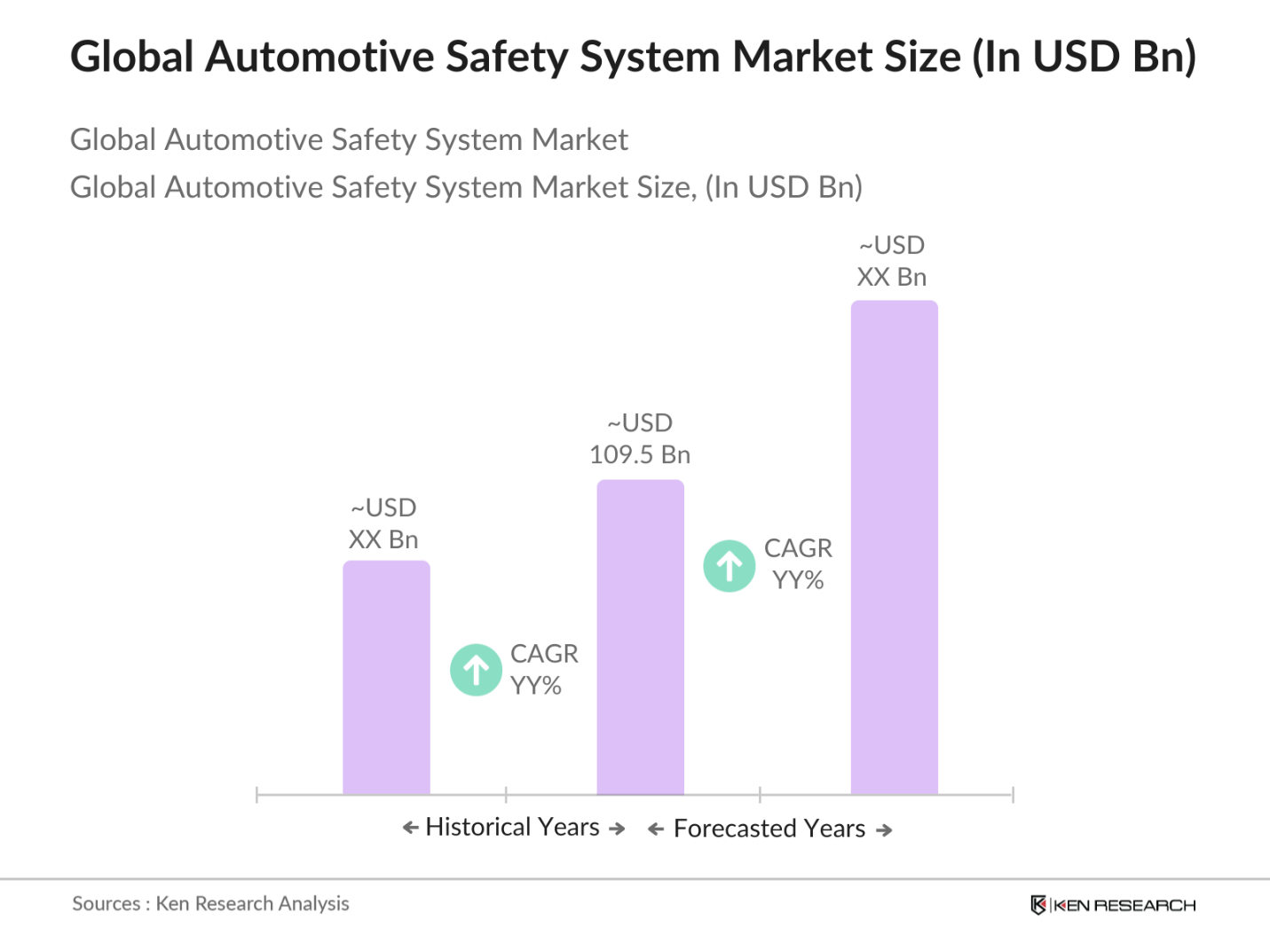
- Countries such as the United States, Germany, and Japan dominate the automotive safety system market due to their advanced automotive manufacturing sectors and stringent safety regulations. These countries benefit from significant investments in research and development aimed at enhancing vehicle safety standards. The presence of major automotive manufacturers and a high level of consumer awareness regarding vehicle safety features further bolster their dominance in this market.
- National safety standards are pivotal in shaping the automotive safety systems market. As of 2024, numerous countries are enforcing stricter safety regulations that mandate the inclusion of advanced safety technologies in new vehicles. For instance, in the United States, the NHTSA's regulations require automakers to implement specific safety measures, influencing the design and manufacturing of vehicles. These regulations are essential in reducing road fatalities and enhancing overall vehicle safety.
Global Automotive Safety System Market Segmentation
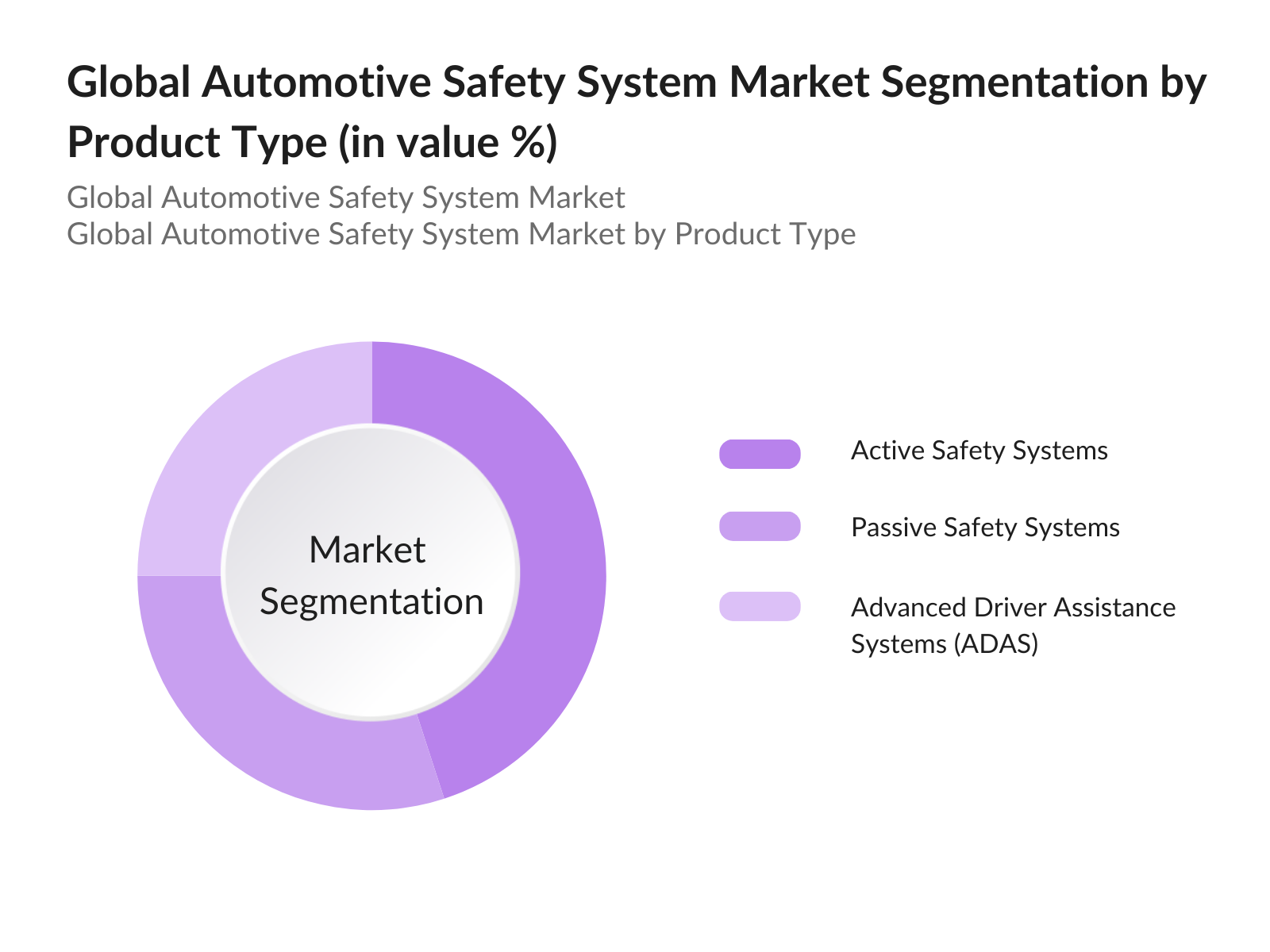
By Product Type: The global automotive safety system market is segmented by product type into active safety systems, passive safety systems, and advanced driver assistance systems (ADAS). Among these, active safety systems hold a dominant market share due to their critical role in accident prevention. Features such as electronic stability control (ESC) and anti-lock braking systems (ABS) are increasingly being integrated into vehicles, driven by regulatory compliance and consumer demand for enhanced safety.
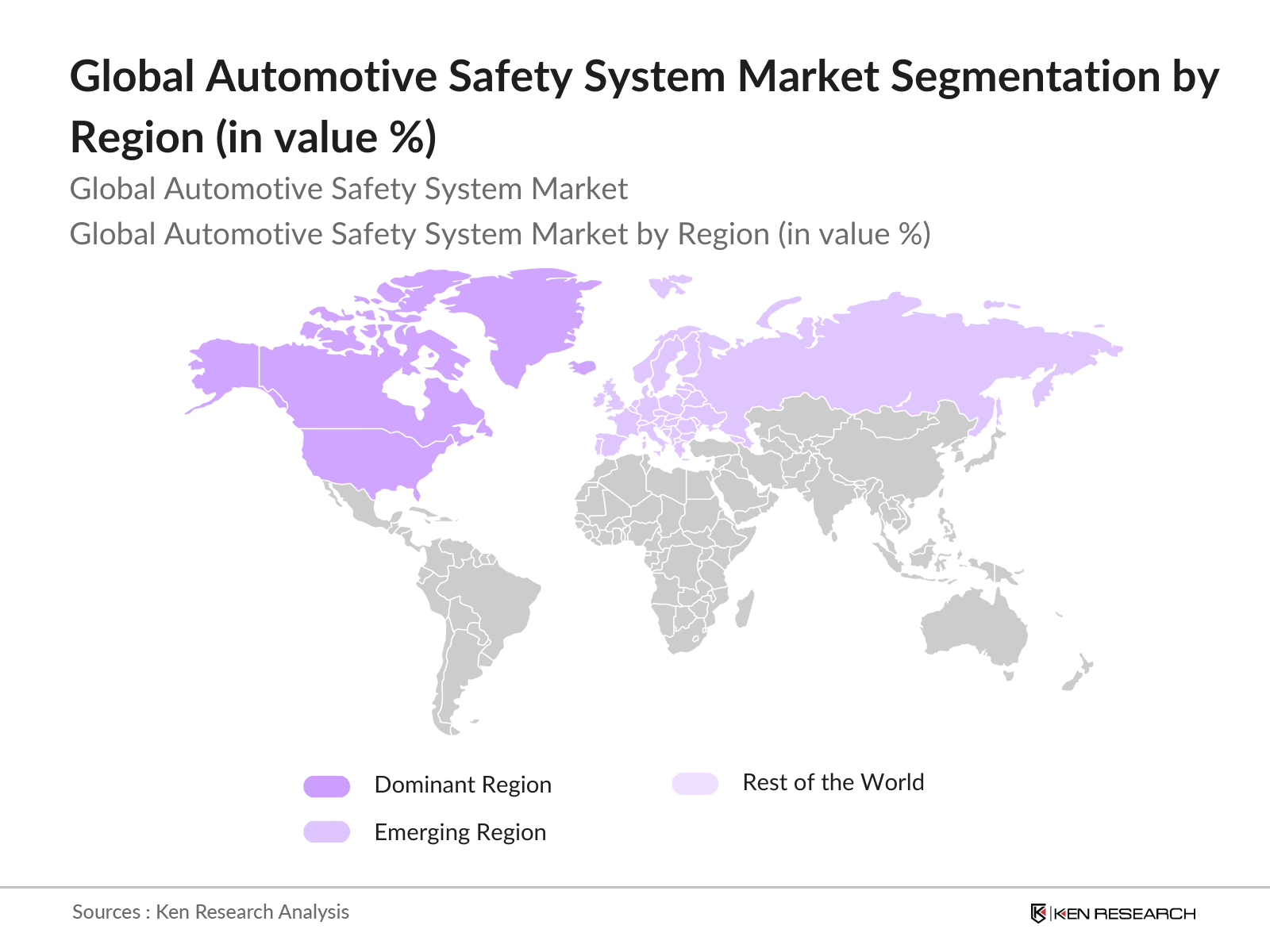
By Region: The global automotive safety system market is segmented by region into North America, Europe, Asia Pacific, Latin America, and the Middle East & Africa. North America holds a significant share in this market due to the presence of major automotive manufacturers and stringent safety regulations. The regulatory environment in North America promotes the adoption of advanced safety technologies, making it a critical market for automotive safety systems.
Global Automotive Safety System Market Competitive Landscape
The global automotive safety system market is dominated by a few key players, including established manufacturers like Bosch, Continental, and Denso. These companies have established strong footholds due to their extensive product portfolios and continuous innovations in automotive safety technology. This consolidation highlights the competitive nature of the market and the significant influence of these major players.
|
Company |
Establishment Year |
Headquarters |
Product Portfolio |
Revenue (USD Bn) |
Key Markets |
R&D Expenditure (%) |
Market Focus |
|
Bosch |
1886 |
Gerlingen, Germany |
ABS, ESC, ADAS |
- |
- |
- |
- |
|
Continental |
1871 |
Hanover, Germany |
Brake Systems, Sensors |
- |
- |
- |
- |
|
Denso |
1949 |
Kariya, Japan |
Airbags, Fuel Systems |
- |
- |
- |
- |
|
Autoliv |
1953 |
Stockholm, Sweden |
Seatbelts, Airbags |
- |
- |
- |
- |
|
ZF Friedrichshafen |
1915 |
Friedrichshafen, Germany |
Driveline, Chassis |
- |
- |
- |
- |
Global Automotive Safety System Market Analysis
Market Growth Drivers
- Stringent Safety Regulations: Governments worldwide are implementing rigorous safety regulations to enhance road safety. For instance, the European Union mandates that all new vehicles must be equipped with Advanced Driver Assistance Systems (ADAS), aiming to reduce traffic fatalities significantly. In 2023, around 21,000 people lost their lives on EU roads, highlighting the urgency for safety improvements. Additionally, the National Highway Traffic Safety Administration (NHTSA) in the United States recorded that a substantial majority of serious crashes are due to human error, further driving the need for stringent safety standards to mitigate risks on the roads.
- Advancements in Technology: The automotive sector is experiencing significant technological advancements, particularly in safety systems. The development of vehicle-to-vehicle (V2V) communication technology has improved collision avoidance systems, potentially reducing accidents significantly. As of 2024, an estimated 15 million vehicles are expected to be equipped with V2V technology in the United States alone, representing a substantial increase from 5 million in 2021. Furthermore, advancements in sensor technologies, such as LiDAR and radar, are enhancing the efficacy of safety systems, leading to a more secure driving experience.
- Rising Demand for Autonomous Vehicles: The demand for autonomous vehicles is driving growth in the automotive safety systems market. By 2023, it was estimated that over 1.5 million autonomous vehicles were on the roads globally, reflecting a significant increase from previous years. This growth is supported by technological advancements and consumer interest in driverless technology. The International Organization of Motor Vehicle Manufacturers reported that the shift towards Level 3 automation is expected to increase the need for advanced safety systems, such as collision avoidance and lane-keeping assistance, to ensure passenger safety during autonomous operations.
Market Challenges:
- High Costs of Advanced Safety Systems: The integration of advanced safety systems comes with high costs that can deter manufacturers and consumers. As of 2024, the average cost of equipping a vehicle with ADAS is approximately $1,500, which can be a barrier for widespread adoption, particularly in developing markets. According to the International Transport Forum, the overall cost of safety features contributes significantly to a vehicle's total price. As manufacturers balance the demand for safety and cost-effectiveness, these financial challenges continue to persist.
- Complexity of Integration: Integrating advanced safety systems into vehicles poses significant engineering challenges. The complexity of integrating hardware and software components can lead to increased development time and costs. As of 2024, many automotive manufacturers are experiencing delays in launching new safety technologies due to integration issues. These challenges necessitate extensive testing and validation to ensure system reliability and performance, which can impede the rapid deployment of new safety systems.
Global Automotive Safety System Market Future Outlook
The global automotive safety system market is expected to experience significant growth in the coming years. Driven by continuous advancements in technology, increasing government regulations, and a growing consumer demand for safety features, the market is poised for expansion. Innovations such as autonomous driving technologies and the integration of artificial intelligence in safety systems are anticipated to create new growth opportunities, further enhancing vehicle safety and performance.
Market Opportunities:
- Integration of AI in Safety Systems: The integration of artificial intelligence (AI) into automotive safety systems is transforming the landscape of vehicle safety. As of 2024, AI-driven systems are expected to play a significant role in new safety technology deployments. AI technologies enable real-time data analysis from various vehicle sensors, enhancing the decision-making capabilities of safety systems. For example, AI-powered collision avoidance systems are becoming more prevalent, improving vehicle safety and reducing the likelihood of accidents.
- Growth of Electric Vehicles: The growth of electric vehicles (EVs) is influencing the automotive safety systems market. In 2023, the global EV sales are expected to reach 12 million units, driven by increasing environmental concerns and supportive government policies. EVs often come equipped with advanced safety technologies as standard features, further elevating their appeal to consumers. The shift towards electrification is prompting manufacturers to invest in developing innovative safety systems tailored specifically for electric and hybrid vehicles.
Scope of the Report
|
By Product Type |
Active Safety Systems Passive Safety Systems Advanced Driver Assistance Systems (ADAS) |
|
By Technology |
Electronic Stability Control (ESC) Anti-lock Braking System (ABS) Airbags and Seatbelt Systems |
|
By Vehicle Type |
Passenger Cars Commercial Vehicles Electric Vehicles |
|
By Application |
Collision Avoidance Driver Assistance Occupant Protection |
|
By Region |
North America Europe Asia Pacific Latin America Middle East & Africa |
Products
Key Target Audience
Automotive Manufacturers
Tier 1 Suppliers
Original Equipment Manufacturers (OEMs)
Government and Regulatory Bodies (National Highway Traffic Safety Administration, European Commission)
Automotive Safety Equipment Manufacturers
Insurance Companies
Investments and Venture Capitalist Firms
Automotive Research and Development Organizations
Companies
Players Mention in the Market
Bosch
Continental
Denso
Autoliv
ZF Friedrichshafen
Delphi Technologies
Honeywell
Magna International
Toyota
Nissan
Honda
Hyundai
Ford
General Motors
FCA (Fiat Chrysler Automobiles)
Table of Contents
01. Global Automotive Safety System Market Overview
1.1. Definition and Scope
1.2. Market Taxonomy
1.3. Market Growth Rate
1.4. Market Segmentation Overview
02. Global Automotive Safety System Market Size (In USD Bn)
2.1. Historical Market Size
2.2. Year-On-Year Growth Analysis
2.3. Key Market Developments and Milestones
03. Global Automotive Safety System Market Analysis
3.1. Growth Drivers
3.1.1. Stringent Safety Regulations
3.1.2. Advancements in Technology
3.1.3. Increasing Consumer Awareness
3.1.4. Rising Demand for Autonomous Vehicles
3.2. Market Challenges
3.2.1. High Costs of Advanced Safety Systems
3.2.2. Complexity of Integration
3.2.3. Regulatory Compliance Issues
3.3. Opportunities
3.3.1. Development of Smart Safety Systems
3.3.2. Expansion into Emerging Markets
3.3.3. Collaboration with Tech Companies
3.4. Trends
3.4.1. Integration of AI in Safety Systems
3.4.2. Adoption of Connected Vehicles
3.4.3. Growth of Electric Vehicles
3.5. Government Regulations
3.5.1. National Safety Standards
3.5.2. Emission and Safety Compliance
3.5.3. Incentives for Safety Enhancements
3.6. SWOT Analysis
3.7. Stake Ecosystem
3.8. Porters Five Forces
3.9. Competition Ecosystem
04. Global Automotive Safety System Market Segmentation
4.1. By Product Type (In Value %)
4.1.1. Active Safety Systems
4.1.2. Passive Safety Systems
4.1.3. Advanced Driver Assistance Systems (ADAS)
4.2. By Technology (In Value %)
4.2.1. Electronic Stability Control (ESC)
4.2.2. Anti-lock Braking System (ABS)
4.2.3. Airbags and Seatbelt Systems
4.3. By Vehicle Type (In Value %)
4.3.1. Passenger Cars
4.3.2. Commercial Vehicles
4.3.3. Electric Vehicles
4.4. By Region (In Value %)
4.4.1. North America
4.4.2. Europe
4.4.3. Asia Pacific
4.4.4. Latin America
4.4.5. Middle East & Africa
4.5. By Application (In Value %)
4.5.1. Collision Avoidance
4.5.2. Driver Assistance
4.5.3. Occupant Protection
05. Global Automotive Safety System Market Competitive Analysis
5.1. Detailed Profiles of Major Companies
5.1.1. Bosch Group
5.1.2. Continental AG
5.1.3. Denso Corporation
5.1.4. Delphi Technologies
5.1.5. Honeywell International Inc.
5.1.6. Autoliv Inc.
5.1.7. ZF Friedrichshafen AG
5.1.8. Magna International Inc.
5.1.9. Nissan Motor Corporation
5.1.10. Ford Motor Company
5.1.11. Toyota Motor Corporation
5.1.12. Honda Motor Co., Ltd.
5.1.13. Volkswagen AG
5.1.14. Hyundai Motor Company
5.1.15. FCA (Fiat Chrysler Automobiles)
5.2. Cross Comparison Parameters (No. of Employees, Headquarters, Revenue, Inception Year, Product Portfolio, Market Share, Key Partnerships, R&D Expenditure)
5.3. Market Share Analysis
5.4. Strategic Initiatives
5.5. Mergers and Acquisitions
5.6. Investment Analysis
5.7. Government Grants
5.8. Private Equity Investments
06. Global Automotive Safety System Market Regulatory Framework
6.1. Safety Standards and Compliance
6.2. Certification Processes
6.3. Impact of Regulations on Market Dynamics
07. Global Automotive Safety System Future Market Size (In USD Bn)
7.1. Future Market Size Projections
7.2. Key Factors Driving Future Market Growth
08. Global Automotive Safety System Future Market Segmentation
8.1. By Product Type (In Value %)
8.2. By Technology (In Value %)
8.3. By Vehicle Type (In Value %)
8.4. By Application (In Value %)
8.5. By Region (In Value %)
09. Global Automotive Safety System Market Analysts Recommendations
9.1. TAM/SAM/SOM Analysis
9.2. Customer Cohort Analysis
9.3. Marketing Initiatives
9.4. White Space Opportunity Analysis
Research Methodology
Step 1: Identification of Key Variables
The research begins with constructing an ecosystem map that encompasses all major stakeholders within the global automotive safety system market. This step relies on extensive desk research, utilizing both secondary and proprietary databases to gather comprehensive industry-level information. The objective is to identify and define critical variables influencing market dynamics.
Step 2: Market Analysis and Construction
This phase involves compiling and analyzing historical data related to the automotive safety system market. It includes assessing market penetration, the ratio of marketplaces to service providers, and resultant revenue generation. Furthermore, evaluating service quality statistics ensures the reliability and accuracy of revenue estimates.
Step 3: Hypothesis Validation and Expert Consultation
Market hypotheses are developed and validated through consultations with industry experts. These experts represent a diverse array of companies within the automotive safety sector, providing valuable operational and financial insights that refine and corroborate the market data.
Step 4: Research Synthesis and Final Output
In the final phase, direct engagement with multiple automotive safety system manufacturers occurs to gather insights into product segments, sales performance, and consumer preferences. This interaction serves to verify and complement the statistics derived from the bottom-up approach, ensuring a comprehensive and validated analysis of the automotive safety system market.
Frequently Asked Questions
01. How big is the global automotive safety system market?
The global automotive safety system market is valued at USD 109.5 billion, driven by advancements in safety technology and increasing regulatory mandates.
02. What are the challenges in the global automotive safety system market?
Challenges include the high costs associated with advanced safety systems, complexities in integrating new technologies, and stringent regulatory compliance requirements that manufacturers must navigate.
03. Who are the major players in the global automotive safety system market?
Key players include Bosch, Continental, Denso, Autoliv, and ZF Friedrichshafen. These companies dominate due to their extensive product offerings and continuous innovation in safety technologies.
04. What are the growth drivers of the global automotive safety system market?
The market is propelled by factors such as increased consumer awareness of vehicle safety, technological advancements, and stringent safety regulations imposed by governments worldwide.
Why Buy From Us?

What makes us stand out is that our consultants follows Robust, Refine and Result (RRR) methodology. i.e. Robust for clear definitions, approaches and sanity checking, Refine for differentiating respondents facts and opinions and Result for presenting data with story

We have set a benchmark in the industry by offering our clients with syndicated and customized market research reports featuring coverage of entire market as well as meticulous research and analyst insights.

While we don't replace traditional research, we flip the method upside down. Our dual approach of Top Bottom & Bottom Top ensures quality deliverable by not just verifying company fundamentals but also looking at the sector and macroeconomic factors.

With one step in the future, our research team constantly tries to show you the bigger picture. We help with some of the tough questions you may encounter along the way: How is the industry positioned? Best marketing channel? KPI's of competitors? By aligning every element, we help maximize success.

Our report gives you instant access to the answers and sources that other companies might choose to hide. We elaborate each steps of research methodology we have used and showcase you the sample size to earn your trust.

If you need any support, we are here! We pride ourselves on universe strength, data quality, and quick, friendly, and professional service.