
Global Automotive Software Market Outlook to 2030
Region:Global
Author(s):Mukul Soni
Product Code:KROD4913
Region:Global
Author(s):Mukul Soni
Product Code:KROD4913
December 2024
96
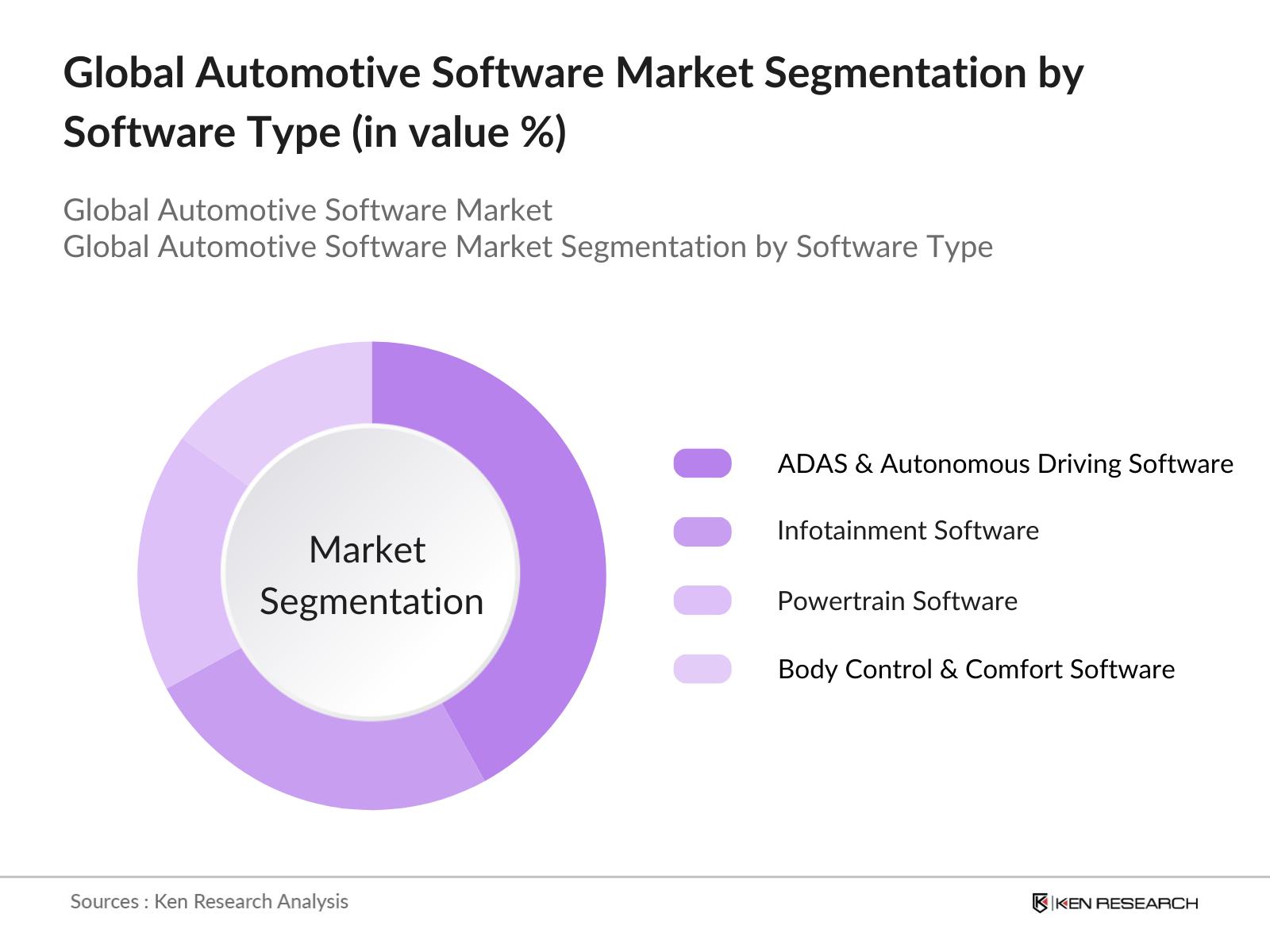
By Software Type: The global automotive software market is segmented by software type into ADAS & autonomous driving software, infotainment software, powertrain software, body control & comfort software, and safety & security software. Recently, ADAS & autonomous driving software holds a dominant market share in this segmentation, driven by heightened consumer interest in safety and convenience, alongside regulatory requirements for ADAS installation. These systems enable enhanced safety features, including collision avoidance, adaptive cruise control, and lane departure warnings, making them essential in modern vehicles.
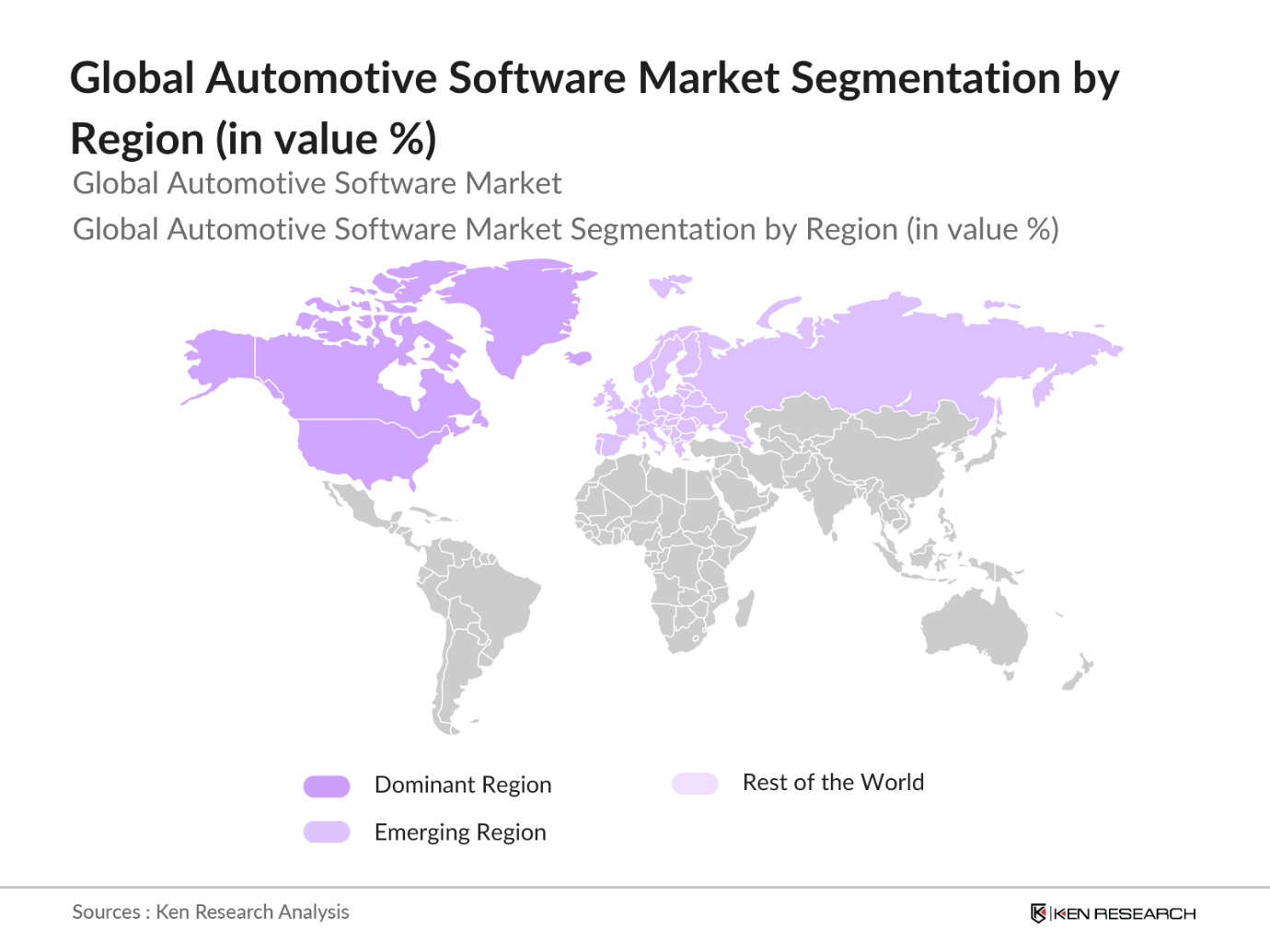
By Region: The automotive software market is segmented by region into North America, Europe, Asia-Pacific, Latin America, and the Middle East & Africa. North America leads due to its strong automotive manufacturing base and supportive regulatory framework that encourages autonomous and electric vehicle development. Furthermore, consumer demand for connected car services and extensive R&D investments in advanced automotive technologies solidify North Americas position in this market.
By Deployment Type: The market is segmented by deployment type into cloud-based and on-premise software solutions. Cloud-based deployment currently dominates due to its scalability, real-time updates, and cost-effectiveness, allowing automotive firms to streamline processes and reduce downtime. This segment is further propelled by the growing reliance on connected car services and the integration of cloud-based IoT platforms within the automotive ecosystem, facilitating remote diagnostics, OTA updates, and enhanced cybersecurity.
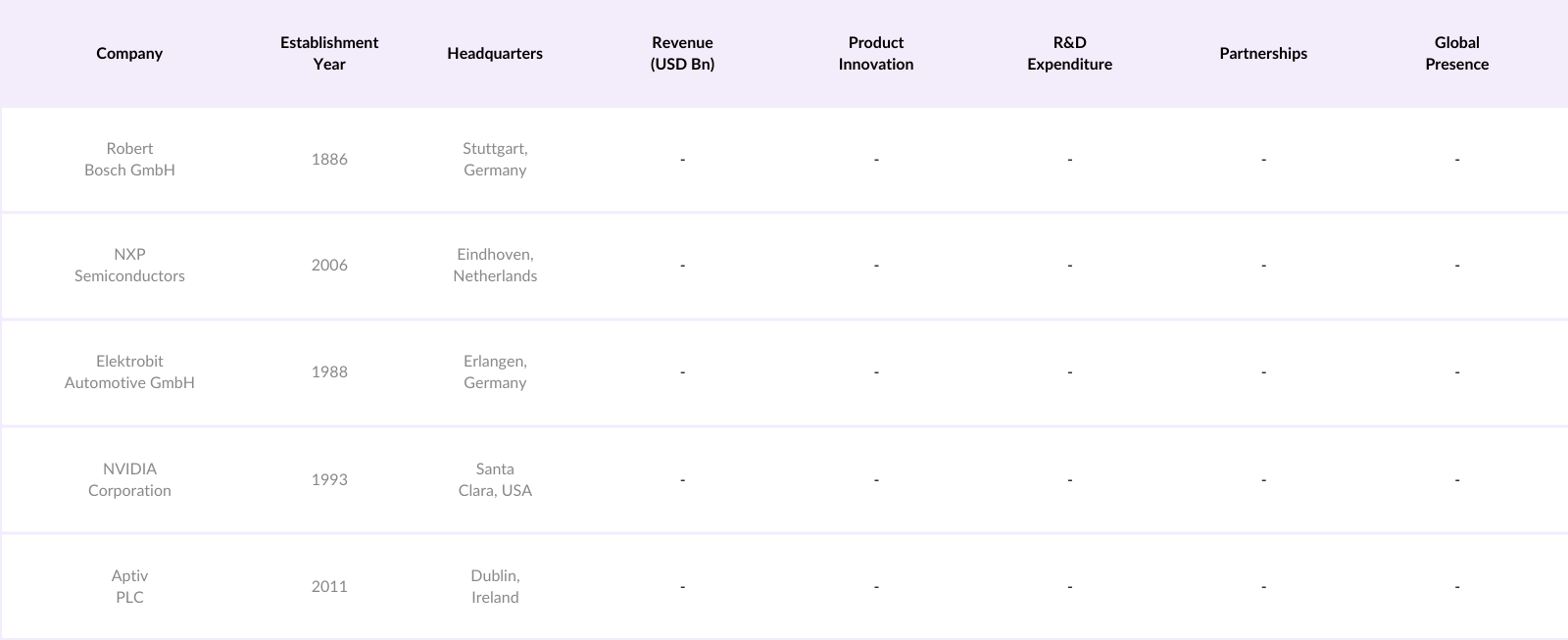
The global automotive software market is dominated by major players, with key companies leveraging innovative technologies and partnerships to solidify their market positions. The industry features prominent companies like Robert Bosch GmbH and Aptiv PLC, which hold significant influence due to their long-standing experience, extensive R&D initiatives, and wide-reaching market presence.
The global automotive software market is expected to experience sustained growth due to technological advancements, regulatory support, and an increased focus on autonomous and connected vehicles. The surge in demand for electric vehicles, coupled with the shift towards smart cities, will further amplify the importance of automotive software in improving transportation efficiency and safety. Additionally, strategic collaborations between software and automotive companies will likely drive market expansion.
|
By Software Type |
ADAS & Autonomous Driving Software |
|
By Deployment Type |
Cloud-based |
|
By Vehicle Type |
Passenger Vehicles |
|
By Application |
Predictive Maintenance |
|
By Region |
North America |
1.1 Definition and Scope
1.2 Market Taxonomy
1.3 Key Growth Indicators
1.4 Market Segmentation Overview
2.1 Historical Market Size
2.2 Year-On-Year Growth Analysis
2.3 Milestones and Market Developments
3.1 Growth Drivers
3.1.1 Rise in Connected Vehicles (connected vehicle penetration)
3.1.2 Demand for Autonomous Driving Features (autonomous driving levels)
3.1.3 Increasing Regulatory Requirements (emission regulations)
3.1.4 Advancements in Vehicle-to-Everything (V2X) Communication (V2X standards)
3.2 Market Challenges
3.2.1 High R&D Costs (R&D expenditure as % of revenue)
3.2.2 Cybersecurity Threats (cybersecurity breaches in automotive)
3.2.3 Data Privacy Concerns (compliance with data privacy laws)
3.3 Opportunities
3.3.1 Electrification of Vehicles (EV software demands)
3.3.2 Cloud Integration in Automotive Systems (cloud-based software services)
3.3.3 Expansion in Emerging Markets (regional adoption rates)
3.4 Trends
3.4.1 AI and Machine Learning in Vehicles (AI-powered solutions)
3.4.2 Real-time Over-the-Air (OTA) Updates (OTA market penetration)
3.4.3 Adoption of Open-Source Platforms (open-source adoption rates)
3.5 Regulatory Landscape
3.5.1 ISO 26262 Functional Safety Standards (functional safety compliance)
3.5.2 GDPR and Data Compliance in Automotive (data protection regulations)
3.5.3 Emission Norms and Eco-friendly Software Development (carbon footprint reduction)
3.6 Stakeholder Ecosystem
3.7 Porters Five Forces
3.8 Competitive Ecosystem
4.1 By Software Type (in value %)
4.1.1 ADAS & Autonomous Driving Software
4.1.2 Body Control & Comfort Software
4.1.3 Infotainment Software
4.1.4 Powertrain Software
4.1.5 Safety & Security Software
4.2 By Deployment Type (in value %)
4.2.1 Cloud-based
4.2.2 On-premise
4.3 By Vehicle Type (in value %)
4.3.1 Passenger Vehicles
4.3.2 Commercial Vehicles
4.3.3 Electric Vehicles
4.4 By Application (in value %)
4.4.1 Predictive Maintenance
4.4.2 Fleet Management
4.4.3 Telematics
4.4.4 Navigation & Mapping
4.5 By Region (in value %)
4.5.1 North America
4.5.2 Europe
4.5.3 Asia-Pacific
4.5.4 Latin America
4.5.5 Middle East & Africa
5.1 Detailed Profiles of Major Companies
5.1.1 Robert Bosch GmbH
5.1.2 NXP Semiconductors
5.1.3 Elektrobit Automotive GmbH
5.1.4 NVIDIA Corporation
5.1.5 Aptiv PLC
5.1.6 Continental AG
5.1.7 Denso Corporation
5.1.8 BlackBerry QNX
5.1.9 Renesas Electronics Corporation
5.1.10 Intel Corporation
5.1.11 Microsoft Corporation
5.1.12 Harman International
5.1.13 TomTom N.V.
5.1.14 Valeo SA
5.1.15 Visteon Corporation
5.2 Cross Comparison Parameters (Employee Strength, Regional Presence, Revenue, R&D Expenditure, Market Share, Key Partnerships, Product Innovation Index, Customer Base)
5.3 Market Share Analysis
5.4 Strategic Initiatives
5.5 Mergers & Acquisitions
5.6 Investment Analysis
5.7 Venture Capital Funding
5.8 Government Grants and Support
5.9 Private Equity Investments
6.1 Data Security and Compliance Standards
6.2 Vehicle Safety Standards
6.3 Certification Processes for Automotive Software
6.4 Environmental Compliance Standards
7.1 Future Market Size Projections
7.2 Key Drivers for Future Market Growth
8.1 By Software Type (in value %)
8.2 By Deployment Type (in value %)
8.3 By Vehicle Type (in value %)
8.4 By Application (in value %)
8.5 By Region (in value %)
9.1 TAM/SAM/SOM Analysis
9.2 Customer Cohort Analysis
9.3 Marketing Initiatives
9.4 White Space Opportunity Analysis
Disclaimer Contact UsThis phase involves defining the automotive software market ecosystem, including key players, product types, and technological trends. Extensive desk research is conducted using reliable sources and proprietary databases to map critical variables impacting market dynamics.
Historical data for the automotive software market is compiled, covering aspects such as market penetration, deployment ratios, and revenue generation. The analysis ensures precise data collection, enhancing the reliability of market estimates.
Key hypotheses are developed and validated through interviews with industry experts. These consultations offer in-depth operational insights and confirm market data, providing a holistic view of industry trends and competitive strategies.
In the final stage, direct engagement with automotive software developers and OEMs ensures comprehensive insights into sales performance, product segments, and end-user preferences, leading to an accurate, validated report output.
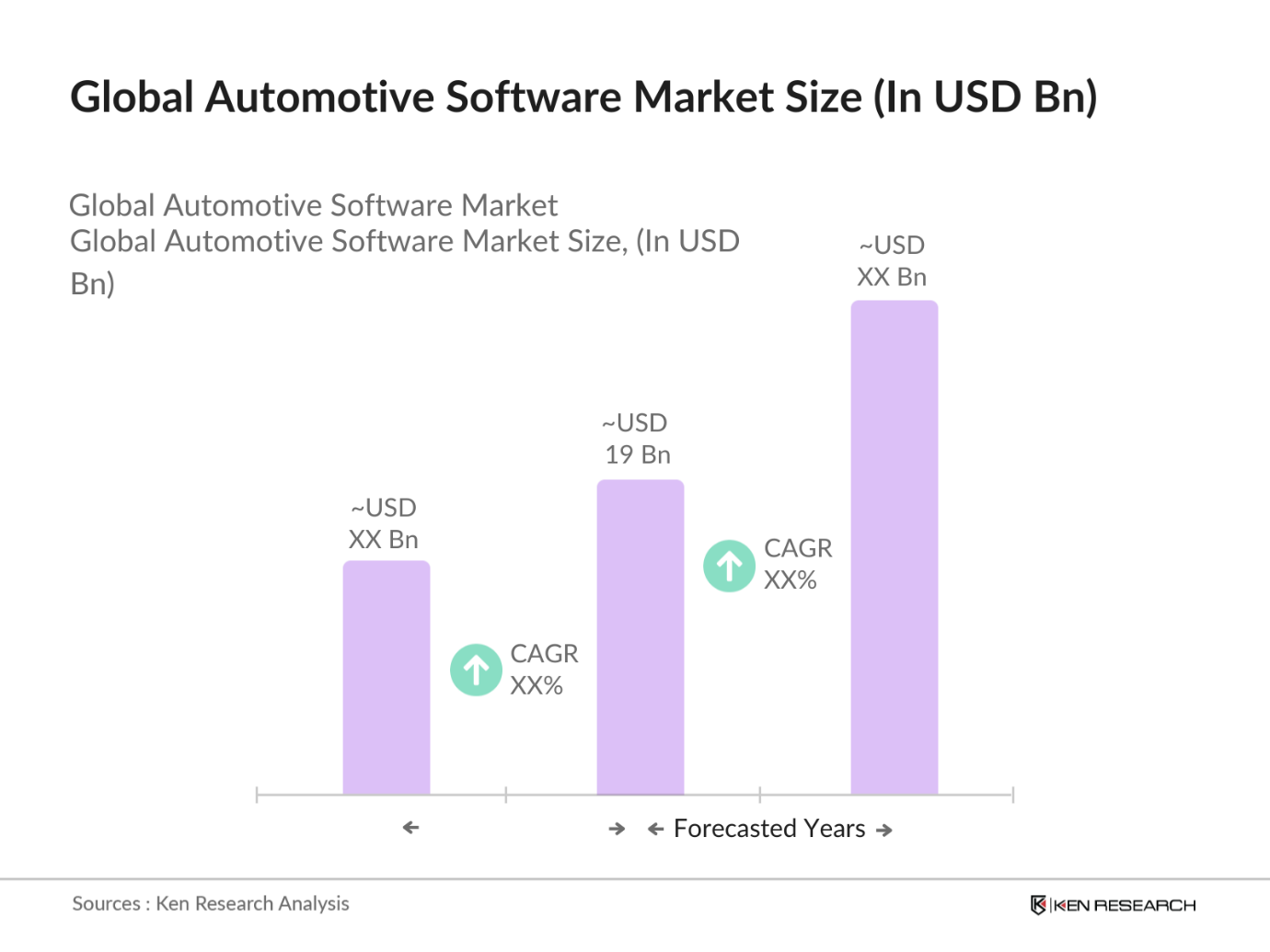
The global automotive software market is valued at USD 19 billion, driven by factors like the surge in demand for connected cars, electric vehicles, and safety-focused technologies.
Key challenges include cybersecurity threats, high R&D costs, and stringent regulatory requirements for autonomous and connected vehicles, impacting the growth and innovation in the market.
Notable players include Robert Bosch GmbH, Aptiv PLC, NXP Semiconductors, Elektrobit Automotive GmbH, and NVIDIA Corporation, each leveraging strong market presence, partnerships, and extensive R&D to lead the market.
Market drivers include the increased adoption of electric vehicles, advancements in autonomous driving technologies, and the integration of V2X systems, enhancing the functionality and connectivity of modern vehicles.

What makes us stand out is that our consultants follows Robust, Refine and Result (RRR) methodology. i.e. Robust for clear definitions, approaches and sanity checking, Refine for differentiating respondents facts and opinions and Result for presenting data with story

We have set a benchmark in the industry by offering our clients with syndicated and customized market research reports featuring coverage of entire market as well as meticulous research and analyst insights.

While we don't replace traditional research, we flip the method upside down. Our dual approach of Top Bottom & Bottom Top ensures quality deliverable by not just verifying company fundamentals but also looking at the sector and macroeconomic factors.

With one step in the future, our research team constantly tries to show you the bigger picture. We help with some of the tough questions you may encounter along the way: How is the industry positioned? Best marketing channel? KPI's of competitors? By aligning every element, we help maximize success.

Our report gives you instant access to the answers and sources that other companies might choose to hide. We elaborate each steps of research methodology we have used and showcase you the sample size to earn your trust.

If you need any support, we are here! We pride ourselves on universe strength, data quality, and quick, friendly, and professional service.