















Global Automotive Solenoid Market Outlook to 2030
Region:Global
Author(s):Mukul Soni
Product Code:KROD1386
December 2024
86
About the Report
Global Automotive Solenoid Market Overview
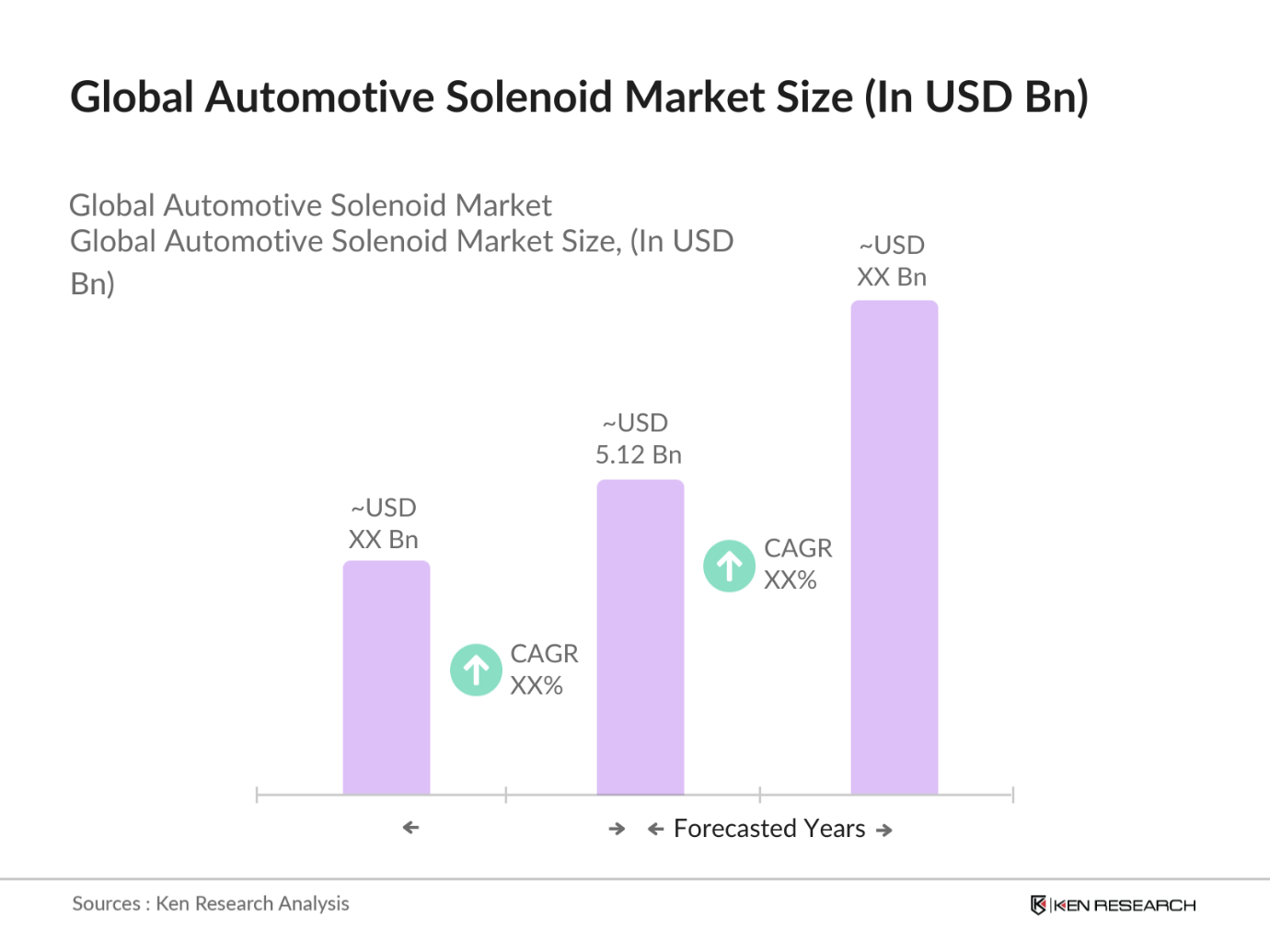
- Global Automotive Solenoid Market was valued at USD 5.12 billion in 2023, driven by the increasing adoption of electric vehicles, advancements in automotive automation, and stringent emission regulations. The widespread integration of solenoids in transmission and fuel control systems has also played a pivotal role in market growth across developed and emerging economies.
- Key players in the Global Automotive Solenoid Market include Robert Bosch GmbH, Continental AG, Denso Corporation, BorgWarner Inc., and Delphi Technologies. These companies dominate the market due to their innovation in solenoid technology, extensive product portfolios, and strategic partnerships with major automotive manufacturers.
- Major automotive hubs such as Detroit (USA), Stuttgart (Germany), and Tokyo (Japan) dominate the automotive solenoid market. These cities are home to leading automobile manufacturers and advanced R&D centers, fostering innovation and high demand for automotive components, including solenoids. The concentration of production facilities, availability of skilled labor, and proximity to suppliers and customers make these cities pivotal in driving the market.
- A significant growth driver for the automotive solenoid market is the global shift towards electric and hybrid vehicles. As governments worldwide tighten emissions regulations and promote sustainable transportation, automakers are increasingly adopting solenoids to optimize fuel efficiency, reduce emissions, and improve vehicle performance. This transition is expected to accelerate the demand for automotive solenoids, particularly in regions with stringent environmental regulations such as Europe and North America.
Global Automotive Solenoid Market Segmentation
The Global Automotive Solenoid Market can be segmented based on several factors:
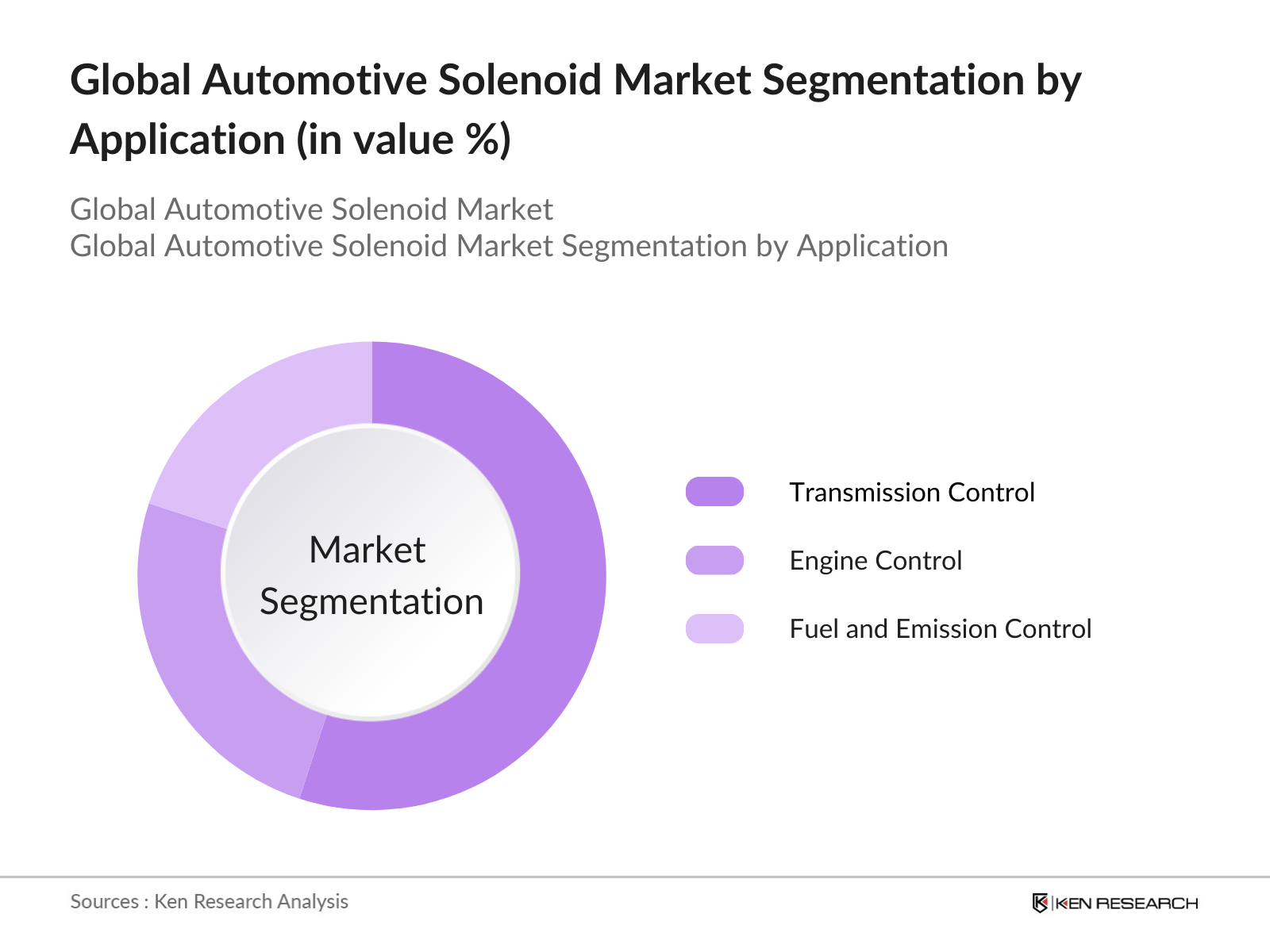
By Application: Global Automotive Solenoid Market is segmented by application into Engine Control, Transmission Control, Fuel and Emission Control, and HVAC Systems. In 2023, Transmission Control dominated the market due to the widespread adoption of automatic and semi-automatic transmissions in modern vehicles. Solenoids play a crucial role in enhancing the efficiency and performance of these systems, making them indispensable in automotive design.
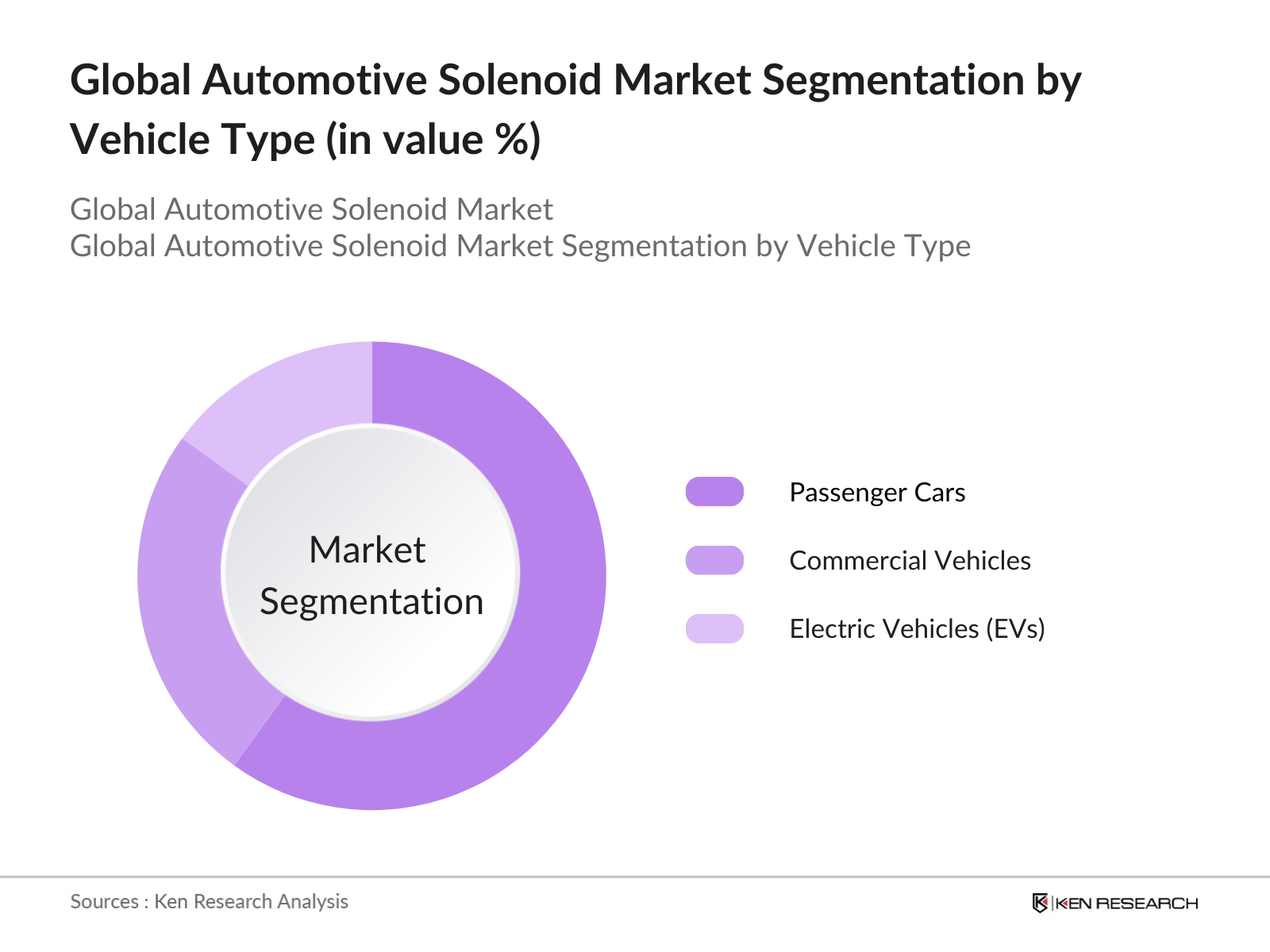
By Vehicle Type: Global Automotive Solenoid Market is segmented by vehicle type into Passenger Cars, Commercial Vehicles, and Electric Vehicles (EVs). In 2023, Passenger Cars led dominated the market due to their large-scale production and widespread adoption, particularly in emerging markets. The increasing consumer demand for fuel-efficient and technologically advanced vehicles has driven the integration of solenoid systems in this category.
By Region: Global Automotive Solenoid Market is segmented by region into North America, Europe, Asia-Pacific, Latin America, and Middle East & Africa. In 2023, the Asia-Pacific region dominated the market, driven by the high automotive production and increasing adoption of advanced vehicle technologies in countries like China and Japan. The regions strong manufacturing base and favorable government policies have significantly contributed to its leadership in the market.
Global Automotive Solenoid Market Competitive Landscape
|
Company Name |
Establishment Year |
Headquarters |
|
Robert Bosch GmbH |
1886 |
Gerlingen, Germany |
|
Continental AG |
1871 |
Hanover, Germany |
|
Denso Corporation |
1949 |
Kariya, Japan |
|
BorgWarner Inc. |
1928 |
Auburn Hills, USA |
|
Delphi Technologies |
2017 |
London, UK |
- Robert Bosch GmbH: In 2023, Bosch introduced a new series of solenoid valves specifically designed for electric vehicle applications. These valves are engineered to enhance performance and reliability, aligning with the industry's shift towards electric and hybrid vehicles
- BorgWarner Inc.: In August 2023, BorgWarner secured a significant contract with an automotive thermal and energy management solutions supplier. This contract involves the delivery of high-voltage coolant heaters for three electric vehicle platforms for a major original equipment manufacturer (OEM)
Global Automotive Solenoid Industry Analysis
Global Automotive Solenoid Market Growth Drivers
- Stringent Emission Standards: Governments worldwide are implementing stricter emission standards, pushing automakers to adopt advanced solenoid technologies in fuel and emission control systems. For instance, the U.S. EPAs new emission regulations in 2023 have compelled automakers to integrate more efficient solenoid-operated systems to meet the required standards, thereby driving demand.
- Growth in Autonomous and Connected Vehicles: The rise of autonomous and connected vehicles is another significant growth driver for the automotive solenoid market. These vehicles require a high level of automation and precision, which solenoids provide in various systems, including braking, steering, and transmission. As automakers invest heavily in autonomous vehicle technology, the demand for advanced solenoids is expected to increase.
- Technological Innovations in Solenoid Design: Ongoing innovations in solenoid design and materials, such as the development of high-temperature and lightweight solenoids, are driving market growth. These advancements enable solenoids to operate efficiently under extreme conditions and reduce the overall weight of vehicles, contributing to improved fuel efficiency and performance. As automakers seek to enhance vehicle efficiency and comply with environmental regulations, the adoption of these advanced solenoids is expected to rise.
Global Automotive Solenoid Market Challenges
- Supply Chain Disruptions: The Global Automotive Solenoid Market faces challenges from ongoing supply chain disruptions, particularly due to semiconductor shortages and geopolitical tensions. These disruptions have led to delays in solenoid production and delivery, affecting the overall automotive manufacturing timelines.
- Regulatory Compliance: The need to comply with diverse regulatory standards across different regions poses a significant challenge. In 2024, new safety and emission regulations in Europe and North America have increased the compliance burden on solenoid manufacturers, requiring continuous innovation and substantial investments in product development.
Global Automotive Solenoid Market Government Initiatives
- European Unions Green Deal (2023): The EUs Green Deal, introduced in 2023, aims to make Europe climate-neutral by 2050. This initiative includes stringent CO2 emission targets for vehicles, which are driving automakers to adopt advanced solenoid technologies in emission control systems. The Green Deal allocates significant funding to support the development and adoption of these technologies across the automotive industry.
- U.S. Inflation Reduction Act (2023): The U.S. government passed the Inflation Reduction Act in 2023, which includes significant investments in the EV industry to promote clean energy and reduce emissions. The act provides $369 billion in funding for energy security and climate change programs over the next decade. This includes tax credits for EV manufacturers that integrate advanced technologies, such as solenoid-based systems, into their vehicles. This initiative is expected to drive the adoption of solenoids in the U.S. automotive market.
Global Automotive Solenoid Future Market Outlook
The global automotive solenoid market is poised for substantial growth over the next five years, driven by the rapid adoption of electric and hybrid vehicles, advancements in autonomous driving technology, and stringent environmental regulations. The market is expected to benefit significantly from government initiatives that promote clean energy and low-emission vehicles
Future Market Trends
- AI Integration in Solenoid Systems: Over the next five years, the integration of AI and machine learning technologies in solenoid systems will become more prevalent. AI-driven solenoid systems will enable real-time diagnostics and predictive maintenance, improving vehicle performance and reducing downtime. This trend will enhance the efficiency of solenoids in various automotive applications, from engine control to autonomous driving.
- Expansion of Lightweight Solenoid Materials: Over the next five years, the automotive industrys focus on reducing vehicle weight will drive the development of solenoids made from lightweight materials such as advanced composites and alloys. These materials will not only reduce the overall weight of vehicles but also improve the durability and efficiency of solenoid systems, making them essential components in next-generation vehicles.
Scope of the Report
|
By Region |
North America Europe Asia Pacific Latin America Middle East Africa |
|
By Application |
Engine Control Transmission Control Fuel and Emission Control HVAC Systems |
|
By Vehicle Type |
Passenger Cars Commercial Vehicles Electric Vehicles (EVs) |
|
By EV Type |
BEV PHEV FCEV |
|
By Valve Type |
2- Way 3- Way 4- Way 5- Way |
Products
Key Target Audience
Automotive Manufacturers
Electric Vehicle (EV) Manufacturers
Automotive OEMs
Automotive Component Suppliers
Transmission System Suppliers
Government & Regulatory Bodies (EPA, European Commission)
Environmental and Emissions Testing Agencies
Investment & Venture Capital Firms
Time Period Captured in the Report
Historical Period: 2018-2023
Base Year: 2023
Forecast Period: 2023-2028
Companies
Players Mentioned in the Report
Robert Bosch GmbH
Continental AG
Denso Corporation
BorgWarner Inc.
Delphi Technologies
Hitachi, Ltd.
Nidec Corporation
Johnson Electric Holdings Limited
Mitsubishi Electric Corporation
Schaeffler Group
Table of Contents
1. Global Automotive Solenoid Market Overview
1.1. Definition and Scope
1.2. Market Taxonomy
1.3. Market Growth Rate
1.4. Market Segmentation Overview
2. Global Automotive Solenoid Market Size (in USD Bn), 2018-2023
2.1. Historical Market Size
2.2. Year-on-Year Growth Analysis
2.3. Key Market Developments and Milestones
3. Global Automotive Solenoid Market Analysis
3.1. Growth Drivers
3.1.1. Increasing Adoption of Electric Vehicles
3.1.2. Advancements in Transmission Systems
3.1.3. Stringent Emission Standards
3.1.4. Growth in Autonomous and Connected Vehicles
3.1.5. Expansion of the Automotive Industry in Emerging Markets
3.1.6. Technological Innovations in Solenoid Design
3.2. Challenges
3.2.1. High Production Costs
3.2.2. Supply Chain Disruptions
3.2.3. Regulatory Compliance Challenges
3.3. Opportunities
3.3.1. Expansion into Emerging Markets
3.3.2. Strategic Partnerships and Collaborations
3.3.3. Adoption of Advanced Manufacturing Technologies
3.4. Trends
3.4.1. AI Integration in Solenoid Systems
3.4.2. Development of Lightweight Solenoids
3.4.3. Increased Focus on Sustainability
3.5. Government Initiatives
3.5.1. European Unions Green Deal (2023)
3.5.2. U.S. Inflation Reduction Act (2023)
3.5.3. Chinas NEV Development Plan (2024)
3.6. SWOT Analysis
3.7. Stake Ecosystem
3.8. Competition Ecosystem
4. Global Automotive Solenoid Market Segmentation, 2023
4.1. By Application (in Value %)
4.1.1. Engine Control
4.1.2. Transmission Control
4.1.3. Fuel and Emission Control
4.1.4. HVAC Systems
4.2. By Vehicle Type (in Value %)
4.2.1. Passenger Cars
4.2.2. Commercial Vehicles
4.2.3. Electric Vehicles (EVs)
4.3. By Region (in Value %)
4.3.1. North America
4.3.2. Europe
4.3.3. Asia-Pacific
4.3.4. Latin America
4.3.5. Middle East & Africa
5. Global Automotive Solenoid Market Competitive Landscape
5.1 Detailed Profiles of Major Companies
5.1.1. Robert Bosch GmbH
5.1.2. Continental AG
5.1.3. Denso Corporation
5.1.4. BorgWarner Inc.
5.1.5. Delphi Technologies
5.1.6. Hitachi, Ltd.
5.1.7. Nidec Corporation
5.1.8. Johnson Electric Holdings Limited
5.1.9. Mitsubishi Electric Corporation
5.1.10. Schaeffler Group
5.1.11. Valeo SA
5.1.12. Mahle GmbH
5.1.13. Magneti Marelli S.p.A.
5.1.14. Flex Ltd.
5.1.15. GKN plc
5.2 Cross Comparison Parameters (No. of Employees, Headquarters, Inception Year, Revenue)
6. Global Automotive Solenoid Market Competitive Landscape
6.1. Market Share Analysis
6.2. Strategic Initiatives
6.3. Mergers and Acquisitions
6.4. Investment Analysis
6.4.1. Venture Capital Funding
6.4.2. Government Grants
6.4.3. Private Equity Investments
7. Global Automotive Solenoid Market Regulatory Framework
7.1. Environmental Standards
7.2. Compliance Requirements
7.3. Certification Processes
8. Global Automotive Solenoid Future Market Size (in USD Bn), 2023-2028
8.1. Future Market Size Projections
8.2. Key Factors Driving Future Market Growth
9. Global Automotive Solenoid Future Market Segmentation, 2028
9.1. By Application (in Value %)
9.2. By Vehicle Type (in Value %)
9.3. By Region (in Value %)
10. Global Automotive Solenoid Market Analysts Recommendations
10.1. TAM/SAM/SOM Analysis
10.2. Customer Cohort Analysis
10.3. Marketing Initiatives
10.4. White Space Opportunity Analysis
Disclaimer
Contact Us
Research Methodology
Step 1: Identifying Key Variables:
Ecosystem creation for all the major entities within the Global Automotive Solenoid Market, including OEMs, component manufacturers, and regulatory bodies. This step involves extensive desk research utilizing multiple secondary and proprietary databases to gather comprehensive industry-level information. The focus is on identifying key variables such as market drivers, trends, competitive dynamics, and regulatory impacts.
Step 2: Market Building:
Collating statistics on the Global Automotive Solenoid Market over the past years, analyzing the penetration of solenoid technologies across various vehicle types and regions. We compute revenue generated for the Automotive Solenoid Market by segmenting the data by application, vehicle type, and region. Additionally, service quality statistics and technological advancements are reviewed to ensure the accuracy of the revenue data points and market size estimation.
Step 3: Validating and Finalizing:
Building market hypotheses and conducting Computer-Assisted Telephone Interviews (CATIs) with industry experts, including senior executives and R&D heads from leading automotive solenoid companies. This step aims to validate the gathered statistics, refine market estimations, and seek operational and financial information directly from company representatives to enhance the robustness of the data.
Step 4: Research Output:
Our team will engage with multiple automotive solenoid suppliers, distributors, and industry stakeholders to understand the nature of product segments, sales volumes, consumer preferences, and other critical parameters. This approach ensures that the statistics derived through a bottom-up methodology are accurate and reflective of the real market scenario. This step also includes synthesizing the collected data into actionable insights and finalizing the report for dissemination.
Frequently Asked Questions
1. How big is the Global Automotive Solenoid Market?
The Global Automotive Solenoid Market reached a value of USD 5.12 billion in 2023, fueled by the rising adoption of electric vehicles, progress in automotive automation, and strict emission regulations. The extensive use of solenoids in transmission and fuel control systems has been a key factor contributing to market expansion in both developed and emerging markets.
2. What are the challenges in the Global Automotive Solenoid Market?
Challenges include high production costs, supply chain disruptions due to semiconductor shortages and geopolitical tensions, and regulatory compliance challenges across different regions, all impacting market growth.
3. Who are the major players in the Global Automotive Solenoid Market?
Key players in the Global Automotive Solenoid Market include Robert Bosch GmbH, Continental AG, Denso Corporation, BorgWarner Inc., and Delphi Technologies. These companies lead the market due to their innovation in solenoid technology, extensive product portfolios, and strategic partnerships with global automakers.
4. What are the growth drivers of the Global Automotive Solenoid Market?
The market is driven by the growing adoption of electric vehicles, advancements in autonomous vehicle technology, and stringent emission regulations that necessitate the integration of advanced solenoid systems in modern vehicles.
Why Buy From Us?

What makes us stand out is that our consultants follows Robust, Refine and Result (RRR) methodology. i.e. Robust for clear definitions, approaches and sanity checking, Refine for differentiating respondents facts and opinions and Result for presenting data with story

We have set a benchmark in the industry by offering our clients with syndicated and customized market research reports featuring coverage of entire market as well as meticulous research and analyst insights.

While we don't replace traditional research, we flip the method upside down. Our dual approach of Top Bottom & Bottom Top ensures quality deliverable by not just verifying company fundamentals but also looking at the sector and macroeconomic factors.

With one step in the future, our research team constantly tries to show you the bigger picture. We help with some of the tough questions you may encounter along the way: How is the industry positioned? Best marketing channel? KPI's of competitors? By aligning every element, we help maximize success.

Our report gives you instant access to the answers and sources that other companies might choose to hide. We elaborate each steps of research methodology we have used and showcase you the sample size to earn your trust.

If you need any support, we are here! We pride ourselves on universe strength, data quality, and quick, friendly, and professional service.