















Global Automotive Windshield Market Outlook to 2030
Region:Global
Author(s):Shubham
Product Code:KROD4817
October 2024
83
About the Report
Global Automotive Windshield Market Overview
- The global automotive windshield market is projected to witness steady growth through the forecasted period, currently valued at USD 18 Bn, driven by increased vehicle production and the growing demand for safety features. The integration of advanced windshield technologies such as heads-up displays (HUD), smart glass, and acoustic windshields are also contributing to market growth. In recent years, automakers have been incorporating windshields as a critical component of vehicle safety systems, including ADAS (Advanced Driver Assistance Systems), which further fuels the demand for automotive windshields.
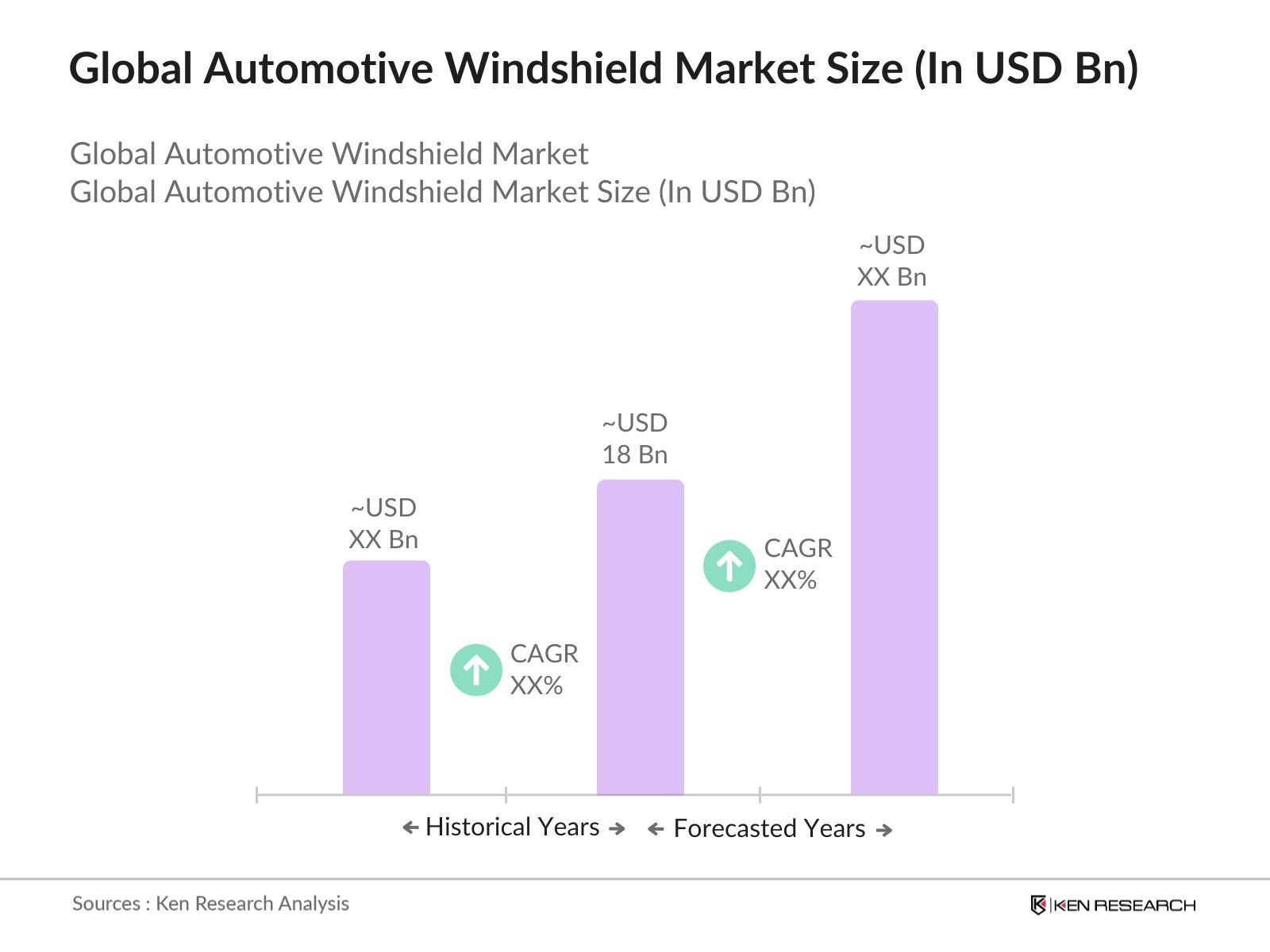
- Key regions driving growth in the automotive windshield market include North America, Europe, and Asia Pacific. The North American market is benefiting from stringent safety regulations and the rising adoption of advanced driver-assistance features, leading to increased demand for technologically enhanced windshields. In Europe, safety standards and the focus on reducing vehicle noise pollution are key drivers. Meanwhile, Asia Pacific, led by China and India, is experiencing growth due to the expanding automotive sector and rising vehicle ownership.
- The shift towards electric vehicles (EVs) is also creating new opportunities in the automotive windshield market, as manufacturers focus on lightweight and energy-efficient materials to enhance EV performance. Governments worldwide are offering subsidies to promote EV adoption, which in turn is boosting demand for specialized windshields designed for electric vehicles. The European Union's "Fit for 55" initiative is pushing automakers to use more sustainable materials in vehicle manufacturing, including windshields.
Global Automotive Windshield Market Segmentation
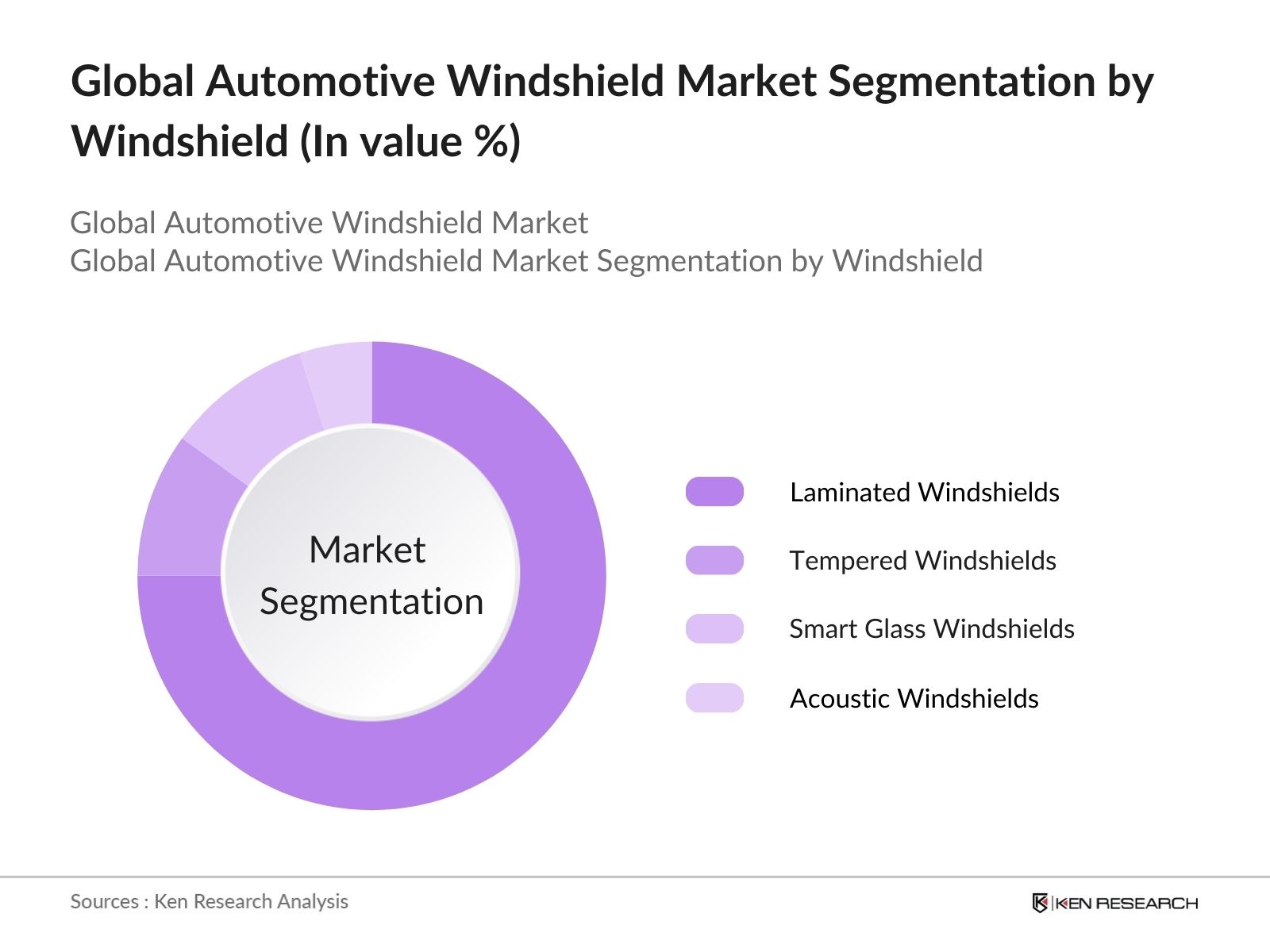
- By Type of Windshield: The market is segmented by windshield type into laminated windshields, tempered windshields, smart glass windshields, and acoustic windshields. Recently, laminated windshields hold a dominant market share due to their superior safety features. Laminated windshields are designed with two layers of glass and a layer of polyvinyl butyral (PVB) in between, providing exceptional resistance to shattering upon impact. This makes them highly preferred in passenger cars, particularly in regions with stringent safety regulations like North America and Europe.
- By Vehicle Type: The market is segmented by vehicle type into passenger cars, commercial vehicles, electric vehicles (EVs), and luxury vehicles. Passenger cars dominate the market owing to their high production volume globally and the increasing focus on integrating advanced driver assistance systems (ADAS) into windshields for safety enhancements. The rising popularity of electric vehicles (EVs) is also contributing to growth in this segment as automakers prioritize lightweight windshields to improve energy efficiency in EVs.
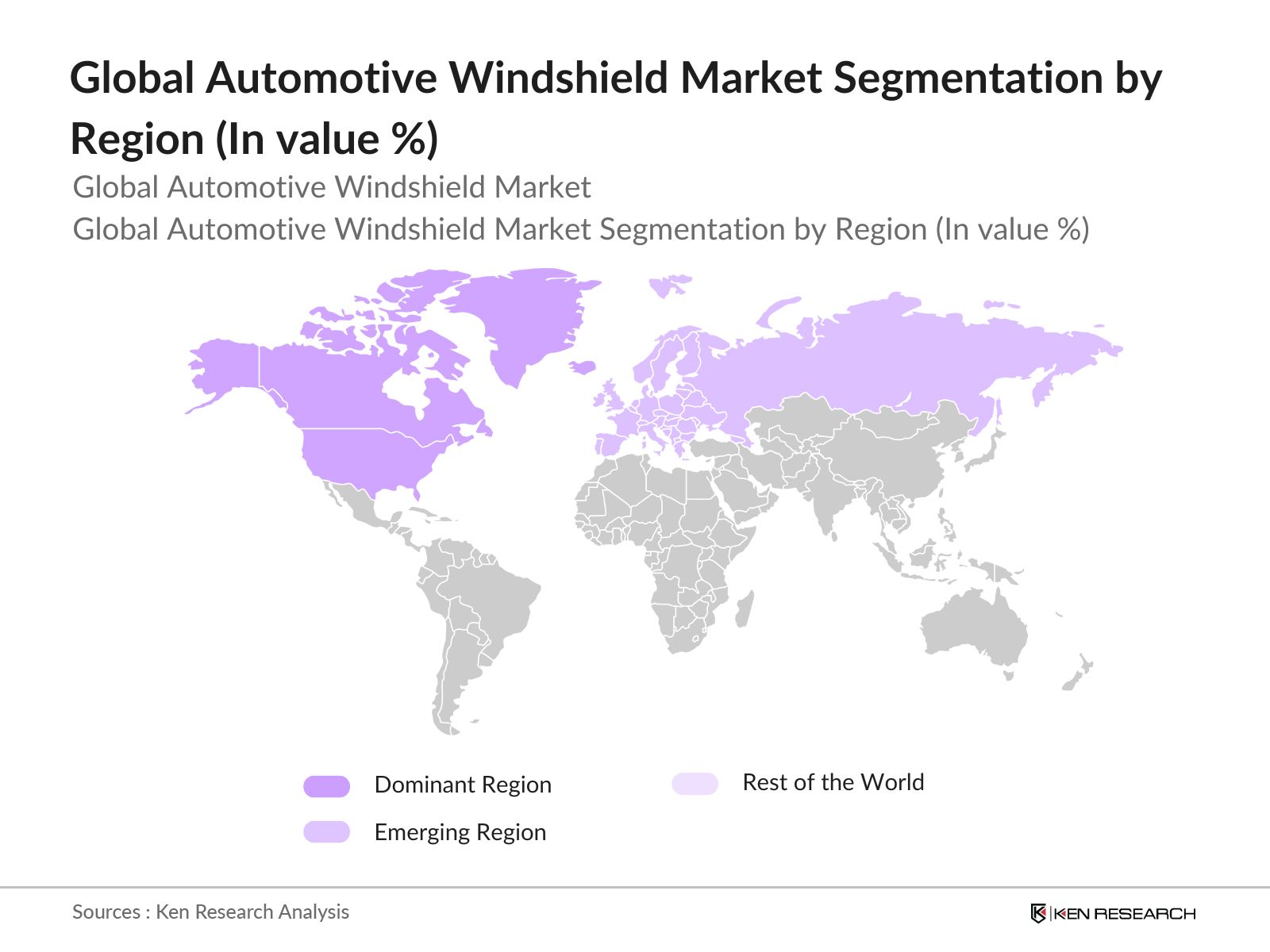 By Region: The market is segmented by region into North America, Europe, Asia Pacific, Latin America, and the Middle East & Africa. North America dominates the market due to the presence of key automotive manufacturers, strict vehicle safety regulations, and high adoption of advanced technologies like heads-up displays (HUD) and acoustic windshields. The region's focus on electric vehicle (EV) production also boosts demand for lightweight and energy-efficient windshields. In Europe, stringent environmental regulations and government incentives for electric vehicles are driving market growth, especially in countries like Germany and France.
Global Automotive Windshield Market Competitive Landscape
The global automotive windshield market is characterized by a few dominant players focusing on technological innovation and partnerships with automakers to provide customized solutions. Companies like Asahi Glass Co., Ltd., Saint-Gobain Sekurit, and Fuyao Group are investing heavily in research and development to create lighter, stronger, and more energy-efficient windshields. Additionally, the increasing use of heads-up displays (HUD) in premium vehicles is pushing manufacturers to develop windshields with advanced optical properties.
|
Company Name |
Establishment Year |
Headquarters |
R&D Investment (2023) |
Global Reach |
Revenue (2023) |
Product Portfolio |
Partnerships |
Technological Innovations |
Certifications |
|
Asahi Glass Co., Ltd. |
1907 |
Tokyo, Japan |
High |
||||||
|
Saint-Gobain Sekurit |
1665 |
Paris, France |
High |
||||||
|
Fuyao Group |
1987 |
Fujian, China |
Medium |
||||||
|
Nippon Sheet Glass Co., Ltd. |
1918 |
Osaka, Japan |
Medium |
||||||
|
Xinyi Glass Holdings Limited |
1988 |
Hong Kong |
Medium |
Global Automotive Windshield Market Analysis
Growth Drivers
- Rising Vehicle Production: The automotive industry has witnessed a steady increase in global vehicle production, with over 91 million cars manufactured annually by 2024. This rise in production is bolstered by surging demand in key regions such as China, India, and the USA. Automotive windshields account for 3-5% of a vehicles cost, making them critical components. Increased vehicle production directly drives the demand for windshields, as more units require sophisticated materials. This trend is further supported by the global push towards mobility and urbanization in developing economies, fueling automotive manufacturing growth.
- Advanced Windshield Technologies: Technological advancements in automotive windshields, such as heads-up displays (HUD), smart glass, and acoustic windshields, are redefining windshield design and functionality. HUD windshields are projected to be installed in over 15 million vehicles by 2024 globally, especially in luxury and electric vehicles. Acoustic windshields are becoming integral for noise reduction, with demand spurred by the need for quieter cabins. The integration of smart glass technology, which allows for variable transparency, is already a standard feature in premium car models.
- Growing Electric Vehicle (EV) Adoption: Electric vehicle (EV) production is set to cross 10 million units globally by 2024, spurred by government mandates and environmental concerns. This rise has directly impacted the automotive windshield market, as EVs increasingly incorporate lightweight and energy-efficient windshields to optimize performance. Windshield manufacturers are now focusing on lightweight glass to improve EV range. The adoption of electric vehicles is gaining momentum across North America, Europe, and China, with automakers integrating advanced windshield technologies to enhance vehicle efficiency and safety.
Market Challenges
- High Cost of Advanced Windshields: The integration of advanced technologies such as HUD, smart glass, and acoustic features into windshields significantly increases production costs. These advanced windshields are priced much higher than standard versions, which discourages mid-market car manufacturers from adopting these technologies, resulting in their limited integration primarily within luxury vehicle segments. The high cost of such windshields continues to be a barrier, particularly in price-sensitive markets like Southeast Asia and Latin America, where affordability remains a key concern for consumers and manufacturers alike.
- Raw Material Price Volatility: The production of automotive windshields is heavily dependent on the availability and cost of raw materials, including soda-lime glass and polyvinyl butyral (PVB). Global supply chain disruptions, compounded by geopolitical tensions, have caused significant fluctuations in the prices of these raw materials. This volatility affects the profit margins of windshield manufacturers, leading to price adjustments throughout the supply chain. Manufacturers are forced to navigate these challenges while trying to maintain competitive pricing and ensure product availability.
Global Automotive Windshield Market Future Outlook
The global automotive windshield market is expected to grow steadily, driven by rising vehicle production, the growing demand for safety features, and technological advancements in windshield materials. As automakers continue to innovate and incorporate new technologies in windshields, the market is likely to see increased demand for advanced products that offer enhanced safety, comfort, and energy efficiency.
Future Market Opportunities
- Integration of Smart Glass: Smart glass technology is an emerging trend in the automotive sector, allowing drivers to control the level of tint in windshields to optimize visibility and reduce glare. By 2024, the smart glass market for automotive windshields is expected to supply around a million units. The growing interest in autonomous and connected vehicles is driving the adoption of this technology, creating significant opportunities for windshield manufacturers to collaborate with automakers for integration into mid-tier and luxury vehicles.
- Expansion in Electric Vehicles: The growing adoption of electric vehicles presents a significant opportunity for windshield manufacturers, particularly in the integration of lightweight and aerodynamic windshields. The global EV fleet is expected to reach 30 million vehicles by 2025, with 2024 projections already crossing 10 million vehicles. Windshields designed specifically for electric vehicles, focusing on weight reduction and enhanced energy efficiency, are critical components to optimize range and battery performance.
Scope of the Report
|
By Windshield Type |
- Laminated Windshields |
|
- Tempered Windshields |
|
|
- Smart Glass Windshields |
|
|
- Acoustic Windshields |
|
|
By Vehicle Type |
- Passenger Cars |
|
- Commercial Vehicles |
|
|
- Electric Vehicles (EVs) |
|
|
- Luxury Vehicles |
|
|
By Technology |
- Heads-Up Display Windshields |
|
- Heated Windshields |
|
|
- Rain-Sensing Windshields |
|
|
- Solar Control Windshields |
|
|
By Distribution Channel |
- OEM (Original Equipment Manufacturer) |
|
- Aftermarket |
|
|
By Region |
- North America |
|
- Europe |
|
|
- Asia Pacific |
|
|
- Latin America |
|
|
- Middle East & Africa |
Products
Key Target Audience
Automotive OEMs
Windshield Manufacturers
Electric Vehicle Manufacturers
Automotive Component Distributors
Investors and Venture Capitalist Firms
Government and Regulatory Bodies (e.g., National Highway Traffic Safety Administration - NHTSA, European Union Vehicle Safety Standards)
Automotive Aftermarket Suppliers
Technology Innovators in Automotive Industry
Banks and Financial Institutions
Companies
Players Mentioned in the Report
Asahi Glass Co., Ltd.
Saint-Gobain Sekurit
Fuyao Group
Nippon Sheet Glass Co., Ltd.
Xinyi Glass Holdings Limited
Pilkington Automotive
Guardian Glass
Magna International
Central Glass Co., Ltd.
Shenzhen Benson Automobile Glass Co., Ltd.
Sisecam Group
Gentex Corporation
Vitro Automotive
Soliver NV
Webasto Group
Table of Contents
1. Global Automotive Windshield Market Overview
1.1. Definition and Scope
1.2. Market Taxonomy
1.3. Market Growth Rate
1.4. Key Market Segmentation Overview
2. Global Automotive Windshield Market Size (In USD Bn)
2.1. Historical Market Size
2.2. Year-on-Year Growth Analysis
2.3. Key Market Developments and Milestones
3. Global Automotive Windshield Market Analysis
3.1. Growth Drivers
3.2. Market Challenges3.3. Opportunities3.4. Trends3.5. Government Regulations3.6. SWOT Analysis
3.7. Value Chain and Stakeholder Ecosystem
3.8. Porters Five Forces Analysis
3.9. Competition Ecosystem and Market Concentration
4. Global Automotive Windshield Market Segmentation
4.1. By Windshield Type (In Value %)
4.2. By Vehicle Type (In Value %)
4.3. By Technology (In Value %)
4.4. By Distribution Channel (In Value %)
4.5. By Region (In Value %)
5. Global Automotive Windshield Market Competitive Analysis
5.1. Detailed Profiles of Major Companies
5.2. Cross Comparison Parameters (R&D Investment, Headquarters, Revenue, Global Reach, Certifications, Partnerships, Market Share, Product Portfolio)
5.3. Market Share Analysis
5.4. Strategic Initiatives (Collaborations, Mergers and Acquisitions, Product Innovations, Geographical Expansions)
5.5. Investment Analysis
5.6. Government Grants and Subsidies
5.7. Private Equity Investments
6. Global Automotive Windshield Market Regulatory Framework
6.1. Safety Standards (FMVSS 205, ECE R43)
6.2. Environmental Regulations (Sustainable Manufacturing, Emission Control Standards)
6.3. Certification Processes (ISO Certifications, Quality Certifications for Automotive Parts)
7. Global Automotive Windshield Market Future Size (In USD Bn)
7.1. Future Market Size Projections
7.2. Key Factors Driving Future Market Growth
8. Global Automotive Windshield Market Future Segmentation
8.1. By Windshield Type (In Value %)
8.2. By Vehicle Type (In Value %)
8.3. By Technology (In Value %)
8.4. By Distribution Channel (In Value %)
8.5. By Region (In Value %)
9. Global Automotive Windshield Market Analyst's Recommendations
9.1. TAM/SAM/SOM Analysis
9.2. Customer Cohort Analysis
9.3. Strategic Marketing Initiatives
9.4. White Space Opportunity Analysis
Research Methodology
Step 1: Identification of Key Variables
The research process begins by identifying the critical variables that influence the global automotive windshield market. This is achieved through comprehensive desk research utilizing a combination of proprietary databases, industry reports, and market data from legitimate sources. Key variables include windshield production volumes, raw material prices, and technological innovations.
Step 2: Market Analysis and Construction
In this step, historical data regarding the production and demand for automotive windshields is compiled and analyzed. Market size estimates, growth rates, and market penetration across regions are calculated using reliable data from automotive associations and government bodies.
Step 3: Hypothesis Validation and Expert Consultation
Market hypotheses are developed based on the initial data collection and then validated through expert consultations with industry professionals. These consultations provide real-time insights into market dynamics, technological innovations, and upcoming trends, which are crucial for the accuracy of market forecasts.
Step 4: Research Synthesis and Final Output
The final phase involves synthesizing all collected data into a comprehensive report. This includes validating market size estimates and future projections by cross-referencing multiple data sources and incorporating insights from automotive windshield manufacturers.
Frequently Asked Questions
01. How big is the Global Automotive Windshield Market?
The global automotive windshield market was valued at USD 18 billion, driven by the increasing demand for advanced windshield technologies such as heads-up displays (HUD), acoustic windshields, and smart glass.
02. What are the challenges in the Global Automotive Windshield Market?
Challenges in the global automotive windshield market include the high cost of advanced windshields with integrated technologies like HUD, fluctuating raw material prices, and stringent safety regulations that drive up production costs.
03. Who are the major players in the Global Automotive Windshield Market?
Key players in the global automotive windshield market include Asahi Glass Co., Ltd., Saint-Gobain Sekurit, Fuyao Group, Nippon Sheet Glass Co., Ltd., and Xinyi Glass Holdings Limited, who dominate through extensive research and development and strategic partnerships with major automakers.
04. What are the growth drivers of the Global Automotive Windshield Market?
The global automotive windshield market is driven by increasing vehicle production, growing demand for electric vehicles, advancements in smart glass and heads-up display technologies, and the rising focus on vehicle safety regulations globally.
05. What are the opportunities in the Global Automotive Windshield Market?
Significant opportunities include the expansion of electric vehicles, the adoption of smart glass technology, and the growing demand for windshields with advanced driver assistance systems (ADAS) integration.
Why Buy From Us?

What makes us stand out is that our consultants follows Robust, Refine and Result (RRR) methodology. i.e. Robust for clear definitions, approaches and sanity checking, Refine for differentiating respondents facts and opinions and Result for presenting data with story

We have set a benchmark in the industry by offering our clients with syndicated and customized market research reports featuring coverage of entire market as well as meticulous research and analyst insights.

While we don't replace traditional research, we flip the method upside down. Our dual approach of Top Bottom & Bottom Top ensures quality deliverable by not just verifying company fundamentals but also looking at the sector and macroeconomic factors.

With one step in the future, our research team constantly tries to show you the bigger picture. We help with some of the tough questions you may encounter along the way: How is the industry positioned? Best marketing channel? KPI's of competitors? By aligning every element, we help maximize success.

Our report gives you instant access to the answers and sources that other companies might choose to hide. We elaborate each steps of research methodology we have used and showcase you the sample size to earn your trust.

If you need any support, we are here! We pride ourselves on universe strength, data quality, and quick, friendly, and professional service.