















Global Biomass Power Generation Market Outlook to 2030
Region:Global
Author(s):Sanjeev
Product Code:KROD1809
November 2024
81
About the Report
Global Biomass Power Generation Market Overview
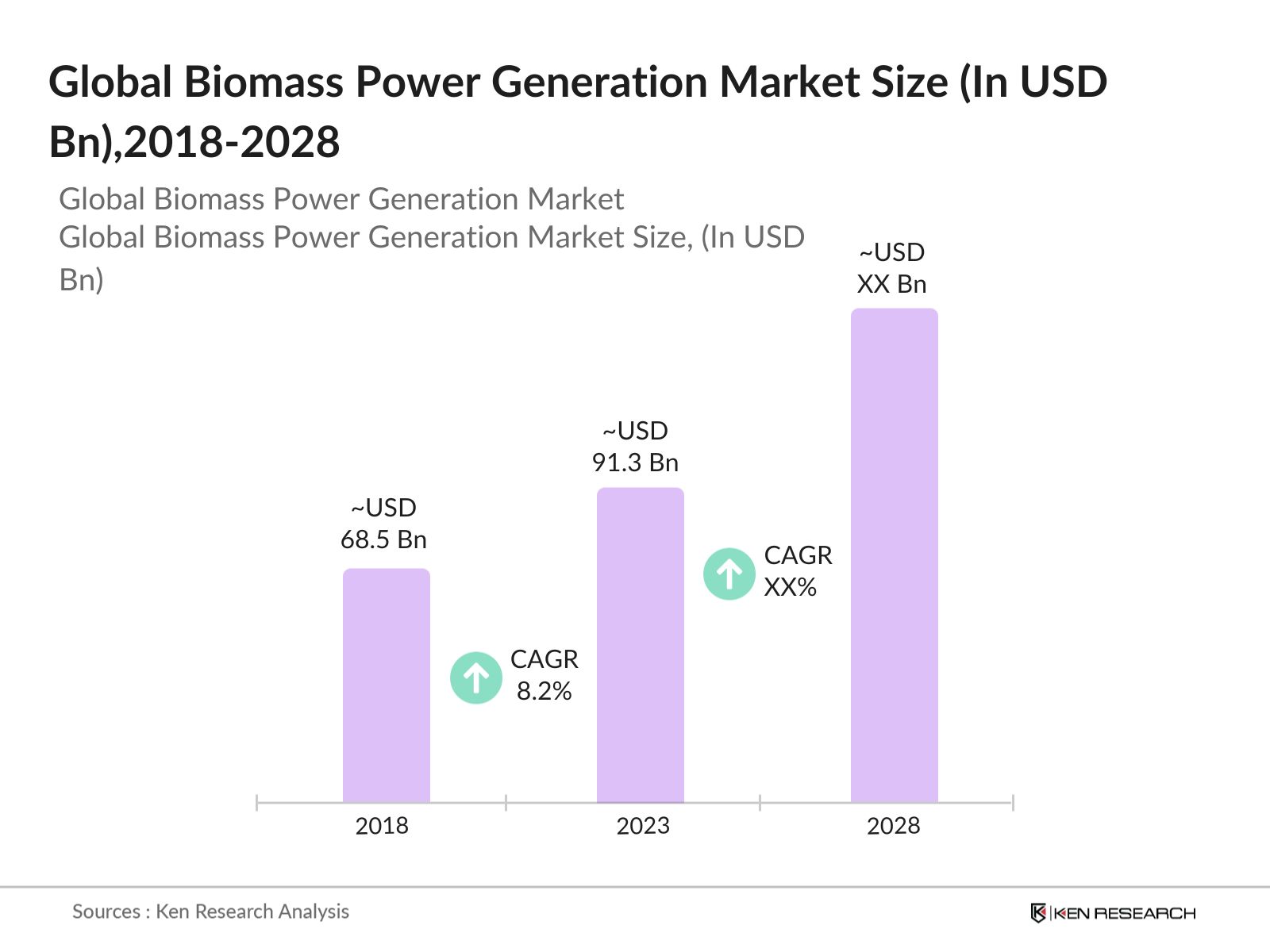
- In 2023, the Global Biomass Power Generation Market was valued at USD 91.3 billion, driven by the increasing focus on renewable energy sources and the need to reduce greenhouse gas emissions. The market's growth is propelled by the rising demand for sustainable energy solutions and the expanding use of biomass as a renewable resource for power generation.
- Major players in the biomass power generation market include Drax Group, rsted A/S, Engie SA, Enel Green Power, and Vattenfall AB. These companies are leading the industry with advanced technologies, significant investments in renewable energy projects, and strategic partnerships to enhance their biomass power generation capacities and expand their global footprint.
- In Europe, countries like Germany, Sweden, and the United Kingdom are prominent in the biomass power generation market, attributed to their strong government support for renewable energy and ambitious climate goals. These countries are investing heavily in biomass power plants and have set targets to increase the share of biomass in their energy mix.
- In 2023, Drax Group announced the expansion of its biomass power plant in North Yorkshire, UK, showcasing the company's commitment to renewable energy and sustainable practices. This initiative aligns with global efforts to reduce reliance on fossil fuels and promote cleaner energy solutions.
Global Biomass Power Generation Market Segmentation
The Global Biomass Power Generation Market can be segmented based on feedstock type, technology, application, and region:
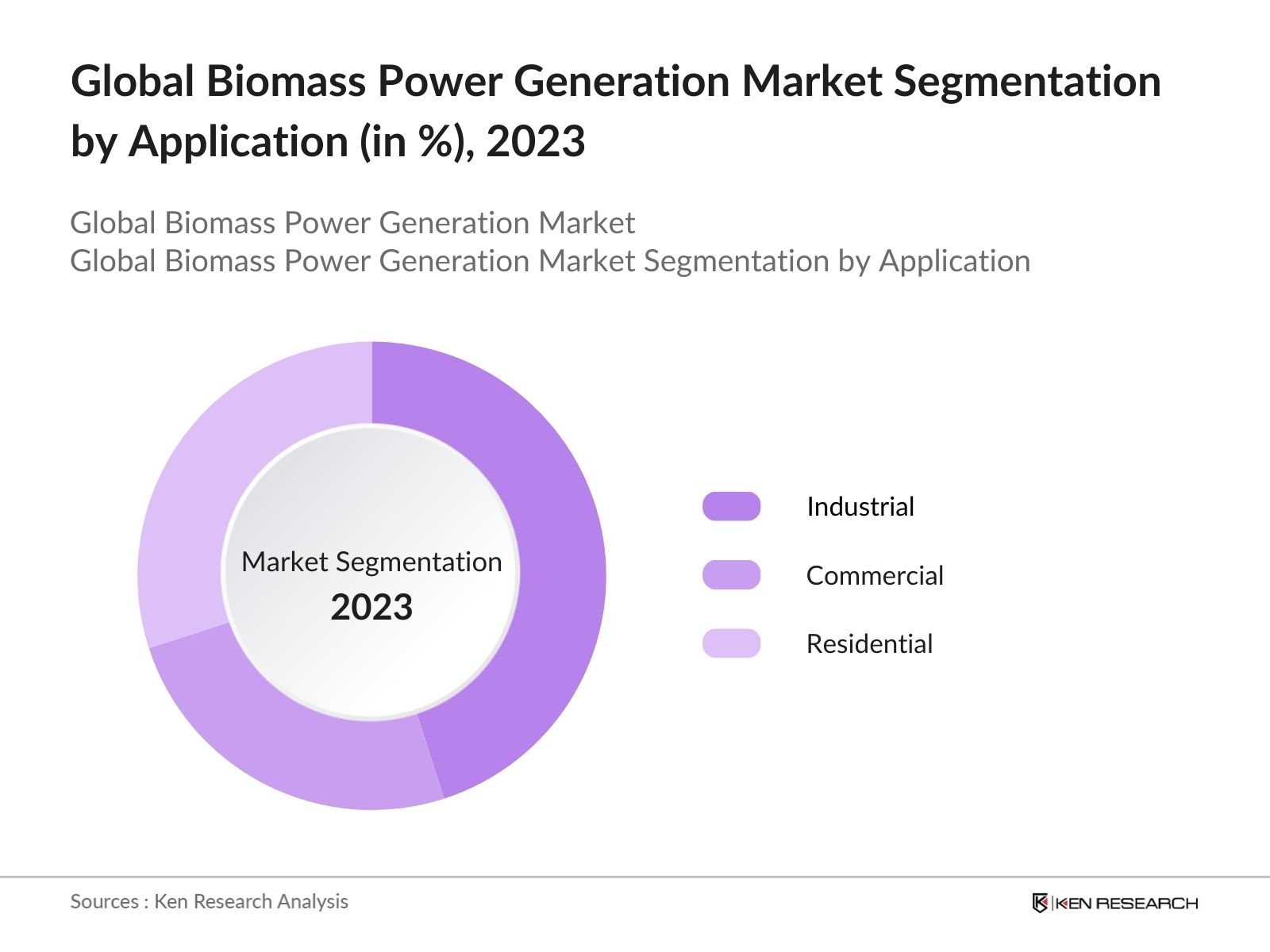
- By Application: The market is segmented into Residential, Industrial, and Commercial. In 2023, the Industrial segment held the largest market share, driven by the high demand for biomass power in industries to reduce carbon footprints and meet sustainability goals.
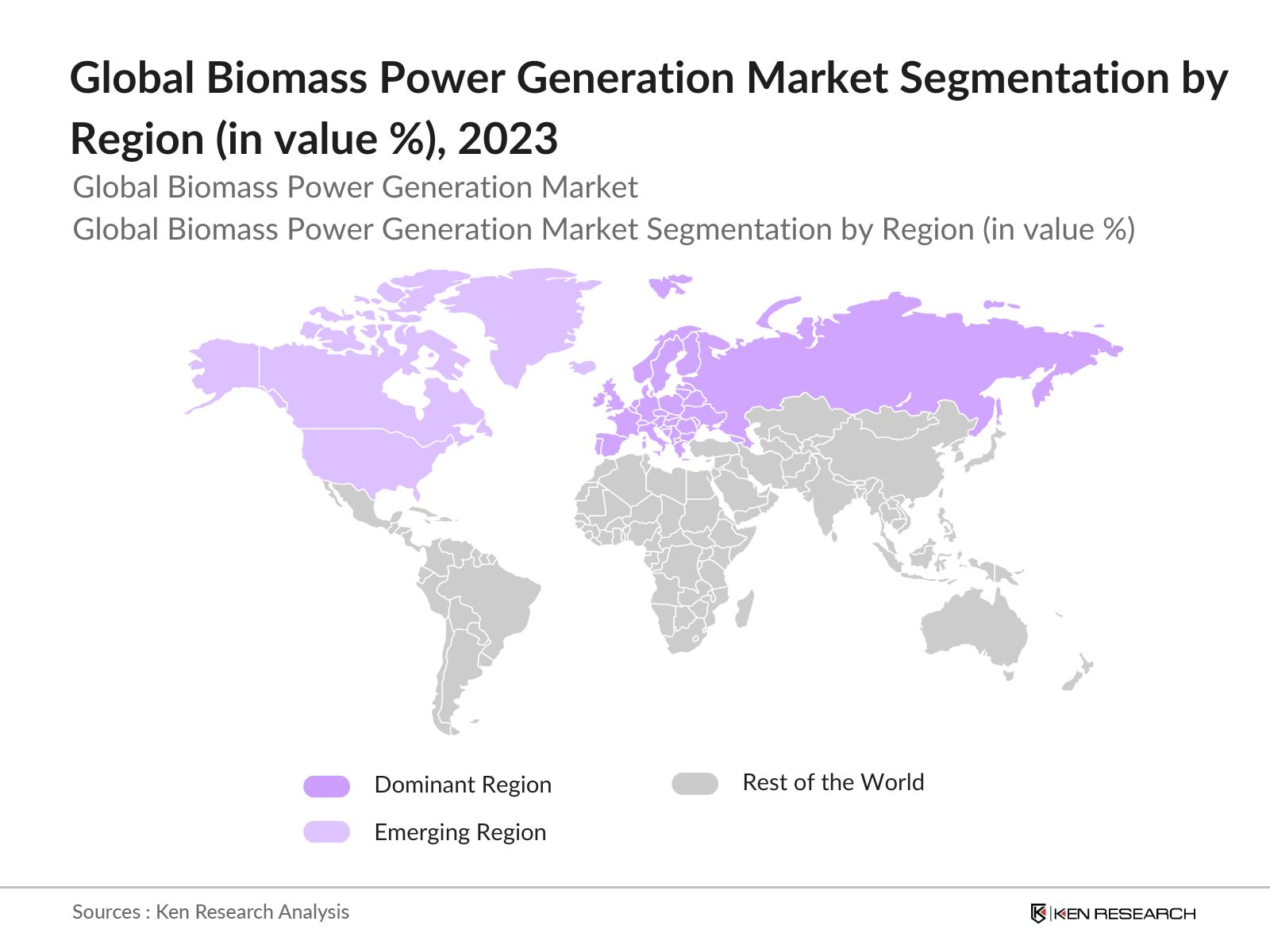
- By Region: The market is segmented into North America, Europe, Asia-Pacific, Latin America, and Middle East & Africa. Europe led the global market in 2023, holding the largest share due to significant investments in biomass power plants and strong governmental support for renewable energy.
- By Feedstock Type: The market is segmented into Agricultural Residues, Wood and Woody Biomass, Urban Residues, and Energy Crops. In 2023, the Wood and Woody Biomass segment held the largest market share, driven by the high availability of wood resources and the established infrastructure for wood-based power generation.
Global Biomass Power Generation Market Competitive Landscape
|
Company |
Establishment Year |
Headquarters |
|
Drax Group |
1974 |
Selby, UK |
|
rsted A/S |
2006 |
Fredericia, Denmark |
|
Engie SA |
2008 |
Paris, France |
|
Enel Green Power |
2008 |
Rome, Italy |
|
Vattenfall AB |
1909 |
Stockholm, Sweden |
Drax Group: In 2023, Drax Group expanded its biomass power plant capacity, emphasizing low-carbon energy production. The company also partnered with various forest management organizations to ensure sustainable biomass sourcing and enhance its renewable energy capabilities.
rsted A/S: rsted A/S continued to dominate the market with its comprehensive portfolio of renewable energy projects, including biomass power generation. The company expanded its global network of biomass plants and developed new partnerships to promote sustainable energy practices.
Global Biomass Power Generation Market Analysis
Market Growth Drivers:
Government Support and Incentives: The European Union, for instance, has allocated over 1 billion specifically for biomass projects as part of its Green Deal, aiming to support research, development, and deployment of biomass technologies. The United States offers various grants and incentives through the USDA and DOE, like the Rural Energy for America Program (REAP), to promote biomass energy projects.
Rising Demand for Renewable Energy: The global shift towards renewable energy to combat climate change is driving the demand for biomass power. In 2023, biomass accounted for 35% of Swedens total energy consumption, driven by the countrys emphasis on renewable energy and sustainable forestry practices. In Finland, biomass power represented around 30% of renewable energy consumption, supported by the governments National Energy and Climate Strategy targeting increases in renewable energy production, including biomass.
Increasing Demand for Energy Security and Independence: The European Union has turned to biomass to enhance energy security and reduce reliance on imported natural gas and oil, with countries like Germany and Poland accelerating investments in biomass power plants in 2023.
Market Challenges:
Competition with Other Renewable Sources: Biomass faces competition from other renewable energy sources, such as solar and wind power. As these technologies also aim to reduce carbon emissions, biomass must continuously prove its economic viability and environmental benefits.
Sustainability Concerns: The sustainability of biomass resources, particularly regarding deforestation and land-use changes, poses a significant challenge. Ensuring sustainable sourcing of biomass feedstocks is crucial to maintain environmental integrity and public acceptance.
Government Initiatives:
- European Union Green Deal: The European Unions Green Deal is a comprehensive strategy aimed at making Europe the first climate-neutral continent by 2050. As part of this strategy, the EU has been heavily investing in renewable energy projects, including biomass. The EU has allocated over 3.6 billion specifically for biomass projects to support the research, development, and deployment of advanced biomass technologies.
- United States Rural Energy for America Program (REAP): The REAP is a program by the U.S. Department of Agriculture (USDA) designed to promote energy efficiency and renewable energy production, including biomass, among rural small businesses and agricultural producers. In 2023, REAP provided grants and loan guarantees totaling USD 300 million for biomass energy projects, supporting the deployment of renewable energy technologies across the United States.
Global Biomass Power Generation Market Future Outlook
The Global Biomass Power Generation Market is expected to experience substantial growth, driven by the increasing emphasis on renewable energy solutions, technological advancements, and government support.
Future Market Trends:
Expansion of Biomass Infrastructure: By 2028, there will be increased investment in building biomass power plants globally, including facilities for converting various biomass feedstocks into electricity. This expansion will support the growing demand for biomass as a renewable energy source, especially in regions committed to reducing carbon emissions.
Increased Adoption of Hybrid Renewable Energy Systems: By 2028, there will be a rise in the adoption of hybrid renewable energy systems that combine biomass power generation with other renewable sources such as solar, wind, and hydroelectric power. This integration allows for more stable and continuous power supply, optimizing the use of diverse energy resources and enhancing overall grid reliability.
Global Biomass Power Generation Market Scope
|
By Region |
North America Europe Asia-Pacific Latin America Middle East & Africa |
|
By Feedstock Type |
Agricultural Residues Wood and Woody Biomass Urban Residues Energy Crops |
|
By Application |
Residential Industrial Commercial |
|
By Distribution Channel |
Direct Sales Distributors Online Platforms |
|
By End-User |
Utilities Industrial Residential Commercial |
Products
Key Target Audience:
Biomass Power Generation Companies
Renewable Energy Companies
Utilities and Energy Providers
Government and Regulatory Bodies (EPA, IEA, EIA)
Research & Academic Institutions
Venture Capitalists & Investment Firms
Environmental NGOs
Equipment Manufacturers
Banks and Financial Institutes
Time Period Captured in the Report:
Historical Period: 2018-2023
Base Year: 2023
Forecast Period: 2023-2028
Companies
Players Mentioned in the Report:
Drax Group
rsted A/S
Engie SA
Enel Green Power
Vattenfall AB
RWE Renewables
Veolia Environnement SA
Babcock & Wilcox Enterprises, Inc.
Fortum Oyj
Suez
Ameresco, Inc.
Iberdrola SA
Acciona, S.A.
Statkraft AS
Xcel Energy Inc.
Table of Contents
1. Global Biomass Power Generation Market Overview
1.1. Definition and Scope
1.2. Market Taxonomy
1.3. Market Growth Rate
1.4. Market Segmentation Overview
2. Global Biomass Power Generation Market Size (in USD Bn), 2018-2023
2.1. Historical Market Size
2.2. Year-on-Year Growth Analysis
2.3. Key Market Developments and Milestones
3. Global Biomass Power Generation Market Analysis
3.1. Growth Drivers
3.1.1. Government Support and Incentives
3.1.2. Rising Demand for Renewable Energy
3.1.3. Increasing Demand for Energy Security and Independence
3.1.4. Technological Advancements in Biomass Conversion
3.2. Restraints
3.2.1. Competition with Other Renewable Sources
3.2.2. Sustainability Concerns
3.2.3. Logistical and Transportation Issues
3.3. Opportunities
3.3.1. Expansion of Biomass Infrastructure
3.3.2. Integration with Carbon Capture Technologies
3.3.3. Increased Adoption of Hybrid Renewable Energy Systems
3.4. Trends
3.4.1. Rise of Sustainable Biomass Solutions
3.4.2. Growth in Industrial Applications
3.4.3. Advancements in Biomass Logistics and Supply Chain
3.5. Government Regulation
3.5.1. European Union Green Deal
3.5.2. U.S. Renewable Energy Policies
3.5.3. Japans Biomass Policy
3.5.4. Indias National Biomass Mission
3.6. SWOT Analysis
3.7. Stake Ecosystem
3.8. Competition Ecosystem
4. Global Biomass Power Generation Market Segmentation, 2023
4.1. By Feedstock Type (in Value %)
4.1.1. Agricultural Residues
4.1.2. Wood and Woody Biomass
4.1.3. Urban Residues
4.1.4. Energy Crops
4.2. By Application (in Value %)
4.2.1. Residential
4.2.2. Industrial
4.2.3. Commercial
4.3. By Technology (in Value %)
4.3.1. Combustion
4.3.2. Gasification
4.3.3. Anaerobic Digestion
4.4. By Region (in Value %)
4.4.1. North America
4.4.2. Europe
4.4.3. Asia-Pacific
4.4.4. Latin America
4.4.5. Middle East & Africa
4.5. By Distribution Channel (in Value %)
4.5.1. Direct Sales
4.5.2. Distributors
4.5.3. Online Platforms
5. Global Biomass Power Generation Market Cross Comparison
5.1. Detailed Profiles of Major Companies
5.1.1. Drax Group
5.1.2. rsted A/S
5.1.3. Engie SA
5.1.4. Enel Green Power
5.1.5. Vattenfall AB
5.1.6. RWE Renewables
5.1.7. Veolia Environnement SA
5.1.8. Babcock & Wilcox Enterprises, Inc.
5.1.9. Fortum Oyj
5.1.10. Suez
5.1.11. Ameresco, Inc.
5.1.12. Iberdrola SA
5.1.13. Acciona, S.A.
5.1.14. Statkraft AS
5.1.15. Xcel Energy Inc.
5.2. Cross Comparison Parameters (No. of Employees, Headquarters, Inception Year, Revenue)
6. Global Biomass Power Generation Market Competitive Landscape
6.1. Market Share Analysis
6.2. Strategic Initiatives
6.3. Mergers and Acquisitions
6.4. Investment Analysis
6.4.1. Venture Capital Funding
6.4.2. Government Grants
6.4.3. Private Equity Investments
7. Global Biomass Power Generation Market Regulatory Framework
7.1. Environmental Standards
7.2. Compliance Requirements
7.3. Certification Processes
8. Global Biomass Power Generation Future Market Size (in USD Bn), 2023-2028
8.1. Future Market Size Projections
8.2. Key Factors Driving Future Market Growth
9. Global Biomass Power Generation Future Market Segmentation, 2028
9.1. By Feedstock Type (in Value %)
9.2. By Application (in Value %)
9.3. By Technology (in Value %)
9.4. By Region (in Value %)
9.5. By Distribution Channel
10. Global Biomass Power Generation Market Analysts Recommendations
10.1. TAM/SAM/SOM Analysis
10.2. Customer Cohort Analysis
10.3. Marketing Initiatives
10.4. White Space Opportunity Analysis
Disclaimer
Contact Us
Research Methodology
Step 1: Identifying Key Variables
Building an ecosystem of major entities in the Global Biomass Power Generation Market and referencing multiple secondary and proprietary databases to conduct desk research. This includes gathering industry-level information on market drivers, challenges, and key players, as well as understanding technological advancements and regulatory impacts.
Step 2: Market Building
Collecting statistics on the global biomass power generation market over the years, including historical market size, growth rates, and the adoption of biomass technologies across various industries. We will analyze market share, revenue generated by major players, and emerging trends to ensure accuracy and reliability in the data presented.
Step 3: Validating and Finalizing
Formulating market hypotheses and conducting CATIs (Computer-Assisted Telephone Interviews) with industry experts from leading biomass power generation companies. These interviews will help validate the collected statistics and provide insights into operational and financial aspects directly from company representatives.
Step 4: Research Output
Our team will approach multiple biomass technology providers and understand the dynamics of market segments, consumer preferences, and sales trends. This process will validate the derived statistics using a bottom-to-top approach, ensuring that the final data accurately reflects the actual market conditions.
Frequently Asked Questions
01. How big is the Global Biomass Power Generation Market?
In 2023, the Global Biomass Power Generation Market was valued at USD 91.3 billion. The market's growth is driven by the increasing focus on renewable energy, advancements in biomass conversion technologies, and expanding applications across various sectors.
02. What are the challenges in the Global Biomass Power Generation Market?
Challenges in the Global Biomass Power Generation Market include competition with other renewable sources, sustainability concerns related to biomass sourcing, and logistical issues associated with biomass transportation.
03. Who are the major players in the Global Biomass Power Generation Market?
Major players in the Global Biomass Power Generation Market include Drax Group, rsted A/S, Engie SA, Enel Green Power, and Vattenfall AB. These companies lead the market with their innovative technologies, extensive investments, and strategic partnerships.
04. What are the growth drivers of the Global Biomass Power Generation Market?
Key growth drivers in the Global Biomass Power Generation Market include government support and incentives, rising demand for renewable energy, and technological advancements in biomass conversion and integration with carbon capture technologies.
Why Buy From Us?

What makes us stand out is that our consultants follows Robust, Refine and Result (RRR) methodology. i.e. Robust for clear definitions, approaches and sanity checking, Refine for differentiating respondents facts and opinions and Result for presenting data with story

We have set a benchmark in the industry by offering our clients with syndicated and customized market research reports featuring coverage of entire market as well as meticulous research and analyst insights.

While we don't replace traditional research, we flip the method upside down. Our dual approach of Top Bottom & Bottom Top ensures quality deliverable by not just verifying company fundamentals but also looking at the sector and macroeconomic factors.

With one step in the future, our research team constantly tries to show you the bigger picture. We help with some of the tough questions you may encounter along the way: How is the industry positioned? Best marketing channel? KPI's of competitors? By aligning every element, we help maximize success.

Our report gives you instant access to the answers and sources that other companies might choose to hide. We elaborate each steps of research methodology we have used and showcase you the sample size to earn your trust.

If you need any support, we are here! We pride ourselves on universe strength, data quality, and quick, friendly, and professional service.