
Global Bioplastics Market Outlook to 2030
Region:Global
Author(s):Shivani
Product Code:KROD10653
Region:Global
Author(s):Shivani
Product Code:KROD10653
November 2024
91
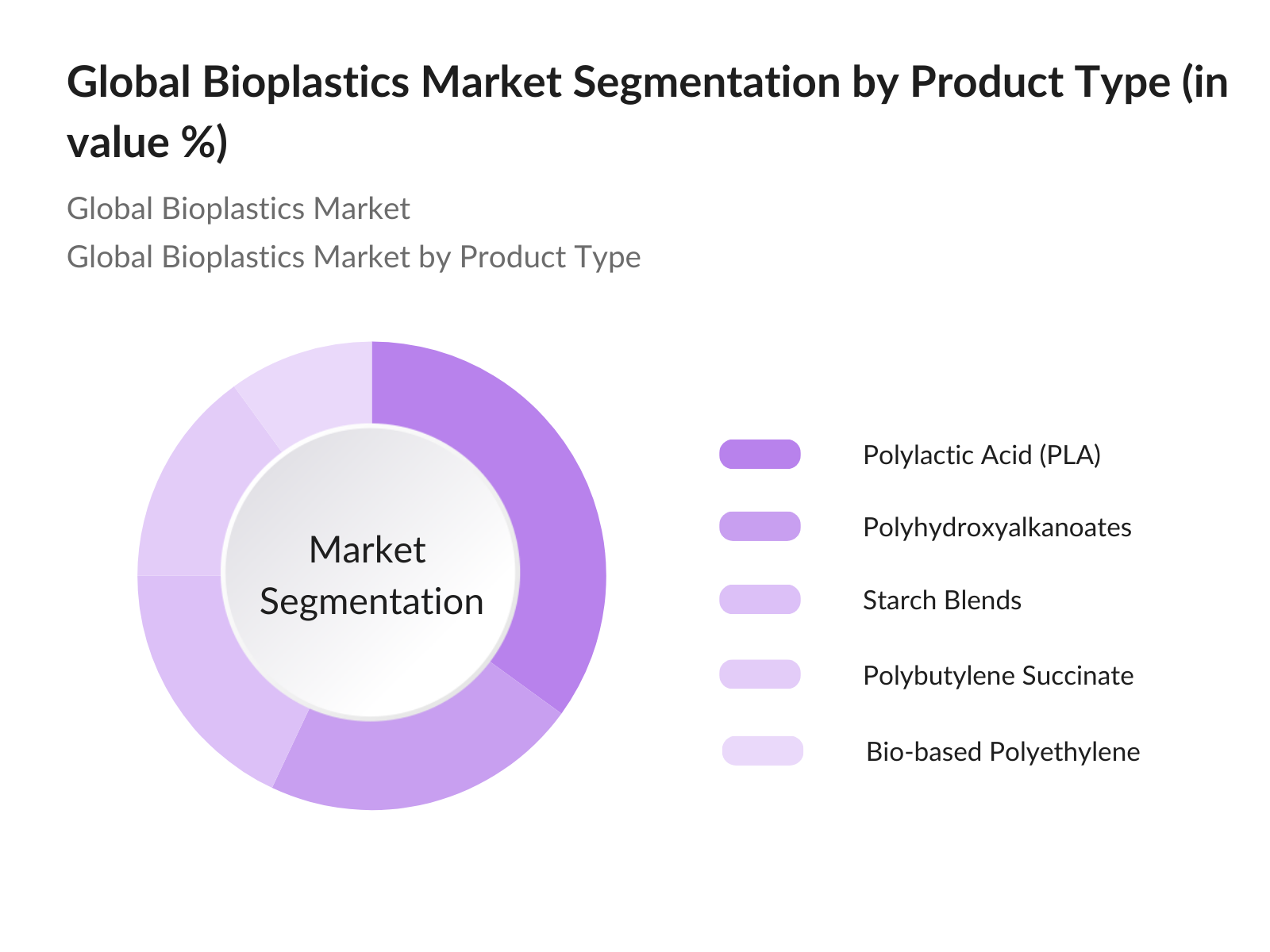
By Product Type: The global bioplastics market is segmented by product type into Polylactic Acid (PLA), Polyhydroxyalkanoates (PHA), Polybutylene Succinate (PBS), Starch Blends, and Bio-based Polyethylene (Bio-PE). Among these, PLA holds the dominant market share due to its widespread use in packaging and consumer goods applications. PLA's versatility, coupled with its compostability, makes it an attractive alternative to conventional plastics, especially for brands looking to improve sustainability and meet regulatory requirements.
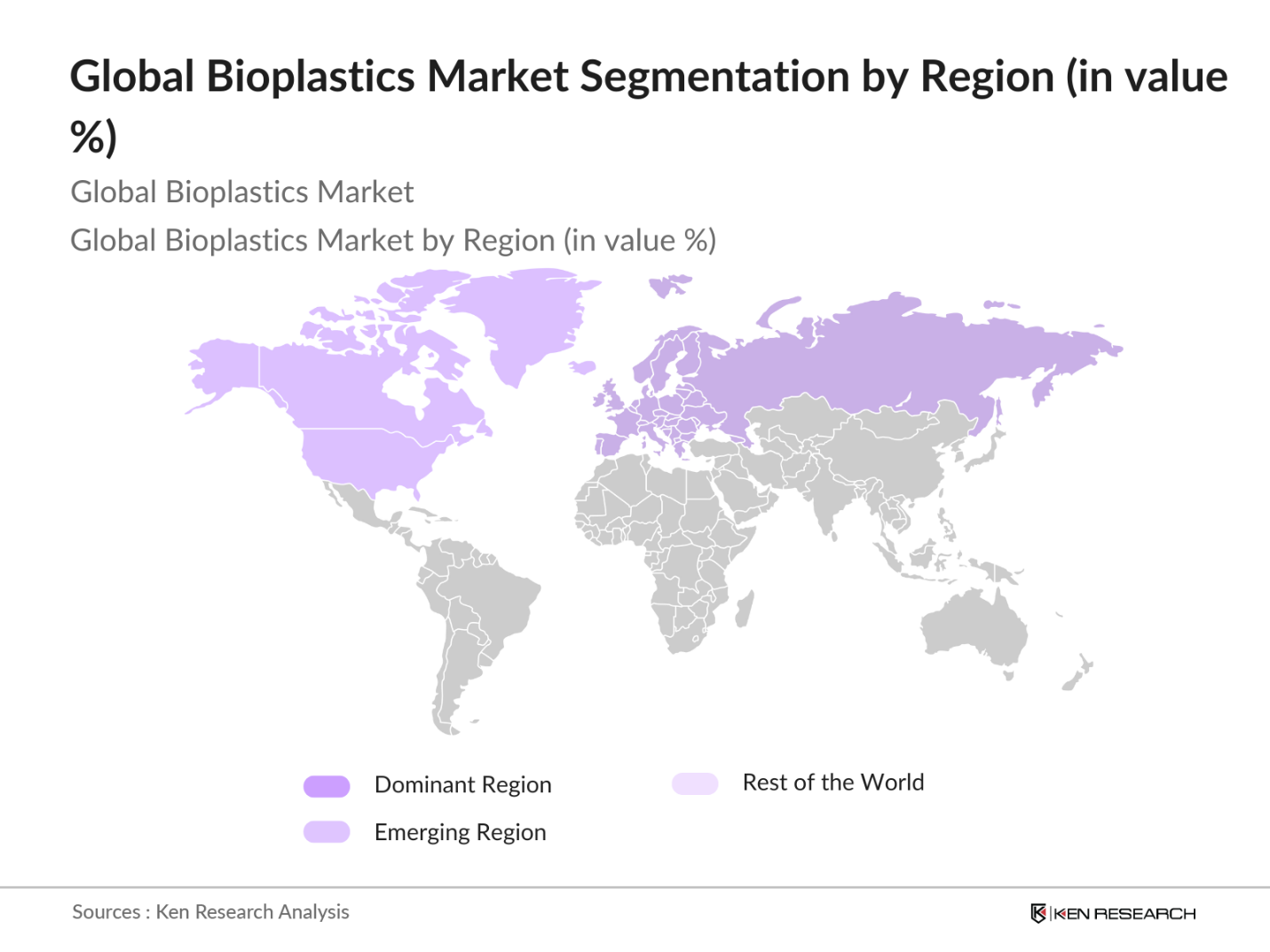
By Region: The bioplastics market is segmented into North America, Europe, Asia-Pacific, Latin America, and Middle East & Africa. Europe leads the market, supported by stringent regulations around plastic usage and high consumer demand for sustainable products. The European Union's push towards a circular economy and its aggressive regulatory frameworks have made Europe the global hub for bioplastics production and consumption, with major players operating extensively in this region.
The global bioplastics market is characterized by several key players that drive innovation and development. The consolidation of these companies highlights their significant influence on market trends and developments.
|
Company Name |
Establishment Year |
Headquarters |
Revenue (2023) |
No. of Employees |
Sustainability Initiatives |
R&D Investments |
Production Capacity |
Partnerships/Collaborations |
Certifications |
|
BASF SE |
1865 |
Ludwigshafen, Germany |
USD 95 Bn |
||||||
|
NatureWorks LLC |
1989 |
Minnesota, USA |
USD 1 Bn |
||||||
|
Braskem |
1972 |
So Paulo, Brazil |
USD 19 Bn |
||||||
|
Novamont S.p.A |
1990 |
Novara, Italy |
USD 1.5 Bn |
||||||
|
TotalEnergies Corbion |
2017 |
Gorinchem, Netherlands |
USD 500 Mn |
Market Growth Drivers
Market Challenges:
Over the next five years, the global bioplastics market is expected to experience significant growth, driven by stringent environmental regulations, increasing consumer awareness of plastic pollution, and technological advancements in bio-based materials. Key sectors such as packaging, automotive, and agriculture will continue to adopt bioplastics to meet sustainability goals and reduce reliance on fossil-based plastics. Innovations in feedstock, alongside a strong push from governments worldwide, are expected to propel the market further.
Market Opportunities:
|
By Product Type |
Polylactic Acid (PLA) Polyhydroxyalkanoates (PHA) PBS Starch Blends Bio-PE |
|
By Application |
Packaging Agriculture Consumer Goods Automotive Textile |
|
By End-User Industry |
Packaging Agriculture Consumer Goods Automotive Healthcare |
|
By End-User |
Corn Sugarcane Cassava Wood Fibers |
|
By Region |
North America Europe Asia-Pacific Latin America Middle East & Africa |
1.1. Definition and Scope
1.2. Market Taxonomy
1.3. Market Growth Rate
1.4. Market Segmentation Overview
2.1. Historical Market Size
2.2. Year-On-Year Growth Analysis
2.3. Key Market Developments and Milestones
3.1. Growth Drivers (Biodegradability, Government Regulations, Sustainability Goals, Fossil Fuel Dependency Reduction)
3.2. Market Challenges (Cost Competitiveness, Limited Feedstock Availability, Processing Challenges, Infrastructure Gaps)
3.3. Opportunities (Emerging Technologies in Production, Brand Adoption, Circular Economy, Investment in Bio-based Raw Materials)
3.4. Trends (Increasing R&D Investment, Partnerships for Raw Material Supply, Certification Requirements, Consumer Preference Shift Towards Eco-Friendly Products)
3.5. Government Regulations (National Plastic Waste Policies, Bio-based Material Incentives, Carbon Footprint Reduction Goals, Biodegradable Plastics Standards)
3.6. SWOT Analysis
3.7. Stakeholder Ecosystem (Raw Material Suppliers, Technology Providers, Bioplastic Manufacturers, End-Users, Recyclers)
3.8. Porters Five Forces
3.9. Competitive Ecosystem
4.1. By Product Type (In Value %)
Polylactic Acid (PLA)
Polyhydroxyalkanoates (PHA)
Polybutylene Succinate (PBS)
Starch Blends
Bio-based Polyethylene (Bio-PE) 4.2. By Application (In Value %)
Packaging
Agriculture
Consumer Goods
Automotive
Textile
4.3. By End-User Industry (In Value %)
Packaging Industry
Agriculture Industry
Consumer Goods Industry
Automotive Industry
Healthcare Industry
4.4. By Feedstock Type (In Value %)
Corn
Sugarcane
Cassava
Wood Fibers
4.5. By Region (In Value %)
North America
Europe
Asia-Pacific
Latin America
Middle East & Africa
5.1 Detailed Profiles of Major Companies
5.1.1. BASF SE
5.1.2. NatureWorks LLC
5.1.3. TotalEnergies Corbion
5.1.4. Braskem
5.1.5. Novamont S.p.A
5.1.6. Biome Bioplastics
5.1.7. Mitsubishi Chemical Corporation
5.1.8. Danimer Scientific
5.1.9. Plantic Technologies Ltd.
5.1.10. Cardia Bioplastics
5.1.11. FKuR Kunststoff GmbH
5.1.12. Synbra Technology B.V.
5.1.13. Biotec GmbH & Co. KG
5.1.14. Avantium
5.1.15. Green Dot Bioplastics
5.2 Cross Comparison Parameters (Market Share, Revenue, Headquarters, Product Portfolio, Sustainability Initiatives, Number of Patents, Collaborations, Raw Material Sourcing)
5.3. Market Share Analysis
5.4. Strategic Initiatives (Product Launches, Sustainability Drives, Expansion into New Regions)
5.5. Mergers and Acquisitions
5.6. Investment Analysis
5.7. Venture Capital Funding
5.8. Government Grants
5.9. Private Equity Investments
6.1. Environmental Standards (EU Green Deal, U.S. BioPreferred Program, Japans Bioplastic Standards)
6.2. Compliance Requirements (Food Contact Regulations, Certification for Compostability, Biodegradability Standards)
6.3. Certification Processes (EN 13432, ASTM D6400, ISO 17088, OK Compost)
7.1. Future Market Size Projections
7.2. Key Factors Driving Future Market Growth
8.1. By Product Type (In Value %)
8.2. By Application (In Value %)
8.3. By End-User Industry (In Value %)
8.4. By Feedstock Type (In Value %)
8.5. By Region (In Value %)
9.1. TAM/SAM/SOM Analysis
9.2. White Space Opportunity Analysis
9.3. Strategic Partnerships
9.4. Sustainability Goals Alignment
In the first phase, we identified the key stakeholders and mapped out the global bioplastics ecosystem. This involved extensive desk research, which incorporated a mix of secondary data sources such as government publications, industry reports, and proprietary databases to construct a detailed overview of market variables.
This phase involved compiling historical market data on the global bioplastics market, including production volumes, revenue generation, and technology adoption rates. We also assessed key developments in bio-based material research to ensure a comprehensive market analysis.
We engaged industry experts through telephonic interviews and surveys to validate our hypotheses regarding the market's trajectory. These consultations provided key insights into industry practices and financial performance, which helped in refining our final analysis.
Finally, we synthesized the data collected from interviews and secondary research into a comprehensive report. This stage included detailed product segment analyses, consumer preferences, and competitive landscape evaluations to provide a validated, data-driven report.
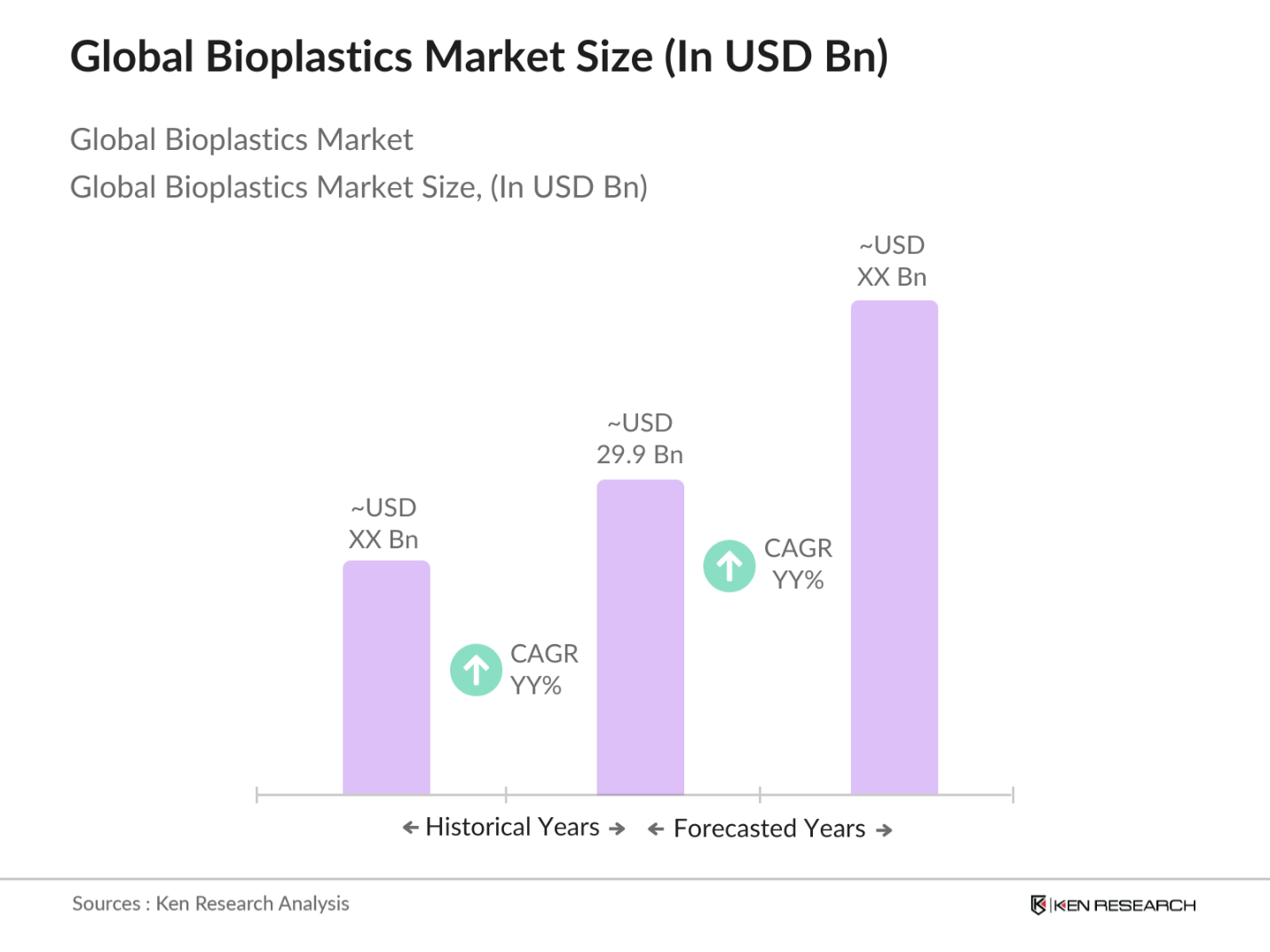
The global bioplastics market, valued at USD 29.9 billion, is driven by increasing demand for eco-friendly packaging, regulatory pressures, and consumer preferences for sustainable products.
Key challenges include cost competitiveness with conventional plastics, limited infrastructure for composting and recycling, and the availability of sustainable raw materials.
Major players in the bioplastics market include BASF SE, NatureWorks LLC, TotalEnergies Corbion, Braskem, and Novamont S.p.A., known for their strong sustainability initiatives and bio-based product portfolios.
The growth of the bioplastics market is driven by regulatory support for reducing plastic waste, consumer demand for sustainable packaging, and innovations in bio-based materials and technologies.

What makes us stand out is that our consultants follows Robust, Refine and Result (RRR) methodology. i.e. Robust for clear definitions, approaches and sanity checking, Refine for differentiating respondents facts and opinions and Result for presenting data with story

We have set a benchmark in the industry by offering our clients with syndicated and customized market research reports featuring coverage of entire market as well as meticulous research and analyst insights.

While we don't replace traditional research, we flip the method upside down. Our dual approach of Top Bottom & Bottom Top ensures quality deliverable by not just verifying company fundamentals but also looking at the sector and macroeconomic factors.

With one step in the future, our research team constantly tries to show you the bigger picture. We help with some of the tough questions you may encounter along the way: How is the industry positioned? Best marketing channel? KPI's of competitors? By aligning every element, we help maximize success.

Our report gives you instant access to the answers and sources that other companies might choose to hide. We elaborate each steps of research methodology we have used and showcase you the sample size to earn your trust.

If you need any support, we are here! We pride ourselves on universe strength, data quality, and quick, friendly, and professional service.