















Global Blood Culture Testing Market Outlook to 2030
Region:Global
Author(s):Sanjana
Product Code:KROD542
October 2024
88
About the Report
Global Blood Culture Testing Market Overview
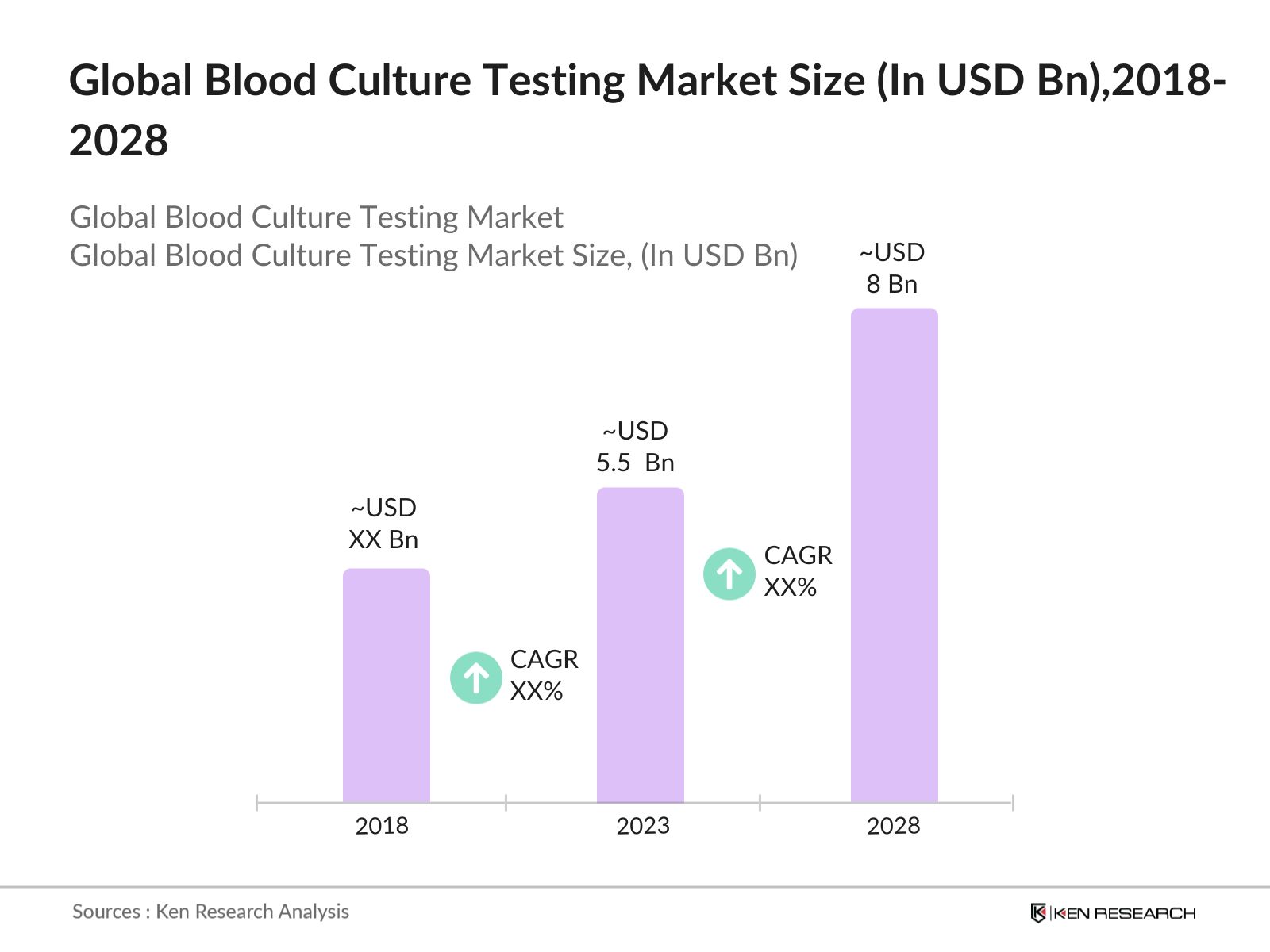
- Global Blood Culture Testing Market was valued at USD 5.5 billion in 2023, driven by advancements in medical diagnostics and increasing incidences of bloodstream infections. Enhanced diagnostic accuracy and faster results have led to higher adoption rates in both developed and developing regions.
- Key players in the global Blood Culture Testing Market include Becton, Dickinson and Company, bioMrieux SA, Thermo Fisher Scientific Inc., Luminex Corporation, and Bruker Corporation. These companies are leading due to their extensive product portfolios, innovative technologies, and strong global presence.
- In April 2023, Thermo Fisher Scientific launched a new automated blood culture system, enhancing the speed and accuracy of infection detection. This development is expected to significantly impact the market by reducing diagnosis times and improving patient outcomes.
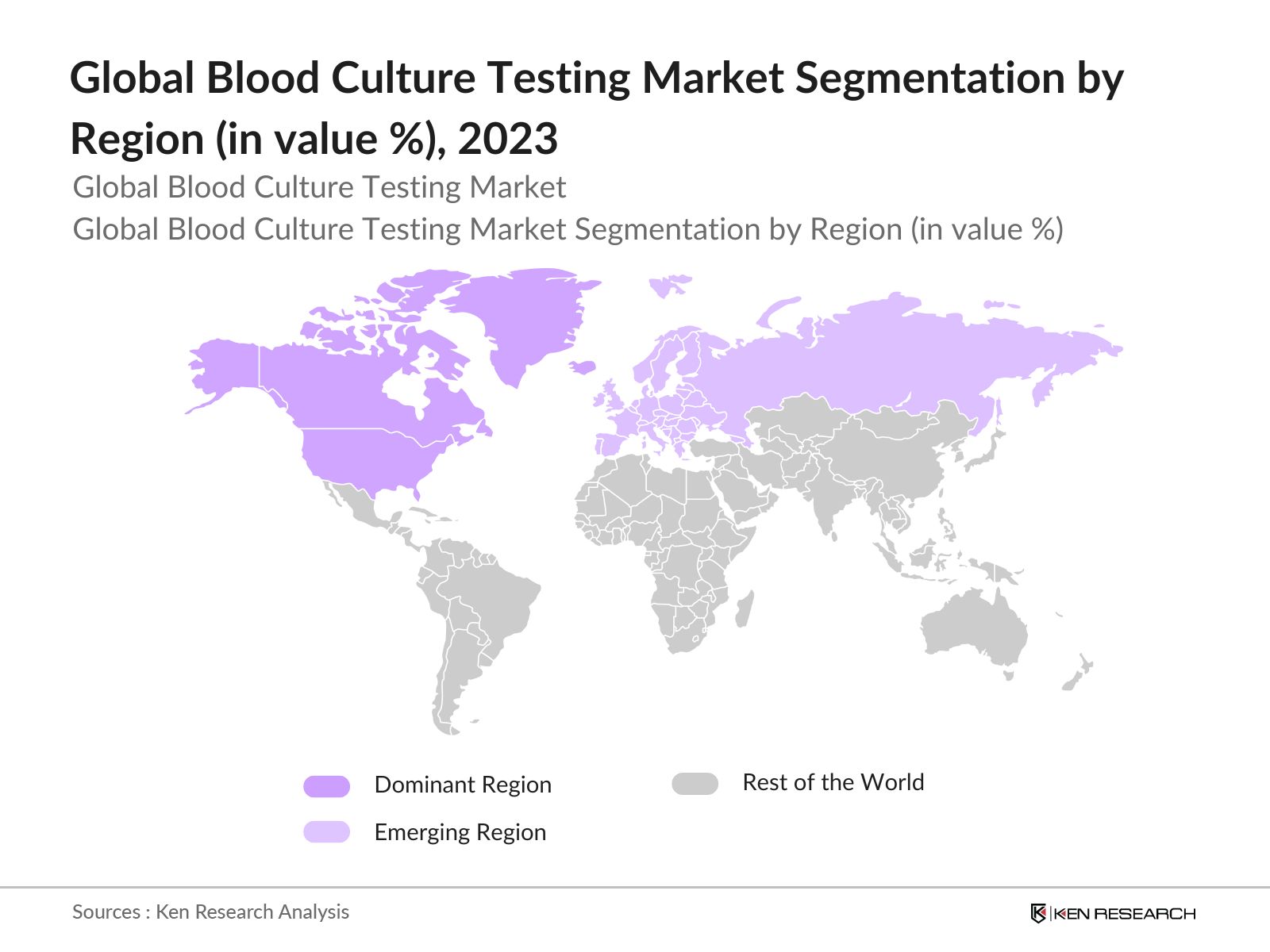
- North America dominates the Global Blood Culture Testing Market since North America, particularly the United States, has a well-established and advanced healthcare infrastructure. Hospitals and diagnostic centers in this region are equipped with state-of-the-art technologies, facilitating the adoption of sophisticated blood culture testing systems.
Global Blood Culture Testing Market Segmentation
The Global Blood Culture Testing Market can be segmented based on several factors:
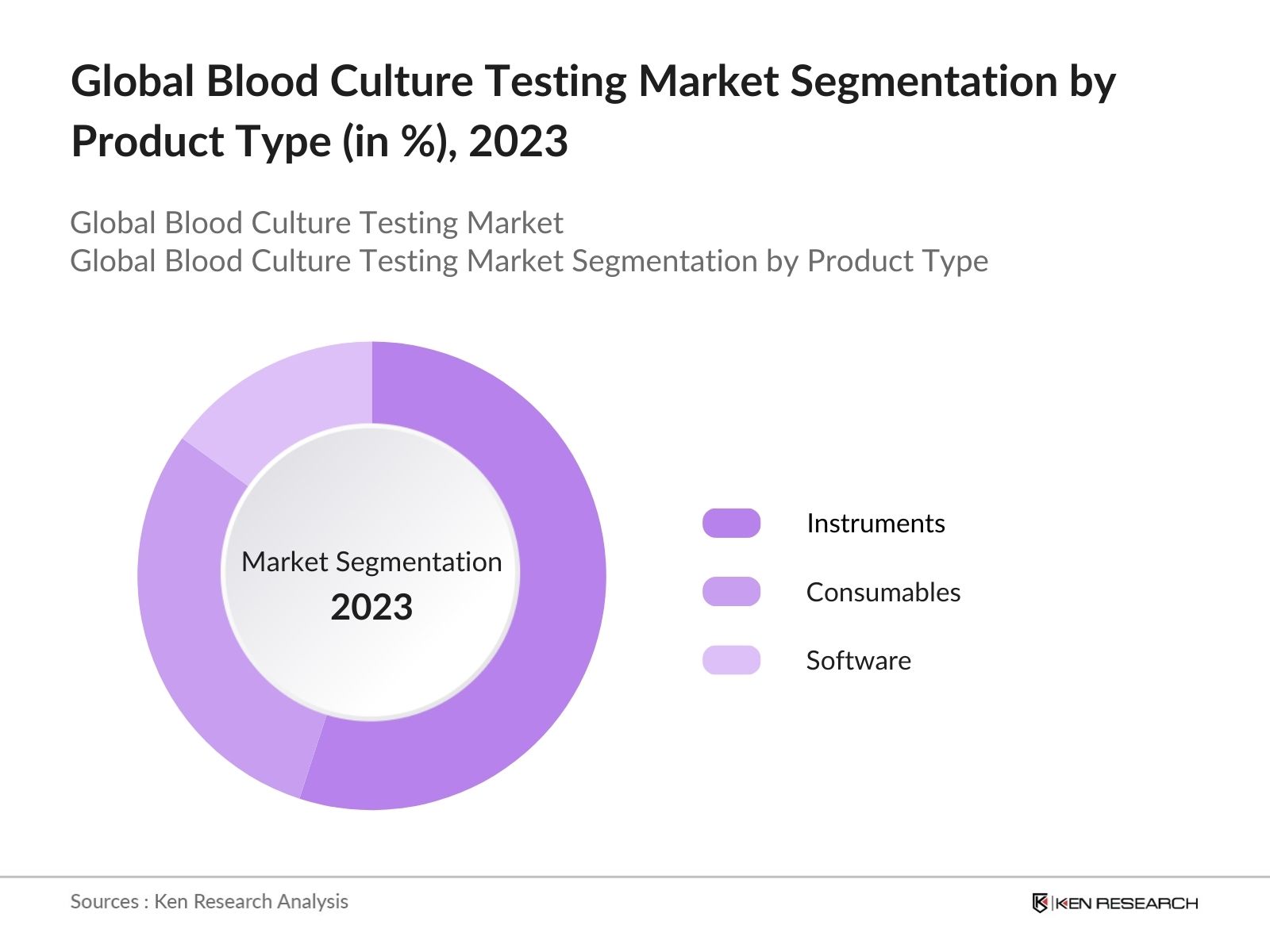
By Product Type: Global Blood Culture Testing Market is segmented by product into consumables, instruments & software. In 2023, consumables dominated this segment due to their recurring need and high usage in blood culture tests. This includes blood culture bottles, media, and assay kits, which are essential for each testing process. This consistent demand for consumables is driven by their crucial role in ensuring accurate and reliable test results, making them indispensable in clinical diagnostics.
By Application: Global Blood Culture Testing Market is segmented by application into Bacteremia, Fungemia and Mycobacterial Detection. Bacteremia detection held the dominant share in 2023 due to the high incidence of bacterial infections and the critical need for timely diagnosis and treatment to prevent severe complications. The rising prevalence of sepsis and hospital-acquired infections further underscores the importance of Bacteremia detection in clinical settings.
By Region: Global Blood Culture Testing Market is segmented by region into North America, Europe, Asia-Pacific, Latin America, Middle East & Africa regions. In 2023, North America region is dominating this segment. North America, particularly the United States, has one of the most advanced healthcare infrastructures in the world. This includes a high number of hospitals, diagnostic laboratories, and research institutions equipped with state-of-the-art technology and facilities.
Global Blood Culture Testing Market Competitive Landscape
|
Company Name |
Establishment Year |
Headquarters |
|
Becton, Dickinson and Company |
1897 |
Franklin Lakes, USA |
|
bioMrieux SA |
1963 |
Marcy l'Etoile, France |
|
Thermo Fisher Scientific Inc. |
1956 |
Waltham, USA |
|
Luminex Corporation |
1995 |
Austin, USA |
|
Bruker Corporation |
1960 |
Billerica, USA |
- bioMerieux Blood Culture Identification: In 2023, bioMrieux launched its BIOFIRE Blood Culture Identification 2 Panel, which can identify over 40 pathogens and antimicrobial resistance genes from positive blood cultures in about 1 hour. This syndromic panel helps guide antibiotic stewardship by enabling rapid, accurate diagnosis of bloodstream infections.
- Cytek Biosciences: In 2023, Cytek Biosciences, Inc. has completed the acquisition of the Flow Cytometry & Imaging business unit from Luminex Corporation for $44.9 million. This strategic move reflects Luminex's focus on its core competencies and positions Cytek to enhance its product offerings in the flow cytometry market.
- Bruker: In 2023, Bruker introduced new In Vitro Diagnostic (IVD) solutions specifically for mycobacteria and fungi. This includes advancements in their Biotyper system and a novel LiquidArray gastrointestinal syndromic panel, enhancing their offerings in the blood culture testing arena
Global Blood Culture Testing Industry Analysis
Growth Drivers:
- Rising Incidence of Bloodstream Infections: The increasing prevalence of bloodstream infections globally is a significant growth driver for the blood culture testing market. According to National Institute of Health, an estimated 250,000 The rise in hospital-acquired infections (HAIs) has further boosted the demand for advanced diagnostic solutions like blood culture testing systems.
- Increasing Healthcare Expenditure: Governments worldwide are increasing healthcare budgets, which directly impacts the growth of the blood culture testing market. Health spending in the U.S. increased by 4.1% in 2022 to $13,493 per capita. This rise in spending enables healthcare facilities to invest in advanced diagnostic technologies, including blood culture testing systems, enhancing their diagnostic capabilities.
- Technological Advancements in Diagnostic Tools: Innovations in diagnostic technologies have significantly contributed to the growth of the blood culture testing market. POCT devices provide rapid diagnostic results at the patient's bedside, clinic, or community setting. These advancements reduce the time required for diagnosis, leading to better patient outcomes and increased adoption of these technologies in healthcare settings.
Challenges:
- High Cost of Advanced Diagnostic Systems: The high cost of automated and advanced blood culture testing systems poses a significant challenge for market growth. The average cost of a fully automated blood culture system ranges from $50,000 to $100,000, which can be prohibitive for smaller healthcare facilities, particularly in developing regions. This cost factor limits the widespread adoption of these advanced diagnostic tools.
- Stringent Regulatory Requirements: The blood culture testing market faces stringent regulatory requirements for the approval and commercialization of diagnostic products. Regulatory bodies such as the U.S. Food and Drug Administration (FDA) and the European Medicines Agency (EMA) impose rigorous standards, which can delay product launches and increase compliance costs for manufacturers. These regulatory hurdles can impede market growth.
Government Initiatives:
- Sepsis Prevention Initiative: In 2023, The Centers for Disease Control and Prevention (CDC) introduced the Hospital Sepsis Program Core Elements, which aims to improve sepsis identification and management in hospitals. This initiative emphasizes the need for effective sepsis programs, rapid diagnosis, and appropriate treatment to enhance survival rates. It is part of a broader effort to strengthen hospital capabilities in recognizing and treating sepsis, which is a major cause of mortality in healthcare settings.
- National Health Service (NHS) Diagnostics Program: The NHS Diagnostics Program, initiated in 2020, aims to establish Community Diagnostic Centers across England with a budget of USD 271 million every year to digitize diagnostics care across the NHS using the latest technology. Furthermore, the NHS has also invested $26.5 million in an AI Diagnostic Fund to accelerate the deployment of artificial intelligence tools in diagnostics, aiming to improve the speed and accuracy of patient diagnoses.
Global Blood Culture Testing Future Market Outlook
The Global Blood Culture Testing Market is projected to reach USD 8 billion by 2028, being driven by continuous advancements in diagnostic technologies and increasing healthcare expenditure.
Future Market Trends
- Integration of AI and Machine Learning: In the future, the integration of AI and machine learning technologies in blood culture testing systems will become more prevalent. These technologies will enhance the accuracy and speed of pathogen detection, reducing the time required for diagnosis and improving patient outcomes. AI-powered systems will also assist in identifying patterns and trends in infection rates, aiding in the development of targeted treatment strategies.
- Expansion of Point-of-Care Testing: The adoption of point-of-care blood culture testing will increase, particularly in remote and underserved areas. Portable and easy-to-use blood culture testing devices will enable healthcare providers to conduct tests at the point of care, improving accessibility and timely diagnosis. This trend will be driven by ongoing innovations in miniaturized diagnostic technologies and the need for rapid, on-site testing solutions.
Scope of the Report
|
By Region |
North America Europe Asia Pacific Latin America Middle East Africa |
|
By Product Type |
Instruments Software & Services |
|
By Application |
Bacteremia Fungemia Mycobacterial Detection |
|
By Technology |
Molecular Technologies Proteomics Technology |
|
By End User |
Reference Laboratories Academic Research Laboratories Others |
Products
Key Target Audience Organizations and Entities who can benefit by Subscribing This Report:
Hospitals and Clinics
Diagnostic Laboratories
Biotechnology Companies
Pharmaceutical Companies
Medical Device Manufacturers
Healthcare IT Companies
Investment & Venture Capital Firms
Government & Regulatory Bodies (FDA, EMA)
Time Period Captured in the Report:
Historical Period: 2018-2023
Base Year: 2023
Forecast Period: 2023-2028
Companies
Players Mentioned in the Report:
Becton, Dickinson and Company
bioMrieux SA
Thermo Fisher Scientific Inc.
Luminex Corporation
Bruker Corporation
Cepheid Inc.
Roche Diagnostics
Abbott Laboratories
Siemens Healthineers
Danaher Corporation
Table of Contents
Research Methodology
Step 1: Identifying Key Variables:
Ecosystem creation for all the major entities and referring to multiple secondary and proprietary databases to perform desk research around market to collate industry level information.
Step 2: Market Building:
Collating statistics on Global Blood Culture Testing Market over the years, penetration of marketplaces and service providers ratio to compute revenue generated for Blood Culture Testing Market. We will also review service quality statistics to understand revenue generated which can ensure accuracy behind the data points shared.
Step 3: Validating and Finalizing:
Building market hypothesis and conducting CATIs with industry experts belonging to different companies to validate statistics and seek operational and financial information from company representatives.
Step 4: Research output:
Our team will approach multiple blood culture testing suppliers and distributors companies and understand nature of product segments and sales, consumer preference and other parameters, which will support us validate statistics derived through bottom to top approach from blood culture testing suppliers and distributors companies.
Frequently Asked Questions
01. How big is Global Blood Culture Testing Market?
Global Blood Culture Testing Market was valued at USD 5.5 billion in 2023, driven by advancements in medical diagnostics and increasing incidences of bloodstream infections.
02. What are challenges in Global Blood Culture Testing Market?
Challenges in Global Blood Culture Testing Market include the high cost of advanced diagnostic systems, limited access to healthcare in developing regions, and stringent regulatory requirements that can delay product launches and increase compliance costs.
03. Who are the major players in Global Blood Culture Testing Market?
Key players in the Global Blood Culture Testing Market include Becton, Dickinson and Company, bioMrieux SA, Thermo Fisher Scientific Inc., Luminex Corporation, and Bruker Corporation. These companies are leading due to their extensive product portfolios, innovative technologies, and strong global presence.
04 What are the growth drivers of the Global Blood Culture Testing Market?
Global Blood Culture Testing Market is propelled by the rising incidence of bloodstream infections, increasing healthcare expenditure globally, and technological advancements in diagnostic tools, enhancing the accuracy and speed of pathogen detection.
Why Buy From Us?

What makes us stand out is that our consultants follows Robust, Refine and Result (RRR) methodology. i.e. Robust for clear definitions, approaches and sanity checking, Refine for differentiating respondents facts and opinions and Result for presenting data with story

We have set a benchmark in the industry by offering our clients with syndicated and customized market research reports featuring coverage of entire market as well as meticulous research and analyst insights.

While we don't replace traditional research, we flip the method upside down. Our dual approach of Top Bottom & Bottom Top ensures quality deliverable by not just verifying company fundamentals but also looking at the sector and macroeconomic factors.

With one step in the future, our research team constantly tries to show you the bigger picture. We help with some of the tough questions you may encounter along the way: How is the industry positioned? Best marketing channel? KPI's of competitors? By aligning every element, we help maximize success.

Our report gives you instant access to the answers and sources that other companies might choose to hide. We elaborate each steps of research methodology we have used and showcase you the sample size to earn your trust.

If you need any support, we are here! We pride ourselves on universe strength, data quality, and quick, friendly, and professional service.