















Global Brain Implants Market Outlook to 2030
Region:Global
Author(s):Ananya Singh
Product Code:KROD8797
November 2024
98
About the Report
Global Brain Implants Market Overview
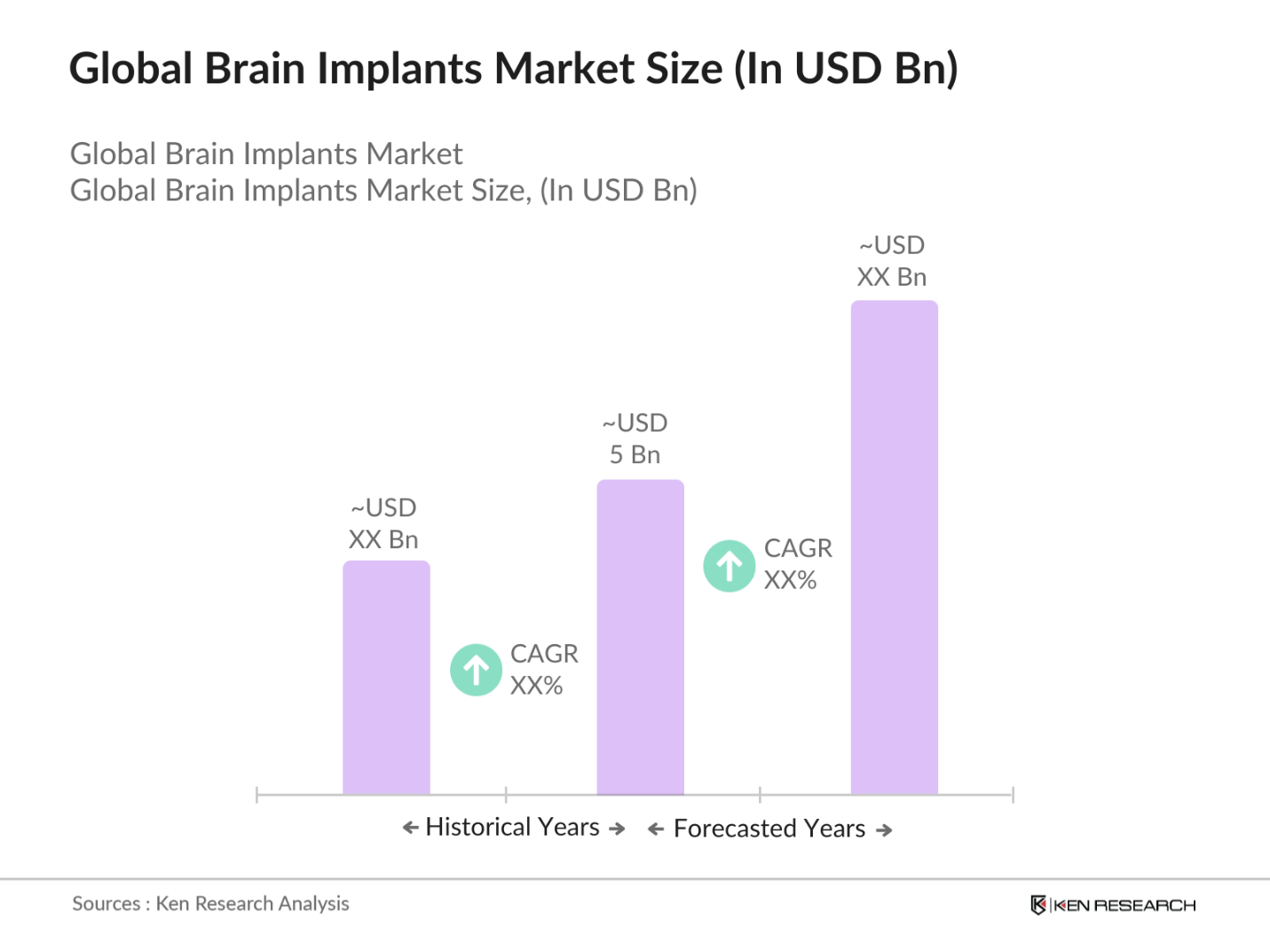
- The Global Brain Implants Market is valued at USD 5 billion. The markets growth is fueled by the rising incidence of neurological disorders, advancements in neurotechnology, and increasing adoption of neural interfaces in treatment protocols. Brain implants, particularly deep brain stimulators, have witnessed a surge in demand due to their effectiveness in treating conditions such as Parkinson's disease and epilepsy, driving significant investments from healthcare providers.
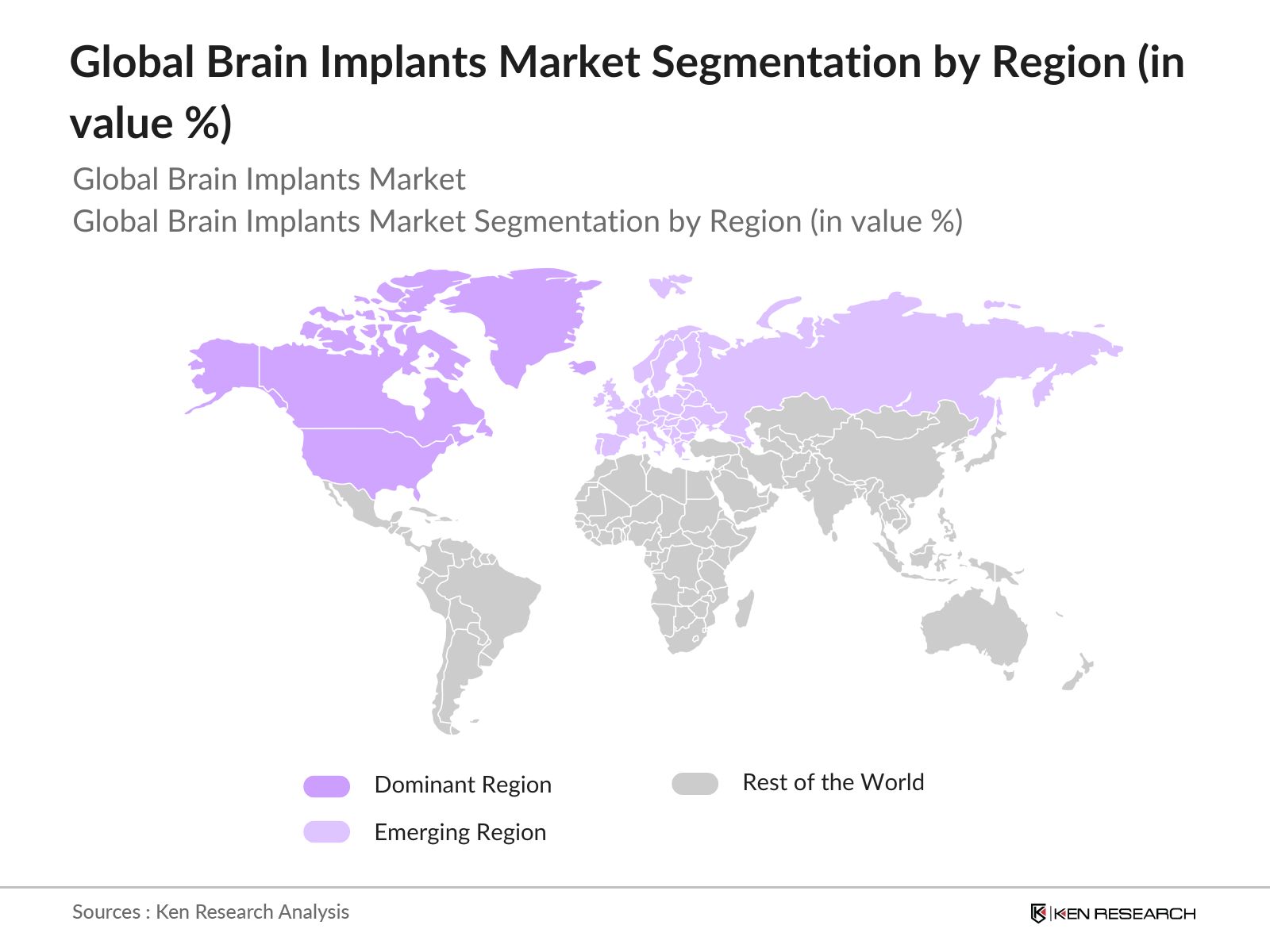
- North America and Europe dominate the brain implants market, mainly due to their advanced healthcare infrastructure and increased R&D investment in neurotechnology. North America, with a high prevalence of neurological disorders and the presence of major market players, is particularly prominent. Europes dominance stems from supportive government initiatives and high adoption rates of innovative healthcare solutions, further boosted by regulatory backing for neurostimulator technologies.
- Governments globally are prioritizing mental health policies, with the World Health Organization (WHO) allocating approximately USD 25 million to mental health research and support initiatives. Brain implants for conditions like severe depression are directly benefiting from this policy shift, as they offer viable treatment options for complex mental health disorders, supported by government healthcare funding and public health campaigns.
Global Brain Implants Market Segmentation
- By Product Type: The brain implants market is segmented by product type into deep brain stimulators, spinal cord stimulators, vagus nerve stimulators, sacral nerve stimulators, and other neurostimulators. Among these, deep brain stimulators hold a dominant market share, driven by their proven efficacy in managing movement disorders and the wide acceptance of these devices among patients and healthcare providers. Furthermore, the increasing adoption of these stimulators in treating psychiatric conditions strengthens their market position.
- By Region: The market is segmented regionally into North America, Europe, Asia Pacific, Latin America, and the Middle East & Africa. North America leads the market, largely due to a high prevalence of neurological conditions, robust healthcare expenditure, and the presence of leading brain implant manufacturers. The regions technological advancements in brain implants and higher patient awareness further contribute to its market dominance.
- By Application: The brain implants market is segmented by application into Parkinsons disease, epilepsy, chronic pain, depression, and essential tremor. Parkinsons disease is the leading application due to the large number of affected individuals and the positive impact of brain implants in managing symptoms. Deep brain stimulation has been particularly effective in reducing tremors and improving quality of life for Parkinsons patients, making it a preferred option in neurological treatment.
Global Brain Implants Market Competitive Landscape
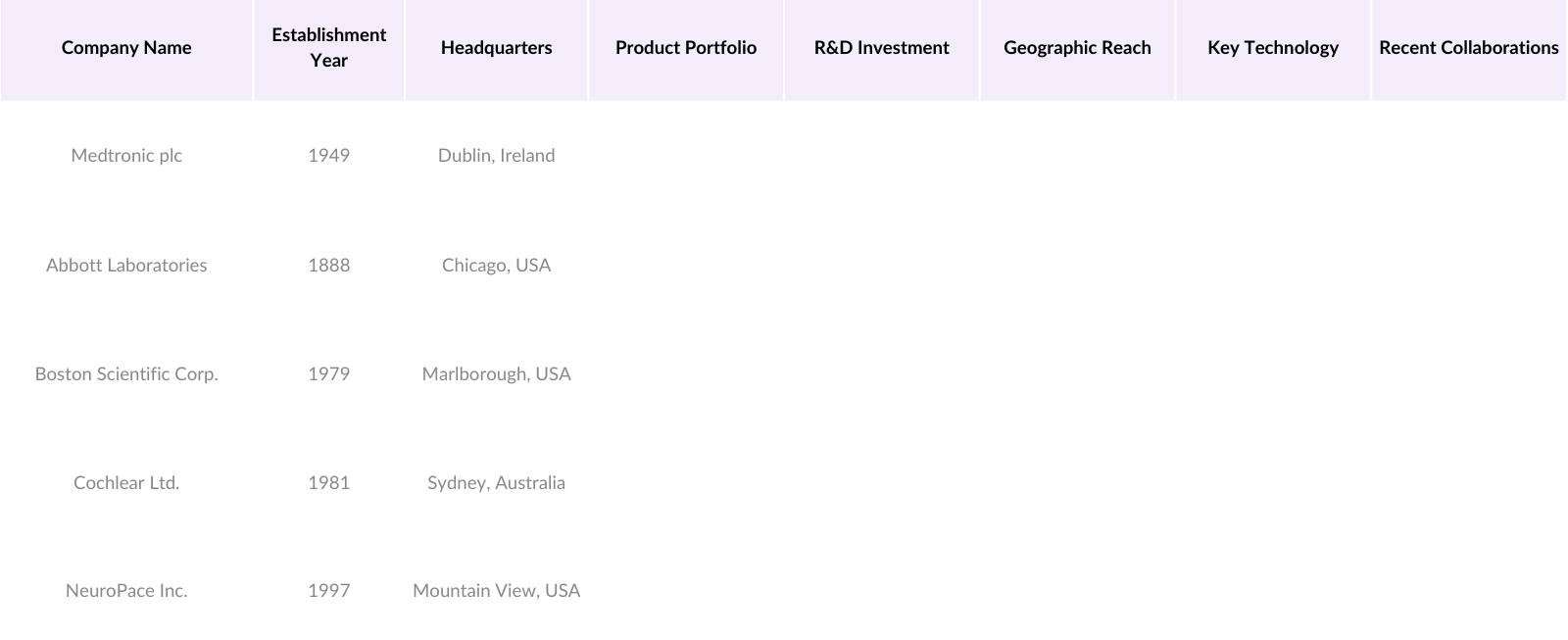
The Global Brain Implants Market is highly competitive, with major players such as Medtronic plc, Abbott Laboratories, and Boston Scientific Corporation dominating the landscape. This markets consolidation highlights the influence of these key companies on pricing, technology innovation, and distribution.
Global Brain Implants Market Analysis
Growth Drivers
- Increasing Prevalence of Neurological Disorders: Neurological conditions, such as Parkinsons disease and epilepsy, are affecting millions globally, with around 10 million people diagnosed with Parkinsons disease and an estimated 50 million with epilepsy. This growing patient base is a critical driver of the brain implants market, as the effectiveness of deep brain stimulators in managing symptoms of these conditions becomes widely recognized. The impact on healthcare costs for these patients is also significant, as the costs associated with managing these diseases can reach as high as USD 100 billion globally, pushing demand for effective treatment options like brain implants.
- Rising Healthcare Expenditure on Neurotechnology: Countries with high healthcare spending, such as the United States, where expenditure per capita reached USD 12,914, are increasingly allocating funds towards advanced neurotechnological treatments. Brain implants are becoming a priority within these allocations due to their impact on improving patient outcomes for various neurological conditions. As healthcare budgets increase, especially in developed regions, so does the focus on providing patients with access to these innovative treatments, fueling market growth.
- Surge in Geriatric Population Requiring Neurostimulation: The global geriatric population, which currently stands at over 700 million, has a heightened risk of neurological diseases like Alzheimers and dementia. By 2030, this population is expected to surpass 1 billion, which will further increase demand for neurostimulators that alleviate symptoms associated with aging. The financial burden of managing neurodegenerative disorders in the elderly population highlights the need for effective interventions like brain implants to reduce long-term care costs.
Market Challenges
- High Treatment Costs Associated with Brain Implants: The cost of brain implant surgery can be prohibitively expensive, making it a significant barrier for many patients, especially in regions with limited healthcare insurance coverage. In countries with underdeveloped healthcare systems, patients often have to cover these expenses out-of-pocket, which limits access to brain implant technology that could significantly improve their quality of life.
- Stringent Regulatory Frameworks and Approval Delays: Obtaining regulatory approval for brain implants is a lengthy and costly process. Regulatory bodies, such as the FDA and the European Commission, require extensive safety and efficacy data, leading to high entry barriers. Approval delays can hold back the availability of these implants in important markets, which impacts overall market growth.
Global Brain Implants Market Future Outlook
The Global Brain Implants Market is set to experience substantial growth over the next five years, driven by continuous advancements in neurostimulator technology, increasing demand for treatment of neurological disorders, and supportive healthcare infrastructure. Enhanced brain-computer interface systems and increasing investments in minimally invasive treatment methods are expected to further fuel market expansion.
Market Opportunities
- Expansion of Brain Implants for Cognitive Enhancement: Over the next five years, brain implants will increasingly be used for cognitive enhancement applications, including memory augmentation and concentration improvements. As research progresses, cognitive implants will become accessible to a wider demographic, beyond patients with neurological disorders, establishing a new market segment driven by high consumer demand for cognitive improvement.
- Integration of AI and Machine Learning in Brain Implants: The future will see extensive integration of AI in brain implant devices, enabling adaptive learning from patient-specific neurological data. This development will allow implants to autonomously adjust settings, enhancing patient outcomes and reducing the need for manual adjustments by healthcare professionals. By 2028, AI-enabled implants will be a standard in neurostimulation.
Scope of the Report
|
By Product Type |
Deep Brain Stimulators Spinal Cord Stimulators Vagus Nerve Stimulators Sacral Nerve Stimulators Other Neurostimulators |
|
By Application |
Parkinsons Disease Epilepsy Chronic Pain Depression Essential Tremor |
|
By End-User |
Hospitals and Clinics Ambulatory Surgery Centers Research Institutions Home Care Settings |
|
By Component |
Electrode Implantable Pulse Generator Battery Accessories |
|
By Region |
North America Europe Asia Pacific Latin America Middle East & Africa |
Products
Key Target Audience
Neurology and Neurosurgery Departments (Hospitals)
Neurotechnology Manufacturers and Suppliers
Government and Regulatory Bodies (FDA, CE, ISO)
Venture Capital and Private Equity Firms
Insurance Providers and Healthcare Payers
Rehabilitation Centers
Research and Development Institutions
Investors and Venture Capitalist Firms
Companies
Players Mentioned in the Report
Medtronic plc
Abbott Laboratories
Boston Scientific Corporation
NeuroPace Inc.
Cochlear Ltd.
LivaNova plc
Synapse Biomedical Inc.
Nevro Corp.
BrainScope Company Inc.
Renishaw plc
Table of Contents
1. Global Brain Implants Market Overview
1.1 Definition and Scope (Medical Device Classification, Usage Parameters)
1.2 Market Taxonomy (Neural Implant Types, Application Categories)
1.3 Market Ecosystem Analysis (Supply Chain Participants, Value Network)
1.4 Market Segmentation Overview (Indications, End-User Analysis)
2. Global Brain Implants Market Size (In USD Mn)
2.1 Historical Market Size (USD Value, Unit Sales Volume)
2.2 Year-On-Year Growth Analysis (Growth Rate %)
2.3 Key Market Developments and Milestones (R&D Breakthroughs, Product Launches)
2.4 Investment and Funding Overview (Venture Capital, Government Funding)
3. Global Brain Implants Market Dynamics
3.1 Growth Drivers
3.1.1 Rise in Neurological Disorders
3.1.2 Technological Advancements in Neural Interfaces
3.1.3 Increasing Demand for Deep Brain Stimulation
3.2 Restraints
3.2.1 High Treatment Costs
3.2.2 Stringent Regulatory Landscape
3.2.3 Ethical Concerns and Social Acceptance Issues
3.3 Opportunities
3.3.1 Expansion in Emerging Economies
3.3.2 Advancements in Minimally Invasive Procedures
3.3.3 Collaboration Between MedTech and Neuroscience Sectors
3.4 Trends
3.4.1 Integration with AI and Machine Learning
3.4.2 Growing Adoption of Wearable Brain-Computer Interfaces (BCIs)
3.4.3 Increasing Usage of Brain Implants in Cognitive Enhancement
3.5 Regulatory and Compliance Landscape
3.5.1 FDA and CE Marking Regulations
3.5.2 ISO Standards for Medical Implants
3.5.3 Data Privacy and Cybersecurity Regulations
3.6 SWOT Analysis
3.7 Porters Five Forces Analysis (Market Entry Barriers, Supplier Power)
3.8 Stakeholder Analysis (Patients, Neurosurgeons, Payers, Researchers)
4. Global Brain Implants Market Segmentation
4.1 By Product Type (In Value %)
4.1.1 Deep Brain Stimulators
4.1.2 Spinal Cord Stimulators
4.1.3 Vagus Nerve Stimulators
4.1.4 Sacral Nerve Stimulators
4.1.5 Other Neurostimulators
4.2 By Application (In Value %)
4.2.1 Parkinsons Disease
4.2.2 Epilepsy
4.2.3 Chronic Pain
4.2.4 Depression
4.2.5 Essential Tremor
4.3 By End-User (In Value %)
4.3.1 Hospitals and Clinics
4.3.2 Ambulatory Surgery Centers
4.3.3 Research Institutions
4.3.4 Home Care Settings
4.4 By Component (In Value %)
4.4.1 Electrode
4.4.2 Implantable Pulse Generator
4.4.3 Battery
4.4.4 Accessories
4.5 By Region (In Value %)
4.5.1 North America
4.5.2 Europe
4.5.3 Asia Pacific
4.5.4 Latin America
4.5.5 Middle East & Africa
5. Global Brain Implants Market Competitive Analysis
5.1 Detailed Profiles of Major Companies
5.1.1 Medtronic plc
5.1.2 Abbott Laboratories
5.1.3 Boston Scientific Corporation
5.1.4 Nevro Corp.
5.1.5 Synapse Biomedical Inc.
5.1.6 Aleva Neurotherapeutics SA
5.1.7 NeuroPace Inc.
5.1.8 Cochlear Ltd.
5.1.9 BrainScope Company Inc.
5.1.10 Renishaw plc
5.2 Cross Comparison Parameters (Product Portfolio Breadth, Market Penetration, R&D Investment, Geographic Reach, Key Product Differentiation)
5.3 Market Share Analysis
5.4 Strategic Initiatives (Partnerships, Technology Licenses, Collaborations)
5.5 Mergers and Acquisitions
5.6 Investor Landscape (Private Equity, Venture Capital, Government Investments)
5.7 R&D Focus Areas (Cognitive Neuroscience, Neuroengineering)
5.8 Intellectual Property Analysis (Patent Trends, Licensing Agreements)
6. Global Brain Implants Market Regulatory Framework
6.1 Medical Device Classification and Approval Processes
6.2 Quality Management System Requirements (ISO 13485)
6.3 Health Technology Assessments (HTA) and Reimbursement Policies
6.4 Patient Safety and Risk Management Standards
6.5 Clinical Trial Regulations and Compliance
7. Global Brain Implants Future Market Size (In USD Mn)
7.1 Future Market Projections
7.2 Key Factors Driving Market Growth (Emerging Neuroscience Applications, Technology Maturity)
7.3 Predicted Advancements in Brain-Computer Interfaces and Neural Implants
8. Global Brain Implants Future Market Segmentation
8.1 By Product Type (In Value %)
8.2 By Application (In Value %)
8.3 By End-User (In Value %)
8.4 By Component (In Value %)
8.5 By Region (In Value %)
9. Global Brain Implants Market Analysts Recommendations
9.1 Total Addressable Market (TAM), Serviceable Available Market (SAM), Serviceable Obtainable Market (SOM) Analysis
9.2 Patient Cohort and Demographic Analysis
9.3 Potential Partnerships and Market Entry Recommendations
9.4 Innovation and White Space Opportunity Analysis
Disclaimer Contact UsResearch Methodology
Step 1: Identification of Key Variables
In this initial phase, we mapped the global brain implant market ecosystem, focusing on primary stakeholders, including manufacturers, healthcare providers, and regulatory authorities. Extensive desk research and proprietary databases were employed to identify critical variables affecting market dynamics.
Step 2: Market Analysis and Construction
This step involved gathering historical data on brain implant market penetration, product usage in neurology practices, and revenue generation. Market penetration and service quality statistics were evaluated to ensure data reliability and accuracy.
Step 3: Hypothesis Validation and Expert Consultation
Hypotheses about growth trends and technological adoption were formulated and validated through computer-assisted telephone interviews (CATIs) with industry professionals, including neurotechnology manufacturers and neurologists. These interviews helped to refine data on emerging trends and operational insights.
Step 4: Research Synthesis and Final Output
The final stage entailed synthesizing information from various sources and direct consultations with leading brain implant manufacturers. This process ensured a comprehensive and validated analysis that accurately represents the Global Brain Implants Market.
Frequently Asked Questions
01. How big is the Global Brain Implants Market?
The Global Brain Implants Market is valued at USD 5 billion, driven by technological innovations, rising prevalence of neurological disorders, and advancements in neurostimulator devices.
02. What are the primary growth drivers in the Global Brain Implants Market?
Key growth drivers in Global Brain Implants Market include the increasing incidence of neurological conditions, a strong R&D focus on neurostimulation technologies, and the expanding application of brain implants in managing various disorders.
03. Who are the major players in the Global Brain Implants Market?
Major players in the Global Brain Implants Market include Medtronic, Abbott Laboratories, Boston Scientific Corporation, and Cochlear Ltd., with these companies dominating through advanced technology portfolios and extensive market reach.
04. What are the challenges in the Global Brain Implants Market?
Challenges in Global Brain Implants Market include high costs associated with brain implants, strict regulatory compliance requirements, and ethical concerns regarding neurostimulation in cognitive enhancement applications.
Why Buy From Us?

What makes us stand out is that our consultants follows Robust, Refine and Result (RRR) methodology. i.e. Robust for clear definitions, approaches and sanity checking, Refine for differentiating respondents facts and opinions and Result for presenting data with story

We have set a benchmark in the industry by offering our clients with syndicated and customized market research reports featuring coverage of entire market as well as meticulous research and analyst insights.

While we don't replace traditional research, we flip the method upside down. Our dual approach of Top Bottom & Bottom Top ensures quality deliverable by not just verifying company fundamentals but also looking at the sector and macroeconomic factors.

With one step in the future, our research team constantly tries to show you the bigger picture. We help with some of the tough questions you may encounter along the way: How is the industry positioned? Best marketing channel? KPI's of competitors? By aligning every element, we help maximize success.

Our report gives you instant access to the answers and sources that other companies might choose to hide. We elaborate each steps of research methodology we have used and showcase you the sample size to earn your trust.

If you need any support, we are here! We pride ourselves on universe strength, data quality, and quick, friendly, and professional service.