















Global Bulk Bags Market Outlook to 2030
Region:Global
Author(s):Vijay Kumar
Product Code:KROD7013
November 2024
88
About the Report
Global Bulk Bags Market Overview
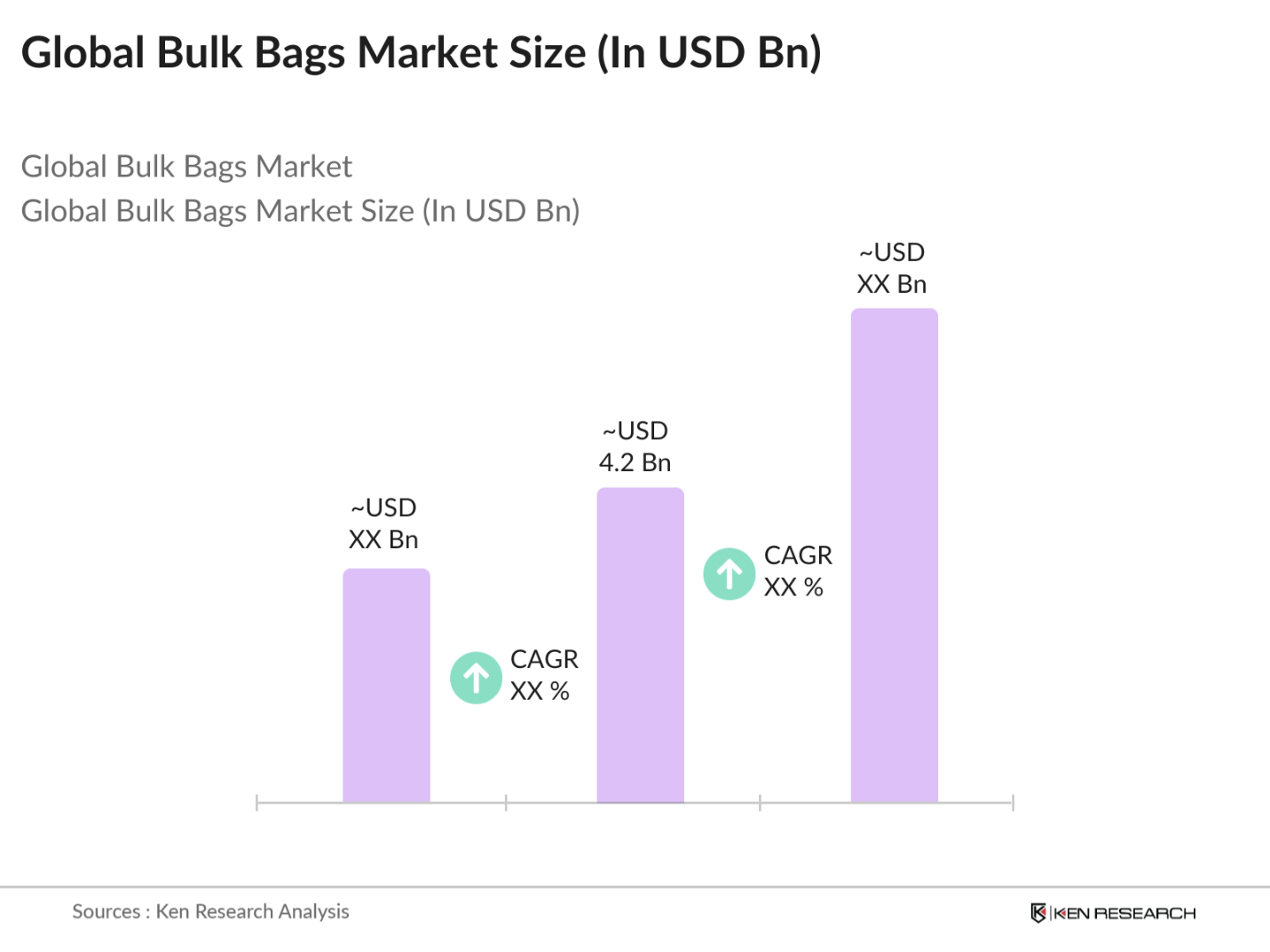
- The global bulk bags market is valued at USD 4.2 billion, based on a five-year historical analysis. This growth is primarily driven by the increasing demand from industries such as chemicals, food and agriculture, and construction, which rely on bulk bags for efficient and safe transportation of goods. The versatility of bulk bags, especially for transporting hazardous materials and large quantities, has positioned them as a preferred packaging solution, contributing significantly to market expansion.
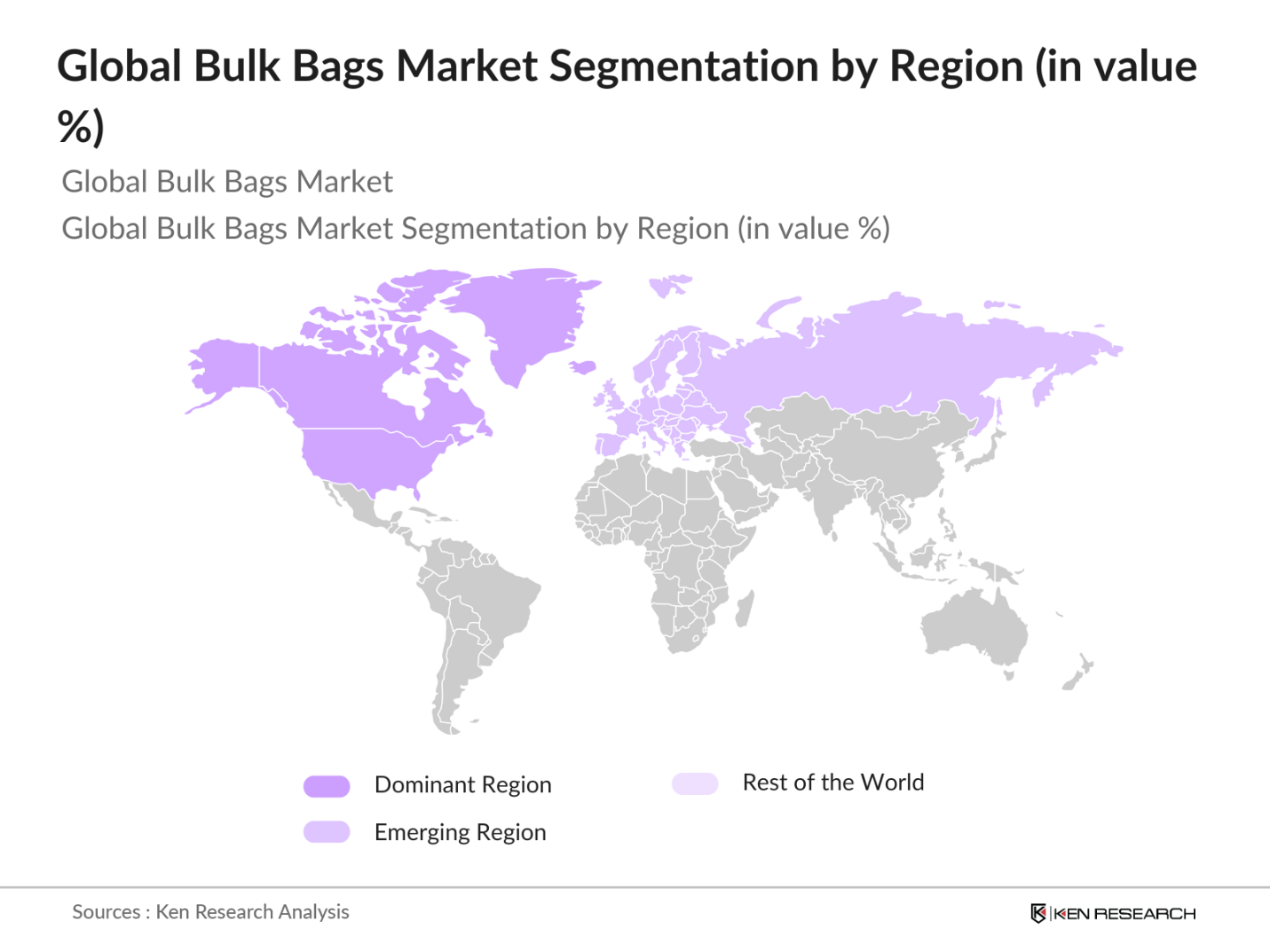
- The Asia-Pacific (APAC) region dominates the global bulk bags market due to its large industrial base, particularly in countries like China and India. These nations are major exporters of chemicals, food products, and construction materials, which significantly drive the demand for bulk bags. The rapid industrialization and urbanization across APAC, combined with the need for cost-effective, large-scale packaging solutions, contribute to the region's dominance. Moreover, the region benefits from well-established logistics and transportation networks, enhancing its capacity for bulk material handling and packaging solutions.
- New waste management regulations are pushing companies to adopt more sustainable packaging solutions. In 2023, the European Union and several other regions implemented laws mandating companies to reduce packaging waste by 20%, according to the European Commission. These regulations are encouraging the use of recyclable materials in packaging, including bulk bags. As businesses aim to comply with these regulations, the demand for eco-friendly.
Global Bulk Bags Market Segmentation
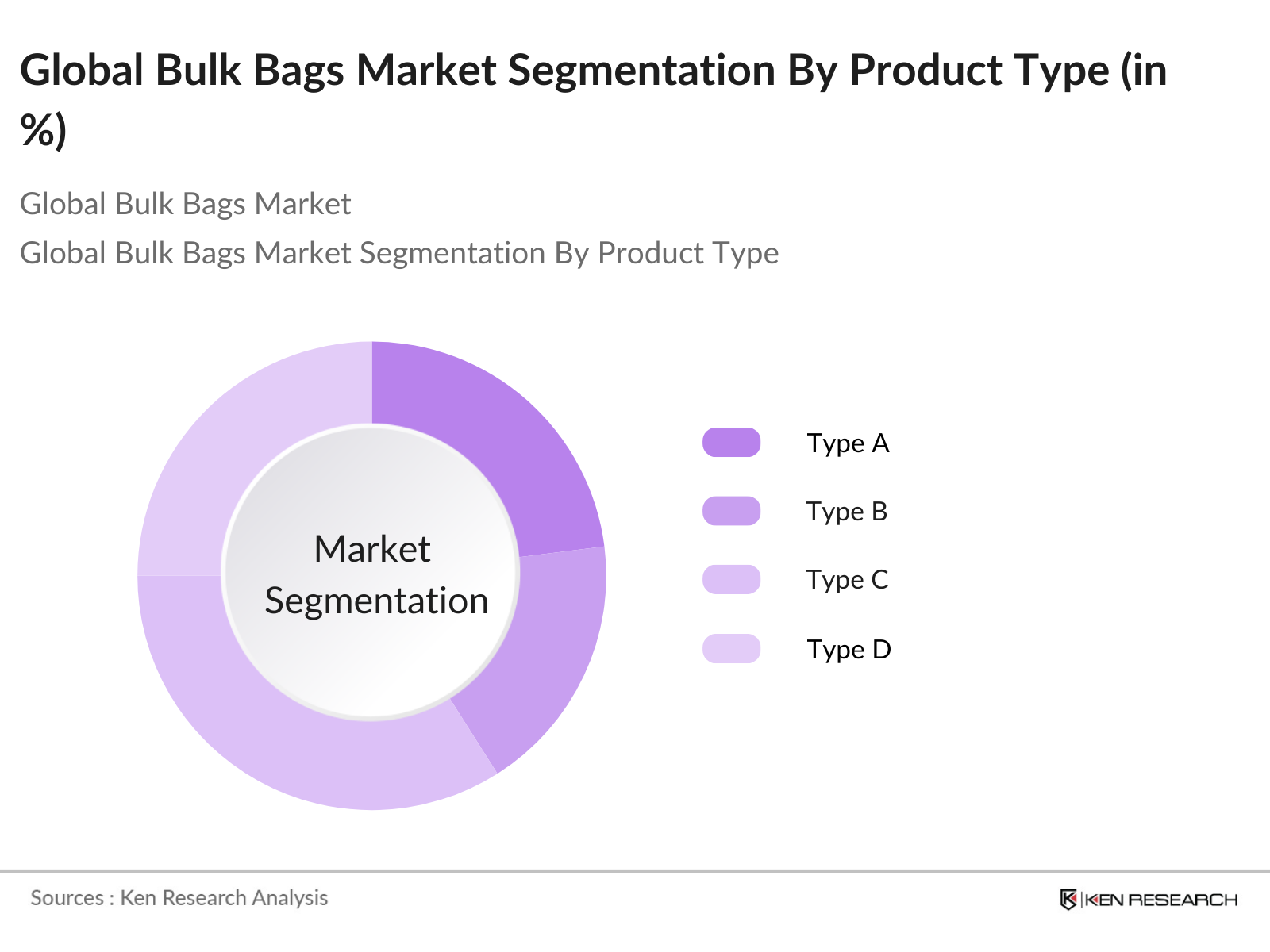
By Product Type: The global bulk bags market is segmented by product type into Type A, Type B, Type C, and Type D bulk bags. Type C bulk bags have a dominant market share in the segmentation due to their conductive properties, which are essential for transporting flammable powders and materials. The safety and regulatory requirements of industries like chemicals and pharmaceuticals make Type C bags particularly important.
By Application: The bulk bags market is segmented by application into food and agriculture, chemical and petrochemical, pharmaceutical, and construction sectors. The chemical and petrochemical industries hold the dominant market share, driven by their high demand for bulk transportation and storage solutions. Chemicals, especially hazardous ones, require specialized packaging that can safely transport large volumes without spillage or contamination.
By Region: Geographically, the bulk bags market is divided into North America, Europe, Asia-Pacific, Middle East & Africa, and Latin America. Asia-Pacific has a dominant share, particularly driven by the high production rates in China and India. These countries have become global manufacturing hubs, exporting massive volumes of goods such as chemicals, food, and construction materials. The extensive use of bulk bags for industrial packaging in these regions, along with growing infrastructure development, positions Asia-Pacific as the leading market.
Global Bulk Bags Market Competitive Landscape
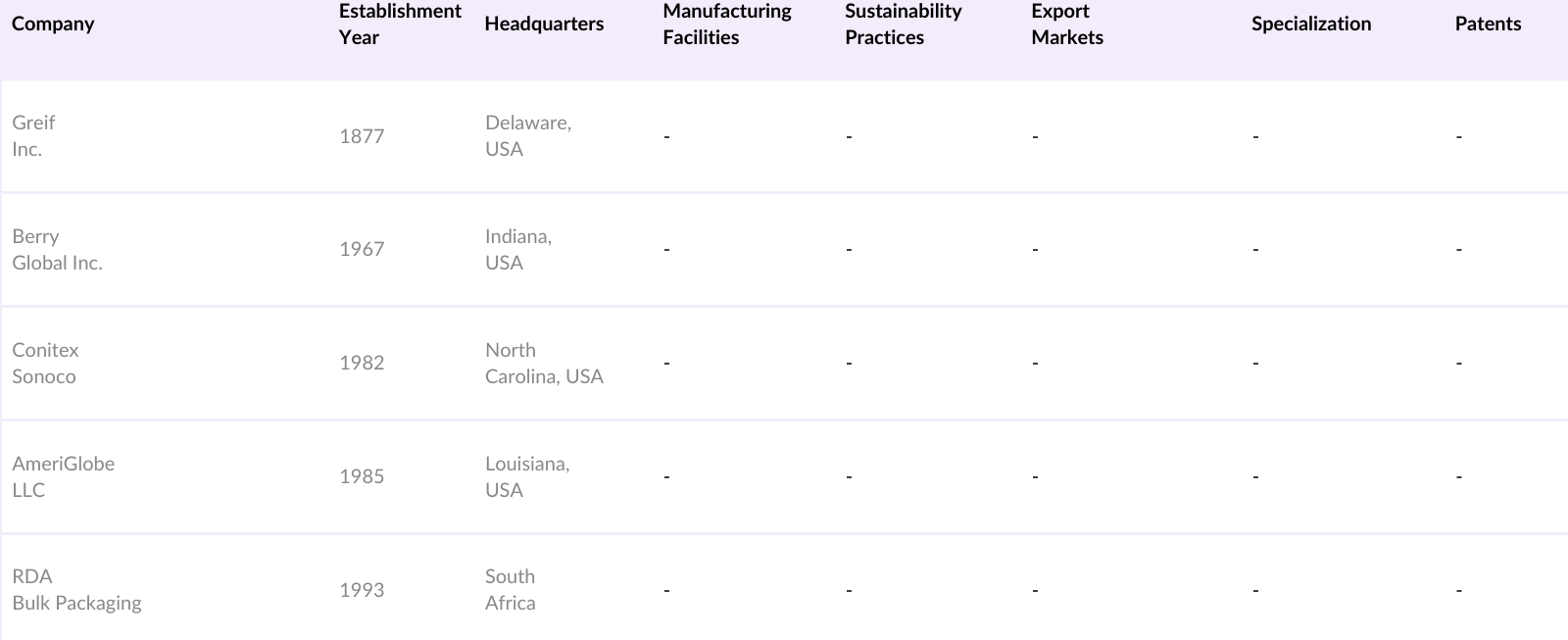
The global bulk bags market is dominated by key players who are leaders in bulk packaging innovation, sustainability practices, and market penetration. These companies benefit from their wide distribution networks, focus on safety, and specialization in producing bags for hazardous materials. The market landscape is consolidated, with these major players holding significant market share.
Global Bulk Bags Industry Analysis
Growth Drivers
- Industrial Expansion (e.g., chemical, agriculture): The growth of industries such as chemicals and agriculture is driving demand for bulk bags due to the need for efficient and safe transportation of goods. According to the World Bank, global agricultural output increased by 2% in 2023, with an increase in chemical production in key regions like North America and Asia by 1.8%. This industrial expansion has led to a rising demand for bulk packaging solutions to accommodate large quantities of materials, particularly in sectors requiring safe handling of granular and powdered substances.
- Rising Demand for Cost-Effective Packaging Solutions: The need for cost-effective packaging is increasing across various industries, driven by a global shift towards reducing operational costs. The International Monetary Fund (IMF) reported that global transportation costs rose by 6.5% in 2022 due to inflationary pressures. Bulk bags offer an efficient solution by allowing the transportation of large volumes with minimal packaging materials, reducing overall shipping and packaging costs.
- Increased Usage in Cross-Border Trade: The demand for bulk bags is also bolstered by the growth in cross-border trade. According to World Trade Organization (WTO) data, global merchandise trade volumes increased by 2.6% in 2023. Bulk bags are highly sought after for international shipments due to their durability and ability to handle large loads securely. The global rise in demand for agricultural products, chemicals, and minerals has increased the need for cost-effective and durable packaging options such as bulk bags, which support cross-border logistics.
Market Challenges
- Fluctuating Raw Material Prices (Polypropylene, HDPE): The bulk bags industry is facing challenges due to fluctuating raw material prices. In 2023, the price of polypropylene, a key component in bulk bags, increased by 15% due to supply chain disruptions and geopolitical tensions, according to the World Bank Commodity Price Data. High Density Polyethylene (HDPE) prices have also shown volatility, rising by 8% over the same period.
- Environmental Concerns and Regulations: Stringent environmental regulations are impacting the packaging industry, including bulk bags. In 2022, the European Union introduced new packaging waste management regulations that aim to reduce plastic waste by 50% by 2030, creating pressure on manufacturers to adopt more sustainable production methods. Bulk bag producers are increasingly required to comply with regulations that enforce the reduction of single-use plastics and promote recyclability, creating a challenge in balancing regulatory compliance with cost efficiency.
Global Bulk Bags Market Future Outlook
Over the next five years, the global bulk bags market is expected to show substantial growth, driven by increasing demand for efficient industrial packaging solutions, the growing trend towards sustainable and reusable packaging, and the expansion of infrastructure and construction industries. In addition, innovations in materials used for manufacturing bulk bags, such as recyclable and biodegradable plastics, are set to boost market growth.
Market Opportunities
- Shift towards Recyclable and Reusable Bulk Bags: The shift towards environmentally friendly packaging presents a significant opportunity in the bulk bags market. According to UNEP, 23% of packaging materials were recyclable in 2023, with projections suggesting this figure will rise further as more industries adopt sustainable practices. Bulk bags made from recyclable polypropylene and other eco-friendly materials are becoming increasingly popular in sectors like agriculture, chemicals, and food.
- Adoption of Advanced Manufacturing Techniques (e.g., automated stitching): Advancements in manufacturing technology, particularly automated stitching and improved fabric welding techniques, are streamlining the production of bulk bags, reducing labor costs and enhancing durability. According to the International Federation of Robotics, there was a 14% increase in the adoption of automation technologies in packaging industries globally in 2023.
Scope of the Report
|
By Product Type |
Type A Bulk Bags Type B Bulk Bags Type C Bulk Bags Type D Bulk Bags |
|
By Application |
Food and Agriculture Chemical and Petrochemical Pharmaceutical Construction |
|
By Material Type |
Polypropylene HDPE LDPE |
|
By Capacity |
Less than 1 Ton 1 Ton to 2 Tons 2 Tons to 3 Tons Above 3 Tons |
|
By Region |
North America Europe Asia-Pacific Middle East & Africa Latin America |
Products
Key Target Audience
Bulk Bag Manufacturers
Chemical and Petrochemical Companies
Food and Agriculture Producers
Construction Material Suppliers
Logistics and Transportation Companies
Investments and Venture Capitalist Firms
Government and Regulatory Bodies (FDA, EPA)
Packaging and Safety Compliance Agencies
Companies
Players Mentioned in the Report
Greif Inc.
Berry Global Inc.
Conitex Sonoco
AmeriGlobe LLC
BAG Corp
Bulk Lift International
Halsted Corporation
Intertape Polymer Group Inc.
RDA Bulk Packaging Ltd.
Langston Companies Inc.
Table of Contents
1. Global Bulk Bags Market Overview
1.1. Definition and Scope
1.2. Market Taxonomy
1.3. Market Growth Rate
1.4. Market Segmentation Overview
2. Global Bulk Bags Market Size (In USD Bn)
2.1. Historical Market Size
2.2. Year-on-Year Growth Analysis
2.3. Key Market Developments and Milestones
3. Global Bulk Bags Market Analysis
3.1. Growth Drivers
3.1.1. Industrial Expansion (e.g., chemical, agriculture)
3.1.2. Rising Demand for Cost-Effective Packaging Solutions
3.1.3. Increased Usage in Cross-Border Trade
3.1.4. Sustainability in Packaging Solutions
3.2. Market Challenges
3.2.1. Fluctuating Raw Material Prices (Polypropylene, HDPE)
3.2.2. Environmental Concerns and Regulations
3.2.3. Intense Market Competition
3.3. Opportunities
3.3.1. Shift towards Recyclable and Reusable Bulk Bags
3.3.2. Adoption of Advanced Manufacturing Techniques (e.g., automated stitching)
3.3.3. Expansion into Emerging Markets (e.g., Africa, Southeast Asia)
3.4. Trends
3.4.1. Innovations in Bulk Bag Design (e.g., anti-static, conductive bags)
3.4.2. Adoption of Flexible Packaging in Food and Pharmaceuticals
3.4.3. Growth in E-commerce Demand for Bulk Packaging
3.5. Government Regulations
3.5.1. Stringent Packaging Standards (UN Certification for Hazardous Materials)
3.5.2. Packaging Waste Management Regulations
3.5.3. Government Incentives for Sustainable Packaging
3.6. SWOT Analysis
3.7. Stakeholder Ecosystem
3.8. Porters Five Forces
3.9. Competition Ecosystem
4. Global Bulk Bags Market Segmentation
4.1. By Product Type (In Value %)
4.1.1. Type A Bulk Bags
4.1.2. Type B Bulk Bags
4.1.3. Type C Bulk Bags
4.1.4. Type D Bulk Bags
4.2. By Application (In Value %)
4.2.1. Food and Agriculture
4.2.2. Chemical and Petrochemical
4.2.3. Pharmaceutical
4.2.4. Construction
4.3. By Material Type (In Value %)
4.3.1. Polypropylene
4.3.2. High-Density Polyethylene (HDPE)
4.3.3. Low-Density Polyethylene (LDPE)
4.4. By Capacity (In Value %)
4.4.1. Less than 1 Ton
4.4.2. 1 Ton to 2 Tons
4.4.3. 2 Tons to 3 Tons
4.4.4. Above 3 Tons
4.5. By Region (In Value %)
4.5.1. North America
4.5.2. Europe
4.5.3. Asia-Pacific
4.5.4. Middle East & Africa
4.5.5. Latin America
5. Global Bulk Bags Market Competitive Analysis
5.1. Detailed Profiles of Major Companies
5.1.1. Greif Inc.
5.1.2. Berry Global Inc.
5.1.3. Conitex Sonoco
5.1.4. AmeriGlobe LLC
5.1.5. BAG Corp
5.1.6. Bulk Lift International
5.1.7. Halsted Corporation
5.1.8. Intertape Polymer Group Inc.
5.1.9. RDA Bulk Packaging Ltd.
5.1.10. Langston Companies Inc.
5.1.11. MiniBulk Inc.
5.1.12. Sackmaker J&HM Dickson Ltd.
5.1.13. LC Packaging International BV
5.1.14. Plastene India Limited
5.1.15. Lasheen Group
5.2. Cross Comparison Parameters (Material Usage, Capacity Handled, Sustainability Initiatives, Manufacturing Facilities, Number of Patents, Export Markets, Strategic Partnerships, Certifications Held)
5.3. Market Share Analysis
5.4. Strategic Initiatives
5.5. Mergers and Acquisitions
5.6. Investment Analysis
5.7. Venture Capital Funding
5.8. Government Grants
5.9. Private Equity Investments
6. Global Bulk Bags Market Regulatory Framework
6.1. Packaging Safety Standards (ISO, ASTM Standards)
6.2. Compliance Requirements for Hazardous Materials
6.3. Certification Processes for Export Markets
7. Global Bulk Bags Future Market Size (In USD Bn)
7.1. Future Market Size Projections
7.2. Key Factors Driving Future Market Growth
8. Global Bulk Bags Future Market Segmentation
8.1. By Product Type (In Value %)
8.2. By Application (In Value %)
8.3. By Material Type (In Value %)
8.4. By Capacity (In Value %)
8.5. By Region (In Value %)
9. Global Bulk Bags Market Analysts Recommendations
9.1. TAM/SAM/SOM Analysis
9.2. Customer Cohort Analysis
9.3. Marketing Initiatives
9.4. White Space Opportunity Analysis
Disclaimer Contact UsResearch Methodology
Step 1: Identification of Key Variables
The first step in the research process involves creating an ecosystem map of all the key players in the global bulk bags market. Through extensive desk research and industry analysis, we identify the main factors influencing the market, including material innovations, industrial demand, and regulatory requirements.
Step 2: Market Analysis and Construction
During this phase, we compile historical market data, focusing on market penetration rates and revenue generation by different segments. This includes analyzing demand in key sectors like chemicals, food, and construction and assessing how different bulk bag types perform.
Step 3: Hypothesis Validation and Expert Consultation
We validate our market hypotheses through consultations with industry experts via telephone interviews (CATI). These consultations provide real-world insights into industry challenges, safety standards, and market dynamics, helping refine our final market analysis.
Step 4: Research Synthesis and Final Output
In the final phase, we engage directly with manufacturers and suppliers in the bulk bags industry to gather detailed data on production capacities, sales performance, and product innovation. This synthesis ensures that the final report is comprehensive and thoroughly validated.
Frequently Asked Questions
01. How big is the Global Bulk Bags Market?
The global bulk bags market is valued at USD 4.2 billion, based on a five-year historical analysis. This growth is primarily driven by the increasing demand from industries such as chemicals, food and agriculture, and construction, which rely on bulk bags for efficient and safe transportation of goods.
02. What are the challenges in the Global Bulk Bags Market?
Challenges in the bulk bags market include fluctuating raw material prices, stringent regulatory requirements for hazardous material packaging, and increasing competition from low-cost manufacturers.
03. Who are the major players in the Global Bulk Bags Market?
Key players in the market include Greif Inc., Berry Global Inc., Conitex Sonoco, AmeriGlobe LLC, and BAG Corp, who dominate due to their global distribution networks, product innovation, and adherence to safety standards.
04. What are the growth drivers of the Global Bulk Bags Market?
Growth drivers include the increasing demand for industrial packaging, the push towards sustainable packaging solutions, and the expanding construction and infrastructure sectors.
Why Buy From Us?

What makes us stand out is that our consultants follows Robust, Refine and Result (RRR) methodology. i.e. Robust for clear definitions, approaches and sanity checking, Refine for differentiating respondents facts and opinions and Result for presenting data with story

We have set a benchmark in the industry by offering our clients with syndicated and customized market research reports featuring coverage of entire market as well as meticulous research and analyst insights.

While we don't replace traditional research, we flip the method upside down. Our dual approach of Top Bottom & Bottom Top ensures quality deliverable by not just verifying company fundamentals but also looking at the sector and macroeconomic factors.

With one step in the future, our research team constantly tries to show you the bigger picture. We help with some of the tough questions you may encounter along the way: How is the industry positioned? Best marketing channel? KPI's of competitors? By aligning every element, we help maximize success.

Our report gives you instant access to the answers and sources that other companies might choose to hide. We elaborate each steps of research methodology we have used and showcase you the sample size to earn your trust.

If you need any support, we are here! We pride ourselves on universe strength, data quality, and quick, friendly, and professional service.