















Global Bulletproof Glass Market Outlook to 2030
Region:Global
Author(s):Mukul
Product Code:KROD6977
November 2024
90
About the Report
Global Bulletproof Glass Market Overview
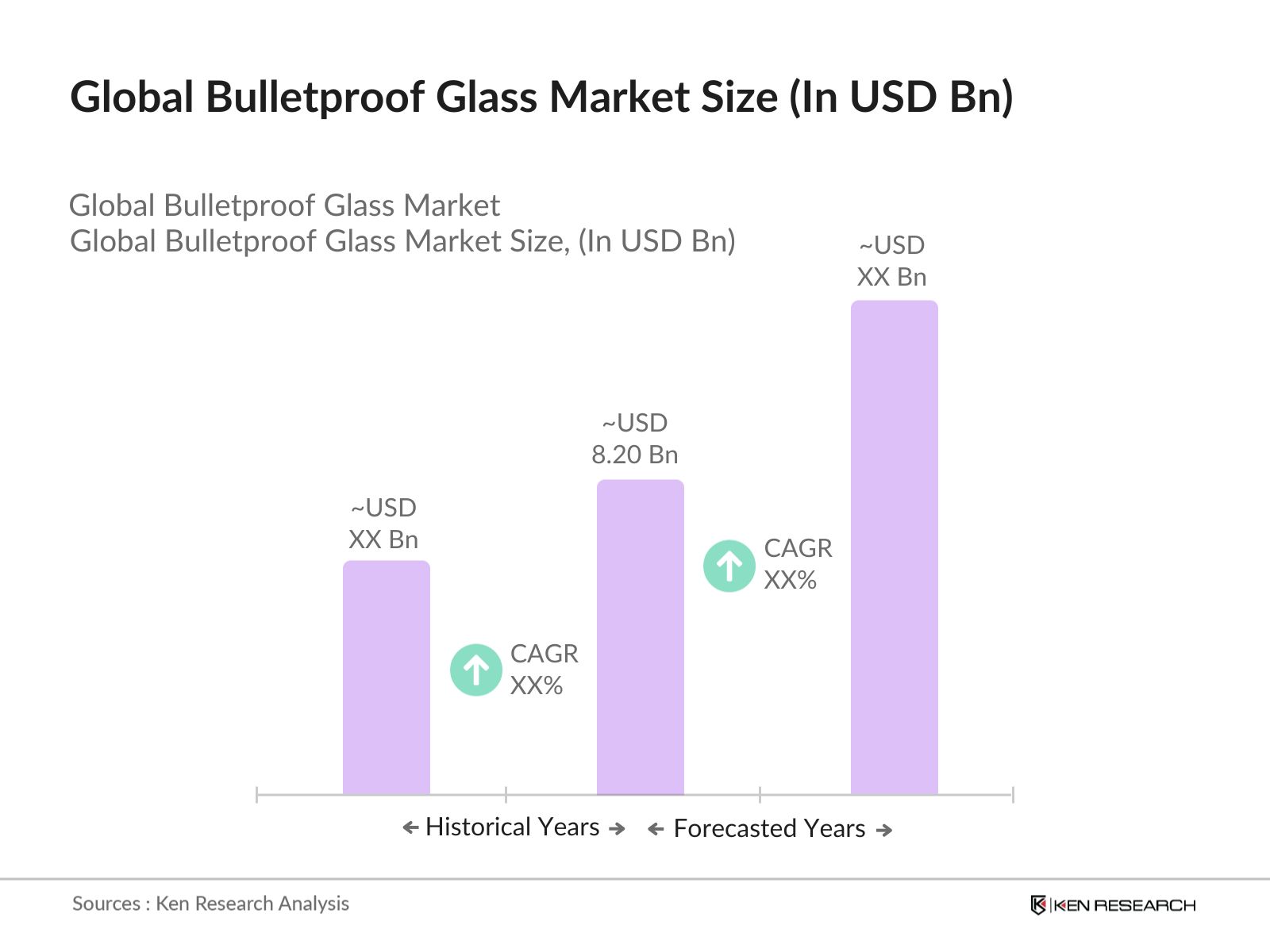
- The global bulletproof glass market is valued at USD 8.20 billion, based on a five-year historical analysis. This market is primarily driven by rising security concerns in both civilian and governmental sectors. Increasing investments in defense and infrastructure projects, particularly in high-risk areas, have further contributed to the demand. Additionally, technological advancements in material science are improving the effectiveness of bulletproof glass, ensuring higher adoption across applications like banks, military vehicles, and premium residential properties.
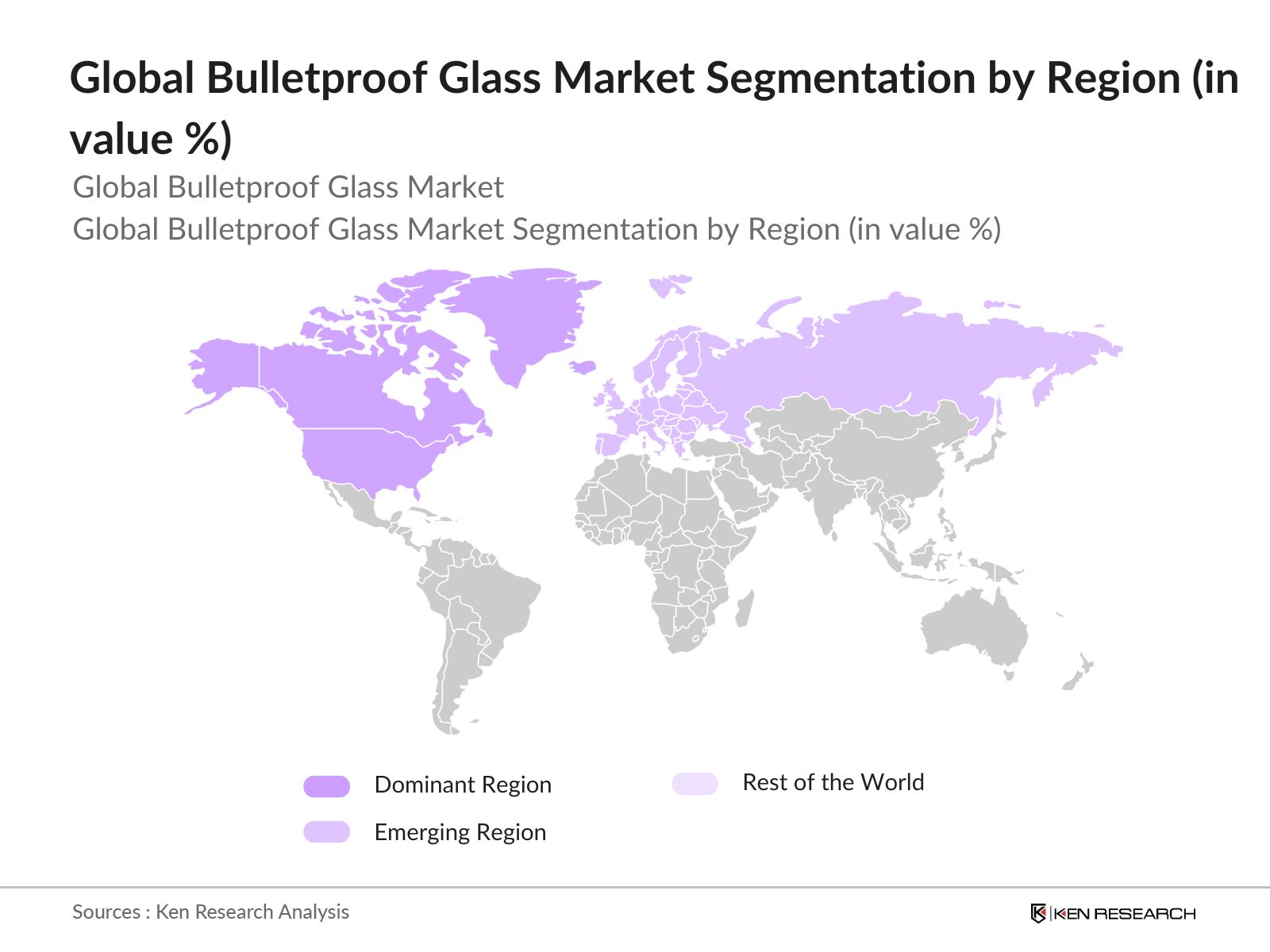
- North America and Europe are the dominant regions in the global bulletproof glass market. The high demand in these regions is fueled by strict safety regulations in public and private buildings, along with significant defense investments. In North America, particularly in the United States, the growing use of bulletproof glass in vehicles for high-net-worth individuals and government officials is a key factor. In Europe, Germany's advanced manufacturing capabilities and its prominence in automotive safety are major drivers of the market's dominance in the region.
- Several governments are introducing incentives to promote local manufacturing of bulletproof glass. For instance, Indias government, through its Make in India initiative, is offering tax breaks and subsidies to domestic bulletproof glass manufacturers. This policy is aimed at reducing import dependence and fostering a local defense manufacturing ecosystem. By 2023, this initiative had attracted over $15 billion in investments, significantly boosting the countrys manufacturing capabilities in this sector.
Global Bulletproof Glass Market Segmentation
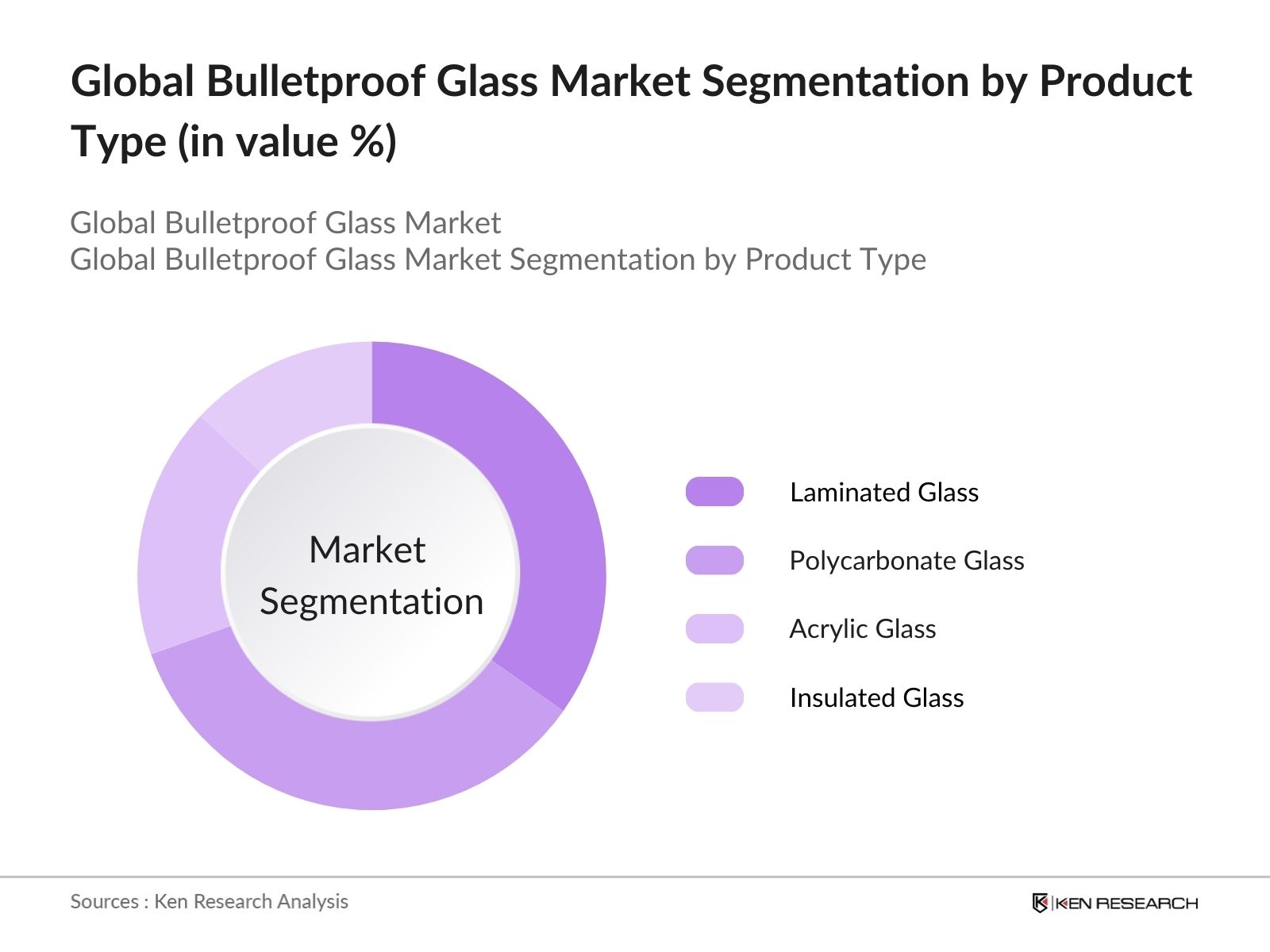
- By Product Type: The global bulletproof glass market is segmented by product type into polycarbonate glass, laminated glass, acrylic glass, and insulated glass. Laminated glass holds a dominant market share due to its widespread use in the automotive industry, particularly in armored vehicles. The product's multi-layered structure provides superior resistance to impact, making it ideal for protecting vehicles used by military and high-ranking officials.
- By Region: The regional segmentation includes North America, Europe, Asia-Pacific, the Middle East and Africa, and Latin America. North America dominates the market owing to its robust defense sector and stringent building safety regulations. Meanwhile, Asia-Pacific is showing rapid growth, driven by increasing urbanization and rising defense budgets in countries like China and India.
- By Application: The market is also segmented by application into defense and military, commercial and residential buildings, automotive, financial institutions, and VIP and government vehicles. Automotive applications are currently dominating the market due to the increasing demand for armored vehicles, particularly in volatile regions. Governments and private entities are investing in enhanced vehicle protection as security concerns rise globally.
Global Bulletproof Glass Market Competitive Landscape
The global bulletproof glass market is highly consolidated with a few major players dominating the market. Companies are increasingly investing in R&D to develop lightweight, multi-layered bulletproof glass that can provide better protection without compromising transparency. Mergers, acquisitions, and partnerships are common strategies employed by these firms to expand their market share.
|
Company |
Establishment Year |
Headquarters |
Production Capacity |
No. of Employees |
Annual Revenue |
Global Market Reach |
Security Certifications |
Product Innovation |
|
Asahi Glass Co., Ltd. |
1907 |
Tokyo, Japan |
- |
- |
- |
- |
- |
- |
|
Saint-Gobain |
1665 |
Paris, France |
- |
- |
- |
- |
- |
- |
|
Guardian Industries |
1932 |
Michigan, USA |
- |
- |
- |
- |
- |
- |
|
SCHOTT AG |
1884 |
Mainz, Germany |
- |
- |
- |
- |
- |
- |
|
Nippon Sheet Glass Co., Ltd. |
1918 |
Tokyo, Japan |
- |
- |
- |
- |
- |
- |
Global Bulletproof Glass Industry Analysis
Growth Drivers
- Increasing Security Concerns (Defense, Financial Institutions, VIP Protection): Increased security concerns globally have led to a surge in demand for bulletproof glass across various sectors such as defense, banking, and VIP protection. For instance, global defense spending reached approximately $2 trillion in 2023, emphasizing the need for enhanced security measures, including the adoption of bulletproof glass in military vehicles and defense installations. Moreover, heightened risks of robberies in financial institutions and attacks on VIPs have prompted the usage of bulletproof glass in banks and armored vehicles. These rising security demands are backed by growing geopolitical tensions in regions like Europe and the Middle East .
- Regulatory Mandates (Building Codes, Safety Standards): Global safety standards and building codes have been implemented to mandate the use of bulletproof glass in critical infrastructure. For example, in the European Union, the EN1063 standard requires specific types of bulletproof glass in government buildings, financial institutions, and public spaces. In the U.S., UL 752 standards govern the protection levels for ballistic materials used in high-security facilities. Additionally, government regulations increasingly enforce the use of bulletproof glass in public transport stations and airports to ensure public safety in light of growing security threats .
- Rising Urbanization and Infrastructure Developments (Use in Buildings, Government Facilities): Urbanization and infrastructure growth are driving the demand for bulletproof glass in high-risk buildings such as embassies, airports, and government facilities. In 2023, 56% of the worlds population lived in urban areas, with numbers expected to increase, leading to significant infrastructure investments, especially in emerging markets. In India alone, the governments Smart Cities Mission aims to improve security through advanced construction practices, including the use of bulletproof glass in public facilities. These infrastructure advancements support the rising demand for high-security materials to mitigate risks in dense urban environments .
Market Restraints
- Technological Limitations (Transparency vs. Protection Balance): A critical challenge in the bulletproof glass market is balancing transparency and protection. High-protection bulletproof glass often sacrifices clarity, which affects industries like retail banking or high-end luxury brands that demand both security and aesthetic appeal. Despite advancements in polycarbonate materials, transparency diminishes as the protection level increases, limiting its application in sectors like commercial buildings. As of 2024, there is no clear technological breakthrough that solves this limitation, causing hesitation among certain commercial buyers .
- Supply Chain Disruptions (Raw Material Constraints): The production of bulletproof glass is heavily dependent on the availability of raw materials like polycarbonate and specialized glass. Global supply chains have been under pressure due to geopolitical tensions and disruptions caused by events such as the COVID-19 pandemic. In 2022, supply chain disruptions resulted in material shortages that increased lead times for bulletproof glass production by up to 50%, affecting delivery schedules globally. Such disruptions are more prevalent in regions relying on imports of polycarbonate from countries like China .
Global Bulletproof Glass Market Future Outlook
Over the next five years, the global bulletproof glass market is expected to show significant growth driven by increasing concerns about security and public safety. The expanding application in sectors like automotive, construction, and defense will further contribute to market growth. Additionally, advancements in material technology such as lighter and more impact-resistant glass solutions will offer new opportunities for market players.
Market Opportunities
- Expansion in Emerging Markets (Middle East, Africa): Emerging markets such as the Middle East and Africa are witnessing increased demand for bulletproof glass due to rising investments in infrastructure and heightened security risks. For example, Saudi Arabia's Vision 2030 initiative includes substantial investments in secure infrastructure, including the adoption of bulletproof glass in high-profile government buildings. Additionally, security threats in countries like Nigeria, which saw over 2,000 violent incidents in 2023, have led to growing investments in bulletproof glass for both government and commercial facilities .
- Integration with Smart Technologies (Smart Glass Solutions, IoT in Security): The incorporation of bulletproof glass with smart technology offers significant growth potential. Smart glass solutions that adjust opacity based on lighting conditions or integrate with IoT-based security systems are gaining traction in both commercial and residential applications. In 2023, the global smart glass market saw an investment of $5.2 billion, with increasing overlap in the security sector. Such integration allows real-time monitoring and enhanced protective measures, making it attractive for government and high-security private sectors.
Scope of the Report
|
Product Type |
Polycarbonate Glass |
|
Acrylic Glass |
|
|
Laminated Glass |
|
|
Insulated Glass |
|
|
Application |
Defense and Military |
|
Commercial and Residential Buildings |
|
|
Automotive |
|
|
Financial Institutions |
|
|
VIP and Government Vehicles |
|
|
End-User |
Civilian |
|
Commercial |
|
|
Government |
|
|
Protection Level |
Level 1 (Low-Caliber Handguns) |
|
Level 2 (Medium-Caliber Handguns) |
|
|
Level 3 (High-Caliber Rifles) |
|
|
Region |
North America |
|
Europe |
|
|
Asia-Pacific |
|
|
Middle East and Africa |
|
|
Latin America |
Products
Key Target Audience
Defense Contractors and Agencies (U.S. Department of Defense, European Defence Agency)
Automotive Manufacturers
Financial Institutions (High-Security Banks)
Government and Regulatory Bodies (UL Laboratories, National Institute of Justice)
Construction and Infrastructure Companies
High-Net-Worth Individuals and Security Firms
Real Estate Developers
Investor and Venture Capitalist Firms
Companies
Players Mentioned in the Report:
Asahi Glass Co., Ltd.
Saint-Gobain
Nippon Sheet Glass Co., Ltd.
SCHOTT AG
Guardian Industries
Armortex
ESG Security Glass
Total Security Solutions
Dlubak Specialty Glass Corporation
Consolidated Glass Holdings
National Glass
Romag Ltd.
Polytronix Inc.
Global Security Glazing
Smartglass International Ltd.
Table of Contents
1. Global Bulletproof Glass Market Overview
1.1. Definition and Scope
1.2. Market Taxonomy
1.3. Market Growth Rate (Incorporating ballistic standards, protection levels)
1.4. Market Segmentation Overview
2. Global Bulletproof Glass Market Size (In USD Mn)
2.1. Historical Market Size (Market Dynamics by Application)
2.2. Year-On-Year Growth Analysis
2.3. Key Market Developments and Milestones (Technological Advancements and Safety Standards)
3. Global Bulletproof Glass Market Analysis
3.1. Growth Drivers
3.1.1. Increasing Security Concerns (Defense, Financial Institutions, VIP Protection)
3.1.2. Regulatory Mandates (Building Codes, Safety Standards)
3.1.3. Rising Urbanization and Infrastructure Developments (Use in Buildings, Government Facilities)
3.2. Market Challenges
3.2.1. High Production and Installation Costs (Advanced Manufacturing Techniques)
3.2.2. Technological Limitations (Transparency vs. Protection Balance)
3.2.3. Supply Chain Disruptions (Raw Material Constraints)
3.3. Opportunities
3.3.1. Expansion in Emerging Markets (Middle East, Africa)
3.3.2. Integration with Smart Technologies (Smart Glass Solutions, IoT in Security)
3.3.3. Green Building Initiatives (Sustainable Bulletproof Glass Materials)
3.4. Trends
3.4.1. Customization in Glass Design (Aesthetic + Functional Use)
3.4.2. Increasing Use in Civilian Vehicles (Automotive Bulletproof Solutions)
3.4.3. R&D in Lightweight Materials (Polycarbonate-Layered Glass)
3.5. Government Regulation
3.5.1. Global Standards for Bulletproof Glass (NIJ, UL 752, EN1063)
3.5.2. Mandatory Installation Guidelines in Public Spaces
3.5.3. Government Incentives for Bulletproof Glass Manufacturing
3.6. SWOT Analysis
3.7. Stakeholder Ecosystem
3.8. Porters Five Forces
3.9. Competition Ecosystem
4. Global Bulletproof Glass Market Segmentation
4.1. By Product Type (In Value %)
4.1.1. Polycarbonate Glass
4.1.2. Acrylic Glass
4.1.3. Laminated Glass
4.1.4. Insulated Glass
4.2. By Application (In Value %)
4.2.1. Defense and Military
4.2.2. Commercial and Residential Buildings
4.2.3. Automotive
4.2.4. Financial Institutions
4.2.5. VIP Vehicles and Government Vehicles
4.3. By End-User (In Value %)
4.3.1. Civilian
4.3.2. Commercial
4.3.3. Government
4.4. By Protection Level (In Value %)
4.4.1. Level 1 (Low-Caliber Handguns)
4.4.2. Level 2 (Medium-Caliber Handguns)
4.4.3. Level 3 (High-Caliber Rifles)
4.5. By Region (In Value %)
4.5.1. North America
4.5.2. Europe
4.5.3. Asia-Pacific
4.5.4. Middle East and Africa
4.5.5. Latin America
5. Global Bulletproof Glass Market Competitive Analysis
5.1. Detailed Profiles of Major Companies
5.1.1. Asahi Glass Co., Ltd.
5.1.2. Saint-Gobain
5.1.3. Nippon Sheet Glass Co., Ltd.
5.1.4. SCHOTT AG
5.1.5. Guardian Industries
5.1.6. Armortex
5.1.7. ESG Security Glass
5.1.8. Total Security Solutions
5.1.9. Dlubak Specialty Glass Corporation
5.1.10. Consolidated Glass Holdings
5.1.11. National Glass
5.1.12. Romag Ltd.
5.1.13. Polytronix Inc.
5.1.14. Global Security Glazing
5.1.15. Smartglass International Ltd.
5.2. Cross Comparison Parameters (Inception Year, Production Capacity, No. of Employees, Headquarters, Annual Revenue, Technological Advancements, Security Certifications, Global Market Reach)
5.3. Market Share Analysis
5.4. Strategic Initiatives
5.5. Mergers and Acquisitions
5.6. Investment Analysis
5.7. Venture Capital Funding
5.8. Government Grants
5.9. Private Equity Investments
6. Global Bulletproof Glass Market Regulatory Framework
6.1. Safety Standards and Certifications
6.2. Testing and Compliance Procedures
6.3. Environmental and Sustainability Regulations
7. Global Bulletproof Glass Future Market Size (In USD Mn)
7.1. Future Market Size Projections
7.2. Key Factors Driving Future Market Growth (Focus on Technological Improvements and Expanding Use in Non-Traditional Markets)
8. Global Bulletproof Glass Future Market Segmentation
8.1. By Product Type (In Value %)
8.2. By Application (In Value %)
8.3. By Protection Level (In Value %)
8.4. By End-User (In Value %)
8.5. By Region (In Value %)
9. Global Bulletproof Glass Market Analysts Recommendations
9.1. Total Addressable Market (TAM) Analysis
9.2. Serviceable Available Market (SAM) Analysis
9.3. Serviceable Obtainable Market (SOM) Analysis
9.4. White Space Opportunity Identification
9.5. Customer Cohort Analysis
9.6. Marketing Strategy Recommendations
Research Methodology
Step 1: Identification of Key Variables
The initial phase involves constructing an ecosystem map encompassing all major stakeholders within the global bulletproof glass market. This step is underpinned by extensive desk research, utilizing a combination of secondary and proprietary databases to gather comprehensive industry-level information. The primary objective is to identify and define the critical variables that influence market dynamics.
Step 2: Market Analysis and Construction
In this phase, we will compile and analyze historical data pertaining to the global bulletproof glass market. This includes assessing market penetration across various sectors, the ratio of glass manufacturers to end-users, and the resultant revenue generation. Furthermore, an evaluation of supply chain logistics will be conducted to ensure the reliability and accuracy of the market data.
Step 3: Hypothesis Validation and Expert Consultation
Market hypotheses will be developed and subsequently validated through computer-assisted telephone interviews (CATIs) with industry experts representing a diverse array of companies. These consultations will provide valuable operational and financial insights directly from industry practitioners, which will be instrumental in refining and corroborating the market data.
Step 4: Research Synthesis and Final Output
The final phase involves direct engagement with bulletproof glass manufacturers to acquire detailed insights into product segments, production capacity, consumer preferences, and other pertinent factors. This interaction will serve to verify and complement the statistics derived from the bottom-up approach, ensuring a comprehensive, accurate, and validated analysis of the market.
Frequently Asked Questions
01. How big is the Global Bulletproof Glass Market?
The global bulletproof glass market is valued at USD 8.20 billion, driven by rising security concerns and increasing demand across defense, automotive, and construction sectors.
02. What are the challenges in the Global Bulletproof Glass Market?
Challenges include high production costs, technological limitations in balancing protection with transparency, and supply chain disruptions caused by raw material constraints.
03. Who are the major players in the Global Bulletproof Glass Market?
Key players in the market include Asahi Glass Co., Ltd., Saint-Gobain, Nippon Sheet Glass Co., Ltd., SCHOTT AG, and Guardian Industries, dominating due to their advanced manufacturing processes and strong global reach.
04. What are the growth drivers of the Global Bulletproof Glass Market?
The market is propelled by factors such as increasing government investments in defense, stricter building safety regulations, and technological advancements in glass production.
Why Buy From Us?

What makes us stand out is that our consultants follows Robust, Refine and Result (RRR) methodology. i.e. Robust for clear definitions, approaches and sanity checking, Refine for differentiating respondents facts and opinions and Result for presenting data with story

We have set a benchmark in the industry by offering our clients with syndicated and customized market research reports featuring coverage of entire market as well as meticulous research and analyst insights.

While we don't replace traditional research, we flip the method upside down. Our dual approach of Top Bottom & Bottom Top ensures quality deliverable by not just verifying company fundamentals but also looking at the sector and macroeconomic factors.

With one step in the future, our research team constantly tries to show you the bigger picture. We help with some of the tough questions you may encounter along the way: How is the industry positioned? Best marketing channel? KPI's of competitors? By aligning every element, we help maximize success.

Our report gives you instant access to the answers and sources that other companies might choose to hide. We elaborate each steps of research methodology we have used and showcase you the sample size to earn your trust.

If you need any support, we are here! We pride ourselves on universe strength, data quality, and quick, friendly, and professional service.