Region:Global
Author(s):Geetanshi
Product Code:KRAD0041
Pages:93
Published On:August 2025
By Product Type:The camping equipment market is segmented into various product types, including tents, sleeping bags, camping furniture, cooking systems & cookware, camping backpacks, camping gear & accessories, and others. Among these, tents and sleeping bags are the most popular due to their essential role in camping experiences. Tents provide shelter and comfort, while sleeping bags ensure warmth and convenience during outdoor activities. The demand for innovative designs, lightweight materials, and multifunctional features in these categories has led to significant market growth. Recent trends include the adoption of eco-friendly materials, compact and lightweight designs, and integration of smart technology such as solar-powered devices and GPS-enabled gear.

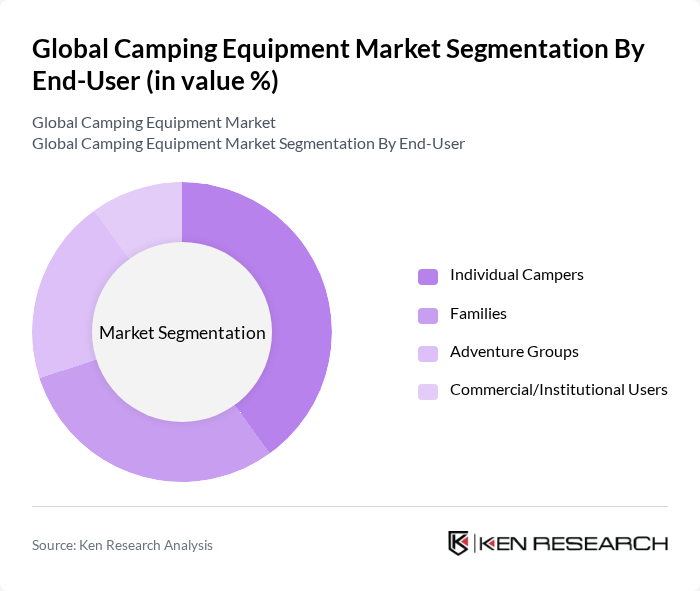
By End-User:The market is segmented based on end-users, including individual campers, families, adventure groups, and commercial/institutional users. Individual campers and families dominate the market, driven by the increasing trend of outdoor activities, family bonding experiences, and the influence of social media on outdoor lifestyles. The rise in adventure tourism has also led to a growing demand from adventure groups, while commercial users contribute to the market through organized camping events, outdoor education, and eco-tourism programs.
The Global Camping Equipment Market is characterized by a dynamic mix of regional and international players. Leading participants such as The North Face, Coleman Company, Inc., REI Co-op, Patagonia, Inc., Black Diamond Equipment, Ltd., Big Agnes, Inc., MSR (Mountain Safety Research), Kelty, Eureka!, Outwell, Sea to Summit, Marmot Mountain, LLC, Therm-a-Rest, Vango, Nemo Equipment, Inc., Johnson Outdoors Inc., Oase Outdoors ApS, Zempire Camping Equipment, Newell Brands (owner of Coleman, Marmot, etc.) contribute to innovation, geographic expansion, and service delivery in this space.
The future of the camping equipment market appears promising, driven by increasing consumer interest in outdoor activities and sustainable practices. As more individuals prioritize health and wellness, the demand for camping gear that promotes outdoor experiences is expected to rise. Additionally, the integration of smart technology into camping products will likely enhance user experiences, attracting a broader demographic. Companies that innovate and adapt to these trends will be well-positioned to capitalize on emerging opportunities in the market.
| Segment | Sub-Segments |
|---|---|
| By Product Type | Tents Sleeping Bags Camping Furniture Cooking Systems & Cookware Camping Backpacks Camping Gear & Accessories Others |
| By End-User | Individual Campers Families Adventure Groups Commercial/Institutional Users |
| By Distribution Channel | Online Stores Specialty Sporting Goods Stores Supermarkets/Hypermarkets Others |
| By Material | Synthetic Natural Composite |
| By Price Range | Budget Mid-Range Premium |
| By Region | North America Europe Asia Pacific Middle East & Africa South America |
| Scope Item/Segment | Sample Size | Target Respondent Profiles |
|---|---|---|
| Camping Gear Retailers | 60 | Store Managers, Purchasing Agents |
| Outdoor Enthusiasts | 100 | Frequent Campers, Adventure Travelers |
| Manufacturers of Camping Equipment | 50 | Product Development Managers, Sales Directors |
| Camping Event Organizers | 40 | Event Coordinators, Marketing Managers |
| Outdoor Recreation Associations | 40 | Policy Makers, Community Leaders |
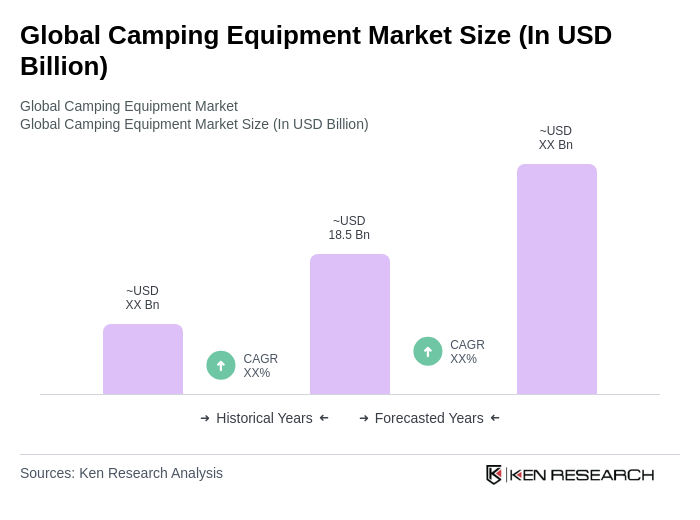
The Global Camping Equipment Market is valued at approximately USD 18.5 billion, reflecting a significant growth trend driven by increased outdoor recreational activities and rising disposable incomes among consumers.

What makes us stand out is that our consultants follow Robust, Refine and Result (RRR) methodology. Robust for clear definitions, approaches and sanity checking, Refine for differentiating respondents' facts and opinions, and Result for presenting data with story.

We have set a benchmark in the industry by offering our clients with syndicated and customized market research reports featuring coverage of entire market as well as meticulous research and analyst insights.

While we don't replace traditional research, we flip the method upside down. Our dual approach of Top Bottom & Bottom Top ensures quality deliverable by not just verifying company fundamentals but also looking at the sector and macroeconomic factors.

With one step in the future, our research team constantly tries to show you the bigger picture. We help with some of the tough questions you may encounter along the way: How is the industry positioned? Best marketing channel? KPI's of competitors? By aligning every element, we help maximize success.

Our report gives you instant access to the answers and sources that other companies might choose to hide. We elaborate each steps of research methodology we have used and showcase you the sample size to earn your trust.

If you need any support, we are here! We pride ourselves on universe strength, data quality, and quick, friendly, and professional service.













