
Global Car Diagnostic Scanner Market Outlook to 2030
Region:Global
Author(s):Yogita Sahu
Product Code:KROD6073
Region:Global
Author(s):Yogita Sahu
Product Code:KROD6073
November 2024
91
Listen to the audio summary
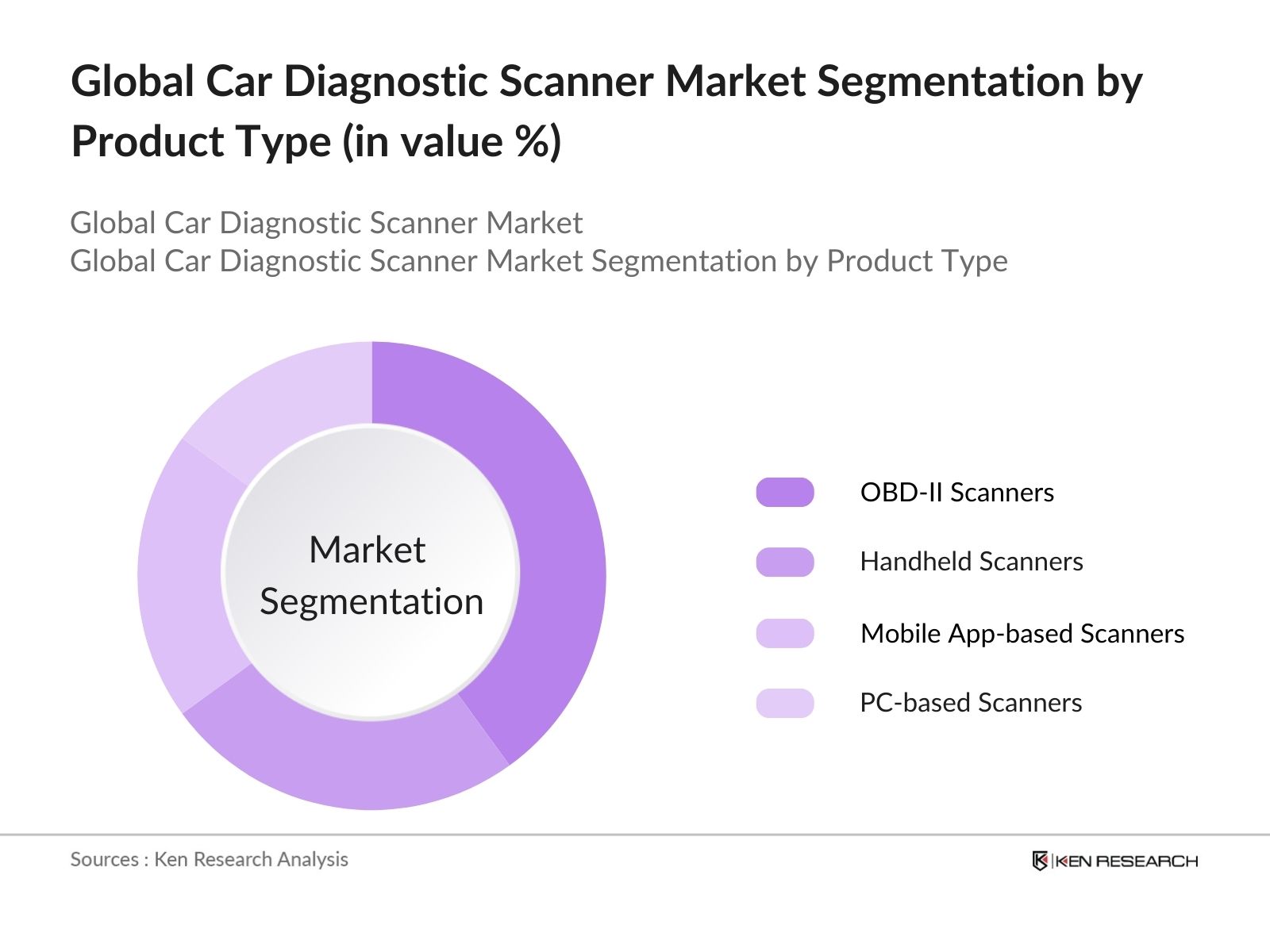
By Product Type: The market is segmented by product type into OBD-II scanners, handheld scanners, mobile app-based scanners, and PC-based scanners. Recently, OBD-II scanners have maintained a dominant market share due to their universal compatibility with most vehicles and the ability to provide real-time data on vehicle performance. These scanners offer enhanced diagnostic capabilities, making them highly favored by both professional mechanics and individual car owners.
By Vehicle Type: The market is segmented by vehicle type into passenger cars, light commercial vehicles (LCVs), and heavy commercial vehicles (HCVs). Passenger cars dominate the market due to their vast numbers globally, which translates into higher demand for diagnostic tools. The growing electrification of passenger cars has also contributed to this dominance, as EVs require more frequent and specialized diagnostics.
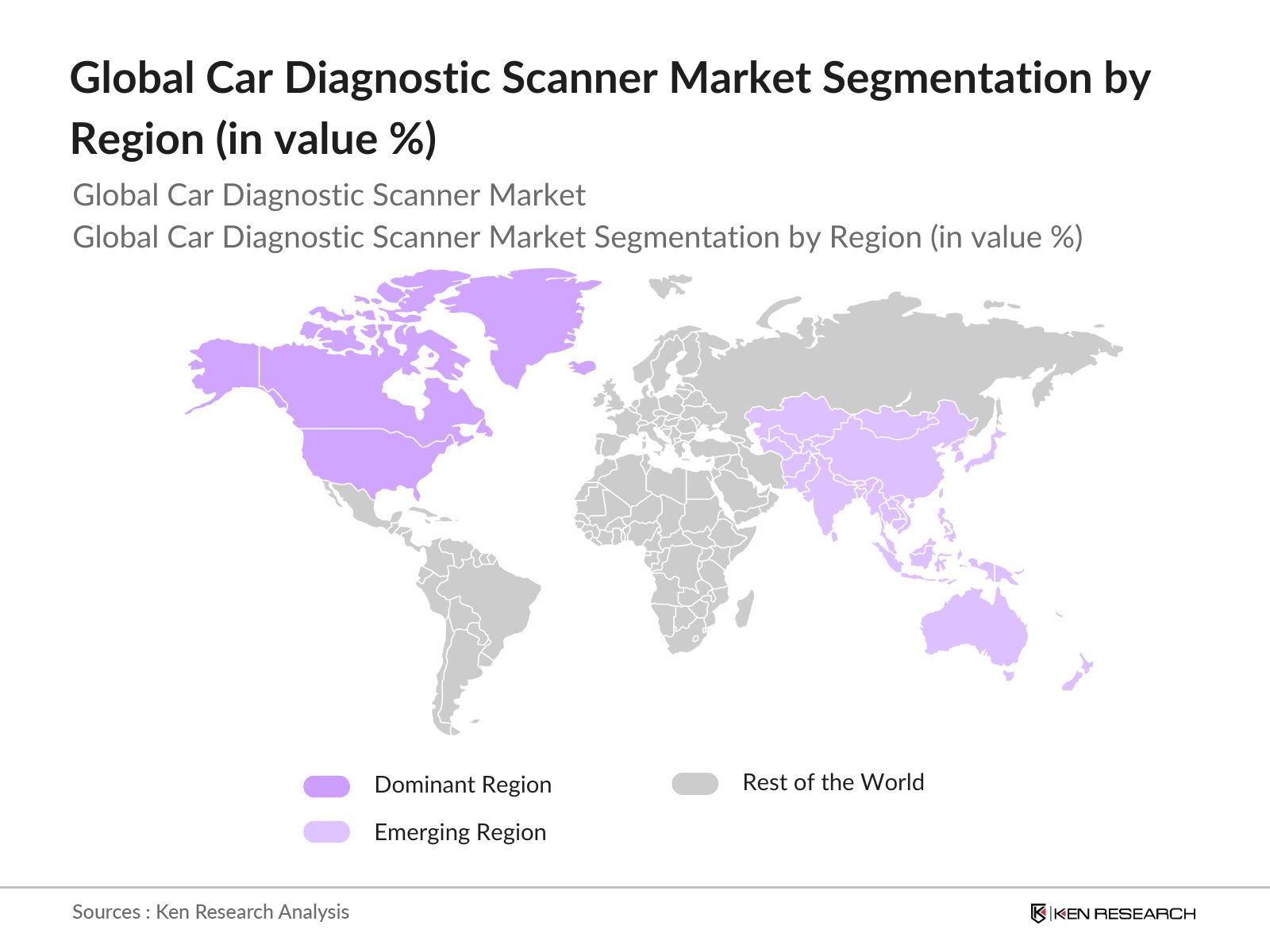
By Region: The market is segmented by region into North America, Europe, Asia Pacific, Latin America, and the Middle East & Africa. North America holds a significant share of the market, driven by the United States' robust automotive industry and the high adoption rate of advanced diagnostic technologies. The European market, led by Germany, is also growing rapidly due to stringent emissions standards and government regulations regarding vehicle safety.
The market is dominated by key players who have established strong positions through technological innovation, global reach, and strategic partnerships. These companies offer a wide range of diagnostic tools, including OBD-II scanners, handheld devices, and mobile applications, catering to both professional and consumer markets.
|
Company |
Year of Establishment |
Headquarters |
Revenue |
R&D Centers |
Patents |
Global Reach |
Service Offerings |
Acquisition Strategy |
|
Bosch Automotive Service Solutions |
1886 |
Germany |
||||||
|
Snap-on Incorporated |
1920 |
USA |
||||||
|
Launch Tech Co. Ltd. |
1992 |
China |
||||||
|
Autel Intelligent Technology |
2004 |
China |
||||||
|
Denso Corporation |
1949 |
Japan |
Over the next five years, the global car diagnostic scanner industry is expected to grow due to the increasing penetration of electric vehicles, continuous advancements in diagnostic technologies, and rising consumer awareness about the importance of vehicle maintenance.
|
By Product Type |
OBD-II Scanners Handheld Scanners Mobile App-based Scanners PC-based Scanners |
|
By Vehicle Type |
Passenger Cars Light Commercial Vehicles (LCVs) Heavy Commercial Vehicles (HCVs) |
|
By End-User |
OEM Dealerships Independent Repair Shops Consumers Fleet Operators |
|
By Connectivity |
Wired Wireless (Bluetooth, Wi-Fi) |
|
By Region |
North America Europe Asia Pacific Latin America Middle East & Africa |
1.1 Definition and Scope
1.2 Market Taxonomy
1.3 Market Growth Rate
1.4 Market Segmentation Overview
2.1 Historical Market Size
2.2 Year-On-Year Growth Analysis
2.3 Key Market Developments and Milestones
3.1 Growth Drivers (Diagnostic Technology Adoption Rate, Vehicle Electrification, Consumer Awareness, Regulatory Compliance)
3.1.1 Increasing Adoption of OBD-II Scanners
3.1.2 Growth in Electric and Hybrid Vehicles
3.1.3 Rising Awareness About Vehicle Diagnostics
3.1.4 Stringent Emission and Safety Regulations
3.2 Market Challenges (High Equipment Costs, Technological Complexity, Data Privacy Issues, Lack of Skilled Technicians)
3.2.1 High Initial Setup Costs for Workshops
3.2.2 Technological Integration with Complex Automotive Systems
3.2.3 Data Security and Privacy Concerns
3.2.4 Shortage of Skilled Technicians
3.3 Opportunities (R&D in Advanced Diagnostics, Connectivity Solutions, Integration with Cloud Platforms, Emerging Markets)
3.3.1 Innovation in Wireless Car Diagnostic Solutions
3.3.2 Expansion of Connected Car Diagnostics
3.3.3 Integration with IoT and Cloud-based Analytics
3.3.4 Increasing Demand from Emerging Markets
3.4 Trends (Remote Diagnostics, AI-based Scanning Tools, Consumer Grade Scanners, Subscription Models)
3.4.1 Growth in Remote Vehicle Diagnostics
3.4.2 Rise of AI-driven Diagnostic Solutions
3.4.3 Consumer-focused Diagnostic Scanners
3.4.4 Shift Towards Subscription-based Models
3.5 Government Regulation (Emission Standards, Safety Regulations, Compliance for Automotive Workshops, Data Protection Laws)
3.5.1 Emission Control Standards (EPA, EU Regulations)
3.5.2 Safety Norms for Diagnostics and Maintenance
3.5.3 Certification Requirements for Workshops
3.5.4 Data Protection Regulations for Diagnostic Tools
3.6 SWOT Analysis
3.7 Stakeholder Ecosystem
3.8 Porters Five Forces Analysis
3.9 Competition Ecosystem
4.1 By Product Type (In Value %)
4.1.1 OBD-II Scanners
4.1.2 Handheld Scanners
4.1.3 Mobile App-based Scanners
4.1.4 PC-based Scanners
4.2 By Vehicle Type (In Value %)
4.2.1 Passenger Cars
4.2.2 Light Commercial Vehicles (LCVs)
4.2.3 Heavy Commercial Vehicles (HCVs)
4.3 By End-User (In Value %)
4.3.1 OEM Dealerships
4.3.2 Independent Repair Shops
4.3.3 Consumers
4.3.4 Fleet Operators
4.4 By Connectivity (In Value %)
4.4.1 Wired
4.4.2 Wireless (Bluetooth, Wi-Fi)
4.5 By Region (In Value %)
4.5.1 North America
4.5.2 Europe
4.5.3 Asia Pacific
4.5.4 Latin America
4.5.5 Middle East & Africa
5.1 Detailed Profiles of Major Companies
5.1.1 Bosch Automotive Service Solutions
5.1.2 Snap-on Incorporated
5.1.3 Launch Tech Co. Ltd.
5.1.4 Autel Intelligent Technology
5.1.5 Actia Group
5.1.6 Denso Corporation
5.1.7 Foxwell Tech
5.1.8 Innova Electronics Corporation
5.1.9 BlueDriver
5.1.10 Hella GmbH & Co. KGaA
5.1.11 Delphi Technologies
5.1.12 Continental AG
5.1.13 Siemens Digital Industries
5.1.14 AVL List GmbH
5.1.15 Texa S.p.A.
5.2 Cross Comparison Parameters (Revenue, No. of Patents, No. of R&D Centers, Market Share, Service Offerings, Global Reach, Acquisition Strategy, Technological Innovation)
5.3 Market Share Analysis
5.4 Strategic Initiatives
5.5 Mergers and Acquisitions
5.6 Investment Analysis
5.7 Venture Capital Funding
5.8 Government Grants
5.9 Private Equity Investments
6.1 Automotive Emission Standards
6.2 Certification Requirements for Diagnostics Tools
6.3 Compliance Standards for Workshops
6.4 Data Privacy Regulations
7.1 Future Market Size Projections
7.2 Key Factors Driving Future Market Growth
8.1 By Product Type (In Value %)
8.2 By Vehicle Type (In Value %)
8.3 By End-User (In Value %)
8.4 By Connectivity (In Value %)
8.5 By Region (In Value %)
9.1 TAM/SAM/SOM Analysis
9.2 Customer Cohort Analysis
9.3 Marketing Initiatives
9.4 White Space Opportunity Analysis
The initial phase involves identifying and defining key variables in the global car diagnostic scanner market, such as vehicle diagnostic needs, technological advancements, and regulatory standards. Extensive desk research utilizing secondary sources and proprietary databases forms the foundation of this phase.
In this phase, historical data regarding the car diagnostic scanner market is compiled and analyzed. This includes vehicle production and sales statistics, OBD-II scanner adoption rates, and the overall market penetration of diagnostic tools.
Market hypotheses are validated through expert consultations and interviews with automotive industry professionals. These consultations help refine the research findings and provide insights into operational practices and technological innovations in the diagnostic scanner market.
The final phase synthesizes the research into a comprehensive market report, incorporating primary data from manufacturers, service providers, and industry experts. The output is validated to ensure the accuracy and relevance of market forecasts and competitive analysis.
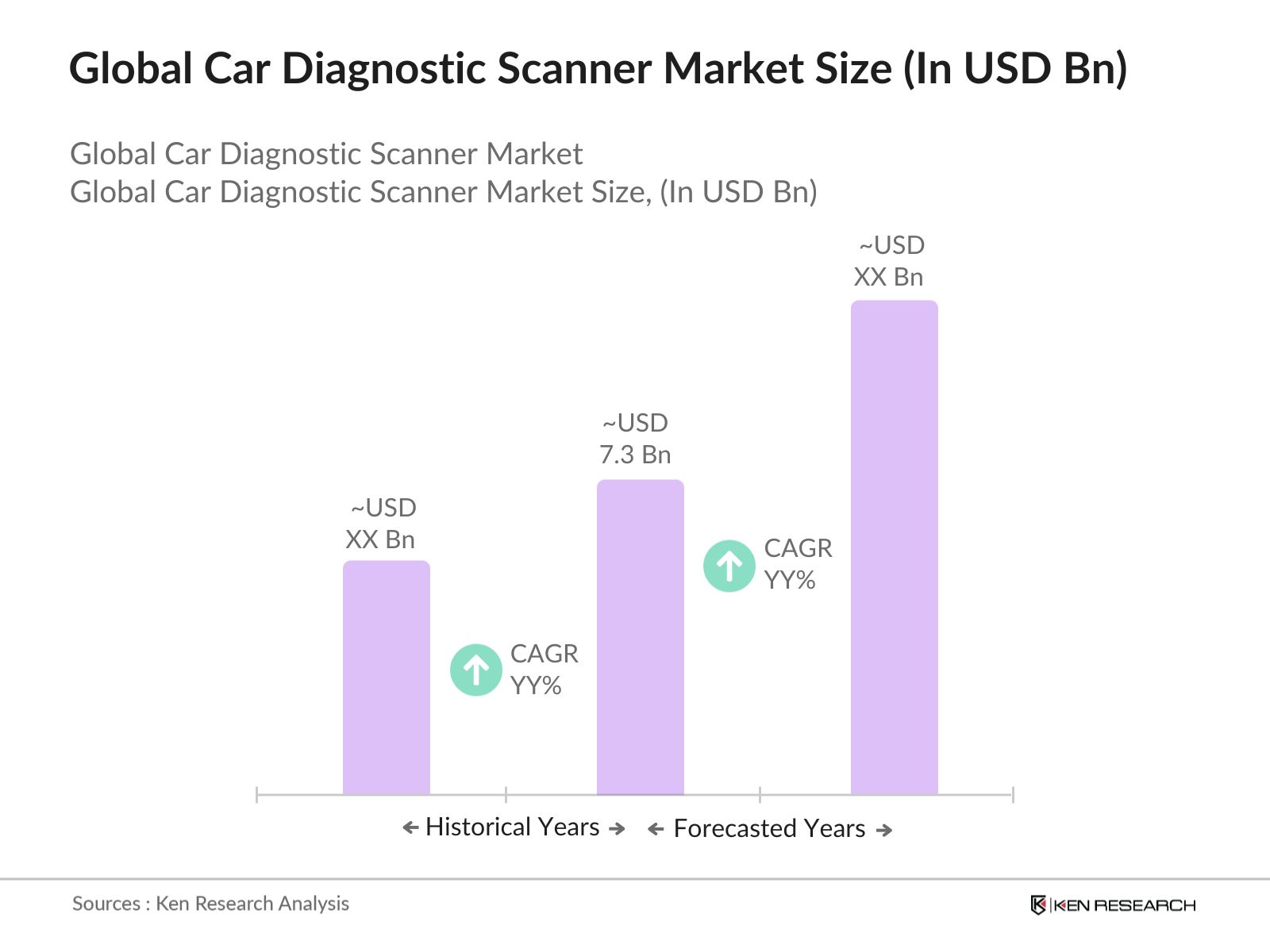
The global car diagnostic scanner market is valued at USD 7.3 billion, driven by the increasing complexity of automotive electronics and rising consumer demand for effective vehicle maintenance solutions.
Challenges in the global car diagnostic scanner market include high initial costs for diagnostic tools, technological complexities in modern vehicles, and concerns around data privacy. Additionally, a lack of skilled technicians poses an operational challenge for the widespread adoption of these tools.
Key players in the global car diagnostic scanner market include Bosch Automotive Service Solutions, Snap-on Incorporated, Launch Tech Co. Ltd., Autel Intelligent Technology, and Denso Corporation. These companies dominate through technological innovation and strong global presence.
The global car diagnostic scanner market is driven by rising vehicle electrification, growing consumer awareness regarding vehicle diagnostics, and increasing adoption of advanced diagnostic technologies like OBD-II scanners. Technological advancements such as AI and wireless connectivity are also fueling growth.
Key trends include the integration of AI and machine learning for predictive diagnostics, the rise of app-based and consumer-focused diagnostic tools, and the growing application of wireless diagnostic platforms in fleet management.

What makes us stand out is that our consultants follows Robust, Refine and Result (RRR) methodology. i.e. Robust for clear definitions, approaches and sanity checking, Refine for differentiating respondents facts and opinions and Result for presenting data with story

We have set a benchmark in the industry by offering our clients with syndicated and customized market research reports featuring coverage of entire market as well as meticulous research and analyst insights.

While we don't replace traditional research, we flip the method upside down. Our dual approach of Top Bottom & Bottom Top ensures quality deliverable by not just verifying company fundamentals but also looking at the sector and macroeconomic factors.

With one step in the future, our research team constantly tries to show you the bigger picture. We help with some of the tough questions you may encounter along the way: How is the industry positioned? Best marketing channel? KPI's of competitors? By aligning every element, we help maximize success.

Our report gives you instant access to the answers and sources that other companies might choose to hide. We elaborate each steps of research methodology we have used and showcase you the sample size to earn your trust.

If you need any support, we are here! We pride ourselves on universe strength, data quality, and quick, friendly, and professional service.