Ken Research Logo

Global Carbon Capture and Storage (CCS) Market Outlook to 2030

Region:Global

Author(s):Shivani Mehra

Product Code:KROD2448

Published On

November 2024

Total pages

89

About the Report

Global Carbon Capture and Storage (CCS) Market Overview

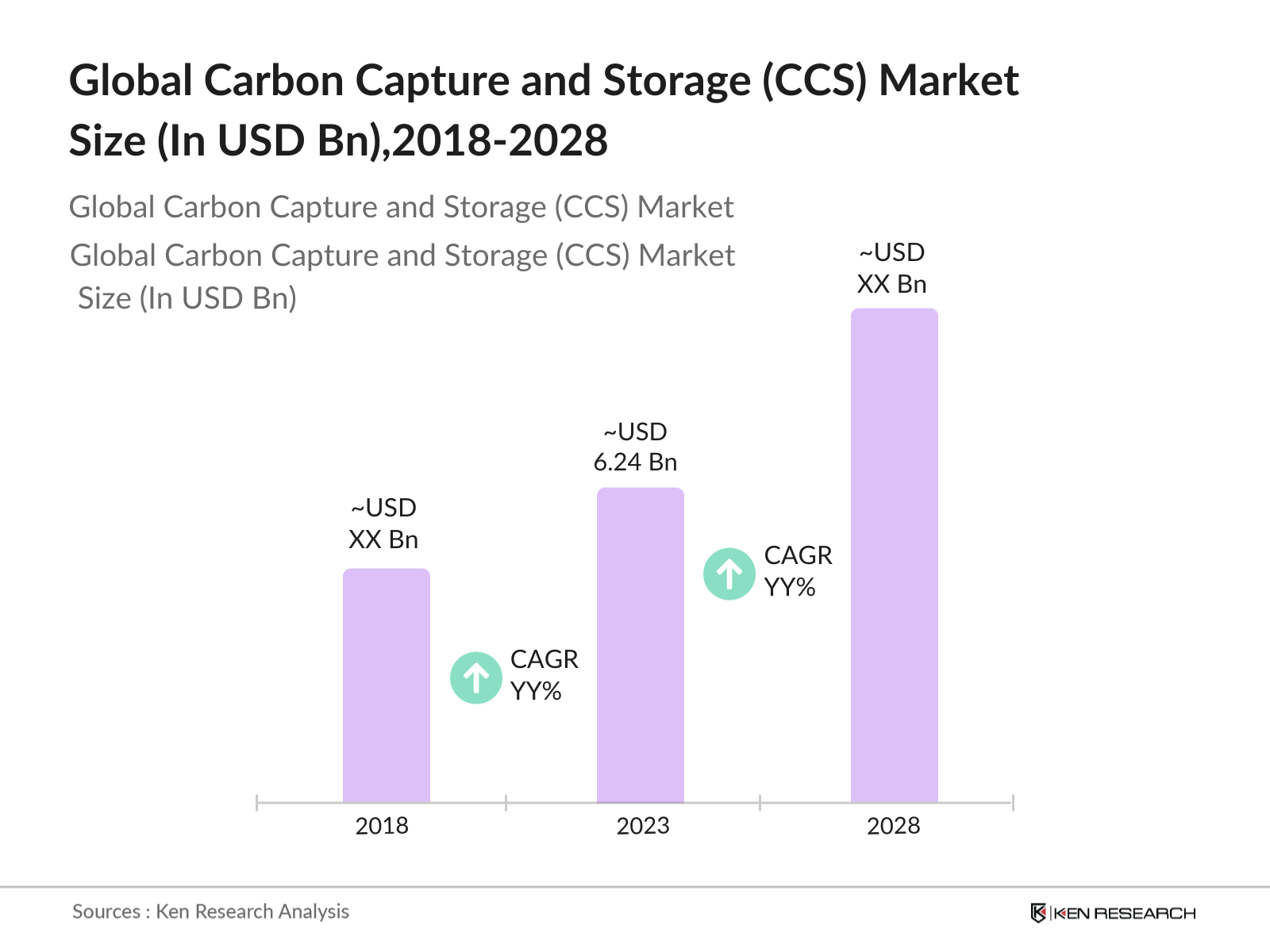
  • The global carbon capture and storage (CCS) is valued at USD 6.24 billion in 2023. This market is driven by increasing awareness of environmental sustainability and strict regulations surrounding carbon emissions. With growing investments in clean energy and a focus on reducing greenhouse gas emissions, CCS technology has become a key solution for industries that contribute heavily to carbon pollution, such as energy, manufacturing, and chemicals. The demand is propelled by rising industrial activities that necessitate the deployment of effective carbon capture mechanisms to meet international climate goals.

market overviews

  • Some of the major players in the global CCS market in 2023 include ExxonMobil, Shell, Chevron Corporation, TotalEnergies, and Equinor. These companies are leading the market with significant investments in developing and expanding CCS infrastructure. ExxonMobil, for instance, has committed to capturing 9 million tons of CO2 annually by 2025, while Shells Quest project has already sequestered over 6 million tons of CO2 since its inception. These players dominate the market through their large-scale projects and advanced CCS technologies.
  • In 2023, ExxonMobil completed an acquisition of Denbury Inc. in an all-stock transaction valued at $4.9 billion. This acquisition significantly enhances ExxonMobil's carbon capture and sequestration (CCS) capabilities, as it now controls the largest owned and operated CO pipeline network in the United States, which includes over 1,300 miles of pipelines and access to more than 15 onshore CO storage sites.
  • Cities like Houston, Texas; Rotterdam, Netherlands; and Melbourne, Australia, dominate the carbon capture and storage (CCS) market due to their well-developed industrial infrastructure and strategic location. Houston, a major hub for energy operations, benefits from extensive pipeline networks and large-scale industrial emissions sources. Rotterdam, with its deep-water port and industrial activities, leads Europes CCS projects, while Melbourne plays a key role in Australia's CCS initiatives due to its robust energy sector and accessible CO2 storage sites.

Global Carbon Capture and Storage (CCS) Market Segmentation

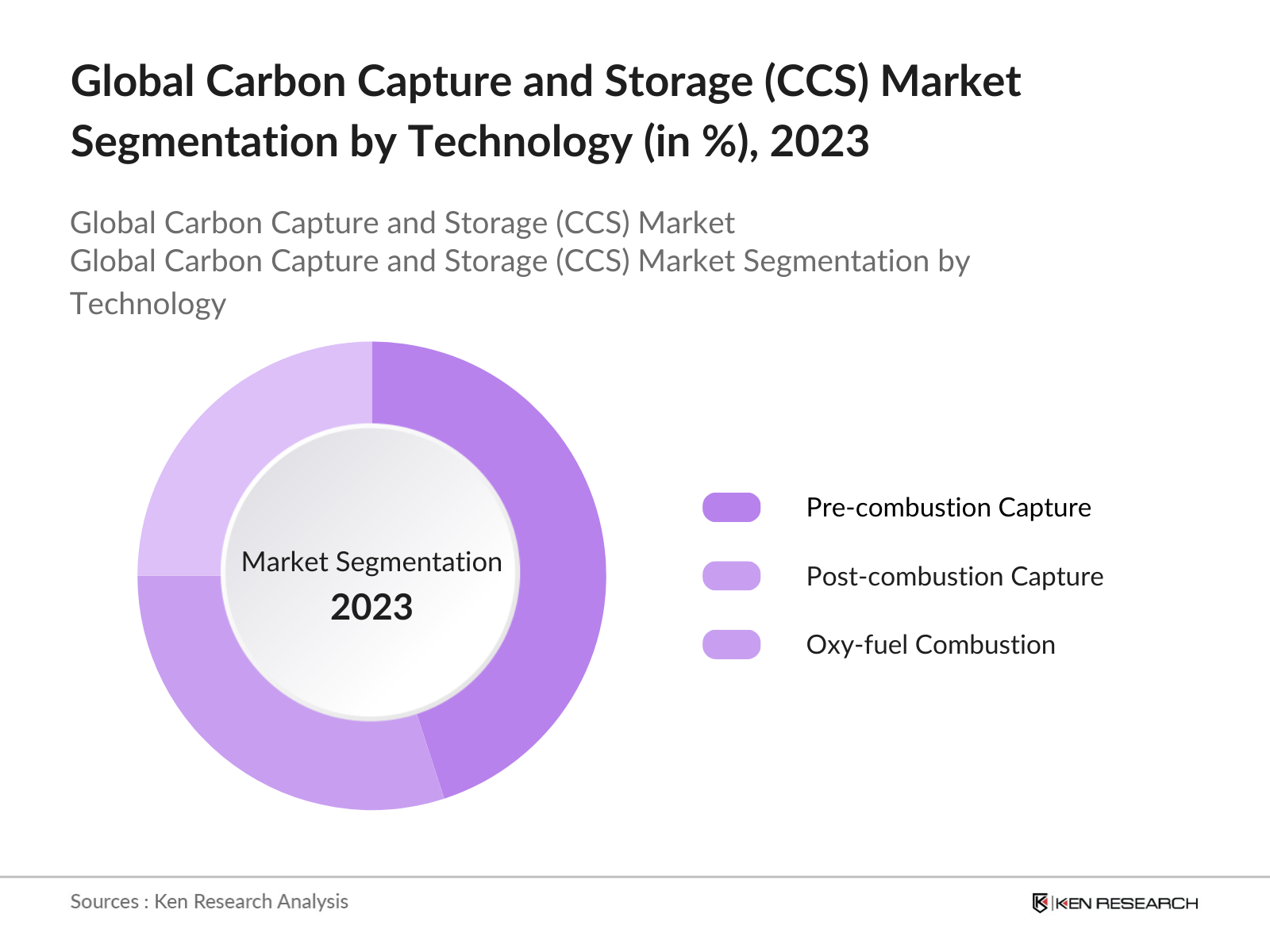
By Technology: The global CCS market is segmented by technology into pre-combustion capture, post-combustion capture, and oxy-fuel combustion. In 2023, pre-combustion capture has been noted to dominate the CCS market due to its effectiveness in capturing large volumes of CO2 at lower costs compared to post-combustion methods. This cost-effectiveness and efficiency make it a preferred choice for power plants and industrial applications.
market overviews

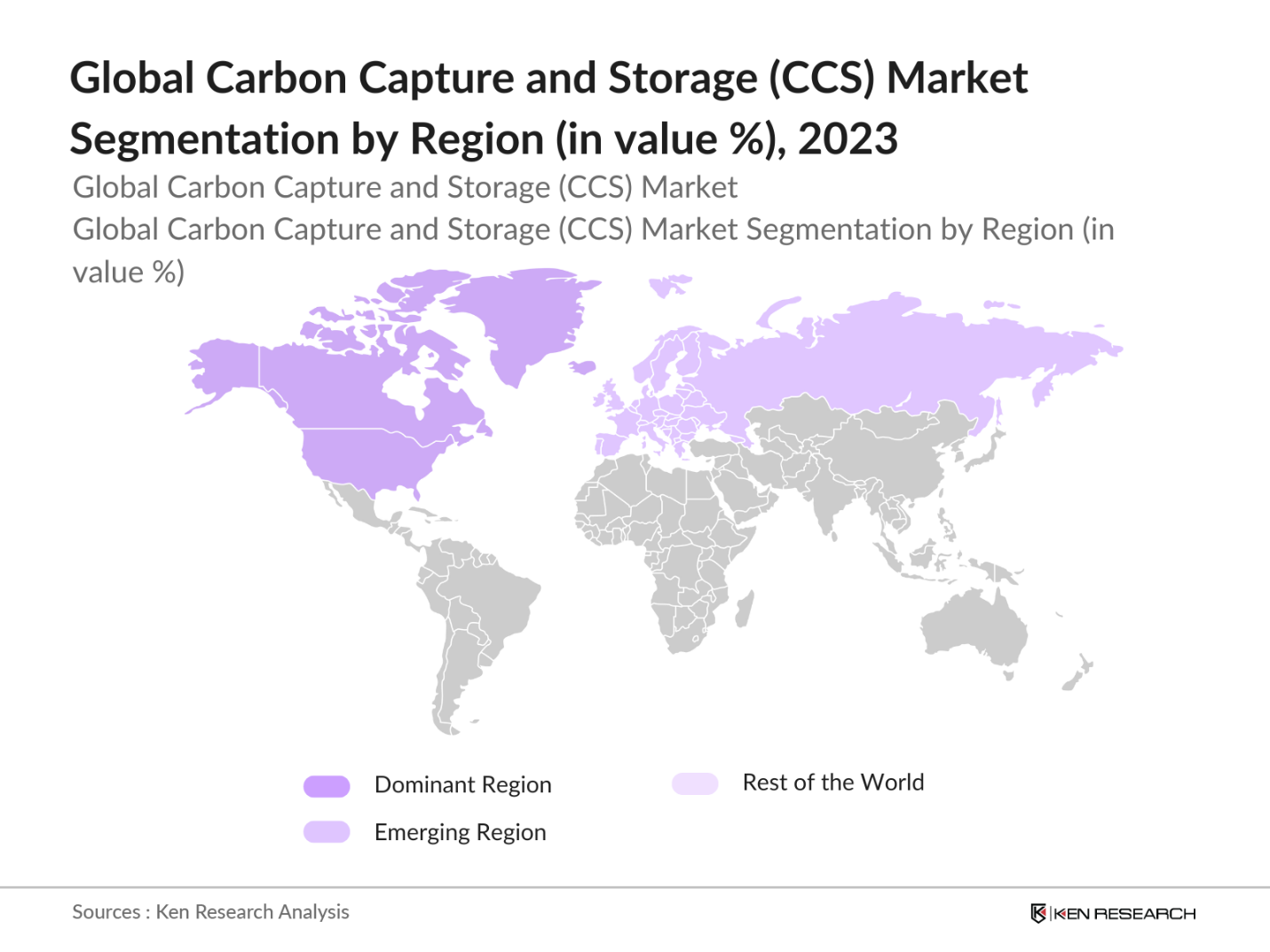
By Region: The global CCS market is segmented into North America, Europe, Asia-Pacific (APAC), Latin America, and the Middle East & Africa (MEA). North America dominates the market in 2023, driven by favorable government policies, significant investments, and the presence of major players such as ExxonMobil and Chevron. The U.S. and Canada lead the CCS space with extensive project development and large-scale storage capacities. Government initiatives, like the U.S. 45Q carbon capture credits, have further accelerated growth in this region.
market overviews

By End-Use Industry: The global CCS market is segmented by end-use industry into power generation, oil and gas, and chemicals. In 2023, power generation holds the dominant position, driven by the sector's significant carbon emissions and the urgent need for emission reduction solutions. Coal and natural gas-fired power plants are increasingly adopting CCS technologies to comply with environmental regulations. The electricity sector is a major contributor to greenhouse gas emissions, accounting for about one-third of total emissions in the U.S.

Global Carbon Capture and Storage (CCS) Market Competitive Landscape

Company Name

Establishment Year

Headquarters

ExxonMobil

1870

Irving, Texas

Shell

1907

The Hague, Netherlands

Chevron

1879

San Ramon, California

TotalEnergies

1924

Paris, France

Equinor

1972

Stavanger, Norway

  • ExxonMobil: In 2023, ExxonMobil expanded its CCS capacity through the acquisition of Denburys CO2 infrastructure, significantly boosting its ability to capture and store carbon across North America. The companys goal of reducing carbon emissions by 9 million tons annually positions it as a leader in the CCS market. Additionally, ExxonMobil is investing heavily in research to further improve the efficiency of carbon capture technologies and reduce costs.
  • Chevron: Chevron has been actively investing in CCS technology, particularly through its Gorgon Gas Project in Australia. As of June 2024, the project has injected millions of tonnes of CO2. However, the project has underperformed its initial targets, capturing and injecting less CO2 than originally planned during its first five years of operation. Chevron is now working on strategies to improve the efficiency and output of the project to meet its long-term goals.

Global Carbon Capture and Storage (CCS) Market Analysis

Global Carbon Capture and Storage (CCS) Market Growth Drivers

  • Rising Demand from the Oil and Gas Sector: The oil and gas industry is increasingly adopting CCS technologies, particularly for enhanced oil recovery (EOR) processes. The sector relies on CCS to optimize production while reducing emissions. Demand for CO2 in EOR applications is expected to grow, with the oil and gas sector becoming a major contributor to the overall CCS market, driven by the need for more sustainable production practices.
  • Rising Demand from High-Emission Sectors: High-emission industries like power generation, oil and gas, and chemicals are adopting CCS technologies to comply with environmental regulations. Fossil fuel-based power plants are significant emitters, pushing companies to invest in CCS. In 2023, Shell announced a $1.4 billion investment in global CCS projects, focusing on the energy sector to reduce emissions and meet sustainability targets.
  • Increased Investment in Energy Transition: The global transition to cleaner energy sources is leading to significant investments in CCS technologies, positioning it as a crucial tool for reducing carbon emissions. These investments highlight the growing recognition of CCS in achieving decarbonization goals. Increased capital is expected to drive research, development, and deployment of CCS technologies. This will accelerate the growth of the market and support the advancement of more efficient systems for carbon capture and storage.

Global Carbon Capture and Storage (CCS) Market Challenges

  • Limited Storage Infrastructure: The availability of suitable geological formations for storing captured CO2 is another critical challenge. According to data from the U.S. Geological Survey, North America holds an estimated 500 billion tons of potential CO2 storage capacity. developing this infrastructure is capital-intensive and time-consuming, requiring substantial investment in pipelines and storage sites. The lack of developed infrastructure for transportation and long-term storage of CO2 in several regions, particularly in Asia-Pacific and Africa, is limiting the growth potential of CCS technologies.
  • Regulatory and Policy Uncertainties: While many governments have committed to net-zero emission targets, inconsistent and evolving regulatory frameworks present a significant barrier. For example, changes in the U.S. federal governments approach to environmental policies could impact the funding and development of CCS projects. In Europe, although the European Commission is pushing for a unified carbon pricing system, disparities in national policies have led to unequal adoption rates across member countries. This regulatory uncertainty makes it difficult for businesses to invest in long-term CCS projects confidently.

Global Carbon Capture and Storage (CCS) Market Government Initiatives

  • U.S. Department of Energys Carbon Capture Program: The DOE announced a $2.5 billion funding initiative for carbon capture projects, not $3.5 billion as stated. This funding is part of the Bipartisan Infrastructure Law and is aimed at advancing carbon capture, utilization, and storage (CCUS) technologies, particularly in power generation and industrial sectors
  • European Unions Innovation Fund for CCS: Horizon Europe is indeed a key funding program for research and innovation in the EU, which includes support for CCS technologies. It aims to foster innovation in carbon storage technologies, especially in industries like chemicals, steel, and cement, which are significant contributors to carbon emissions. The program is part of broader EU efforts to tackle climate change and enhance energy resilience by supporting the development and deployment of innovative technologies

Global Carbon Capture and Storage (CCS) Market Outlook

The global carbon capture and storage (CCS) market is poised for significant growth by 2028, driven by a combination of government initiatives, stricter environmental regulations, and the increasing demand for sustainable industrial practices. As countries push toward achieving net-zero carbon emissions targets, CCS will play a vital role in reducing CO2 emissions across energy-intensive sectors.

Future Trends:

  • Expansion of Large-Scale Carbon Storage Facilities: By 2028, large-scale carbon storage facilities are expected to increase significantly, particularly in North America and Europe, driven by government investments and stricter carbon pricing policies. Countries such as the U.S., Canada, and Norway are anticipated to lead this growth. These projects will rely on robust infrastructure, including CO2 pipelines and dedicated storage sites, as governments work to reduce industrial emissions and meet climate goals by 2028.
  • Adoption of CCS in Emerging Markets: Emerging markets in Asia-Pacific and Latin America are projected to adopt CCS technologies at an accelerated pace by 2028. Countries such as China and India are likely to invest heavily in CCS to mitigate the environmental impact of their rapidly growing industrial sectors. China, for instance, is expected to deploy CCS in its coal-fired power plants to reduce emissions, contributing significantly to the markets expansion in the APAC region.

Scope of the Report

By Technology

Pre-combustion Capture

Post-combustion Capture

Oxy-fuel Combustion

By End-Use Industry

Power Generation

Oil and Gas

Chemicals

By Region

North America

Europe

APAC

Latin America

MEA

By Capture Method

Point Source Capture

Industrial Carbon Capture

Direct Air Capture

Products

Key Target Audience Organizations and Entities Who Can Benefit by Subscribing This Report:

  • Investments and venture capitalist firms

  • Government and regulatory bodies (EU, EPA)

  • Carbon capture technology providers

  • Power generation companies

  • Oil and gas companies

  • Chemical manufacturers

  • Industrial process industries

  • Energy storage providers

Companies

Players Mentioned in the Report:

  • ExxonMobil

  • Shell

  • Chevron Corporation

  • TotalEnergies

  • Equinor

  • BP

  • Schlumberger

  • Fluor Corporation

  • Linde PLC

  • Mitsubishi Heavy Industries

  • Aker Solutions

  • Air Liquide

  • Siemens Energy

  • Honeywell International Inc.

  • General Electric (GE)

Table of Contents

01. Global Carbon Capture and Storage (CCS) Market Overview

1.1. Definition and Scope

1.2. Market Taxonomy

1.3. Market Growth Rate

1.4. Market Segmentation Overview

02. Global Carbon Capture and Storage (CCS) Market Size (in USD Bn), 2018-2023

2.1. Historical Market Size

2.2. Year-on-Year Growth Analysis

2.3. Key Market Developments and Milestones

03. Global Carbon Capture and Storage (CCS) Market Analysis

3.1. Growth Drivers

3.1.1. Increasing Government Investments

3.1.2. Demand from High-Emission Sectors

3.1.3. Net-Zero Emissions Push

3.2. Restraints

3.2.1. High Implementation Costs

3.2.2. Limited Storage Infrastructure

3.2.3. Policy and Regulatory Uncertainties

3.3. Opportunities

3.3.1. Carbon Capture for Industrial Applications

3.3.2. Innovation in CO2 Storage Technologies

3.3.3. Potential for Market Expansion in Emerging Economies

3.4. Trends

3.4.1. Public-Private Partnerships

3.4.2. Cluster-Based Carbon Capture Projects

3.4.3. Scaling of Pilot Projects to Full Deployment

3.5. Government Initiatives

3.5.1. U.S. Carbon Capture Program

3.5.2. European Union Innovation Fund

3.5.3. Canadas Net-Zero Accelerator Initiative

3.6. SWOT Analysis

3.7. Stake Ecosystem

3.8. Competitive Ecosystem

04. Global Carbon Capture and Storage (CCS) Market Segmentation, 2023

4.1. By Technology (in Value %)

4.1.1. Pre-combustion Capture

4.1.2. Post-combustion Capture

4.1.3. Oxy-fuel Combustion

4.2. By End-Use Industry (in Value %)

4.2.1. Power Generation

4.2.2. Oil and Gas

4.2.3. Chemicals

4.3. By Region (in Value %)

4.3.1. North America

4.3.2. Europe

4.3.3. Asia-Pacific (APAC)

4.3.4. Latin America

4.3.5. Middle East & Africa (MEA)

4.4. By Capture Method (in Value %)

4.4.1. Point Source Capture

4.4.2. Industrial Carbon Capture

4.4.3. Direct Air Capture

4.5. By Storage Type (in Value %)

4.5.1. Geological Storage

4.5.2. Mineral Storage

4.5.3. Ocean Storage

4.6. By CO2 Source (in Value %)

4.6.1. Power Plants

4.6.2. Industrial Processes

4.6.3. Transportation

4.7. By Deployment Type (in Value %)

4.7.1. Enhanced Oil Recovery (EOR)

4.7.2. Standalone CCS Projects

4.7.3. Integrated CCS Systems

05. Global Carbon Capture and Storage (CCS) Market Cross Comparison

5.1. Detailed Profiles of Major Companies

5.1.1. ExxonMobil

5.1.2. Shell

5.1.3. Chevron Corporation

5.1.4. TotalEnergies

5.1.5. Equinor

5.1.6. BP

5.1.7. Schlumberger

5.1.8. Fluor Corporation

5.1.9. Linde PLC

5.1.10. Mitsubishi Heavy Industries

5.1.11. Aker Solutions

5.1.12. Air Liquide

5.1.13. Siemens Energy

5.1.14. Honeywell International Inc.

5.1.15. General Electric (GE)

5.2. Cross Comparison Parameters (No. of Employees, Headquarters, Inception Year, Revenue)

06. Global Carbon Capture and Storage (CCS) Market Competitive Landscape

6.1. Market Share Analysis

6.2. Strategic Initiatives

6.3. Mergers and Acquisitions

6.4. Investment Analysis

6.4.1. Venture Capital Funding

6.4.2. Government Grants

6.4.3. Private Equity Investments

07. Global Carbon Capture and Storage (CCS) Market Regulatory Framework

7.1. Environmental Standards

7.2. Compliance Requirements

7.3. Certification Processes

08. Global Carbon Capture and Storage (CCS) Market Future Market Size (in USD Bn), 2023-2028

8.1. Future Market Size Projections

8.2. Key Factors Driving Future Market Growth

09. Global Carbon Capture and Storage (CCS) Market Future Market Segmentation, 2028

9.1. By Region (in Value %)

9.2. By Technology (in Value %)

9.3. By CO2 Source (in Value %)

9.4. By Storage Type (in Value %)

9.5. By Deployment Type (in Value %)

10. Global Carbon Capture and Storage (CCS) Market Analysts Recommendations

10.1. TAM/SAM/SOM Analysis

10.2. Customer Cohort Analysis

10.3. Marketing Initiatives

10.4. White Space Opportunity Analysis

Disclaimer

Contact Us

Research Methodology

Step: 1 Identifying Key Variables:

Ecosystem creation for all the major entities and referring to multiple secondary and proprietary databases to perform desk research around market to collate industry level information.

Step: 2 Market Building:

Collating statistics on the Global Carbon Capture and Storage (CCS) Market over the years, penetration of marketplaces and service providers ratio to compute revenue generated for Global Carbon Capture and Storage (CCS) Market. We will also review service quality statistics to understand revenue generated which can ensure accuracy behind the data points shared.

Step: 3 Validating and Finalizing:

Building market hypothesis and conducting CATIs with industry experts belonging to different companies to validate statistics and seek operational and financial information from company representatives.

Step: 4 Research Output:

Our team will approach multiple Carbon Capture and Storage (CCS) and understand nature of product segments and sales, consumer preference and other parameters, which will support us validate statistics derived through bottom to top approach from Carbon Capture and Storage (CCS).

Frequently Asked Questions

01. How big is the Global Carbon Capture and Storage (CCS) market?

The global carbon capture and storage (CCS) market was valued at USD 6.24 billion in 2023. It is driven by stringent environmental regulations, growing investments in sustainable technologies, and the need for large-scale carbon emissions reduction across industries like power generation and oil and gas.

02. What are the challenges in the Global Carbon Capture and Storage (CCS) market?

Challenges in the CCS market include high operational costs, limited availability of suitable CO2 storage sites, and inadequate infrastructure for transporting captured carbon. Additionally, regulatory uncertainties in some regions hinder the smooth development of large-scale CCS projects.

03. Who are the major players in the Global Carbon Capture and Storage (CCS) market?

Key players in the global CCS market include ExxonMobil, Shell, Chevron Corporation, TotalEnergies, and Equinor. These companies lead the market through extensive investments in infrastructure, cutting-edge CCS technologies, and strategic partnerships for CO2 capture and storage.

04. What are the growth drivers of the Global Carbon Capture and Storage (CCS) market?

The growth of the CCS market is driven by increasing governmental investments in climate mitigation, the push for net-zero carbon emissions, and growing adoption of CCS technology in high-emission sectors like power generation, oil and gas, and chemicals.

Why Buy From Us?

RRR
Refine Robust Result (RRR) Framework

What makes us stand out is that our consultants follows Robust, Refine and Result (RRR) methodology. i.e. Robust for clear definitions, approaches and sanity checking, Refine for differentiating respondents facts and opinions and Result for presenting data with story

Our Reach Is Unmatched

We have set a benchmark in the industry by offering our clients with syndicated and customized market research reports featuring coverage of entire market as well as meticulous research and analyst insights.

Research
Shifting the Research Paradigm

While we don't replace traditional research, we flip the method upside down. Our dual approach of Top Bottom & Bottom Top ensures quality deliverable by not just verifying company fundamentals but also looking at the sector and macroeconomic factors.

Insite
More Insights-Better Decisions

With one step in the future, our research team constantly tries to show you the bigger picture. We help with some of the tough questions you may encounter along the way: How is the industry positioned? Best marketing channel? KPI's of competitors? By aligning every element, we help maximize success.

Trust
Transparency and Trust

Our report gives you instant access to the answers and sources that other companies might choose to hide. We elaborate each steps of research methodology we have used and showcase you the sample size to earn your trust.

support
Round the Clock Support

If you need any support, we are here! We pride ourselves on universe strength, data quality, and quick, friendly, and professional service.

Why Client Choose Us?

400000+ Reports in repository
150+ Consulting project a year
100+ Analysts
8000+ Client Queries in 2022