
Global Carbon Fiber Market Outlook to 2030
Region:Global
Author(s):Mukul Soni
Product Code:KROD9809
Region:Global
Author(s):Mukul Soni
Product Code:KROD9809
December 2024
85
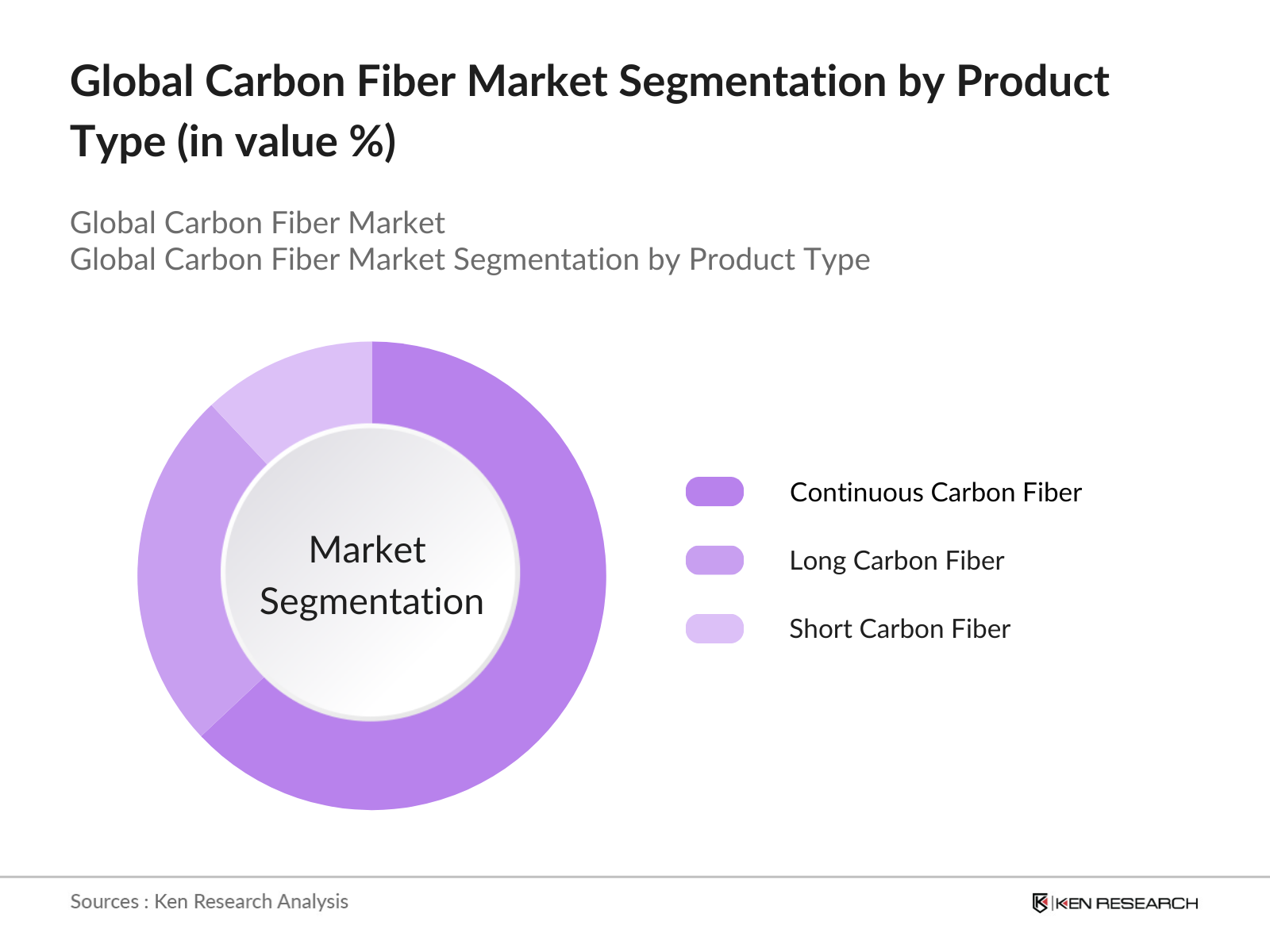
By Product Type: The carbon fiber market is segmented by product type into continuous carbon fiber, long carbon fiber, and short carbon fiber. Continuous carbon fiber holds the dominant market share due to its superior mechanical properties and widespread application in critical industries such as aerospace and automotive. Its higher strength-to-weight ratio and ability to be woven into composite materials make it the most versatile and high-performing option across sectors, giving it a clear advantage in the market.
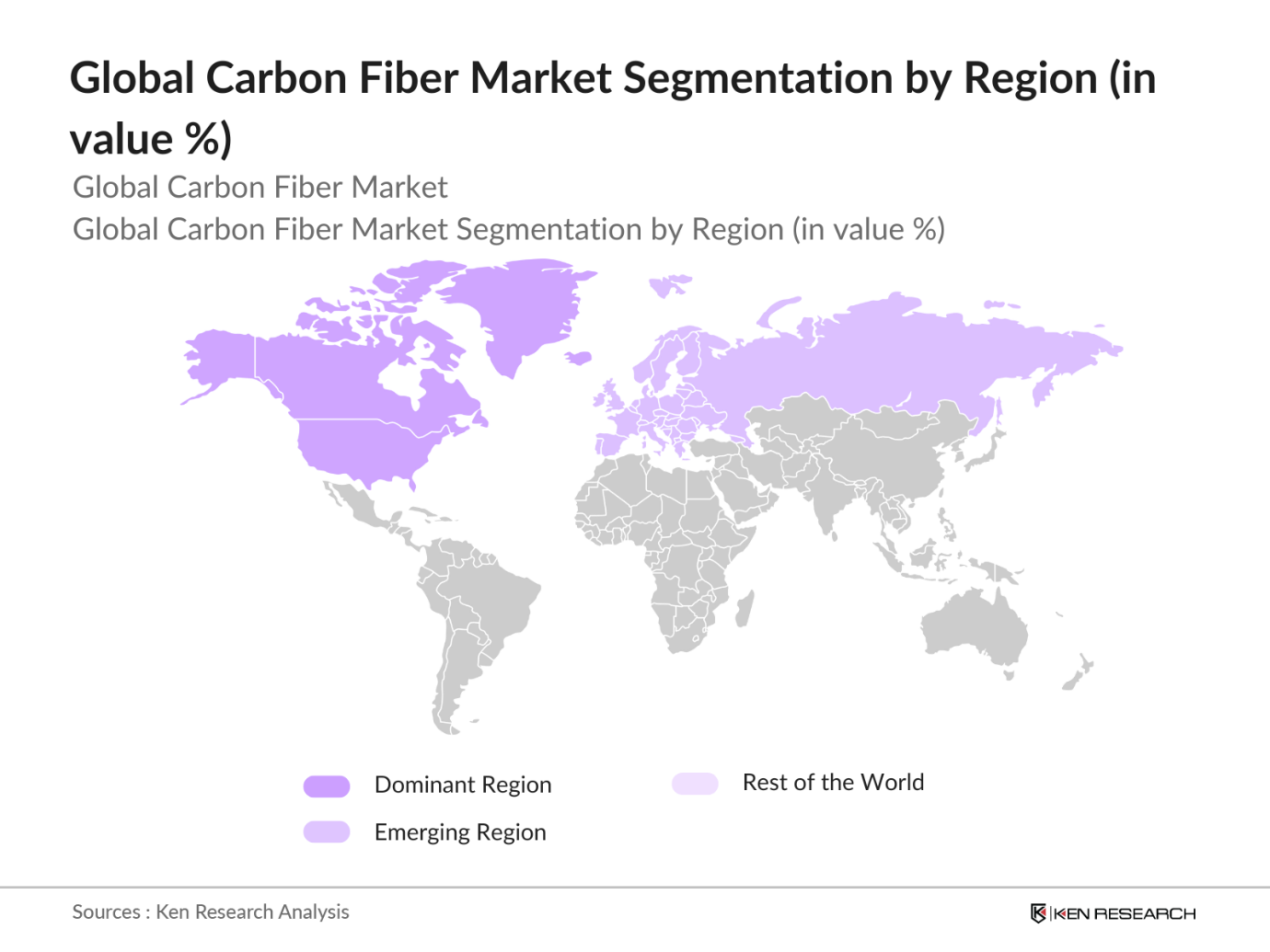
By Region: The carbon fiber market is segmented regionally into North America, Europe, Asia-Pacific, Latin America, and the Middle East & Africa. North America remains the leading region due to high investments in aerospace, defense, and automotive industries. The region's advanced research and development capabilities in these sectors make it a prime consumer of carbon fiber. Europe follows closely with its focus on lightweight vehicles and wind energy. Asia-Pacific is rapidly emerging as a key player due to its growing manufacturing capabilities and increased demand from the energy sector, particularly for wind turbine components.
By Raw Material: The market is segmented by raw materials into Polyacrylonitrile (PAN)-based carbon fiber, pitch-based carbon fiber, and rayon-based carbon fiber. PAN-based carbon fiber dominates the market due to its superior strength, stiffness, and cost-effectiveness. It is primarily used in aerospace, automotive, and construction applications where high-performance materials are required. Pitch-based carbon fiber is used in more niche applications like thermal insulation and high-temperature environments due to its heat resistance properties.
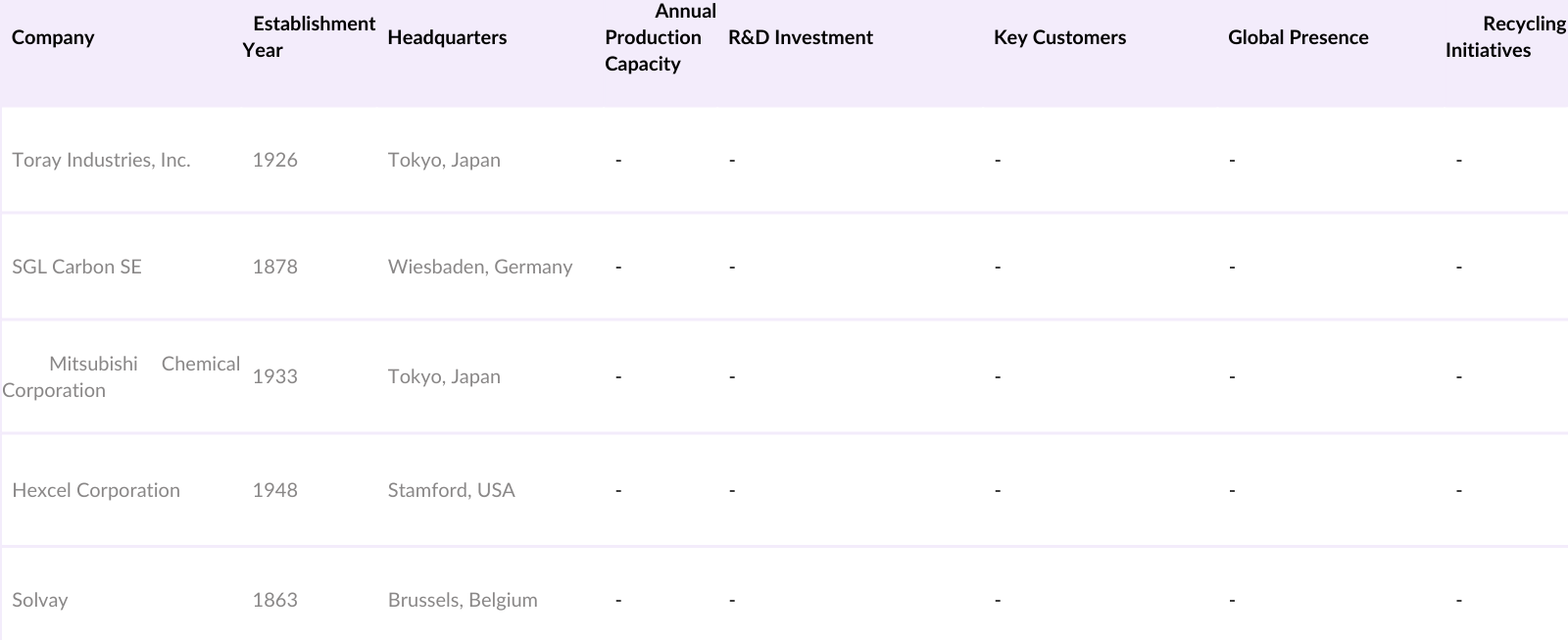
The global carbon fiber market is characterized by the presence of a few key players who dominate due to their technological expertise, production capabilities, and established relationships with key industries such as aerospace, automotive, and energy. The market's consolidation is evident in the limited number of players who control a significant portion of the production and distribution. Companies like Toray Industries, Hexcel Corporation, and Mitsubishi Chemical Corporation have been at the forefront due to their innovations and large-scale production facilities.
Over the next five years, the global carbon fiber market is expected to show significant growth, driven by increased demand for lightweight and high-strength materials across sectors such as aerospace, automotive, and renewable energy. The ongoing advancements in manufacturing technologies, such as automation and recycling solutions, will further reduce the cost of carbon fiber production, making it more accessible to a broader range of industries. Additionally, the global shift towards sustainability and carbon neutrality is anticipated to boost the adoption of carbon fiber in various applications, especially in electric vehicles and wind turbines.
|
Product Type |
Continuous Carbon Fiber Long Carbon Fiber Short Carbon Fiber |
|
Raw Material |
Polyacrylonitrile (PAN)-based Pitch-based, Rayon-based |
|
End-Use Industry |
Aerospace & Defense Automotive Energy Sports & Leisure Construction & Infrastructure |
|
Application |
Structural Parts Pressure Vessels Energy Storage Systems Composite Materials |
|
Region |
North America Europe Asia-Pacific Latin America Middle East & Africa |
1.1. Definition and Scope
1.2. Market Taxonomy
1.3. Market Growth Rate
1.4. Market Segmentation Overview
2.1. Historical Market Size
2.2. Year-On-Year Growth Analysis
2.3. Key Market Developments and Milestones
3.1. Growth Drivers
3.1.1. Increasing Demand for Lightweight Materials in Aerospace & Automotive
3.1.2. Rising Adoption in Renewable Energy Applications (Wind Turbines)
3.1.3. Expansion in Sports & Leisure Equipment Manufacturing
3.1.4. Growing Use in Construction & Infrastructure (High-Tensile Strength, Low Weight)
3.2. Market Challenges
3.2.1. High Production Costs of Carbon Fiber
3.2.2. Recycling and End-of-Life Disposal Issues
3.2.3. Supply Chain Vulnerabilities (Raw Material Shortages, Manufacturing Constraints)
3.3. Opportunities
3.3.1. Technological Advancements in Manufacturing Processes (Lower-Cost Carbon Fiber Production)
3.3.2. Rising Demand from Emerging Markets (Asia-Pacific Expansion)
3.3.3. Growth in Electric Vehicle (EV) Manufacturing
3.3.4. Partnerships for Advanced Composite Solutions (Aerospace, Defense Sectors)
3.4. Trends
3.4.1. Automation in Carbon Fiber Production (Reduced Cycle Times, Enhanced Efficiency)
3.4.2. Increased Focus on Sustainable and Recyclable Carbon Fiber Solutions
3.4.3. Development of Multi-Material Composites (Hybrid Structures)
3.5. Regulatory Framework
3.5.1. Government Incentives for Lightweight Material Adoption (Carbon Neutrality Goals)
3.5.2. Environmental Regulations on Carbon Fiber Manufacturing
3.5.3. Certification Requirements (Aerospace, Automotive Standards)
3.6. SWOT Analysis
3.7. Stakeholder Ecosystem
3.8. Porters Five Forces
3.9. Competition Ecosystem
4.1. By Product Type (In Value %)
4.1.1. Continuous Carbon Fiber
4.1.2. Long Carbon Fiber
4.1.3. Short Carbon Fiber
4.2. By Raw Material (In Value %)
4.2.1. Polyacrylonitrile (PAN)-based Carbon Fiber
4.2.2. Pitch-based Carbon Fiber
4.2.3. Rayon-based Carbon Fiber
4.3. By End-Use Industry (In Value %)
4.3.1. Aerospace & Defense
4.3.2. Automotive
4.3.3. Energy (Wind Turbines, Oil & Gas)
4.3.4. Sports & Leisure
4.3.5. Construction & Infrastructure
4.4. By Application (In Value %)
4.4.1. Structural Parts (Chassis, Body Panels, Frames)
4.4.2. Pressure Vessels
4.4.3. Energy Storage Systems
4.4.4. Composite Materials
4.5. By Region (In Value %)
4.5.1. North America
4.5.2. Europe
4.5.3. Asia-Pacific
4.5.4. Latin America
4.5.5. Middle East & Africa
5.1. Detailed Profiles of Major Companies
5.1.1. Toray Industries, Inc.
5.1.2. SGL Carbon
5.1.3. Mitsubishi Chemical Corporation
5.1.4. Hexcel Corporation
5.1.5. Solvay
5.1.6. Teijin Limited
5.1.7. Formosa Plastics Corporation
5.1.8. Zoltek Corporation
5.1.9. Hyosung Corporation
5.1.10. DowAksa
5.1.11. Zhongfu Shenying Carbon Fiber Co., Ltd.
5.1.12. Jiangsu Hengshen Co., Ltd.
5.1.13. Carbon Nexus
5.1.14. Park Aerospace Corp.
5.1.15. Nippon Carbon Co., Ltd.
5.2. Cross Comparison Parameters (Number of Production Plants, Fiber Output Capacity, Regional Presence, Revenue, R&D Investment, Carbon Fiber Recycling Capabilities, Partnerships, Product Portfolio)
5.3. Market Share Analysis
5.4. Strategic Initiatives
5.5. Mergers and Acquisitions
5.6. Investment Analysis
5.7. Venture Capital Funding
5.8. Government Grants
5.9. Private Equity Investments
6.1. Environmental Standards (Emissions, Waste Handling)
6.2. Compliance Requirements (Industry-Specific Certifications)
6.3. Certification Processes (Aerospace, Automotive)
7.1. Future Market Size Projections
7.2. Key Factors Driving Future Market Growth
8.1. By Product Type (In Value %)
8.2. By Raw Material (In Value %)
8.3. By End-Use Industry (In Value %)
8.4. By Application (In Value %)
8.5. By Region (In Value %)
9.1. TAM/SAM/SOM Analysis
9.2. Customer Cohort Analysis
9.3. Marketing Initiatives
9.4. White Space Opportunity Analysis
Disclaimer Contact UsThe initial step involved the mapping of the carbon fiber market, identifying key industry stakeholders such as manufacturers, raw material suppliers, and end-users in aerospace, automotive, and energy. Extensive desk research was conducted using industry reports, government publications, and proprietary databases to gather information on market size, production capacities, and key trends.
In this phase, historical market data was analyzed, focusing on carbon fiber production, consumption patterns, and industry penetration rates. Industry-specific variables such as material strength, cost, and environmental regulations were taken into account to project future market developments.
Market hypotheses were validated through structured interviews with industry experts from major carbon fiber manufacturers and end-user industries. Their insights on operational challenges, pricing trends, and future market opportunities helped refine the market estimates and forecasts.
The final synthesis combined data from industry reports and expert consultations to provide a detailed market analysis. Production statistics, competitive landscape data, and consumer preferences were integrated to ensure a comprehensive and accurate representation of the market dynamics.
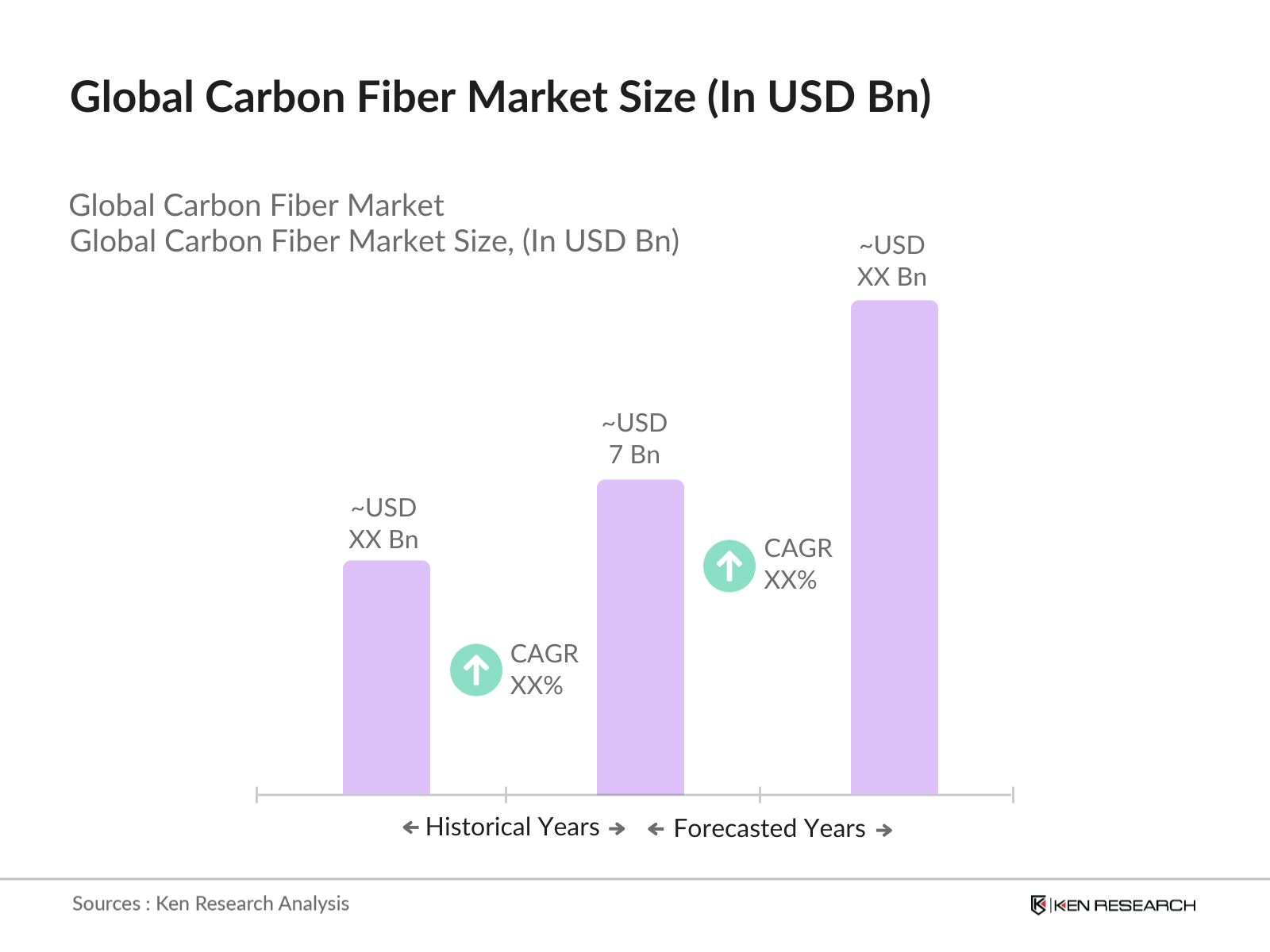
The global carbon fiber market was valued at USD 7 billion, driven by its growing use in the aerospace, automotive, and renewable energy sectors.
Challenges include the high production costs, recycling difficulties, and supply chain vulnerabilities that arise from dependence on specific raw materials.
Key players include Toray Industries, SGL Carbon, Mitsubishi Chemical Corporation, Hexcel Corporation, and Solvay. These companies dominate due to their advanced production techniques and established relationships with key industries.
Growth drivers include increasing demand for lightweight and high-strength materials in aerospace and automotive industries, alongside the growing emphasis on renewable energy projects like wind turbines.

What makes us stand out is that our consultants follows Robust, Refine and Result (RRR) methodology. i.e. Robust for clear definitions, approaches and sanity checking, Refine for differentiating respondents facts and opinions and Result for presenting data with story

We have set a benchmark in the industry by offering our clients with syndicated and customized market research reports featuring coverage of entire market as well as meticulous research and analyst insights.

While we don't replace traditional research, we flip the method upside down. Our dual approach of Top Bottom & Bottom Top ensures quality deliverable by not just verifying company fundamentals but also looking at the sector and macroeconomic factors.

With one step in the future, our research team constantly tries to show you the bigger picture. We help with some of the tough questions you may encounter along the way: How is the industry positioned? Best marketing channel? KPI's of competitors? By aligning every element, we help maximize success.

Our report gives you instant access to the answers and sources that other companies might choose to hide. We elaborate each steps of research methodology we have used and showcase you the sample size to earn your trust.

If you need any support, we are here! We pride ourselves on universe strength, data quality, and quick, friendly, and professional service.