
Global Cardiopulmonary Bypass Accessory Equipment Market Outlook to 2030
Region:Global
Author(s):Shambhavi
Product Code:KROD9771
Region:Global
Author(s):Shambhavi
Product Code:KROD9771
December 2024
86
Listen to the audio summary

By Product Type: The market is segmented by product type into oxygenators, arterial filters, tubing packs, cannulas, and reservoirs. Oxygenators hold a dominant share within this segment due to their critical role in ensuring oxygenated blood during cardiac surgeries. Recent technological advancements in membrane oxygenators, which offer improved gas exchange efficiency, have increased their popularity among surgeons and medical professionals. These products are crucial in high-stakes cardiac procedures, making them an essential component in the product mix.
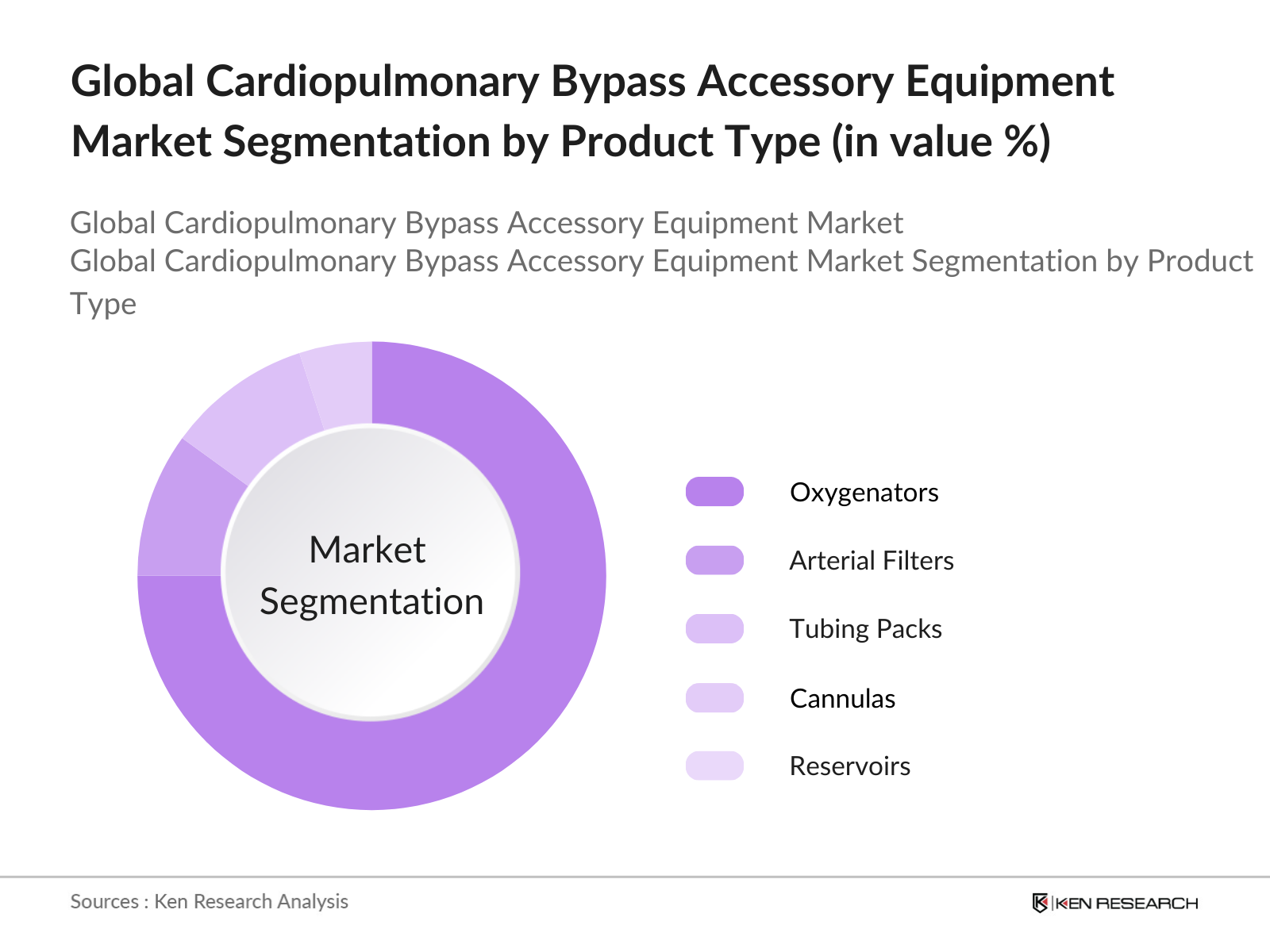
By Application: The CPB accessory equipment market is segmented by application into coronary artery bypass grafting (CABG), heart valve replacement, and other open-heart surgeries. CABG procedures dominate due to the high prevalence of coronary artery disease and the need for revascularization procedures. This segment has seen increasing adoption of CPB equipment, particularly in regions with a growing elderly population. CABGs critical nature has led to higher demand for reliable CPB accessories that enhance surgical success rates and patient recovery outcomes.
By Region
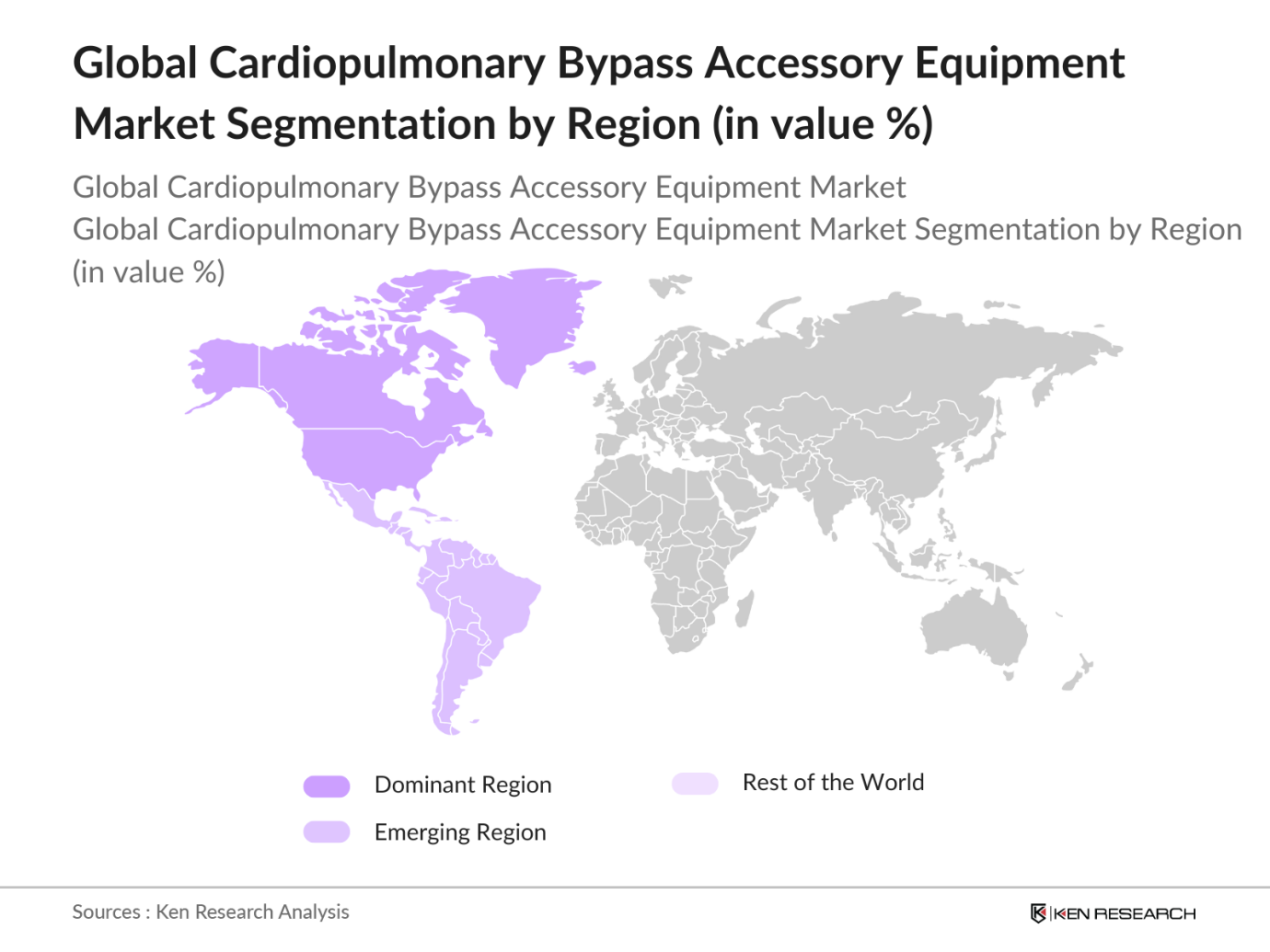
The market is segmented into North America, Europe, Asia Pacific, Latin America, and Middle East & Africa. North America leads the market due to its advanced healthcare infrastructure, high healthcare expenditure, and supportive government policies. The availability of specialized cardiac surgery centers and high awareness of advanced treatment options also support North Americas market dominance. The Asia Pacific region, on the other hand, is experiencing significant growth due to rising healthcare investments and increasing incidences of cardiac diseases in densely populated countries like China and India.
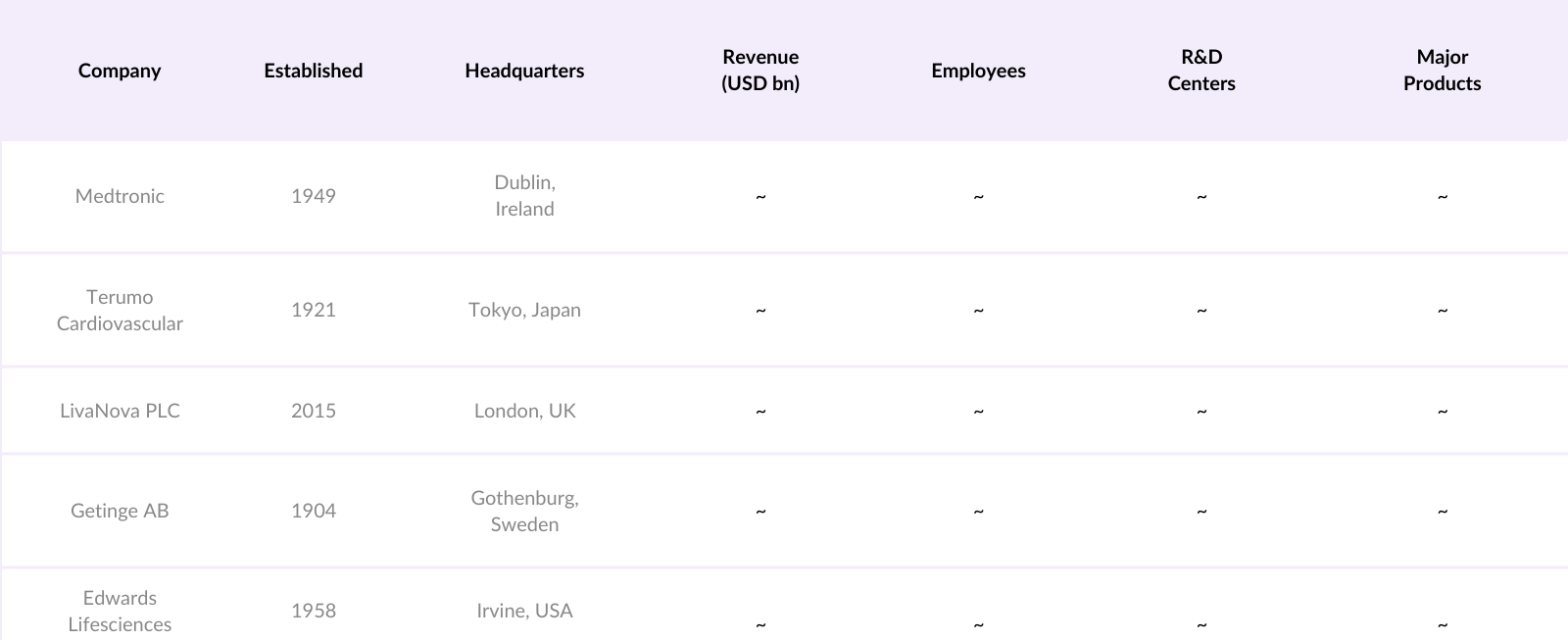
The global CPB accessory equipment market is dominated by key players who lead through innovation, quality, and a strong distribution network. This concentration of market share among a few major players reflects the importance of technological expertise and brand reputation in this industry. The competitive environment encourages ongoing product advancements, particularly in oxygenators and arterial filters, to enhance patient outcomes in critical cardiac surgeries.
The CPB accessory equipment market is expected to experience significant growth over the next five years, driven by increasing cardiac disease rates, technological advancements, and expansion of healthcare facilities in emerging economies. The rising global demand for effective cardiac care solutions will spur innovation in equipment design and performance, making the market a focal point for research and development activities. Additionally, ongoing support from healthcare providers and institutions will encourage further adoption of advanced CPB accessories.
|
Segmentation |
Sub-segments |
|
Product Type |
Oxygenators, Cannulae, Heat Exchangers, Blood Reservoirs |
|
Application |
Adult Cardiac Surgery, Pediatric Cardiac Surgery, Thoracic Surgery |
|
End User |
Hospitals, Surgical Centers, Research Institutes |
|
Region |
North America, Europe, Asia-Pacific, Latin America, Middle East & Africa |
1.1. Definition and Scope
1.2. Market Taxonomy
1.3. Market Growth Rate (CAGR)
1.4. Market Segmentation Overview
2.1. Historical Market Size
2.2. Year-On-Year Growth Analysis
2.3. Key Market Developments and Milestones
3.1. Growth Drivers
3.1.1. Increasing Cardiovascular Diseases (Prevalence Rate)
3.1.2. Advancements in Surgical Techniques (Technological Adoption Rates)
3.1.3. Rise in Elderly Population (Demographic Trends)
3.1.4. Increasing Healthcare Expenditure (Government Spending on Healthcare)
3.2. Market Challenges
3.2.1. High Cost of Equipment (Market Pricing Dynamics)
3.2.2. Complications Associated with Cardiopulmonary Bypass (Clinical Data on Complications)
3.2.3. Shortage of Skilled Professionals (Workforce Statistics)
3.3. Opportunities
3.3.1. Growth in Emerging Markets (Market Expansion Potential)
3.3.2. Technological Innovations (Research & Development Investment)
3.3.3. Partnerships and Collaborations (M&A Activity)
3.4. Trends
3.4.1. Adoption of Minimally Invasive Techniques (Market Shifts)
3.4.2. Integration of AI in Cardiac Surgery (AI Implementation Rates)
3.5. Government Regulation
3.5.1. Regulatory Frameworks for Medical Devices (Compliance Guidelines)
3.5.2. Safety Standards and Guidelines (Health Authority Recommendations)
3.6. SWOT Analysis
3.7. Stake Ecosystem
3.8. Porters Five Forces
3.9. Competition Ecosystem
4.1. By Product Type (In Value %)
4.1.1. Oxygenators
4.1.2. Cannulae
4.1.3. Heat Exchangers
4.1.4. Blood Reservoirs
4.2. By Application (In Value %)
4.2.1. Adult Cardiac Surgery
4.2.2. Pediatric Cardiac Surgery
4.2.3. Thoracic Surgery
4.3. By End User (In Value %)
4.3.1. Hospitals
4.3.2. Surgical Centers
4.3.3. Research Institutes
4.4. By Region (In Value %)
4.4.1. North America
4.4.2. Europe
4.4.3. Asia-Pacific
4.4.4. Latin America
4.4.5. Middle East & Africa
5.1. Detailed Profiles of Major Companies
5.1.1. Terumo Corporation
5.1.2. Medtronic PLC
5.1.3. Sorin Group
5.1.4. Getinge AB
5.1.5. Abbott Laboratories
5.1.6. Boston Scientific Corporation
5.1.7. Edwards Lifesciences Corporation
5.1.8. JenaValve Technology, Inc.
5.1.9. LivaNova PLC
5.1.10. MAQUET GmbH & Co. KG
5.1.11. St. Jude Medical, Inc.
5.1.12. Canon Medical Systems Corporation
5.1.13. EBM, Inc.
5.1.14. Biotronik SE & Co. KG
5.1.15. Renu Medical, Inc.
5.2. Cross Comparison Parameters (Market Share, Product Portfolio, Innovation Index, Revenue, Global Reach, Distribution Network, Manufacturing Capabilities, R&D Investment)
5.3. Market Share Analysis
5.4. Strategic Initiatives
5.5. Mergers and Acquisitions
5.6. Investment Analysis
5.7. Venture Capital Funding
5.8. Government Grants
5.9. Private Equity Investments
6.1. International Regulatory Standards
6.2. Compliance Requirements
6.3. Certification Processes
7.1. Future Market Size Projections
7.2. Key Factors Driving Future Market Growth
8.1. By Product Type (In Value %)
8.2. By Application (In Value %)
8.3. By End User (In Value %)
8.4. By Region (In Value %)
9.1. TAM/SAM/SOM Analysis
9.2. Customer Cohort Analysis
9.3. Marketing Initiatives
9.4. White Space Opportunity Analysis
The initial phase involves constructing an ecosystem map encompassing all major stakeholders within the cardiopulmonary bypass accessory equipment market. This step is underpinned by extensive desk research, utilizing secondary and proprietary databases to gather comprehensive industry-level information. The primary objective is to identify and define the critical variables that influence market dynamics.
This phase involves compiling and analyzing historical data for the CPB accessory equipment market, including assessing market penetration, provider ratios, and revenue generation. An evaluation of service quality statistics will ensure the reliability and accuracy of revenue estimates.
Market hypotheses are developed and validated through expert consultations with industry professionals. These consultations provide operational and financial insights directly from practitioners, instrumental in refining the market data.
The final phase involves engaging with major CPB accessory equipment manufacturers to gain insights into product segments, sales performance, and consumer preferences, verifying and complementing the data derived from other methodologies for a comprehensive analysis.
The global CPB accessory equipment market is valued at USD 2.8 billion, driven by the growing number of cardiac surgeries and innovations in medical technology.
Key growth drivers include the increasing prevalence of cardiovascular diseases, advancements in surgical technologies, and the expansion of cardiac specialty clinics worldwide.
North America and Europe are leaders in the market due to advanced healthcare infrastructures and a high demand for high-quality cardiopulmonary equipment.
Major players include Medtronic, Terumo Cardiovascular, LivaNova PLC, Getinge AB, and Edwards Lifesciences, recognized for their technological expertise and strong market presence.

What makes us stand out is that our consultants follows Robust, Refine and Result (RRR) methodology. i.e. Robust for clear definitions, approaches and sanity checking, Refine for differentiating respondents facts and opinions and Result for presenting data with story

We have set a benchmark in the industry by offering our clients with syndicated and customized market research reports featuring coverage of entire market as well as meticulous research and analyst insights.

While we don't replace traditional research, we flip the method upside down. Our dual approach of Top Bottom & Bottom Top ensures quality deliverable by not just verifying company fundamentals but also looking at the sector and macroeconomic factors.

With one step in the future, our research team constantly tries to show you the bigger picture. We help with some of the tough questions you may encounter along the way: How is the industry positioned? Best marketing channel? KPI's of competitors? By aligning every element, we help maximize success.

Our report gives you instant access to the answers and sources that other companies might choose to hide. We elaborate each steps of research methodology we have used and showcase you the sample size to earn your trust.

If you need any support, we are here! We pride ourselves on universe strength, data quality, and quick, friendly, and professional service.