
Global Cargo Drone Market Outlook to 2030
Region:Global
Author(s):Shreya
Product Code:KROD1424
Region:Global
Author(s):Shreya
Product Code:KROD1424
November 2024
91
Global Cargo Drone Market Overview
The global cargo drone market was valued at USD 0.97 billion in 2023. The growth is primarily driven by the increasing need for efficient, cost-effective, and fast delivery solutions, especially in e-commerce, defense, and healthcare industries. The push towards automation and improved drone technologies, including extended flight ranges and enhanced payload capacities, further propels market demand.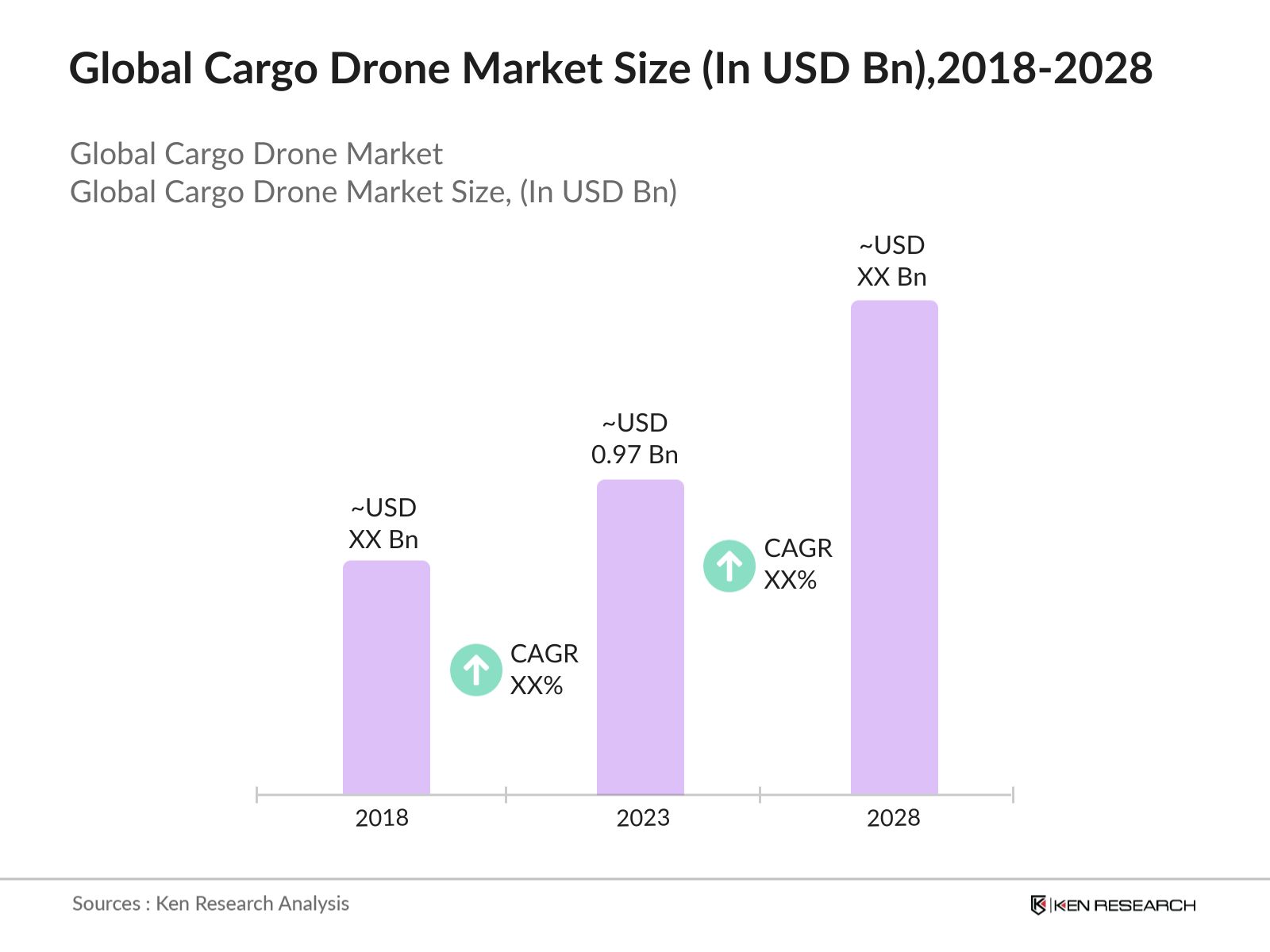
Several major players dominate the cargo drone market, including companies such as DJI, Boeing, Airbus, Wingcopter, and Volocopter. These players focus on enhancing their technological capabilities and expanding their geographic presence, contributing to the market's growth. Their innovative designs, improvements in drone flight performance, and partnerships with logistics and e-commerce companies create a competitive landscape.
In 2023, Wingcopter partnered with UPS Flight Forward to establish large-scale drone delivery services for medical supplies in remote areas of the U.S. This development highlighted the strategic shift towards integrating drones into existing logistics networks. Wingcopter's model 198, capable of carrying up to 6 kg, demonstrated the increasing payload capacities and efficiency of cargo drones, attracting significant interest in the logistics sector.
The U.S. leads the global cargo drone market due to its advanced regulatory framework and large investments in drone infrastructure. California, particularly Silicon Valley, is the epicenter of drone innovation, with companies such as Zipline and Wingcopter setting up operations. In 2023, the state accounted for more than one-third of U.S. drone deliveries, thanks to its conducive business environment and skilled workforce.
The global cargo drone market is segmented into various factors such as drone type, Application and region etc.
By Drone Type: The market can be segmented by drone type into small drones (payload less than 50 kg), medium drones (payload between 50 kg and 100 kg), and large drones (payload above 100 kg). In 2023, small drones dominated the market, due to their widespread adoption in e-commerce and healthcare for last-mile deliveries. Their lower cost, flexibility, and ability to navigate urban environments make them ideal for industries focusing on rapid deliveries.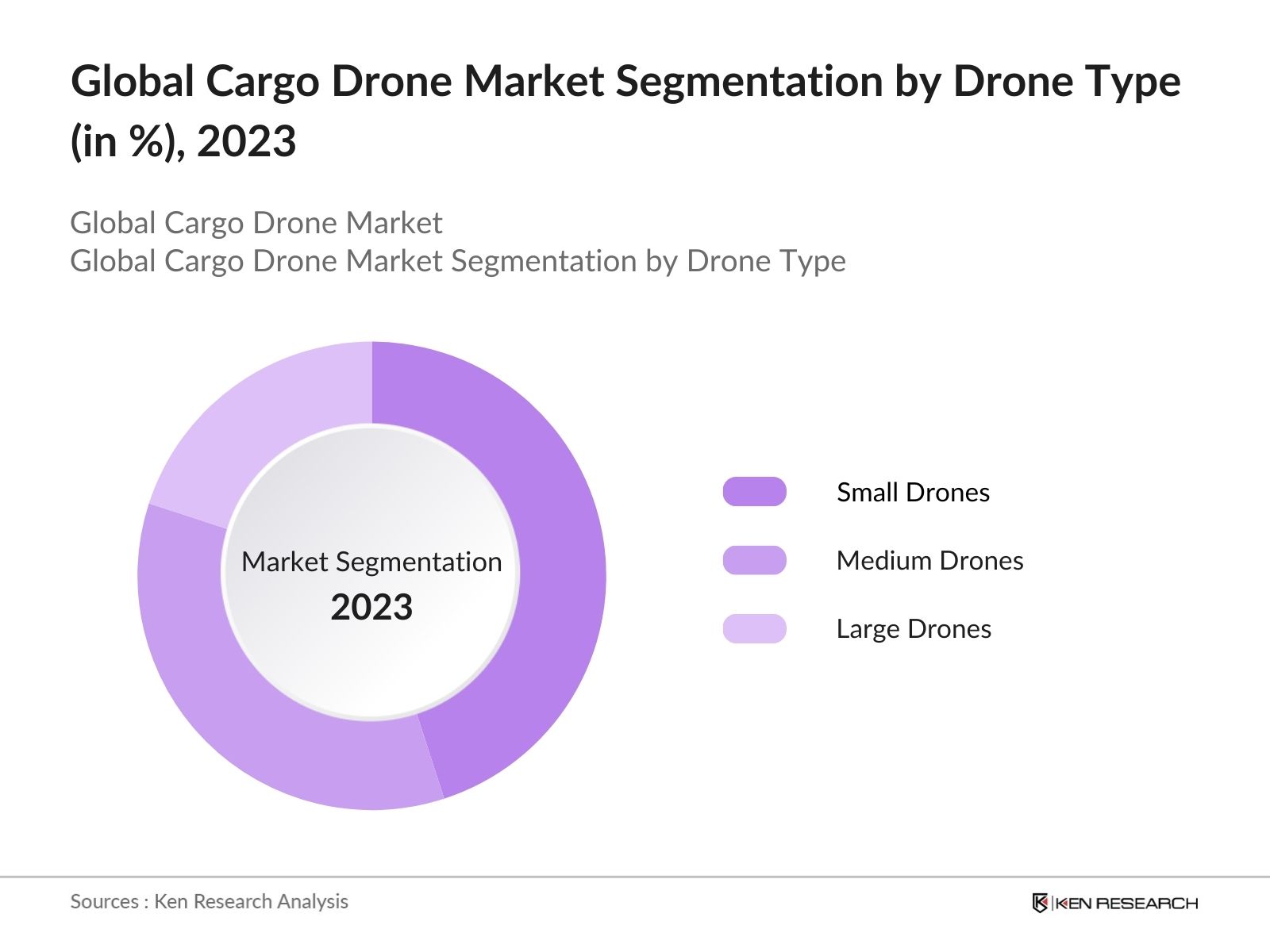
By Application: The market can be segmented by application into logistics, agriculture, defense, and healthcare. Logistics dominated the market in 2023 due to the increasing demand for faster and more efficient delivery services. This growth is driven by the expansion of e-commerce giants such as Amazon and Alibaba, which rely heavily on drone delivery to reduce lead times and optimize supply chain operations.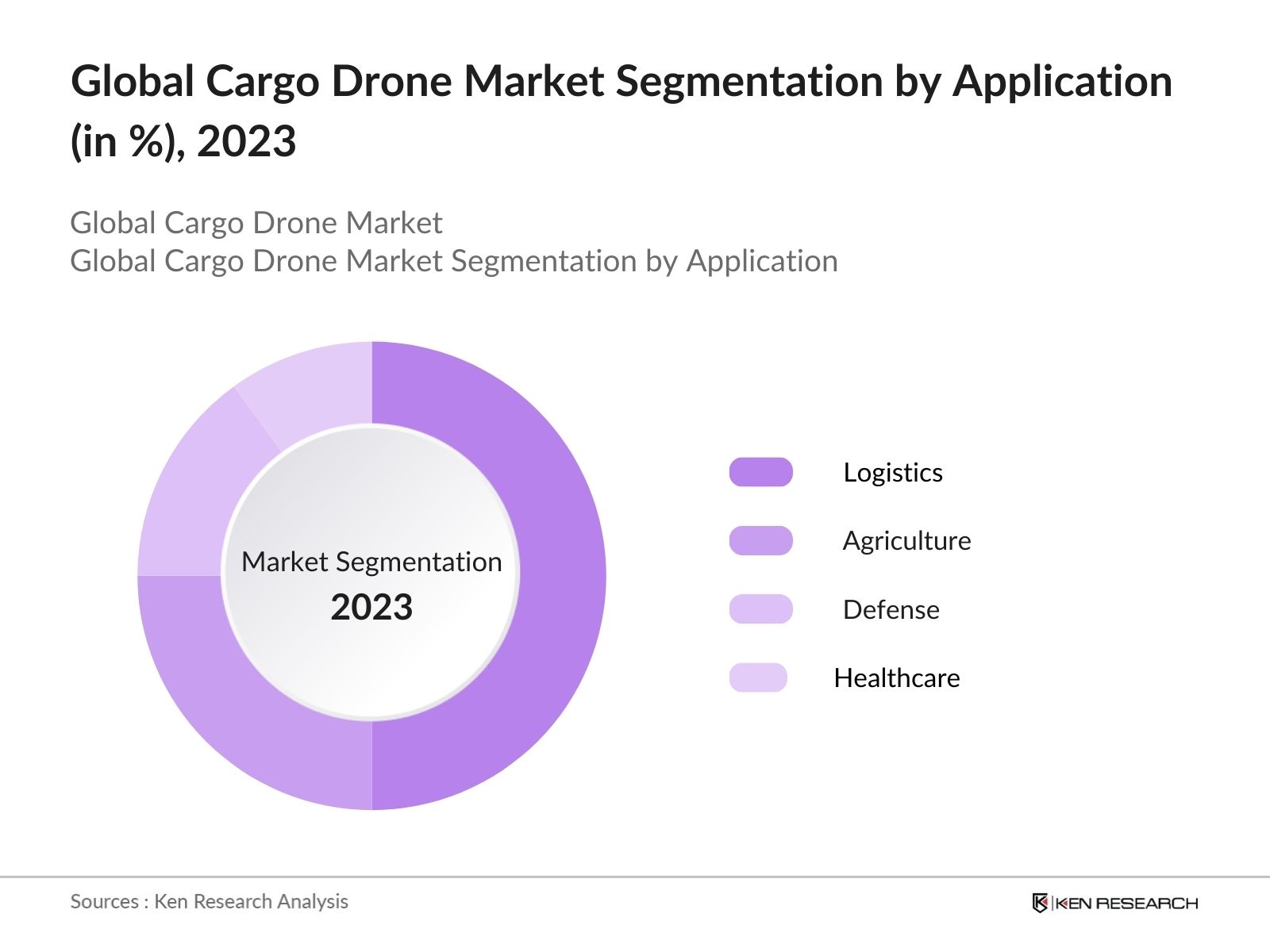
By Region: The market can be divided regionally into North America, Europe, APAC, Latin America and MEA. In 2023, North America held the largest market share, driven by favorable government policies and the strong presence of major drone manufacturers. The dominance of this region is attributed to its advanced technological infrastructure and regulatory advancements, making it a leader in drone integration across various industries.
|
Company |
Established Year |
Headquarters |
|---|---|---|
|
DJI |
2006 |
Shenzhen, China |
|
Boeing |
1916 |
Chicago, U.S. |
|
Airbus |
1970 |
Leiden, Netherlands |
|
Wingcopter |
2017 |
Weiterstadt, Germany |
|
Volocopter |
2011 |
Bruchsal, Germany |
The global cargo drone market is projected to grow exponentially, driven by continued advancements in drone technologies, regulatory support, and expanded use cases across industries such as agriculture, healthcare, and retail. The integration of AI for autonomous navigation and enhanced battery technologies is expected to further fuel market growth.
|
By Drone Type |
Small Drones (Payload Less Than 50 Kg) Medium Drones (Payload Between 50 Kg And 100 Kg) Large Drones (Payload Above 100 Kg) |
|
By Application |
Logistics Agriculture Defense Healthcare |
|
By Region |
North America Europe APAC MEA Latin America |
Key Target Audience Organizations and Entities Who Can Benefit by Subscribing This Report:
Step: 1 Identifying Key Variables:
Ecosystem creation for all the major entities and referring to multiple secondary and proprietary databases to perform desk research around market to collate industry level information.
Step: 2 Market Building:
Collating statistics on Global Cargo Drone market over the years, penetration of marketplaces and service providers ratio to compute revenue generated for Global Cargo Drone market. We will also review service quality statistics to understand revenue generated which can ensure accuracy behind the data points shared.
Step: 3 Validating and Finalizing:
Building market hypothesis and conducting CATIs with industry experts belonging to different companies to validate statistics and seek operational and financial information from company representatives.
Step: 4 Research Output:
Our team will approach multiple Cargo drone manufacturing and understand nature of product segments and sales, consumer preference and other parameters, which will support us validate statistics derived through bottom to top approach from Cargo drone companies.
Players Mentioned in the Report:
1.1. Definition and Scope
1.2. Market Taxonomy
1.3. Market Growth Rate
1.4. Market Segmentation Overview
2.1. Historical Market Size
2.2. Year-on-Year Growth Analysis
2.3. Key Market Developments and Milestones
3.1. Growth Drivers
3.1.1. Increasing Demand for Fast Logistics Solutions
3.1.2. Expansion in Healthcare and Emergency Services
3.1.3. Growing Investment in Drone Infrastructure
3.1.4. Rising E-commerce Adoption
3.2. Restraints
3.2.1. Regulatory Restrictions on Airspace
3.2.2. High Initial Costs of Drone Technology
3.2.3. Limited Flight Ranges and Payload Capacities
3.2.4. Public Safety and Security Concerns
3.3. Opportunities
3.3.1. Technological Advancements in Drone Power Systems
3.3.2. Expansion into Long-Haul Logistics
3.3.3. Opportunities in Developing Economies
3.3.4. Integration with Smart City Projects
3.4. Trends
3.4.1. Emergence of Drone Highways
3.4.2. Adoption of AI in Drone Navigation
3.4.3. Increased Use of Hydrogen-Powered Drones
3.4.4. Autonomous Drone Deliveries
3.5. Government Regulation
3.5.1. FAA BEYOND Program
3.5.2. China's Drone Delivery Zones
3.5.3. EU U-Space Regulation
3.5.4. Indias Drone Policy Expansion
3.6. SWOT Analysis
3.7. Stake Ecosystem
3.8. Competition Ecosystem
4.1. By Drone Type (in Value %)
4.1.1. Small Drones
4.1.2. Medium Drones
4.1.3. Large Drones
4.2. By Application (in Value %)
4.2.1. Logistics
4.2.2. Agriculture
4.2.3. Defense
4.2.4. Healthcare
4.3. By Region (in Value %)
4.3.1. North America
4.3.2. Europe
4.3.3. APAC
4.3.4. MEA
5.1. Detailed Profiles of Major Companies
5.1.1. DJI
5.1.2. Boeing
5.1.3. Airbus
5.1.4. Wingcopter
5.1.5. Volocopter
5.2. Cross Comparison Parameters (No. of Employees, Headquarters, Inception Year, Revenue)
6.1. Market Share Analysis
6.2. Strategic Initiatives
6.3. Mergers and Acquisitions
6.4. Investment Analysis
6.4.1. Venture Capital Funding
6.4.2. Government Grants
6.4.3. Private Equity Investments
7.1. Drone Regulations in Key Markets
7.2. Compliance Requirements
7.3. Certification Processes
8.1. Future Market Size Projections
8.2. Key Factors Driving Future Market Growth
9.1. By Drone Type (in Value %)
9.2. By Application (in Value %)
9.3. By Region (in Value %)
10.1. TAM/SAM/SOM Analysis
10.2. Customer Cohort Analysis
10.3. Marketing Initiatives
10.4. White Space Opportunity Analysis
The global cargo drone market was valued at USD 0.97 billion in 2023, driven by the growing need for faster and more efficient logistics solutions, especially in sectors like e-commerce, healthcare, and defense.
Challenges in the global cargo drone market include regulatory restrictions on airspace for drone operations, high initial costs of drone technology, limited flight ranges and payload capacities, and safety concerns related to mid-air collisions and malfunctions.
Key players in the global cargo drone market include DJI, Boeing, Airbus, Wingcopter, and Volocopter. These companies lead the market due to their technological innovations, extensive R&D, and strategic partnerships with logistics providers.
The global cargo drone market is driven by rising demand for fast logistics solutions, growing investment in drone infrastructure, increased adoption in e-commerce, and expansion in healthcare logistics, where drones play a crucial role in delivering medical supplies to remote areas.

What makes us stand out is that our consultants follows Robust, Refine and Result (RRR) methodology. i.e. Robust for clear definitions, approaches and sanity checking, Refine for differentiating respondents facts and opinions and Result for presenting data with story

We have set a benchmark in the industry by offering our clients with syndicated and customized market research reports featuring coverage of entire market as well as meticulous research and analyst insights.

While we don't replace traditional research, we flip the method upside down. Our dual approach of Top Bottom & Bottom Top ensures quality deliverable by not just verifying company fundamentals but also looking at the sector and macroeconomic factors.

With one step in the future, our research team constantly tries to show you the bigger picture. We help with some of the tough questions you may encounter along the way: How is the industry positioned? Best marketing channel? KPI's of competitors? By aligning every element, we help maximize success.

Our report gives you instant access to the answers and sources that other companies might choose to hide. We elaborate each steps of research methodology we have used and showcase you the sample size to earn your trust.

If you need any support, we are here! We pride ourselves on universe strength, data quality, and quick, friendly, and professional service.