















Global Cloud Seed Market Outlook to 2030
Region:Global
Author(s):Sanjna
Product Code:KROD9873
November 2024
88
About the Report
Global Cloud Seed Market Overview
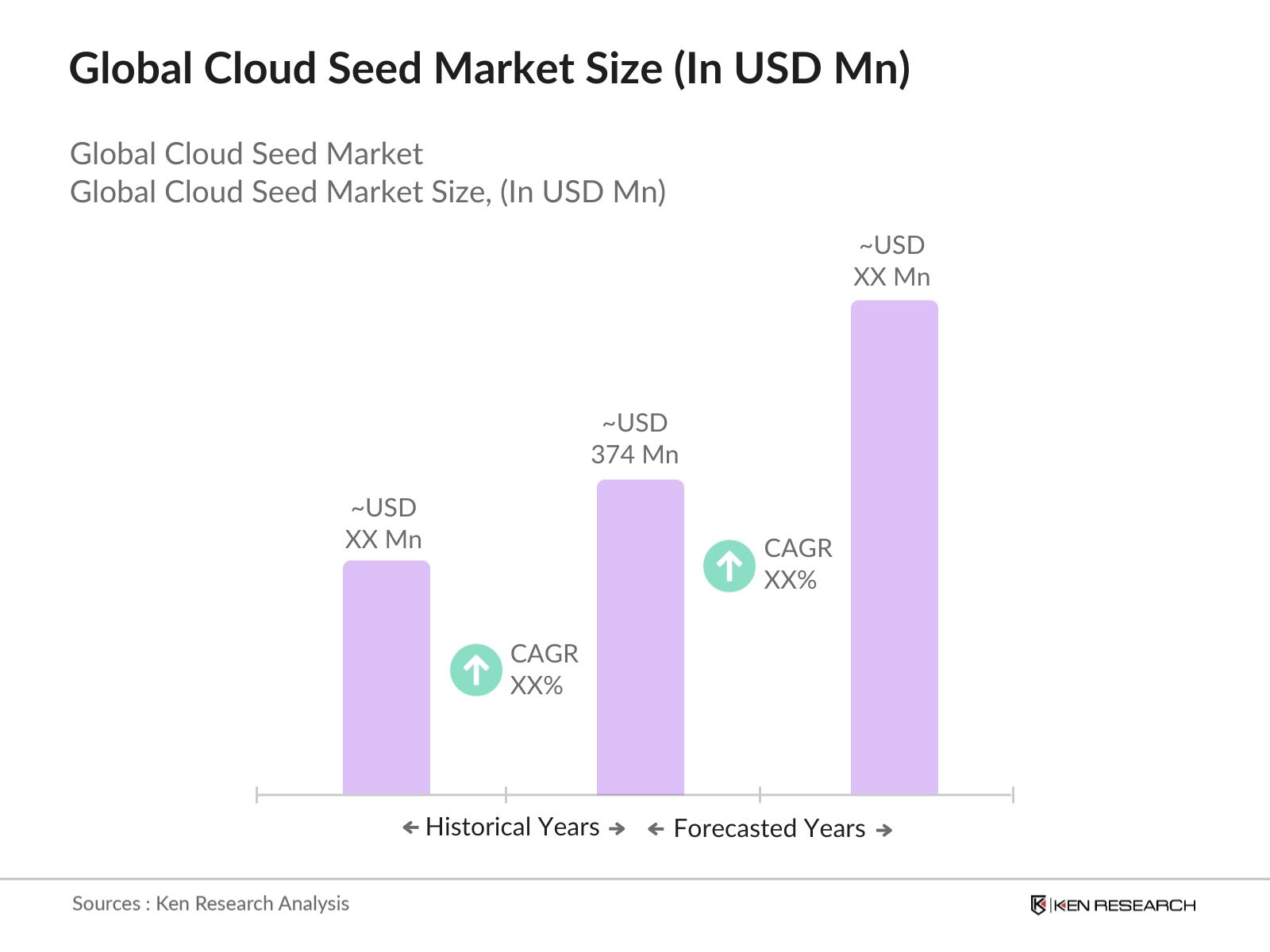
- The Global Cloud Seed Market is valued at USD 375 million, driven by increasing concerns around water scarcity and the need for efficient weather modification techniques. Key growth drivers include technological advancements in weather modification, especially in regions facing recurrent droughts and limited water resources. Government support and private sector investment in research and innovation around cloud seeding technology have significantly contributed to its rapid growth.
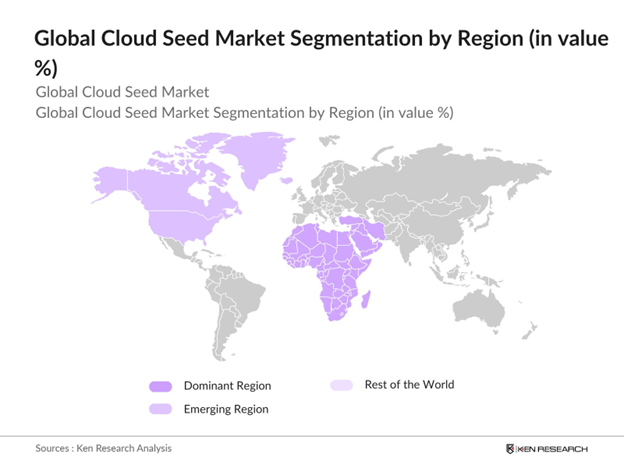
- The Middle East, specifically the United Arab Emirates, along with China and parts of the United States, are dominant regions in the cloud seed market. The Middle Easts prominence is attributed to its arid climate and high water scarcity issues, making cloud seeding a crucial technology for sustainable water supply. Chinas dominance is due to government-funded large-scale weather modification projects aimed at enhancing agricultural productivity and mitigating adverse weather effects. In the U.S., initiatives primarily target water management for agricultural regions.
- Several nations have established comprehensive cloud seeding programs as part of climate resilience plans. The U.S. has allocated $200 million to bolster its cloud seeding initiatives, integrating them into its broader climate strategy. These national programs not only secure water resources but also contribute to the markets operational stability by providing consistent funding and regulatory support.
Global Cloud Seed Market Segmentation
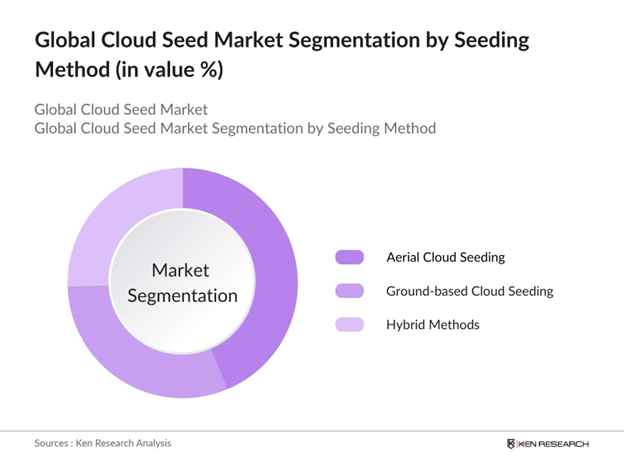
By Seeding Method: The Global Cloud Seed Market is segmented by seeding method into Aerial Cloud Seeding, Ground-based Cloud Seeding, and Hybrid Methods. Currently, Aerial Cloud Seeding holds the largest market share due to its effectiveness and broad application across diverse terrains, making it adaptable to various environmental needs. Aerial seeding allows precise delivery of seeding materials and can cover larger areas more efficiently, which is especially beneficial for drought-prone regions where water needs are critical.
By Region: The cloud seed market is divided into North America, Europe, Asia-Pacific, Middle East & Africa, and Latin America. The Middle East & Africa currently holds the largest market share due to the region's climate challenges and water scarcity issues, prompting substantial investment in cloud seeding technologies. Governments in this region prioritize cloud seeding to ensure sustainable water resources and enhance agricultural productivity in arid zones.
By Material Used: The cloud seed market is also segmented by materials into Silver Iodide, Sodium Chloride, Potassium Chloride, and Liquid Propane. Silver Iodide dominates the market share as it is widely recognized for its efficacy in nucleating cloud droplets, making it the preferred choice among cloud seeding operators globally. Its ability to create ice crystals at relatively warmer temperatures than other materials has solidified its demand.
Global Cloud Seed Market Competitive Landscape
The cloud seed market is dominated by a mix of regional and international companies, each contributing with unique technologies, operational capabilities, and regional focus.
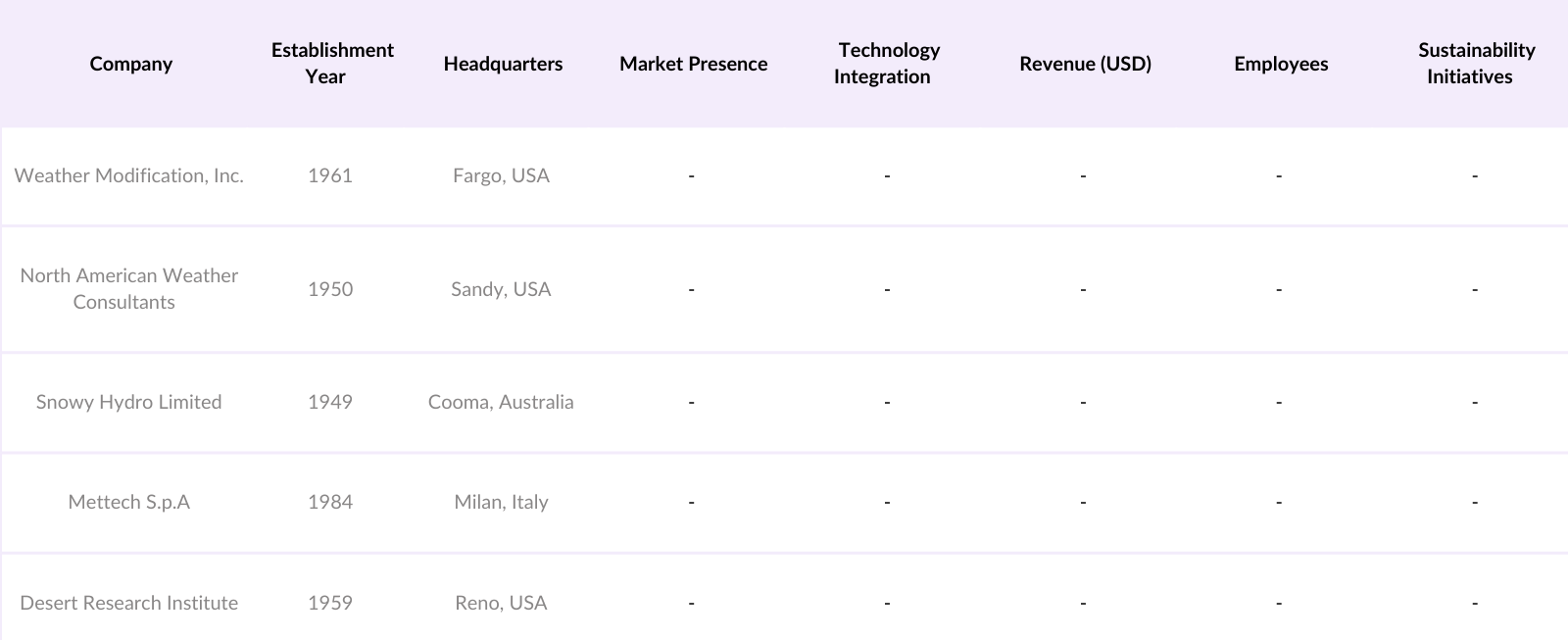
The Global Cloud Seed Market is led by companies such as Weather Modification, Inc., North American Weather Consultants, and Snowy Hydro Limited. These players have a significant influence due to their advanced cloud seeding technology and strategic partnerships with regional governments. Below is an overview of some key companies and their specifics.
Global Cloud Seed Market Analysis
Growth Drivers
- Advancements in Cloud Seeding Technologies: Advancements in cloud seeding, including the development of new dispersal mechanisms and chemical agents, have increased efficiency in generating precipitation. With innovations in silver iodide flares and sodium chloride applications, precipitation from cloud seeding has shown an increase of up to 10-15% in targeted regions with ongoing droughts. The National Center for Atmospheric Research (NCAR) has demonstrated that optimized cloud seeding can lead to an additional 50 million cubic meters of water in arid areas, aiding in water scarcity mitigation.
- Rising Demand for Agricultural Water Efficiency: Cloud seeding has proven essential for enhancing agricultural water efficiency. For instance, in Indias Maharashtra region, pilot cloud seeding projects added approximately 20 million cubic meters of water, sufficient for irrigating thousands of hectares. This increase in water availability for irrigation has supported crop yields by up to 25% in drought-affected regions, bolstering food security. World Bank data suggests that the adoption of cloud seeding in agricultural sectors could play a crucial role in regions facing water stress and in ensuring more reliable water supplies.
- Increased Government Initiatives for Climate Management: Governments across North America, Asia, and the Middle East have increased funding for cloud seeding projects aimed at addressing water scarcity and climate resilience. The UAE invested over $15 million in 2023 to enhance cloud seeding infrastructure, resulting in a 20% increase in local precipitation. Similarly, China implemented 16 cloud seeding programs to supplement regional water needs, especially in drought-prone areas. These initiatives underscore the rising governmental emphasis on cloud seeding for sustainable water management.
Challenges
- High Operational Costs: Cloud seeding remains costly due to the need for specialized aircraft, pilots, and chemical agents. Each operation can cost upwards of $30,000 per mission, limiting accessibility for smaller municipalities and regions with restricted budgets. Operational costs have restrained cloud seedings expansion despite demand, especially in low-income regions where resources are scarce. Government subsidies and partnerships are becoming essential to counteract these high costs and drive market growth in this sector.
- Environmental Impact and Regulatory Challenges: Environmental concerns around the use of silver iodide in cloud seeding have raised questions about its ecological footprint, particularly in fragile ecosystems. Regulatory restrictions in several regions, including parts of Europe, restrict the concentration and volume of dispersants, impacting the cloud seeding market's growth. The European Union has imposed stringent limits on permissible silver iodide usage, affecting cloud seeding operations.
Global Cloud Seed Market Future Outlook
Over the next five years, the Global Cloud Seed Market is anticipated to expand significantly, driven by the increasing need for sustainable water resources, especially in regions facing extreme climate conditions. Technological advancements in delivery mechanisms, coupled with broader governmental acceptance and investments, will further enhance the adoption of cloud seeding technology.
Market Opportunities
- Technological Integration with Drones: Drone technology is increasingly integrated into cloud seeding operations, making it more accessible and affordable. In 2024, the integration of drones enabled smaller-scale cloud seeding efforts, reducing dependency on aircraft and pilots. Trials in Texas achieved comparable precipitation results with drones at half the operational cost. This advancement presents a strong opportunity for expansion, particularly in rural or remote regions where traditional aircraft access is limited.
- Collaboration with Water Management Initiatives: Collaborations with national water management programs are opening avenues for the cloud seeding industry. The U.S. has allocated $10 billion toward water resilience, and cloud seeding partnerships within these programs are projected to increase precipitation retention rates, especially in water-scarce western states. This collaboration enhances long-term water security, directly supporting the cloud seeding market's integration into national water management strategies.
Scope of the Report
|
Segment |
Sub-Segment |
|
Seeding Method |
Aerial Cloud Seeding |
|
Material Used |
Silver Iodide |
|
Application |
Agriculture |
|
End-User Sector |
Government |
|
Region |
North America |
Products
Key Target Audience
Cloud Seeding Companies
Agricultural Sector Organizations
Hydroelectric Power Producers
Environmental and Climate Control Agencies (e.g., EPA, UNEP)
Government and Regulatory Bodies (e.g., Ministry of Environment and Water, China Meteorological Administration)
Investors and Venture Capitalist Firms
Water Resource Management Authorities
Research Institutions focusing on Climate and Environmental Sciences
Companies
Players Mentioned in the Report
Weather Modification, Inc.
North American Weather Consultants
Snowy Hydro Limited
Mettech S.p.A
Desert Research Institute
Ice Crystal Engineering LLC
RHS Consulting
WeatherTec Services GmbH
NARI Group Corporation
GeoEngineering Climate Solutions
Table of Contents
1. Global Cloud Seed Market Overview
1.1 Definition and Scope
1.2 Market Taxonomy
1.3 Market Growth Rate
1.4 Market Segmentation Overview
2. Global Cloud Seed Market Size (in USD Mn)
2.1 Historical Market Size
2.2 Year-On-Year Growth Analysis
2.3 Key Market Developments and Milestones
3. Global Cloud Seed Market Analysis
3.1 Growth Drivers (increased precipitation, agricultural yield improvement, climate resilience)
3.1.1 Advancements in Cloud Seeding Technologies
3.1.2 Rising Demand for Agricultural Water Efficiency
3.1.3 Increased Government Initiatives for Climate Management
3.1.4 Expansion of Cloud Seeding into Water Scarcity Regions
3.2 Market Challenges (technology costs, environmental concerns)
3.2.1 High Operational Costs
3.2.2 Environmental Impact and Regulatory Challenges
3.2.3 Limited Skilled Workforce in Cloud Seeding Operations
3.3 Opportunities (regional market growth, alternative weather control)
3.3.1 Technological Integration with Drones
3.3.2 Collaboration with Water Management Initiatives
3.3.3 Expansion into Drought-Prone Regions
3.4 Trends (use of AI and IoT in weather modification)
3.4.1 Integration of IoT for Real-time Monitoring
3.4.2 Use of AI for Predictive Analytics in Cloud Seeding
3.4.3 Rise of Public-Private Partnerships in Climate Control
3.5 Government Regulation (environmental permits, policy frameworks)
3.5.1 National Cloud Seeding Programs
3.5.2 International Guidelines for Weather Modification
3.5.3 Environmental Impact Assessments
3.5.4 Collaborative Regional Efforts for Cloud Seeding
3.6 SWOT Analysis
3.7 Stakeholder Ecosystem
3.8 Porters Five Forces
3.9 Competition Ecosystem
4. Global Cloud Seed Market Segmentation
4.1 By Seeding Method (in Value %)
4.1.1 Aerial Cloud Seeding
4.1.2 Ground-based Cloud Seeding
4.1.3 Hybrid Methods
4.2 By Material Used (in Value %)
4.2.1 Silver Iodide
4.2.2 Sodium Chloride
4.2.3 Potassium Chloride
4.2.4 Liquid Propane
4.3 By Application (in Value %)
4.3.1 Agriculture
4.3.2 Hydroelectric Power Generation
4.3.3 Water Management
4.3.4 Climate Mitigation
4.4 By End-User Sector (in Value %)
4.4.1 Government
4.4.2 Private Sector
4.4.3 Research Institutions
4.5 By Region (in Value %)
4.5.1 North America
4.5.2 Europe
4.5.3 Asia-Pacific
4.5.4 Middle East & Africa
4.5.5 Latin America
5. Global Cloud Seed Market Competitive Analysis
5.1 Detailed Profiles of Major Companies
5.1.1 Weather Modification, Inc.
5.1.2 RHS Consulting
5.1.3 North American Weather Consultants
5.1.4 Ice Crystal Engineering LLC
5.1.5 Desert Research Institute
5.1.6 Snowy Hydro Limited
5.1.7 WeatherTec Services GmbH
5.1.8 Mettech S.p.A
5.1.9 NARI Group Corporation
5.1.10 GeoEngineering Climate Solutions
5.2 Cross Comparison Parameters (Seeding Coverage, Technology Used, Seeding Efficiency, Material Used, Operations Across Regions, Environmental Compliance, Project Cost Efficiency, R&D Focus)
5.3 Market Share Analysis
5.4 Strategic Initiatives
5.5 Mergers And Acquisitions
5.6 Investment Analysis
5.7 Venture Capital Funding
5.8 Government Grants
5.9 Private Equity Investments
6. Global Cloud Seed Market Regulatory Framework
6.1 Environmental Standards
6.2 Compliance Requirements
6.3 Certification Processes
7. Global Cloud Seed Future Market Size (in USD Mn)
7.1 Future Market Size Projections
7.2 Key Factors Driving Future Market Growth
8. Global Cloud Seed Future Market Segmentation
8.1 By Seeding Method (in Value %)
8.2 By Material Used (in Value %)
8.3 By Application (in Value %)
8.4 By End-User Sector (in Value %)
8.5 By Region (in Value %)
9. Global Cloud Seed Market Analysts Recommendations
9.1 TAM/SAM/SOM Analysis
9.2 Customer Cohort Analysis
9.3 Marketing Initiatives
9.4 White Space Opportunity Analysis
10. Disclaimer
11. Contact Us
Research Methodology
Step 1: Identification of Key Variables
The research begins with an in-depth ecosystem analysis of all relevant stakeholders within the Global Cloud Seed Market, backed by comprehensive secondary data from credible databases. This approach allows the identification of primary factors influencing the markets dynamics.
Step 2: Market Analysis and Construction
In this stage, historical data of the Global Cloud Seed Market is compiled and analyzed, focusing on seeding techniques, effectiveness, and demand patterns. Market penetration and service provider ratios are evaluated, alongside an assessment of overall revenue generated.
Step 3: Hypothesis Validation and Expert Consultation
Market hypotheses are validated through expert interviews with cloud seeding specialists and other industry insiders, providing insights into operations, financial performance, and technological developments. These consultations enhance the reliability of the market data.
Step 4: Research Synthesis and Final Output
Direct interactions with cloud seeding firms allow further verification of product segments, application trends, and market metrics. This synthesis ensures the final report provides an accurate, detailed, and data-backed analysis of the Global Cloud Seed Market.
Frequently Asked Questions
01. How big is the Global Cloud Seed Market?
The Global Cloud Seed Market was valued at USD 375 million, with demand driven by pressing water scarcity issues and the need for advanced climate management solutions.
02. What are the challenges in the Global Cloud Seed Market?
Challenges in Global Cloud Seed Market include high operational costs, regulatory constraints, and environmental concerns regarding cloud seeding materials, which can affect its widespread adoption.
03. Who are the major players in the Global Cloud Seed Market?
Key players in Global Cloud Seed Market include Weather Modification, Inc., North American Weather Consultants, and Snowy Hydro Limited, which lead due to their advanced technology and strong government collaborations.
04. What drives growth in the Global Cloud Seed Market?
Growth in Global Cloud Seed Market is driven by the need for sustainable water sources, government funding, and advancements in cloud seeding technology that enable targeted weather modification.
Why Buy From Us?

What makes us stand out is that our consultants follows Robust, Refine and Result (RRR) methodology. i.e. Robust for clear definitions, approaches and sanity checking, Refine for differentiating respondents facts and opinions and Result for presenting data with story

We have set a benchmark in the industry by offering our clients with syndicated and customized market research reports featuring coverage of entire market as well as meticulous research and analyst insights.

While we don't replace traditional research, we flip the method upside down. Our dual approach of Top Bottom & Bottom Top ensures quality deliverable by not just verifying company fundamentals but also looking at the sector and macroeconomic factors.

With one step in the future, our research team constantly tries to show you the bigger picture. We help with some of the tough questions you may encounter along the way: How is the industry positioned? Best marketing channel? KPI's of competitors? By aligning every element, we help maximize success.

Our report gives you instant access to the answers and sources that other companies might choose to hide. We elaborate each steps of research methodology we have used and showcase you the sample size to earn your trust.

If you need any support, we are here! We pride ourselves on universe strength, data quality, and quick, friendly, and professional service.