
Global CNC Machine Market Outlook 2030
Region:Global
Author(s):Shivani Mehra
Product Code:KROD11290
Region:Global
Author(s):Shivani Mehra
Product Code:KROD11290
November 2024
85
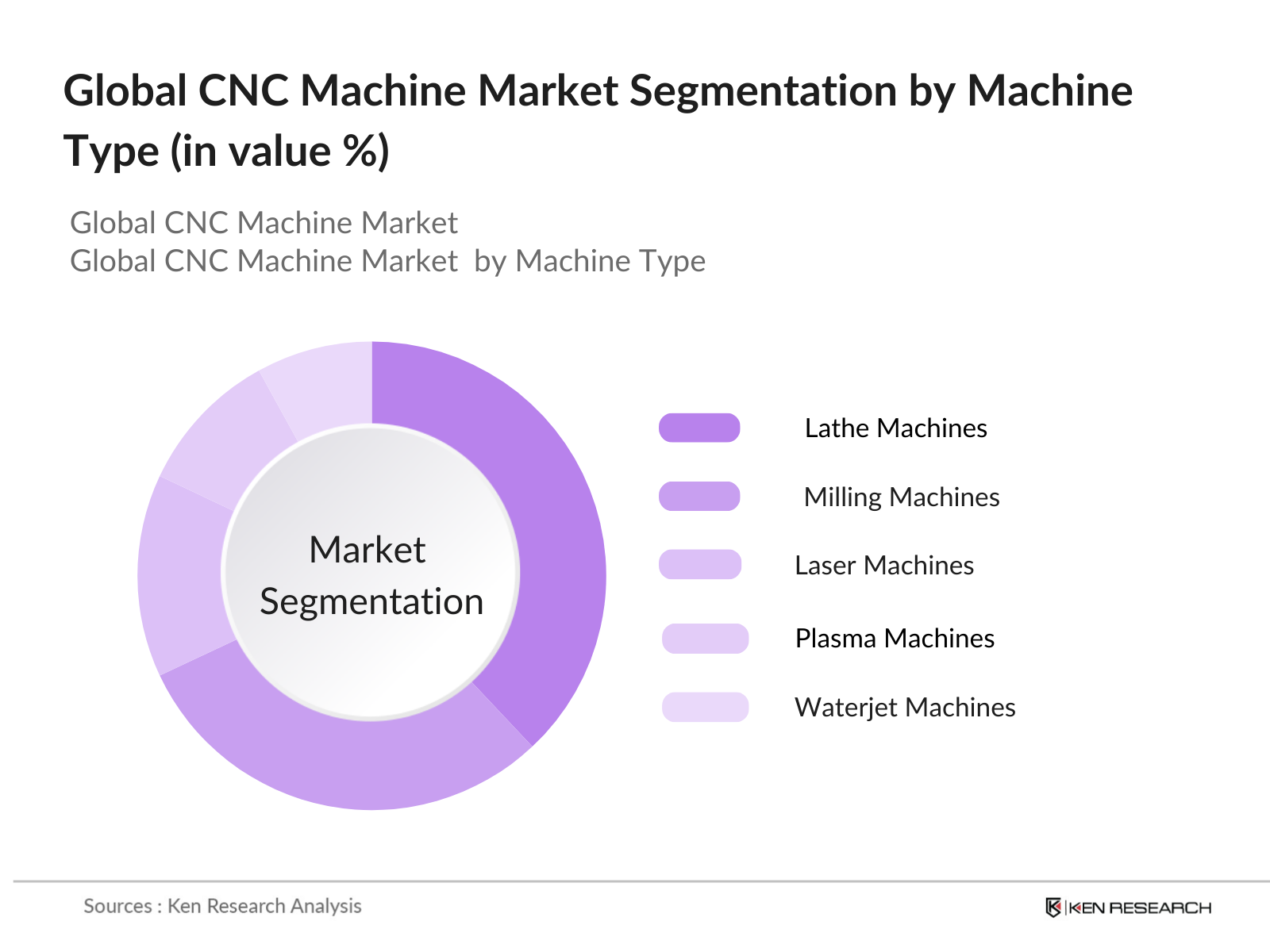
By Machine Type: The global CNC machine market is segmented by machine type into lathe machines, milling machines, laser machines, plasma machines, and waterjet machines. Recently, lathe machines have dominated the market share under the segmentation by machine type. This dominance is driven by their versatile application across industries such as automotive, electronics, and general manufacturing. Lathe machines offer a high level of accuracy in machining processes, making them a crucial element in sectors that demand precision components.
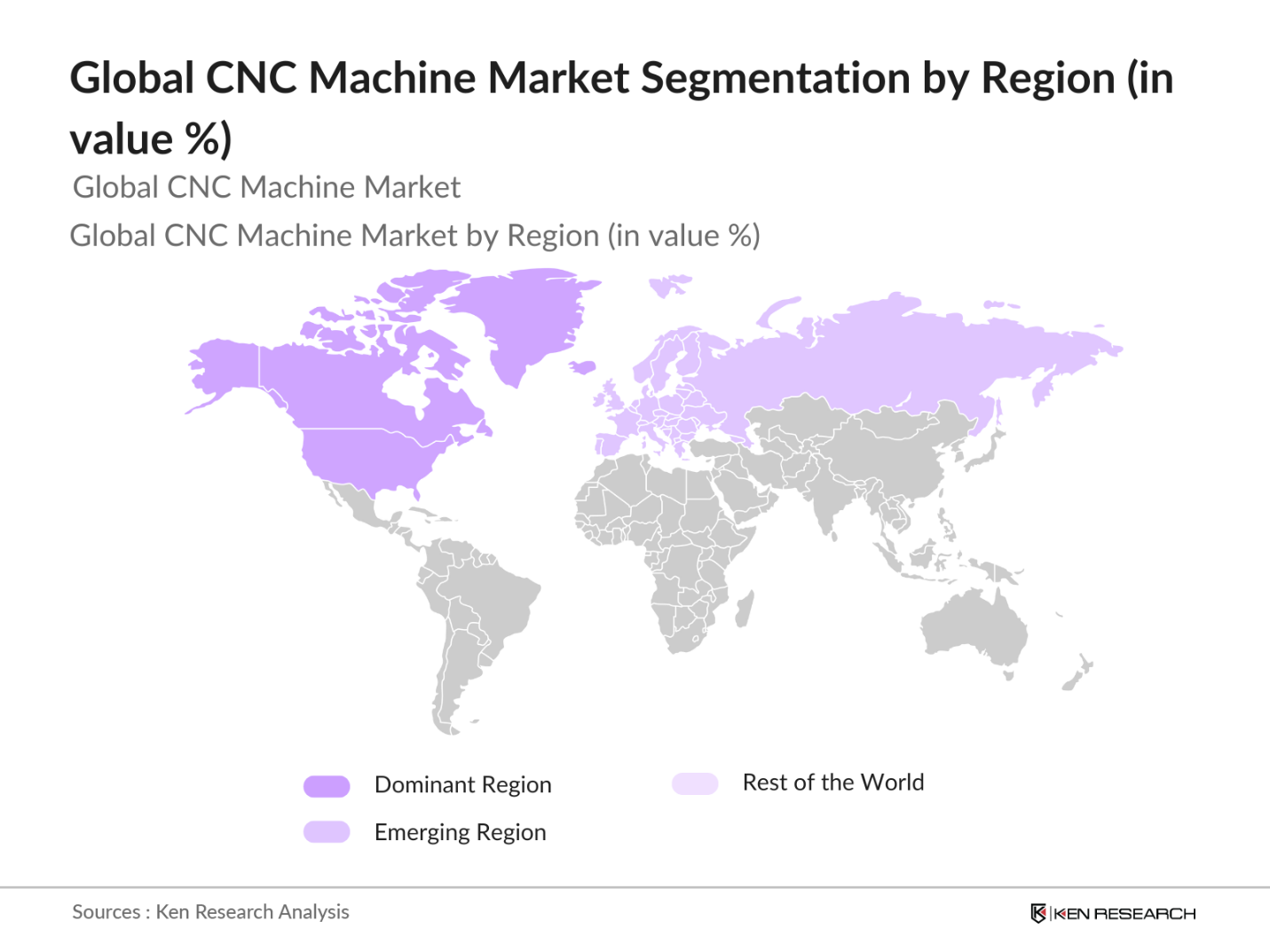
By Region: The CNC machine market by region includes North America, Europe, Asia-Pacific, Latin America, and the Middle East & Africa. Asia-Pacific is currently the leading market, driven by countries like China and Japan. China has leveraged its strong manufacturing base, cost-effective labor, and technological investments, positioning it as a leader in CNC machine production. Japan, on the other hand, is known for its technological innovations and superior product quality, particularly in precision manufacturing.
The global CNC machine market is dominated by a mix of established companies that offer innovative solutions, extensive production capacities, and strong global footprints. The market is characterized by intense competition, with companies continuously developing more advanced CNC technologies to cater to the growing demand for precision and automation.
|
Company Name |
Year of Establishment |
Headquarters |
R&D Expenditure |
Patents Held |
Global Production Capacity |
AI Integration |
Product Innovation |
Key Markets |
|
Haas Automation, Inc. |
1983 |
California, USA |
High |
|||||
|
FANUC Corporation |
1956 |
Yamanashi, Japan |
High |
|||||
|
DMG Mori Co., Ltd. |
1948 |
Tokyo, Japan |
Medium |
|||||
|
Okuma Corporation |
1898 |
Aichi, Japan |
Medium |
|||||
|
Siemens AG |
1847 |
Munich, Germany |
High |
Market Challenges
Over the next five years, the CNC machine market is expected to experience steady growth, driven by the increasing adoption of automation technologies across various industries. The demand for precision engineering, coupled with the advancements in machine learning and artificial intelligence, will enable CNC machines to offer even greater operational efficiency and accuracy. Furthermore, the rise of Industry 4.0 and smart manufacturing initiatives will create new opportunities for market expansion, particularly in regions like Asia-Pacific and North America, where innovation is a core driver of industrial growth.
|
By Machine Type |
Lathe Machines Milling Machines Laser Machines Plasma Machines Waterjet Machines |
|
By Axis Type |
2-Axis 3-Axis 4-Axis 5-Axis |
|
By Application |
Automotive Aerospace & Defense Industrial Machinery Electronics Medical Devices |
|
By End-User |
Small & Medium Enterprises (SMEs) Large Enterprises |
|
By Region |
North America Europe Asia-Pacific Latin America Middle East & Africa |
1.1. Definition and Scope
1.2. Market Taxonomy
1.3. Market Dynamics
1.4. Market Segmentation Overview
2.1. Historical Market Size
2.2. Year-On-Year Growth Analysis
2.3. Key Market Developments and Technological Milestones
3.1. Growth Drivers (e.g., Automation, Precision Manufacturing, Industry 4.0)
3.1.1. Adoption of Smart Manufacturing Technologies
3.1.2. Increased Demand for Precision Engineering
3.1.3. Integration of IoT with CNC Machines
3.1.4. Growth in Aerospace and Automotive Sectors
3.2. Market Challenges (e.g., Operational Costs, Skilled Labor Shortage, High Maintenance)
3.2.1. High Initial Investment Costs
3.2.2. Limited Availability of Skilled Workforce
3.2.3. Technical Complexities in CNC Machine Programming
3.3. Opportunities (e.g., Customization, Advanced Machining Solutions)
3.3.1. Rising Demand for Multi-Axis CNC Machines
3.3.2. Expansion in Emerging Markets
3.3.3. Increase in Precision Machining Applications
3.4. Trends (e.g., Smart CNC Machines, Hybrid CNC Machines)
3.4.1. Integration of AI and Machine Learning in CNC Systems
3.4.2. Hybrid Manufacturing with Additive & Subtractive Processes
3.4.3. Demand for CNC-Based Automation Systems
3.5. Government Regulations (e.g., Safety, Environmental Impact, Industry Standards)
3.5.1. Global Standards for Machine Safety and Operation
3.5.2. Green Manufacturing Initiatives and Environmental Norms
3.5.3. Incentives for Automation in Manufacturing
3.6. SWOT Analysis
3.7. Porters Five Forces
3.8. Competitive Landscape
4.1. By Machine Type (In Value %)
4.1.1. Lathe Machines
4.1.2. Milling Machines
4.1.3. Laser Machines
4.1.4. Plasma Machines
4.1.5. Waterjet Machines
4.2. By Axis Type (In Value %)
4.2.1. 2-Axis
4.2.2. 3-Axis
4.2.3. 4-Axis
4.2.4. 5-Axis
4.3. By Application (In Value %)
4.3.1. Automotive
4.3.2. Aerospace & Defense
4.3.3. Industrial Machinery
4.3.4. Electronics
4.3.5. Medical Devices
4.4. By End-User Industry (In Value %)
4.4.1. Small & Medium Enterprises (SMEs)
4.4.2. Large Enterprises
4.5. By Region (In Value %)
4.5.1. North America
4.5.2. Europe
4.5.3. Asia-Pacific
4.5.4. Latin America
4.5.5. Middle East & Africa
5.1. Detailed Profiles of Major Companies (e.g., Headquarters, Products, Strategies)
5.1.1. Haas Automation, Inc.
5.1.2. DMG Mori Co., Ltd.
5.1.3. Okuma Corporation
5.1.4. Yamazaki Mazak Corporation
5.1.5. FANUC Corporation
5.1.6. Siemens AG
5.1.7. Mitsubishi Electric Corporation
5.1.8. Hurco Companies, Inc.
5.1.9. Makino Milling Machine Co., Ltd.
5.1.10. JTEKT Corporation
5.1.11. MAG IAS GmbH
5.1.12. Fives Group
5.1.13. Hardinge Inc.
5.1.14. Schuler Group
5.1.15. GSK CNC Equipment Co., Ltd.
5.2. Cross Comparison Parameters (Market-specific metrics: No. of Patents, Global Production Capacity, CNC Machine Innovation Index, AI Integration in CNC, Software Solutions for CNC Machines, Smart Manufacturing Infrastructure, Customer Base in Aerospace and Automotive, Operational Efficiency)
5.3. Market Share Analysis
5.4. Strategic Initiatives
5.5. Mergers and Acquisitions
5.6. Investment Analysis
5.7. Research and Development Expenditures
5.8. Government Grants & Subsidies
5.9. Private Equity and Venture Capital Funding
6.1. Industry Standards and Compliance
6.2. Certification Processes (ISO, CE, etc.)
6.3. Environmental Impact Regulations
6.4. Global Safety Standards
7.1. Projected Market Growth
7.2. Key Factors Influencing Future Demand
8.1. By Machine Type (In Value %)
8.2. By Axis Type (In Value %)
8.3. By Application (In Value %)
8.4. By End-User Industry (In Value %)
8.5. By Region (In Value %)
9.1. TAM/SAM/SOM Analysis
9.2. Market Positioning Strategies
9.3. Technology Investment and Partnerships
9.4. White Space Opportunity Analysis
In this step, an in-depth study of the global CNC machine market's ecosystem is performed. By utilizing secondary research sources such as industry reports, government publications, and proprietary databases, the major market variables, including demand drivers and competitive dynamics, are mapped out.
In the market analysis phase, historical data related to the CNC machine market is compiled and thoroughly evaluated. The primary focus is on the adoption rates across various industries, production capacities, and geographic trends. The revenue generation patterns and other key performance metrics are scrutinized.
Hypotheses are developed based on the collected data and subsequently validated through interviews with industry experts, engineers, and product managers from CNC machine manufacturing companies. These consultations help ensure the accuracy of our market analysis.
This final step includes a comprehensive synthesis of the research data, refining the projections through bottom-up analysis. CNC machine manufacturers are engaged directly to corroborate the statistics derived, ensuring a robust final report.
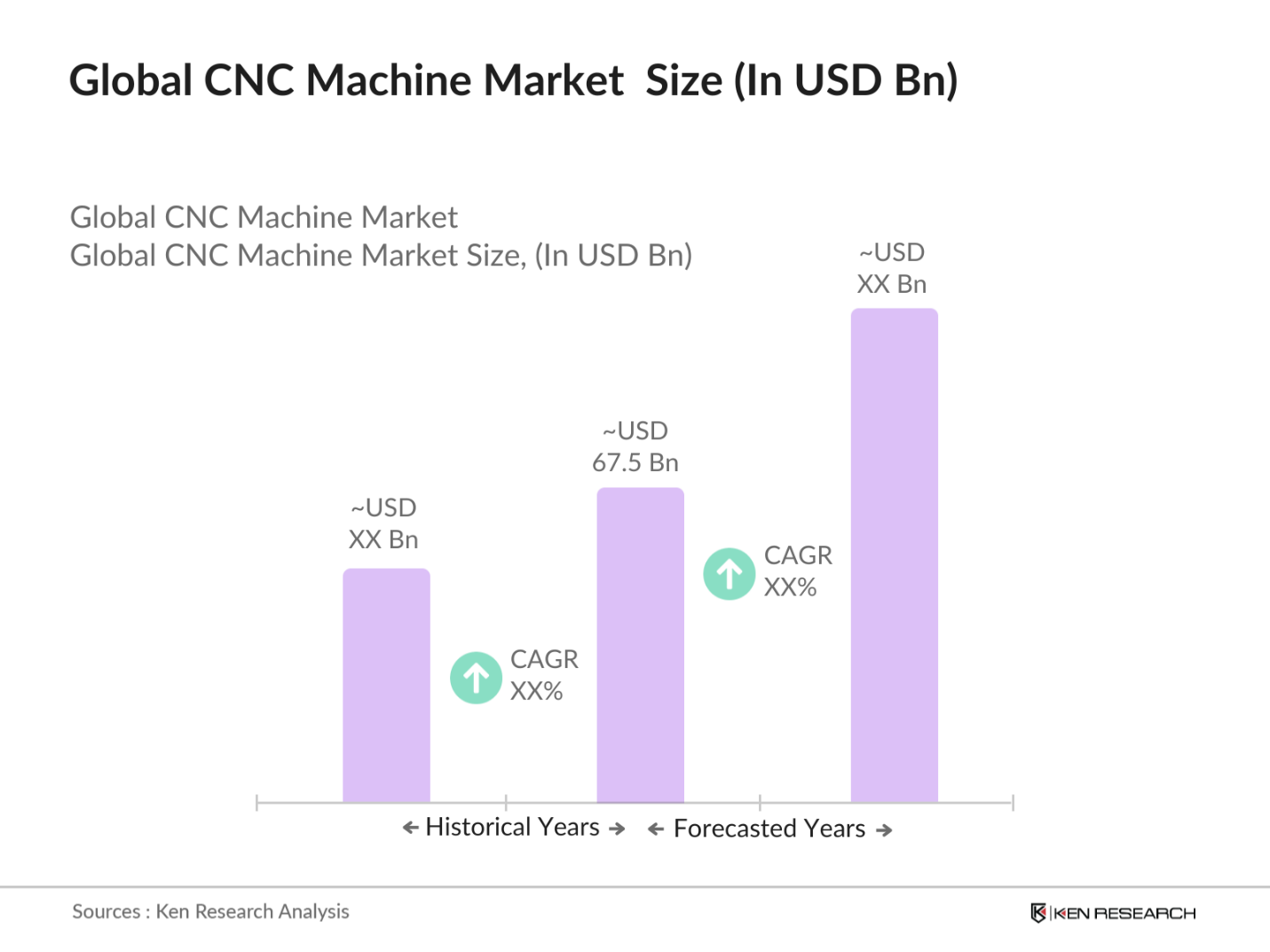
The global CNC machine market is valued at USD 67.5 billion, driven by increasing automation in manufacturing, rising demand for precision engineering, and technological advancements in machine control systems.
Key challenges in the CNC machine market include the high initial costs of CNC systems, a shortage of skilled labor, and the complexity of integrating new technologies like AI and machine learning into existing manufacturing setups.
Some of the leading companies in the CNC machine market include Haas Automation, FANUC, DMG Mori, Siemens AG, and Okuma Corporation. These companies dominate due to their extensive product offerings, innovation, and global market presence.
The market is driven by the increasing demand for automation, advancements in IoT, and the growing adoption of precision machining technologies in industries like aerospace, automotive, and medical devices.

What makes us stand out is that our consultants follows Robust, Refine and Result (RRR) methodology. i.e. Robust for clear definitions, approaches and sanity checking, Refine for differentiating respondents facts and opinions and Result for presenting data with story

We have set a benchmark in the industry by offering our clients with syndicated and customized market research reports featuring coverage of entire market as well as meticulous research and analyst insights.

While we don't replace traditional research, we flip the method upside down. Our dual approach of Top Bottom & Bottom Top ensures quality deliverable by not just verifying company fundamentals but also looking at the sector and macroeconomic factors.

With one step in the future, our research team constantly tries to show you the bigger picture. We help with some of the tough questions you may encounter along the way: How is the industry positioned? Best marketing channel? KPI's of competitors? By aligning every element, we help maximize success.

Our report gives you instant access to the answers and sources that other companies might choose to hide. We elaborate each steps of research methodology we have used and showcase you the sample size to earn your trust.

If you need any support, we are here! We pride ourselves on universe strength, data quality, and quick, friendly, and professional service.