
Global Comic Book Market Outlook to 2030
Region:Global
Author(s):Mukul
Product Code:KROD6109
Region:Global
Author(s):Mukul
Product Code:KROD6109
November 2024
86
Listen to the audio summary

The global comic book market is dominated by a few major players, including both legacy publishers and digital platforms. These companies are shaping the future of the market through digital innovation, licensing, and cross-media adaptations. The concentration of major publishers, combined with the emergence of webtoon platforms, underscores the influence of key players in defining industry trends and consumer preferences.
|
Company |
Establishment Year |
Headquarters |
Revenue |
Digital Comics Focus |
Print vs. Digital Ratio |
Major Franchise |
Global Reach |
Exclusive Licensing Deals |
Subscription Model |
|
Marvel Comics |
1939 |
New York, USA |
- |
- |
- |
- |
- |
- |
- |
|
DC Comics |
1934 |
Burbank, USA |
- |
- |
- |
- |
- |
- |
- |
|
Kodansha Comics |
1938 |
Tokyo, Japan |
- |
- |
- |
- |
- |
- |
- |
|
VIZ Media |
1986 |
San Francisco, USA |
- |
- |
- |
- |
- |
- |
- |
|
Webtoon Entertainment |
2004 |
Seoul, South Korea |
- |
- |
- |
- |
- |
- |
- |
Growth Drivers
Market Restraints
Over the next five years, the comic book market is expected to experience strong growth, driven by the expansion of digital comics and the global spread of manga and webtoons. Continuous technological innovation in content distribution, coupled with growing demand for comic-based media content like movies and series, will further fuel market growth. In addition, increased consumer appetite for interactive and personalized comic experiences, such as augmented reality and NFTs, will reshape the market.
Market Opportunities
|
By Format |
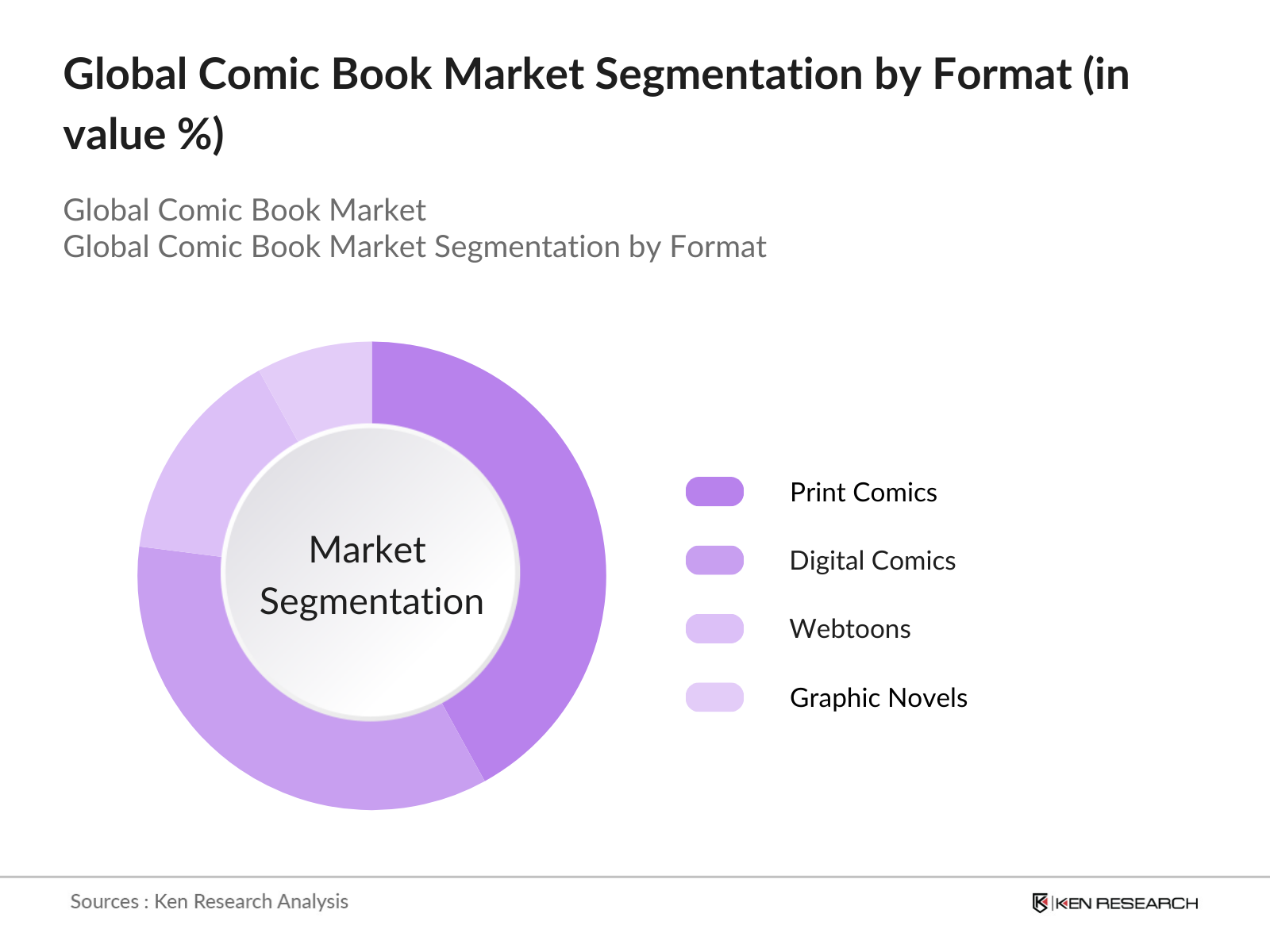
Print Comics Digital Comics Webtoons Graphic Novels |
|
By Genre |
Superhero Manga Science Fiction & Fantasy Drama & Romance Horror |
|
By Distribution Channel |
Online Stores Physical Bookstores Specialty Comic Stores Subscription Platforms |
|
By Audience Type |
Children Teenagers Adults |
|
By Region |
North America Europe Asia-Pacific Latin America Middle East & Africa |
1.1. Definition and Scope
1.2. Market Taxonomy
1.3. Market Growth Rate
1.4. Market Segmentation Overview (Revenue, Distribution Channels, Regions, Genres, Formats)
2.1. Historical Market Size
2.2. Year-On-Year Growth Analysis
2.3. Key Market Developments and Milestones (Launches, Digital Transition, Global Expansion, Partnerships)
3.1. Growth Drivers
3.1.1. Rise in Popularity of Digital Comics (Increased Mobile Penetration, Global Reach)
3.1.2. Expanding Fan Base for Manga and Webtoons (Cross-Cultural Appeal, Youth Engagement)
3.1.3. Licensing and Merchandising Opportunities (Movies, TV, Gaming)
3.1.4. Nostalgia and Collectibles Boom (Special Editions, High Resale Value)
3.2. Market Challenges
3.2.1. Piracy and Copyright Issues (Digital Distribution Vulnerability)
3.2.2. Declining Physical Sales (Shift to Digital Formats)
3.2.3. Economic Pressures on Consumer Spending
3.3. Opportunities
3.3.1. Growth of Independent and Self-Publishing Platforms (Crowdfunding, Indie Creators)
3.3.2. Integration of Augmented Reality and Interactive Comics (Enhanced Reader Experience)
3.3.3. Rising Popularity of NFTs in Digital Comics (Blockchain Integration, Ownership)
3.4. Trends
3.4.1. Diversification of Storytelling Genres (Representation, Gender Diversity)
3.4.2. Global Expansion of Manga and Webtoons (Localized Translations, International Collaborations)
3.4.3. Cross-Media Franchise Development (Comic-to-Screen Adaptations, Gaming)
3.5. Government Regulation
3.5.1. Content Rating Systems (Global Variations, Age Restrictions)
3.5.2. Copyright Laws (Digital Rights Management, Fair Use)
3.5.3. Government Initiatives Supporting Creative Industries (Funding, Tax Credits)
3.6. SWOT Analysis
3.7. Stakeholder Ecosystem (Publishers, Distributors, Digital Platforms, Retailers)
3.8. Porters Five Forces Analysis (Market Power Dynamics: Publishers, Platforms, Consumers)
3.9. Competitive Ecosystem
4.1. By Format (In Value %)
4.1.1. Print Comics
4.1.2. Digital Comics
4.1.3. Webtoons
4.1.4. Graphic Novels
4.2. By Genre (In Value %)
4.2.1. Superhero
4.2.2. Manga
4.2.3. Science Fiction & Fantasy
4.2.4. Drama & Romance
4.2.5. Horror
4.3. By Distribution Channel (In Value %)
4.3.1. Online Stores
4.3.2. Physical Bookstores
4.3.3. Specialty Comic Stores
4.3.4. Subscription Platforms
4.4. By Audience Type (In Value %)
4.4.1. Children
4.4.2. Teenagers
4.4.3. Adults
4.5. By Region (In Value %)
4.5.1. North America
4.5.2. Europe
4.5.3. Asia-Pacific
4.5.4. Latin America
4.5.5. Middle East & Africa
5.1. Detailed Profiles of Major Competitors
5.1.1. Marvel Comics
5.1.2. DC Comics
5.1.3. Dark Horse Comics
5.1.4. Image Comics
5.1.5. Kodansha Comics
5.1.6. VIZ Media
5.1.7. IDW Publishing
5.1.8. Boom! Studios
5.1.9. Shueisha Inc.
5.1.10. Archie Comics
5.1.11. Webtoon Entertainment
5.1.12. Titan Comics
5.1.13. Oni Press
5.1.14. Dynamite Entertainment
5.1.15. Scholastic Graphix
5.2. Cross Comparison Parameters (Revenue, Digital vs. Print Distribution, Genre Specialization, Geographic Reach, Licensing & Merchandising, Key Partnerships, Subscription Models, Content Library Size)
5.3. Market Share Analysis (Top Publishers by Market Share)
5.4. Strategic Initiatives (Digital Expansion, Licensing Agreements, Exclusive Content Deals)
5.5. Mergers and Acquisitions (Key M&A Activity in Comic Book Industry)
5.6. Investment Analysis (Venture Capital, Crowdfunding Trends)
5.7. Government Grants (Creative Industries Support)
5.8. Private Equity Investments (Major PE Players in Comics)
6.1. Content Regulation and Censorship (By Region)
6.2. Copyright and IP Protection
6.3. Compliance Requirements for Digital Platforms
7.1. Future Market Size Projections
7.2. Key Factors Driving Future Market Growth (Digital Transition, Global Franchise Expansion)
8.1. By Format (In Value %)
8.2. By Genre (In Value %)
8.3. By Distribution Channel (In Value %)
8.4. By Audience Type (In Value %)
8.5. By Region (In Value %)
9.1. TAM/SAM/SOM Analysis
9.2. Consumer Behavior Analysis
9.3. Market Entry Strategies
9.4. White Space Opportunity Analysis
The initial stage involves mapping out all key stakeholders, including publishers, digital platforms, and retailers in the comic book market. This research uses a blend of proprietary databases and secondary research to gather comprehensive data on industry trends, revenue streams, and key performance indicators.
In this step, we analyze historical data on comic book sales, segmented by region, format, and genre. We also examine the markets digital transition and the resulting revenue streams. This analysis includes a focus on market penetration and the competitive landscape, supported by sales data and growth trajectories for both print and digital formats.
We develop initial market hypotheses, which are validated through in-depth interviews with industry experts, including comic book publishers and digital platform operators. These consultations provide valuable insights into emerging trends and key growth drivers, which are incorporated into the final report.
The final stage involves synthesizing all the collected data and insights to create a comprehensive market analysis. This includes direct engagement with comic book publishers to verify data on market share, product segmentation, and sales performance, ensuring that the report provides a complete and accurate representation of the global comic book market.
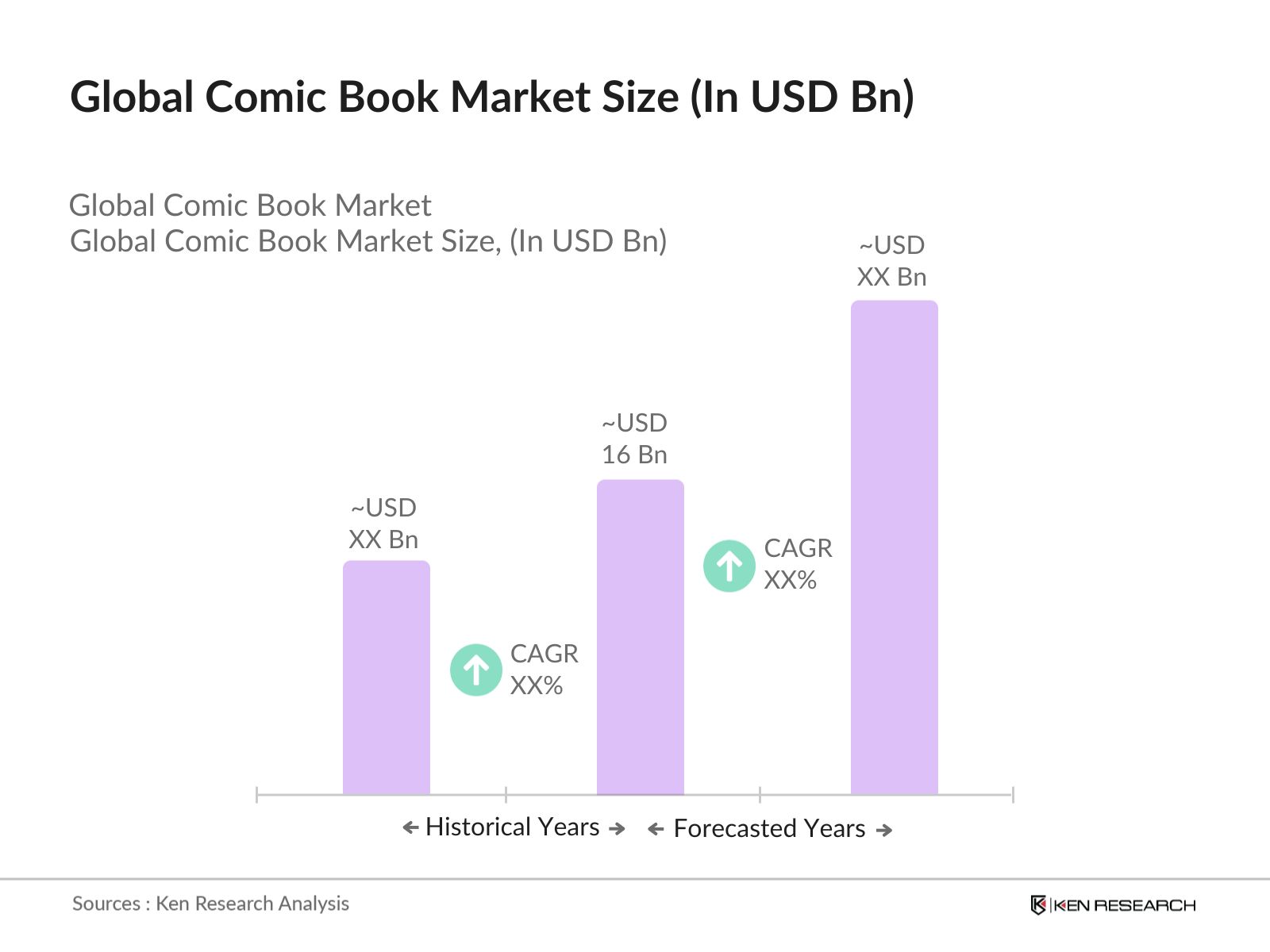
The global comic book market is valued at USD 16 billion, driven by the increasing demand for digital comics and the popularity of franchise-based comics, particularly in North America and Asia-Pacific.
Challenges include digital piracy, the declining demand for print comics, and increasing competition from digital content like webtoons. These factors present barriers to market expansion, especially for traditional publishers.
Key players in the market include Marvel Comics, DC Comics, Dark Horse Comics, Kodansha Comics, and Webtoon Entertainment. These companies dominate due to their strong franchises, expansive distribution networks, and integration with other entertainment sectors.
The market is driven by the global demand for digital comics, the success of comic-based movies and TV shows, and the increasing popularity of genres like manga and webtoons. Additionally, advancements in online distribution platforms are facilitating access to a wider audience.

What makes us stand out is that our consultants follows Robust, Refine and Result (RRR) methodology. i.e. Robust for clear definitions, approaches and sanity checking, Refine for differentiating respondents facts and opinions and Result for presenting data with story

We have set a benchmark in the industry by offering our clients with syndicated and customized market research reports featuring coverage of entire market as well as meticulous research and analyst insights.

While we don't replace traditional research, we flip the method upside down. Our dual approach of Top Bottom & Bottom Top ensures quality deliverable by not just verifying company fundamentals but also looking at the sector and macroeconomic factors.

With one step in the future, our research team constantly tries to show you the bigger picture. We help with some of the tough questions you may encounter along the way: How is the industry positioned? Best marketing channel? KPI's of competitors? By aligning every element, we help maximize success.

Our report gives you instant access to the answers and sources that other companies might choose to hide. We elaborate each steps of research methodology we have used and showcase you the sample size to earn your trust.

If you need any support, we are here! We pride ourselves on universe strength, data quality, and quick, friendly, and professional service.