
Global Consumer Appliances Market Outlook to 2030
Region:Global
Author(s):Mukul
Product Code:KROD4252
Region:Global
Author(s):Mukul
Product Code:KROD4252
November 2024
92

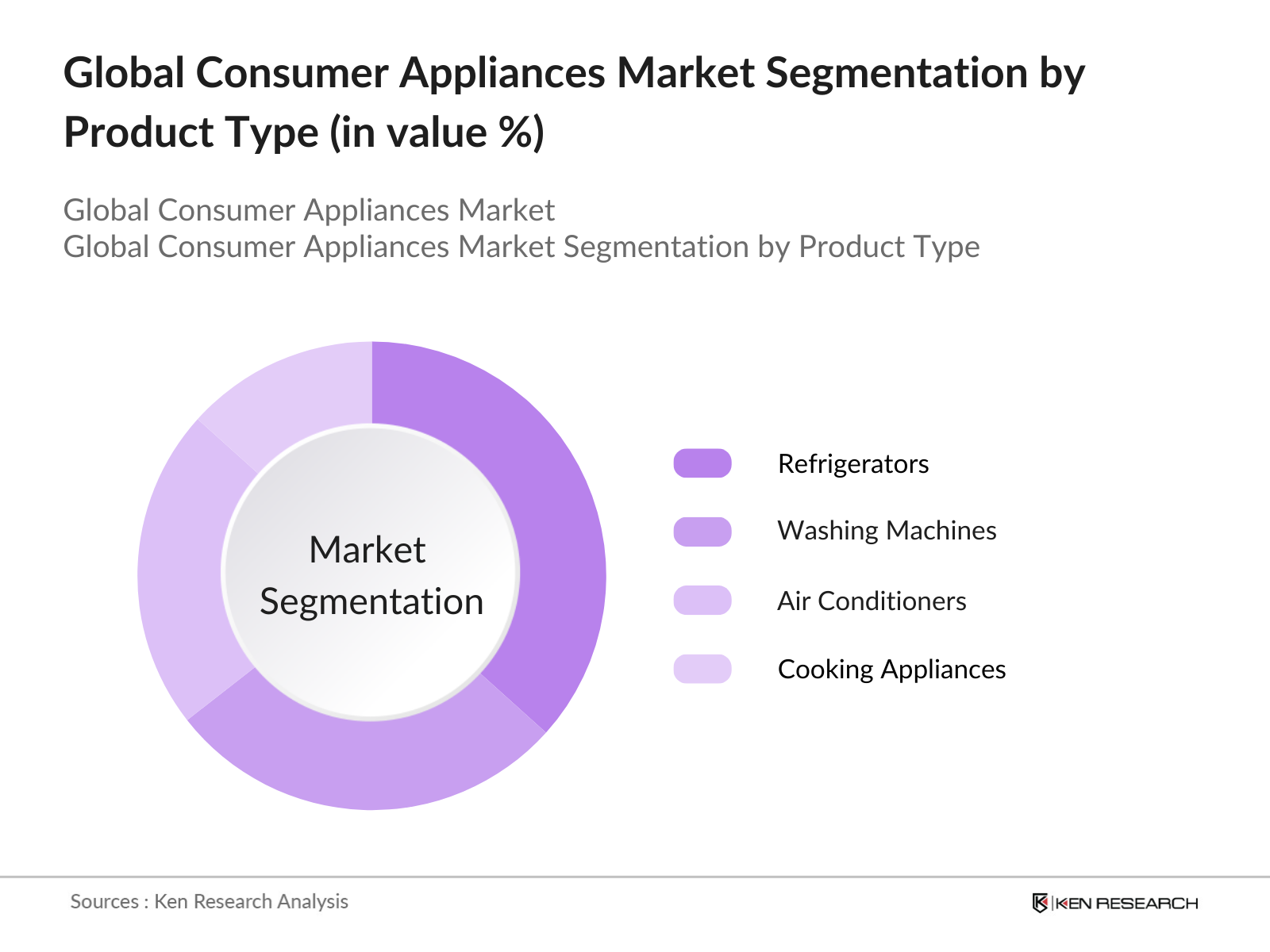
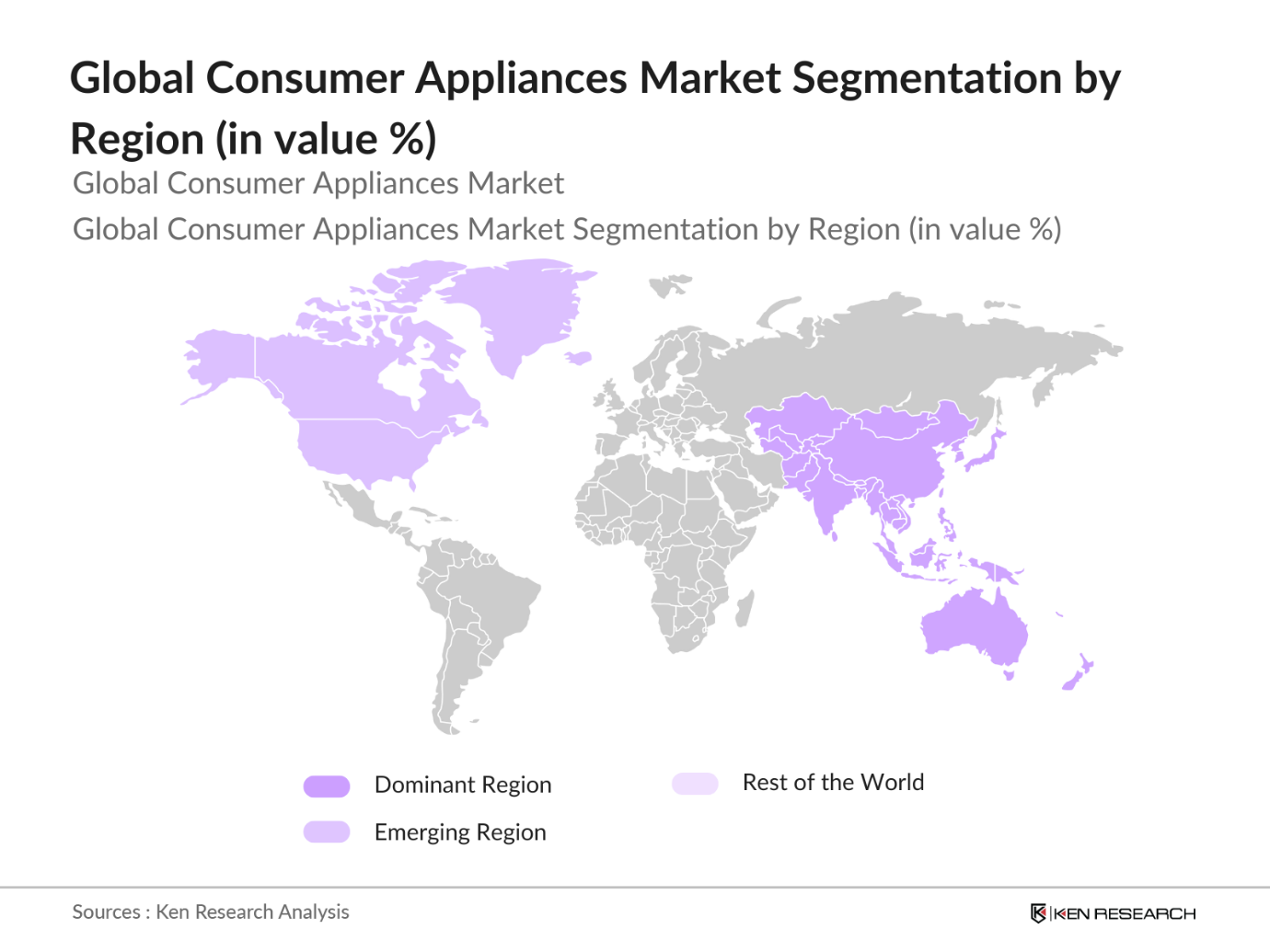
The global consumer appliances market is consolidated with major players dominating due to strong brand presence and product innovation. Key players employ strategies like product differentiation, sustainability initiatives, and extensive distribution networks to maintain competitive advantages.
The global consumer appliances market is anticipated to experience steady growth as demand continues for advanced, sustainable, and smart home products. Factors such as increased adoption of IoT-enabled devices, a shift toward eco-friendly appliances, and advancements in energy efficiency standards are expected to shape market dynamics positively. Moreover, regional expansion in emerging markets across Asia and Latin America will create additional growth opportunities for consumer appliances.
|
Product Type |
Refrigerators, Washing Machines, Air Conditioners, Cooking Appliances, Vacuum Cleaners |
|
Distribution Channel |
Online Retail, Offline Retail, Brand Outlets |
|
Technology Type |
Conventional, Smart/Connected Appliances |
|
End-User |
Residential, Commercial |
|
Region |
North America, Europe, Asia-Pacific, Middle East & Africa, Latin America |
1.1. Definition and Scope
1.2. Market Taxonomy
1.3. Market Dynamics
1.4. Market Segmentation Overview
2.1. Historical Market Size
2.2. Year-On-Year Growth Analysis
2.3. Market Milestones and Key Developments
3.1. Growth Drivers
- 3.1.1. Rising Disposable Income (GDP per capita)
- 3.1.2. Increasing Demand for Energy-Efficient Appliances
- 3.1.3. Urbanization and Changing Consumer Preferences
- 3.1.4. Smart Technology Integration
3.2. Market Challenges
- 3.2.1. High Replacement Costs
- 3.2.2. Environmental Concerns and Regulations
- 3.2.3. Supply Chain Disruptions
3.3. Opportunities
- 3.3.1. Growth in Smart Home Ecosystem (IoT Integration)
- 3.3.2. Expansion in Emerging Markets
- 3.3.3. Advancements in Energy-Efficient Technologies
3.4. Trends
- 3.4.1. Connected Appliances
- 3.4.2. Preference for Compact and Multifunctional Appliances
- 3.4.3. Increased Demand for Sustainable Products
3.5. Regulatory Landscape
- 3.5.1. Energy Efficiency Standards (Government Standards)
- 3.5.2. Compliance with Environmental Policies
- 3.5.3. Safety and Quality Certifications
3.6. SWOT Analysis
3.7. Porters Five Forces Analysis
3.8. Consumer Behavior Insights
3.9. Competitive Ecosystem
4.1. By Product Type (in Value %)
- 4.1.1. Refrigerators
- 4.1.2. Washing Machines
- 4.1.3. Air Conditioners
- 4.1.4. Cooking Appliances
- 4.1.5. Vacuum Cleaners
4.2. By Distribution Channel (in Value %)
- 4.2.1. Online Retail
- 4.2.2. Offline Retail
- 4.2.3. Brand Outlets
4.3. By Technology Type (in Value %)
- 4.3.1. Conventional
- 4.3.2. Smart/Connected Appliances
4.4. By End-User (in Value %)
- 4.4.1. Residential
- 4.4.2. Commercial
4.5. By Region (in Value %)
- 4.5.1. North America
- 4.5.2. Europe
- 4.5.3. Asia-Pacific
- 4.5.4. Middle East & Africa
- 4.5.5. Latin America
5.1. Detailed Profiles of Major Companies
- 5.1.1. LG Electronics
- 5.1.2. Samsung Electronics
- 5.1.3. Whirlpool Corporation
- 5.1.4. Panasonic Corporation
- 5.1.5. Electrolux AB
- 5.1.6. Haier Group
- 5.1.7. Bosch Siemens Hausgerte
- 5.1.8. Midea Group
- 5.1.9. Sharp Corporation
- 5.1.10. Hitachi Ltd.
- 5.1.11. Arelik A..
- 5.1.12. Daikin Industries
- 5.1.13. Gree Electric Appliances Inc.
- 5.1.14. Hisense Group
- 5.1.15. Xiaomi Corporation
5.2. Cross-Comparison Parameters (Product Range, Market Presence, Revenue, Product Innovation, Sustainability Initiatives, Customer Base, Manufacturing Facilities, R&D Investments)
5.3. Market Share Analysis
5.4. Strategic Initiatives
5.5. Mergers & Acquisitions
5.6. Investment Analysis
5.7. Venture Capital & Private Equity Investments
6.1. International Energy Standards
6.2. Compliance and Certification Processes
6.3. Environmental Safety Regulations
7.1. Market Growth Projections
7.2. Key Drivers Shaping Future Growth
8.1. By Product Type (in Value %)
8.2. By Distribution Channel (in Value %)
8.3. By Technology Type (in Value %)
8.4. By End-User (in Value %)
8.5. By Region (in Value %)
9.1. Market Entry Strategies
9.2. White Space Opportunities
9.3. Product Innovation Pathways
9.4. Targeted Marketing Strategies
The first stage involves a comprehensive analysis of the global consumer appliances market ecosystem, incorporating all stakeholders and economic influencers. This data is sourced from a combination of proprietary databases, industry reports, and market-specific publications to identify key market drivers and barriers.
Historical market data is aggregated from primary and secondary sources, including government publications and verified reports, to construct a baseline for revenue and growth analysis. This data serves to verify market trends, the dominance of product segments, and distribution trends.
Experts from leading consumer appliance firms and industry analysts are consulted to validate preliminary findings. This process includes in-depth interviews focusing on consumer preferences, market challenges, and technological advancements, which refine the market data further.
In this stage, data from multiple sources are consolidated to provide a final, validated report. The findings from expert consultations and historical data analysis are synthesized to offer comprehensive insights, covering market dynamics, segmentation, competitive landscape, and forecasted growth.
The global consumer appliances market is valued at USD 437 billion, driven by increasing consumer demand for smart and energy-efficient appliances, primarily due to urbanization and rising disposable incomes.
Challenges include high replacement costs, environmental regulatory compliance, and supply chain disruptions, which affect product availability and cost efficiency in the market.
Major players in the market include LG Electronics, Samsung Electronics, Whirlpool Corporation, Panasonic Corporation, and Electrolux AB, with each holding a strong market presence due to extensive product portfolios and brand loyalty.
The market's growth is driven by the adoption of smart home technology, increasing awareness of energy efficiency, and government incentives promoting eco-friendly appliances.

What makes us stand out is that our consultants follows Robust, Refine and Result (RRR) methodology. i.e. Robust for clear definitions, approaches and sanity checking, Refine for differentiating respondents facts and opinions and Result for presenting data with story

We have set a benchmark in the industry by offering our clients with syndicated and customized market research reports featuring coverage of entire market as well as meticulous research and analyst insights.

While we don't replace traditional research, we flip the method upside down. Our dual approach of Top Bottom & Bottom Top ensures quality deliverable by not just verifying company fundamentals but also looking at the sector and macroeconomic factors.

With one step in the future, our research team constantly tries to show you the bigger picture. We help with some of the tough questions you may encounter along the way: How is the industry positioned? Best marketing channel? KPI's of competitors? By aligning every element, we help maximize success.

Our report gives you instant access to the answers and sources that other companies might choose to hide. We elaborate each steps of research methodology we have used and showcase you the sample size to earn your trust.

If you need any support, we are here! We pride ourselves on universe strength, data quality, and quick, friendly, and professional service.