















Global Contact Lenses Market Outlook to 2030
Region:Global
Author(s):Mukul
Product Code:KROD6011
November 2024
84
About the Report
Global Contact Lenses Market Overview
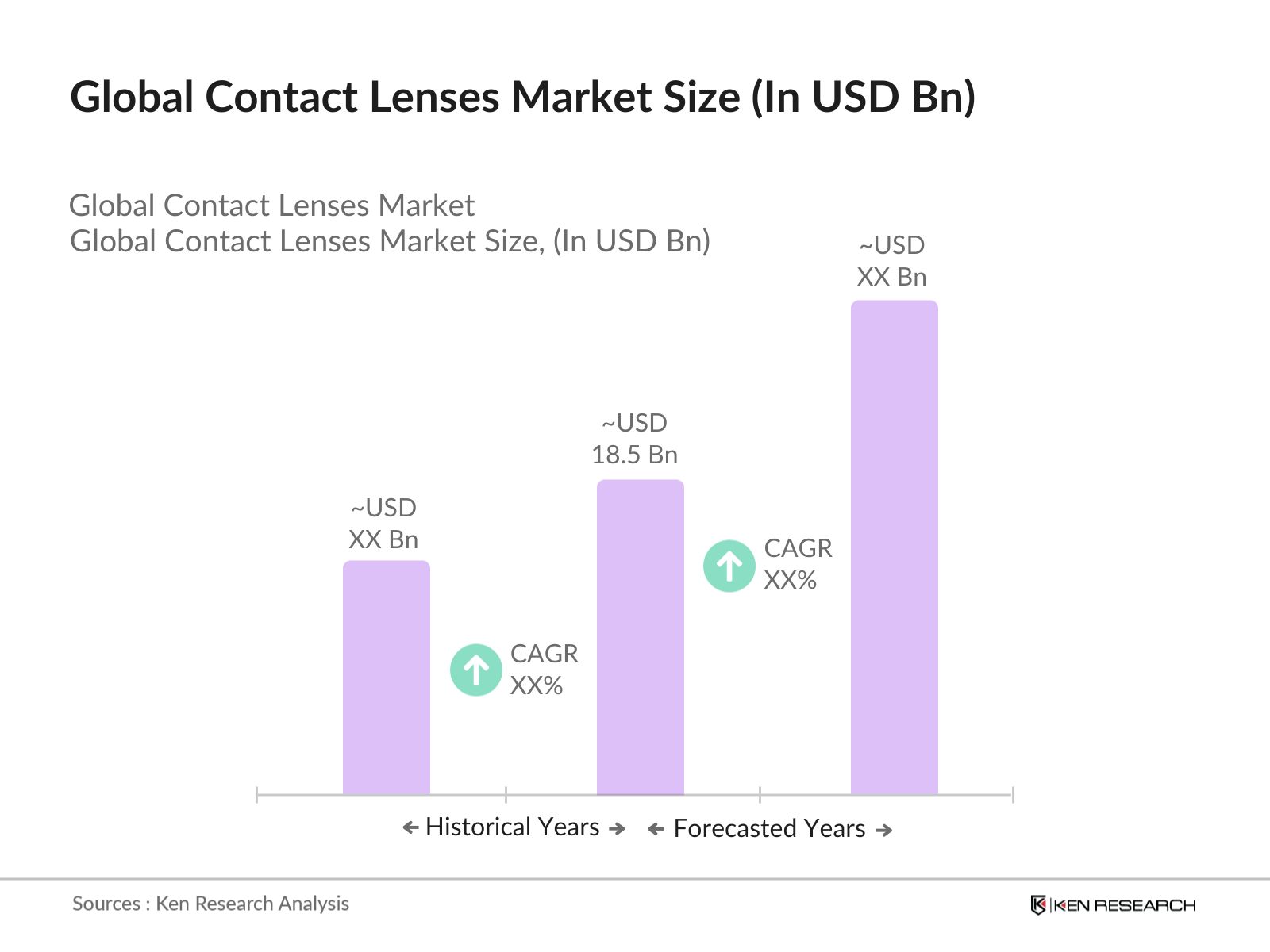
- The global contact lenses market, driven by the rising demand for corrective and cosmetic lenses, is valued at USD 18.5 billion. The market is primarily influenced by the increasing prevalence of myopia and presbyopia across the globe. Innovations in lens materials and production processes, such as the adoption of silicone hydrogel, have further enhanced the comfort and utility of contact lenses, which is propelling market growth. The increasing preference for daily disposable lenses is also driving the market, as they provide convenience and hygiene benefits .
- Countries such as the United States, Japan, and Germany dominate the global contact lenses market. The dominance of these regions can be attributed to their higher disposable incomes, advanced healthcare infrastructure, and higher awareness regarding ocular health. The presence of leading manufacturers, such as Johnson & Johnson Vision and Alcon, also adds to their influence in the market. Additionally, regions like the Asia-Pacific are witnessing rapid growth due to increasing urbanization and rising healthcare expenditures.
- The regulatory approval process for contact lenses varies significantly by region. While the U.S. and Europe follow strict guidelines, markets in Asia and Latin America have more relaxed requirements, allowing for quicker product launches. According to a World Bank study on global regulatory benchmarking, the time to market in these regions is typically 6-12 months, compared to 18-24 months in North America and Europe.
Global Contact Lenses Market Segmentation
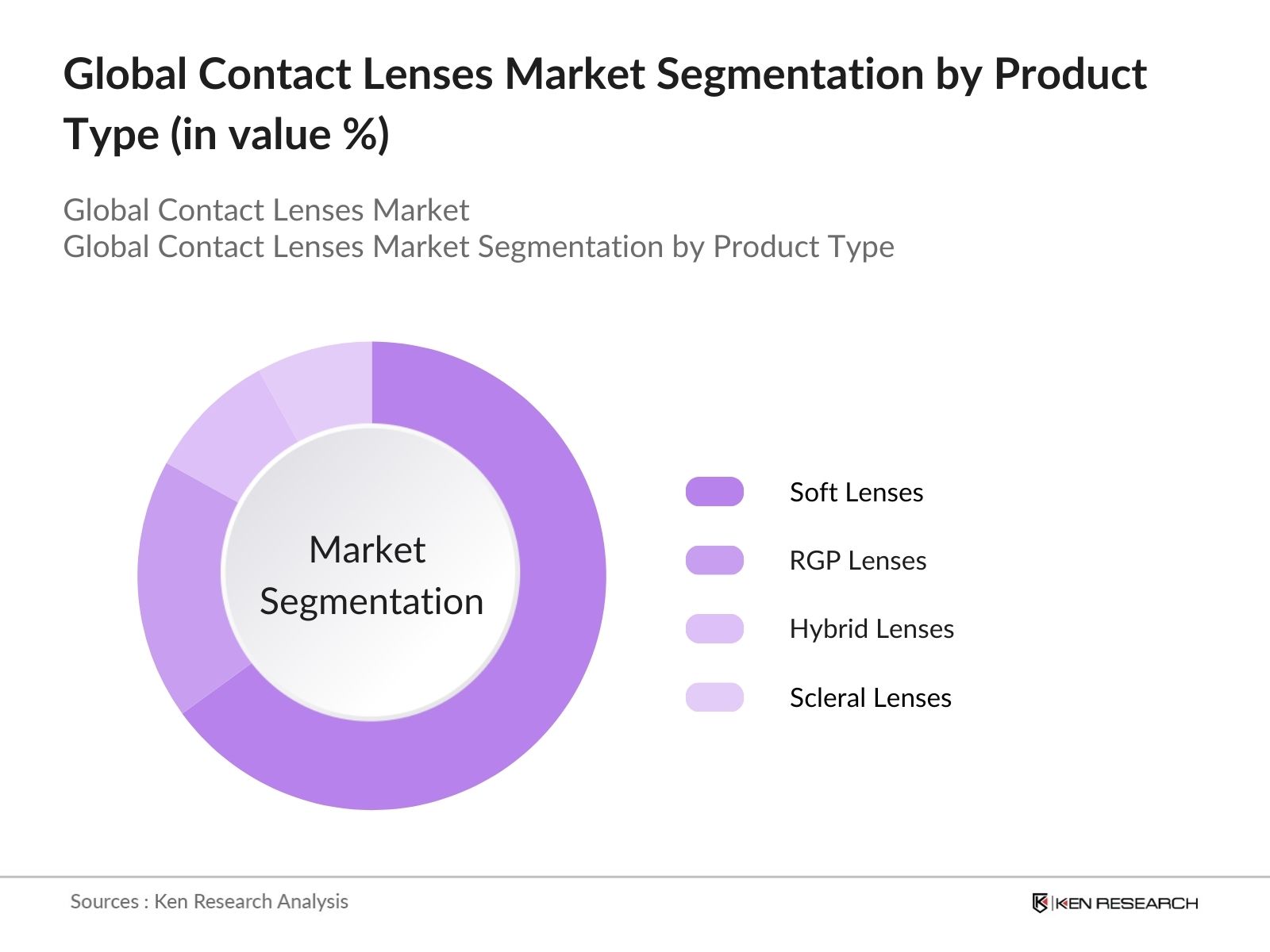
- By Product Type: The global contact lenses market is segmented by product type into soft lenses, rigid gas permeable (RGP) lenses, hybrid lenses, and scleral lenses. Soft lenses have a dominant market share due to their comfort, ease of use, and wide availability. Among soft lenses, daily disposable lenses are becoming increasingly popular due to their convenience and minimal maintenance requirements, making them the preferred choice for a growing number of consumers. The increasing prevalence of vision disorders and growing consumer awareness about the benefits of wearing contact lenses are also driving the demand for soft lenses.
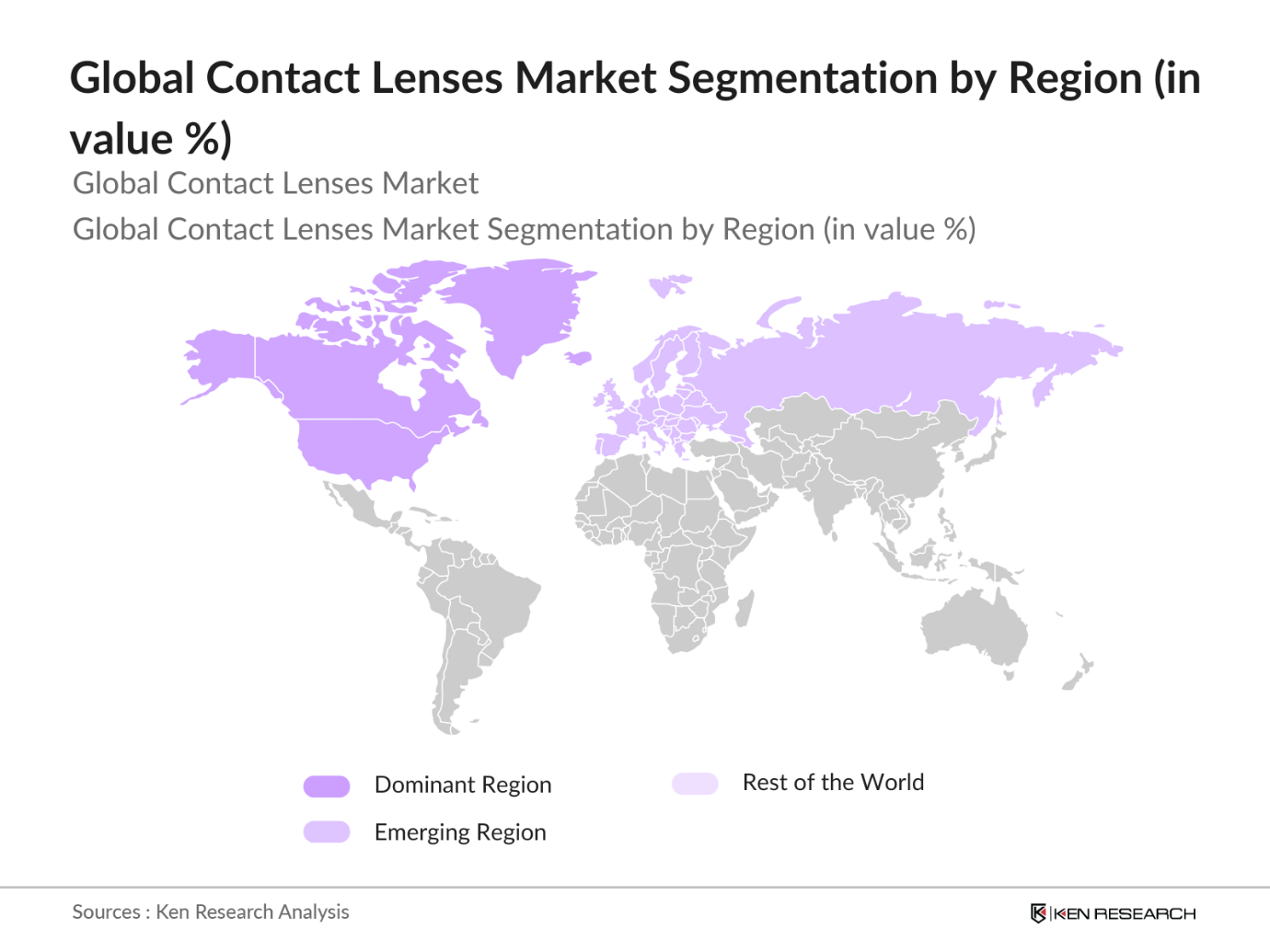
- By Region: The contact lenses market is segmented by region into North America, Europe, Asia-Pacific, Latin America, and the Middle East & Africa. North America dominates the market due to high consumer spending on healthcare, early adoption of new technologies, and the presence of leading contact lens manufacturers. The Asia-Pacific region, particularly countries like China and India, is expected to grow rapidly due to increasing urbanization, rising disposable incomes, and a growing awareness of ocular health.
- By Application: The contact lenses market is segmented by application into corrective lenses, therapeutic lenses, cosmetic lenses, and prosthetic lenses. Corrective lenses hold the dominant share in the market, as they are widely used to correct refractive errors like myopia, hyperopia, astigmatism, and presbyopia. With the increasing incidence of these vision problems, particularly myopia in children and young adults, the demand for corrective lenses is on the rise. The convenience and flexibility offered by contact lenses over traditional eyeglasses also contribute to their growing popularity.
Global Contact Lenses Market Competitive Landscape
The global contact lenses market is highly competitive, with major players focusing on research and development to introduce innovative products and gain a competitive edge. Leading companies are also expanding their distribution networks, particularly in emerging markets, to capture new customers. Companies are investing heavily in new technologies such as smart contact lenses, which have applications in both corrective and therapeutic fields. The market is also witnessing consolidation as companies engage in mergers and acquisitions to expand their product portfolios.
|
Company Name |
Established Year |
Headquarters |
Revenue (USD Bn) |
Market Share (2023) |
R&D Expenditure (USD Mn) |
No. of Employees |
Product Range |
Geographical Presence |
|
Johnson & Johnson Vision |
1957 |
Jacksonville, Florida |
- |
- |
- |
- |
- |
- |
|
Bausch & Lomb |
1853 |
Bridgewater, New Jersey |
- |
- |
- |
- |
- |
- |
|
Alcon (Novartis) |
1945 |
Geneva, Switzerland |
- |
- |
- |
- |
- |
- |
|
CooperVision |
1980 |
Pleasanton, California |
- |
- |
- |
- |
- |
- |
|
Hoya Corporation |
1941 |
Tokyo, Japan |
- |
- |
- |
- |
- |
- |
Global Contact Lenses Industry Analysis
Growth Drivers
- Increasing Prevalence of Myopia and Presbyopia: The rising prevalence of myopia and presbyopia is a significant driver of the contact lens market. According to the World Health Organization (WHO), approximately 2.2 billion people globally suffer from vision impairment, of which uncorrected refractive errors such as myopia and presbyopia are the most common. By 2024, over 1.4 billion people are expected to need vision correction, with myopia cases increasing significantly in urbanized regions due to lifestyle changes like increased screen time. This rise in refractive errors is pushing the demand for contact lenses to address these issues.
- Growing Demand for Aesthetic Lenses: The demand for aesthetic or cosmetic lenses, such as colored or patterned lenses, is increasing due to changing consumer preferences, particularly among younger populations. Data from the global trade association for contact lenses shows that aesthetic lenses constitute nearly 18% of all lens sales in 2023, fueled by social media influences and fashion trends. This is more prominent in markets such as South Korea and Japan, where cosmetic lenses have gained popularity for non-corrective purposes. The trend is also expanding in Western markets with increased disposable income.
- Rising Disposable Income and Healthcare Expenditure: Rising disposable incomes and increased healthcare spending are further driving the adoption of contact lenses. According to the World Bank, global disposable income per capita increased by nearly $400 between 2022 and 2024, providing consumers with more purchasing power for premium and specialty lenses. The growth in healthcare expenditure, particularly in middle-income countries, has also increased access to vision care services, further supporting the market for corrective lenses.
Market Restraints
- Strict Regulatory Approvals: The regulatory approval process for contact lenses, particularly in the U.S. and European markets, is stringent, making it challenging for manufacturers to launch new products. According to the World Banks Regulatory Stringency Index, the medical device sector, including contact lenses, faces some of the highest compliance requirements. Manufacturers must adhere to multiple certifications such as FDA approvals and CE marks, which can delay product launches by up to two years. This creates barriers for new entrants and smaller companies in the market.
- Risk of Eye Infections: significant challenge in the contact lens market is the risk of eye infections associated with improper use or hygiene. The WHO reports that approximately 30 million cases of keratitis are reported annually, many of which are linked to the use of contact lenses. The improper cleaning and overuse of lenses contribute significantly to this risk, leading to a higher rate of complications, particularly in regions with poor access to clean water and healthcare services.
Global Contact Lenses Market Future Outlook
Over the next five years, the global contact lenses market is expected to experience significant growth driven by several factors. These include increasing demand for corrective lenses due to rising incidences of vision problems such as myopia and presbyopia, as well as growing consumer preferences for convenient and aesthetic options like daily disposable lenses. Technological advancements, such as the development of smart lenses, and increased penetration of e-commerce channels are also expected to contribute to the growth of the contact lenses market. Additionally, the expansion of healthcare infrastructure in emerging markets will further support the growth of the market.
Market Opportunities
- Expansion of E-Commerce Channels (Online Sales Growth): The growing penetration of e-commerce platforms has created new opportunities for the contact lens market. In 2023, online sales accounted for approximately 25% of global contact lens purchases, a significant increase from the 18% share in 2022. The convenience of online purchasing, coupled with subscription-based models, is driving growth, particularly in North America and Europe. The rapid expansion of online channels provides manufacturers with broader market access and reduces distribution costs.
- Emerging Markets with Untapped Potential (Market Penetration Rate): Emerging markets, particularly in Asia and Latin America, present significant growth opportunities due to low market penetration rates. The World Bank reports that in countries like India and Brazil, the contact lens penetration rate is below 10%, compared to over 35% in the U.S. and Europe. Increasing healthcare expenditure and growing awareness of vision correction solutions in these regions are expected to boost the demand for contact lenses.
Scope of the Report
|
Product Type |
Soft Lenses Rigid Gas Permeable Lenses (RGP) Hybrid Lenses Scleral Lenses |
|
Application |
Corrective Lenses Therapeutic Lenses Cosmetic Lenses Prosthetic Lenses |
|
Material |
Hydrogel Lenses Silicone Hydrogel Lenses Gas Permeable Materials |
|
Distribution Channel |
Retail Stores Optical Clinics E-commerce Hospital Pharmacies |
|
Region |
North America Europe Asia Pacific Latin America Middle East & Africa |
Products
Key Target Audience
Manufacturers of Contact Lenses
Optical Retail Chains
Hospital Pharmacies
E-commerce Platforms Specializing in Eyewear
Government and Regulatory Bodies (FDA, CE Mark Regulatory Authorities)
Investors and Venture Capitalist Firms
Healthcare Providers
R&D Institutes Focused on Ophthalmology
Companies
Players Mentioned in the Report:
Johnson & Johnson Vision
Bausch & Lomb
Alcon (Novartis)
CooperVision
Hoya Corporation
Menicon Co., Ltd.
Carl Zeiss Meditec
SEED Co., Ltd.
Contamac Ltd.
SynergEyes, Inc.
BenQ Materials Corporation
X-Cel Specialty Contacts
EssilorLuxottica
Ophtecs Corporation
Paragon Vision Sciences
Table of Contents
1. Global Contact Lenses Market Overview
1.1. Definition and Scope
1.2. Market Taxonomy
1.3. Market Growth Rate
1.4. Market Segmentation Overview
2. Global Contact Lenses Market Size (In USD Bn)
2.1. Historical Market Size
2.2. Year-On-Year Growth Analysis
2.3. Key Market Developments and Milestones
3. Global Contact Lenses Market Analysis
3.1. Growth Drivers
3.1.1. Increasing Prevalence of Myopia and Presbyopia (Prevalence Rate of Vision Impairments)
3.1.2. Growing Demand for Aesthetic Lenses (Consumer Preferences for Cosmetic Lenses)
3.1.3. Rising Disposable Income and Healthcare Expenditure (Income Growth)
3.1.4. Technological Advancements in Lens Materials (Technological Innovation Index)
3.2. Market Challenges
3.2.1. High Cost of Specialty Lenses (Cost Structure)
3.2.2. Strict Regulatory Approvals (Regulatory Stringency Index)
3.2.3. Risk of Eye Infections (Health Complication Rate)
3.3. Opportunities
3.3.1. Expansion of E-Commerce Channels (Online Sales Growth)
3.3.2. Emerging Markets with Untapped Potential (Market Penetration Rate)
3.3.3. Development of Smart Lenses for Medical Applications (R&D Spending in Smart Lenses)
3.4. Trends
3.4.1. Increased Adoption of Daily Disposable Lenses (Market Share of Disposable Lenses)
3.4.2. Shift Toward Hybrid and Silicone Hydrogel Lenses (Material Innovation Index)
3.4.3. Focus on Sustainability with Eco-friendly Packaging (Sustainability Compliance Index)
3.5. Regulatory Landscape
3.5.1. FDA and CE Mark Regulations (Regulatory Compliance by Region)
3.5.2. ISO Standards for Contact Lenses (ISO Certification Adoption)
3.5.3. Regional Variations in Approval Processes (Global Regulatory Benchmarking)
3.6. SWOT Analysis
3.7. Stakeholder Ecosystem
3.8. Porters Five Forces
3.9. Competitive Landscape
4. Global Contact Lenses Market Segmentation
4.1. By Product Type (In Value %)
4.1.1. Soft Lenses
4.1.2. Rigid Gas Permeable Lenses (RGP)
4.1.3. Hybrid Lenses
4.1.4. Scleral Lenses
4.2. By Application (In Value %)
4.2.1. Corrective Lenses
4.2.2. Therapeutic Lenses
4.2.3. Cosmetic Lenses
4.2.4. Prosthetic Lenses
4.3. By Material (In Value %)
4.3.1. Hydrogel Lenses
4.3.2. Silicone Hydrogel Lenses
4.3.3. Gas Permeable Materials
4.4. By Distribution Channel (In Value %)
4.4.1. Retail Stores
4.4.2. Optical Clinics
4.4.3. E-commerce
4.4.4. Hospital Pharmacies
4.5. By Region (In Value %)
4.5.1. North America
4.5.2. Europe
4.5.3. Asia Pacific
4.5.4. Latin America
4.5.5. Middle East & Africa
5. Global Contact Lenses Market Competitive Analysis
5.1. Detailed Profiles of Major Companies
5.1.1. Johnson & Johnson Vision
5.1.2. Bausch & Lomb
5.1.3. Alcon (Novartis)
5.1.4. CooperVision
5.1.5. Carl Zeiss Meditec
5.1.6. Hoya Corporation
5.1.7. Menicon Co. Ltd.
5.1.8. Seed Co., Ltd.
5.1.9. EssilorLuxottica
5.1.10. Contamac Ltd.
5.1.11. SEED Contact Lenses
5.1.12. SynergEyes, Inc.
5.1.13. BenQ Materials Corporation
5.1.14. X-Cel Specialty Contacts
5.1.15. Ophtecs Corporation
5.2. Cross Comparison Parameters (No. of Employees, Headquarters, Inception Year, Revenue, R&D Expenditure, Market Share, Product Innovation, Sustainability Initiatives)
5.3. Market Share Analysis
5.4. Strategic Initiatives
5.5. Mergers and Acquisitions
5.6. Investment Analysis
5.7. Venture Capital Funding
5.8. Government Grants
5.9. Private Equity Investments
6. Global Contact Lenses Market Regulatory Framework
6.1. Regulatory Approvals
6.2. Compliance Requirements
6.3. Certification Processes
7. Global Contact Lenses Future Market Size (In USD Bn)
7.1. Future Market Size Projections
7.2. Key Factors Driving Future Market Growth
8. Global Contact Lenses Future Market Segmentation
8.1. By Product Type (In Value %)
8.2. By Application (In Value %)
8.3. By Material (In Value %)
8.4. By Distribution Channel (In Value %)
8.5. By Region (In Value %)
9. Global Contact Lenses Market Analysts' Recommendations
9.1. TAM/SAM/SOM Analysis
9.2. Customer Cohort Analysis
9.3. Marketing Initiatives
9.4. White Space Opportunity Analysis
Disclaimer
Contact Us
Research Methodology
Step 1: Identification of Key Variables
The research begins with an extensive mapping of the global contact lenses ecosystem, encompassing key manufacturers, distributors, and end-users. This phase is guided by thorough desk research utilizing secondary data sources, industry reports, and proprietary databases to gather all pertinent industry information.
Step 2: Market Analysis and Construction
In this phase, historical market data is compiled and analyzed, including an assessment of market penetration, product adoption rates, and the resulting revenue generated across regions. Analyzing service quality and product availability statistics ensures that revenue estimates are accurate and reliable.
Step 3: Hypothesis Validation and Expert Consultation
Market hypotheses are developed and validated through telephone interviews and consultations with industry experts from leading companies. These consultations provide financial insights and operational perspectives, which are crucial for refining the market estimates.
Step 4: Research Synthesis and Final Output
The final research phase involves primary data collection from key industry stakeholders, including manufacturers and distributors, to verify market trends and validate statistical models. This ensures the accuracy and comprehensiveness of the market analysis for the global contact lenses market.
Frequently Asked Questions
1. How big is the global contact lenses market?
The global contact lenses market was valued at USD 18.5 billion, driven by increasing demand for corrective lenses and growing consumer awareness about eye health.
2. What are the challenges in the global contact lenses market?
Challenges in the contact lenses market include high costs associated with specialty lenses, regulatory hurdles, and potential health risks such as eye infections.
3. Who are the major players in the global contact lenses market?
Major players include Johnson & Johnson Vision, Bausch & Lomb, Alcon (Novartis), CooperVision, and Hoya Corporation, dominating the market through extensive product portfolios and global distribution networks.
4. What are the growth drivers of the global contact lenses market?
Growth drivers include the rising prevalence of vision impairments like myopia and presbyopia, increasing consumer preference for cosmetic lenses, and technological advancements in lens materials.
Why Buy From Us?

What makes us stand out is that our consultants follows Robust, Refine and Result (RRR) methodology. i.e. Robust for clear definitions, approaches and sanity checking, Refine for differentiating respondents facts and opinions and Result for presenting data with story

We have set a benchmark in the industry by offering our clients with syndicated and customized market research reports featuring coverage of entire market as well as meticulous research and analyst insights.

While we don't replace traditional research, we flip the method upside down. Our dual approach of Top Bottom & Bottom Top ensures quality deliverable by not just verifying company fundamentals but also looking at the sector and macroeconomic factors.

With one step in the future, our research team constantly tries to show you the bigger picture. We help with some of the tough questions you may encounter along the way: How is the industry positioned? Best marketing channel? KPI's of competitors? By aligning every element, we help maximize success.

Our report gives you instant access to the answers and sources that other companies might choose to hide. We elaborate each steps of research methodology we have used and showcase you the sample size to earn your trust.

If you need any support, we are here! We pride ourselves on universe strength, data quality, and quick, friendly, and professional service.