
Global Cool Roof Market Outlook to 2030
Region:Global
Author(s):Sanjana Verma
Product Code:KROD8111
December 2024
95
About the Report
Global Cool Roof Market Overview
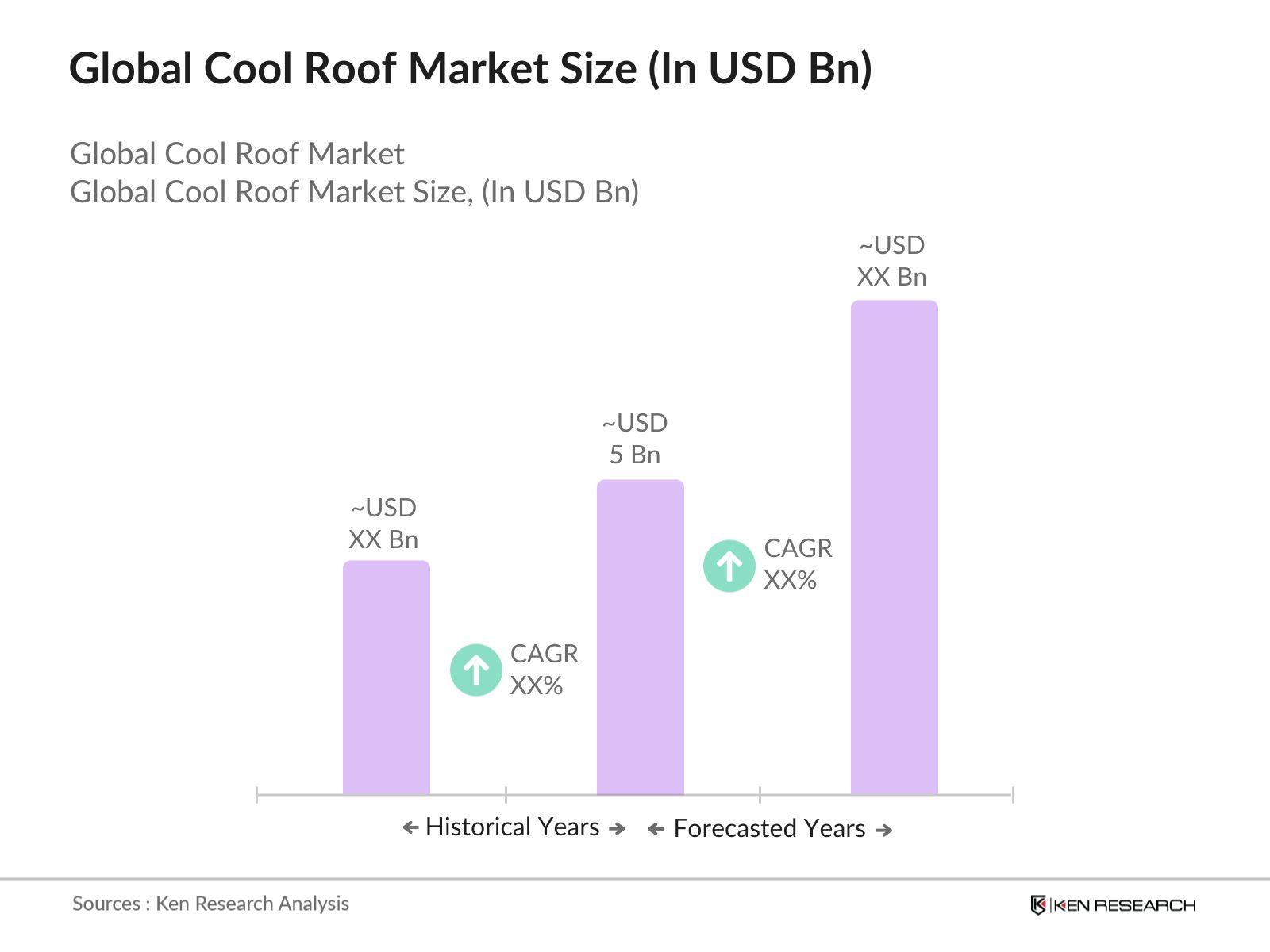
- The global cool roof market is valued at USD 5 billion, based on a five-year historical analysis. The market growth is driven by increasing demand for energy-efficient building materials, rising urban heat island effects, and government incentives promoting sustainable construction. Cool roofs help reduce cooling energy consumption by reflecting more sunlight and absorbing less heat compared to standard roofs, contributing to their adoption across residential, commercial, and industrial buildings.
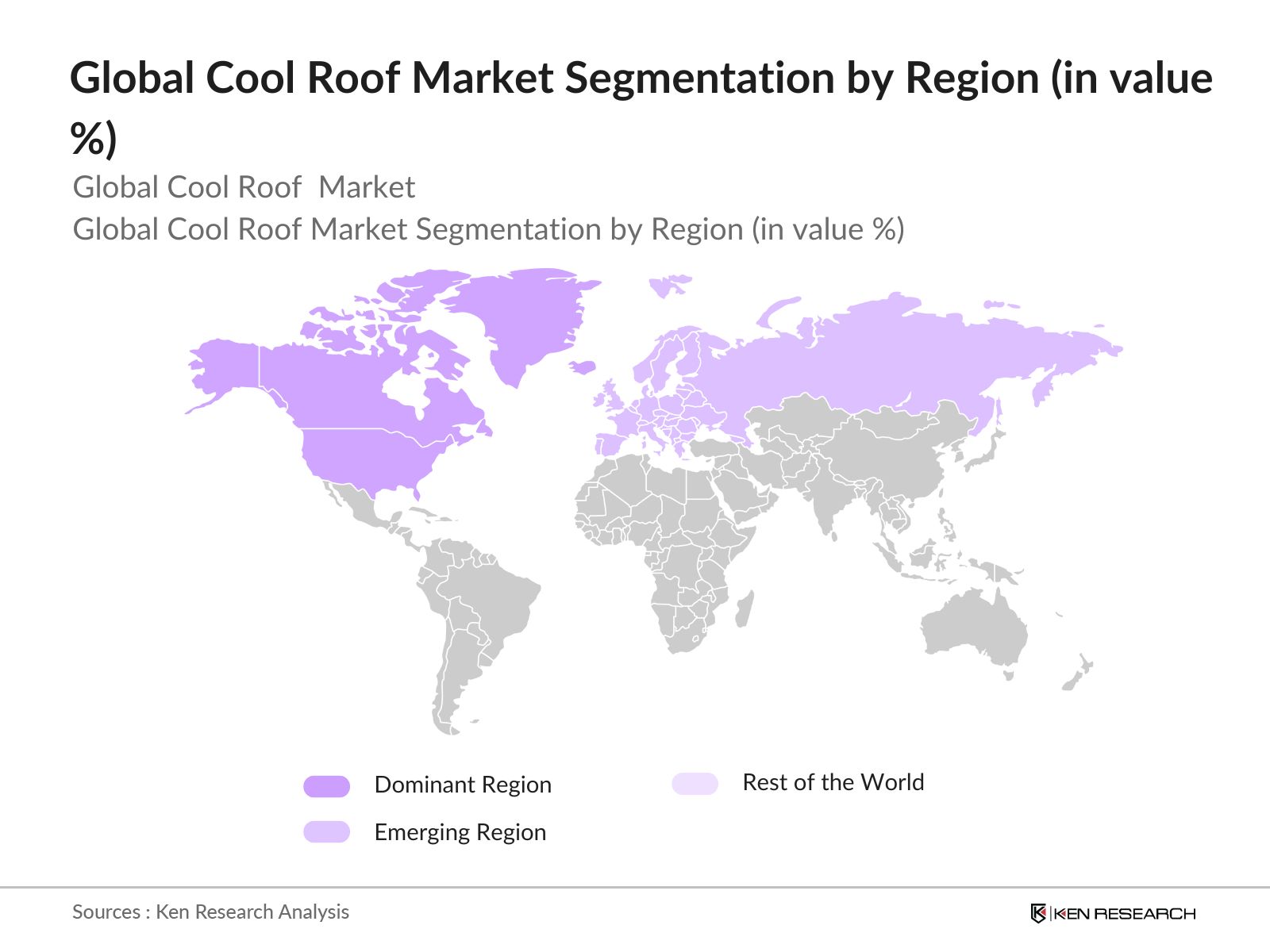
- North America and Europe are the dominant regions in the cool roof market, with cities like Los Angeles and Chicago leading due to stringent government regulations and climate-conscious building practices. These cities have adopted cool roofs as part of their urban heat mitigation strategies and to comply with energy efficiency standards such as LEED and Energy Star certifications.
- Government regulations mandating energy efficiency in buildings have driven the adoption of cool roofing systems that comply with Cool Roof Rating Council (CRRC) standards. In the U.S., CRRC-certified cool roofs are required to meet specific performance benchmarks, including minimum solar reflectance and thermal emittance values of 0.70 and 0.75, respectively. Similar standards are being adopted in Europe and parts of Asia to promote energy efficiency.
Global Cool Roof Market Segmentation
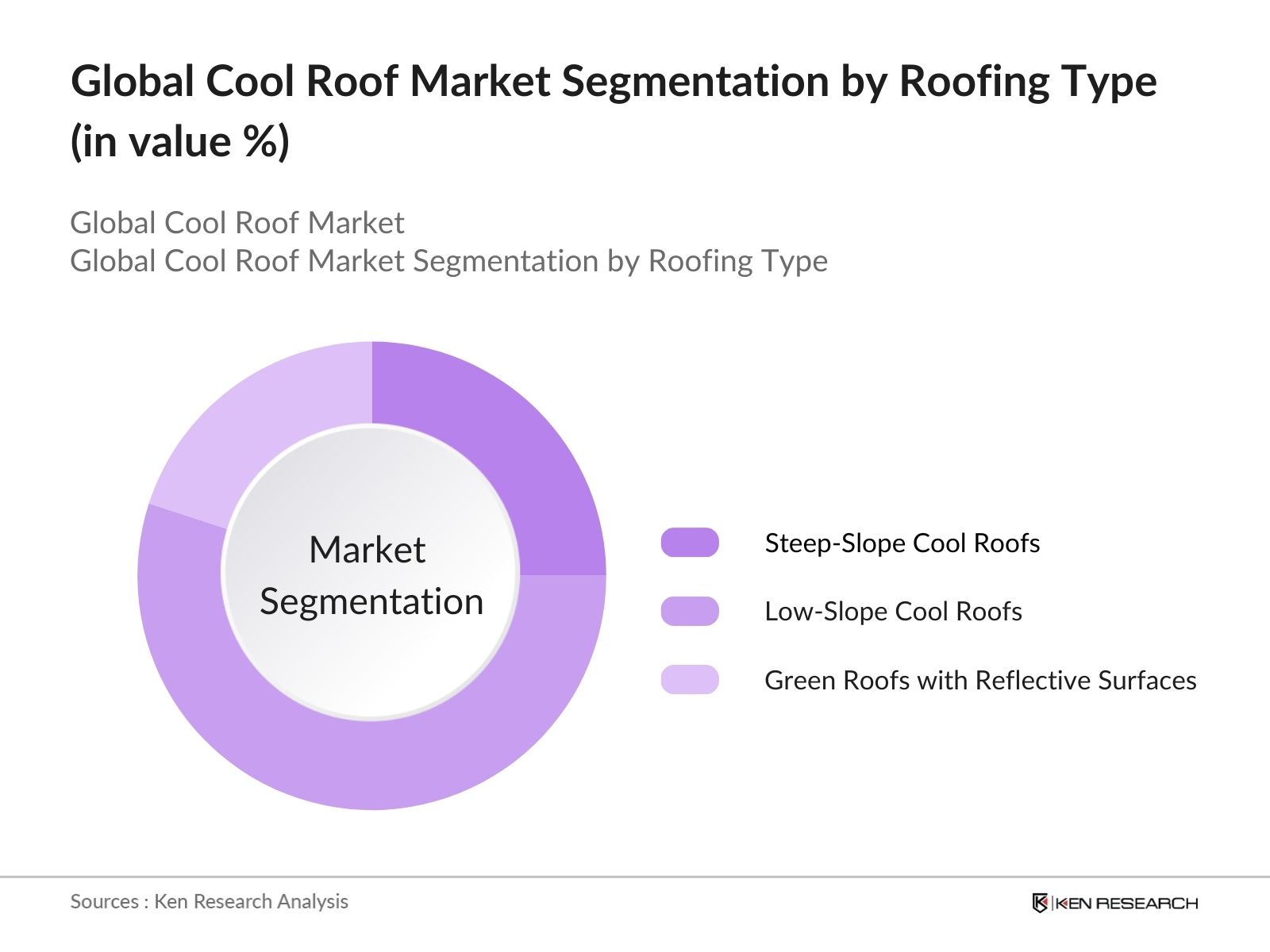
By Roofing Type: The global cool roof market is segmented by roofing type into steep-slope cool roofs, low-slope cool roofs, and green roofs with reflective surfaces. Low-slope cool roofs hold a dominant market share due to their widespread use in commercial and industrial buildings, where large, flat roofs are common. These roofs are easier to apply reflective coatings to, improving their energy efficiency and reducing the heat island effect in urban areas.
By Region: The market is geographically segmented into North America, Europe, Asia Pacific, Latin America, and Middle East & Africa. North America holds the largest market share, driven by the widespread adoption of cool roof policies in the U.S. and Canada. The region's focus on reducing energy consumption and mitigating climate change has led to significant growth in this segment.
By Material Type: The market is further segmented by material type into coated roofs, foam roofs, single-ply membranes, and metal roofs with reflective paint. Coated roofs dominate the market, as reflective coatings can be easily applied to existing roofs, making them a cost-effective solution for retrofitting and enhancing the reflectivity of older buildings. This segments growth is driven by advancements in materials that offer higher solar reflectance and durability.
Global Cool Roof Market Competitive Landscape
The global cool roof market is dominated by key players focusing on product innovation and sustainable construction solutions. The competitive landscape is characterized by a mixture of global companies and regional manufacturers. The global cool roof market is dominated by established players such as Owens Corning and BASF SE, which lead in innovation and product sustainability. These companies focus on reducing carbon footprints and investing heavily in R&D to develop more durable and efficient cool roof solutions.
|
Company Name |
Established |
Headquarters |
No. of Employees |
Product Range |
Certifications |
R&D Investment |
Sustainability Initiatives |
Mergers/Acquisitions |
|
Owens Corning |
1938 |
Toledo, Ohio, USA |
- |
- |
- |
- |
- |
- |
|
GAF Materials Corporation |
1886 |
Parsippany, NJ, USA |
- |
- |
- |
- |
- |
- |
|
CertainTeed Corporation |
1904 |
Malvern, Pennsylvania |
- |
- |
- |
- |
- |
- |
|
BASF SE |
1865 |
Ludwigshafen, Germany |
- |
- |
- |
- |
- |
- |
|
Kingspan Group |
1965 |
Cavan, Ireland |
- |
- |
- |
- |
- |
- |
Global Cool Roof Market Analysis
Growth Drivers
- Increasing Urban Heat Island Effect: The Urban Heat Island (UHI) effect has been intensifying in densely populated cities, driving the adoption of cool roofs with high Solar Reflectance Index (SRI) values. Studies conducted by the U.S. Environmental Protection Agency (EPA) found that cities experience temperatures 25C higher than rural areas due to the UHI effect. Cool roofs, with SRI values above 80, reflect more sunlight and absorb less heat, reducing local temperatures.
- Government Incentives and Rebates for Energy-Efficient Construction: Government initiatives and rebates for energy-efficient building practices, including cool roofs, have been pivotal growth drivers in the market. In the U.S., cool roofs contribute to LEED (Leadership in Energy and Environmental Design) certification, which encourages sustainable building solutions. With global energy demand increasing, such rebates are pushing developers toward energy-efficient solutions, further boosting cool roof adoption.
- Rising Energy Costs: The rising cost of energy has pushed commercial and residential building owners to invest in energy-efficient solutions such as cool roofs. In California, for instance, electricity prices have increased by 12% since 2022, compelling building owners to opt for cool roofs to reduce cooling loads and energy consumption. Cool roofs with energy efficiency ratings above 80% have proven to reduce energy use in buildings by up to 20 kWh per square meter annually, providing significant cost savings.
Challenges
- High Initial Installation Costs: A cool roof system can cost up to USD 10 per square foot, compared to USD 46 per square foot for conventional roofing systems. Although cool roofs offer long-term energy savings, the higher upfront investment often deters homeowners and businesses in cost-sensitive regions from opting for these systems. In North America, the high initial cost has slowed adoption rates, particularly in smaller urban projects where budget constraints are prevalent.
- Durability and Maintenance Requirements: While cool roofs can deliver significant energy savings, their long-term durability and maintenance requirements can be a drawback. Life cycle analyses indicate that cool roofs, particularly those in harsh climates, may require re-coating every 10 to 15 years, adding to maintenance costs. For example, in areas such as the southwestern U.S., where temperatures frequently exceed 35C, the longevity of reflective coatings can diminish, increasing the total cost of ownership. Durability concerns are particularly relevant for cool roofing systems used in commercial buildings, where large-scale maintenance can significantly impact operational budgets.
Global Cool Roof Market Future Outlook
Global Cool Roof Market is expected to witness significant growth, driven by increasing awareness of energy efficiency, urban heat island mitigation, and rising global temperatures. Government policies and incentives promoting sustainable construction, coupled with advancements in material technology, will further fuel market growth. The increasing adoption of green building standards will also lead to the expansion of cool roofs across both developed and developing markets.
Future Market Opportunities
- Growing Demand for Cool Roofing in Emerging Markets: Emerging markets, particularly in Latin America and Southeast Asia, are witnessing a growing demand for cool roofing solutions. In 2023, Brazil saw a 7% rise in cool roof installations in new commercial buildings, driven by increasing urbanization and the need to reduce energy consumption. As temperatures rise in these regions, the demand for energy-efficient buildings is expected to continue driving growth in the cool roofing market.
- Technological Advancements in Materials: Technological advancements in roofing materials, including high-reflective coatings and insulated roofing systems, present significant opportunities for market growth. New cool roof coatings, such as those developed by the Lawrence Berkeley National Laboratory, boast reflectivity levels exceeding 90%, allowing for greater energy efficiency and reducing heat absorption in buildings. In 2023, nearly 12% of new roofing projects in the U.S. utilized these high-reflective materials, marking a growing shift toward advanced roofing technologies that enhance building energy performance.
Scope of the Report
|
Roofing Type |
Steep-Slope Cool Roofs Low-Slope Cool Roofs Green Roofs with Reflective Surfaces |
|
Material Type |
Coated Roofs Foam Roofs Single-Ply Membranes Metal Roofs with Reflective Paint |
|
End-Use |
Residential Commercial Industrial |
|
Reflectance Performance |
High Reflectance (Albedo > 0.7) Medium Reflectance (Albedo 0.3 0.7) Low Reflectance (Albedo < 0.3) |
|
Region |
North America Europe Asia Pacific Latin America Middle East & Africa |
Products
Key Target Audience
Roofing Material Manufacturers
Construction and Real Estate Developers
Architects and Building Consultants
Energy Efficiency Consultants
Government and Regulatory Bodies (Cool Roof Rating Council, Energy Star Program)
Investors and Venture Capitalist Firms
Sustainability and Green Building Organizations
Commercial and Industrial Building Owners
Companies
Players Mentioned in the Report
Owens Corning
GAF Materials Corporation
CertainTeed Corporation
BASF SE
Kingspan Group
Firestone Building Products
Saint-Gobain
Sika AG
Dow Chemical Company
Icopal Group
Table of Contents
Global Cool Roof Market Overview
1.1 Definition and Scope
1.2 Market Taxonomy
1.3 Market Growth Rate
1.4 Market Segmentation Overview
Global Cool Roof Market Size (In USD Bn)
2.1 Historical Market Size
2.2 Year-On-Year Growth Analysis
2.3 Key Market Developments and Milestones
Global Cool Roof Market Analysis
3.1 Growth Drivers
3.1.1 Increasing Urban Heat Island Effect (SRI Metrics)
3.1.2 Government Incentives and Rebates for Energy-Efficient Construction (LEED Certification)
3.1.3 Rising Energy Costs (Energy Efficiency Rating)
3.1.4 Adoption of Sustainable and Green Building Practices (Thermal Emittance Standards)
3.2 Market Challenges
3.2.1 High Initial Installation Costs (Cost per Square Foot Analysis)
3.2.2 Durability and Maintenance Requirements (Life Cycle Analysis)
3.2.3 Climate Suitability and Regional Adoption (Performance under Extreme Weather Conditions)
3.2.4 Lack of Awareness in Developing Markets (Energy Savings Potential)
3.3 Opportunities
3.3.1 Growing Demand for Cool Roofing in Emerging Markets (Expansion Opportunities by Region)
3.3.2 Technological Advancements in Materials (High-Reflective Coatings and Insulated Roofing Systems)
3.3.3 Retrofitting Existing Roofs (Analysis of Retrofitting Cost vs. Energy Savings)
3.3.4 Integration with Renewable Energy Systems (Cool Roof Compatibility with Solar PV)
3.4 Trends
3.4.1 Increased Use of Reflective Roofing Materials (Reflectance Improvement Metrics)
3.4.2 Growth of Green Roofing Practices in Urban Areas (Integration with Cool Roofing)
3.4.3 Increased Adoption of Building Energy Efficiency Codes (Regional Compliance Statistics)
3.4.4 Advances in Roofing Material Lifespan and Resilience (Long-Term Durability Metrics)
3.5 Government Regulations
3.5.1 Energy Efficiency Building Codes (Cool Roof Rating Council Standards)
3.5.2 Tax Incentives for Cool Roof Installation (Financial Benefits Analysis)
3.5.3 Regional Mandates for Reflective Roofing (Analysis by Country/Region)
3.5.4 Building Certification Programs (Energy Star Roof Product Criteria)
3.6 SWOT Analysis
3.7 Stakeholder Ecosystem
3.8 Porters Five Forces Analysis
3.9 Competition Ecosystem
Global Cool Roof Market Segmentation (Reflecting Market Specific Cool Roof Metrics)
4.1 By Roofing Type (In Value %)
4.1.1 Steep-Slope Cool Roofs
4.1.2 Low-Slope Cool Roofs
4.1.3 Green Roofs with Reflective Surfaces
4.2 By Material Type (In Value %)
4.2.1 Coated Roofs (Reflectance Coatings)
4.2.2 Foam Roofs
4.2.3 Single-Ply Membranes
4.2.4 Metal Roofs with Reflective Paint
4.3 By End-Use (In Value %)
4.3.1 Residential
4.3.2 Commercial
4.3.3 Industrial
4.4 By Reflectance Performance (In Value %)
4.4.1 High Reflectance (Albedo > 0.7)
4.4.2 Medium Reflectance (Albedo 0.3 0.7)
4.4.3 Low Reflectance (Albedo < 0.3)
4.5 By Region (In Value %)
4.5.1 North America
4.5.2 Europe
4.5.3 Asia Pacific
4.5.4 Latin America
4.5.5 Middle East & Africa
Global Cool Roof Market Competitive Analysis
5.1 Detailed Profiles of Major Companies
5.1.1 Owens Corning
5.1.2 GAF Materials Corporation
5.1.3 CertainTeed Corporation
5.1.4 Sika AG
5.1.5 BASF SE
5.1.6 Dow Chemical Company
5.1.7 Saint-Gobain
5.1.8 Kingspan Group
5.1.9 Icopal Group
5.1.10 Firestone Building Products
5.2 Cross Comparison Parameters (No. of Employees, Headquarters, Inception Year, Revenue, Regional Presence, Product Portfolio, Sustainability Initiatives, Certification and Awards)
5.3 Market Share Analysis
5.4 Strategic Initiatives
5.5 Mergers and Acquisitions
5.6 Investment Analysis
5.7 Venture Capital Funding
5.8 Government Grants
5.9 Private Equity Investments
Global Cool Roof Market Regulatory Framework
6.1 Energy Efficiency Standards (Cool Roof Rating Council Guidelines)
6.2 Regional Reflectance Requirements (Compliance per Region)
6.3 Certification Processes (Energy Star and LEED Certification)
Global Cool Roof Future Market Size (In USD Bn)
7.1 Future Market Size Projections
7.2 Key Factors Driving Future Market Growth
Global Cool Roof Future Market Segmentation
8.1 By Roofing Type (In Value %)
8.2 By Material Type (In Value %)
8.3 By End-Use (In Value %)
8.4 By Reflectance Performance (In Value %)
8.5 By Region (In Value %)
Global Cool Roof Market Analysts Recommendations
9.1 TAM/SAM/SOM Analysis
9.2 Customer Cohort Analysis
9.3 Marketing Initiatives
9.4 White Space Opportunity Analysis
Research Methodology
Step 1: Identification of Key Variables
The research process begins with identifying the key variables influencing the global cool roof market. This is achieved by studying industry reports, energy efficiency standards, and government policies. Extensive desk research and secondary data sources help in determining the most critical factors.
Step 2: Market Analysis and Construction
This step involves analyzing historical data and market dynamics, including product adoption rates, performance metrics like solar reflectance index (SRI), and government incentives that drive the market. The analysis includes evaluating the penetration of cool roofs across various regions and market segments.
Step 3: Hypothesis Validation and Expert Consultation
Market insights and hypotheses are validated through in-depth interviews with industry experts, cool roof manufacturers, and sustainability consultants. These consultations help refine the data and provide real-world insights into market trends and challenges.
Step 4: Research Synthesis and Final Output
Finally, data is synthesized into a comprehensive report that includes verified market statistics, segmentation analysis, competitive landscape, and future market outlook. Expert consultation ensures that the data is accurate and reflective of real market conditions.
Frequently Asked Questions
01 How big is the global cool roof market?
The global cool roof market was valued at USD 5 billion, driven by rising demand for energy-efficient building materials and government incentives aimed at promoting sustainable construction practices.
02 What are the major challenges in the global cool roof market?
Challenges in the global cool roof market include high initial installation costs, limited awareness in certain regions, and maintenance issues. The durability of cool roof coatings in extreme weather conditions also poses a challenge to wider adoption.
03 Who are the key players in the global cool roof market?
Major players in global cool roof market include Owens Corning, BASF SE, GAF Materials Corporation, Kingspan Group, and CertainTeed Corporation. These companies lead due to their innovation in reflective roofing materials and strong sustainability initiatives.
04 What are the growth drivers for the global cool roof market?
Key drivers in global cool roof market include government regulations promoting energy efficiency, urban heat island mitigation efforts, and the increasing cost of energy. Technological advancements in roofing materials also contribute to market growth.
Why Buy From Us?

What makes us stand out is that our consultants follows Robust, Refine and Result (RRR) methodology. i.e. Robust for clear definitions, approaches and sanity checking, Refine for differentiating respondents facts and opinions and Result for presenting data with story

We have set a benchmark in the industry by offering our clients with syndicated and customized market research reports featuring coverage of entire market as well as meticulous research and analyst insights.

While we don't replace traditional research, we flip the method upside down. Our dual approach of Top Bottom & Bottom Top ensures quality deliverable by not just verifying company fundamentals but also looking at the sector and macroeconomic factors.

With one step in the future, our research team constantly tries to show you the bigger picture. We help with some of the tough questions you may encounter along the way: How is the industry positioned? Best marketing channel? KPI's of competitors? By aligning every element, we help maximize success.

Our report gives you instant access to the answers and sources that other companies might choose to hide. We elaborate each steps of research methodology we have used and showcase you the sample size to earn your trust.

If you need any support, we are here! We pride ourselves on universe strength, data quality, and quick, friendly, and professional service.