
Global Cooler Market Outlook to 2030
Region:Global
Author(s):Sanjna
Product Code:KROD6810
November 2024
87
About the Report
Global Cooler Market Overview
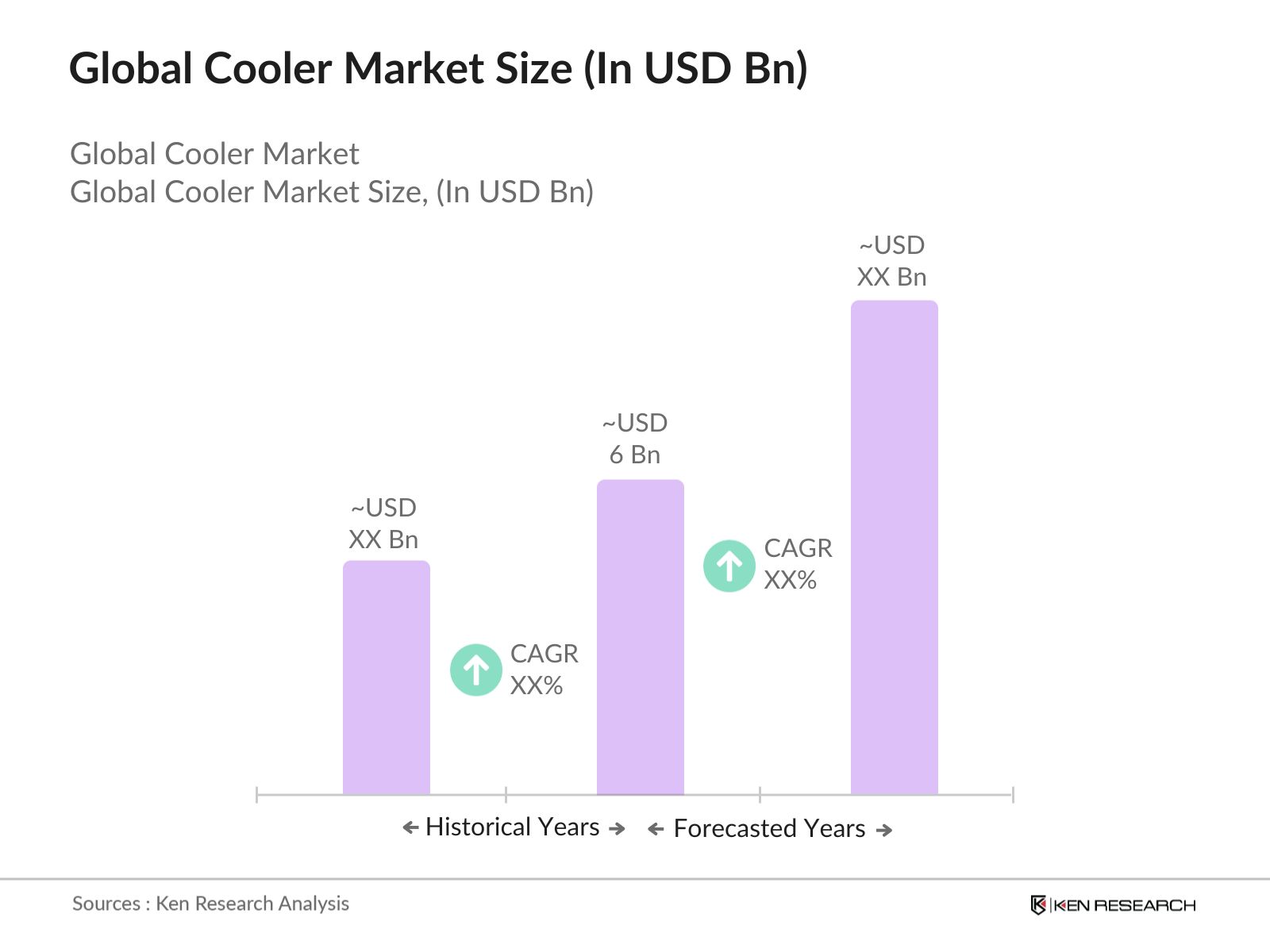
- The global cooler market is valued at USD 6 billion, with the market's growth being driven by rising demand for portable cooling solutions across a variety of sectors, including outdoor recreational activities, commercial refrigeration, and industrial use. The surge in demand is especially notable in regions where outdoor activities and sports are popular.
- Countries like the United States, China, and Germany dominate the cooler market due to their advanced commercial and industrial sectors, high disposable incomes, and a well-established culture of outdoor recreation. The U.S., in particular, sees significant cooler demand across retail, food, and beverage industries. he growth in these regions is fueled by expanding urbanization, outdoor leisure trends, and a consumer shift toward smart, tech-enabled cooling solutions.
- Governments worldwide are implementing stricter energy efficiency standards for cooling appliances, including coolers. In 2024, the U.S. Department of Energy set new guidelines for energy consumption in portable refrigeration systems, aimed at reducing energy use by 10%. These regulations encourage manufacturers to develop energy-efficient products that comply with international standards, fostering innovation in the cooler market.
Global Cooler Market Segmentation
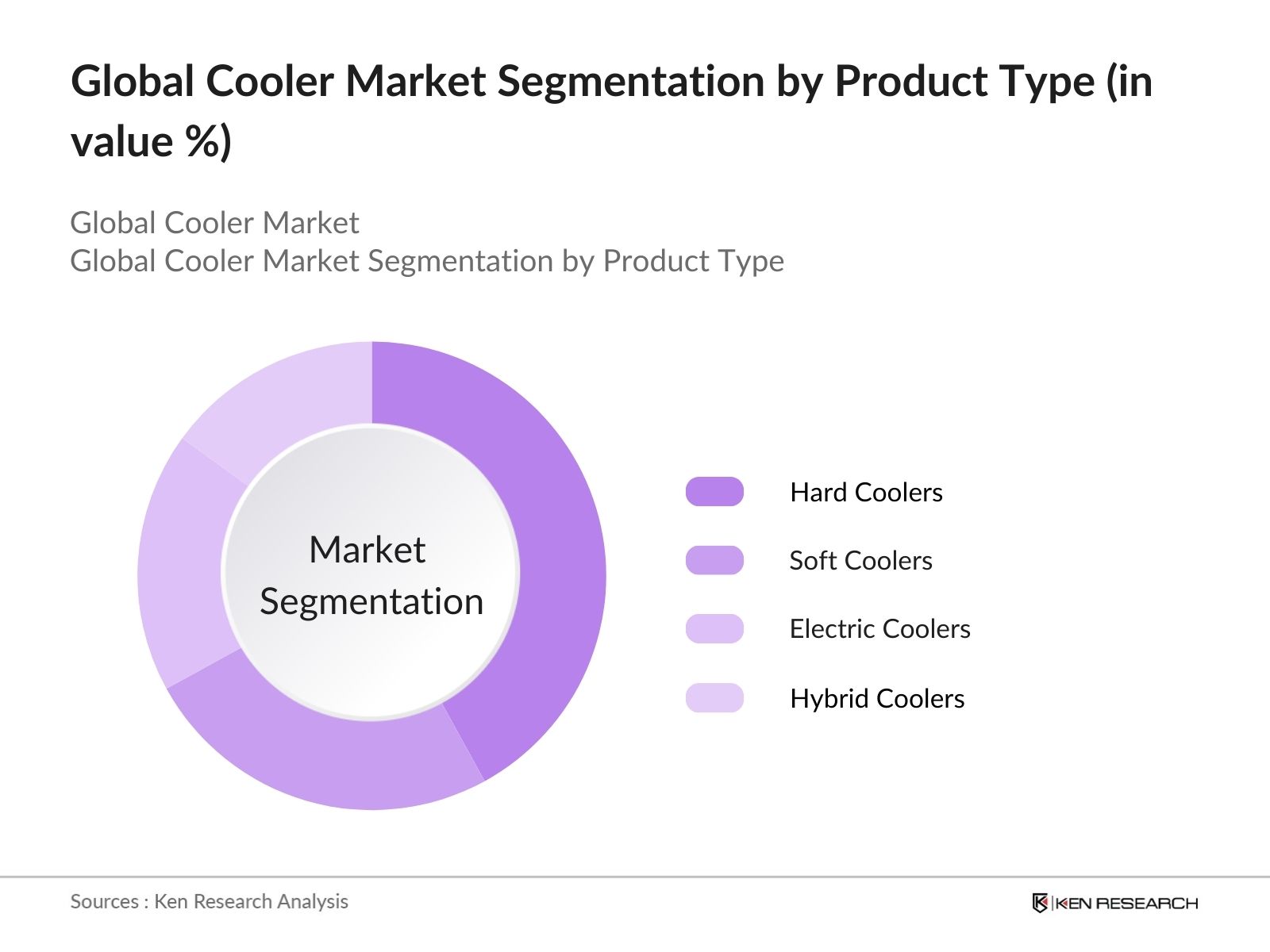
By Product Type: The global cooler market is segmented by product type into hard coolers, soft coolers, electric coolers, and hybrid coolers. Hard coolers dominate the market, driven by their durable nature, which makes them suitable for both personal and industrial use. These coolers are popular for outdoor activities such as camping, fishing, and hiking, especially in regions like North America and Europe. Brands like YETI and Igloo have successfully leveraged their high durability, insulation capabilities, and innovative designs to secure a substantial market share.
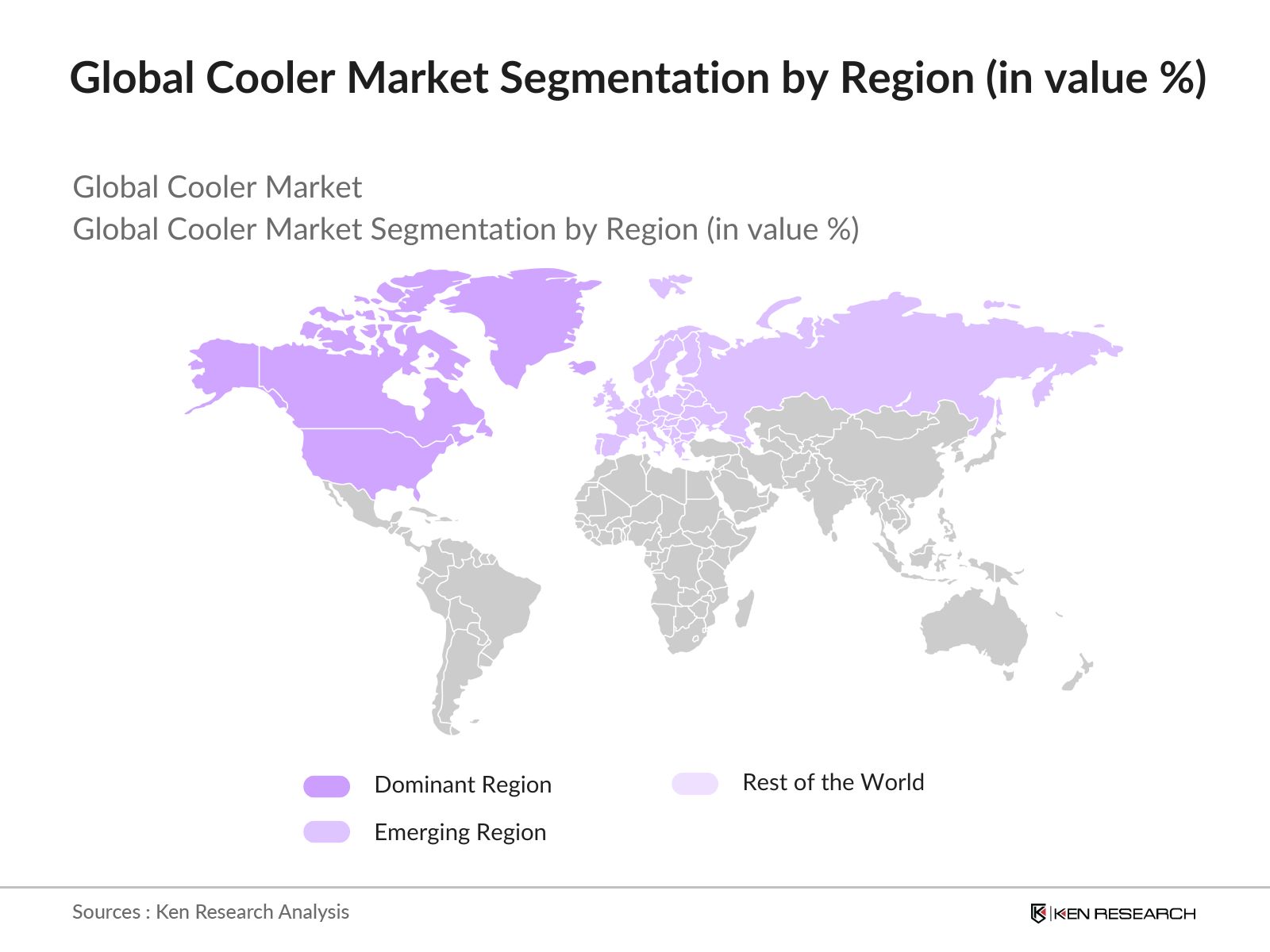
 By Region: The global cooler market is segmented by region into North America, Europe, Asia-Pacific, Latin America, and the Middle East & Africa. North America dominates the market due to the high consumer preference for outdoor activities and the presence of well-established cooler manufacturers. Companies like YETI, RTIC, and Pelican have created strong brand awareness through high-quality products. The region also has a culture of recreational outdoor activities, which directly drives demand for various types of coolers.
By Application: The global cooler market is segmented by application into residential, commercial, industrial, and outdoor activities. Outdoor activities dominate the market, driven by the rising popularity of recreational pursuits like camping, hiking, and fishing. The outdoor segment benefits from the growing awareness of climate change and the need for durable, long-lasting coolers that can preserve food and drinks for extended periods. Brands like Coleman and Grizzly are known for providing coolers that meet the diverse needs of outdoor enthusiasts.
Global Cooler Market Competitive Landscape
The global cooler market is consolidated, with key players focusing on product innovation, sustainability, and expanding their market presence through strategic partnerships and mergers. The market is dominated by a few major players, including YETI Holdings, Igloo Products, and The Coleman Company. These companies have established strong brand recognition and are leaders in terms of product diversity and innovation, particularly in hybrid and electric coolers.
|
Company |
Establishment Year |
Headquarters |
Product Range |
Revenue (USD Mn) |
R&D Investment |
Eco-friendly Focus |
Product Innovation |
Market Presence |
Strategic Initiatives |
|
YETI Holdings, Inc. |
2006 |
Austin, Texas, USA |
- |
- |
- |
- |
- |
- |
- |
|
Igloo Products Corporation |
1947 |
Katy, Texas, USA |
- |
- |
- |
- |
- |
- |
- |
|
The Coleman Company, Inc. |
1900 |
Chicago, Illinois, USA |
- |
- |
- |
- |
- |
- |
- |
|
Pelican Products, Inc. |
1976 |
Torrance, California |
- |
- |
- |
- |
- |
- |
- |
|
OtterBox |
1998 |
Fort Collins, Colorado |
- |
- |
- |
- |
- |
- |
- |
Global Cooler Market Analysis
Growth Drivers
- Increased Outdoor Activities: The growing trend of outdoor activities such as camping, hiking, and tailgating has significantly increased demand for portable coolers. In 2023, the global outdoor recreation market generated $887 billion in revenue, with a major share from camping and hiking activities that require portable refrigeration solutions. This demand for coolers correlates with the rise in outdoor events, where coolers are essential for storing food and beverages.
- Rise in Commercial Refrigeration Demand: Coolers are crucial for ensuring food and beverage safety, making them a staple in the growing food service sector. For instance, restaurants and catering services in North America and Europe have seen a rise in the adoption of advanced cooling systems, contributing to higher cooler sales. Furthermore, the food and beverage segments growth has created demand for durable, high-performance coolers in the supply chain.
- Consumer Preference for Portability: Consumers increasingly prefer portable coolers due to their convenience for personal and recreational use. This preference is especially strong in markets like the U.S. and Europe, where leisure travel and tailgating are prevalent. Demand for lightweight, energy-efficient coolers has risen as more consumers opt for products that offer ease of transport and multi-use functionality, further boosting cooler market growth in these regions.
Challenges
- Supply Chain Disruptions: Supply chain issues have impacted the global cooler market due to the disruption in transportation and logistics. The average shipping delay in 2023 increased by 8.5 days, affecting the timely delivery of cooler components and finished products. Moreover, shipping costs rose by 40% in key markets like the U.S. and Europe. These challenges have increased the time-to-market for cooler manufacturers, affecting the overall market growth and availability of products.
- Raw Material Price Volatility: The volatility in raw material prices, especially aluminum and plastics, has led to fluctuations in production costs for cooler manufacturers. In 2024, the average price of aluminum increased by 17%, and plastic materials saw a 8.98% price hike due to global demand-supply imbalances. This increase in raw material costs has translated into higher manufacturing expenses, making it challenging for companies to maintain competitive pricing while ensuring product quality.
Global Cooler Market Future Outlook
Global Cooler Market is expected to experience significant growth driven by the rising popularity of outdoor activities, advancements in smart cooler technologies, and the increasing adoption of eco-friendly cooling solutions. The market is also poised to benefit from the demand for energy-efficient solutions, which will likely spur innovation in both the residential and commercial segments. North America is expected to remain the leading region, but there is substantial potential for growth in emerging markets across Asia-Pacific and Latin America as consumer preferences shift toward portable and sustainable cooling solutions.
Market Opportunities
- Emergence of Smart Coolers: The development of smart coolers integrated with IoT and wireless technologies presents a significant opportunity for growth. By 2024, the smart appliance market is expected to account for $34 billion in sales globally, driven by consumer demand for connected devices. These coolers, capable of monitoring temperature, energy usage, and other parameters via mobile apps, have gained popularity in commercial and residential sectors. The rise of smart homes and advanced refrigeration technology positions smart coolers as a key growth area in the market.
- Rising Popularity of Eco-Friendly and Sustainable Materials: The shift toward sustainability has led to an increase in demand for eco-friendly coolers made from recycled or biodegradable materials. In 2024, over 30% of consumers in Europe and North America reported a preference for sustainable products, prompting cooler manufacturers to adopt green manufacturing practices. This demand for eco-friendly coolers opens opportunities for companies to explore sustainable materials like recycled plastic, bamboo, and biodegradable insulation while catering to environmentally conscious consumers.
Scope of the Report
|
By Product Type |
Hard Coolers Soft Coolers Electric Coolers Hybrid Coolers |
|
By Application |
Residential Commercial Industrial Outdoor Activities |
|
By Material |
Plastic Metal Fabric Others |
|
By Cooling Technology |
Thermoelectric Coolers Compressor Coolers Absorption Coolers Evaporative Coolers |
|
By Region |
North America Europe Asia-Pacific Latin America Middle East & Africa |
Products
Key Target Audience
Outdoor Gear Manufacturers
Cooler Manufacturers
Food and Beverage Companies
Commercial Refrigeration Companies
Outdoor Sports and Recreational Companies
Investors and Venture Capitalist Firms
Government and Regulatory Bodies (EPA, DOE)
Companies
Players Mentioned in the Report
YETI Holdings, Inc.
Igloo Products Corporation
The Coleman Company, Inc.
Pelican Products, Inc.
ORCA (Outdoor Recreation Company of America)
Bison Coolers
Engel Coolers
Grizzly Coolers
RTIC Outdoors
OtterBox
Table of Contents
1. Global Cooler Market Overview
1.1. Definition and Scope
1.2. Market Taxonomy
1.3. Market Growth Rate
1.4. Market Segmentation Overview
2. Global Cooler Market Size (In USD Mn)
2.1. Historical Market Size
2.2. Year-On-Year Growth Analysis
2.3. Key Market Developments and Milestones
3. Global Cooler Market Analysis
3.1. Growth Drivers
3.1.1. Increased Outdoor Activities
3.1.2. Rise in Commercial Refrigeration Demand
3.1.3. Consumer Preference for Portability
3.1.4. Expanding Food & Beverage Sector
3.2. Market Challenges
3.2.1. Supply Chain Disruptions
3.2.2. Raw Material Price Volatility
3.2.3. Product Innovation Limitations
3.2.4. Environmental Concerns Related to Non-Eco-Friendly Materials
3.3. Opportunities
3.3.1. Emergence of Smart Coolers
3.3.2. Rising Popularity of Eco-Friendly and Sustainable Materials
3.3.3. Geographic Expansion in Emerging Markets
3.3.4. Growing Demand in the Hospitality Sector
3.4. Trends
3.4.1. Integration of IoT in Coolers
3.4.2. Increasing Demand for Hybrid Cooling Technologies
3.4.3. Adoption of Compact Designs
3.4.4. Rising Use in Outdoor Recreational Activities
3.5. Government Regulation
3.5.1. Energy Efficiency Standards
3.5.2. Environmental Regulations on Material Usage
3.5.3. Tax Incentives for Sustainable Coolers
3.5.4. Health and Safety Standards for Food-Grade Coolers
3.6. SWOT Analysis
3.7. Stakeholder Ecosystem
3.8. Porters Five Forces Analysis
3.9. Competition Ecosystem
4. Global Cooler Market Segmentation
4.1. By Product Type (In Value %)
4.1.1. Hard Coolers
4.1.2. Soft Coolers
4.1.3. Electric Coolers
4.1.4. Hybrid Coolers
4.2. By Application (In Value %)
4.2.1. Residential
4.2.2. Commercial
4.2.3. Industrial
4.2.4. Outdoor Activities
4.3. By Material (In Value %)
4.3.1. Plastic
4.3.2. Metal
4.3.3. Fabric
4.3.4. Others
4.4. By Cooling Technology (In Value %)
4.4.1. Thermoelectric Coolers
4.4.2. Compressor Coolers
4.4.3. Absorption Coolers
4.4.4. Evaporative Coolers
4.5. By Region (In Value %)
4.5.1. North America
4.5.2. Europe
4.5.3. Asia-Pacific
4.5.4. Latin America
4.5.5. Middle East & Africa
5. Global Cooler Market Competitive Analysis
5.1. Detailed Profiles of Major Companies
5.1.1. YETI Holdings, Inc.
5.1.2. Igloo Products Corporation
5.1.3. The Coleman Company, Inc.
5.1.4. Pelican Products, Inc.
5.1.5. ORCA (Outdoor Recreation Company of America)
5.1.6. Bison Coolers
5.1.7. Engel Coolers
5.1.8. Grizzly Coolers
5.1.9. RTIC Outdoors
5.1.10. OtterBox
5.2. Cross Comparison Parameters (No. of Employees, Headquarters, Inception Year, Revenue)
5.3. Market Share Analysis
5.4. Strategic Initiatives
5.5. Mergers and Acquisitions
5.6. Investment Analysis
5.7. Venture Capital Funding
5.8. Government Grants
5.9. Private Equity Investments
6. Global Cooler Market Regulatory Framework
6.1. Energy Efficiency Standards
6.2. Environmental Compliance Regulations
6.3. Safety and Certification Requirements
6.4. Tax Incentives for Sustainable Cooling Solutions
7. Global Cooler Future Market Size (In USD Mn)
7.1. Future Market Size Projections
7.2. Key Factors Driving Future Market Growth
8. Global Cooler Market Future Segmentation
8.1. By Product Type (In Value %)
8.2. By Application (In Value %)
8.3. By Material (In Value %)
8.4. By Cooling Technology (In Value %)
8.5. By Region (In Value %)
9. Global Cooler Market Analysts Recommendations
9.1. TAM/SAM/SOM Analysis
9.2. Customer Cohort Analysis
9.3. Marketing Initiatives
9.4. White Space Opportunity Analysis
Disclaimer
Contact Us
Research Methodology
Step 1: Identification of Key Variables
The first phase involves mapping out the global cooler market ecosystem, identifying key stakeholders such as manufacturers, suppliers, and end-users. This step leverages extensive desk research, drawing on proprietary databases and secondary data sources, to understand the dynamics that shape the market.
Step 2: Market Analysis and Construction
In this stage, historical data on market size, product demand, and consumer preferences is collected. We analyze how these variables have impacted the market over the past five years, paying special attention to regional consumption patterns and key growth drivers such as outdoor recreation and technological advancements.
Step 3: Hypothesis Validation and Expert Consultation
Market assumptions are formulated and validated through interviews with industry experts and stakeholders. These consultations allow us to refine our data on product usage, consumer preferences, and emerging trends, ensuring accuracy in market forecasts.
Step 4: Research Synthesis and Final Output
The final phase involves synthesizing all collected data to produce a comprehensive market report. Our analysis includes bottom-up modeling, where specific market segments are detailed to ensure that insights into the global cooler market are accurate and actionable.
Frequently Asked Questions
01. How big is the Global Cooler Market?
The global cooler market is valued at USD 6 billion, driven by growing demand for portable cooling solutions across various sectors including outdoor recreational activities and industrial use.
02. What are the challenges in the Global Cooler Market?
Challenges in global cooler market include the volatility in raw material prices, such as plastics and metals, environmental concerns regarding non-sustainable materials, and supply chain disruptions due to global trade uncertainties.
03. Who are the major players in the Global Cooler Market?
Key players in global cooler market include YETI Holdings, Igloo Products Corporation, The Coleman Company, Pelican Products, and ORCA, which lead the market due to their innovative product offerings and strong distribution networks.
04. What are the growth drivers of the Global Cooler Market?
Growth in global cooler market is driven by the rising popularity of outdoor recreational activities, the increased demand for durable cooling solutions in commercial sectors, and the adoption of smart and sustainable cooling technologies.
Why Buy From Us?

What makes us stand out is that our consultants follows Robust, Refine and Result (RRR) methodology. i.e. Robust for clear definitions, approaches and sanity checking, Refine for differentiating respondents facts and opinions and Result for presenting data with story

We have set a benchmark in the industry by offering our clients with syndicated and customized market research reports featuring coverage of entire market as well as meticulous research and analyst insights.

While we don't replace traditional research, we flip the method upside down. Our dual approach of Top Bottom & Bottom Top ensures quality deliverable by not just verifying company fundamentals but also looking at the sector and macroeconomic factors.

With one step in the future, our research team constantly tries to show you the bigger picture. We help with some of the tough questions you may encounter along the way: How is the industry positioned? Best marketing channel? KPI's of competitors? By aligning every element, we help maximize success.

Our report gives you instant access to the answers and sources that other companies might choose to hide. We elaborate each steps of research methodology we have used and showcase you the sample size to earn your trust.

If you need any support, we are here! We pride ourselves on universe strength, data quality, and quick, friendly, and professional service.